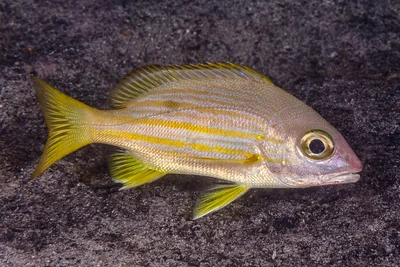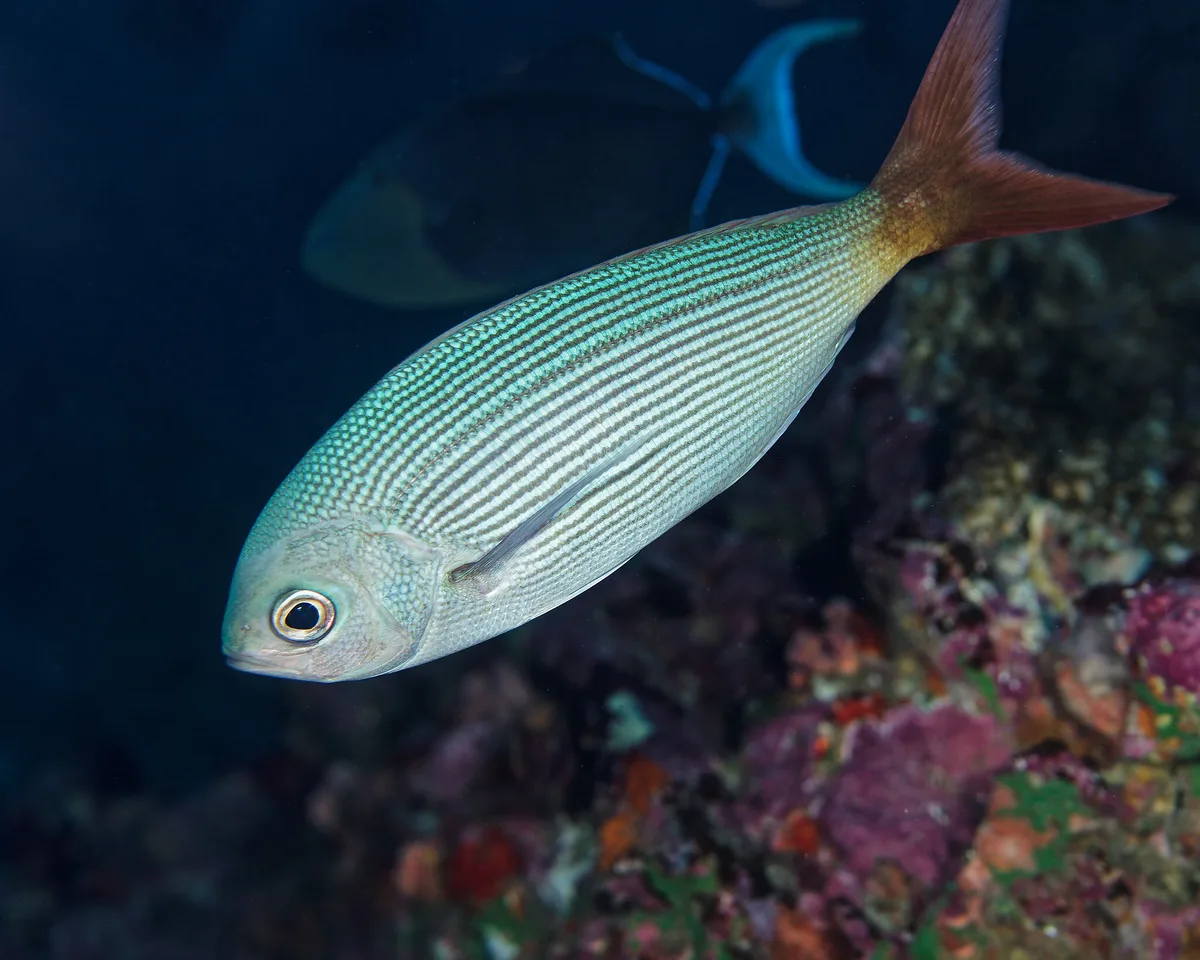
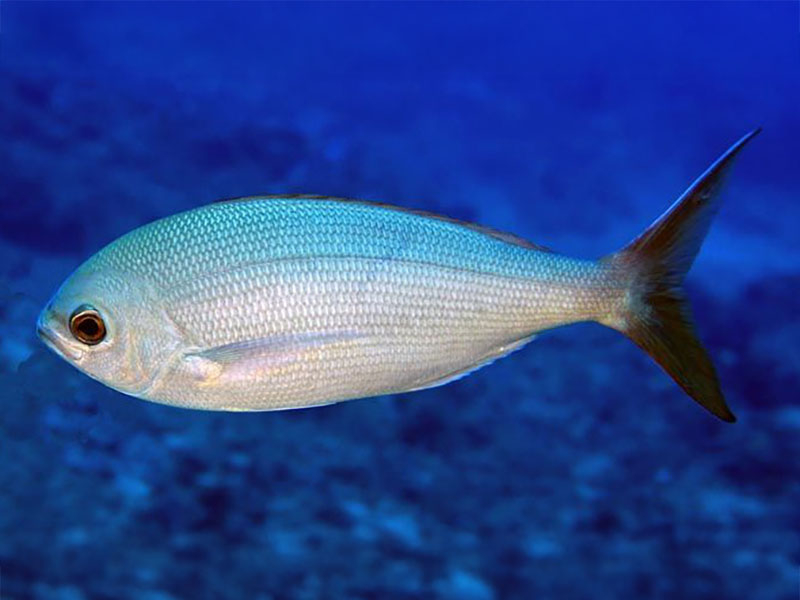
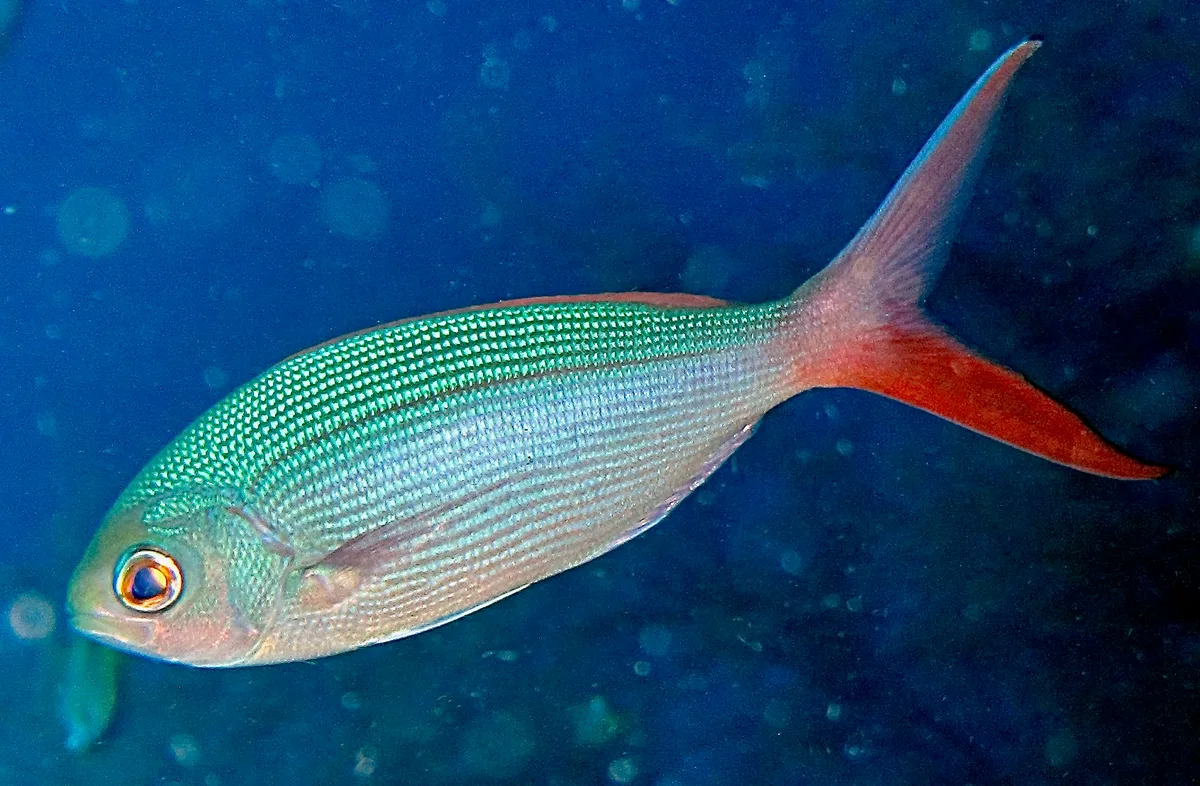
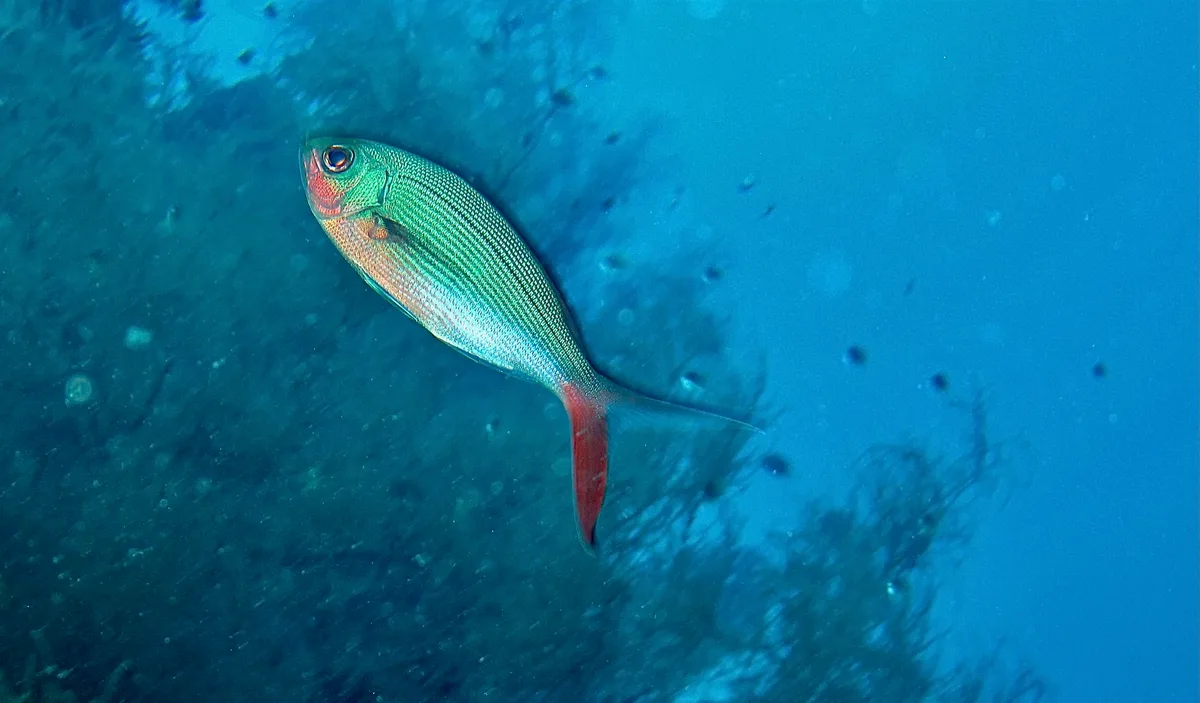
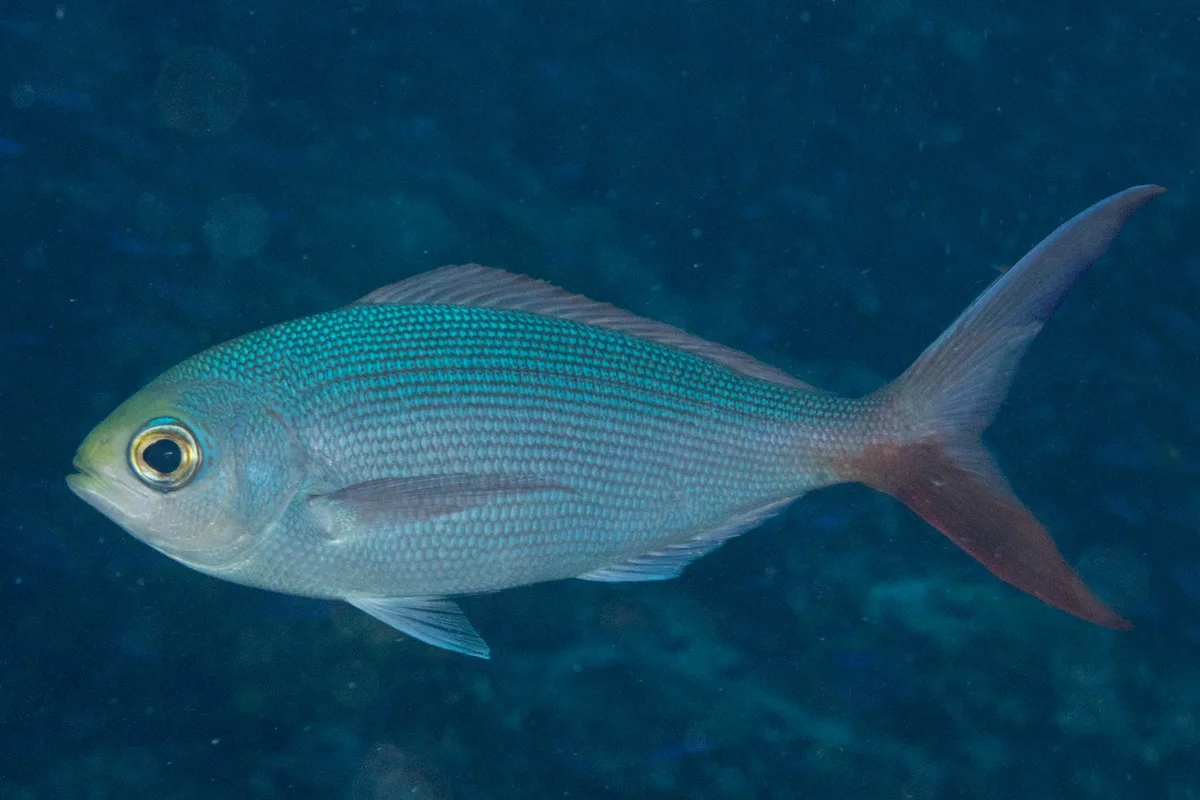
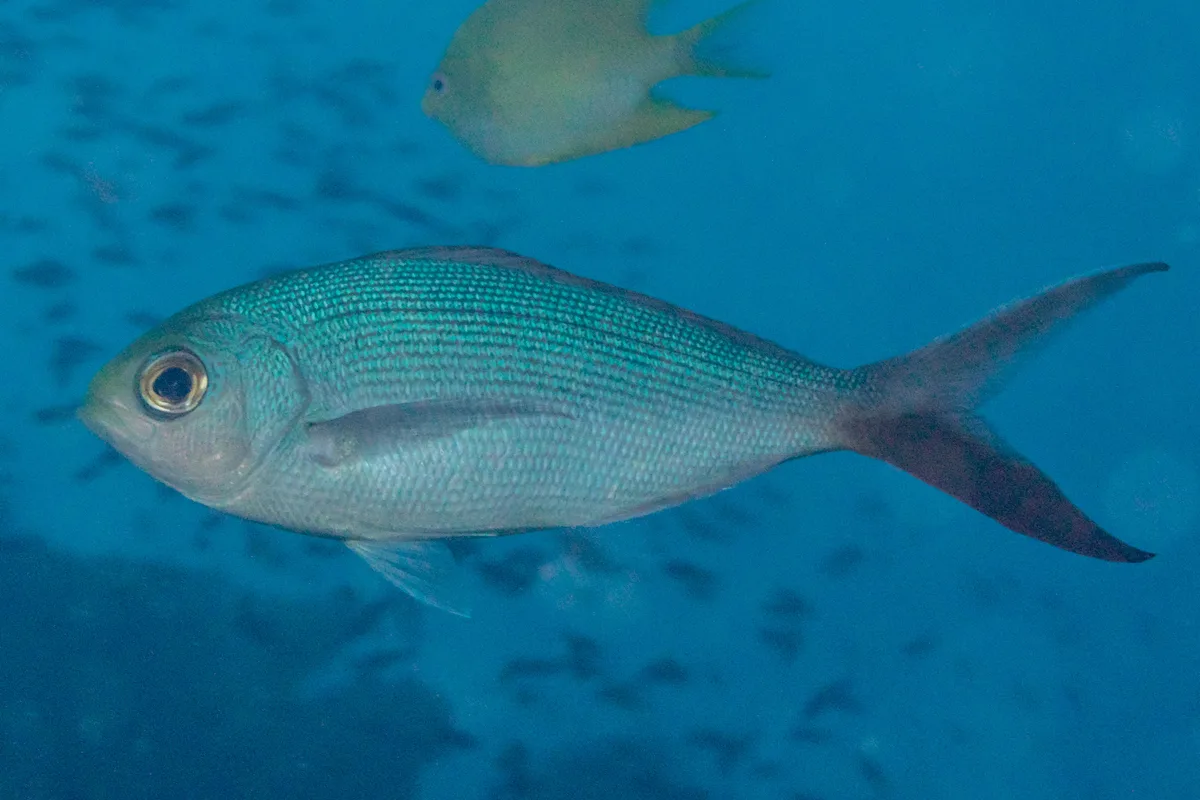
The name says what happened to it. Paracaesio means beside Caesio, which is the fusilier genus - and that is exactly what this animal is: a snapper that gave up the family trade and took up the fusiliers' living instead.
The rest of the snappers here hang beside structure by day and hunt fish and crustaceans off the bottom after dark. This one feeds on plankton in open water, in big schools along deep reef slopes, and the body has followed: slimmer than a reef snapper, smaller-scaled, without the heavy head and obvious canines the family is built around.
It also lives deeper than the rest of them. Records run to 200 m, and although the band where the fish actually is runs from about 5 to 100, most of that is below where a diver goes - so on this coast it is a fish of the wall, seen as a cloud well out from the reef rather than as an animal beside it.
What identifies it is the fins. The body is a plain gray-brown that says nothing, and the dorsal and the tail are reddish.
The genus. Paracaesio Bleeker 1874 - para- (near). ETYFish
The species. Paracaesio sordida Abe & Shinohara 1962 - dirty. ETYFish
- reddish dorsal and tail fins on an otherwise plain gray-brown body
- slimmer and smaller-scaled than the reef snappers
- in midwater off a deep slope rather than over the coral
- up to 48 cm
Why it's threatened
Although P. sordida is an important food fish in some areas, it is usually caught in relatively low numbers (Anderson and Allen 2001). There are no other known threats to this species.
Threat classification from the IUCN Red List.