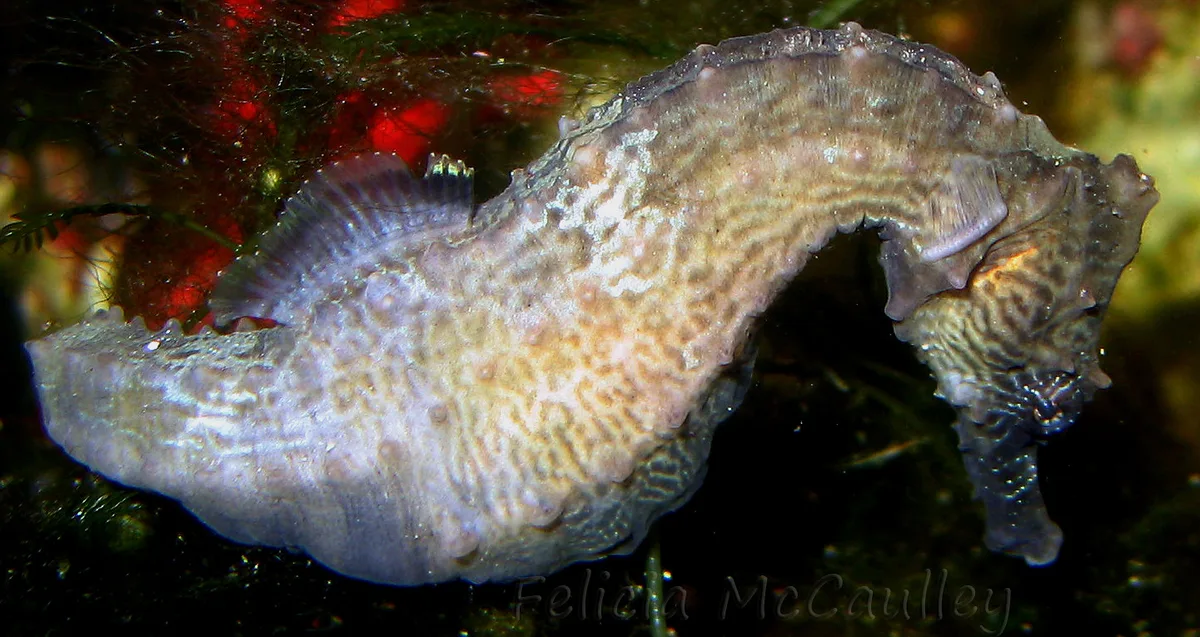
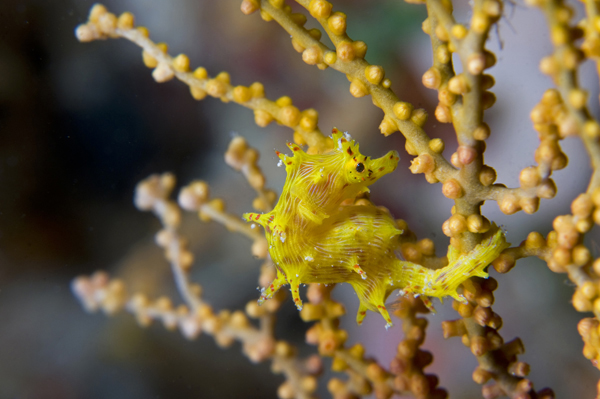
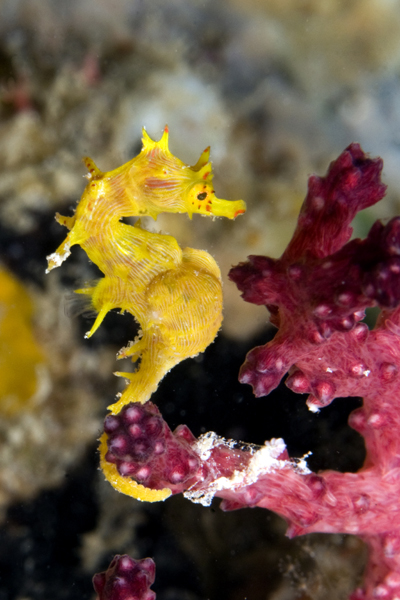
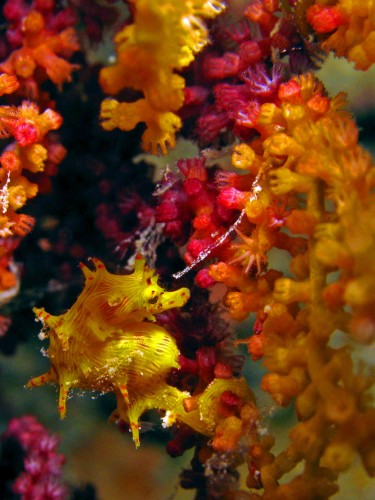
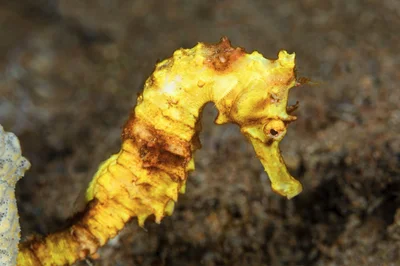
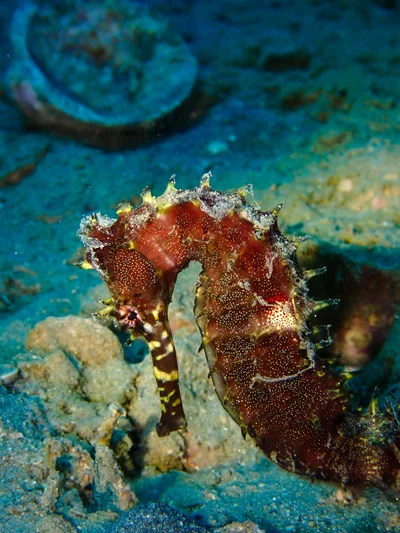
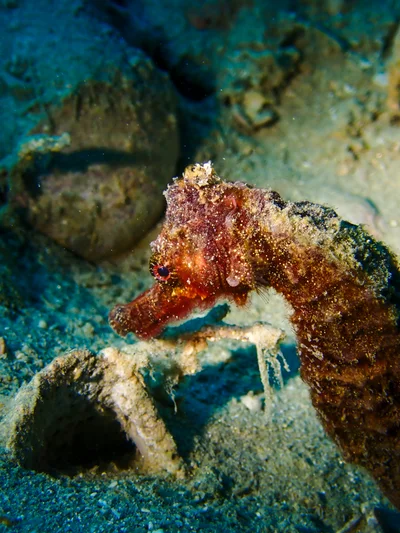
The Softcoral Seahorse is threatened by coral reef habitat loss and degradation. The only known habitat for this species is corals, which are undergoing continuous declines in the region due to climate change (rising SSTs and ocean acidification - Pandolfi et al. 2003, Cantin et al. 2010). Furthermore, coral reefs in the Gulf of Suez are threatened by pressures such as oil spills, tourism, coastal development, overfishing, and pollution (e.g. sewage discharge) (Fine et al. 2019, Kostianaia et al. 2020, Tesfamichael and Mehanna 2016). Consequently, elevated heavy metal concentrations (Zn, Cd, Pb, Ni, Co) due to various anthropogenic stressors have been recorded in the seawater, sediments, and corals in Hurghada and the Gulf of Suez at large (Ali et al. 2011).
However, the effects of these pressures on the soft corals that the Softcoral Seahorse associates with are unclear.
The greater abundance of soft corals in areas with elevated metal concentrations and the higher concentrations of heavy metals in the tissues of soft corals suggest that they may have developed a higher tolerance toward high heavy metal concentrations compared to scleractinian corals (Ali et al. 2011). The impact of tourism activities on coral communities in the Gulf of Suez is significant. Tourism represents the primary threat to Egyptian coral reefs. Over the past three decades, the live coral cover in the Egyptian Red Sea has experienced a substantial decline due to tourism-related pressures (Riegl et al. 2012). The decrease in scleractinian coral cover in the Gulf of Suez due to intensive tourism activities has also been accompanied by an increase in soft coral cover from 2000 to 2014 (Hasan 2018).
Both scleractinian and soft corals in the northern Red Sea (Gulf of Suez and Gulf of Aqaba) have been found to be less susceptible to warming sea temperatures due to their high thermal tolerance (Gabay et al. 2013, Gabay et al. 2014, Krueger et al. 2017, Osman et al. 2018). Furthermore, mass bleaching events have not been observed in the northern Red Sea despite high thermal stress (Fine et al. 2019, Osman et al. 2018). Studies from the Gulf of Aqaba have also found no significant effects of reduced pH levels on octocorals, potentially due to the protection of their fleshy tissues (Gabay et al. 2013, Gabay et al. 2014). Therefore, although increased temperatures and ocean acidification pose a risk to corals in general, this seahorse’s habitat may not be as severely threatened by climate change.
The Softcoral Seahorse may also be caught incidentally in purse seines, given the extensive purse seine fisheries in Gulf of Suez (Tesfamichael and Mehanna 2016).
Despite the various potential threats to corals in the Red Sea, their effects on the soft corals that this seahorse associates with are unclear. Declines in the extent and/or quality of the Softcoral Seahorse’s habitat are therefore inferred to be occurring at a level that would not approach the threshold for a threatened assessment under Criterion A.