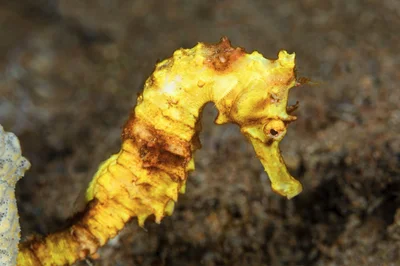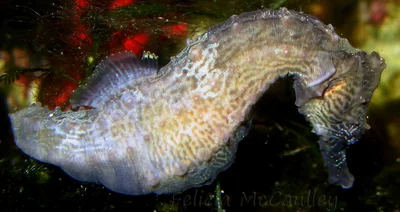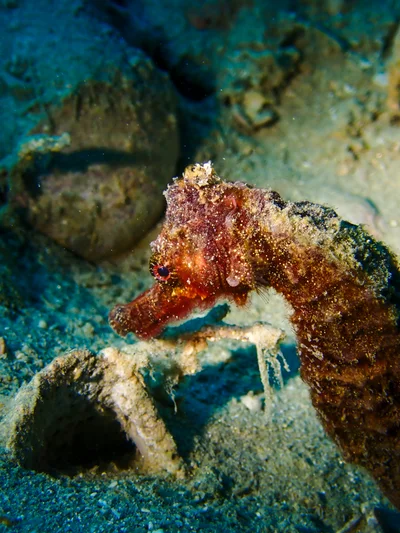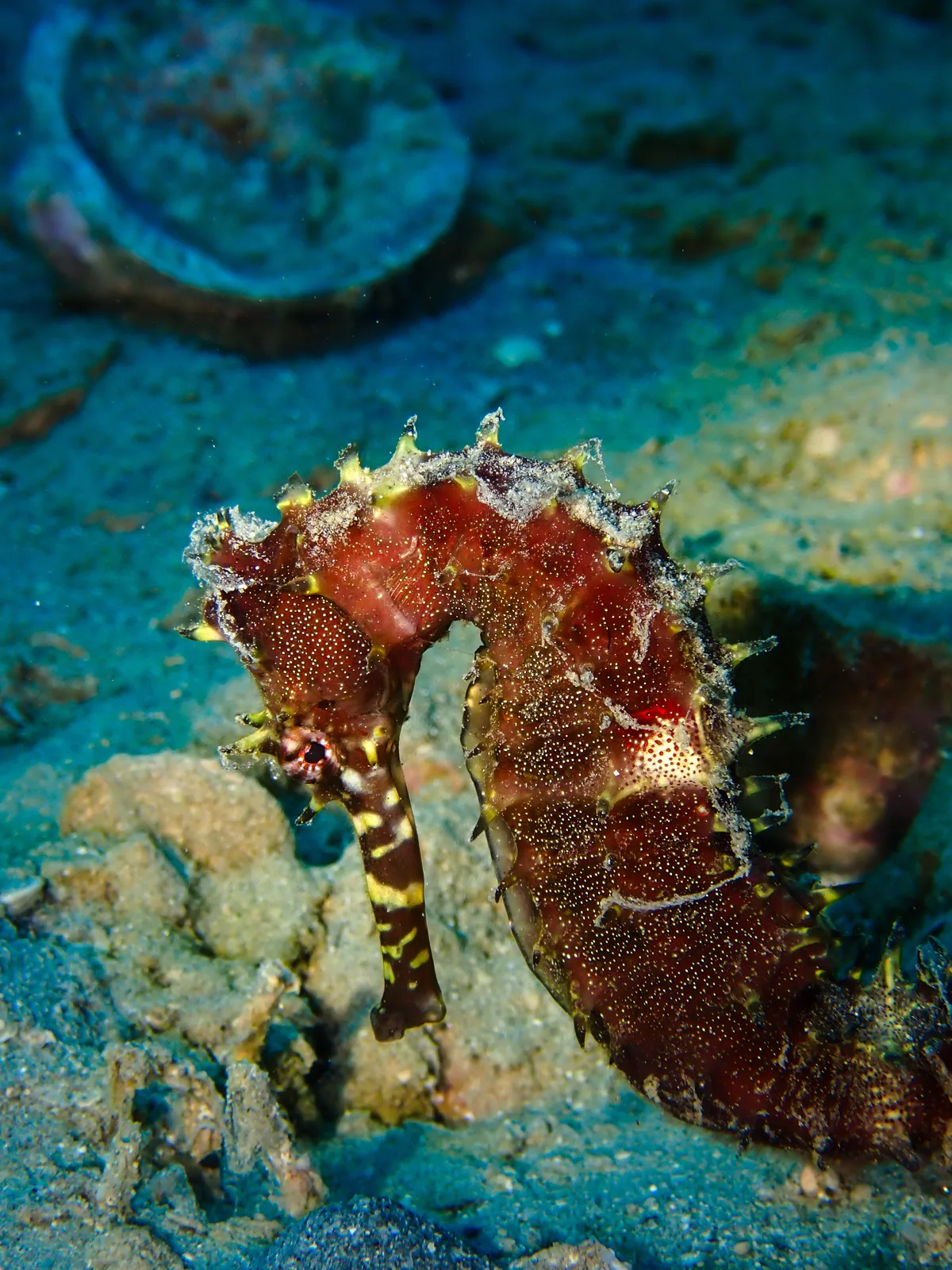
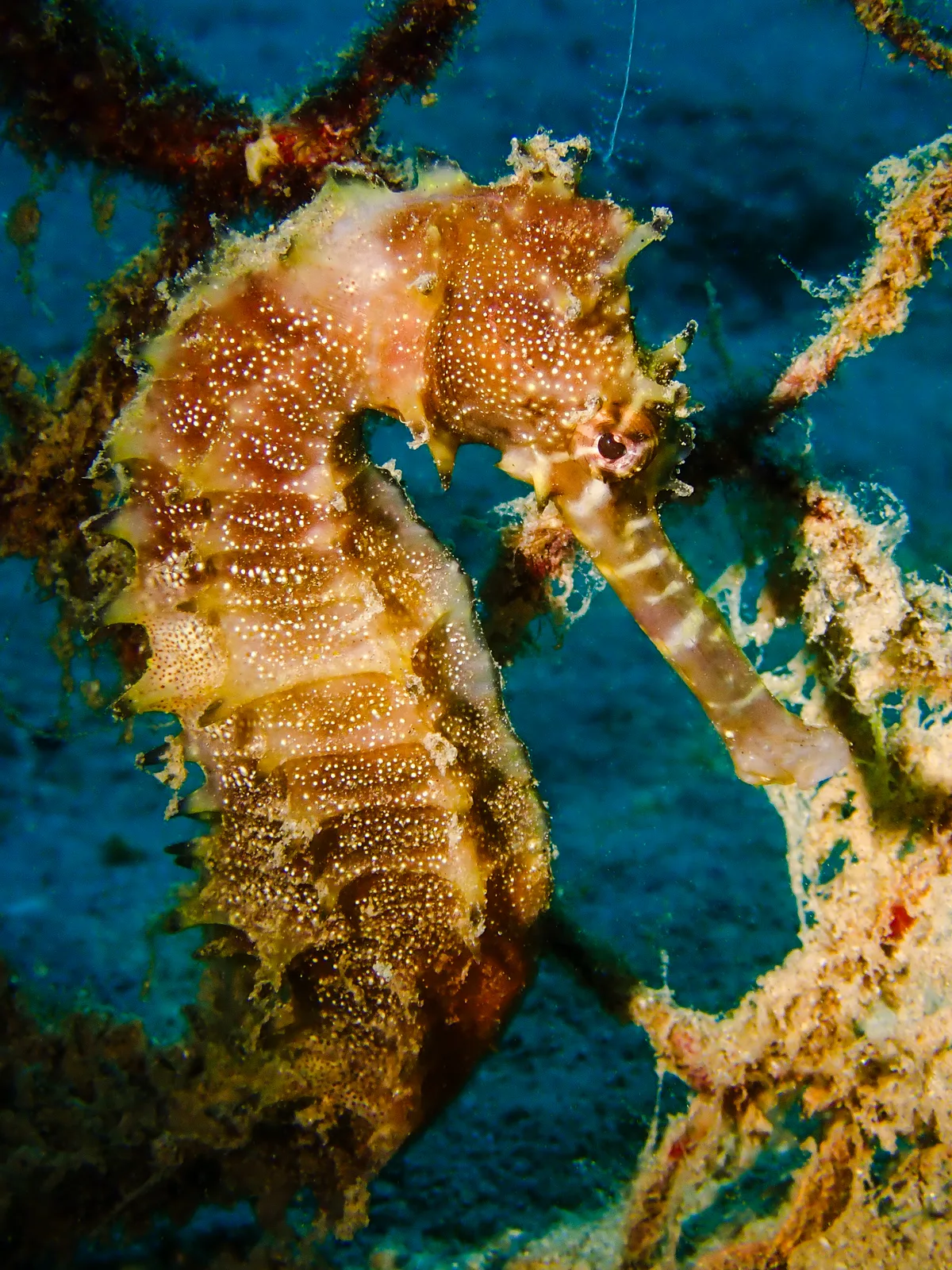
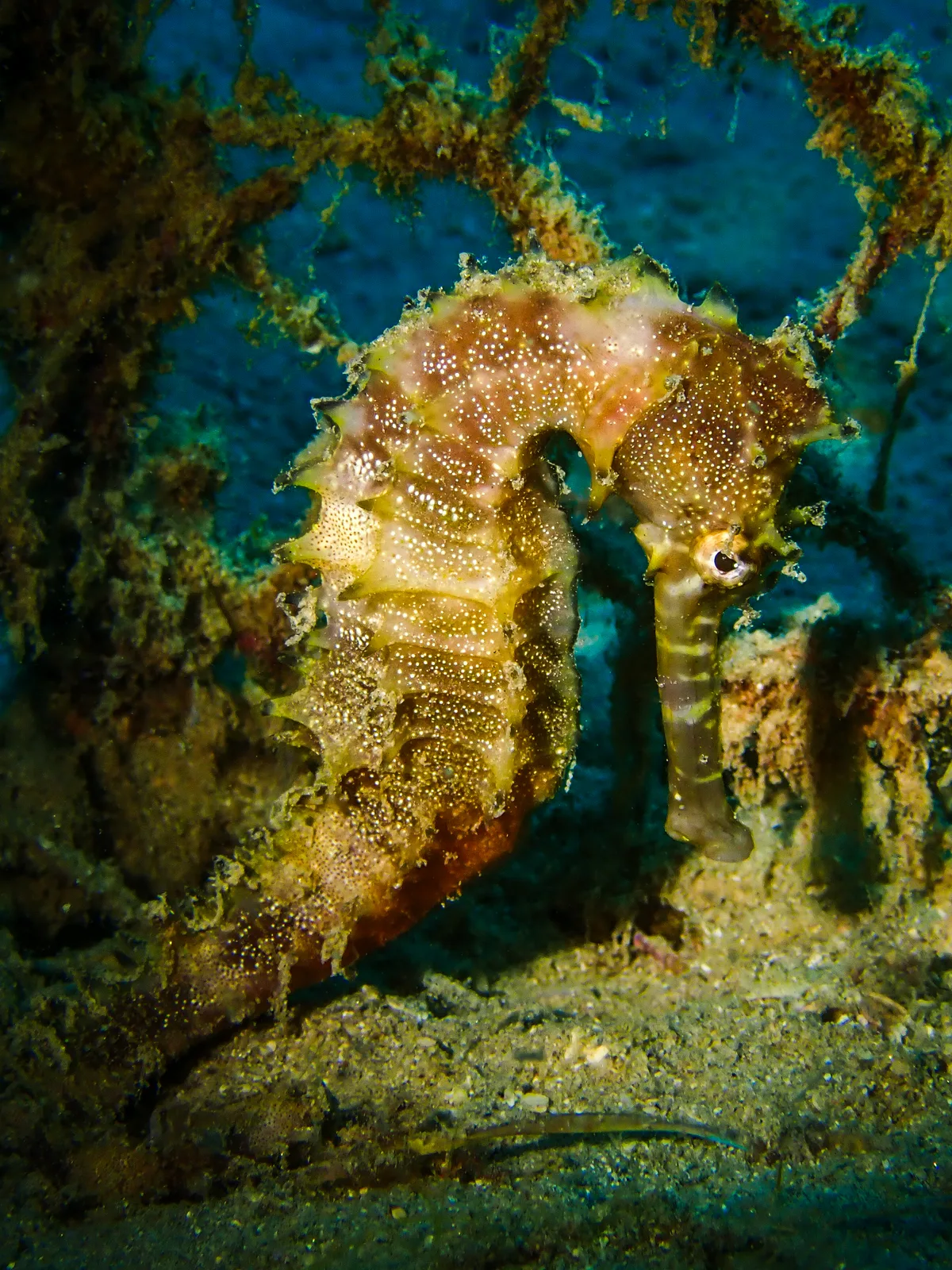
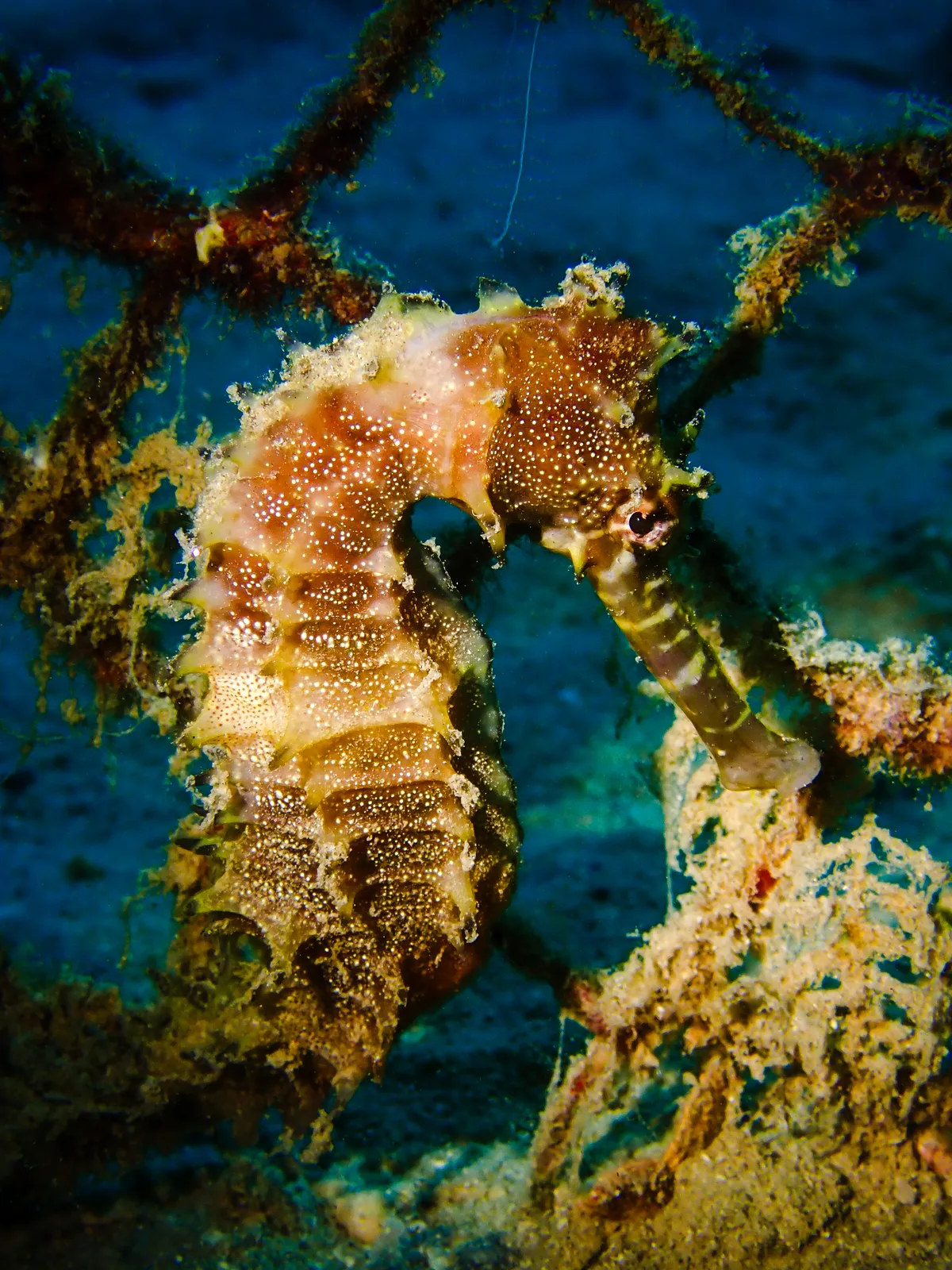
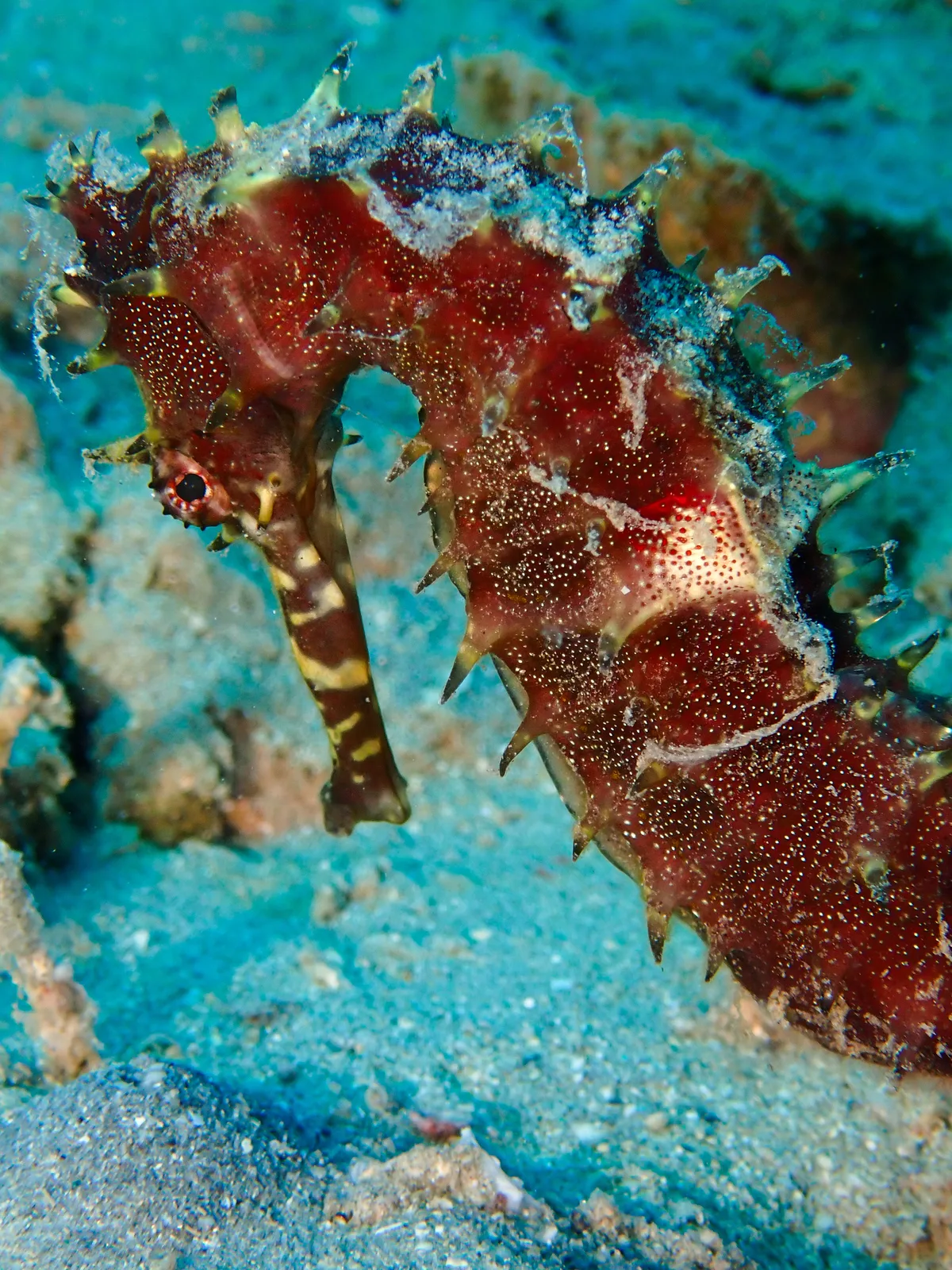
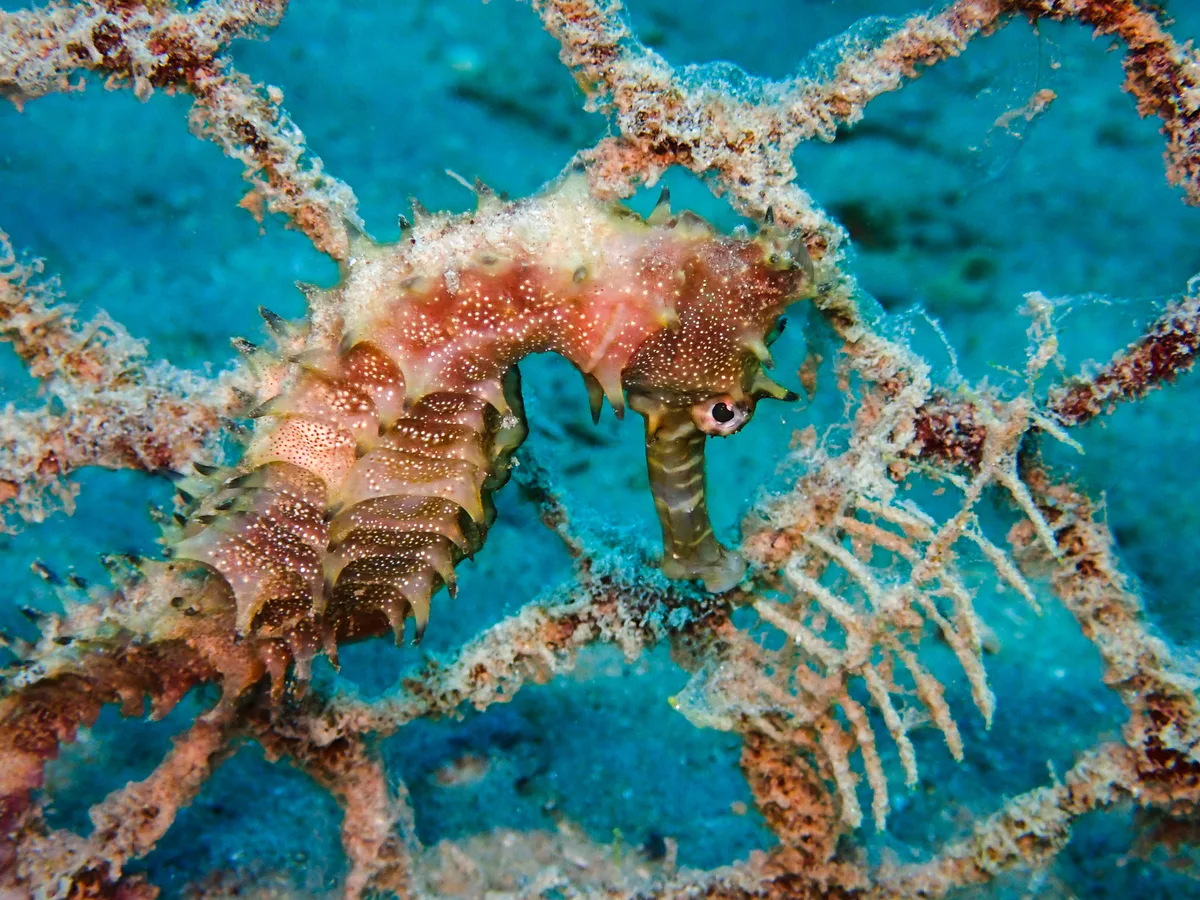
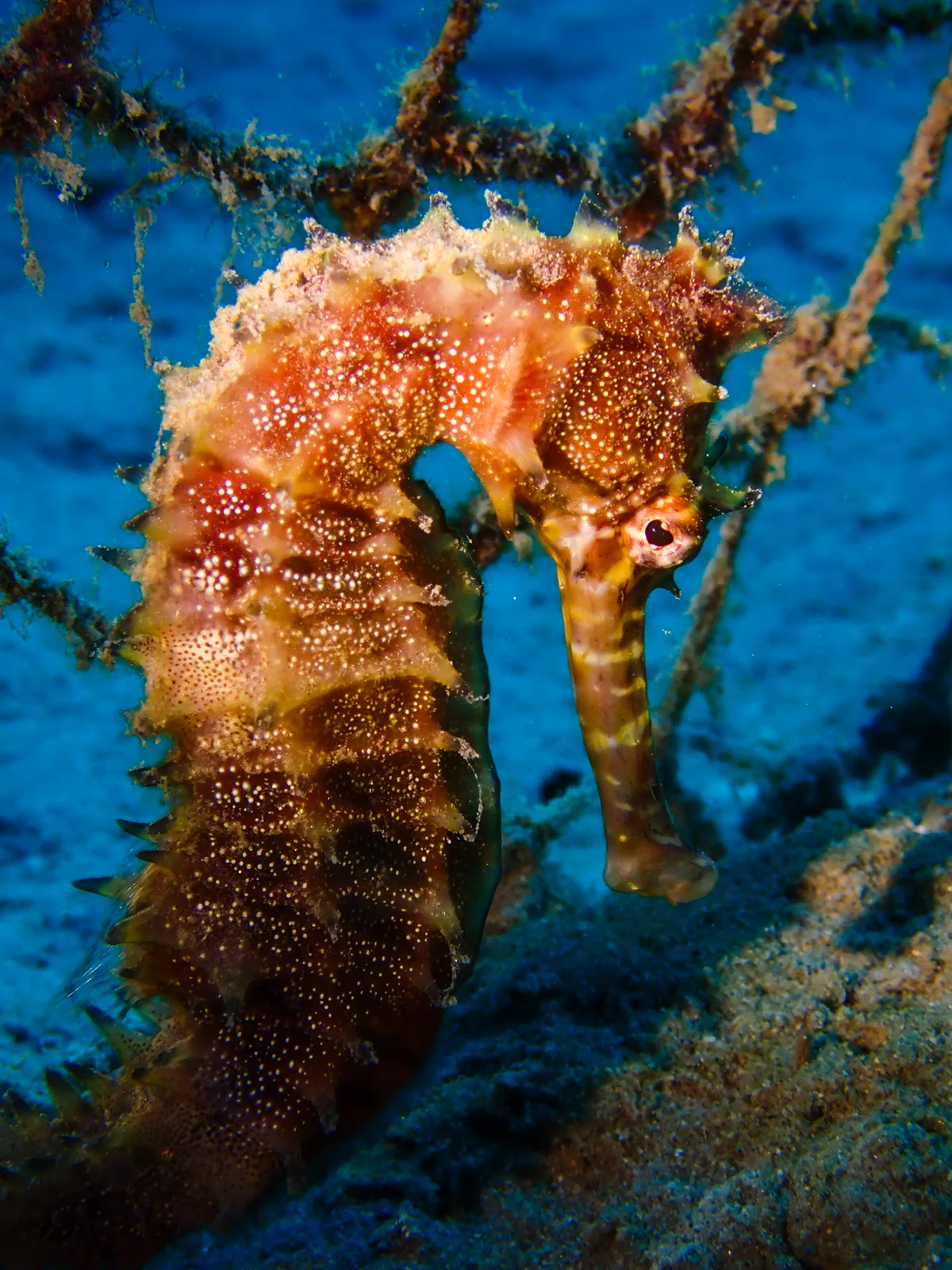
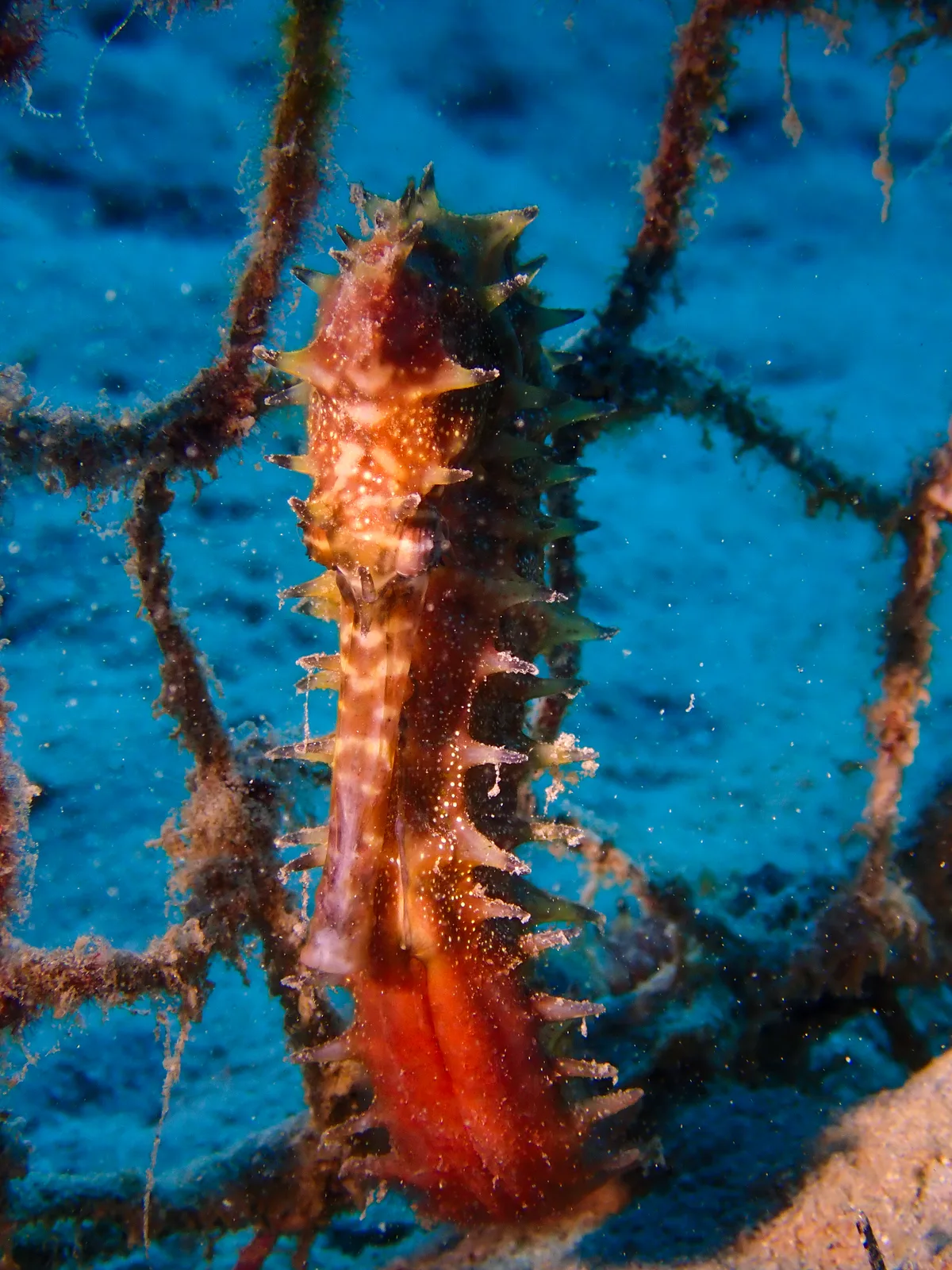
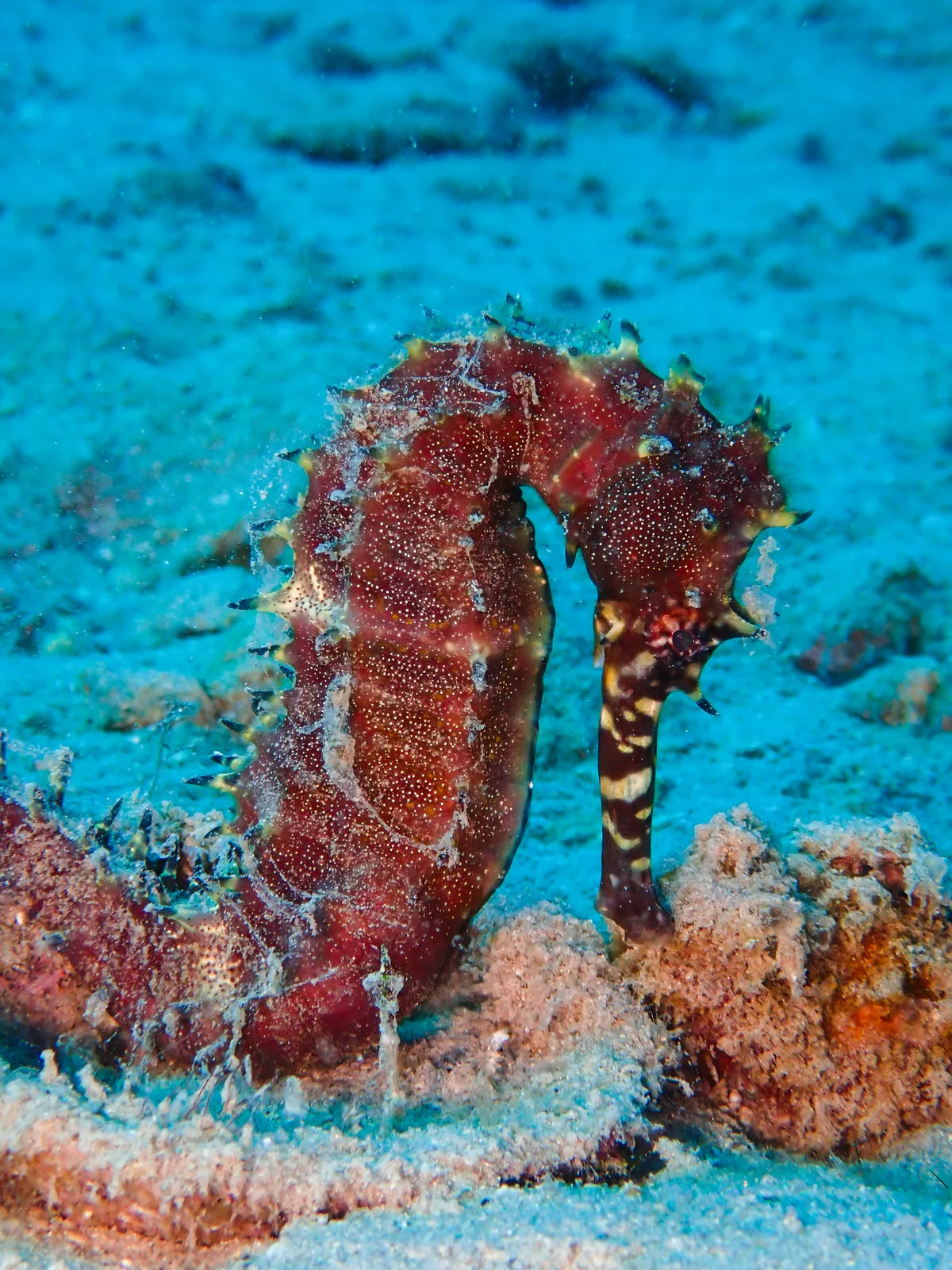
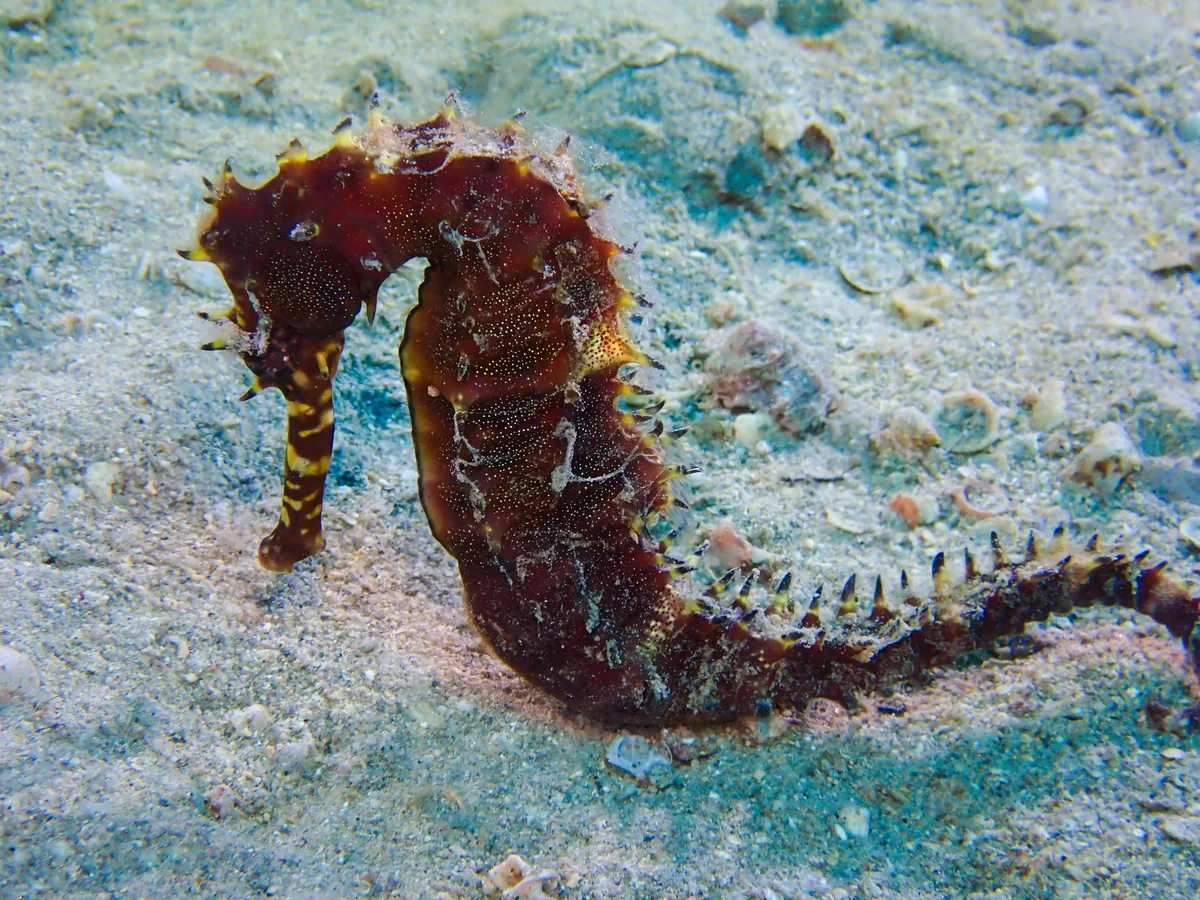
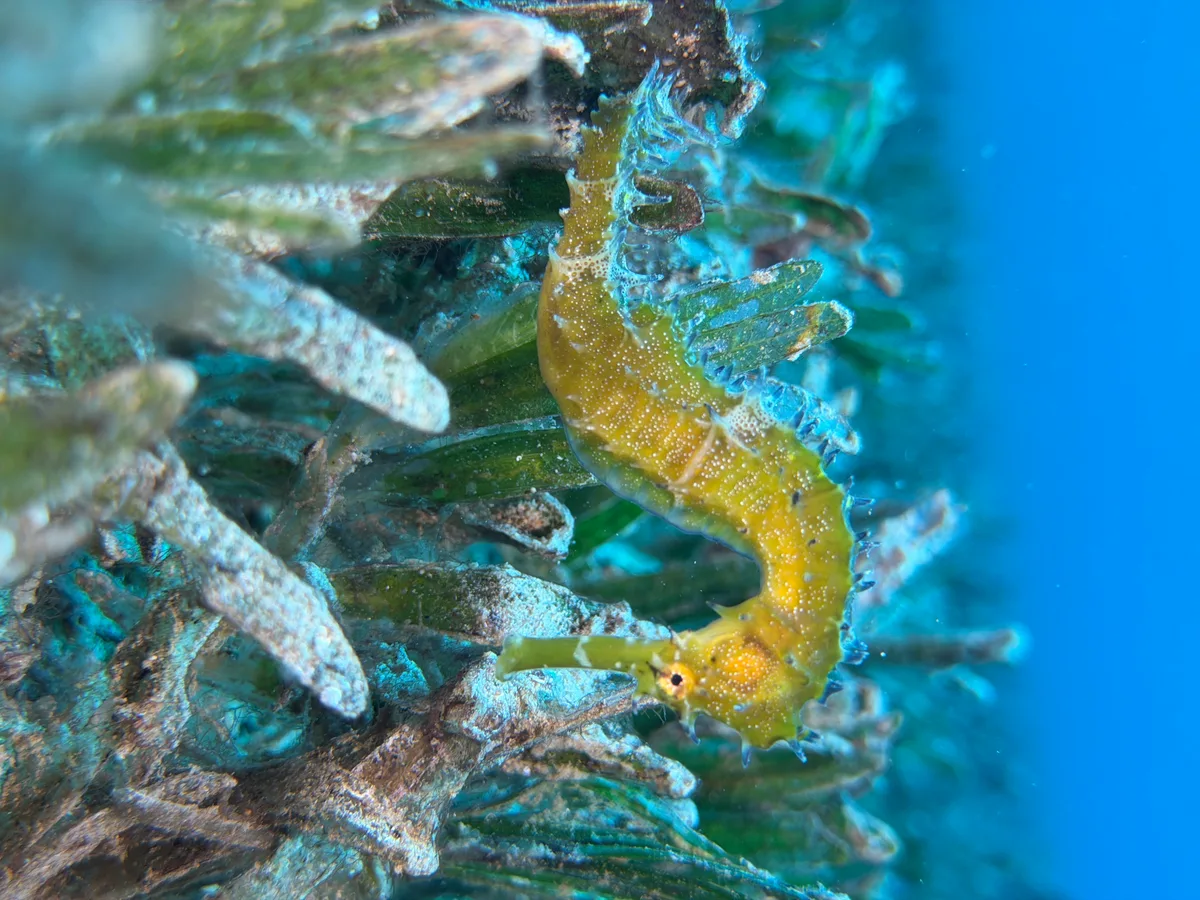
A spiny seahorse to 14 cm (5.5 in) with a long snout and a tall pointed coronet on the head, usually hitched to a blade of seagrass by its tail. It lives from this sea east into the Arabian Sea and along 🇵🇰 Pakistan, and no further.
Seahorses hunt with the fastest movement any fish makes relative to its size. The head is cocked back on a flexible neck and released, and the snout arrives at the prey in under a hundredth of a second - fast enough that the copepod being eaten, which can feel a wave of water coming and jump away in four milliseconds, never registers it. The trick is the shape of the head, which cuts through the water without pushing a wave ahead of it.
The reason it has to be that good is a missing organ. A seahorse has no stomach at all. Food goes through a short, simple gut so quickly that the animal has to eat almost continuously, dozens of hunting bouts a day and thousands of small crustaceans in the course of it. There are no teeth either: the snout works as a pipette and prey goes down whole, so anything that will not fit is not food.
Two more details make that hunting possible. The eyes move independently, so one can lock onto a copepod while the other watches for trouble, and the tail is square in cross section rather than round. Engineers who built both shapes and crushed them found the square one grips a stem better, tolerates being flattened and springs back to shape - a grip that holds all day in surge without tiring.
The pouch is the male's. He carries the eggs the female places in it, aerates and feeds the embryos, and delivers live young after two to four weeks. Seahorses are poor swimmers with tiny home ranges and few offspring, which makes them fragile, and this one is listed as Data Deficient - nobody has counted it. A photograph with a date and a location on it is worth more here than it looks.
The species. Hippocampus jayakari Boulenger 1900 - Honours Atmaram Sadashiva Grandin Jayakar. ETYFish
- tall bony coronet on the head with sharp points, unlike the rounded one of its neighbor
- long snout, about half the head length
- spines along the back and cheeks, more pronounced than in other local seahorses
- length up to 14 cm
Why it's threatened
Threat classification from the IUCN Red List.