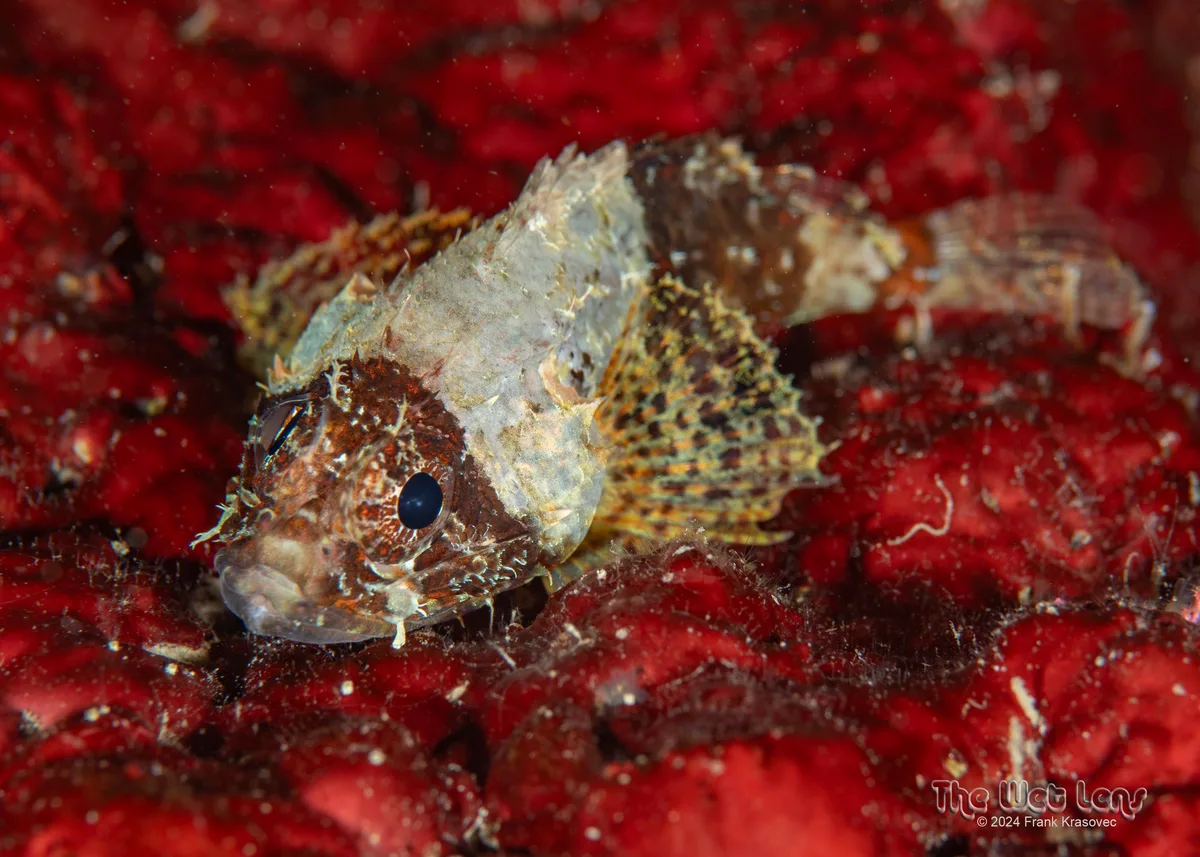
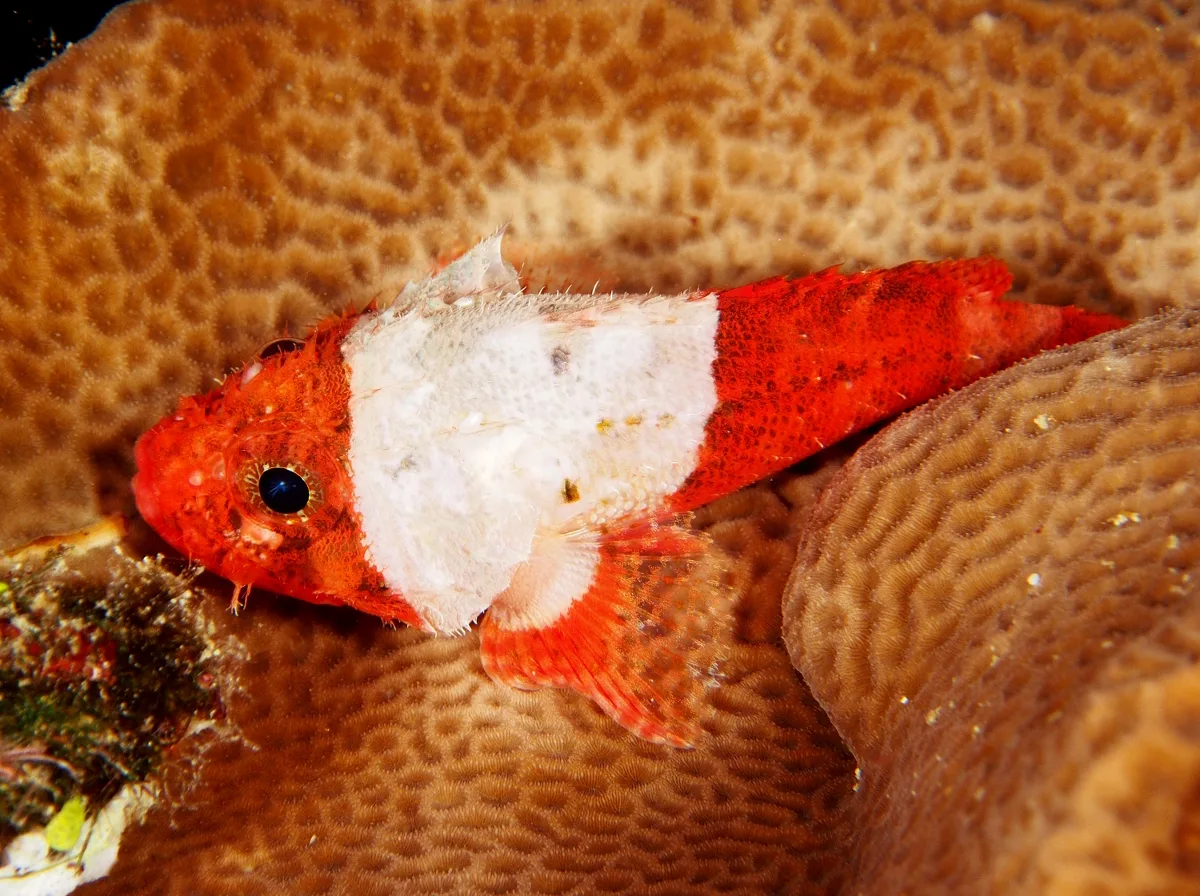
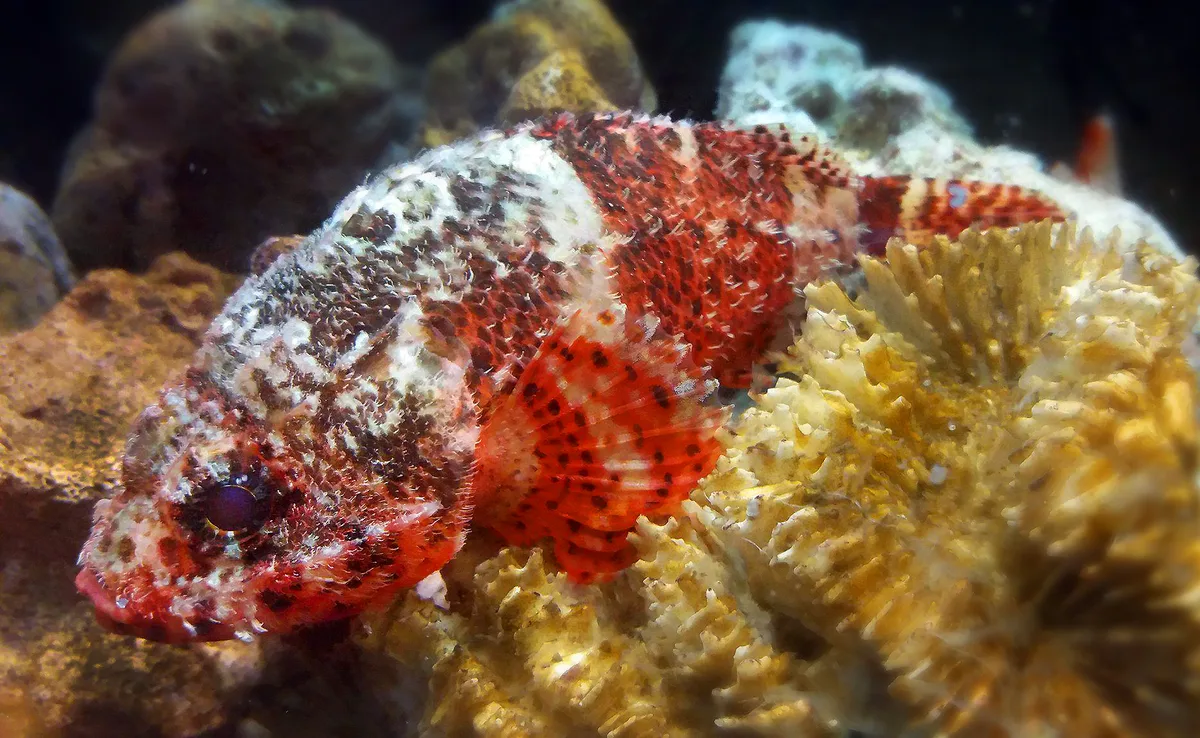
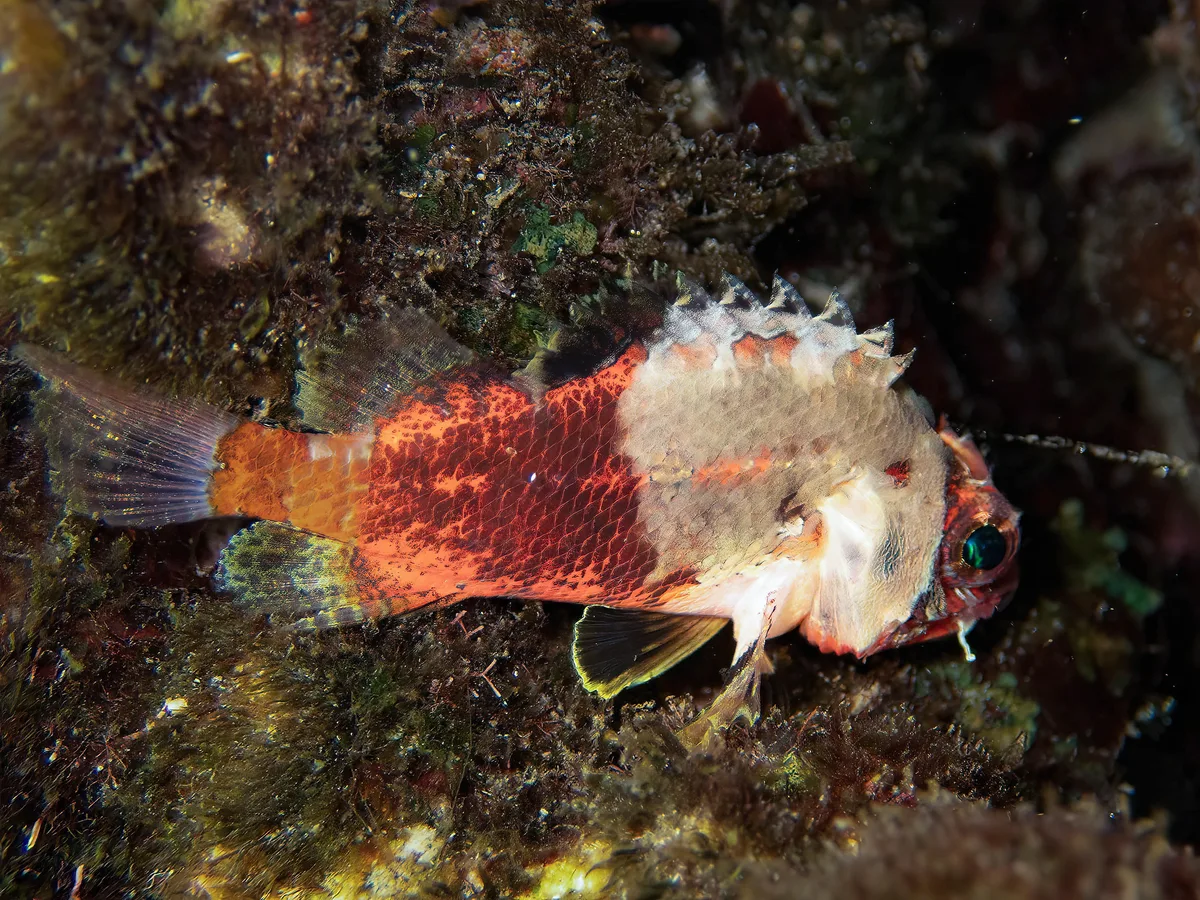
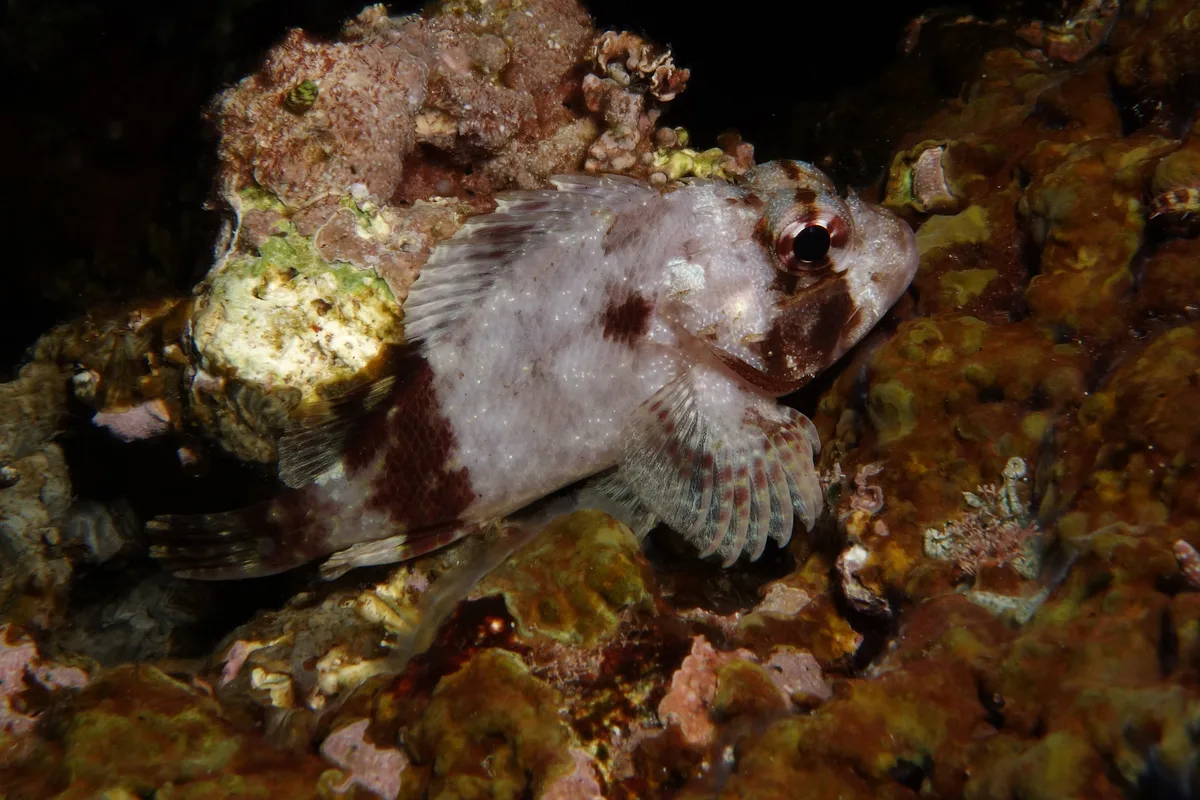
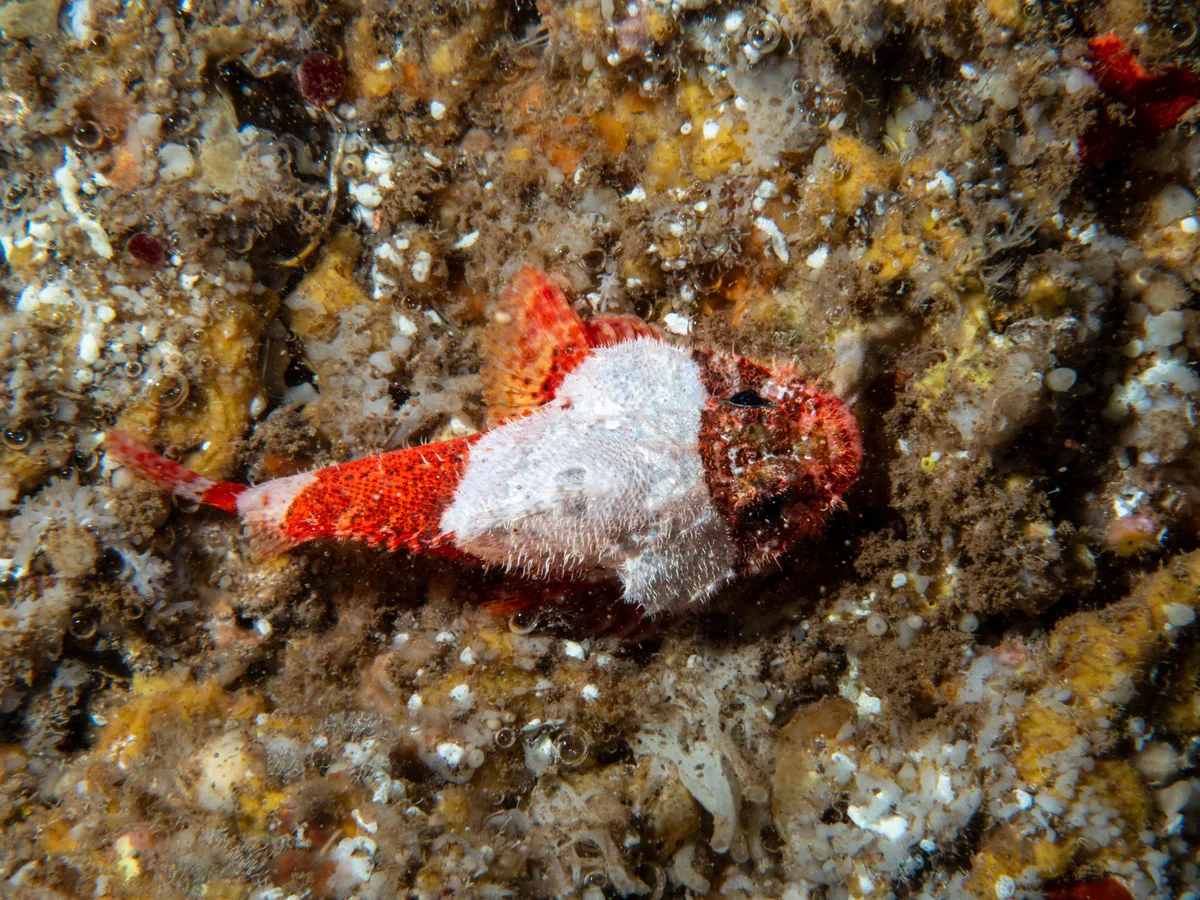
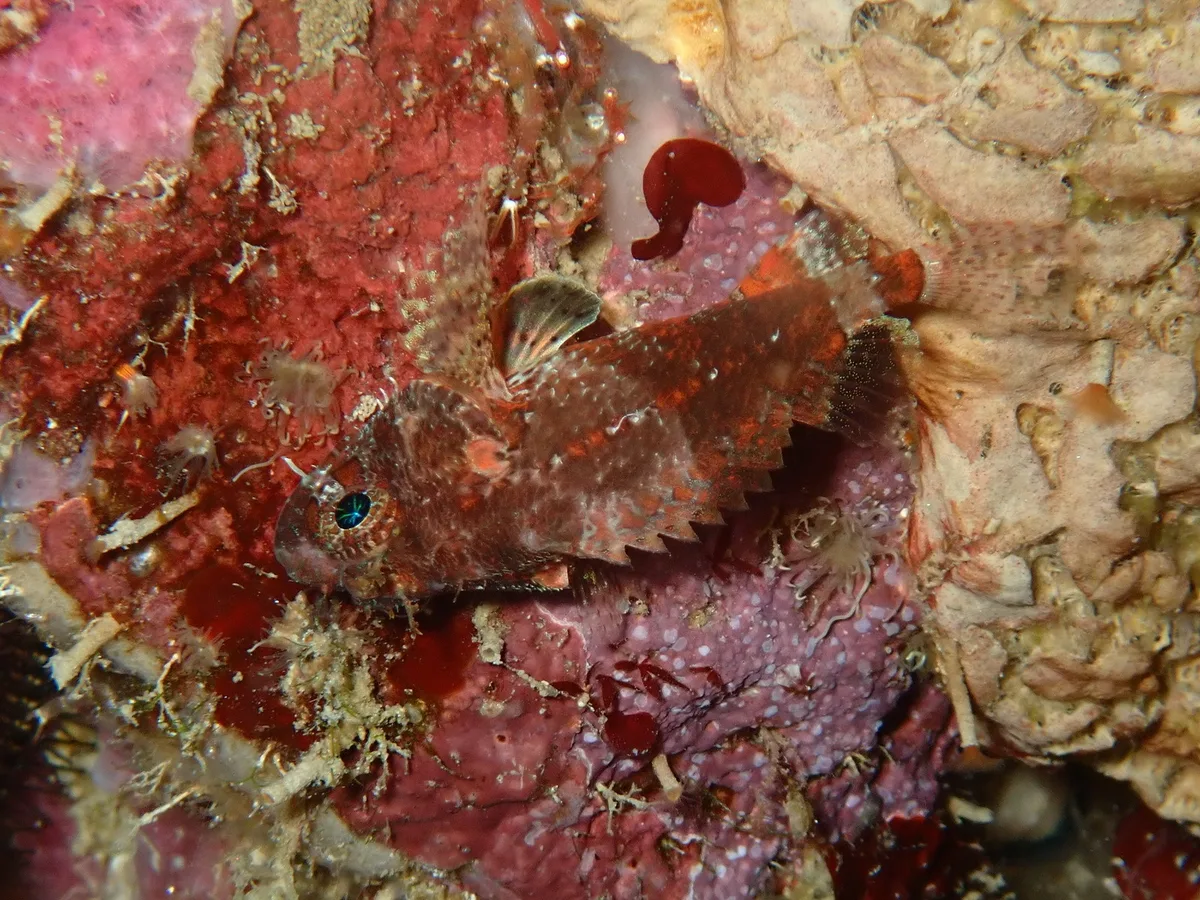
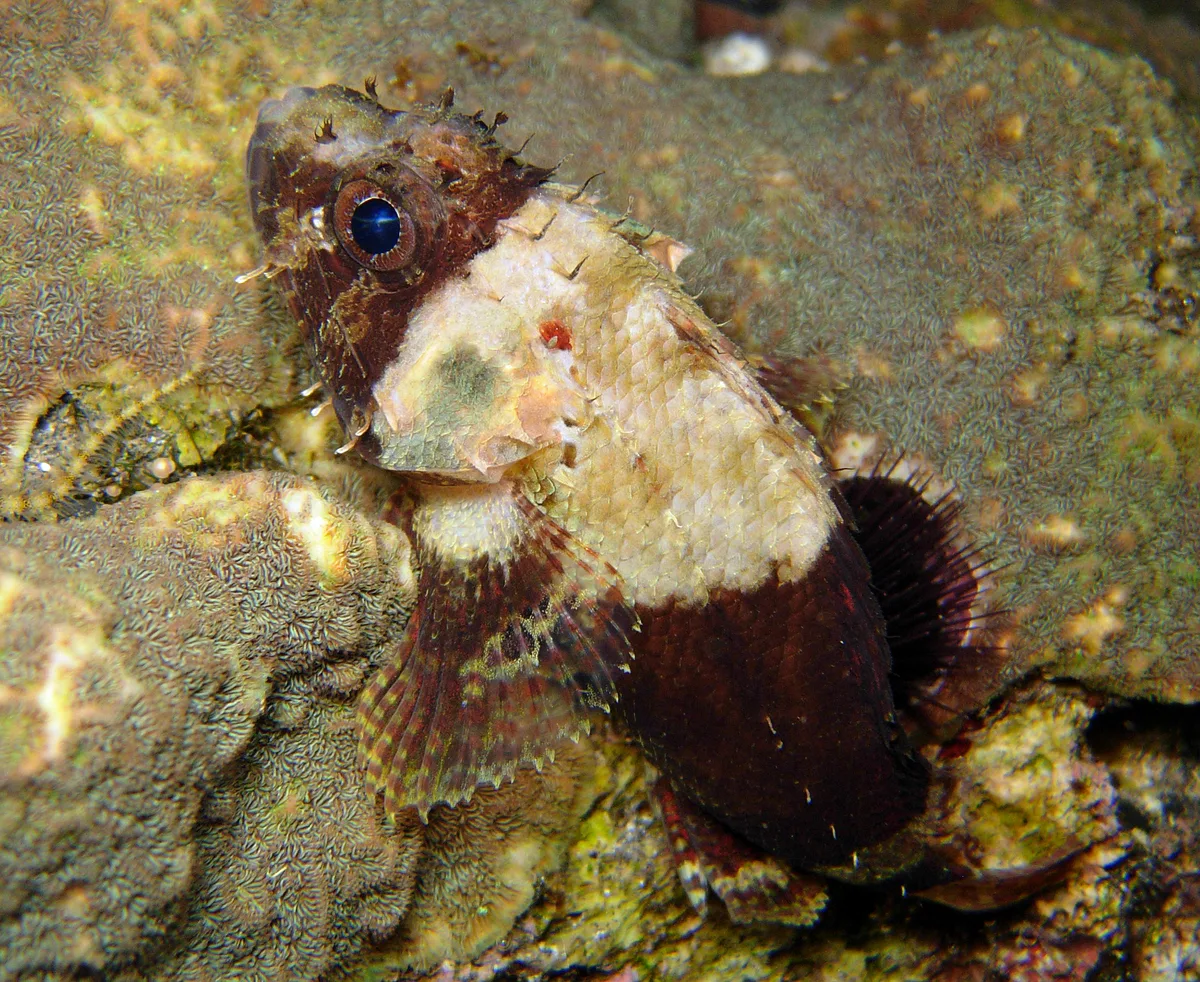
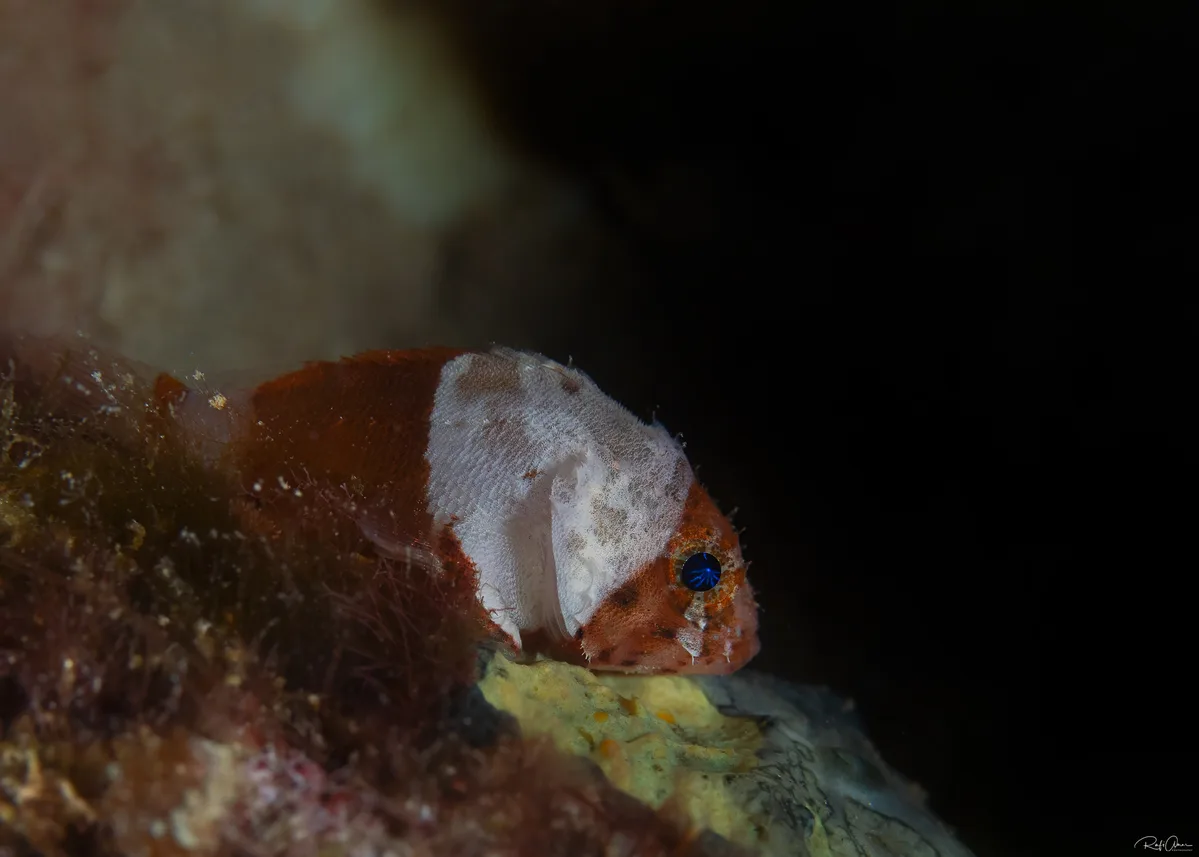
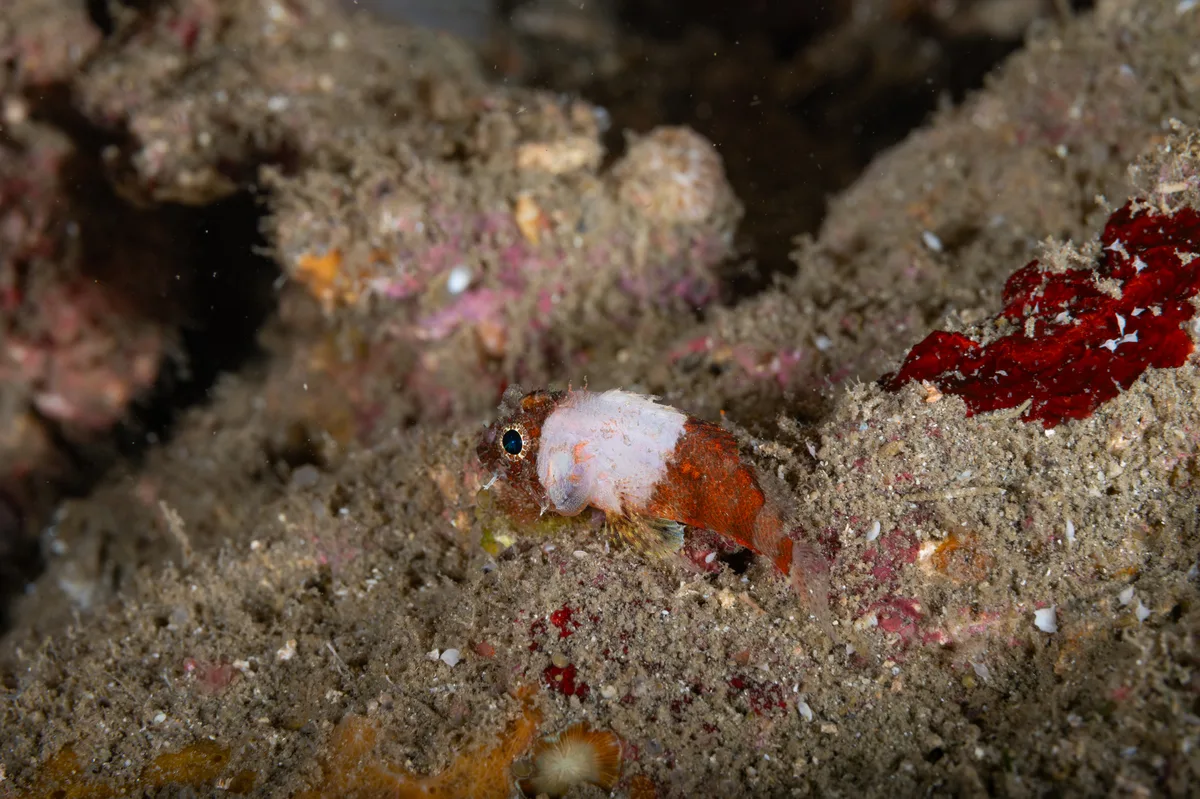
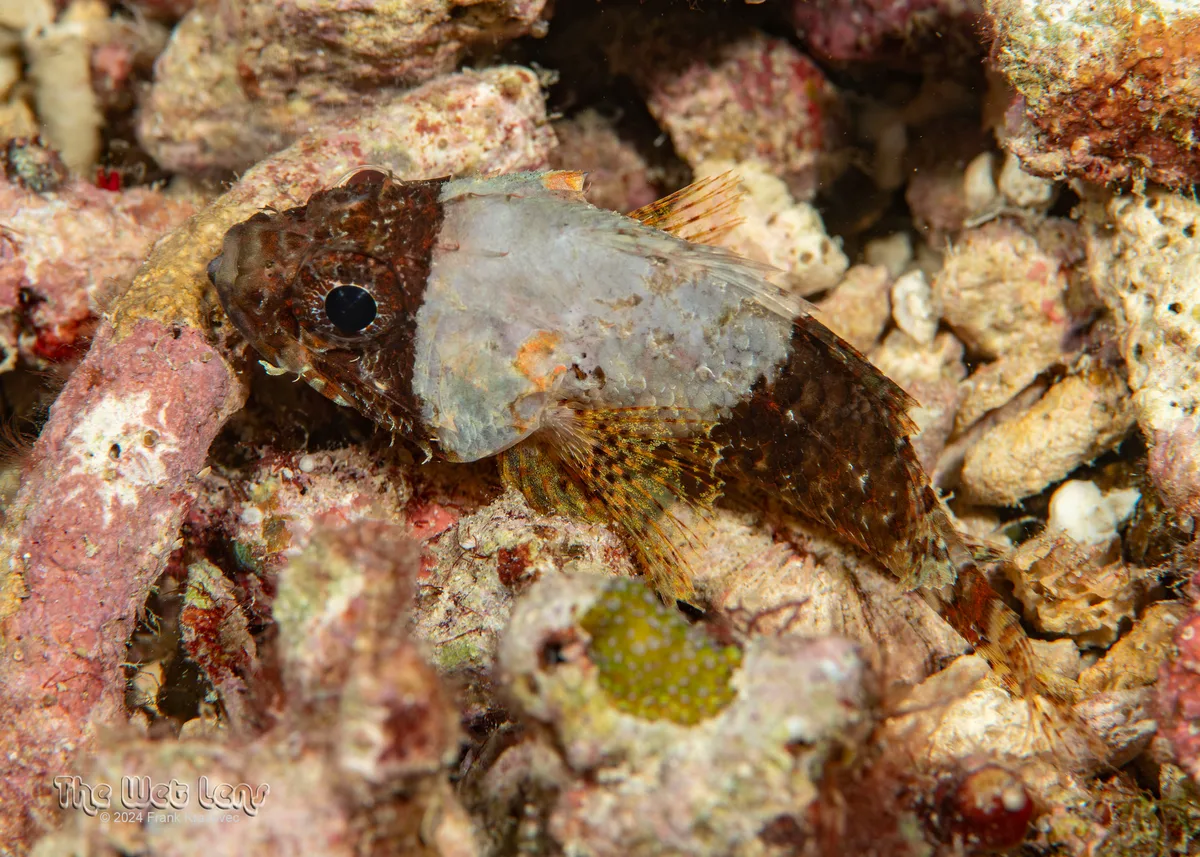
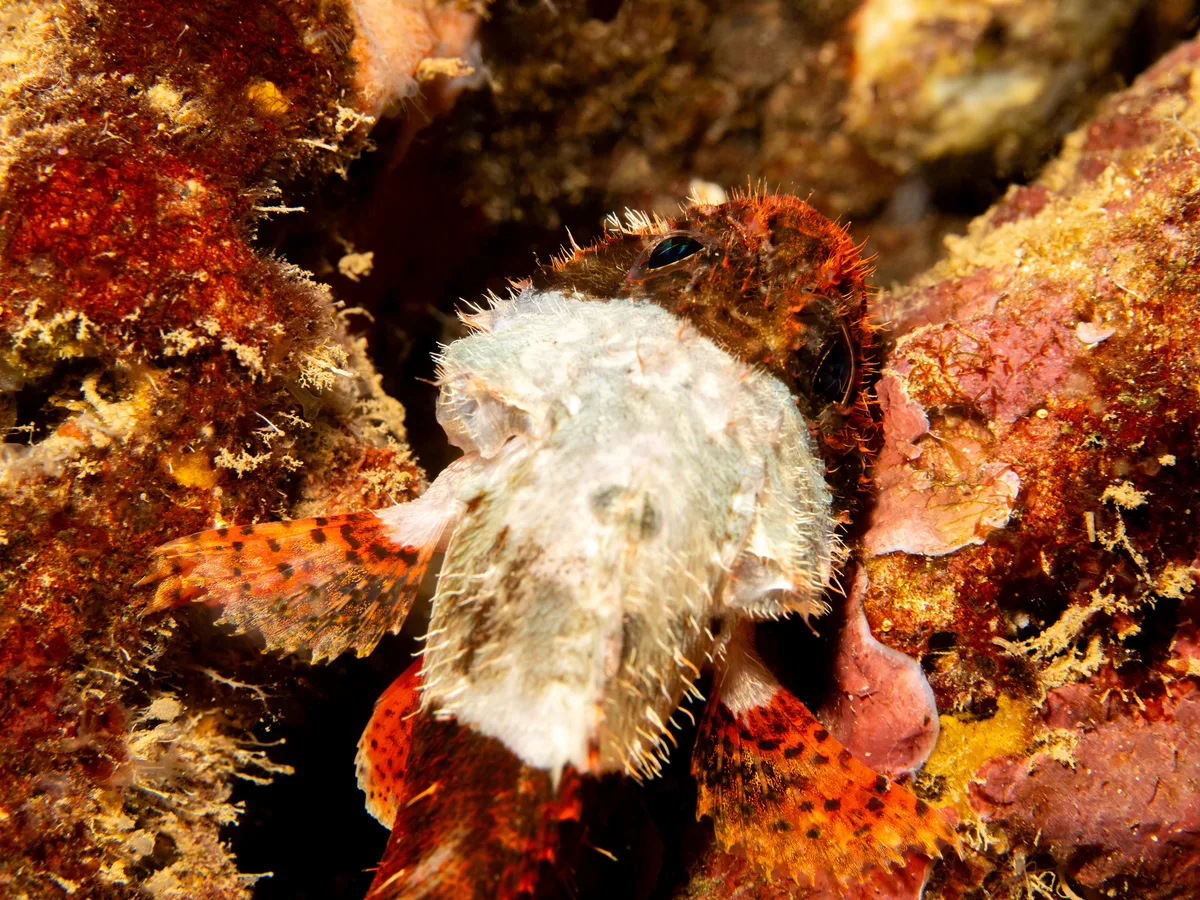
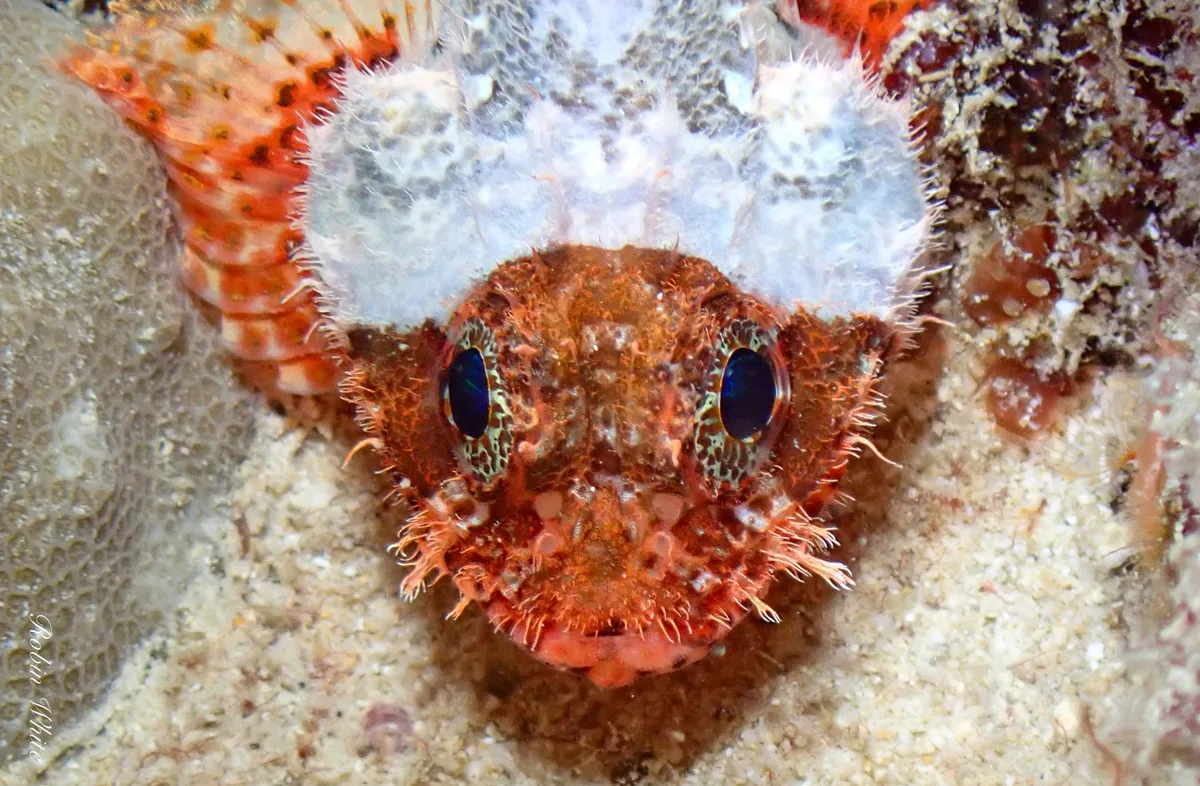
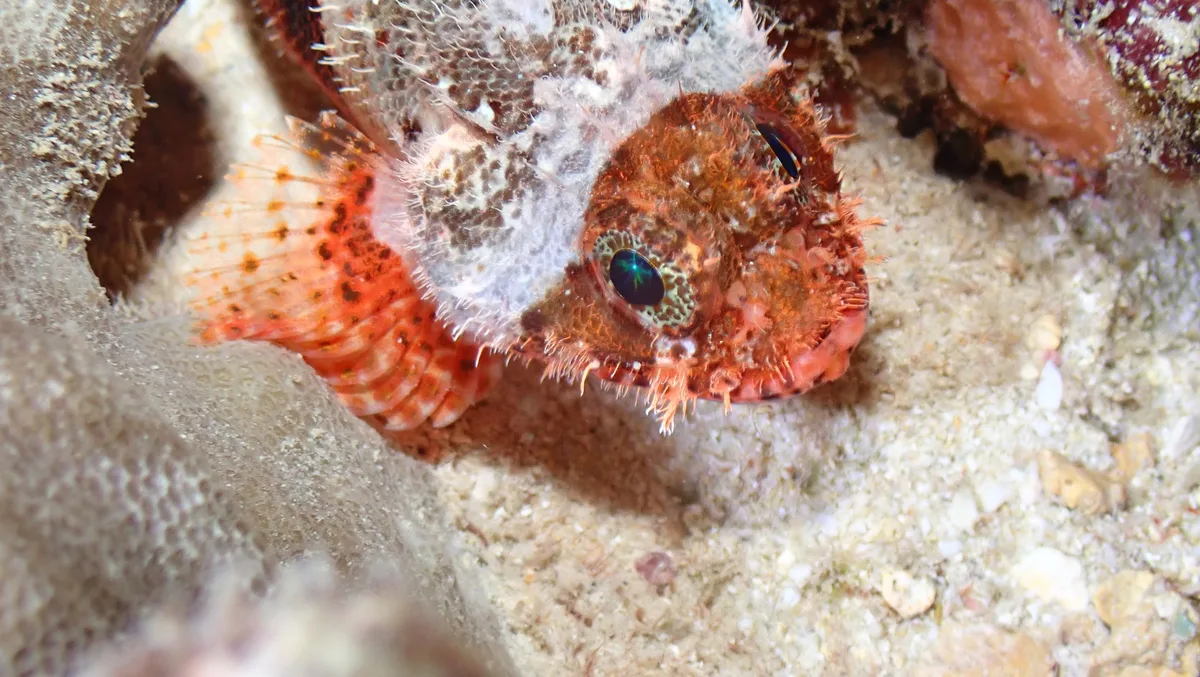
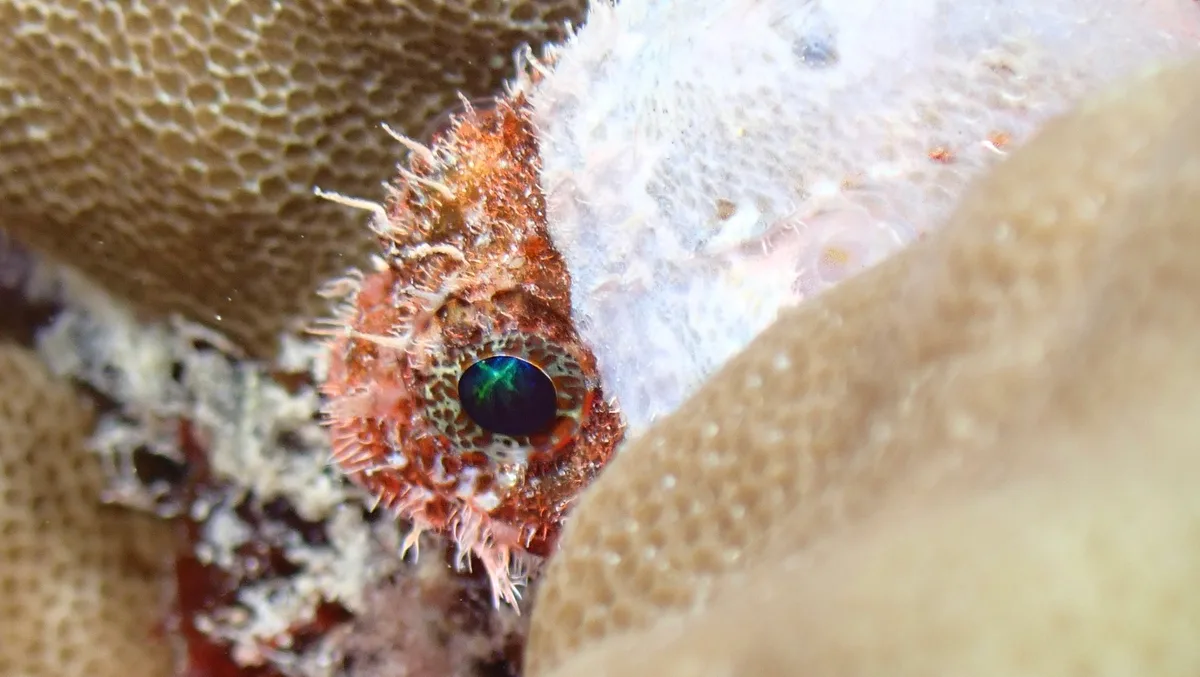
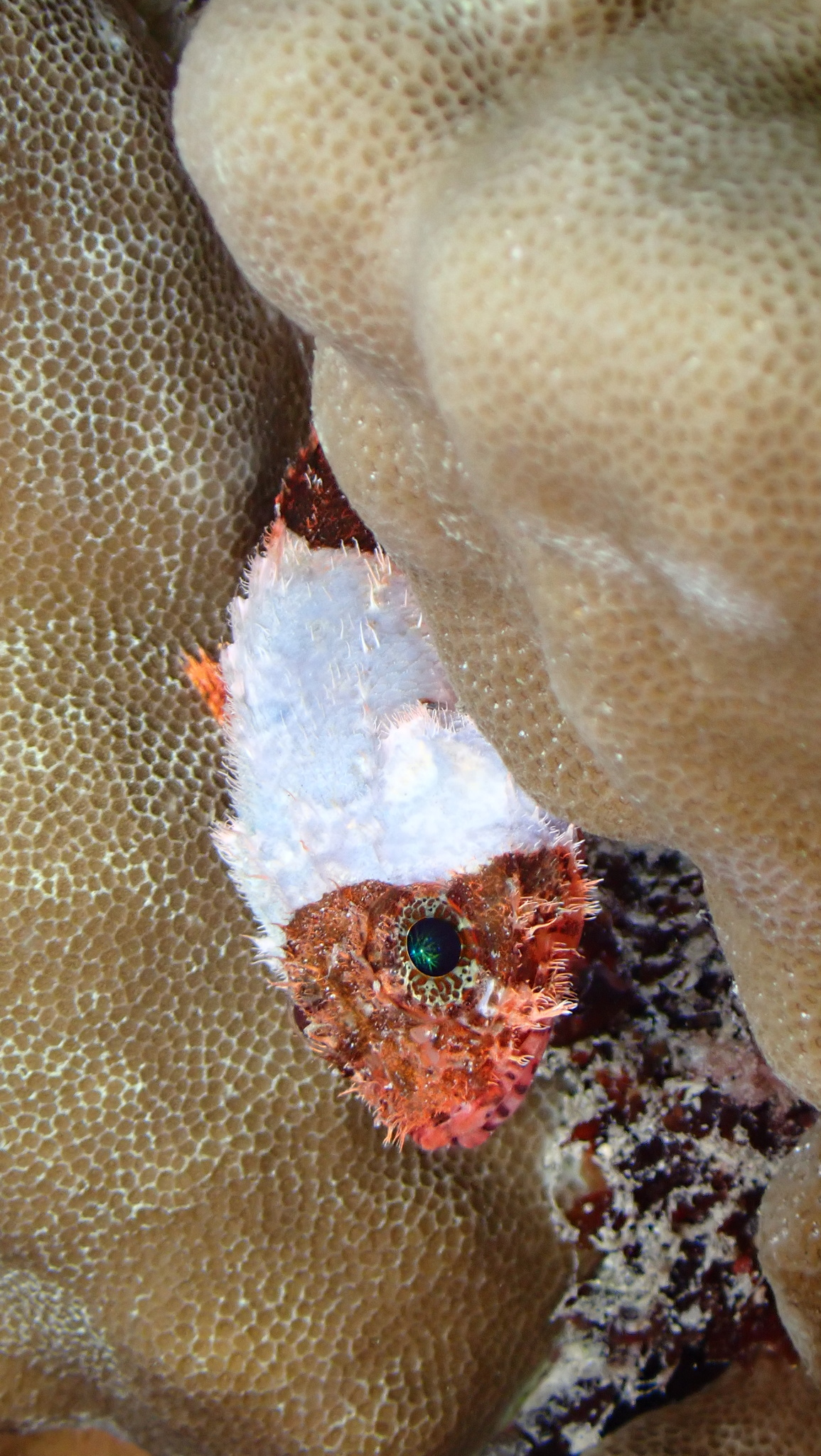
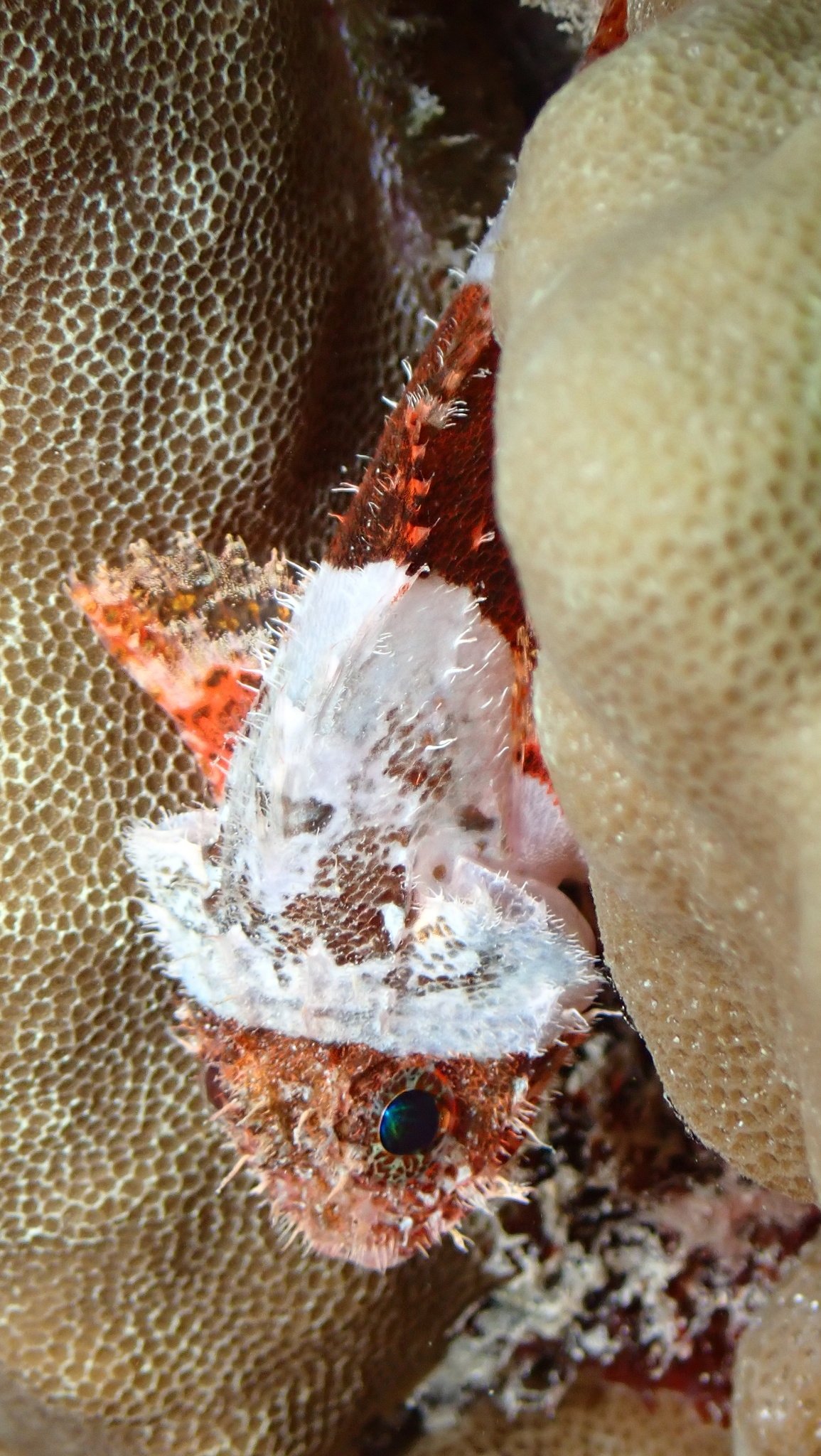
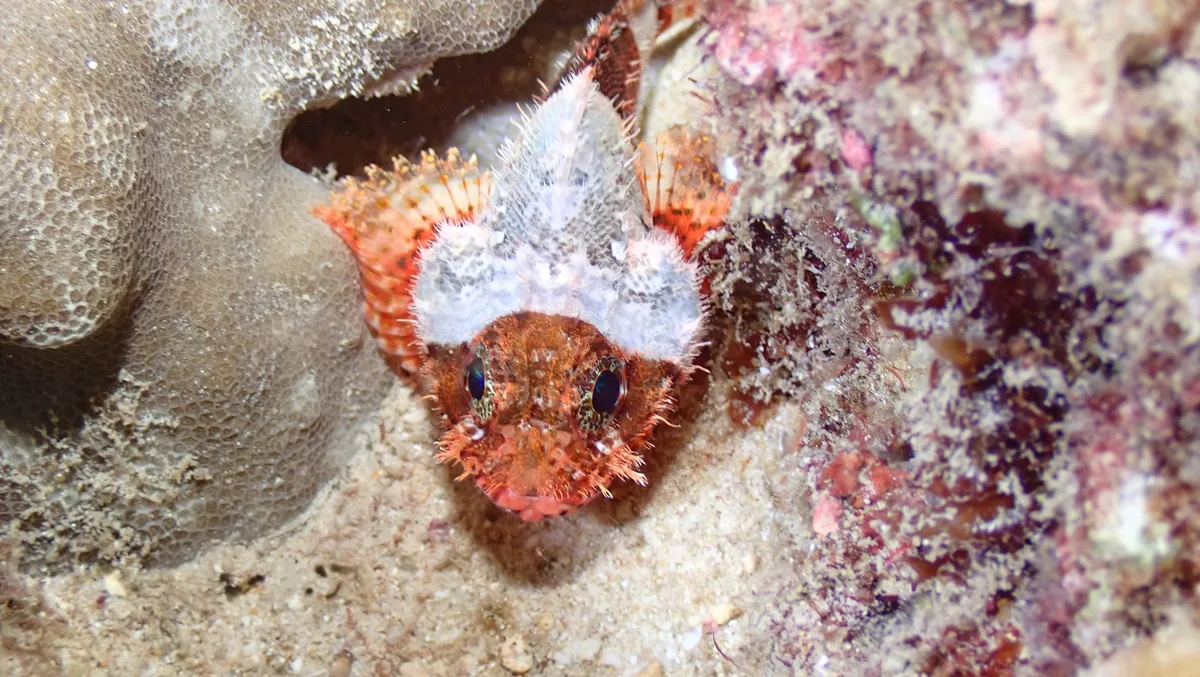
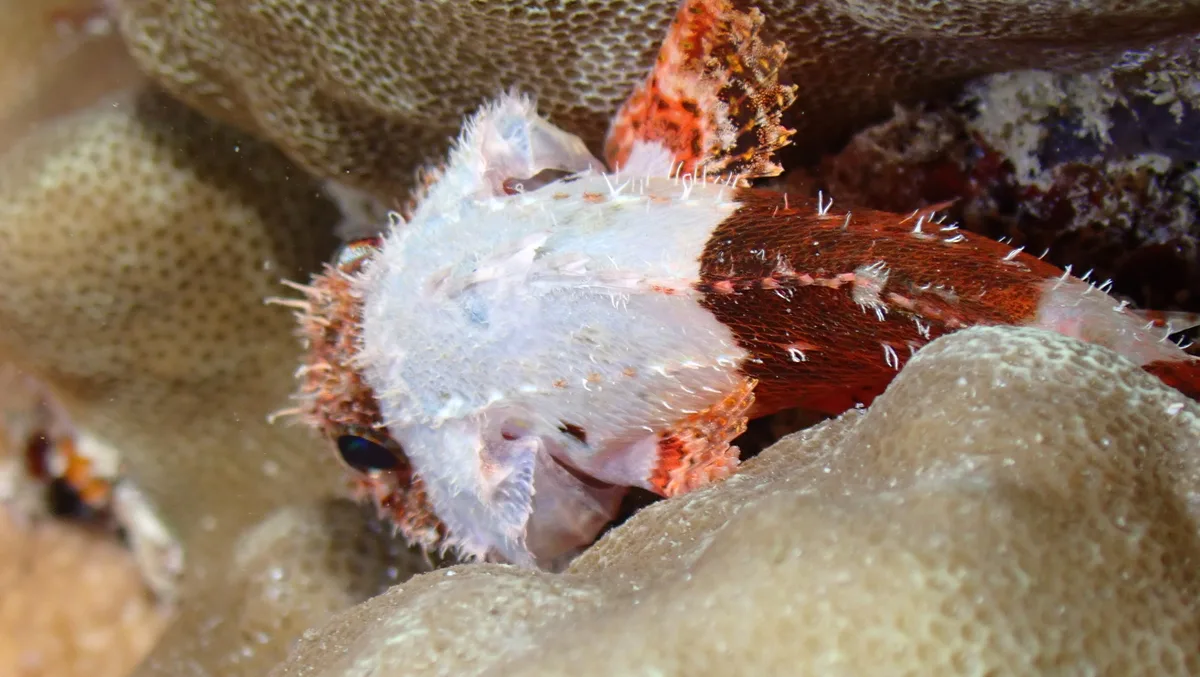
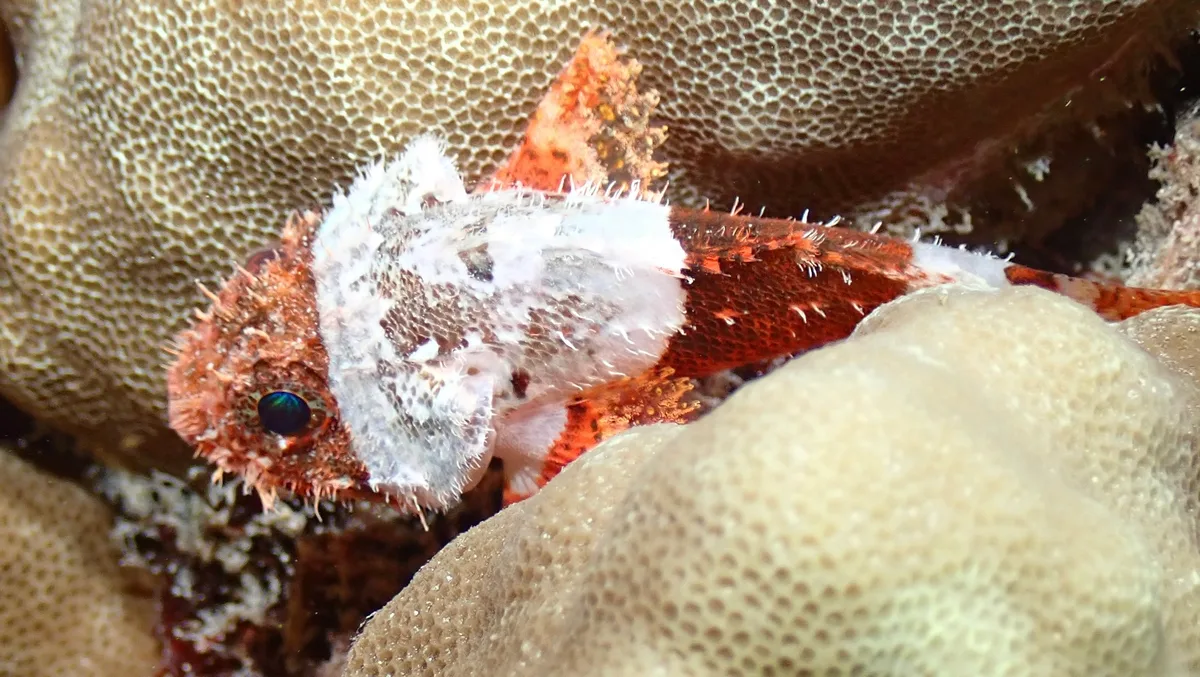
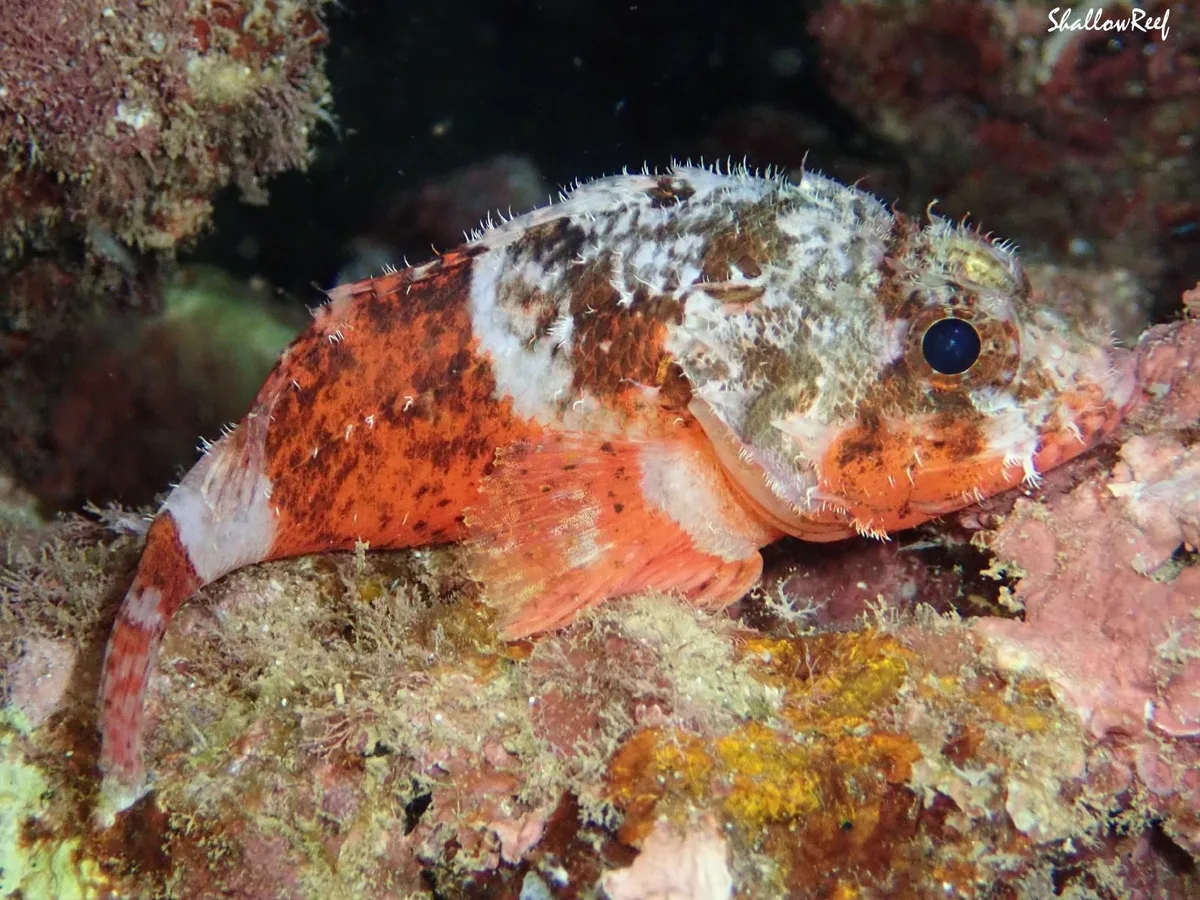
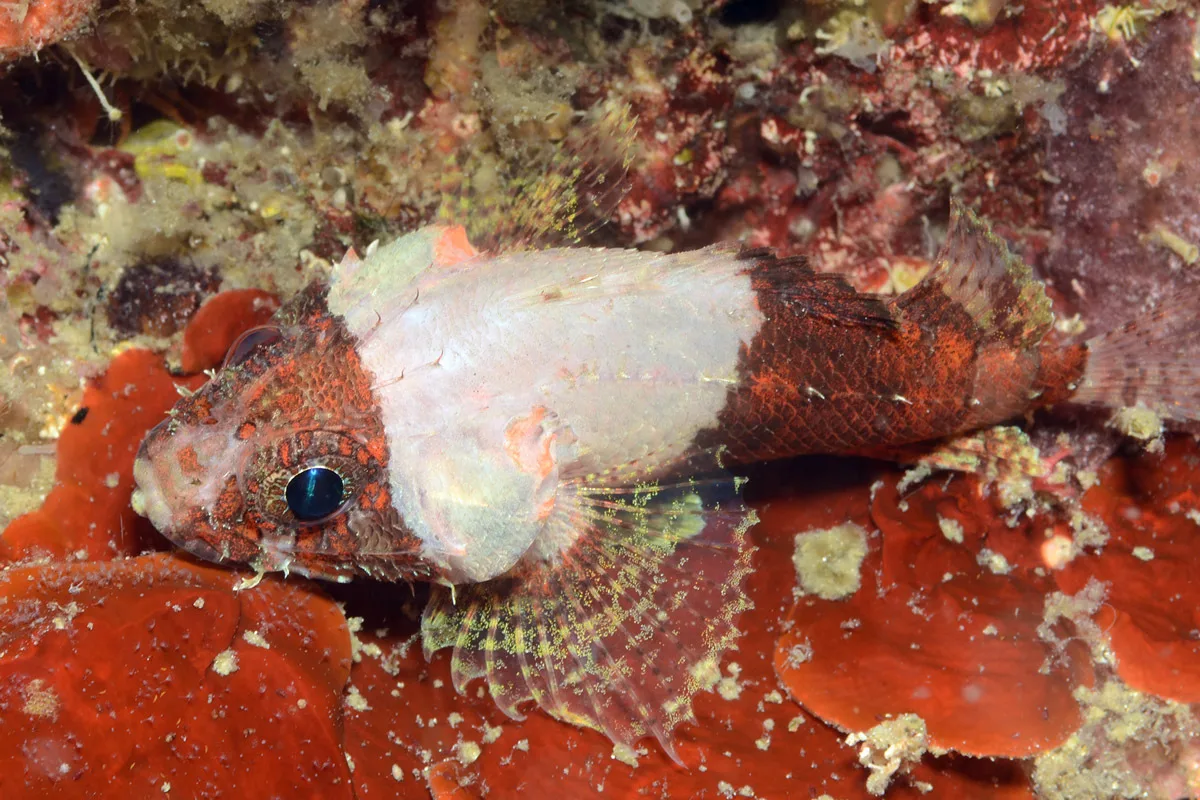
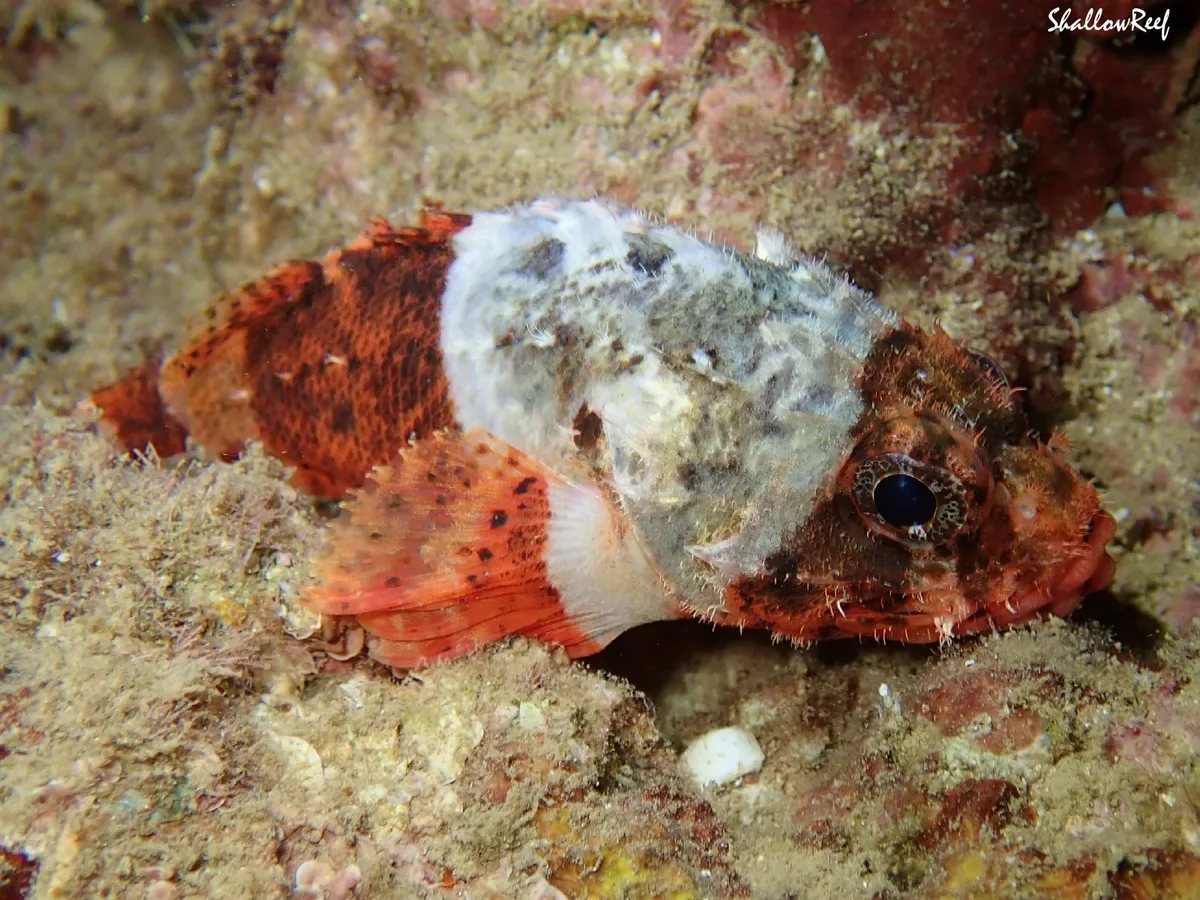
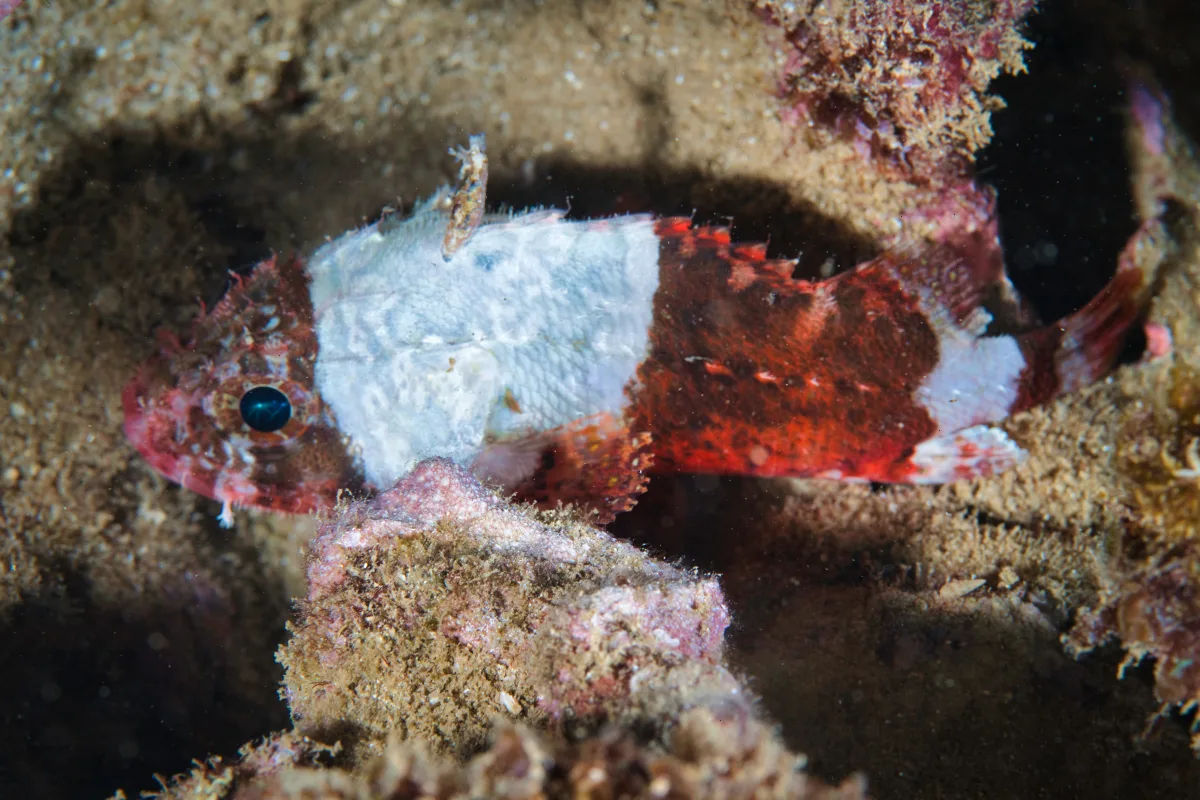
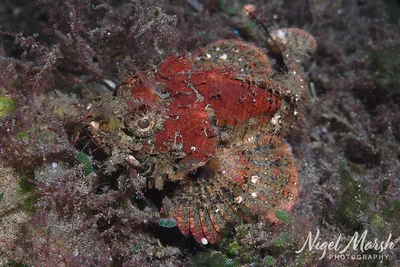
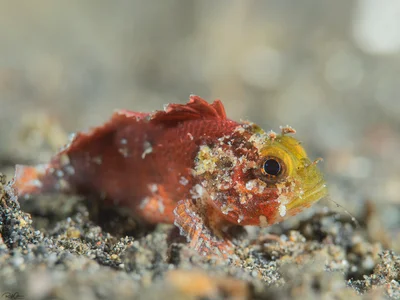
A small mottled scorpionfish that lives inside the reef, and a reminder that most of the fish on a coral reef are ones nobody sees.
Surveys that take a section of reef apart consistently find that cryptic fishes - blennies, gobies, small scorpionfishes, cardinalfishes hiding in the structure - account for a large share of the individuals present and a serious share of the food supply. They are eaten constantly by everything larger, and they are replaced constantly. The visible reef is a thin layer over that.
This species is one of them: fourteen centimeters (5.5 in), wedged into a crevice by day, out on the rubble at night for small crustaceans, and gone before a torch beam settles.
Venomous dorsal spines. It is small enough to be a minor sting rather than a serious one, and the treatment is the same - hot water at about 45 C (113 F), then a doctor.
The genus.Scorpaenodes Bleeker1857 - -oides (having the form of Scorpaena). ETYFish
small mottled scorpionfish with a low, evenly spined dorsal fin
dark spot on the rear of the gill cover
usually deep in a crevice with only the head visible
length up to 14 cm
Why it's threatened
Climate change & severe weather
Habitat shifting & alteration
There have been no confirmed population declines. However, because of its affinity with coral reefs, we suspect it may be experiencing population declines due to habitat loss in parts of its range. Significant global-level population declines are not suspected at this time.
As of 2008, 15% of the world's coral reefs were considered under imminent threat of being "Effectively Lost" (with 90% of the corals lost and unlikely to recover soon), with regions in East Africa, South and South-east Asia, and the wider Caribbean being the most highly threatened (Wilkinson et al. 2008). Of 704 zooxanthellate reef-building coral species which were assessed by using the International Union for Conservation of Nature Red List Criteria, 32.8% are in categories with elevated risk of extinction (Carpenter et al. 2008).
Threat classification from the IUCN Red List.
Comments
Please, sign in to leave a comment
Continue with a social account - yours will be created automatically.