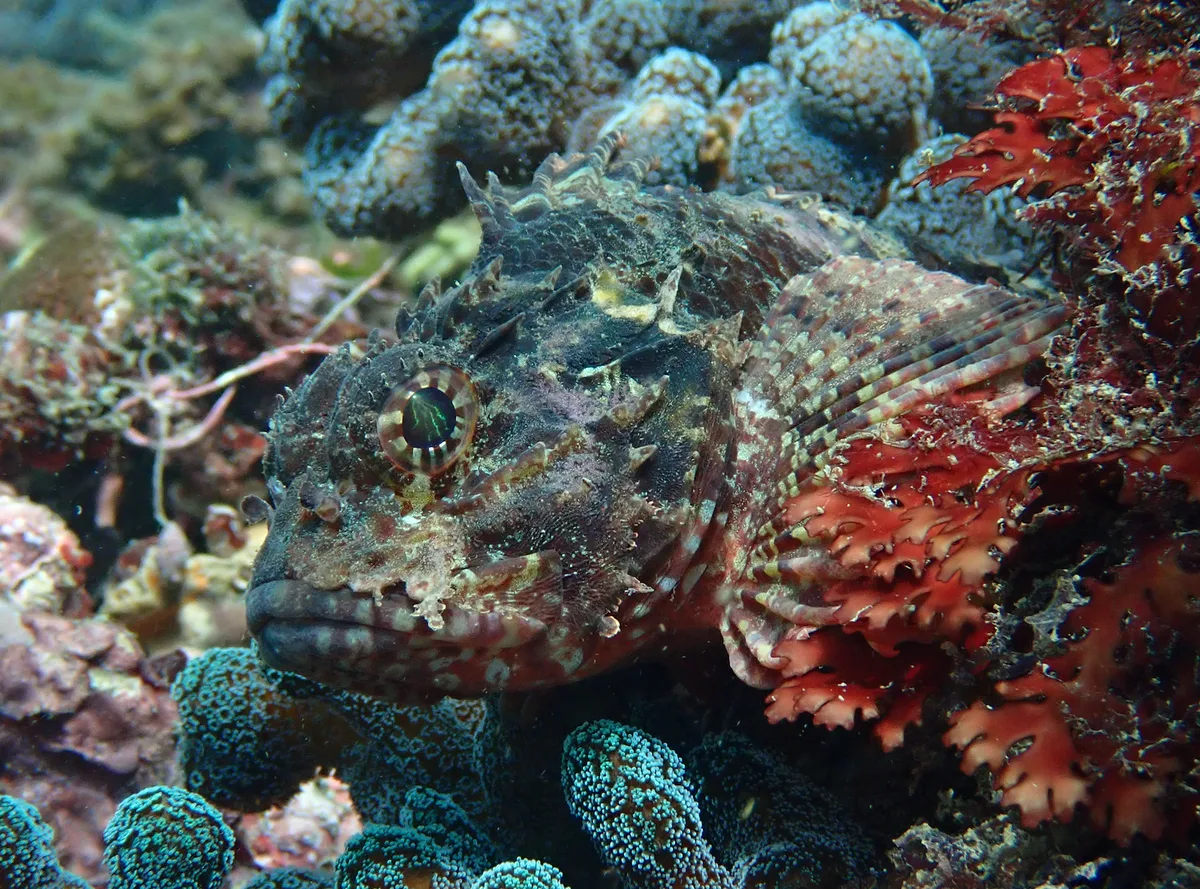
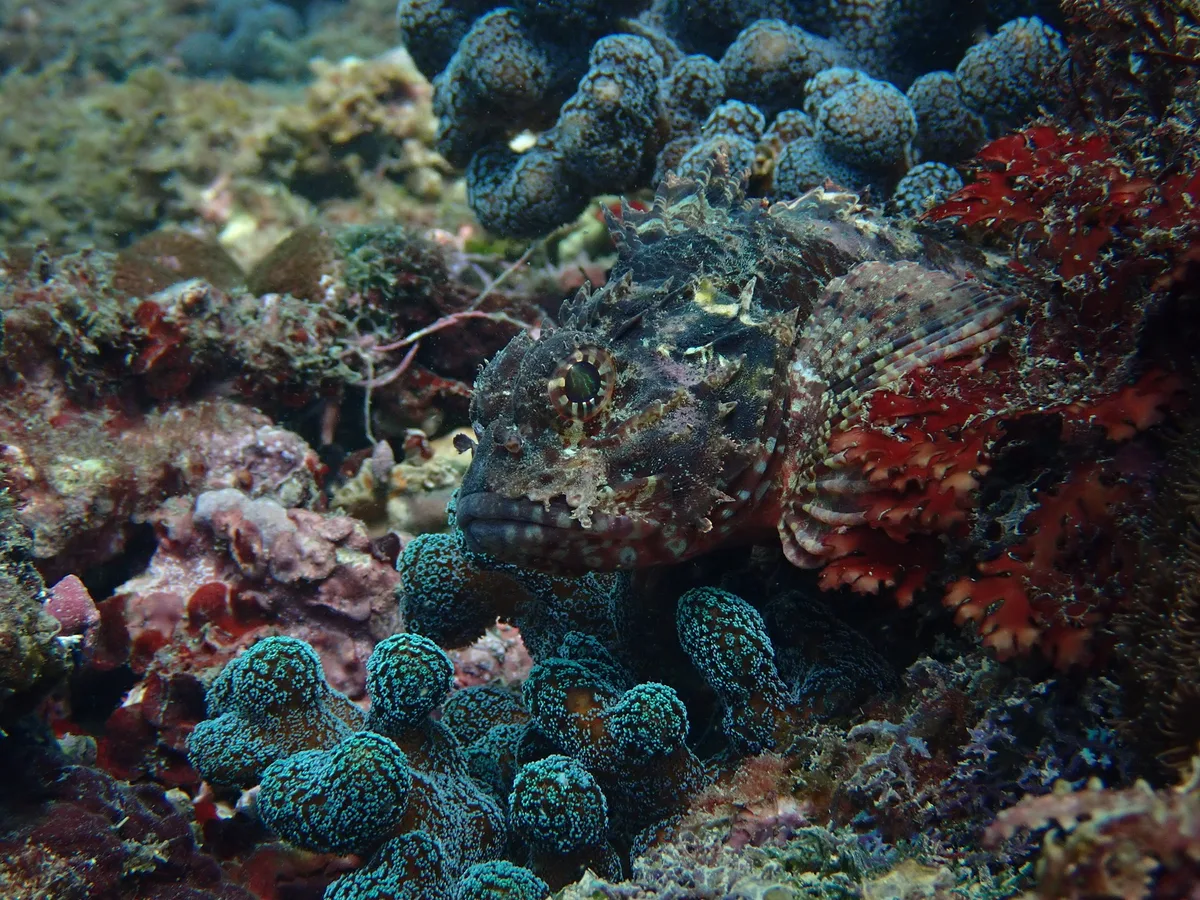
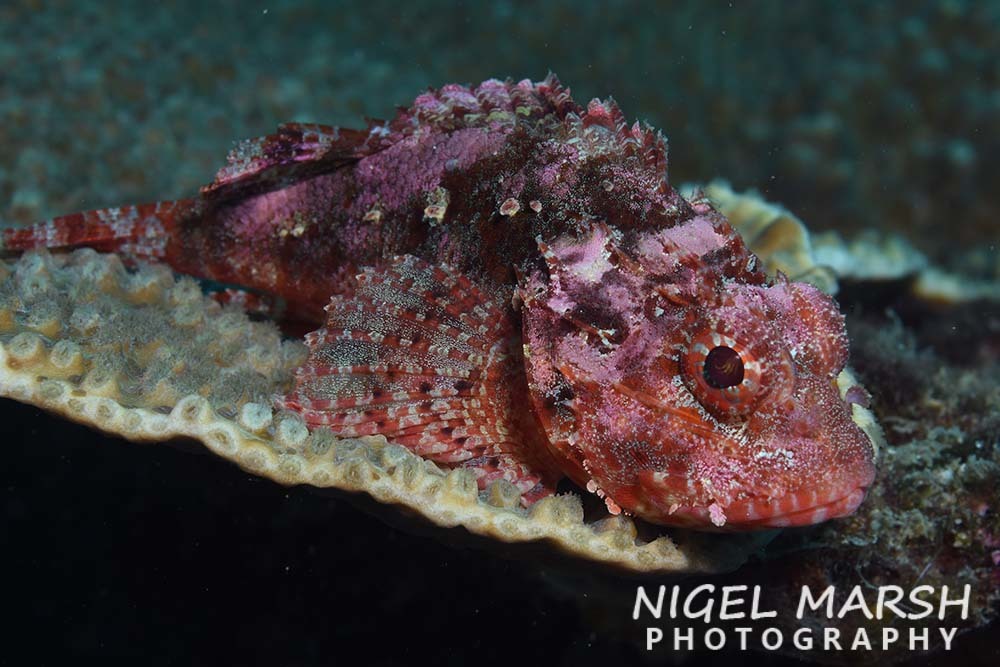
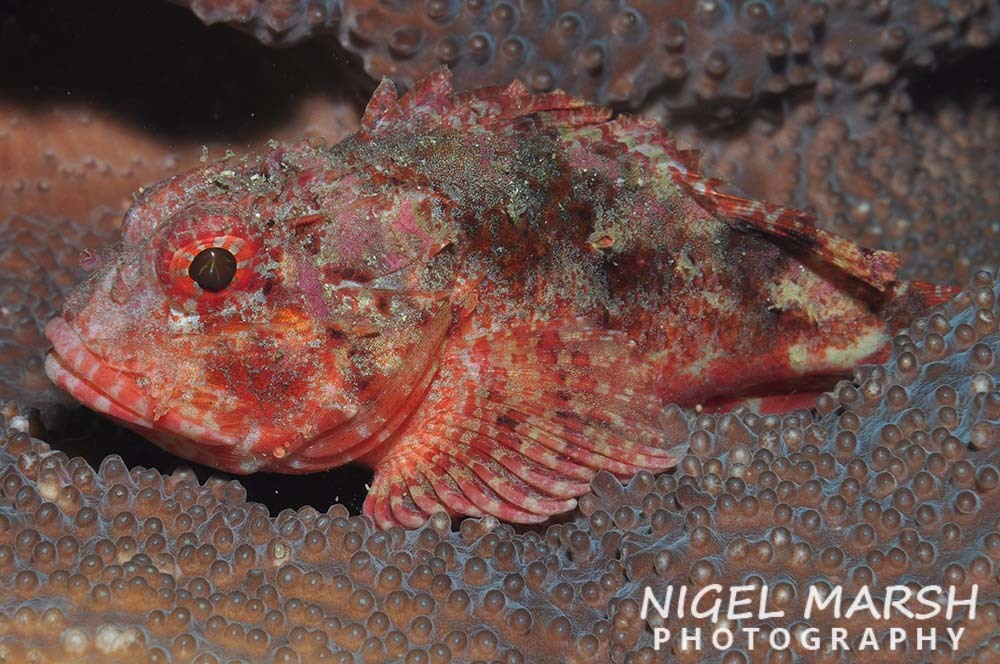
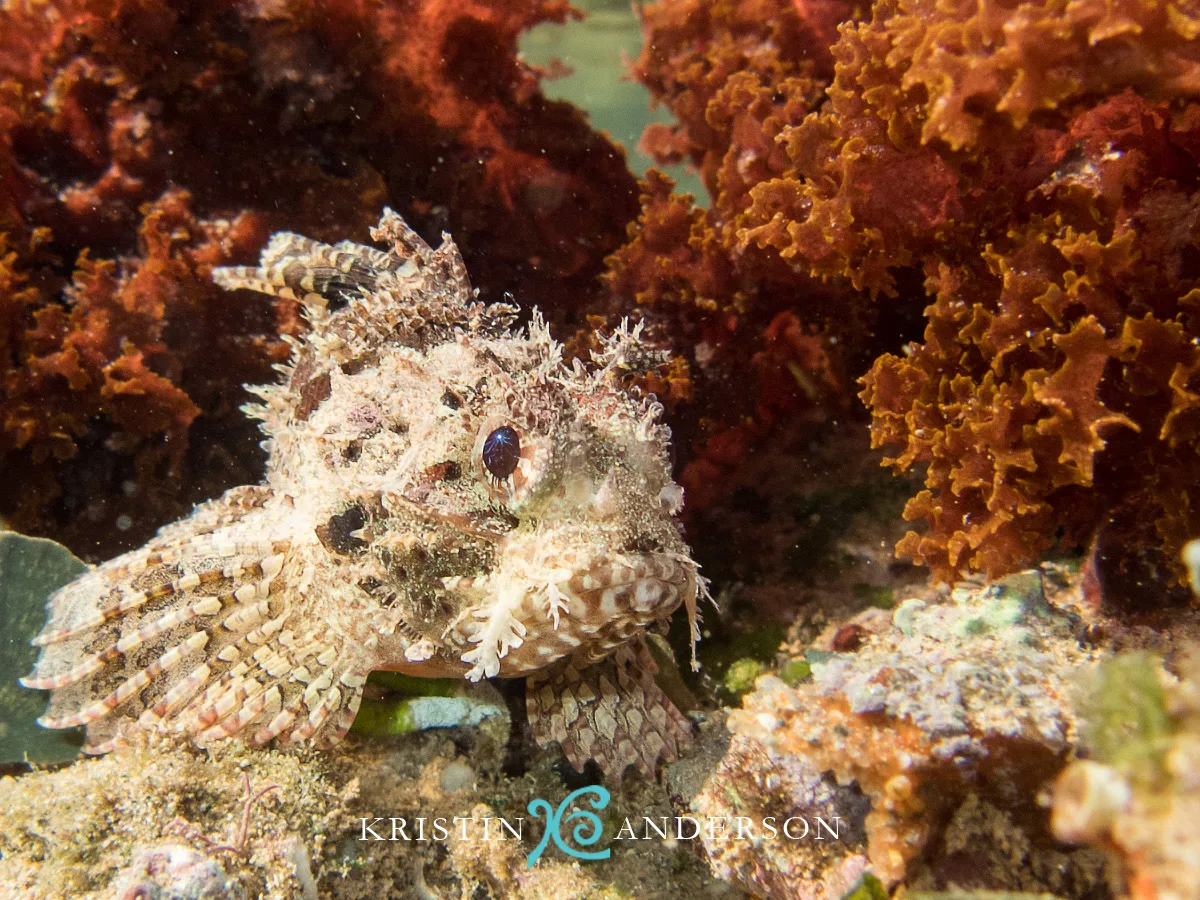
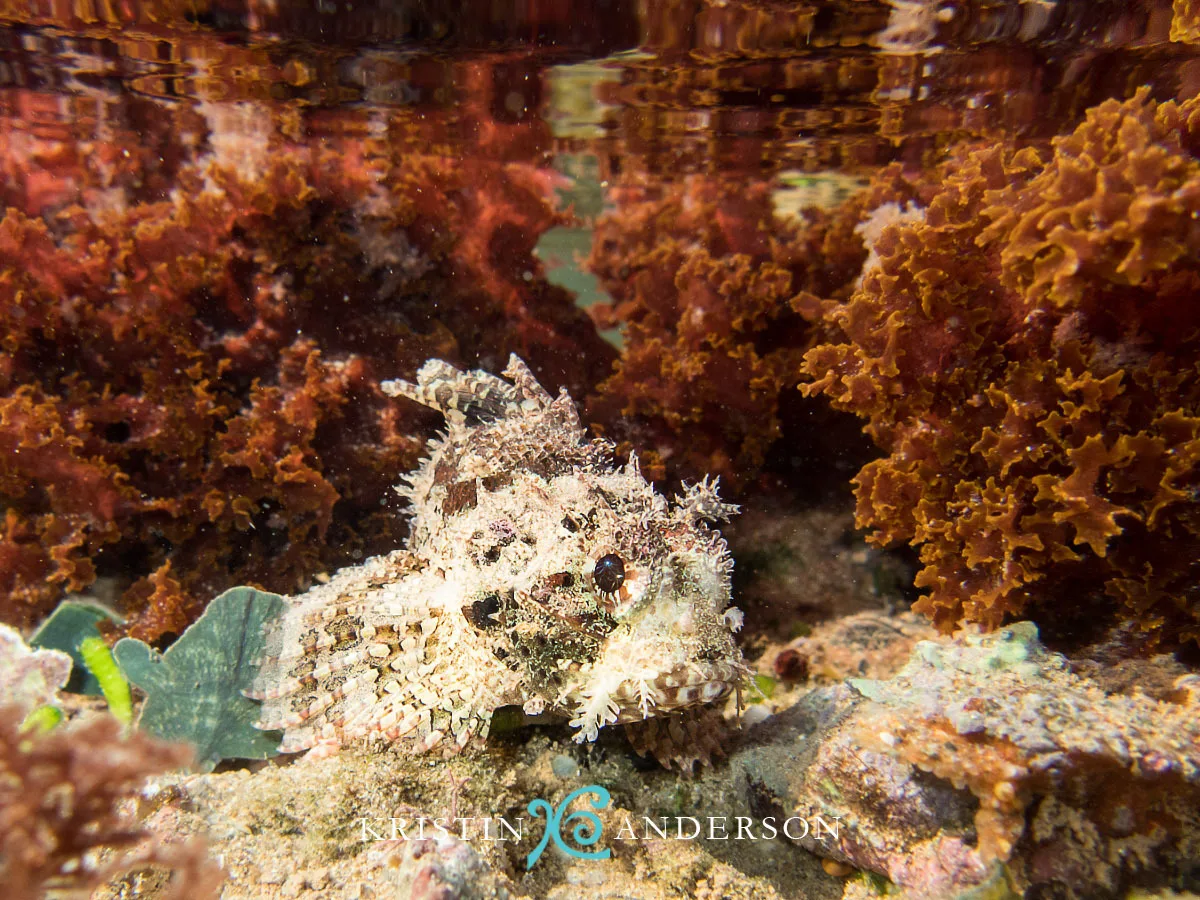
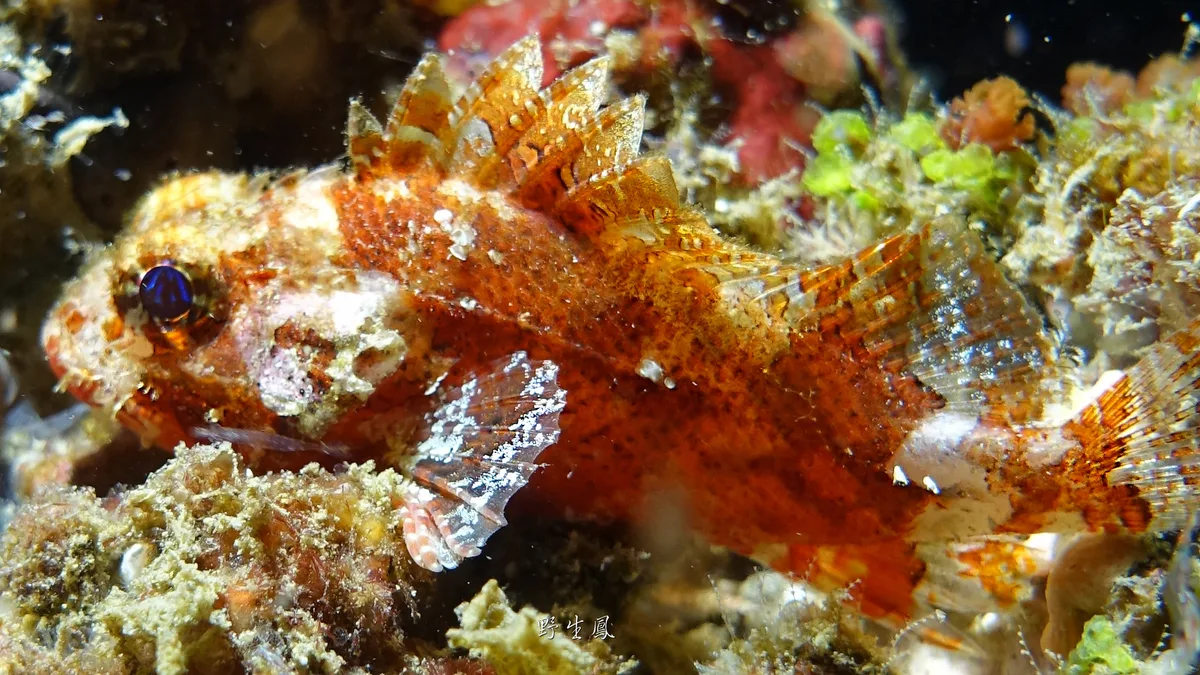
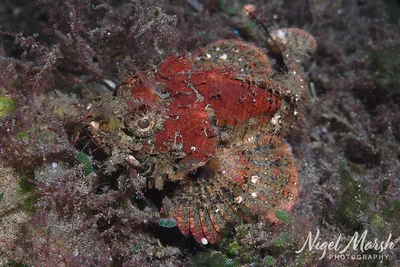
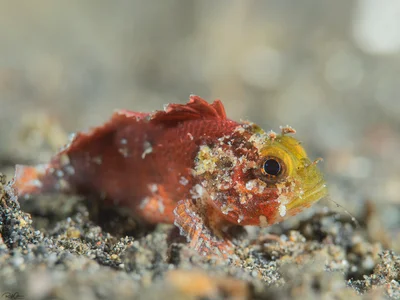
A small golden-brown scorpionfish pressed against rock in the shallows, usually in the surge zone where nobody looks for anything. Fifteen centimeters (6 in), and one of the most overlooked fish in this catalogue.
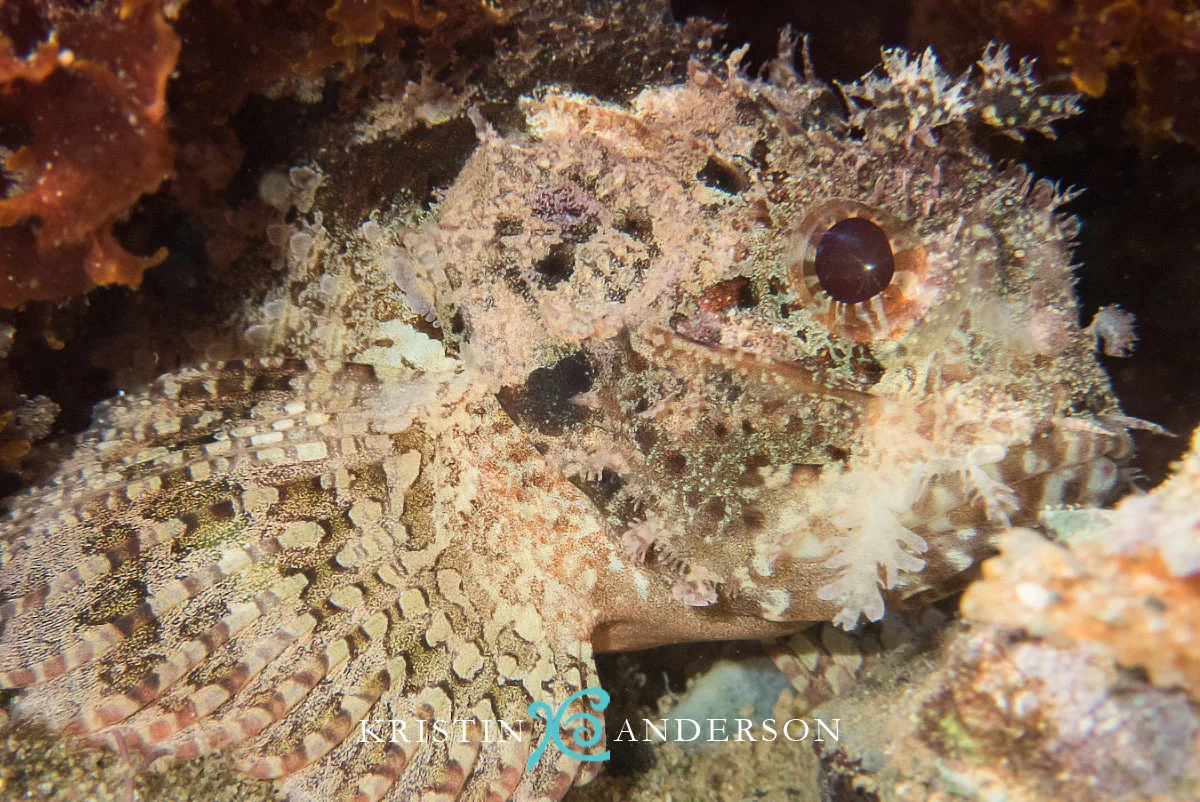
Its camouflage is textural rather than colored. Fringed flaps of skin along the jaw and over the eyes break the outline where a straight edge would give it away, and the wide pectoral fins are held flat against the rock so no shadow forms underneath. In surge it rocks with the water like a piece of weed.
It hunts by sitting still and swallowing whatever comes within a body length - small fish, shrimps, anything that fits. The strike is one of the fastest movements in any fish, and the fish moves nothing else while doing it.
The dorsal spines are venomous like the rest of the family's. It is small enough that a sting is unlikely to be serious, and it is still hot water at about 45 C (113 F) and a doctor if it happens.
The genus.Parascorpaena Bleeker 1876 - para- (near). ETYFish
The species.Parascorpaena aurita (Rüppell 1838) - eared. ETYFish
How to recognise it
small scorpionfish, golden to red-brown with fine dark mottling
large fan-shaped pectoral fins spread flat against the bottom
fringed skin flaps along the jaw
length up to 15 cm
Why it's threatened
Climate change & severe weather
Habitat shifting & alteration
Due to its affinity with coral reefs, we suspect that this species may be experiencing population declines due to habitat loss in parts of its range. However, this species also occupies rocky reefs, and therefore significant global population declines are not suspected.
As of 2008, 15% of the world's coral reefs were considered under imminent threat of being "Effectively Lost" (with 90% of the corals lost and unlikely to recover soon), with regions in East Africa, South and South-east Asia, and the wider Caribbean being the most highly threatened (Wilkinson et al. 2008). Of 704 zooxanthellate reef-building coral species which were assessed by using the International Union for Conservation of Nature Red List Criteria, 32.8% are in categories with elevated risk of extinction (Carpenter et al. 2008).
Threat classification from the IUCN Red List.
Comments
Please, sign in to leave a comment
Continue with a social account - yours will be created automatically.