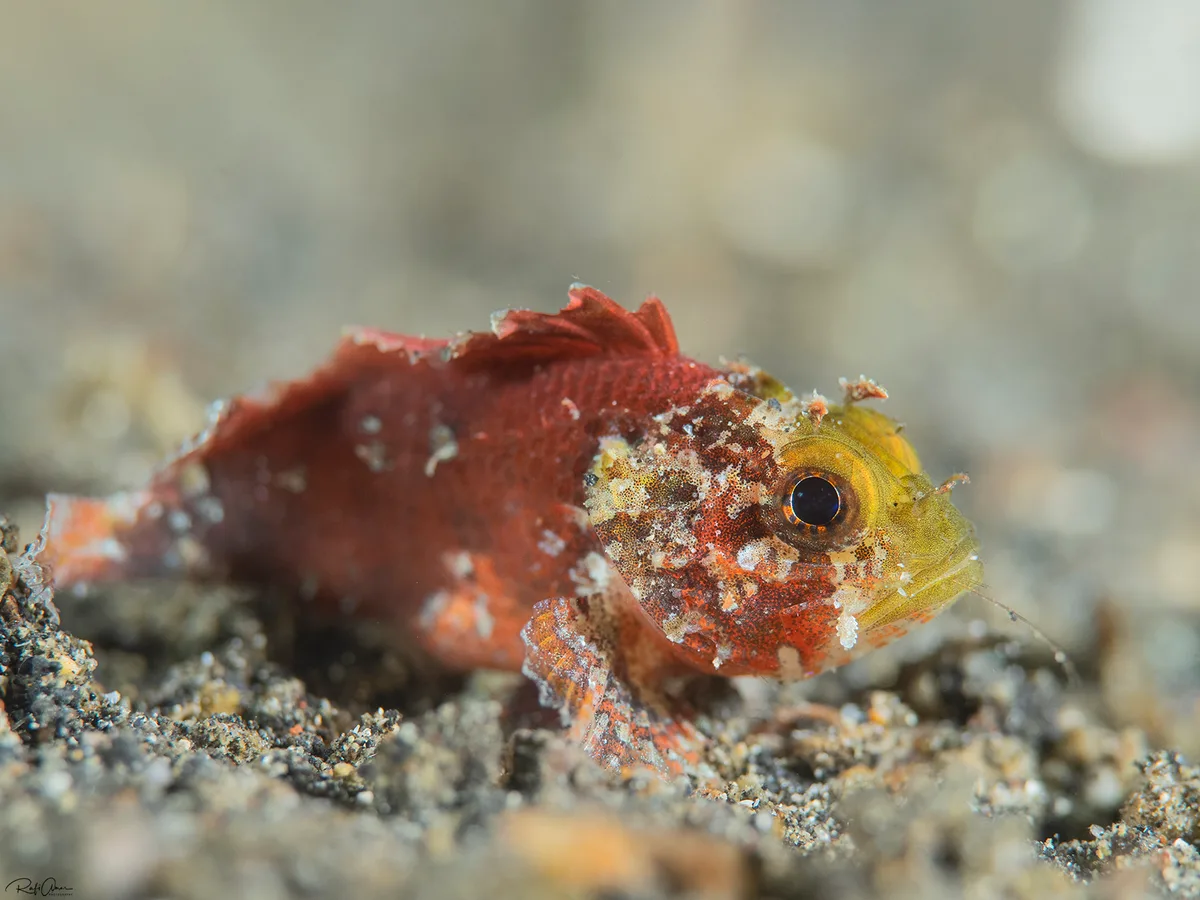
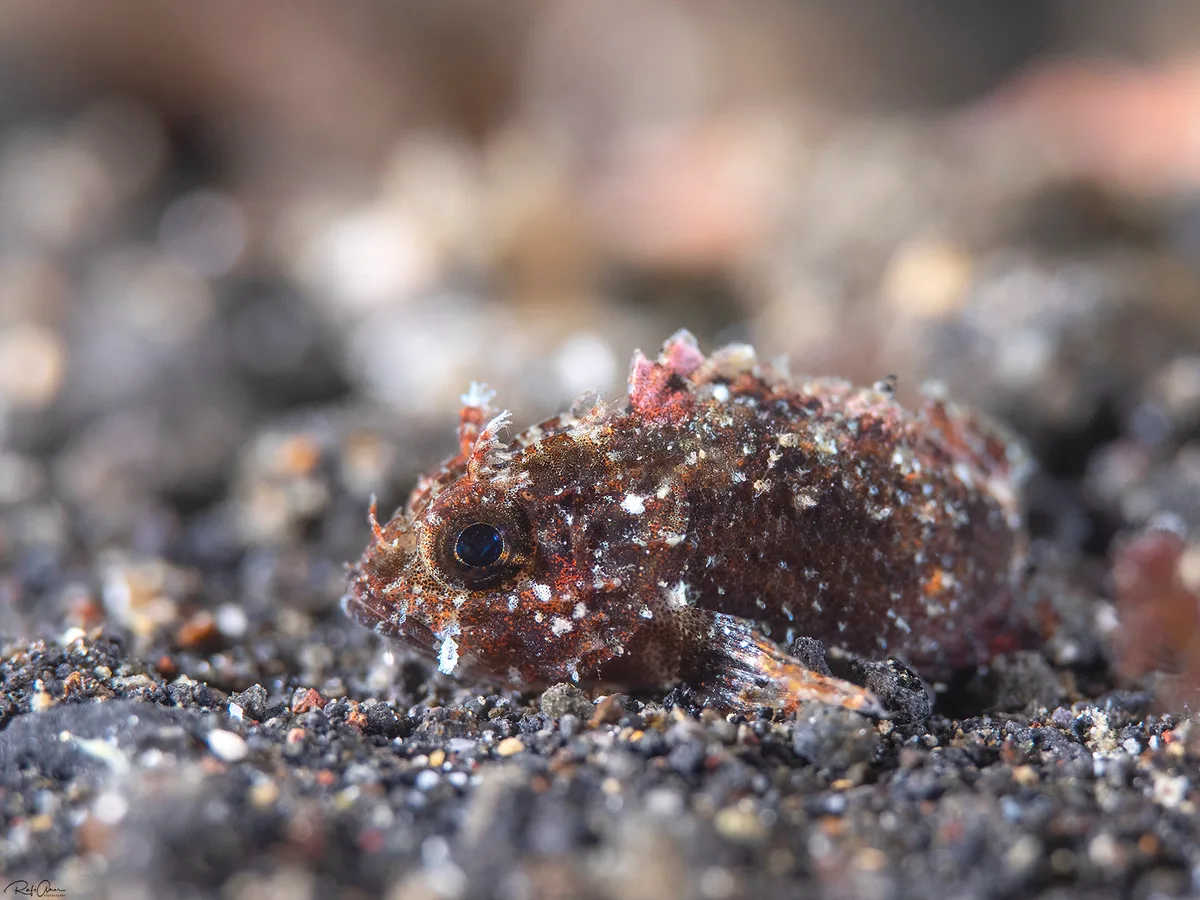
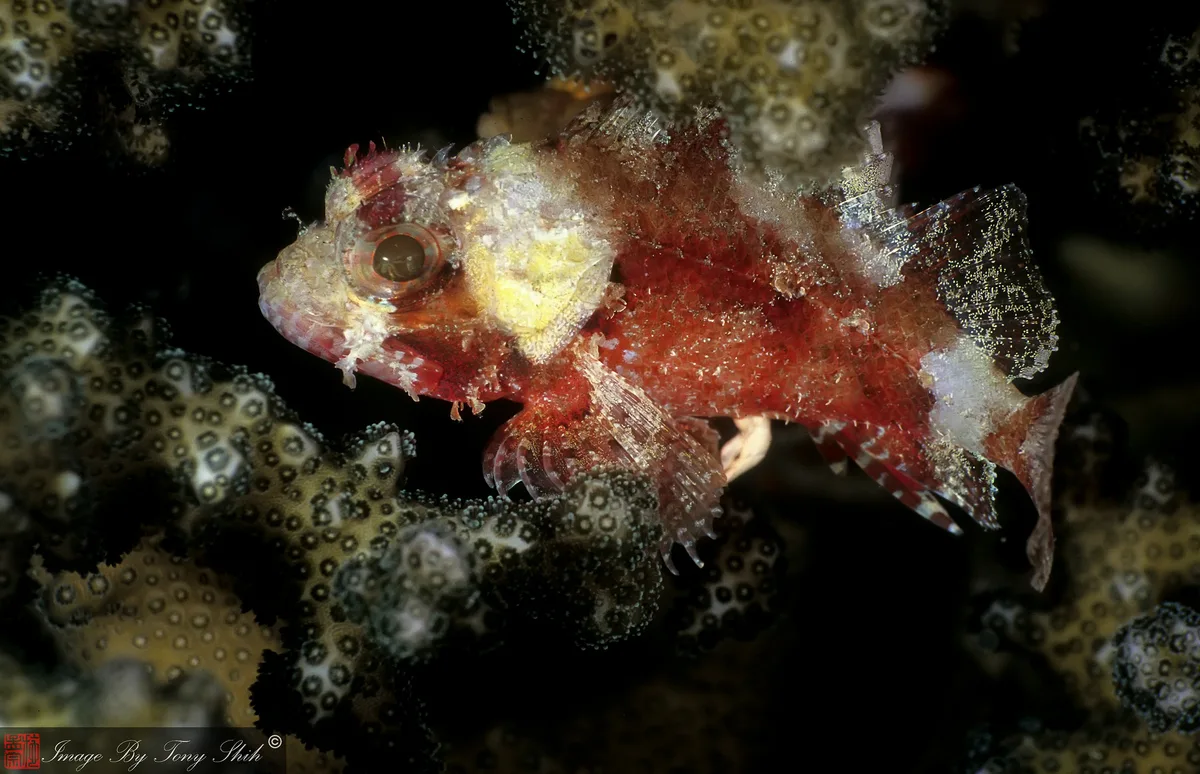
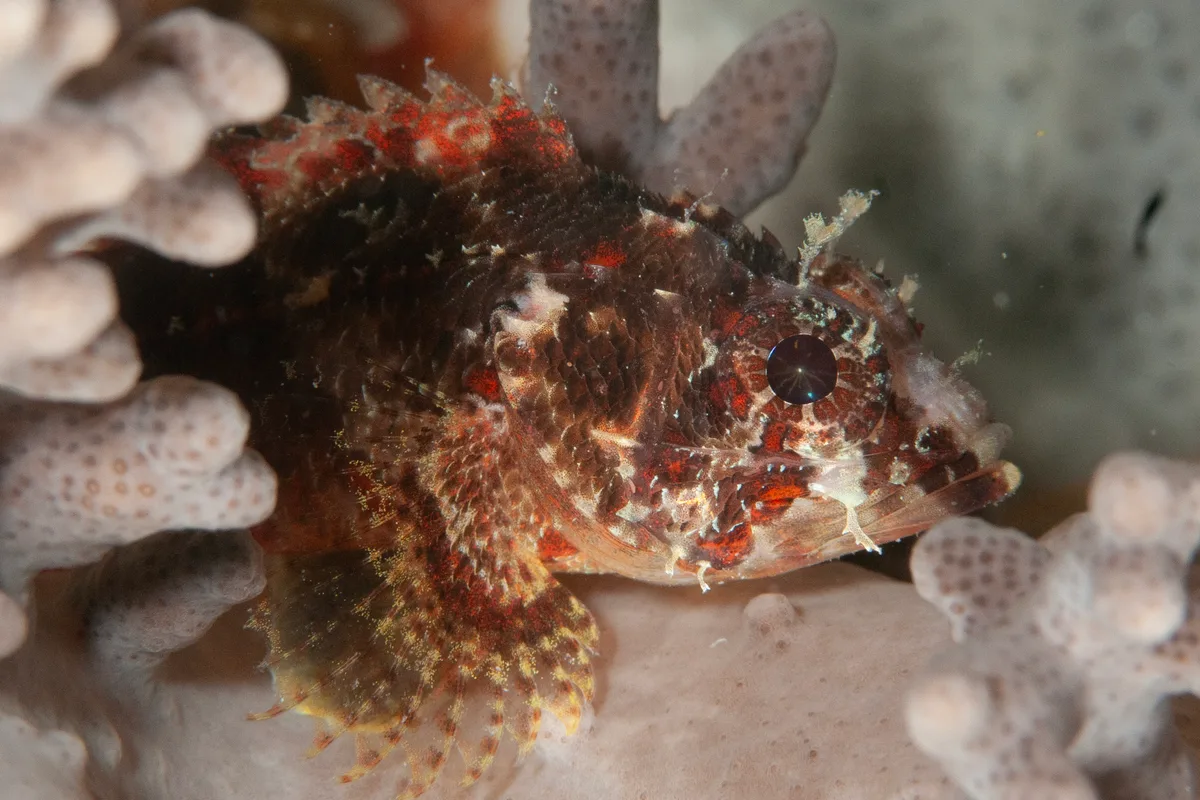
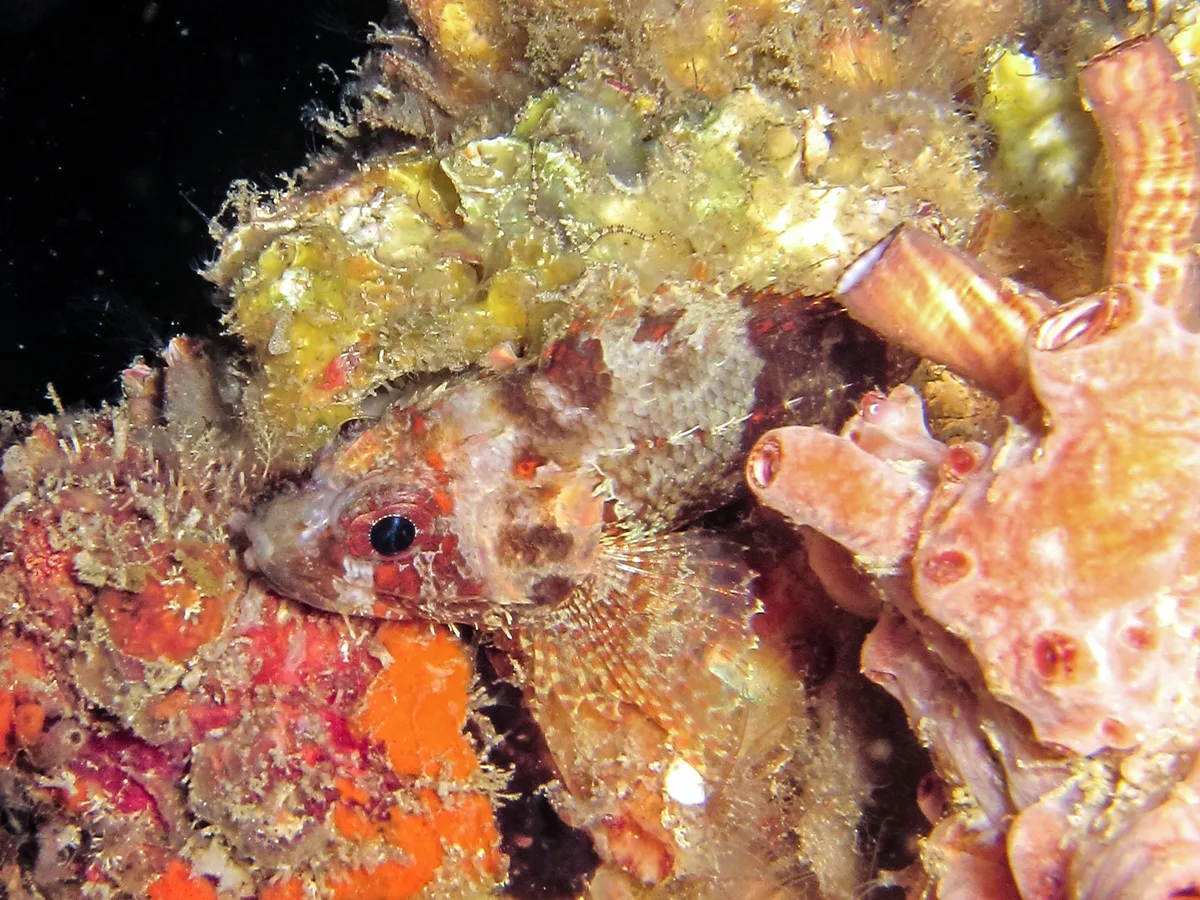
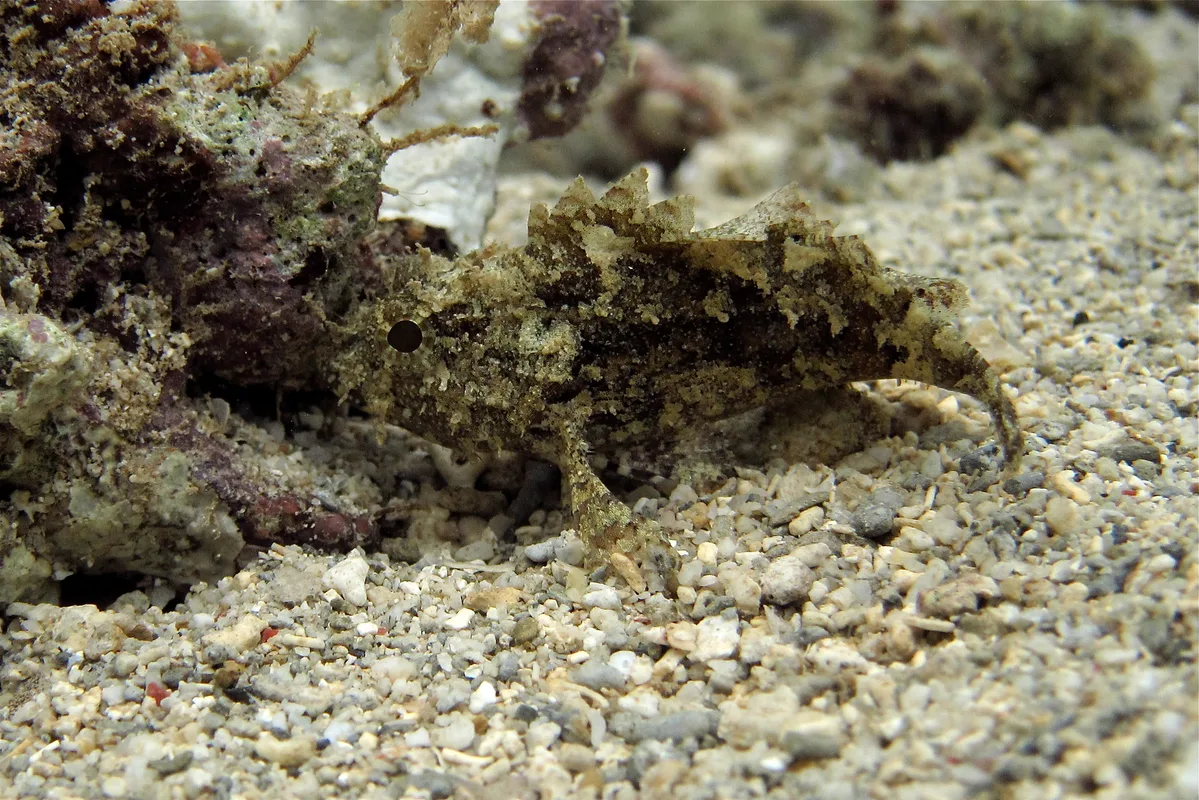
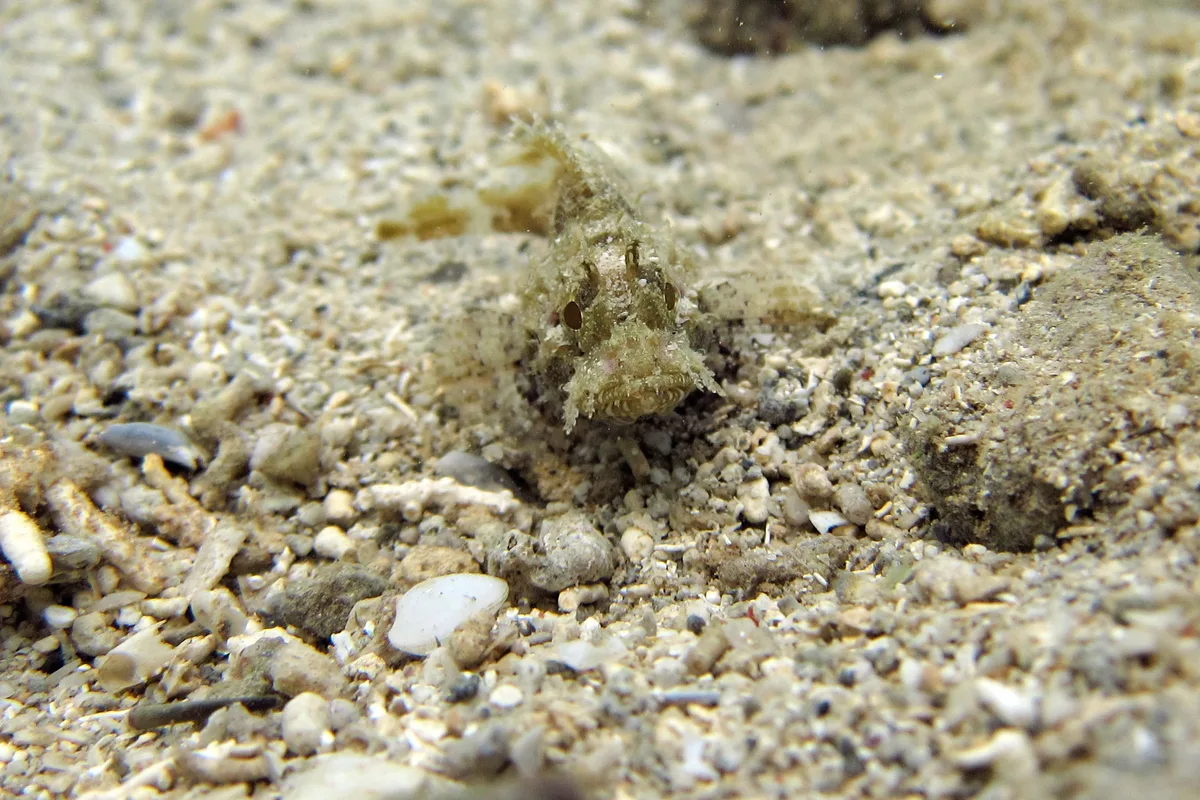
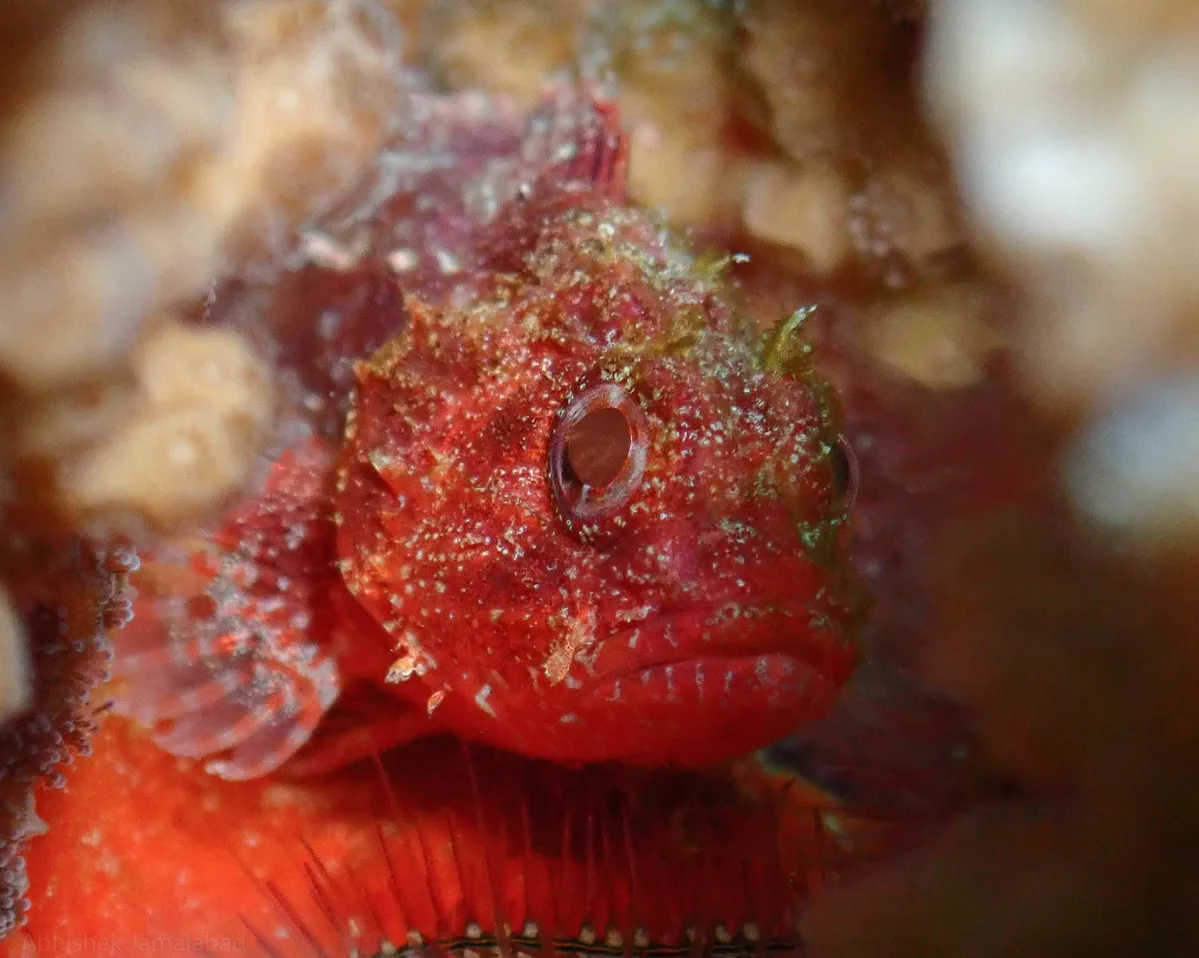
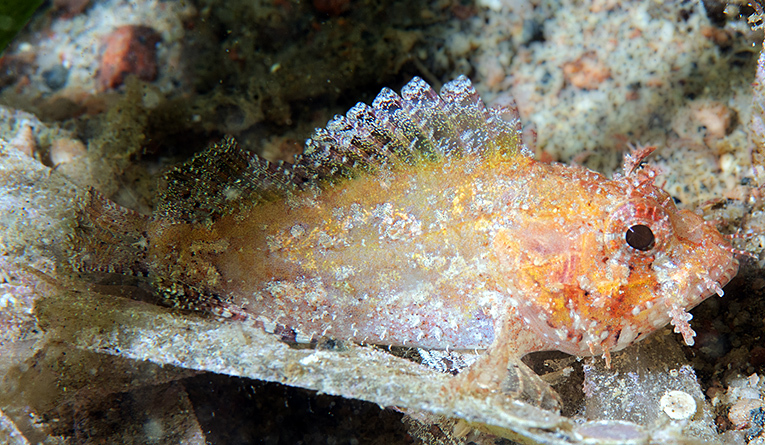
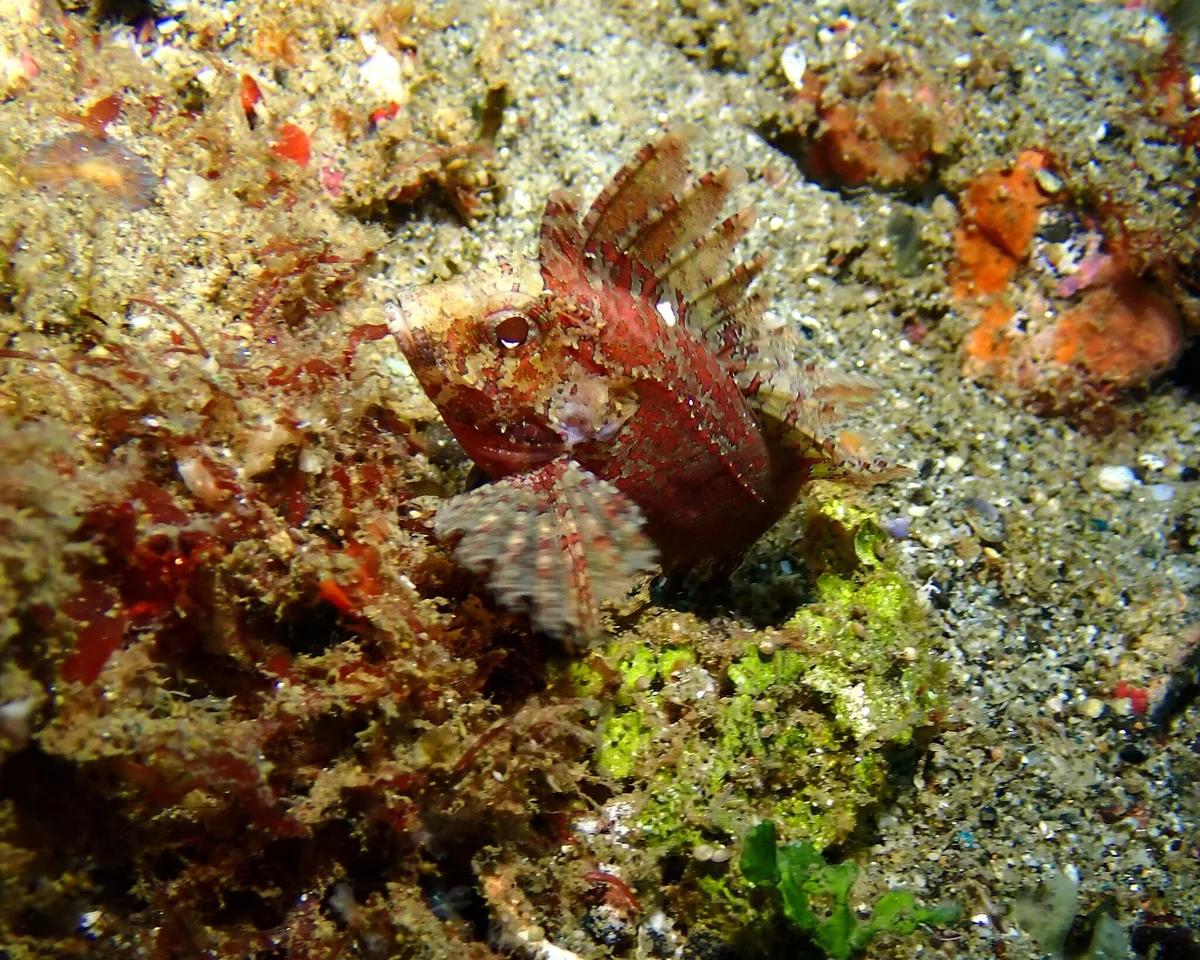
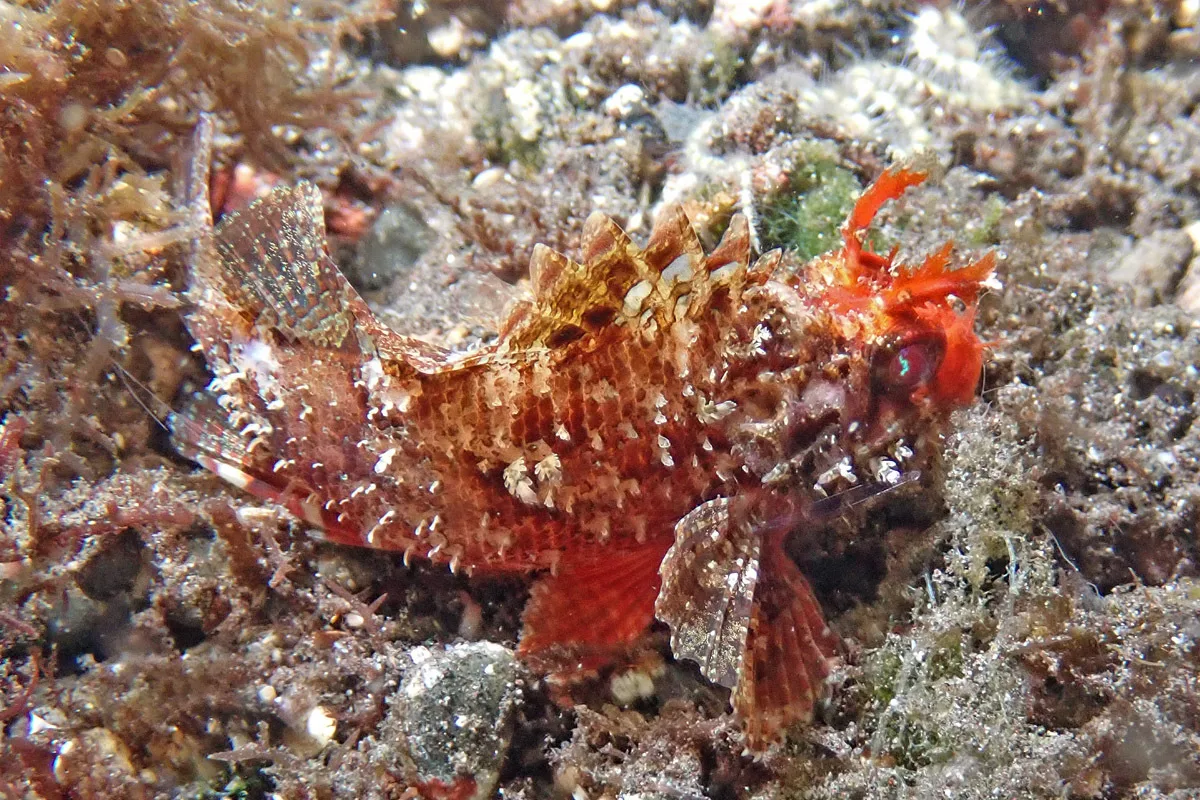
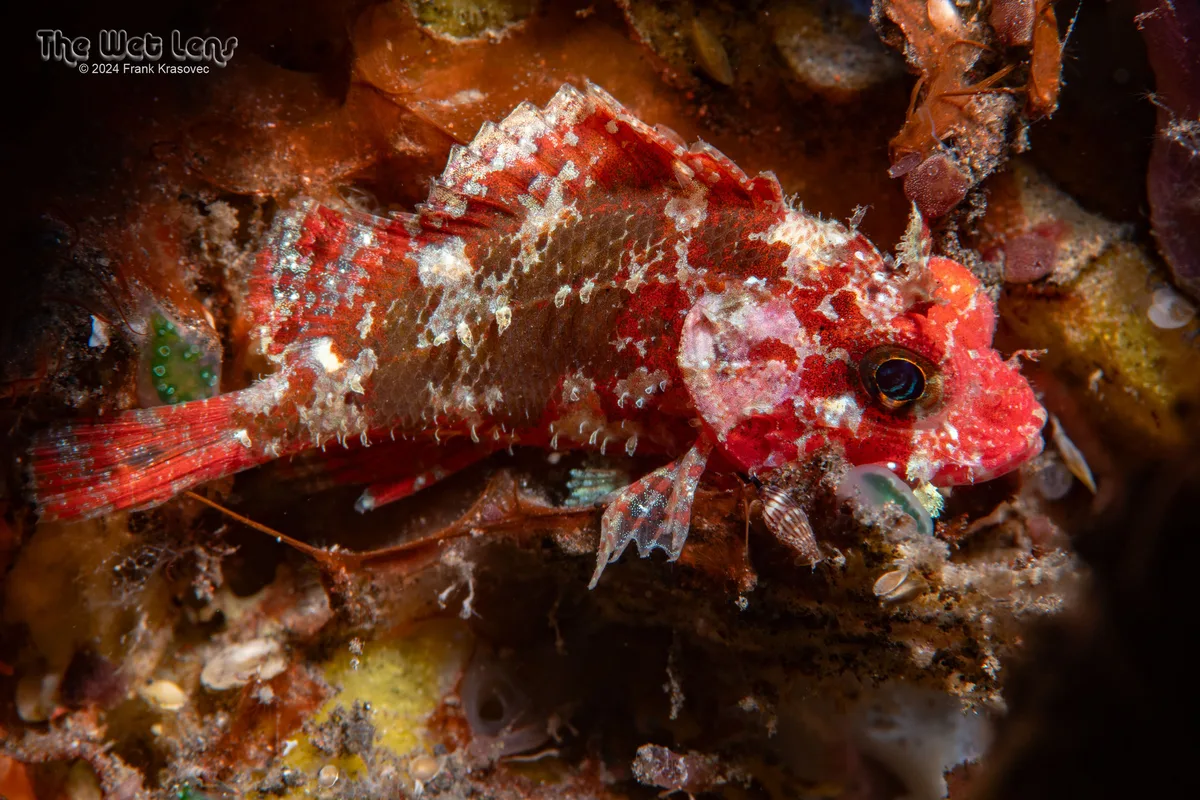
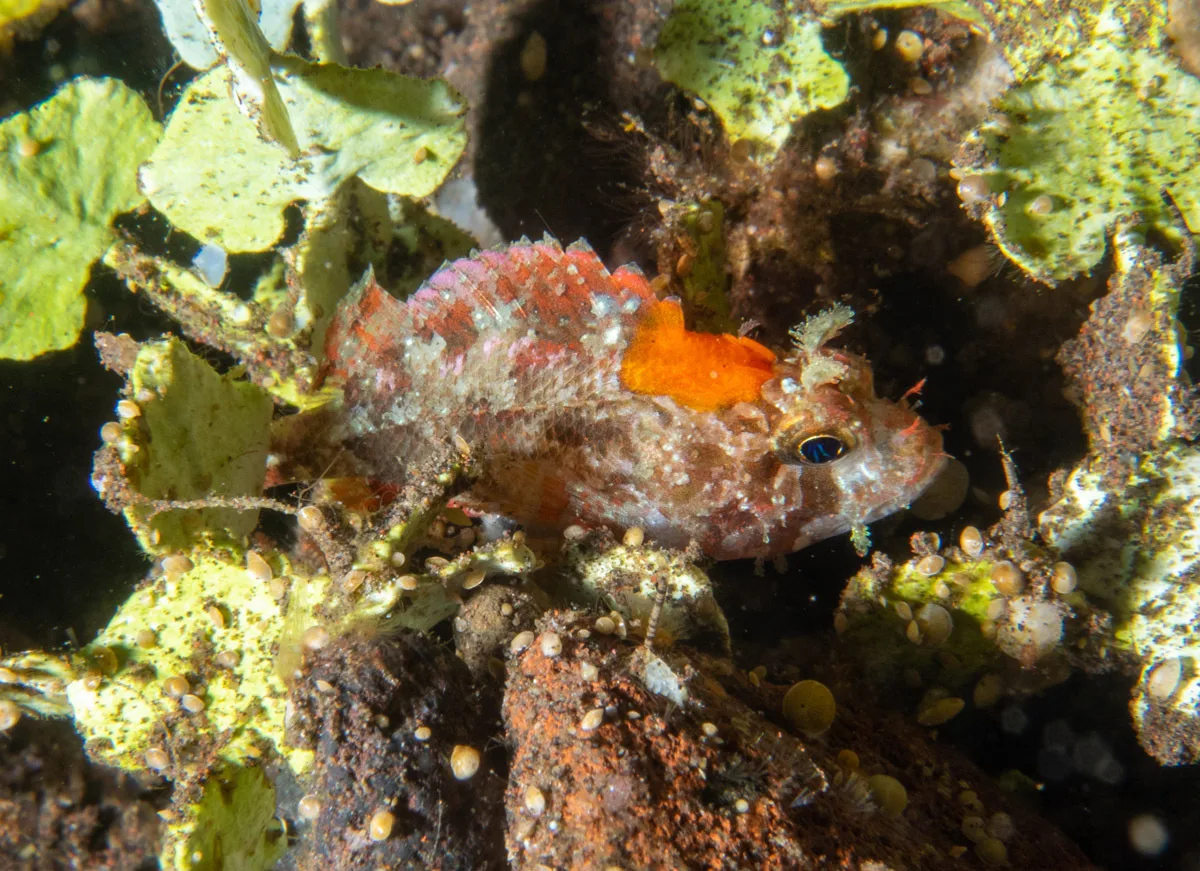
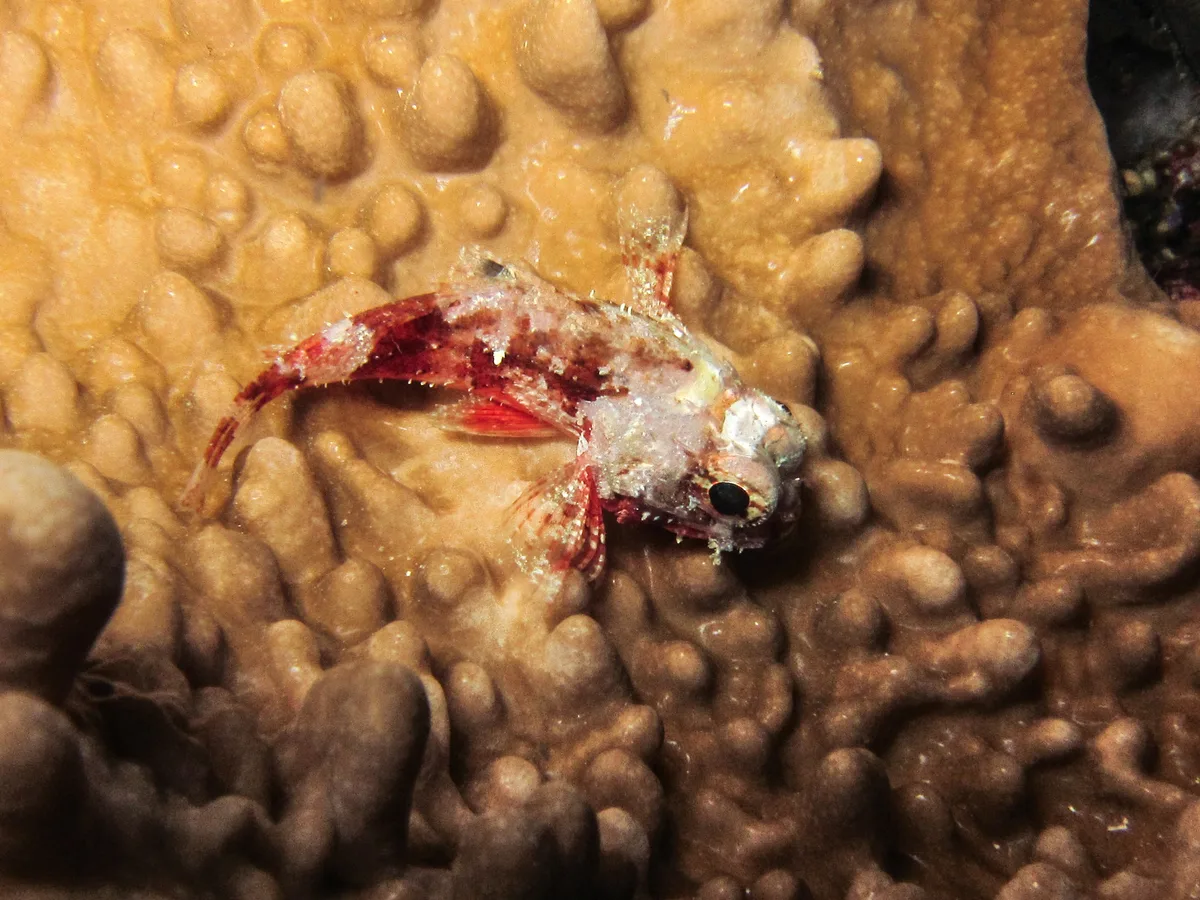
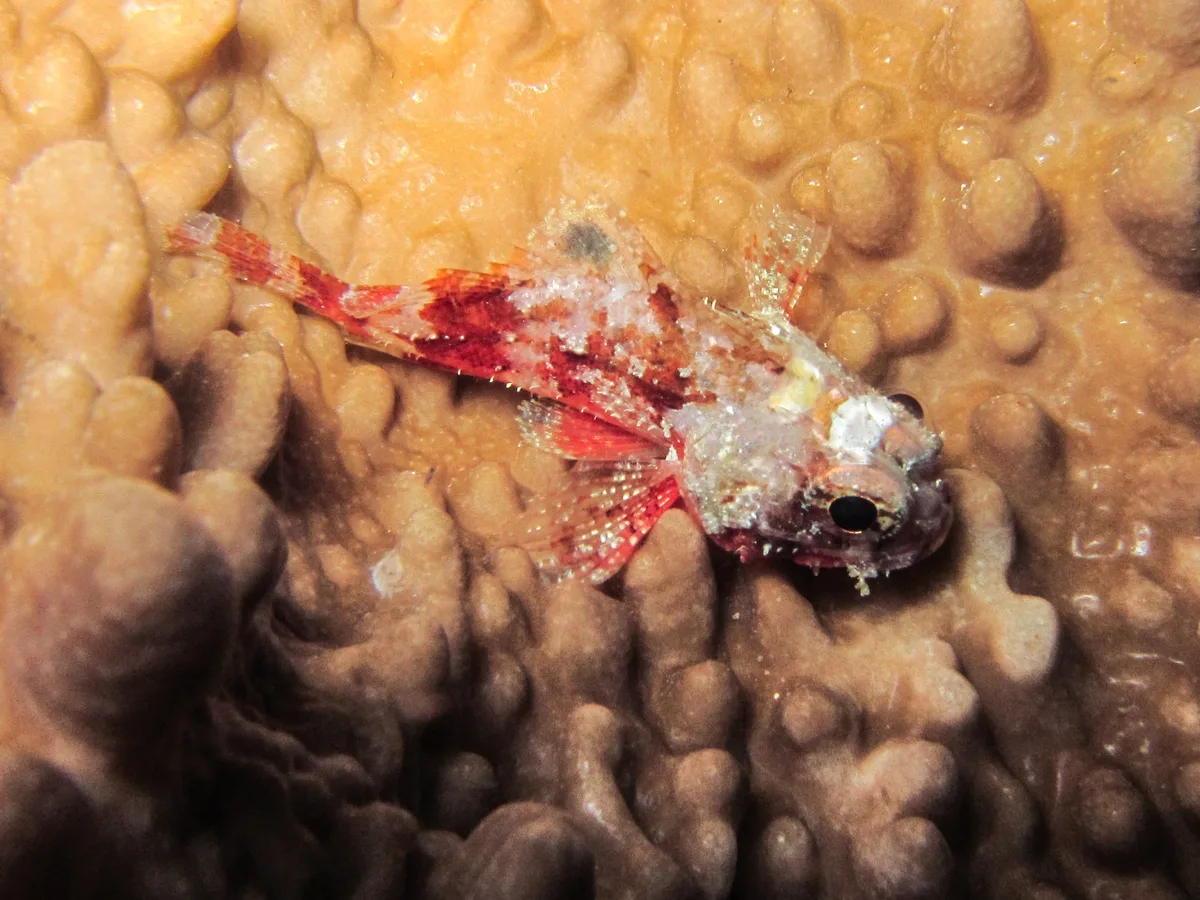
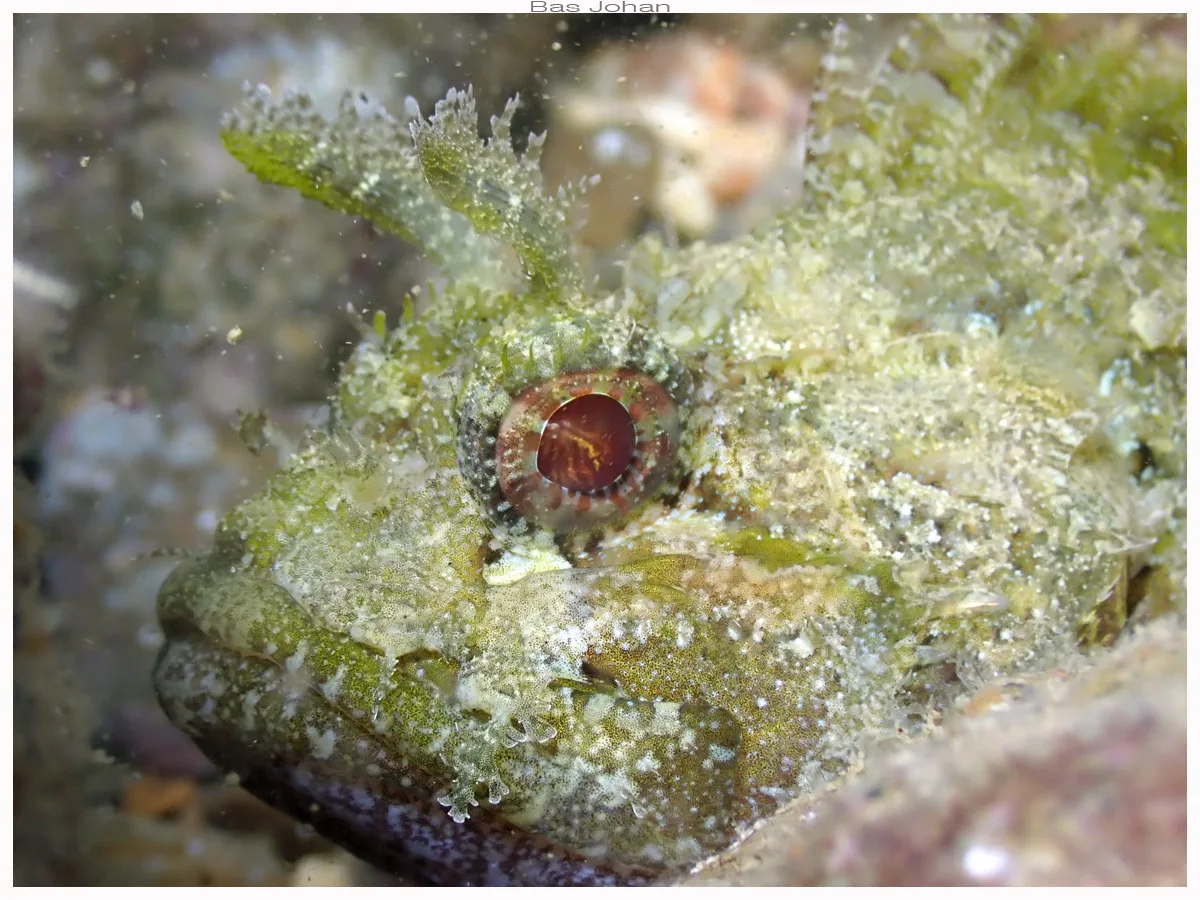
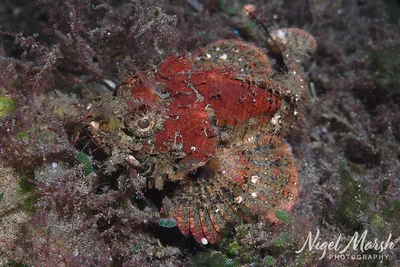
Ten centimeters (4 in) of pale speckled scorpionfish living inside a branching coral head, with a dark bar across the chin that gives it its name.
It shares that address with the yellowspotted scorpionfish, and the two are the reef's coral-dwelling ambushers - a niche that solves both halves of the problem at once, since nothing large can reach in and the prey comes to the coral anyway.
The cost is that the fish is tied to living coral. Where colonies bleach and die, the branches fill with algae and sediment and the residents go with them, which makes this group one of the quieter casualties of a bad summer.
It hunts small shrimps and fish among the branches at night. The spines are venomous like the family's, and the sting scenario is the usual one: a hand grabbing a coral head in current.
The genus.Sebastapistes Gill 1877 - apistes (not to be trusted or perfidious). ETYFish
How to recognise it
small pale scorpionfish with a dark bar across the chin
fine dark speckling over the body, no bright spots
wedged among coral branches rather than on open rock
There have been no confirmed population declines. However, because of its affinity with coral reefs, we suspect it may be experiencing population declines due to habitat loss in parts of its range. However, it is also found on rocky reefs, and significant global population declines are not suspected.
As of 2008, 15% of the world's coral reefs were considered under imminent threat of being "Effectively Lost" (with 90% of the corals lost and unlikely to recover soon), with regions in East Africa, South and South-east Asia, and the wider Caribbean being the most highly threatened (Wilkinson et al. 2008). Of 704 zooxanthellate reef-building coral species which were assessed by using the International Union for Conservation of Nature Red List Criteria, 32.8% are in categories with elevated risk of extinction (Carpenter et al. 2008).
Threat classification from the IUCN Red List.
Comments
Please, sign in to leave a comment
Continue with a social account - yours will be created automatically.