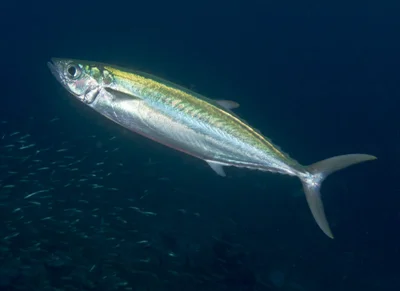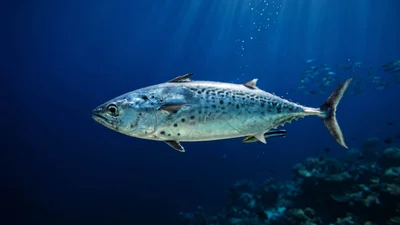
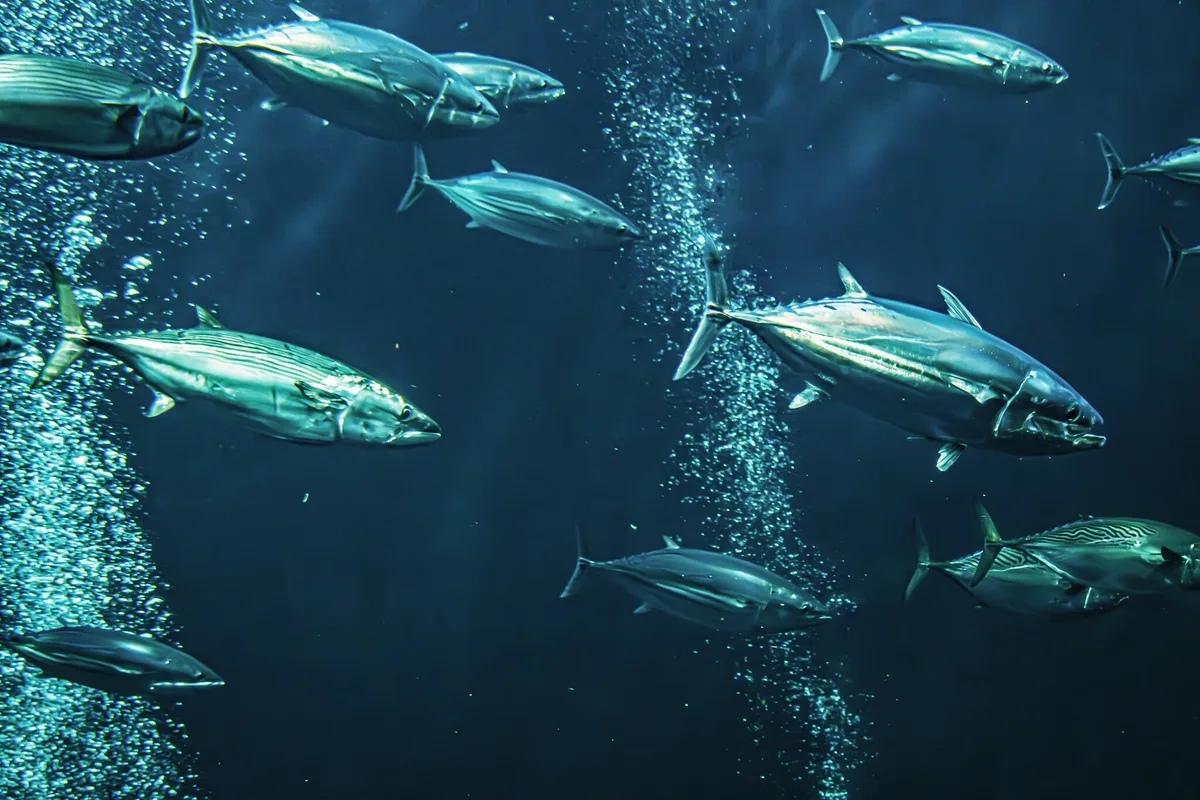
Tuna are famous for running warm. This fish is built like one and does not.
The heat exchangers that let a yellowfin or a skipjack hold its swimming muscle above the temperature of the water around it belong to one branch of the family, the true tunas. Bonitos sit on a different branch and swim cold, on the same body plan: fins that fold away into grooves, a row of small finlets behind the dorsal and anal fins, a keeled tail stalk and a stiff crescent tail. Like most of the family it cannot pump water over its gills and has to keep moving to breathe.
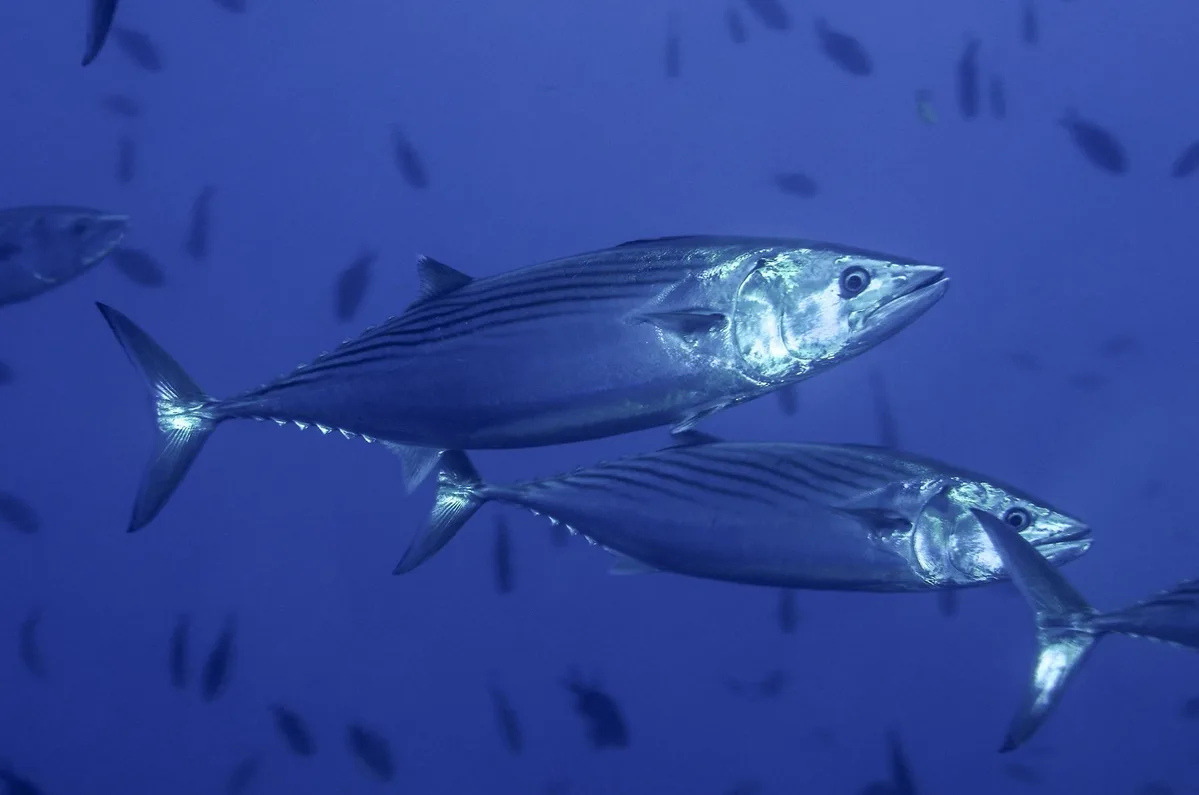
Three things separate it from the tunas it schools with. The first dorsal fin is long and low and runs almost back to the second. The teeth are large and obvious, which is unusual here. And the stripes run the wrong way for a tuna: dark, nearly horizontal lines along the upper back. A kawakawa carries broken oblique bands up there instead, and a skipjack carries its stripes low down on the belly, not on the back.
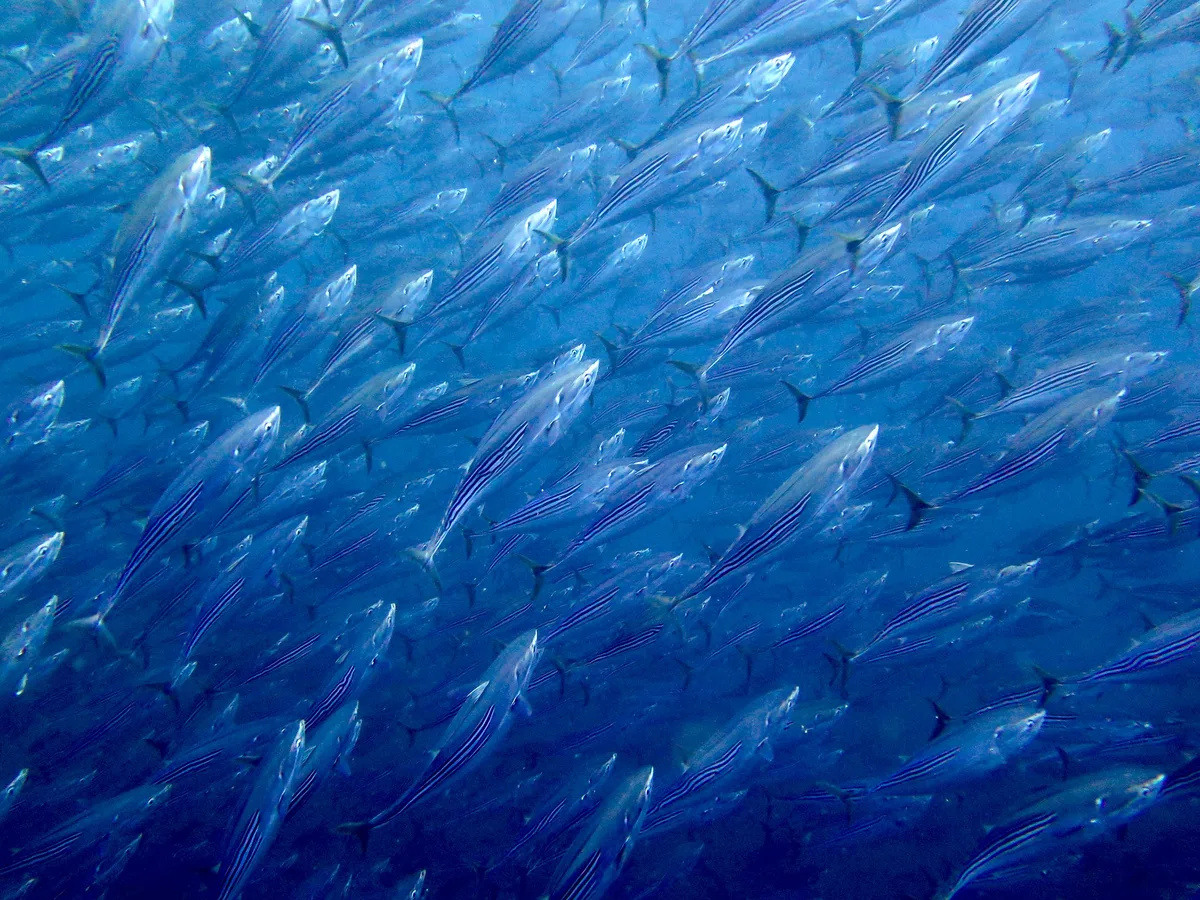
This is an open-water fish and you should not expect to see it. It works coastal water and the edges of islands from the surface down to about 167 m, schooling with small tunas, and feeds on sardines and other small fish, squid and shrimp. Divers on 🌊 Red Sea reefs almost never meet it. It turns up on fishing boats and in markets.
It grows to 102 cm and about 10.6 kg, though 55 cm is the ordinary size. Spawning follows the monsoon season, which varies across a range running from the 🌊 Red Sea through the Indo-Pacific and on to 🇺🇸 California and 🇵🇪 Peru.
The species. Sarda orientalis (Temminck & Schlegel 1844) - eastern. ETYFish
- Dark, nearly horizontal stripes along the upper back
- First dorsal fin long and low, almost touching the second
- Large, obvious teeth
- Finlets behind the dorsal and anal fins, keeled tail stalk
- up to 102 cm
Why it's threatened
Threat classification from the IUCN Red List.