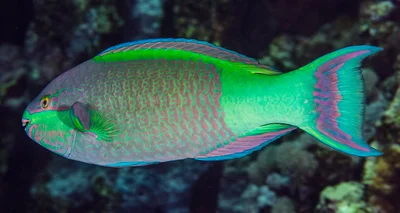
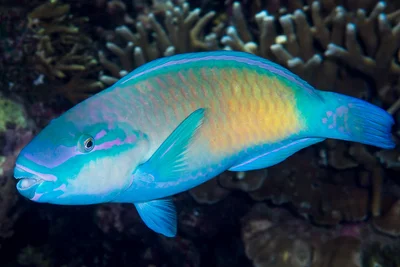
A parrotfish that lives here and in the 🌊 Gulf of Aden and nowhere else, which is rarer in this family than it sounds. Most parrotfish are spread across whole oceans: their larvae drift for weeks, adults are strong swimmers, and the group is not given to being confined. A parrotfish restricted to one basin means that basin has been isolated long enough and often enough to hold one in place.
That is the 🌊 Red Sea's whole biography in one animal. Repeated ice ages dropped the sea level far enough to nearly close the strait at the southern end, and what was inside was cut off in water that became hotter and saltier than anything outside. Species went in and different species came out.
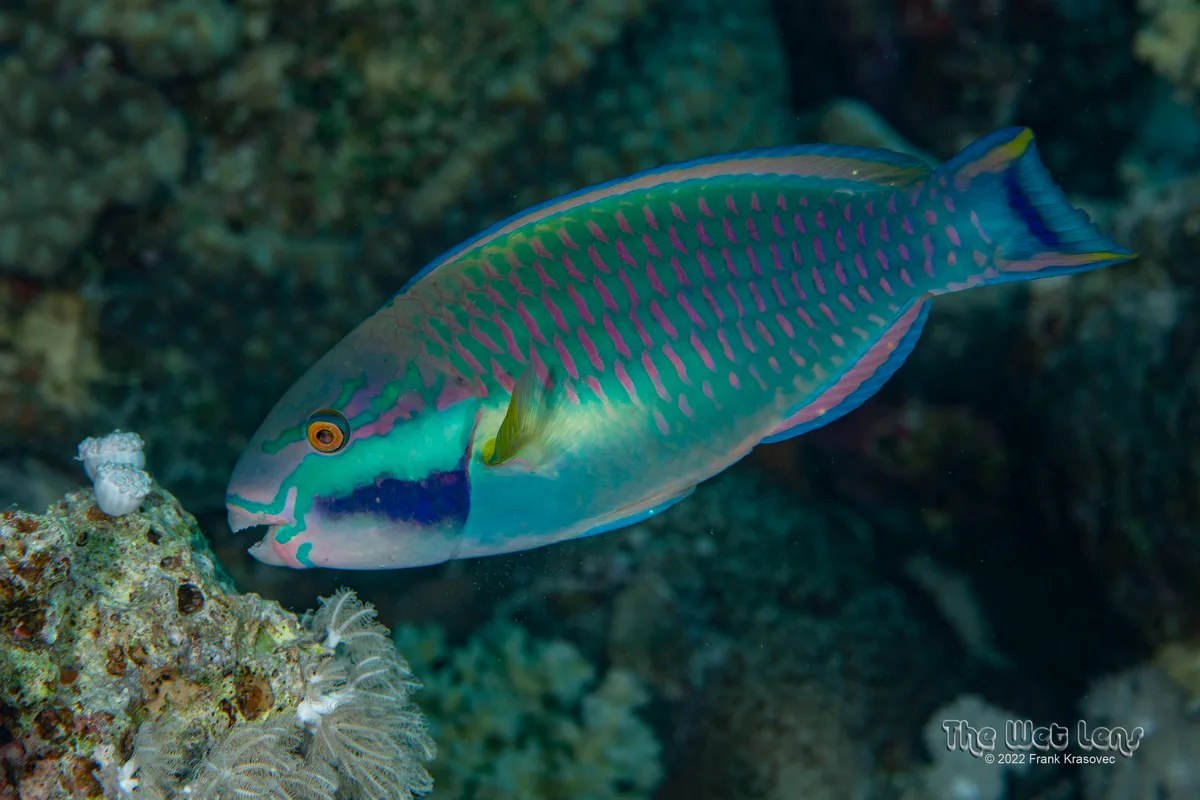
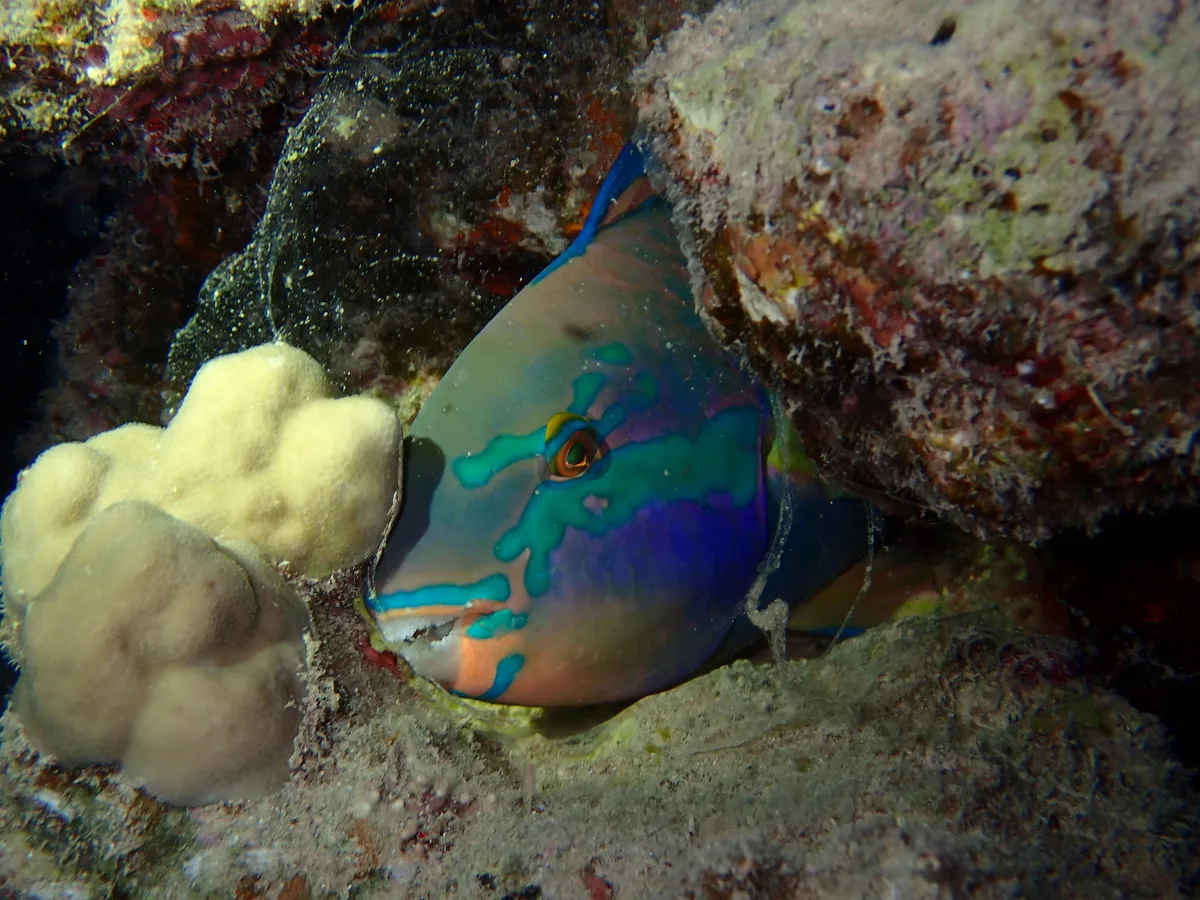
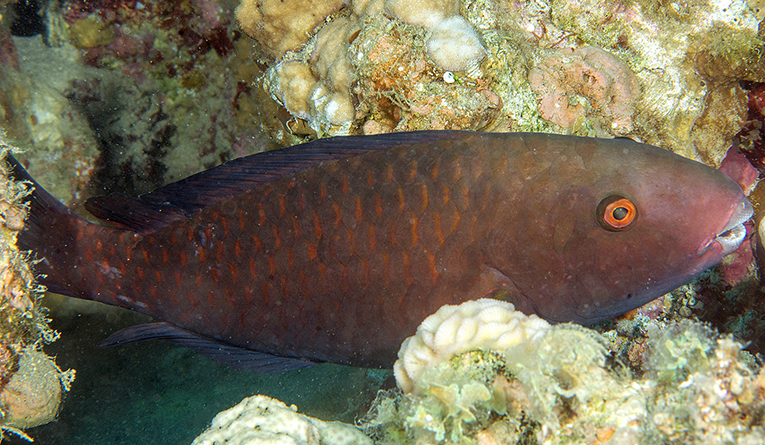
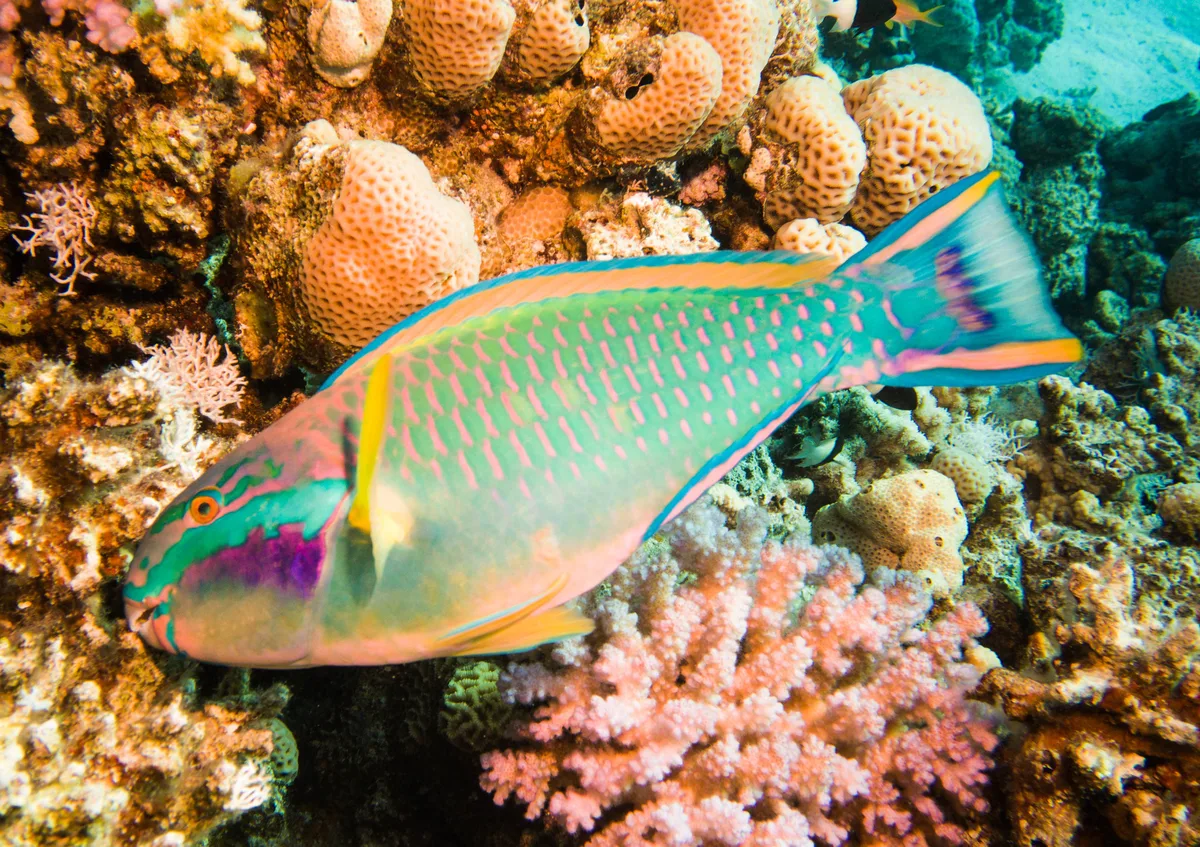
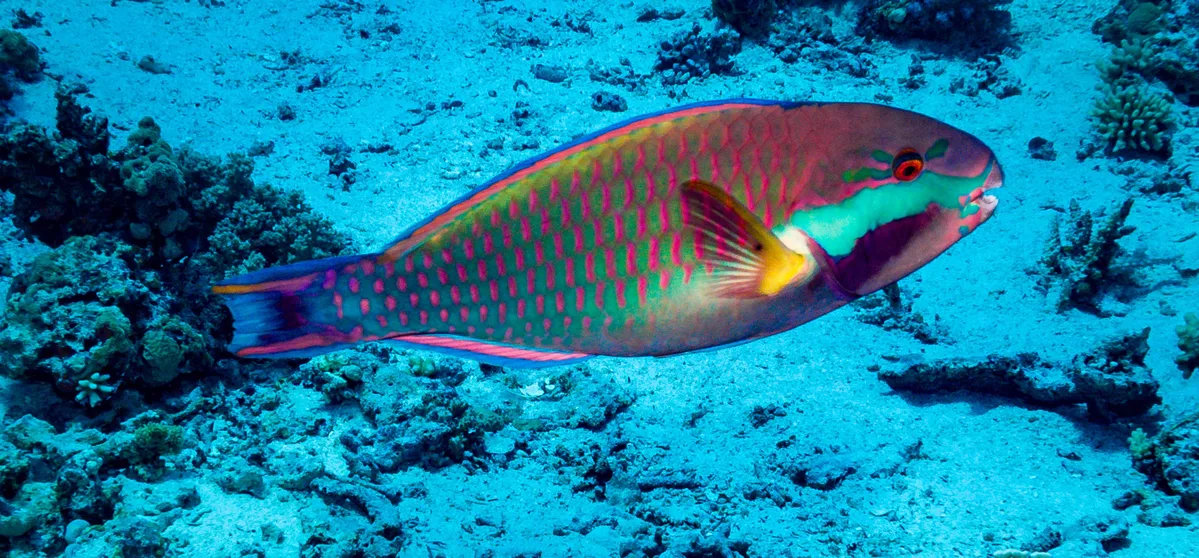
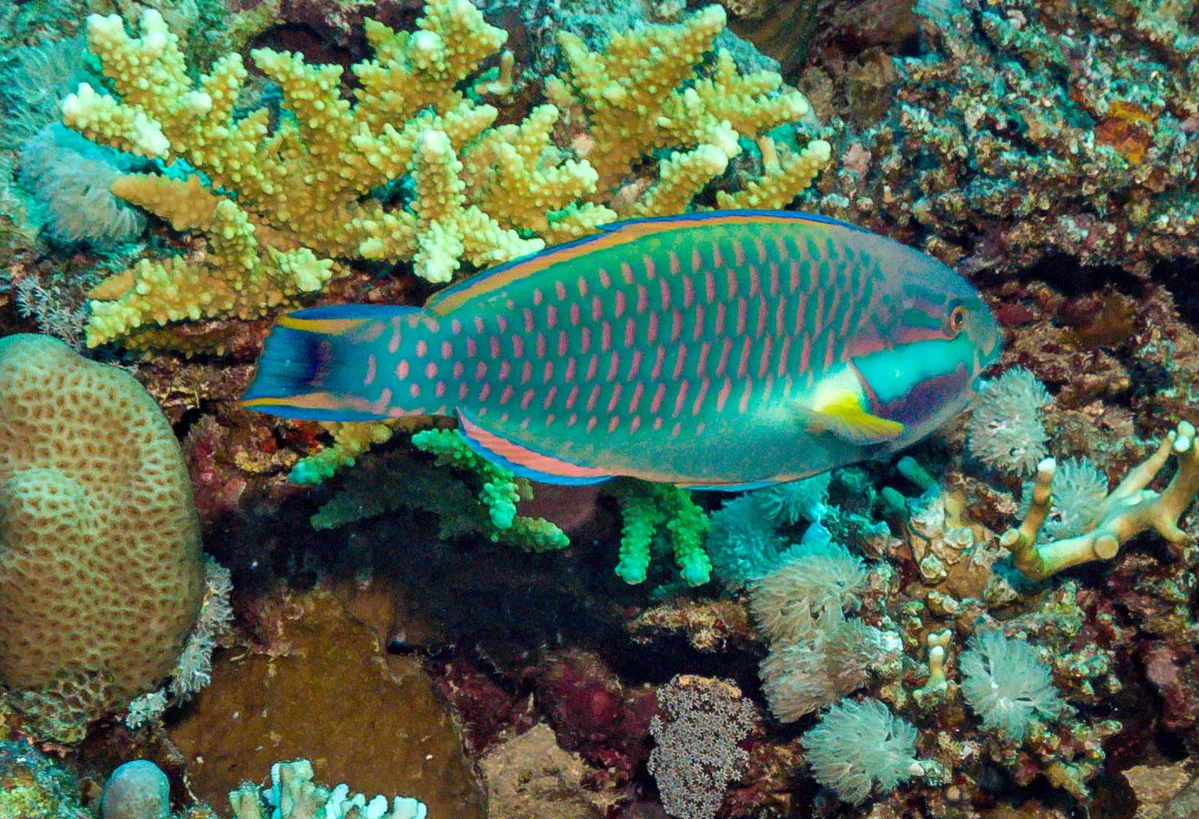
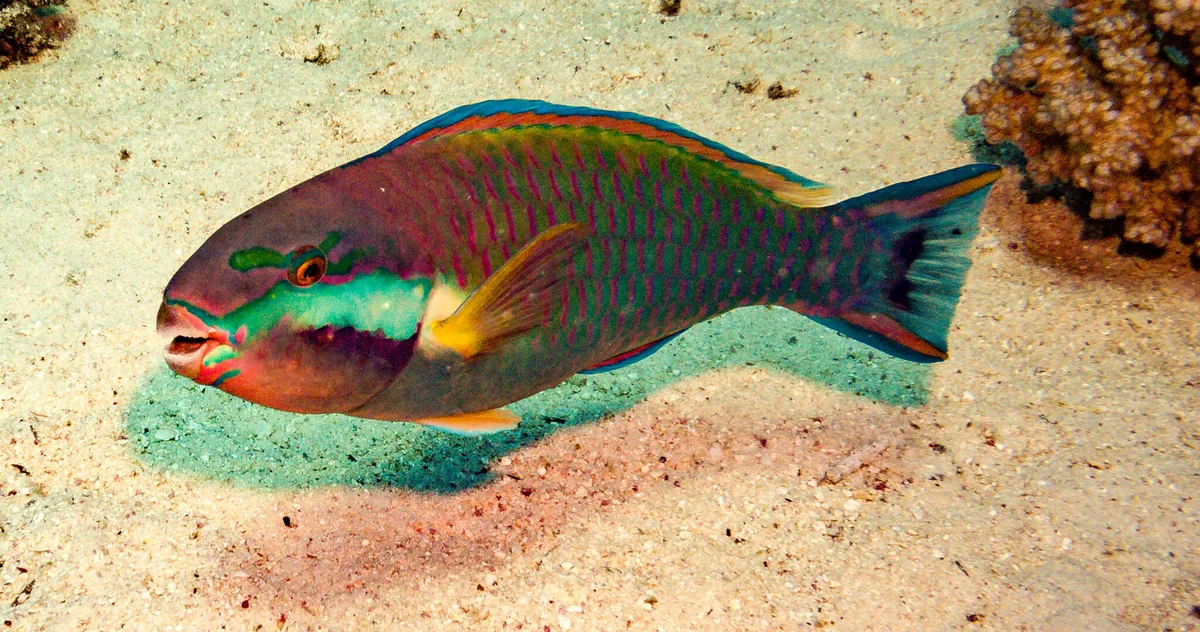
A terminal male is worth finding. Green over the body with a pink bar on every scale, so the whole flank reads as fine pink stitching, and a clean pink stripe running back from the eye across the cheek. Initial-phase fish are plain gray-brown and give nothing away.
It is small by parrotfish standards, around thirty centimeters, and works coral and rubble like the rest of them.
The species.Chlorurus genazonatus (Randall & Bruce 1983) - genys (cheek) + zonatus (banded). ETYFish
How to recognise it
males green with a pink bar on every scale and a pink stripe running from the eye across the cheek
initial-phase fish plainer, gray-brown
small for a parrotfish, around 30 cm
up to 31 cm
Why it's threatened
There are no major threats known for this species.
Parrotfishes show varying degrees of habitat preference and utilization of coral reef habitats, with some species spending the majority of their life stages on coral reefs, while others primarily utilize seagrass beds, mangroves, algal beds, and /or rocky reefs. Although the majority of the parrotfishes occur in mixed habitat (primarily inhabiting seagrass beds, mangroves, and rocky reefs) approximately 78% of these mixed habitat species are experiencing greater than 30% loss of coral reef area and habitat quality across their distributions. Of those species that occur exclusively in coral reef habitat, more than 80% are experiencing a greater than 30% of coral reef loss and degradation across their distributions. However, more research is needed to understand the long-term effects of habitat loss and degradation on these species populations. Widespread coral reef loss and declining habitat conditions are particularly worrying for species that depend on live coral reefs for food and shelter especially as studies have shown that protection of pristine habitats facilitate the persistence of adult populations in species that have spatially separated adult and juvenile habitats. Furthermore, coral reef loss and declining habitat conditions are particularly worrying for some corallivorous excavating parrotfishes that play major roles in reef dynamics and sedimentation (Comeros-Raynal et al. 2012).
Threat classification from the IUCN Red List.
Comments
Please, sign in to leave a comment
Continue with a social account - yours will be created automatically.