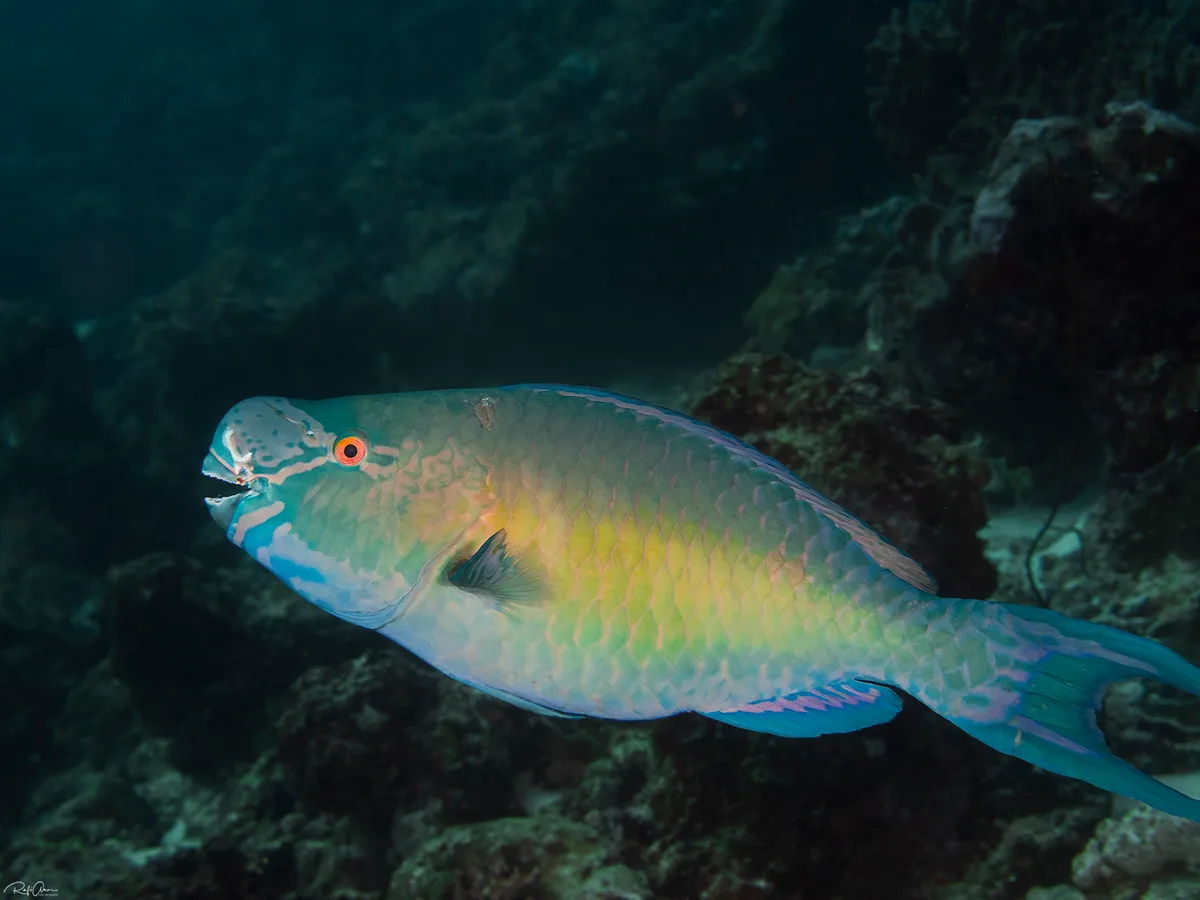
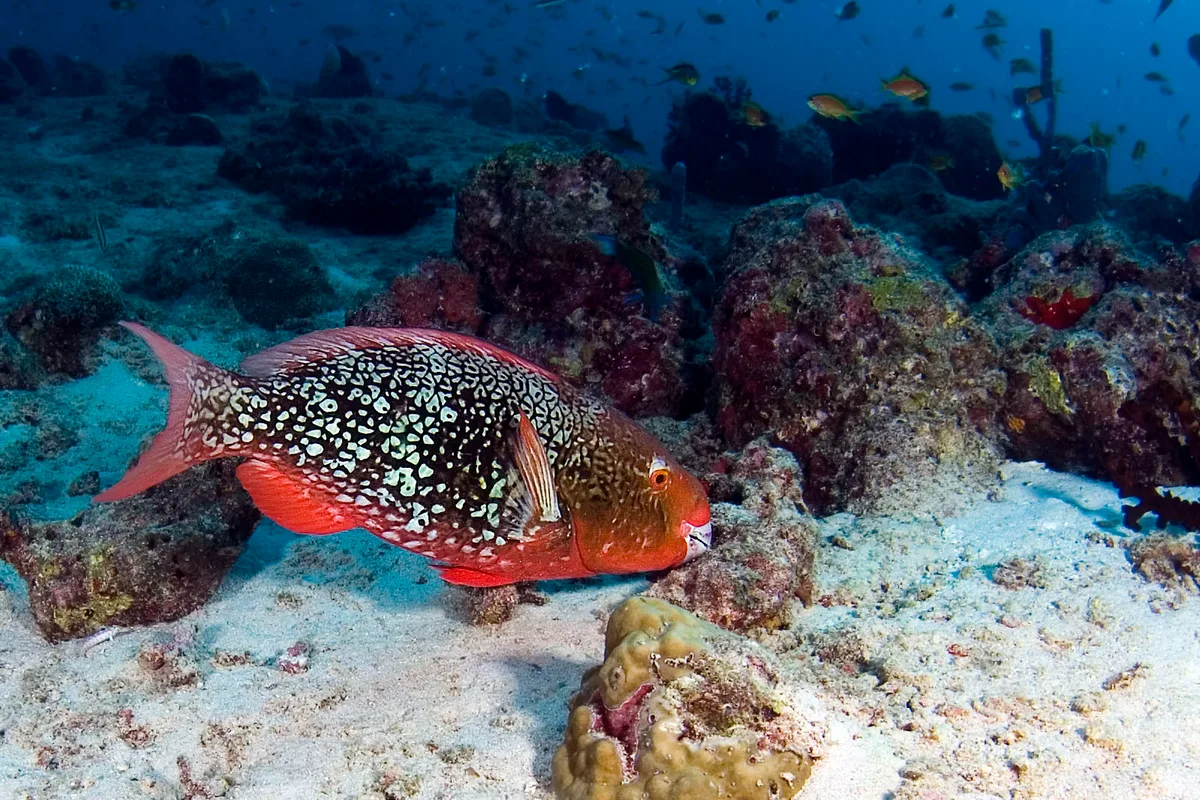
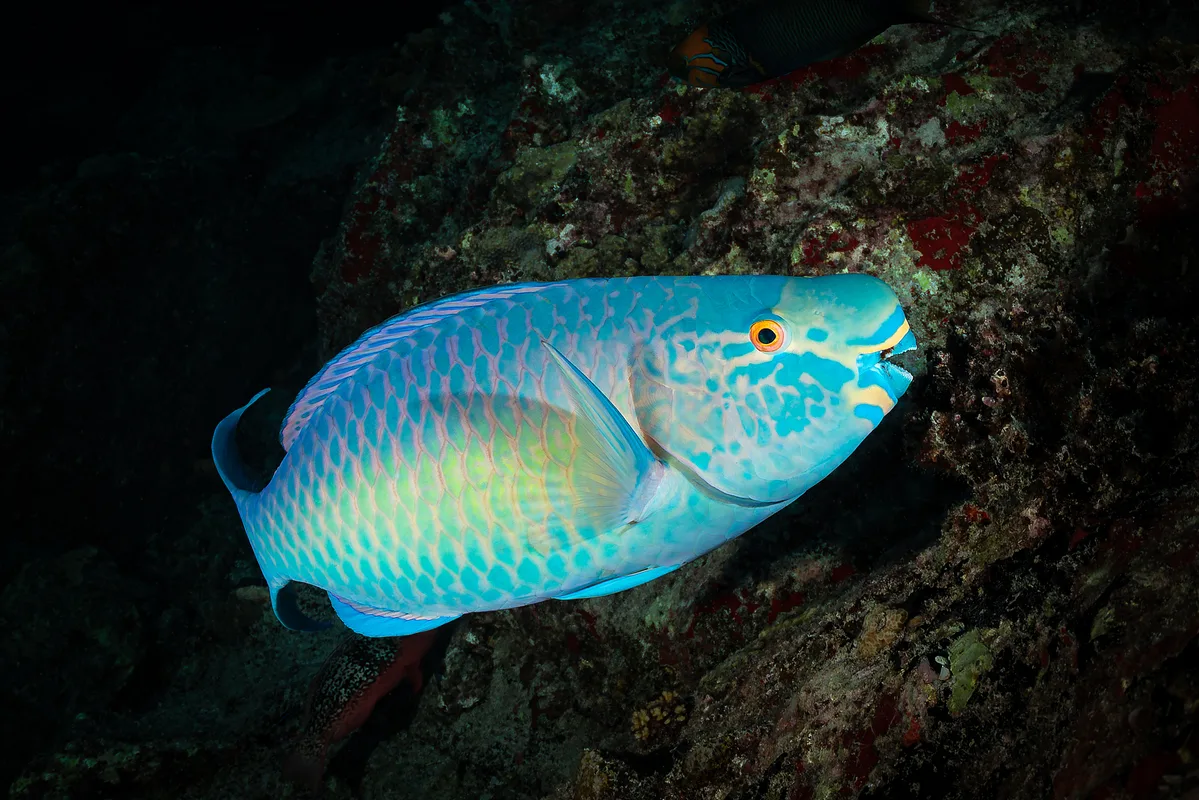
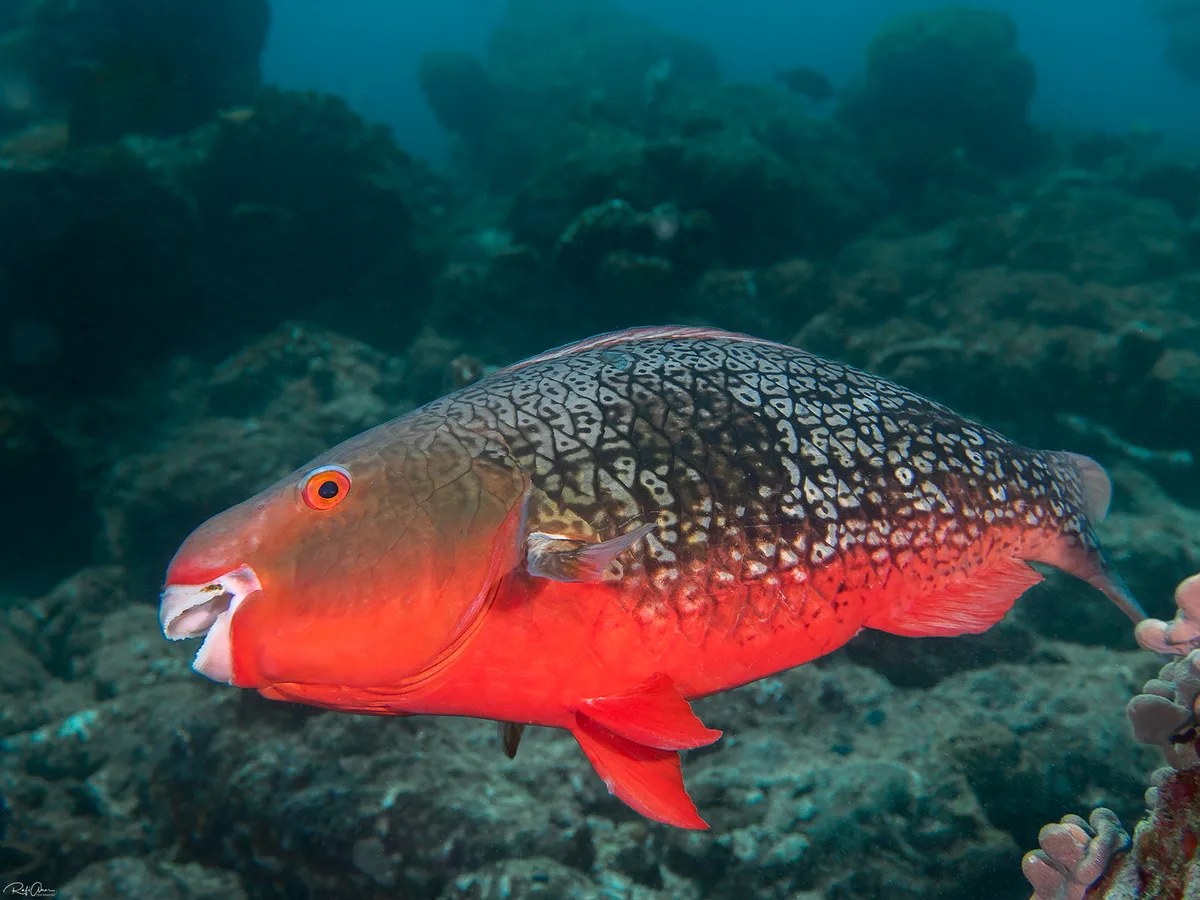
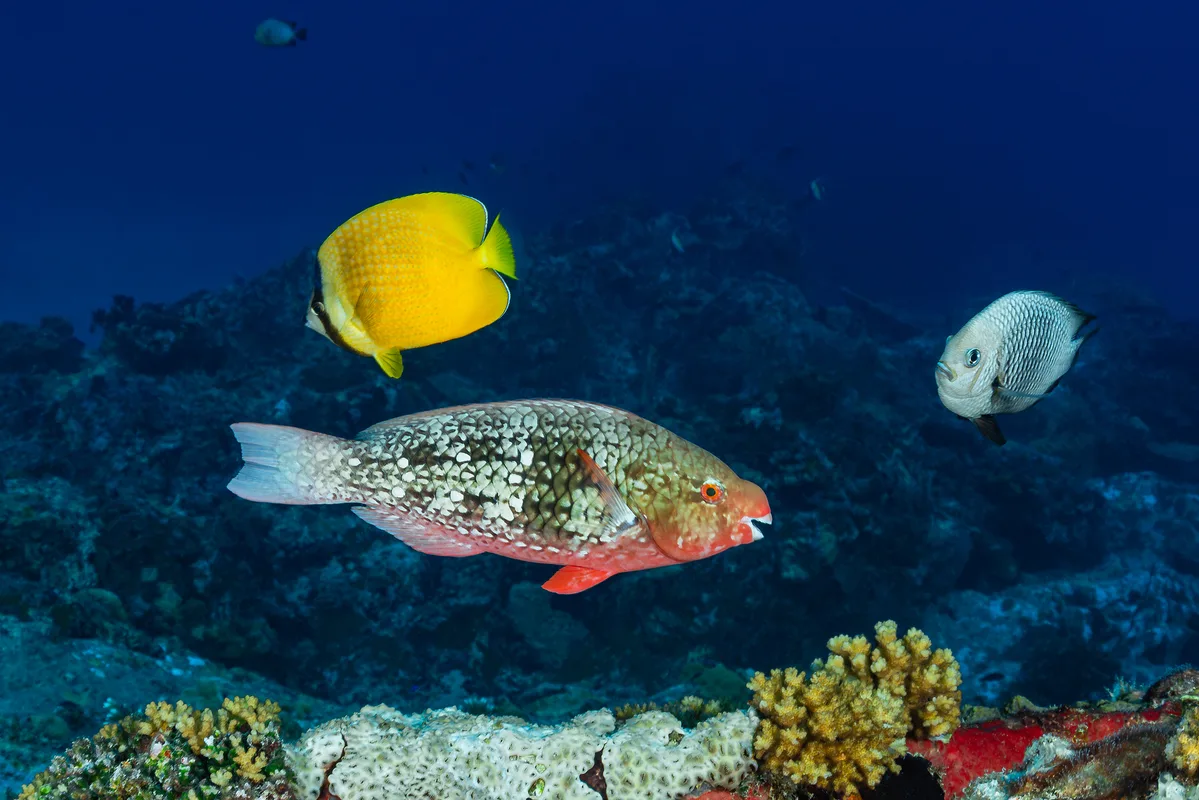
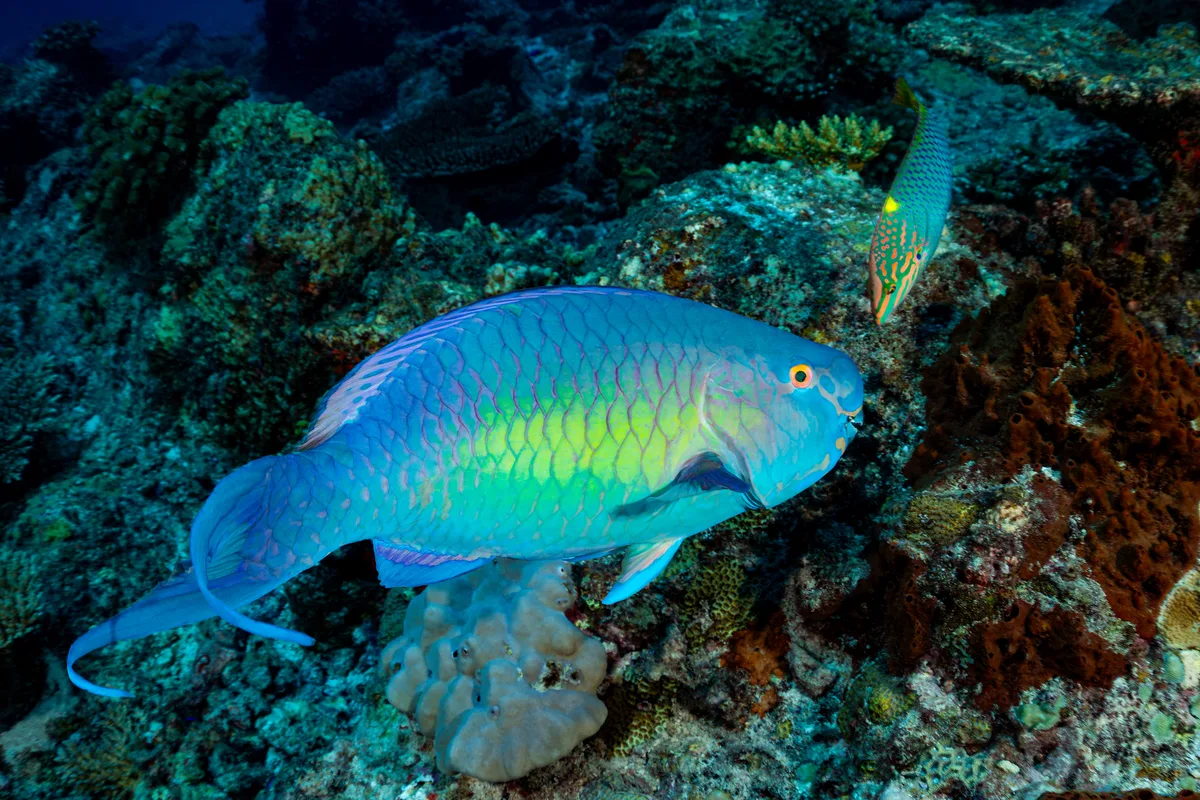
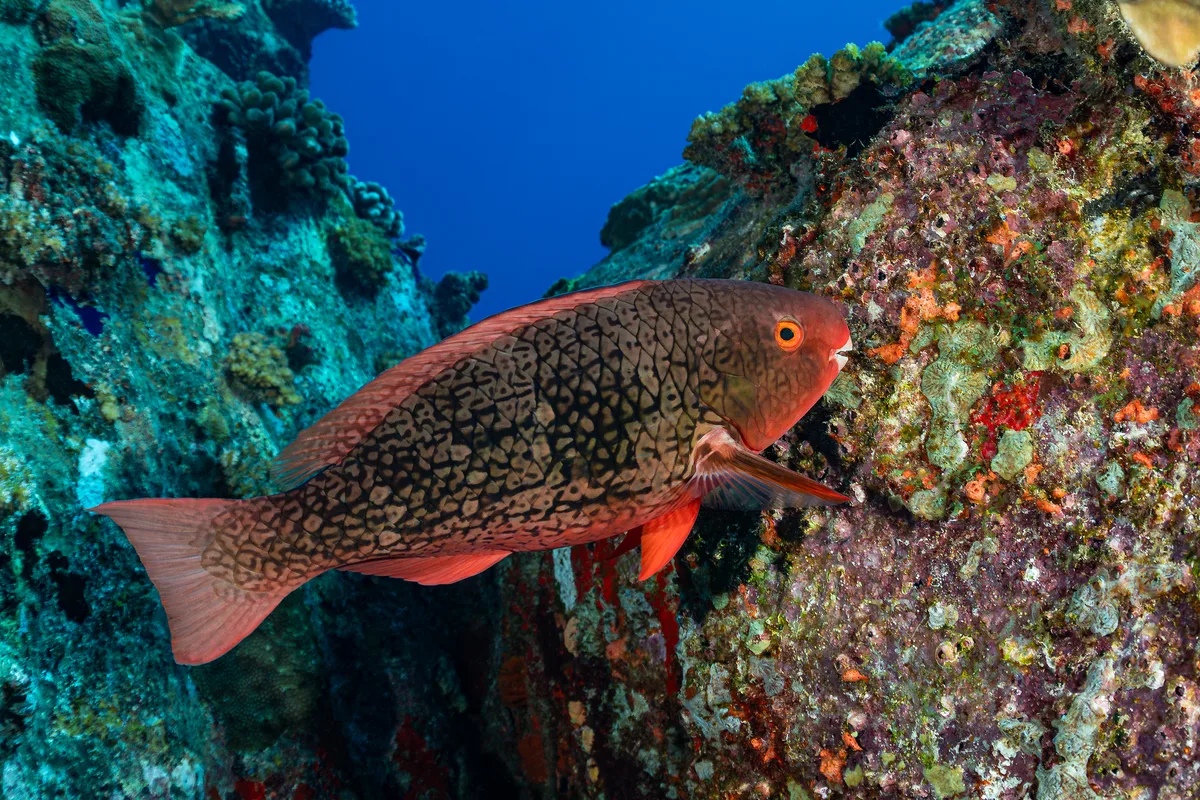
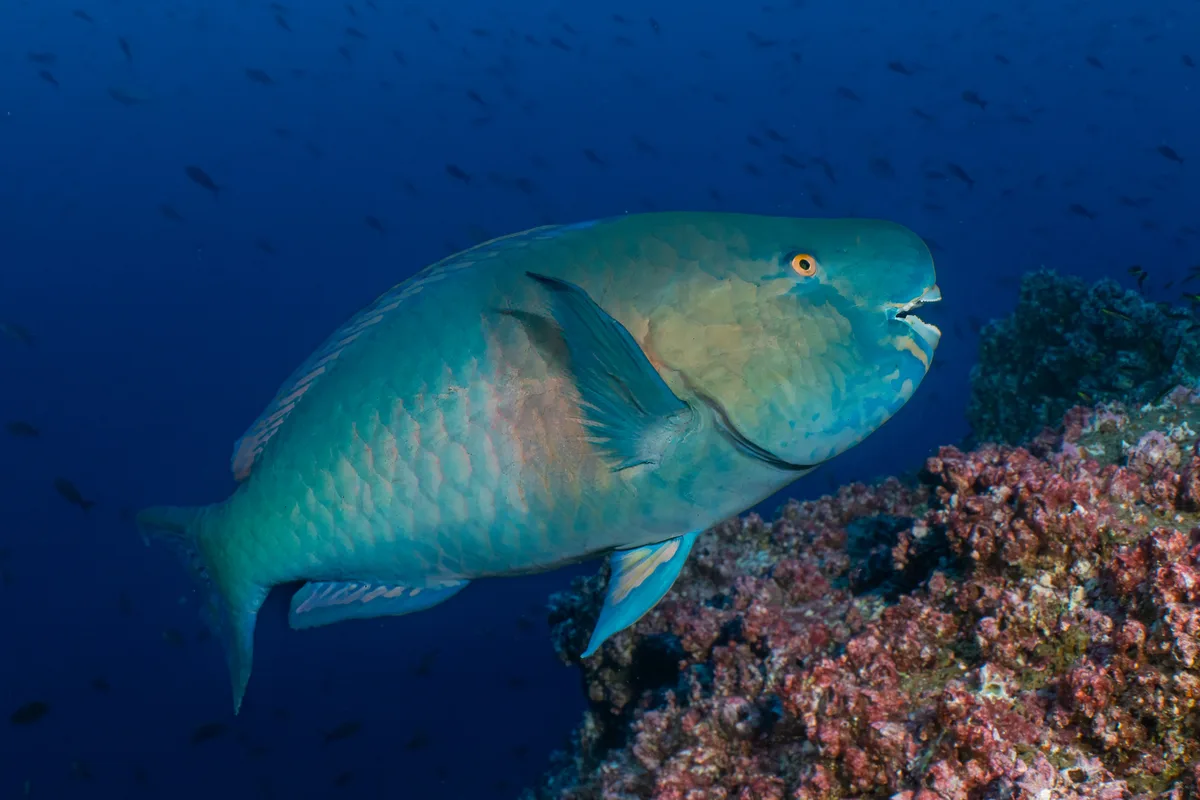
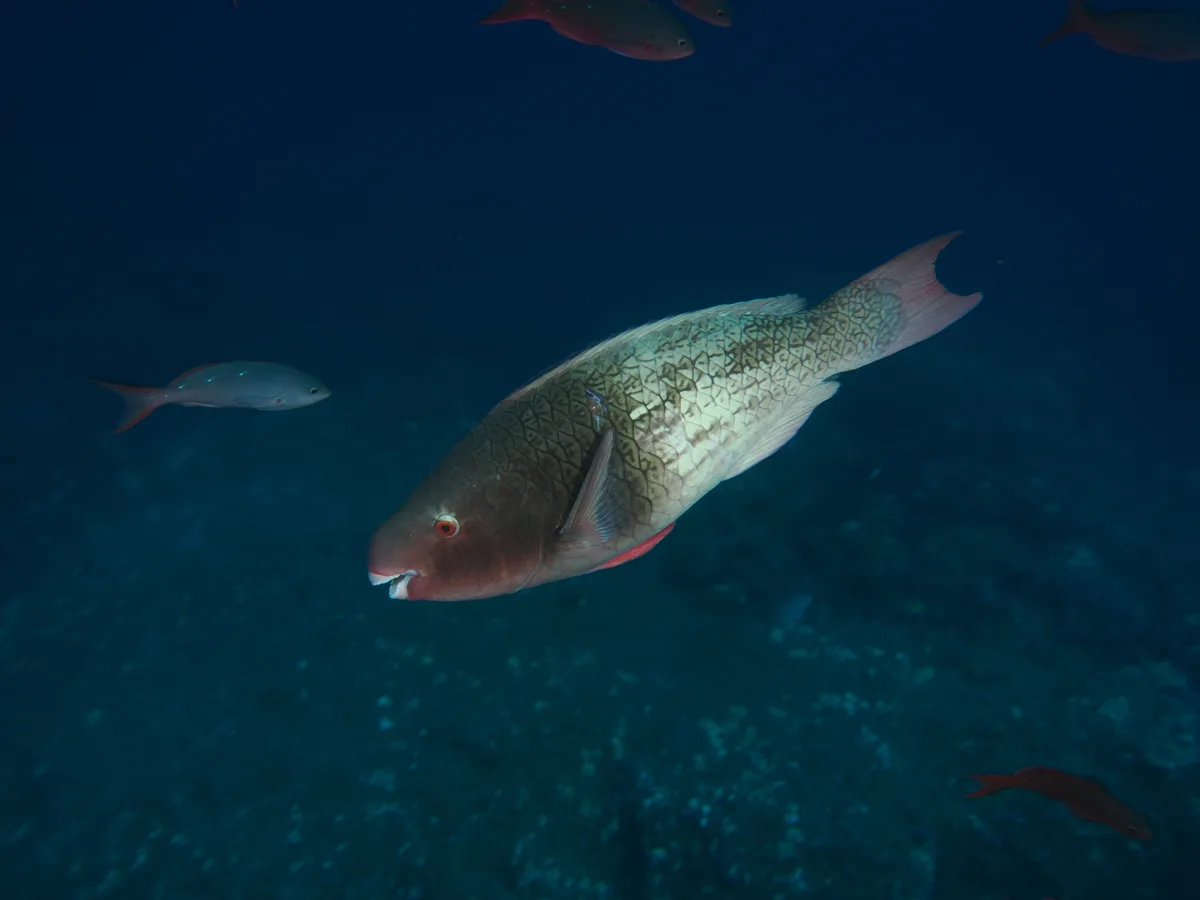
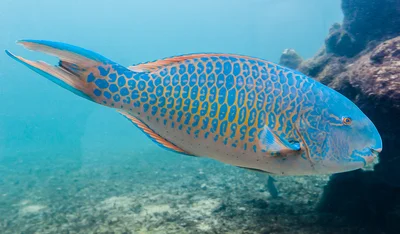
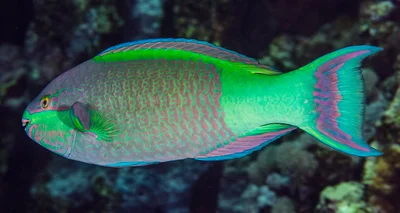
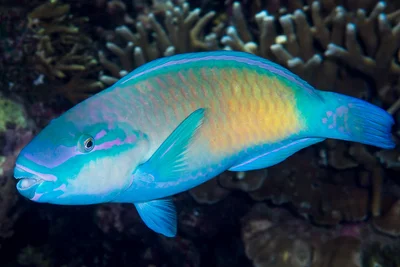
Watch one move and you will notice it is not using its tail. A parrotfish swims by rowing with its pectoral fins, one stroke after another, the way an oarsman works a boat, and the tail stays folded and unused.
That is a deliberate trade. Rowing is slow but it is precise: the fish can hold station against surge, back up, turn on the spot and keep its head exactly where it wants it while biting rock. An animal that has to place a bite accurately on a hard surface all day needs control far more than it needs speed.
The tail is kept in reserve. When something goes wrong the fish switches to it and leaves at several times the cruising speed, which is why a parrotfish that has ignored you for ten minutes can be gone in a second. Wrasses, the family parrotfish came out of, swim exactly the same way.
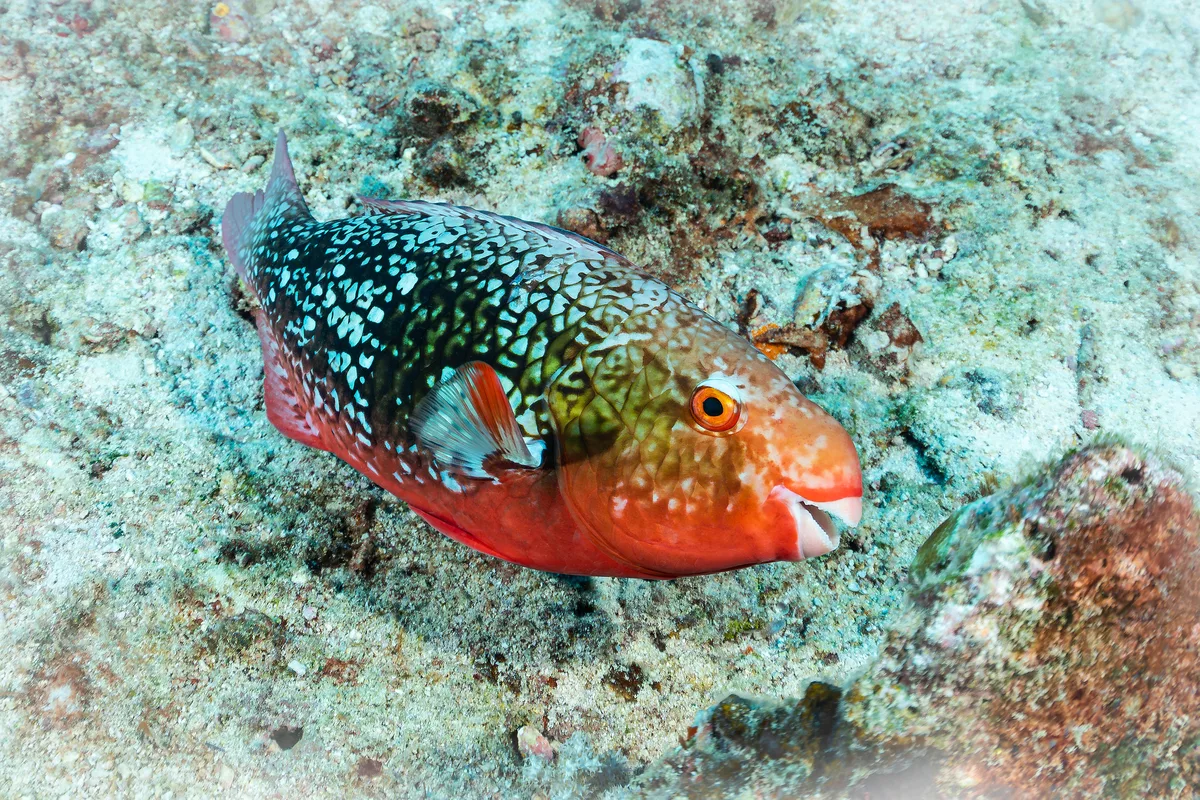
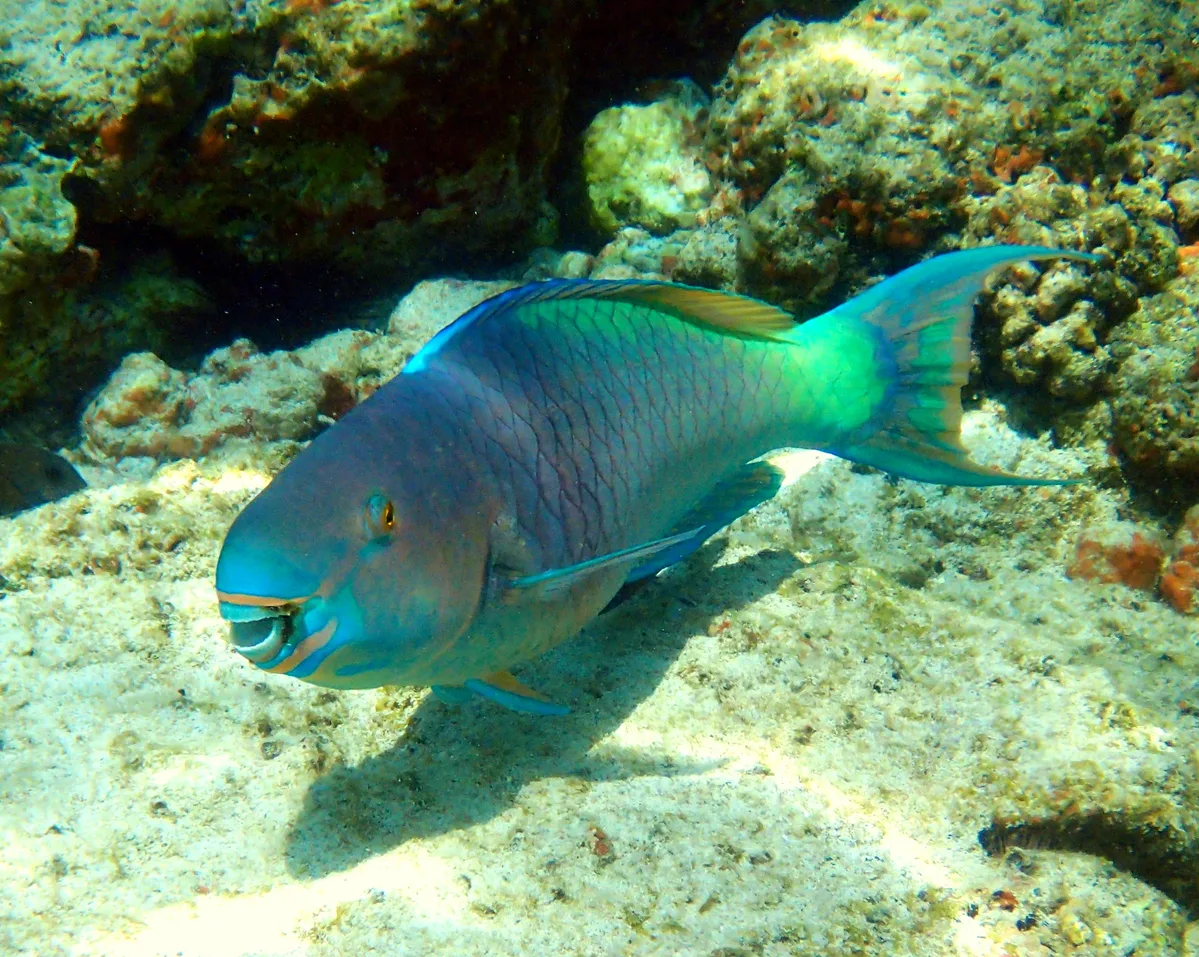
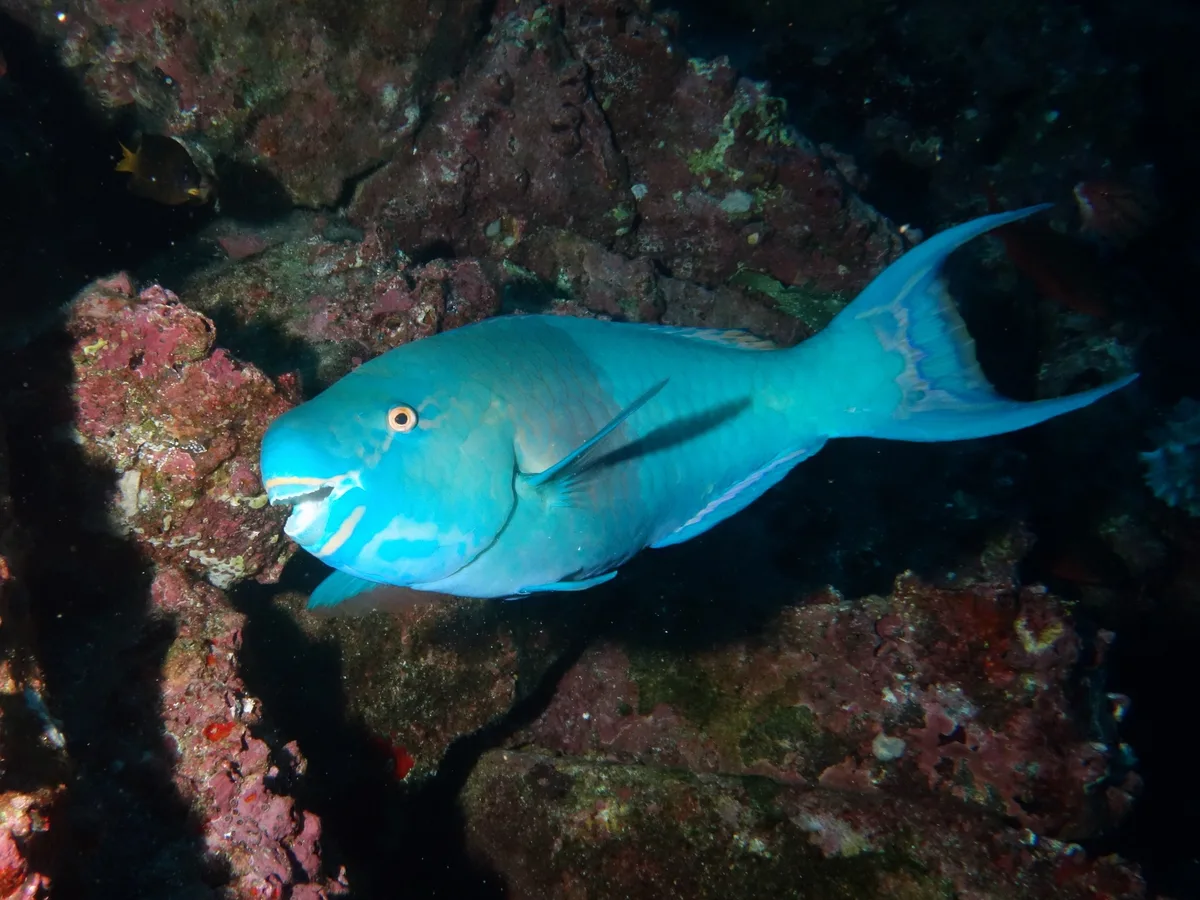
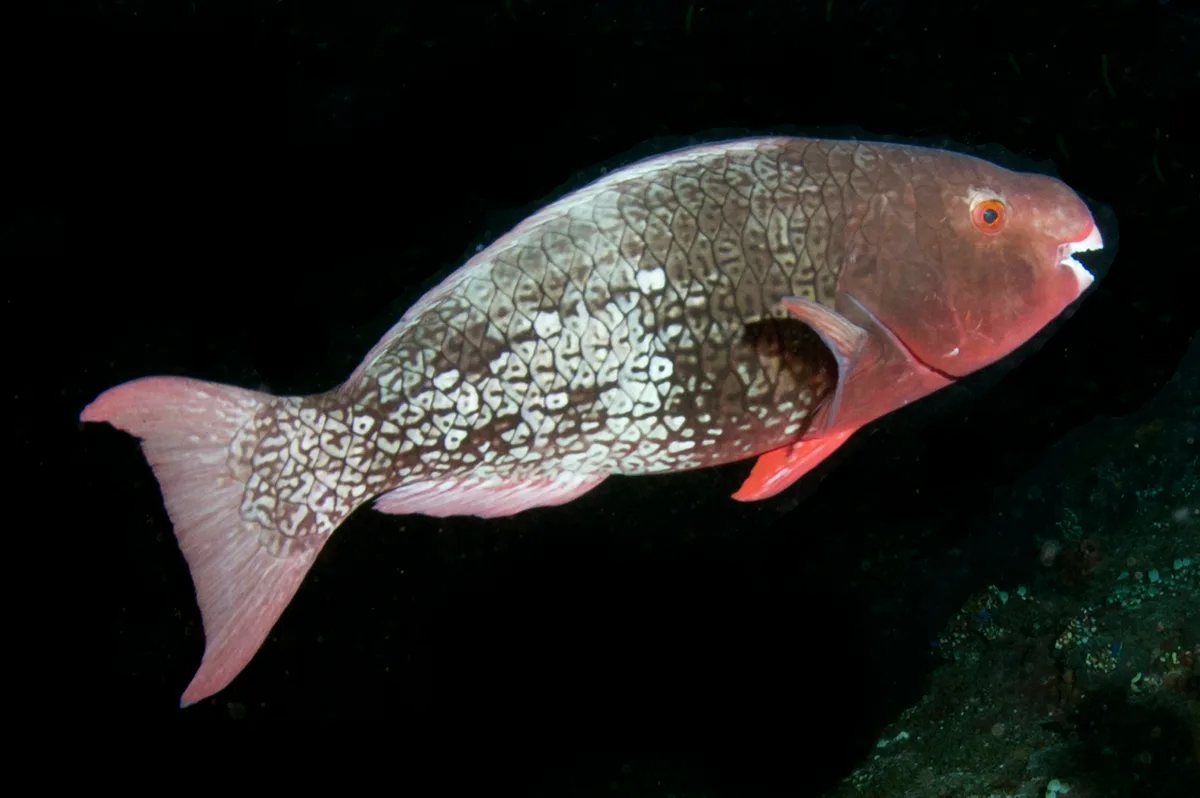
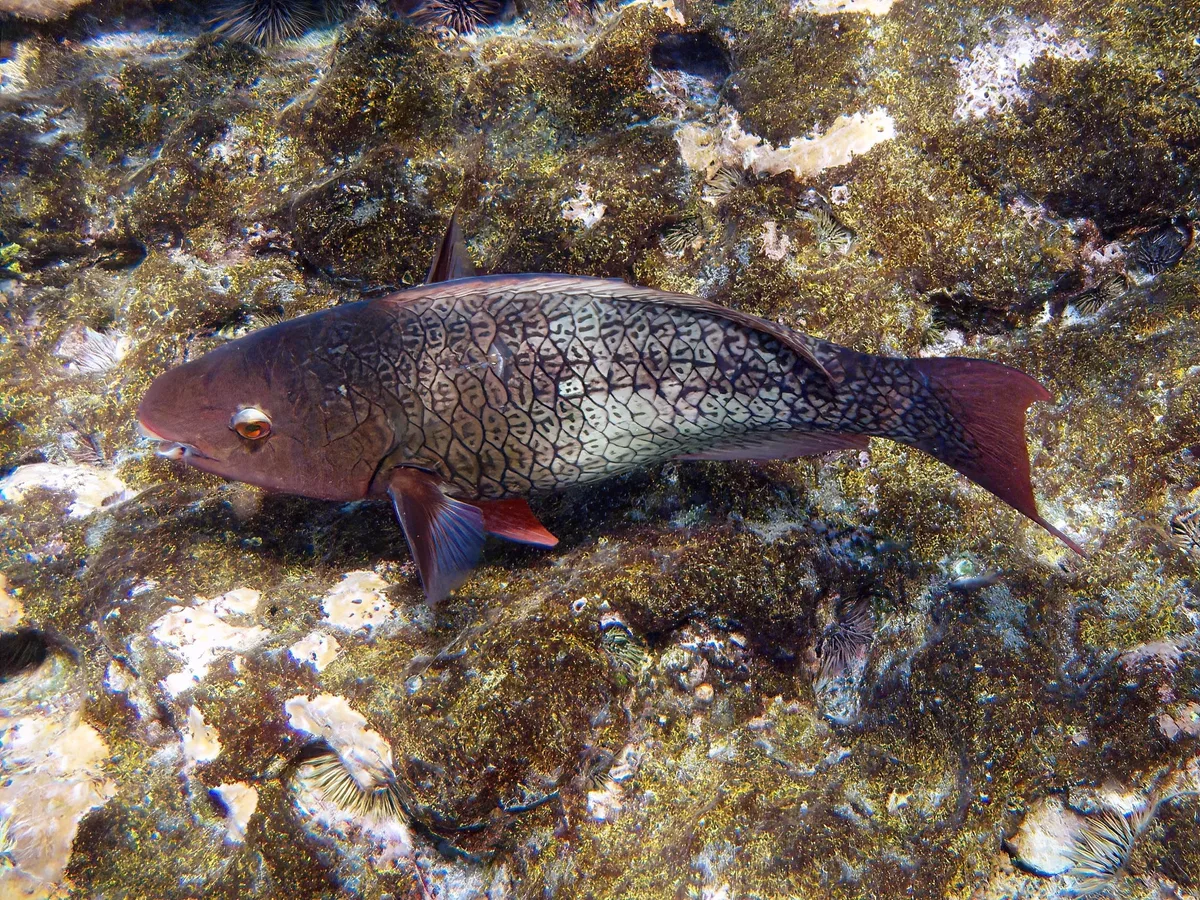
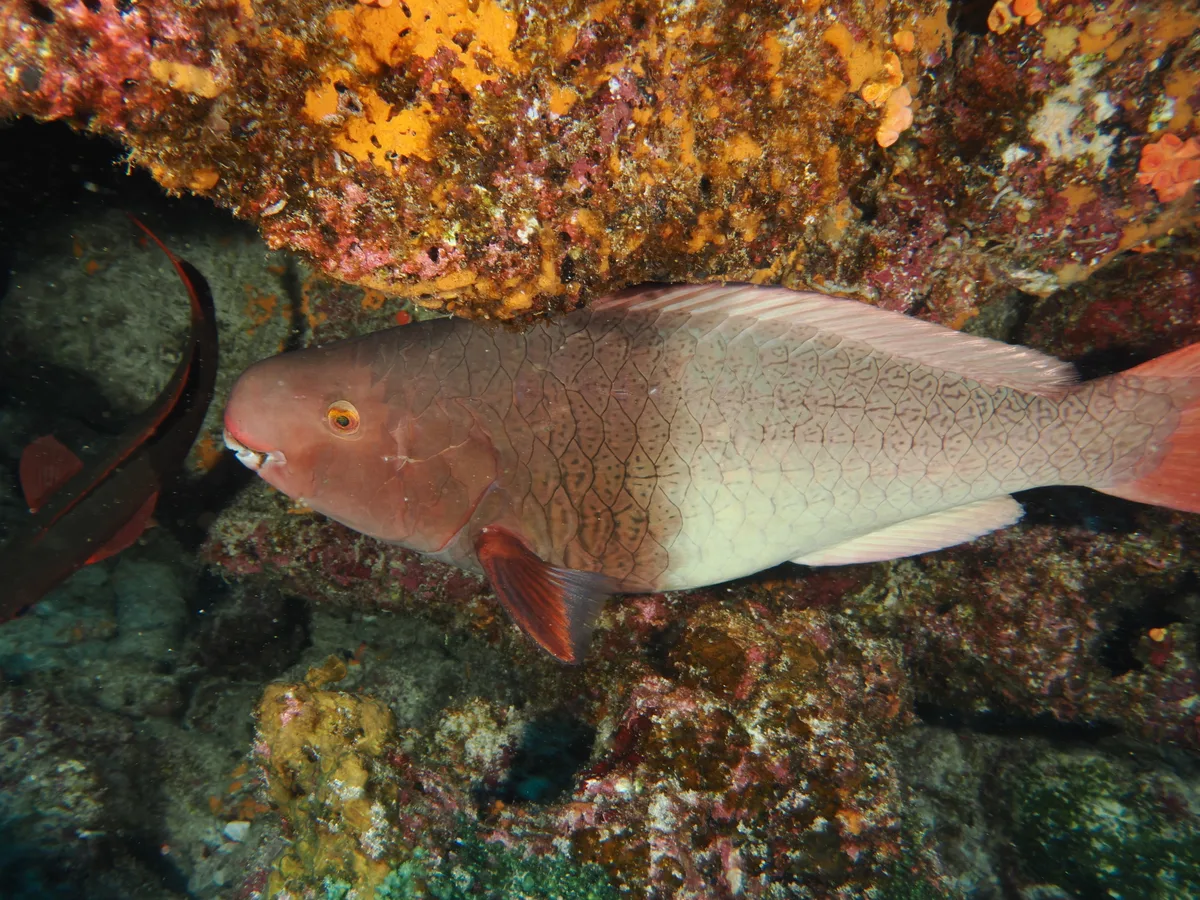
This is the largest parrotfish on the coast, up to seventy centimeters. Big males carry a distinct hump on the forehead and a crescent-shaped tail, and are often two-toned, with the rear half brighter than the front; females are reddish brown broken by pale patches.
The genus.Scarus Forsskål 1775 - skaros (ancient Greek name of Sparisoma cretense). ETYFish
This species is fished in some parts of its range where destructive fishing practices and habitat destruction are prevalent. It is heavily fished in the northern Solomon Islands with evidence of a decline in mean size and numbers of this species in the markets from 2004-2006. It is the second or third most important species in the parrotfish fishery in 2004, but by 2006 the importance of this species in the fishery had declined (J.H. Choat pers comm. 2009).
Parrotfishes show varying degrees of habitat preference and utilization of coral reef habitats, with some species spending the majority of their life stages on coral reefs, while others primarily utilize seagrass beds, mangroves, algal beds, and /or rocky reefs. Although the majority of the parrotfishes occur in mixed habitat (primarily inhabiting seagrass beds, mangroves, and rocky reefs) approximately 78% of these mixed habitat species are experiencing greater than 30% loss of coral reef area and habitat quality across their distributions. Of those species that occur exclusively in coral reef habitat, more than 80% are experiencing a greater than 30% of coral reef loss and degradation across their distributions. However, more research is needed to understand the long-term effects of habitat loss and degradation on these species populations. Widespread coral reef loss and declining habitat conditions are particularly worrying for species that depend on live coral reefs for food and shelter especially as studies have shown that protection of pristine habitats facilitate the persistence of adult populations in species that have spatially separated adult and juvenile habitats. Furthermore, coral reef loss and declining habitat conditions are particularly worrying for some corallivorous excavating parrotfishes that play major roles in reef dynamics and sedimentation (Comeros-Raynal et al. 2012).
Threat classification from the IUCN Red List.
Comments
Please, sign in to leave a comment
Continue with a social account - yours will be created automatically.