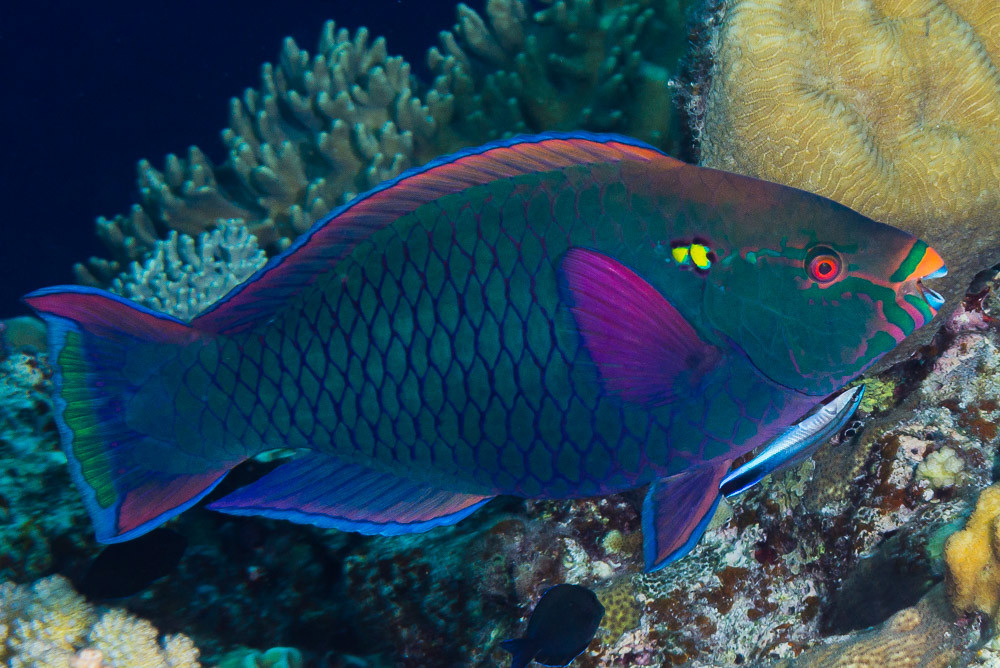
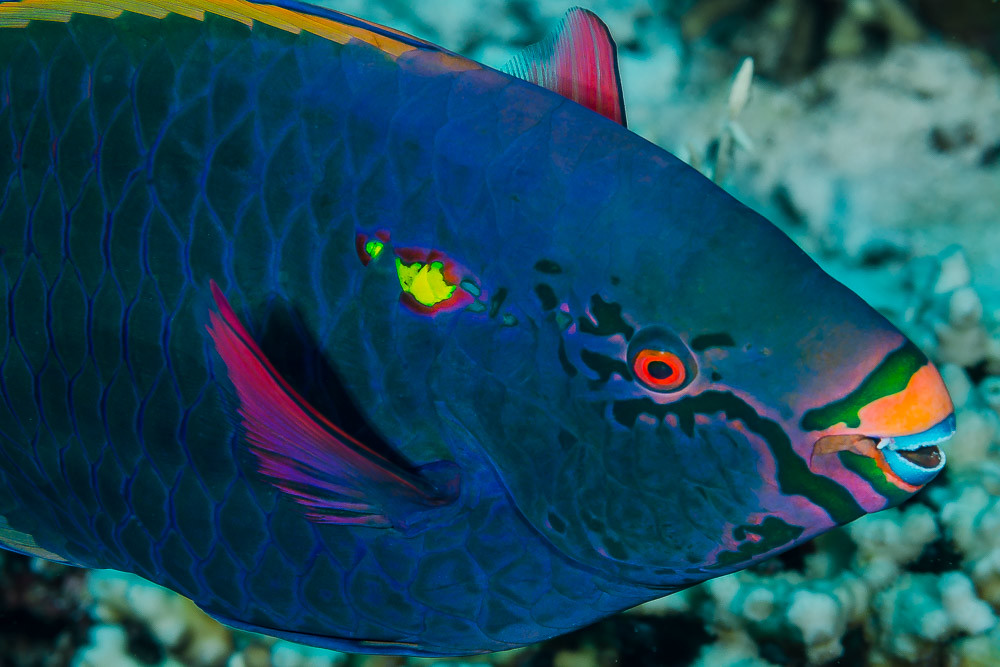
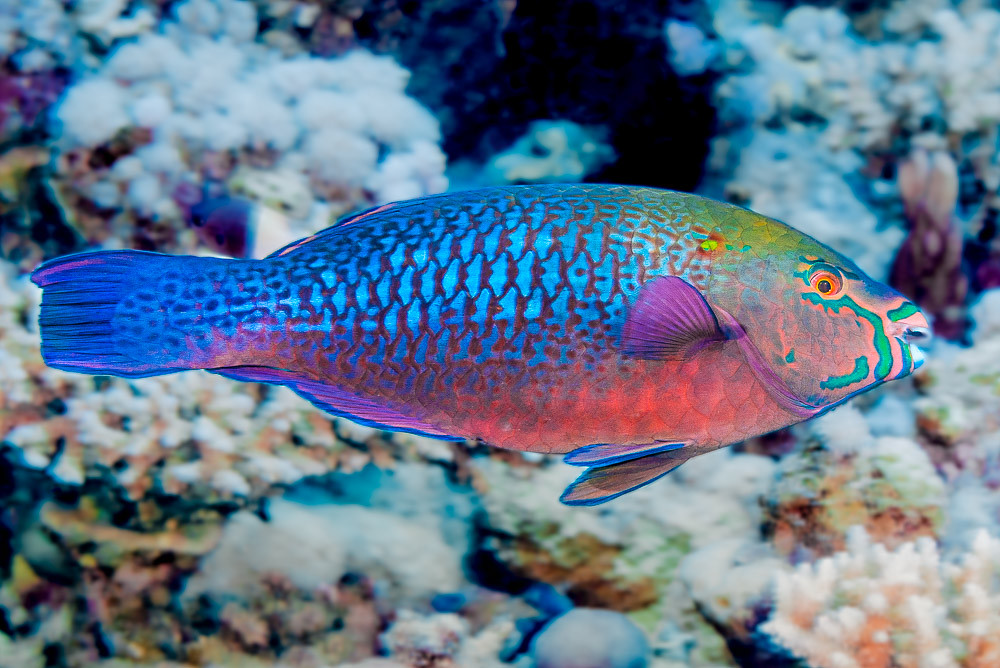
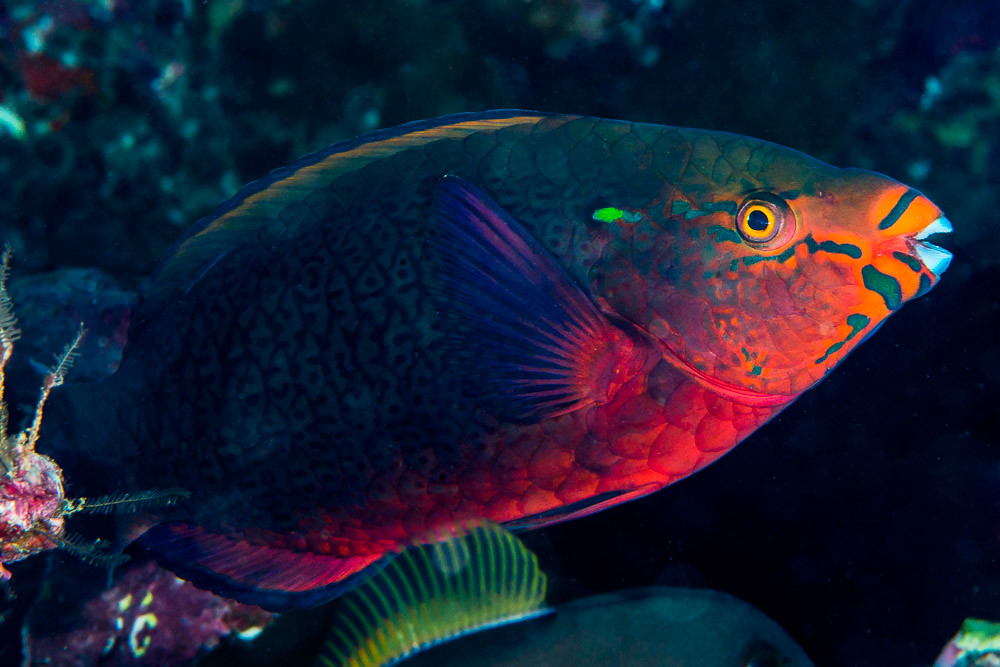
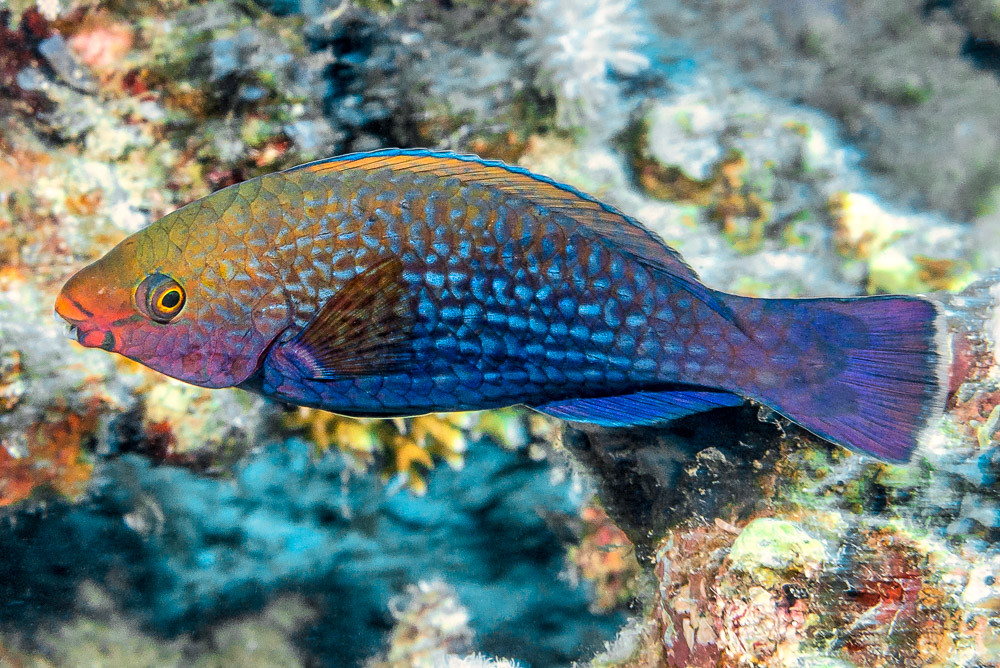
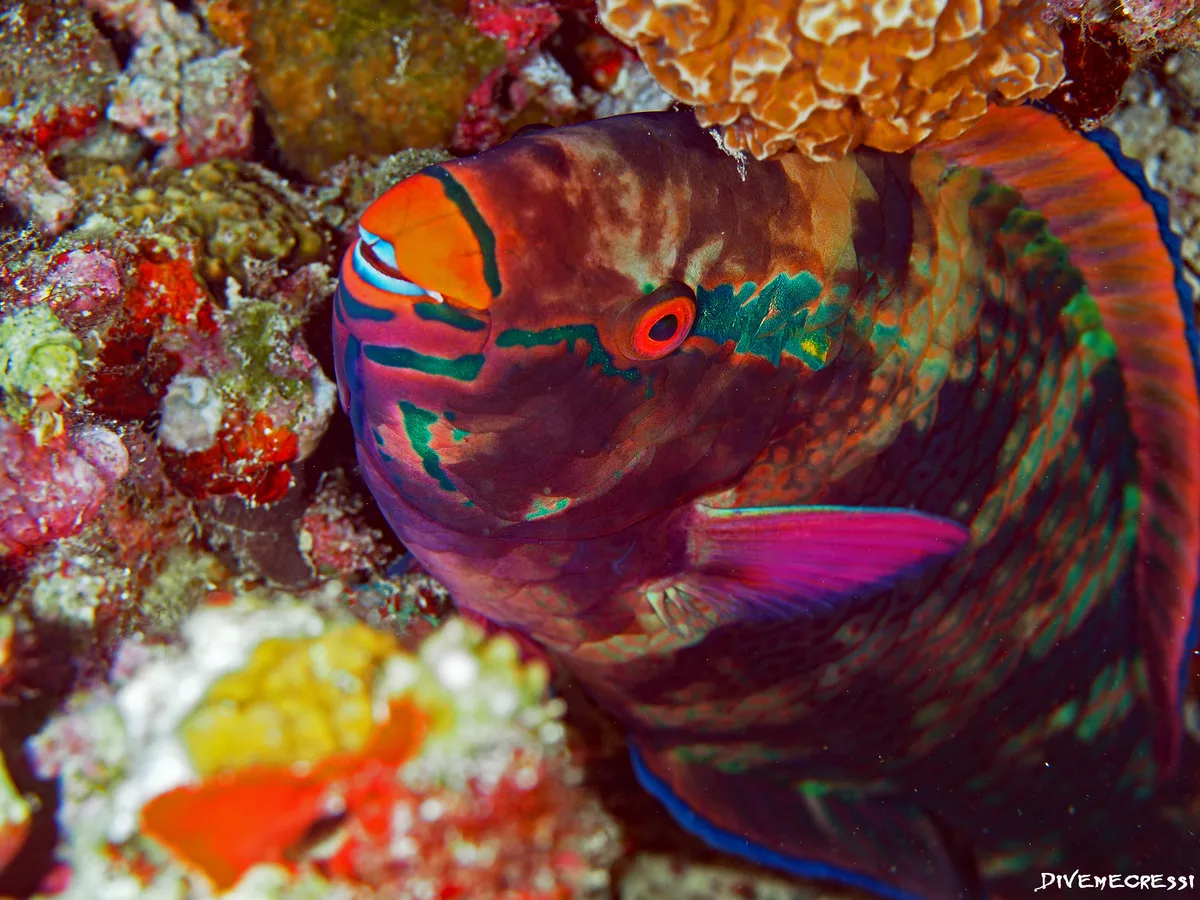
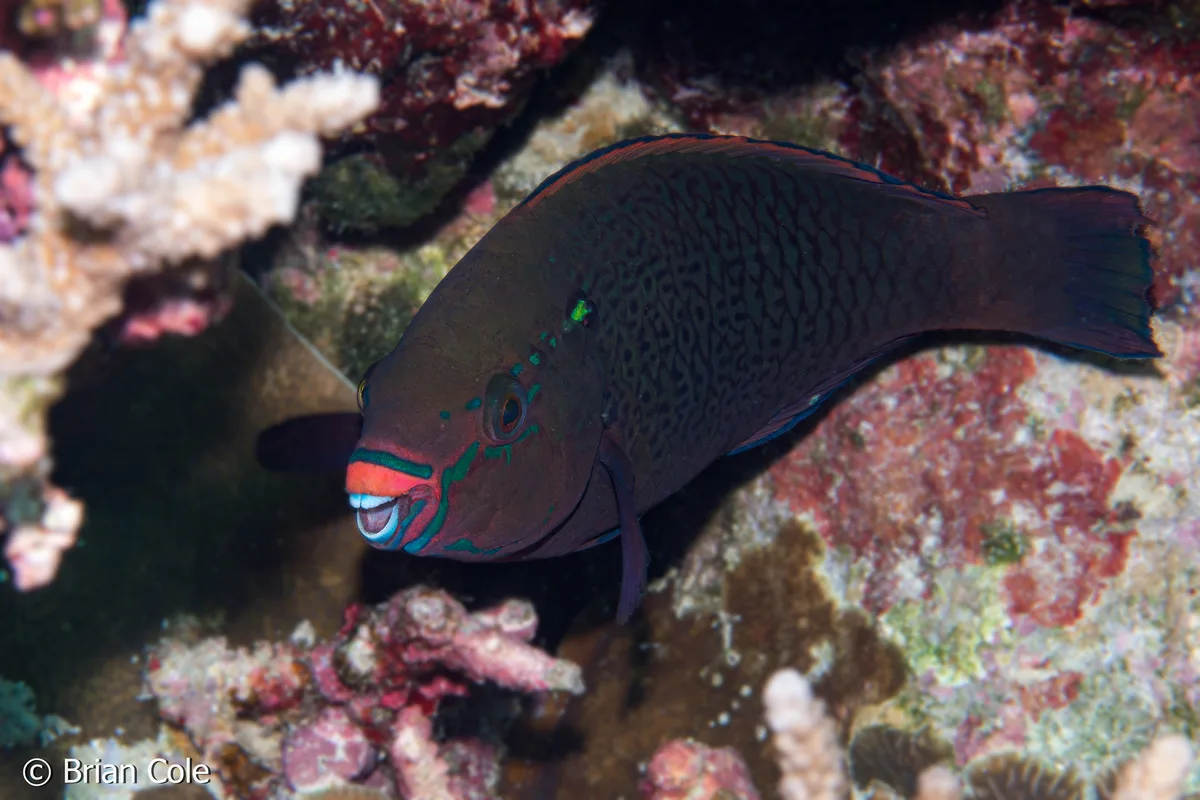
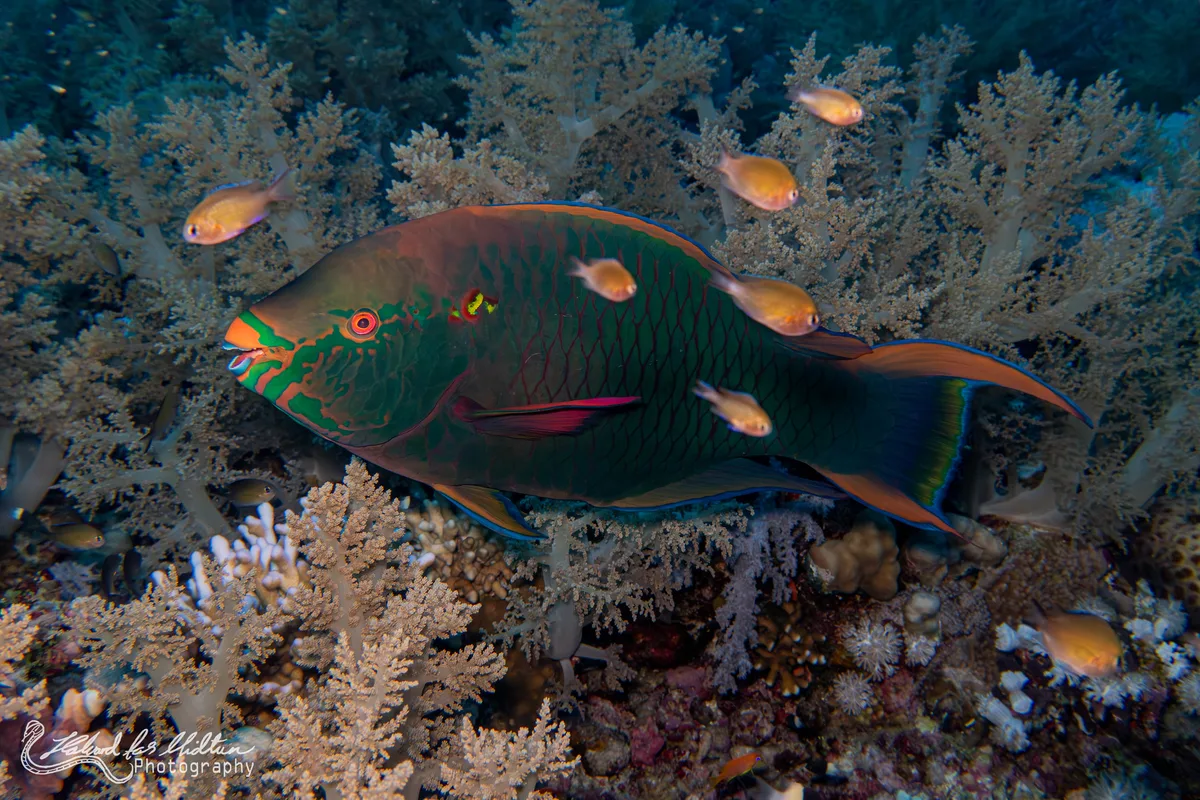
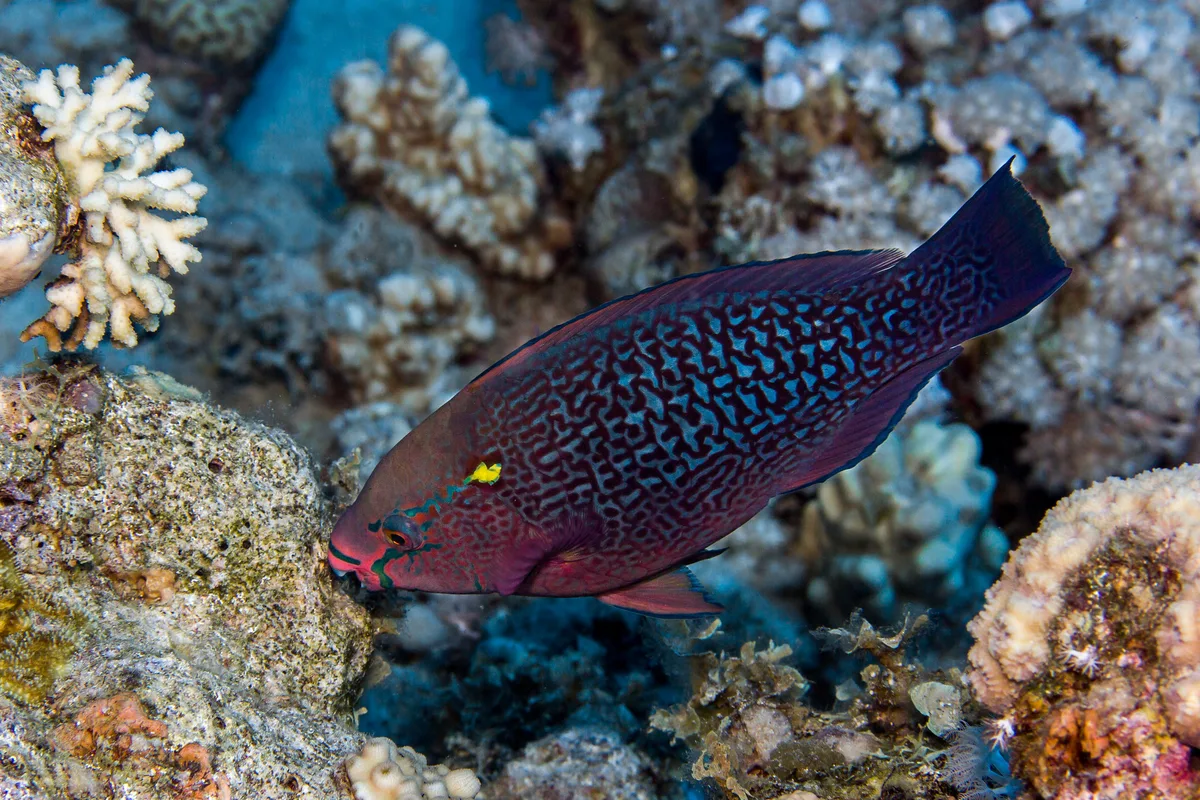
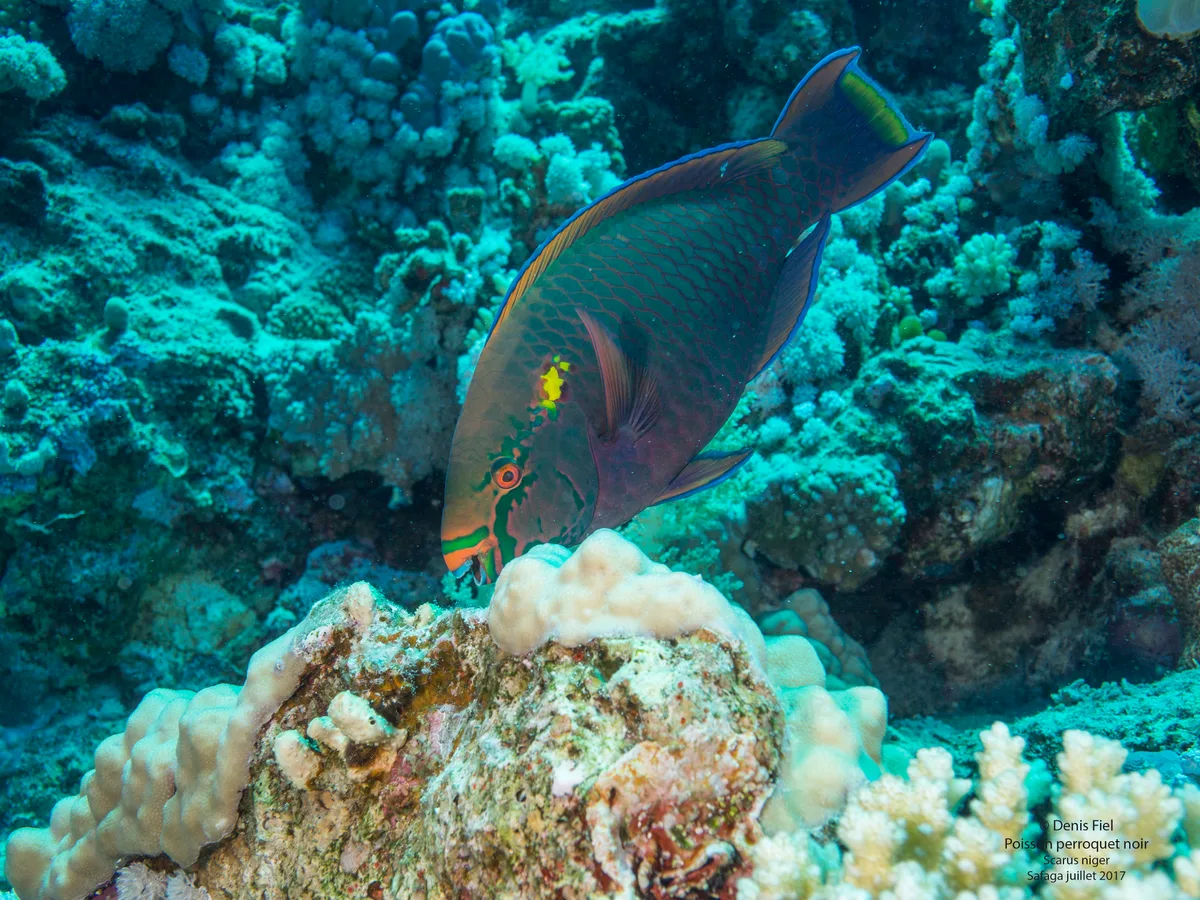
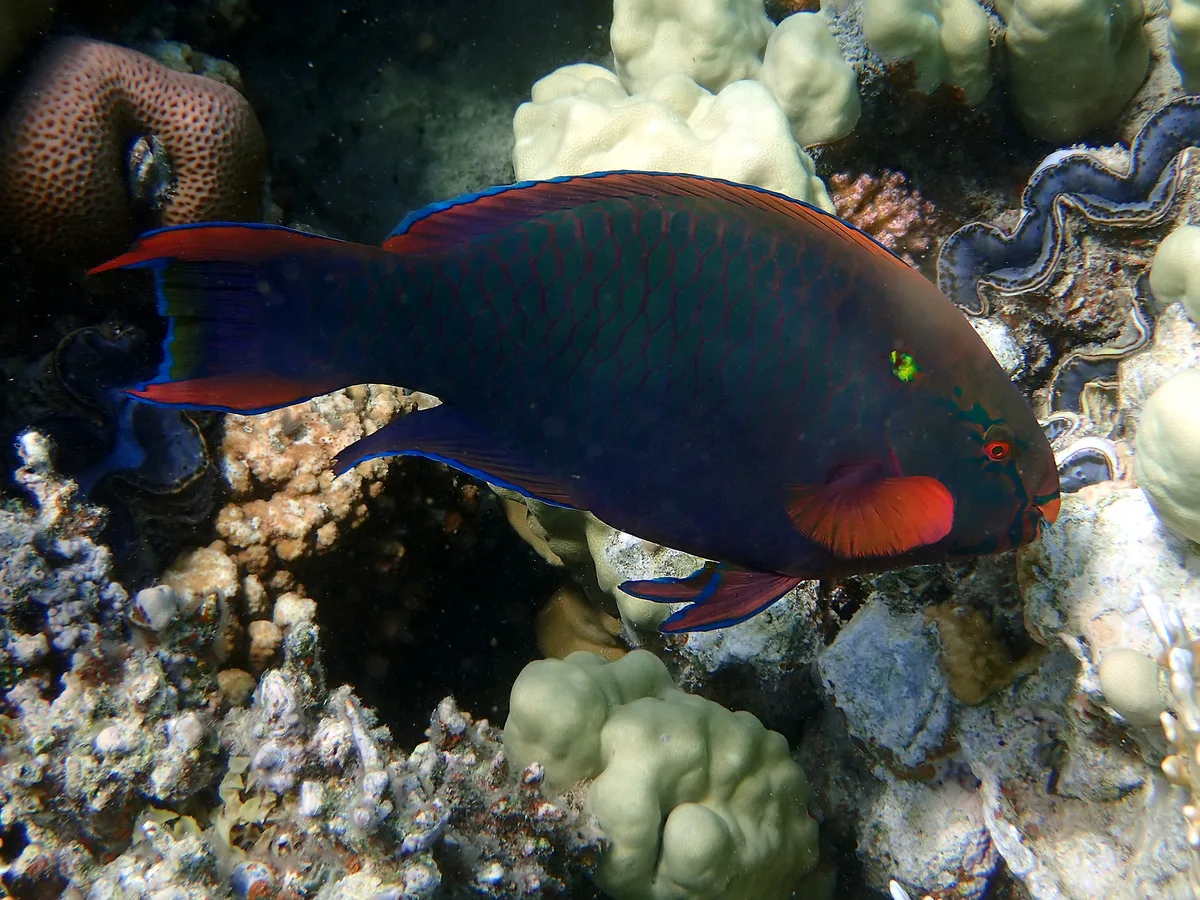
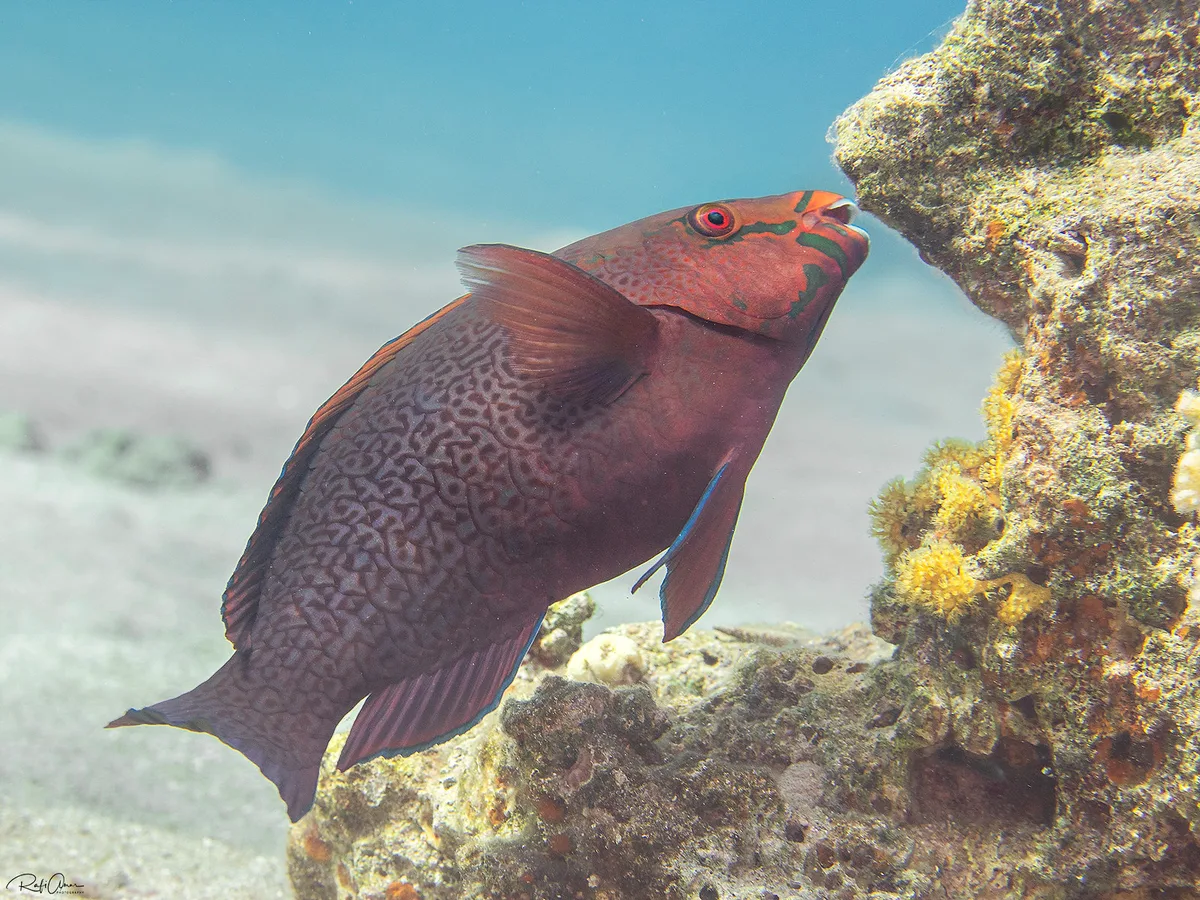
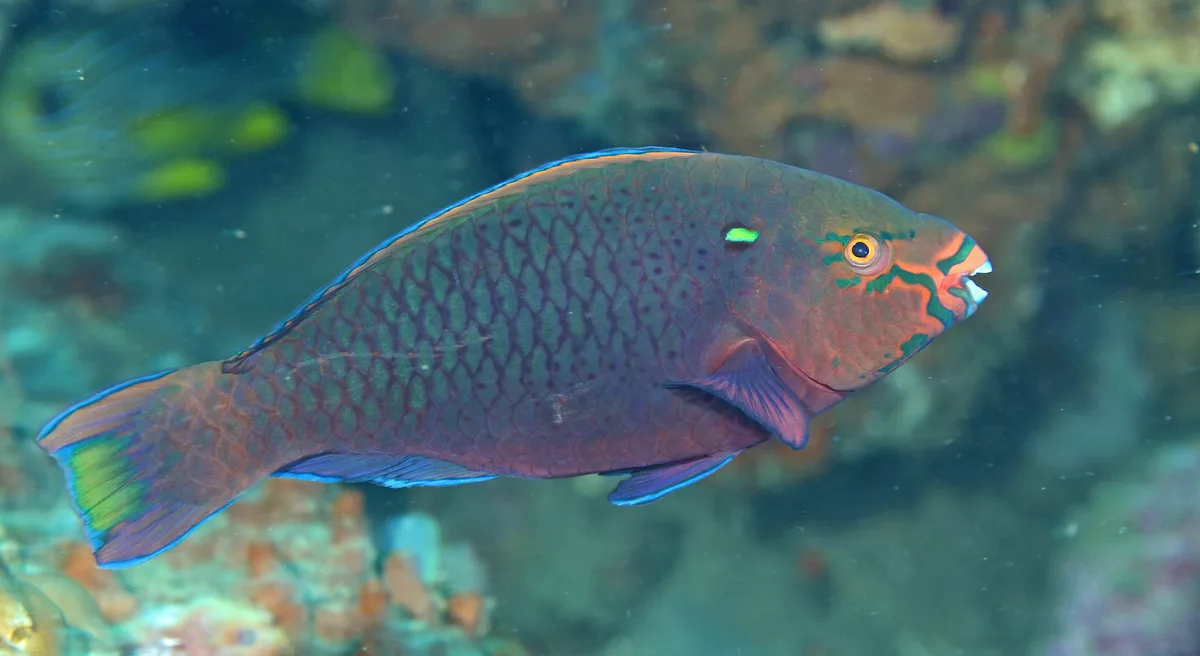
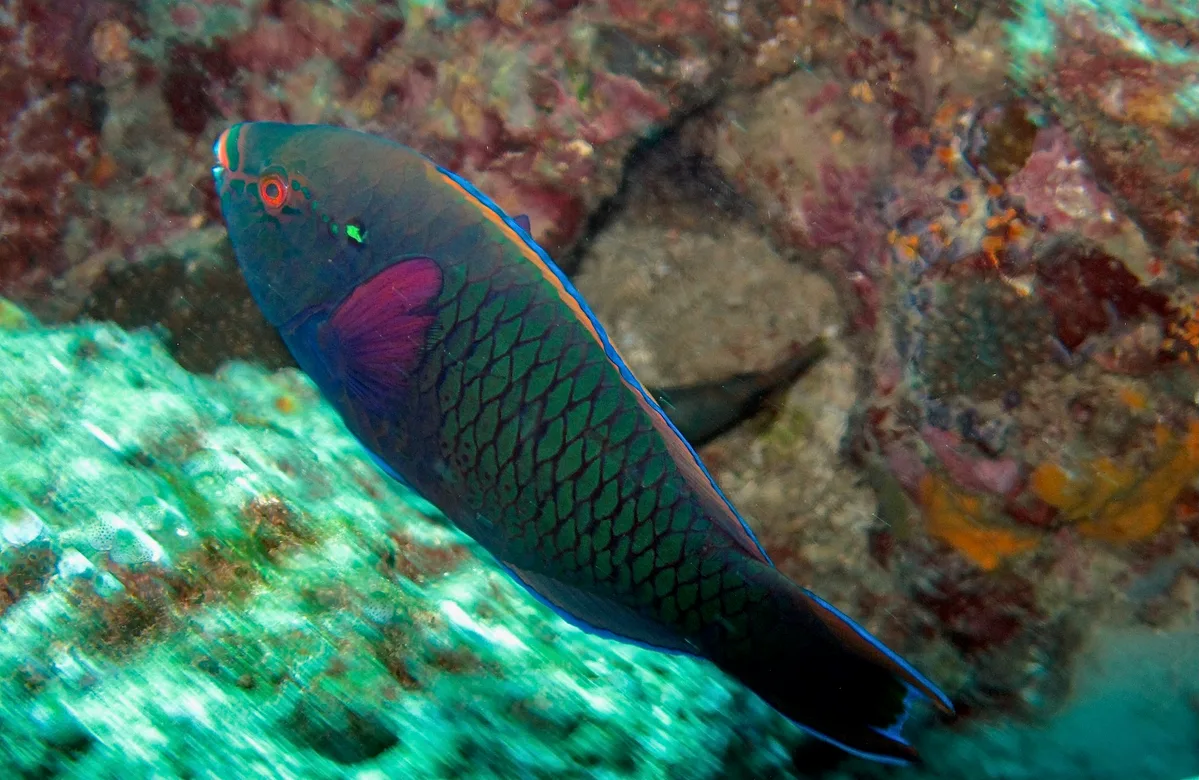
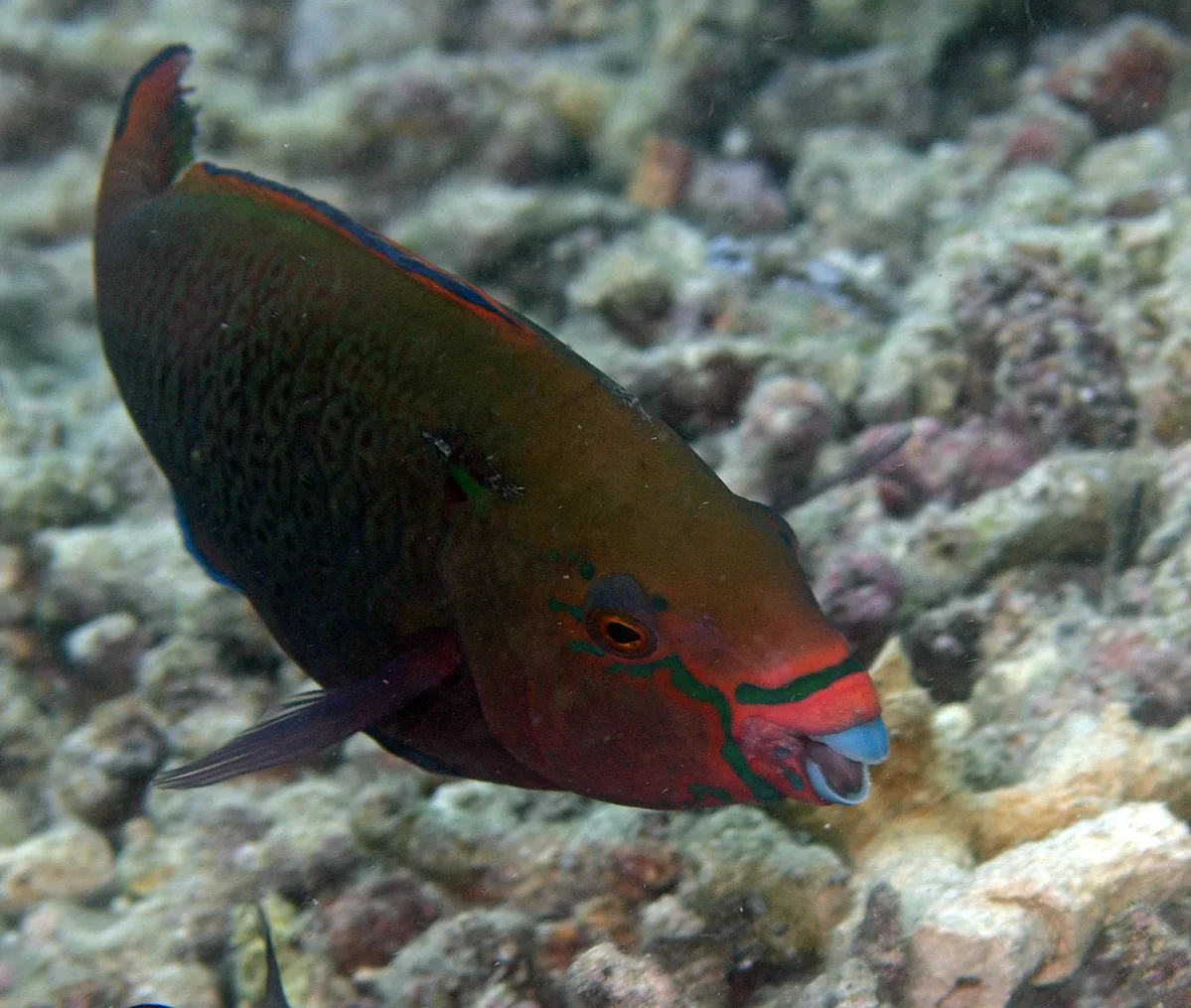
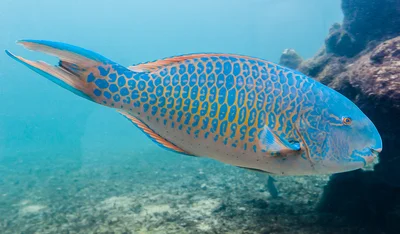
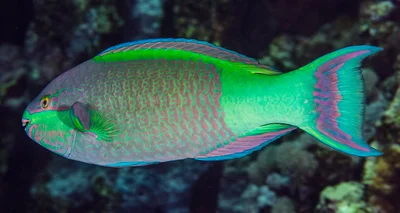
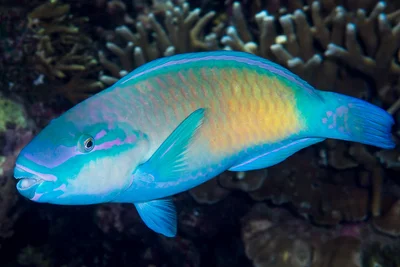
The mark to look for sits just behind the gill cover: a green spot with a dark edge, on the side of the head, carried by males. On a family where almost every species has two color phases and a dozen near-identical relatives, a spot in a fixed place is worth more than any amount of general green.
It is also a fish with a naming problem. Regional guides print it as the swarthy parrotfish; the name dusky is attached both to this one and, as dusky-cap, to a different species on the same reef. Common names in this family were handed out independently in a dozen places, and the scientific name is the only stable handle.
What it does is what the family does: bites algae-covered rock all day, grinds it, and puts out sand. It works coral-rich reef and slopes and is one of the commoner mid-sized parrotfish here.
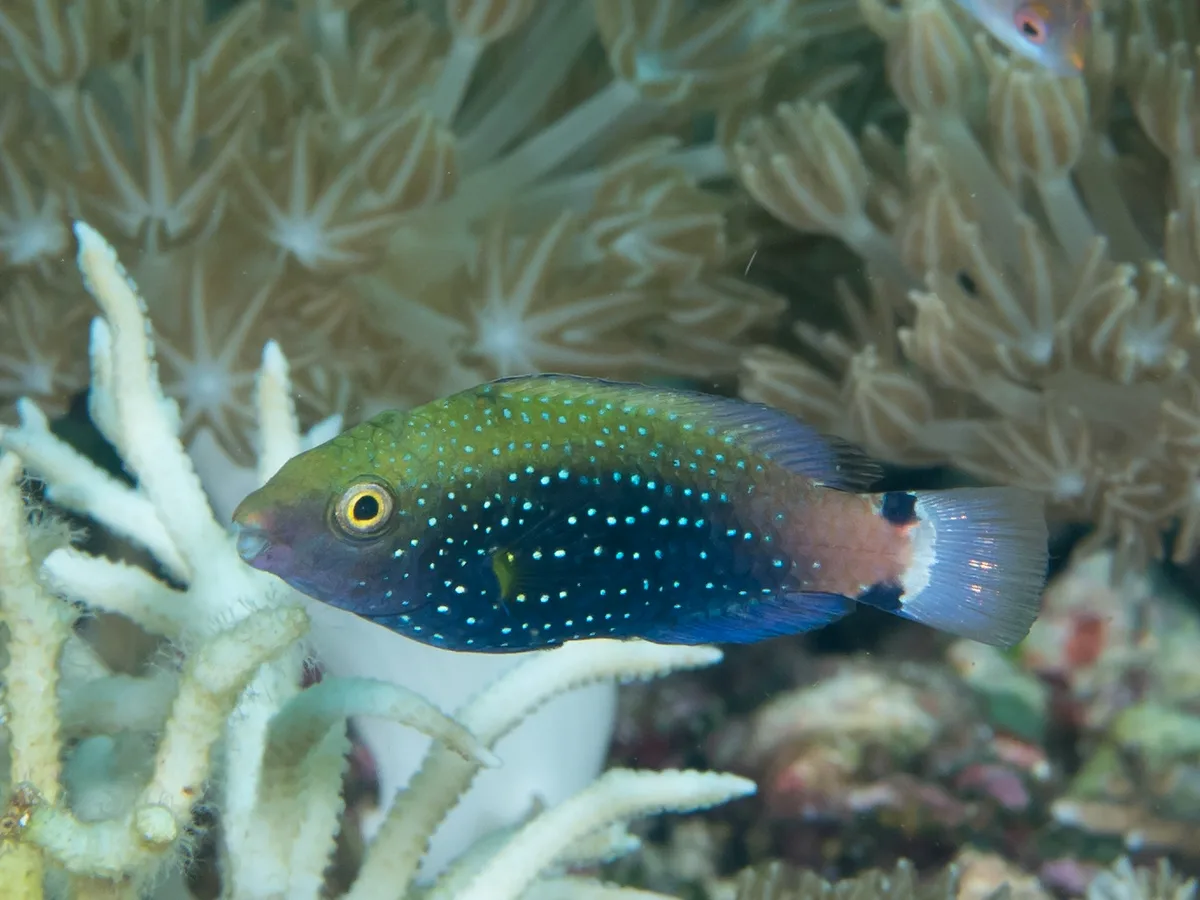
The young are worth a look if you find them: translucent-tailed, with rows of small bluish dots along the body, and nothing about them suggesting the heavy green adult.
The genus.Scarus Forsskål 1775 - skaros (ancient Greek name of Sparisoma cretense). ETYFish
The species.Scarus niger Forsskål 1775 - black. ETYFish
How to recognise it
males with a green ear-spot edged in dark, just behind the gill cover
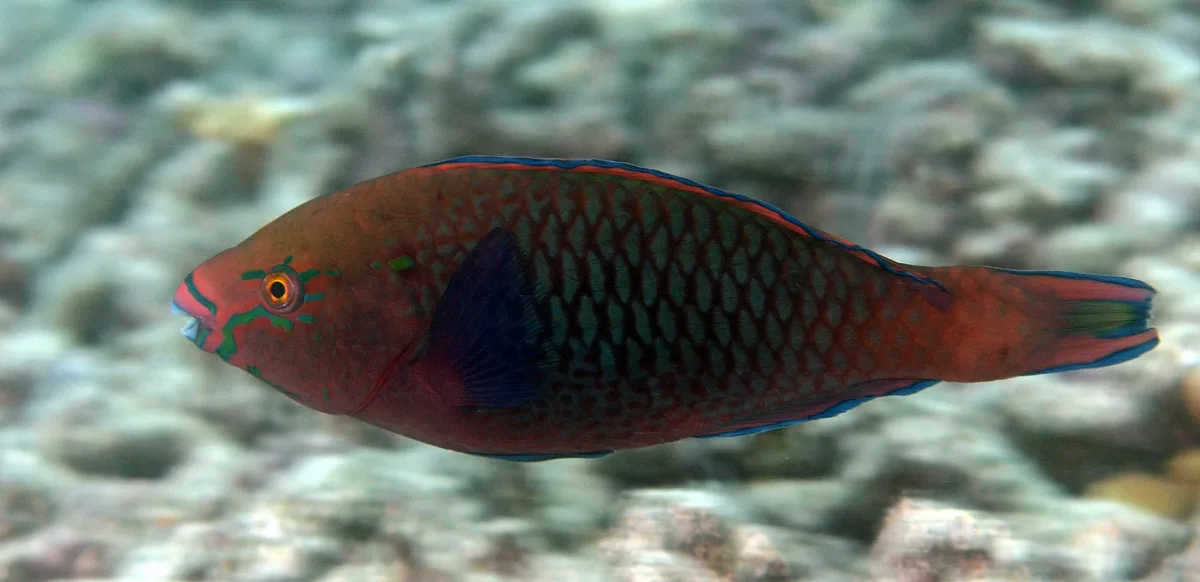
terminal males dark green, initial-phase fish browner
juveniles with a translucent tail and rows of bluish dots
This species is fished in some parts of its range where destructive fishing practices and habitat destruction are prevalent. However, these threats are not considered to affect the overall status of its population.
Parrotfishes show varying degrees of habitat preference and utilization of coral reef habitats, with some species spending the majority of their life stages on coral reefs, while others primarily utilize seagrass beds, mangroves, algal beds, and /or rocky reefs. Although the majority of the parrotfishes occur in mixed habitat (primarily inhabiting seagrass beds, mangroves, and rocky reefs) approximately 78% of these mixed habitat species are experiencing greater than 30% loss of coral reef area and habitat quality across their distributions. Of those species that occur exclusively in coral reef habitat, more than 80% are experiencing a greater than 30% of coral reef loss and degradation across their distributions. However, more research is needed to understand the long-term effects of habitat loss and degradation on these species populations. Widespread coral reef loss and declining habitat conditions are particularly worrying for species that depend on live coral reefs for food and shelter especially as studies have shown that protection of pristine habitats facilitate the persistence of adult populations in species that have spatially separated adult and juvenile habitats. Furthermore, coral reef loss and declining habitat conditions are particularly worrying for some corallivorous excavating parrotfishes that play major roles in reef dynamics and sedimentation (Comeros-Raynal et al. 2012).
Threat classification from the IUCN Red List.
Comments
Please, sign in to leave a comment
Continue with a social account - yours will be created automatically.