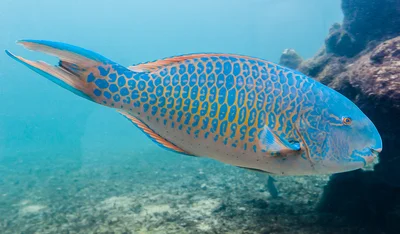
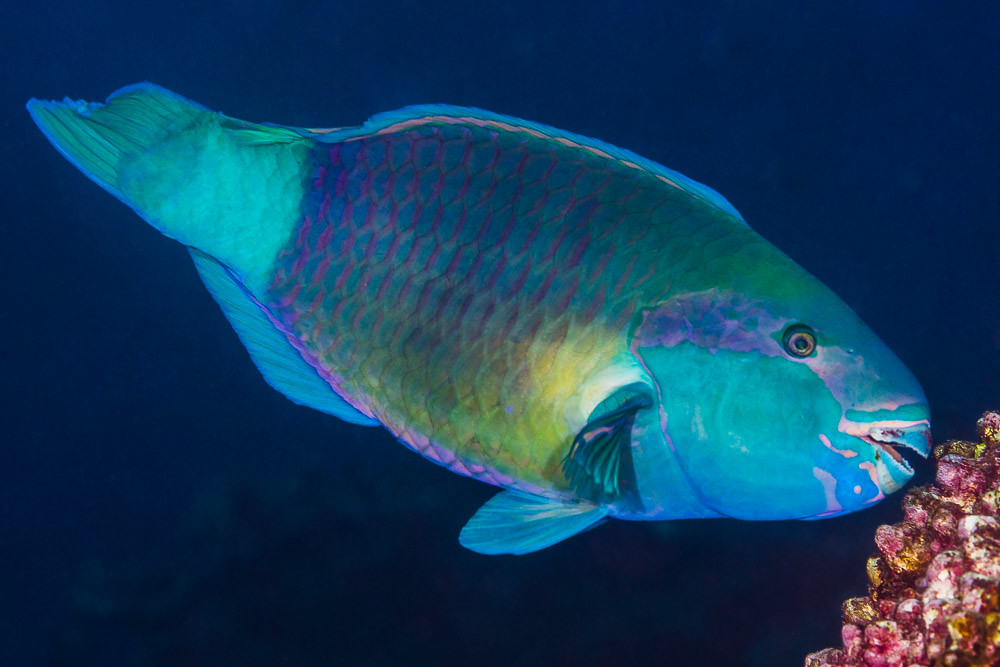
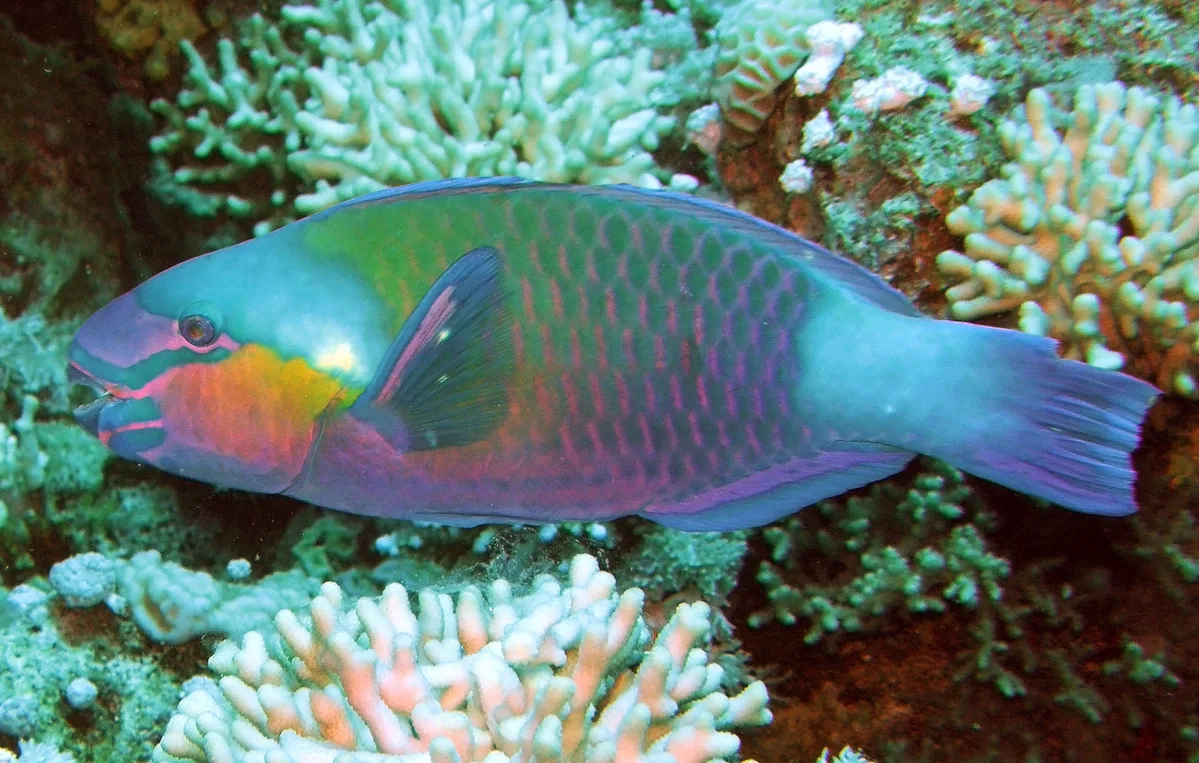
Pacific bullethead parrotfish, terminal phase - Chlorurus spilurus
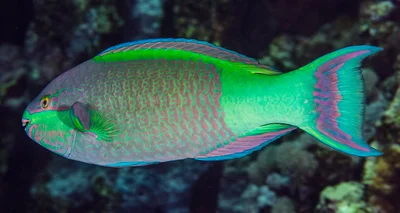
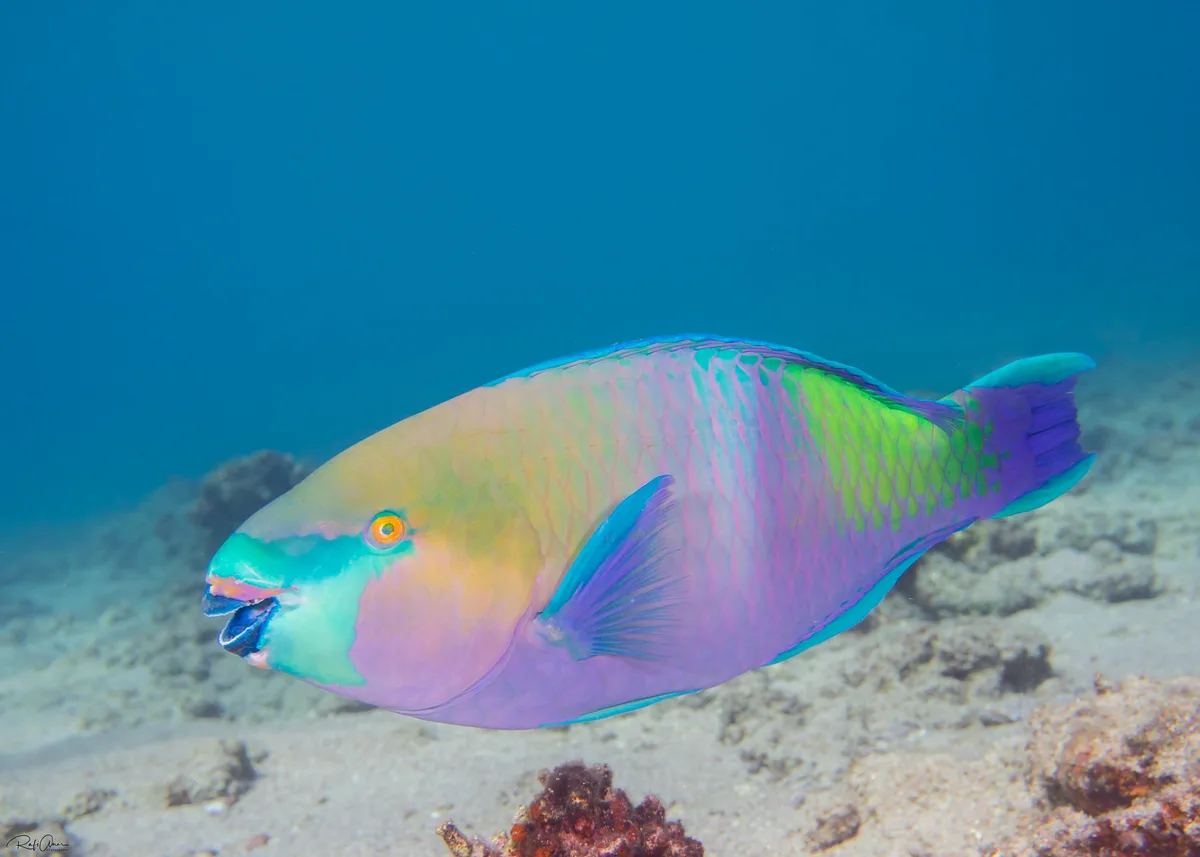
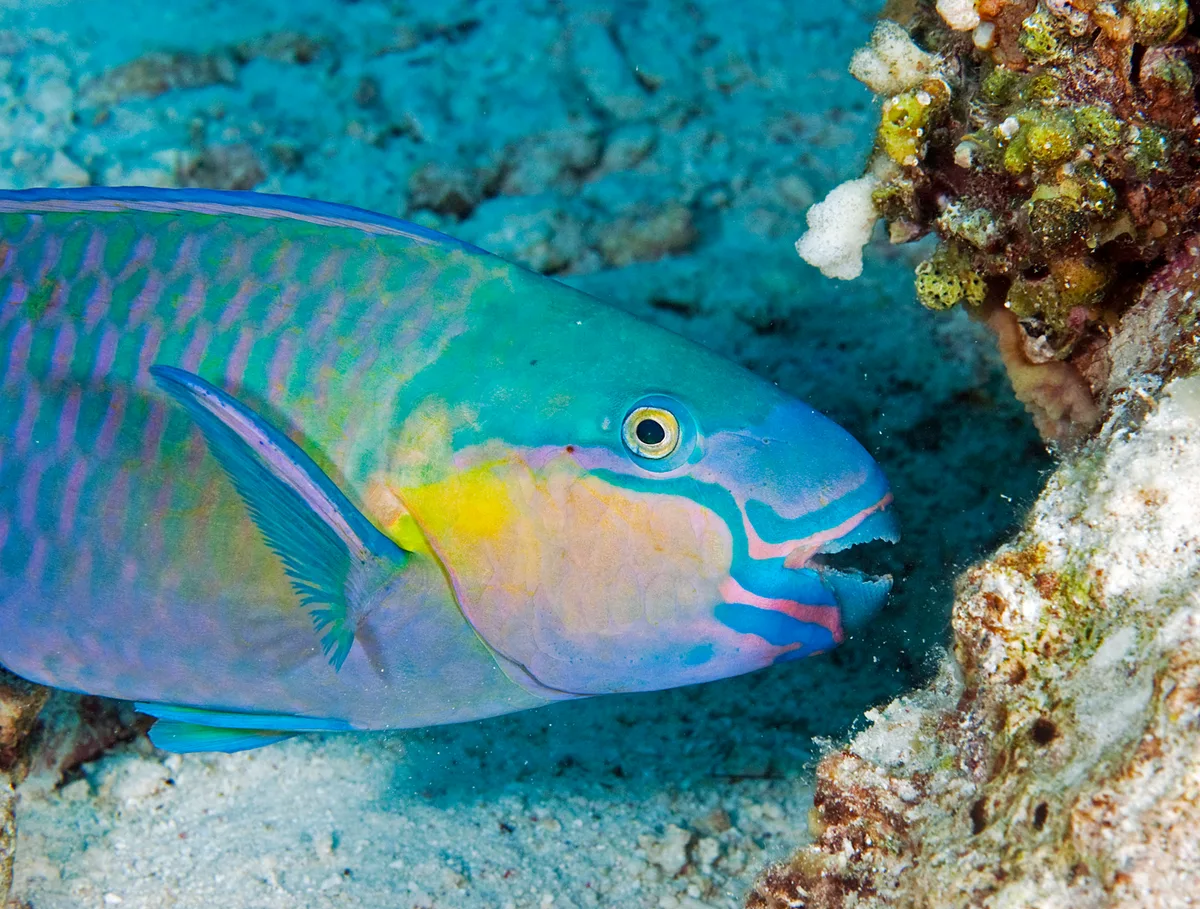
Bullethead Parrotfish, turquoise cheek Indian Ocean terminal phase - Chlorurus sordidus
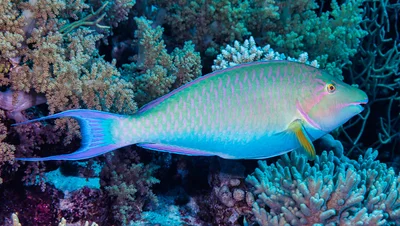
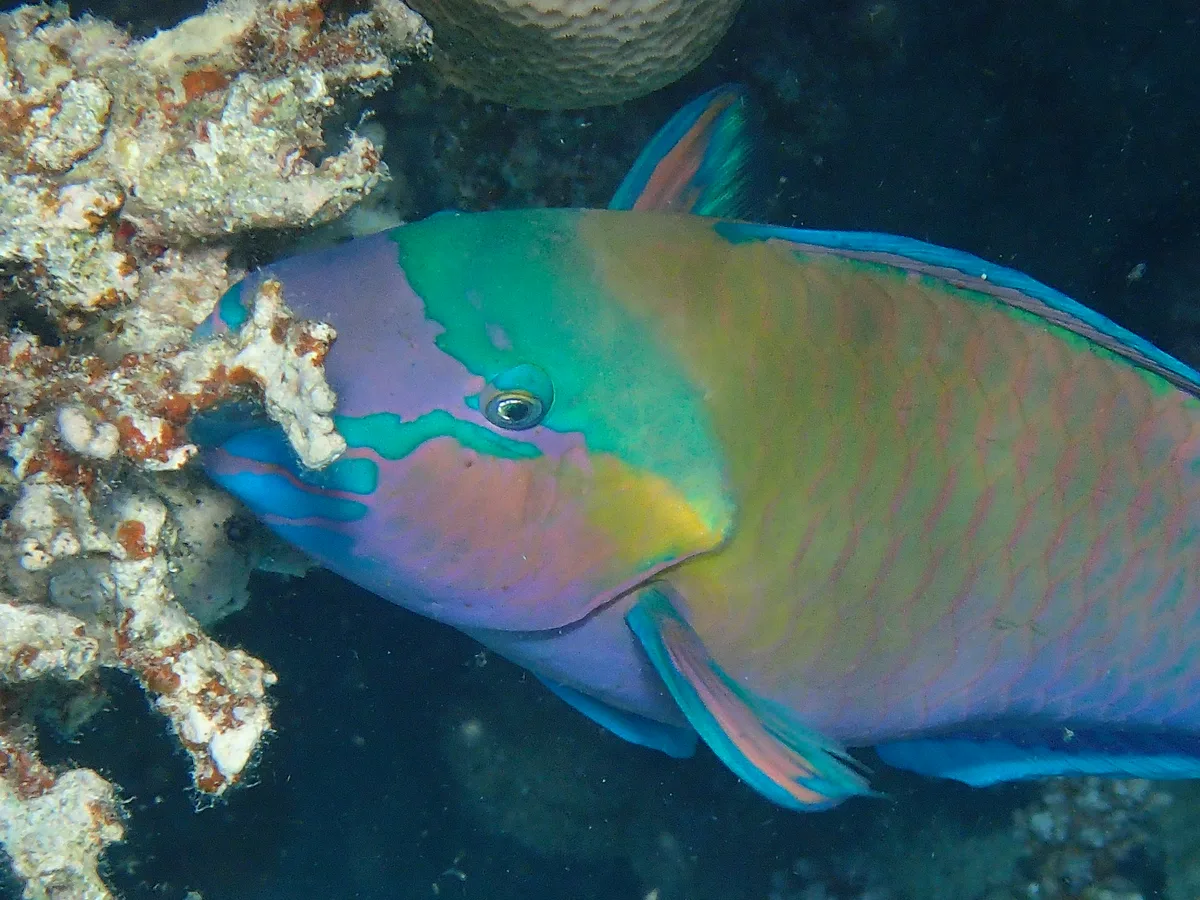
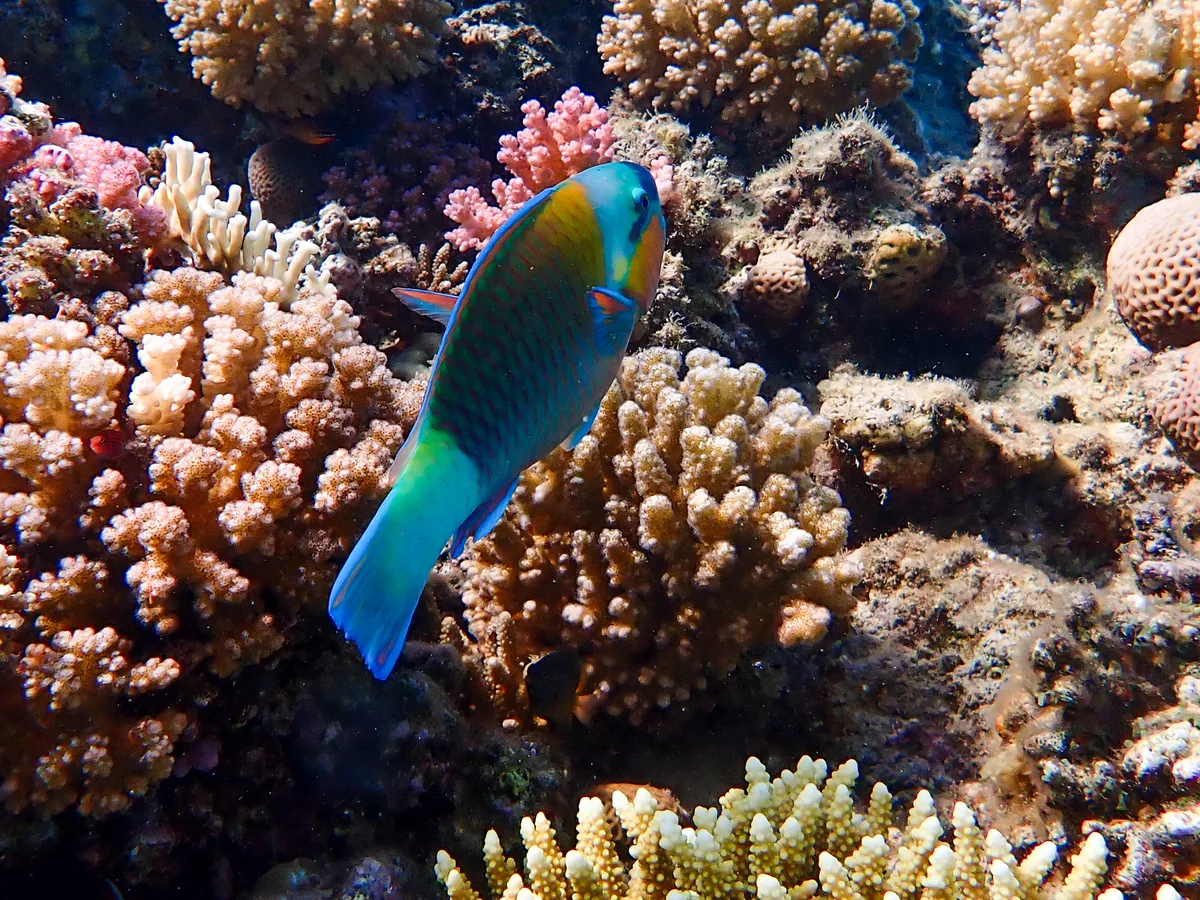
Rusty Parrotfish - Scarus ferrugineus
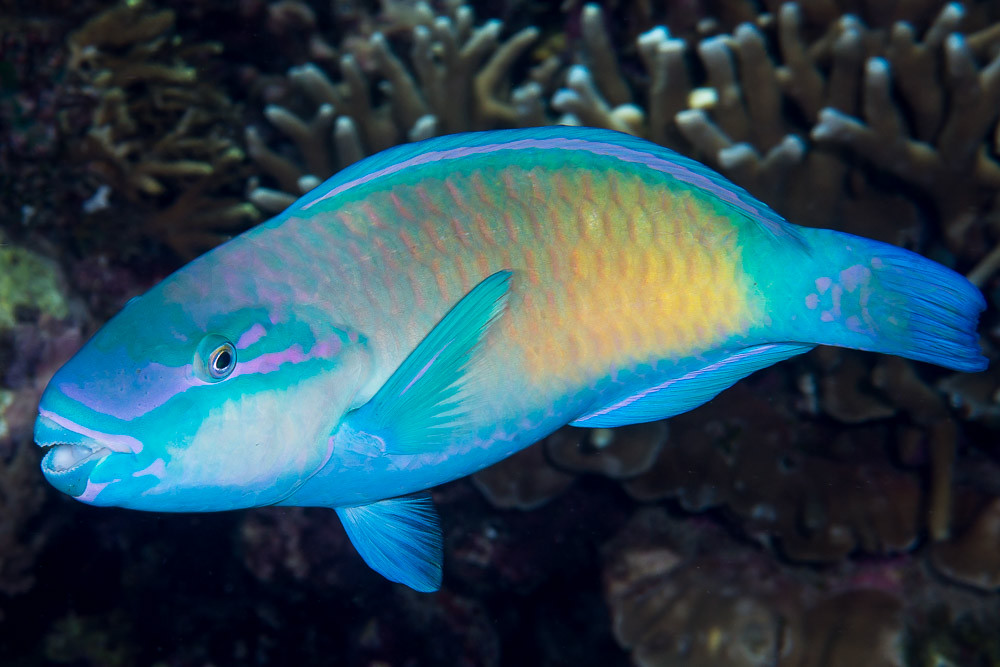
Kugelkopf-Papageifisch (Chlorurus sordidus)
17_Chlorurus sordidus
Mister chomp (Chlorurus sordidus)
Bullethead Parrotfish
Poisonous© François Libert
Fishes · Bony fishes · Parrotfishes

Bullethead Parrotfish

Chlorurus sordidus (Forsskål, 1775)
40 cm1-50 mPoisonousLeast Concern
988

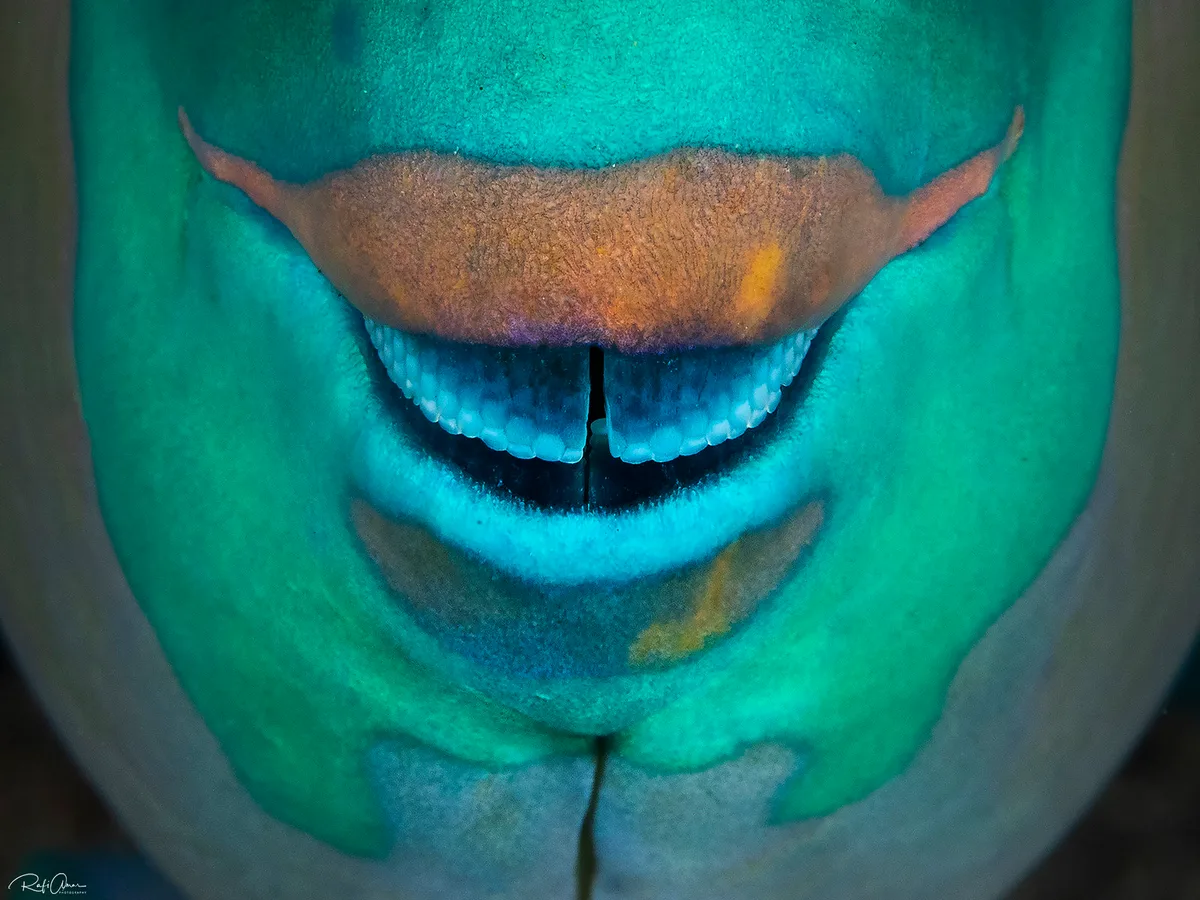
Behind the beak, in the throat, sits a second set of jaws. Plates of fused teeth grind every mouthful of coral rock to powder before it goes any further, and what comes out the other end is sand.

A parrotfish this size processes a few hundred kilograms of reef a year and voids it as clean carbonate grains. On many tropical coasts most of the beach was manufactured this way, one bite at a time, by fish. Stand behind a feeding one and you will see it happen: a puff of fine white cloud, several times a minute, drifting down onto the reef.

The mill runs constantly because the food is poor. What the fish is after is algae growing in and on the rock, and to reach it, it eats the rock. The grinding plates wear out and are replaced continuously from behind, a conveyor of new teeth moving forward through the throat.

One warning attaches to this species that does not attach to most of its relatives: it appears in ciguatera records. The toxin comes from dinoflagellates at the bottom of the food chain, accumulates upward, survives cooking, and cannot be detected by looking at the fish. It is a reason to leave it in the water, which is where it is doing something useful anyway.

It is the blunt-headed one, up to forty centimeters, with a pale green patch at the base of the tail in terminal males. Books also print it as the daisy parrotfish; the two names are one fish.

The genus. Chlorurus Swainson 1839 - chloros (green) + oura (tail). ETYFish

The species. Chlorurus sordidus (Forsskål 1775) - dirty. ETYFish

How to recognise it
  • blunt rounded snout, no forehead hump
  • pale green patch at the base of the tail in terminal males
  • females and initial-phase fish gray-brown, often with a pale band across the body
  • the second common name, daisy parrotfish, belongs to this same species
  • up to 40 cm

Why it's threatened

There are no major threats known for this species.

Parrotfishes show varying degrees of habitat preference and utilization of coral reef habitats, with some species spending the majority of their life stages on coral reefs, while others primarily utilize seagrass beds, mangroves, algal beds, and /or rocky reefs. Although the majority of the parrotfishes occur in mixed habitat (primarily inhabiting seagrass beds, mangroves, and rocky reefs) approximately 78% of these mixed habitat species are experiencing greater than 30% loss of coral reef area and habitat quality across their distributions. Of those species that occur exclusively in coral reef habitat, more than 80% are experiencing a greater than 30% of coral reef loss and degradation across their distributions. However, more research is needed to understand the long-term effects of habitat loss and degradation on these species populations. Widespread coral reef loss and declining habitat conditions are particularly worrying for species that depend on live coral reefs for food and shelter especially as studies have shown that protection of pristine habitats facilitate the persistence of adult populations in species that have spatially separated adult and juvenile habitats. Furthermore, coral reef loss and declining habitat conditions are particularly worrying for some corallivorous excavating parrotfishes that play major roles in reef dynamics and sedimentation (Comeros-Raynal et al. 2012).

Threat classification from the IUCN Red List.

Comments

Please, sign in to leave a comment

Continue with a social account - yours will be created automatically.

No comments yet — be the first.

Last Update: August 20, 2026