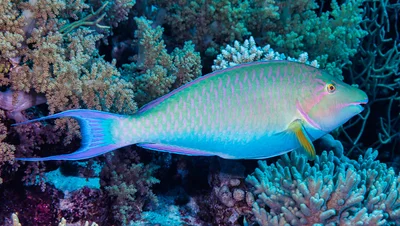
At dusk this fish wraps itself in a sleeping bag it makes out of its own mucus.
Glands behind the gill covers produce a transparent envelope that takes about half an hour to build and completely encloses the animal, open at each end for water to pass. The fish sleeps inside it, wedged in a crevice, and abandons it at dawn.
What it is for took a long time to establish, and the best-supported answer is smell. Moray eels hunt at night largely by scent, and a parrotfish inside a cocoon does not leak its own into the water. Fish removed from their cocoons in experiments were found by eels far more often than fish left in them. The envelope may also carry some defense against parasites, which cannot get through it.
So the animal that spends its day as the loudest thing on the reef, biting rock in the open, spends its night sealed in a bag of slime and undetectable.
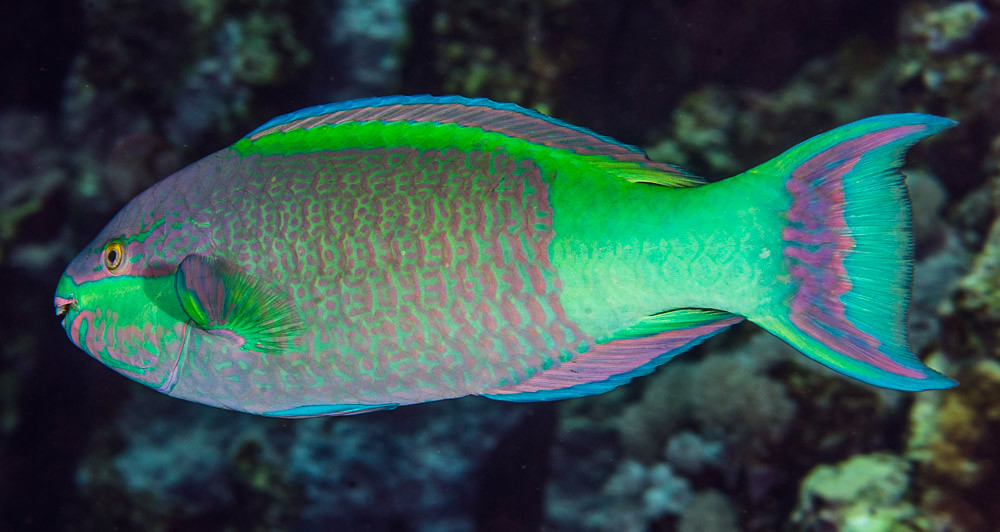
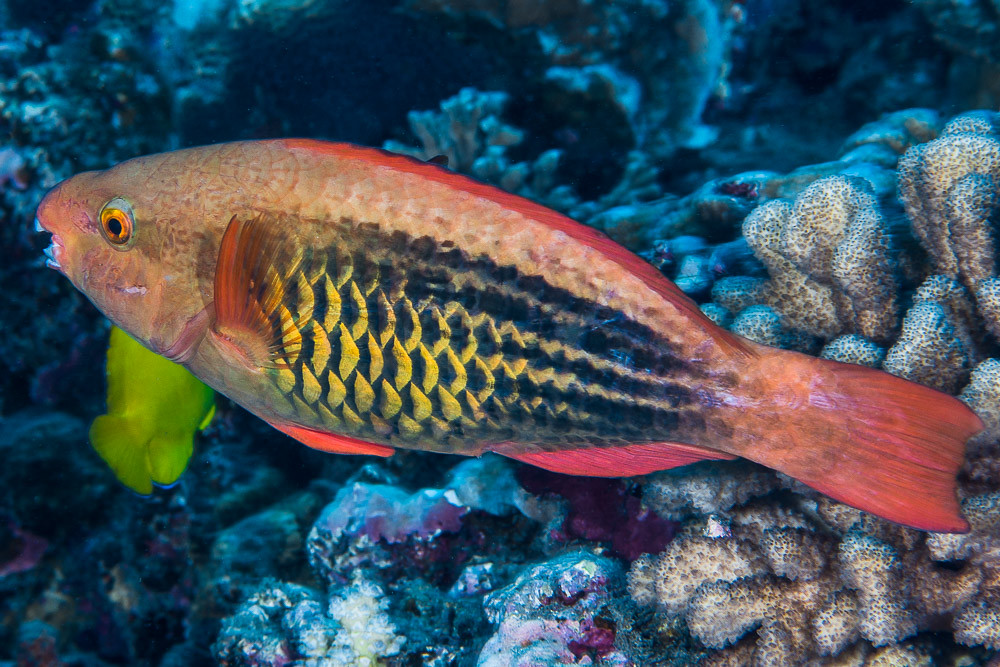
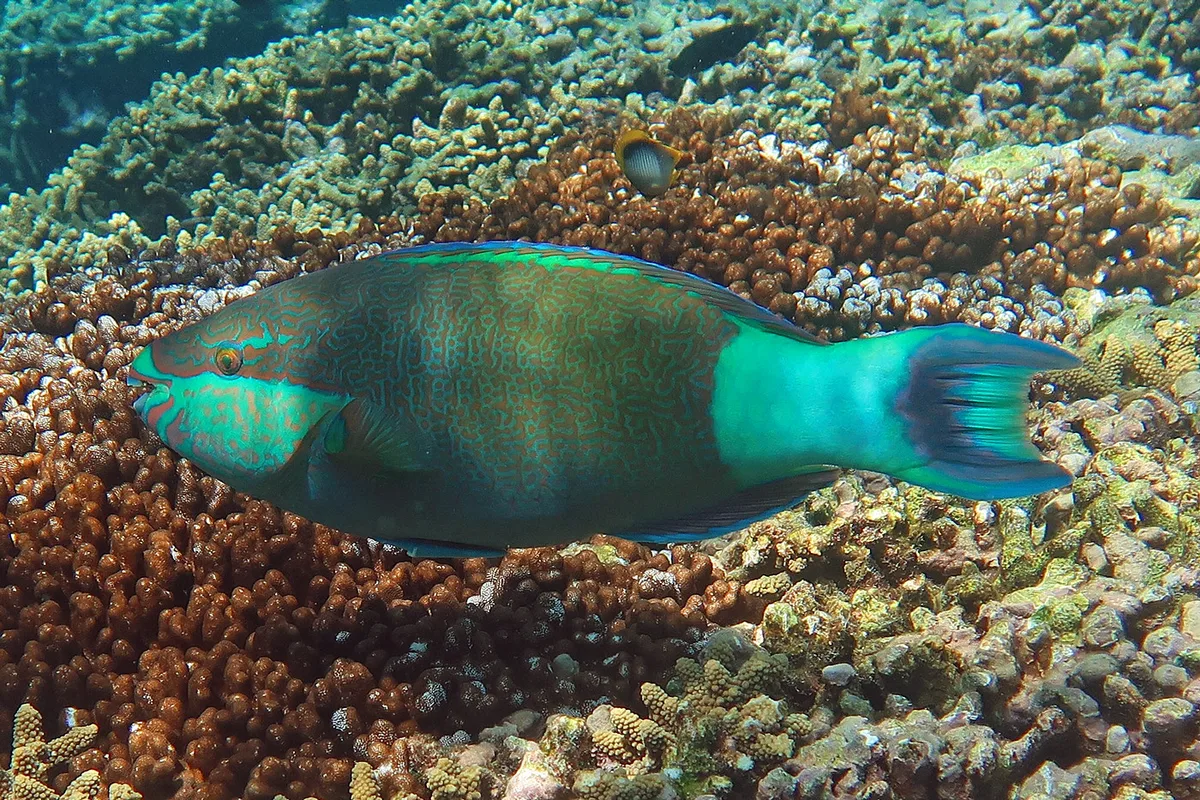
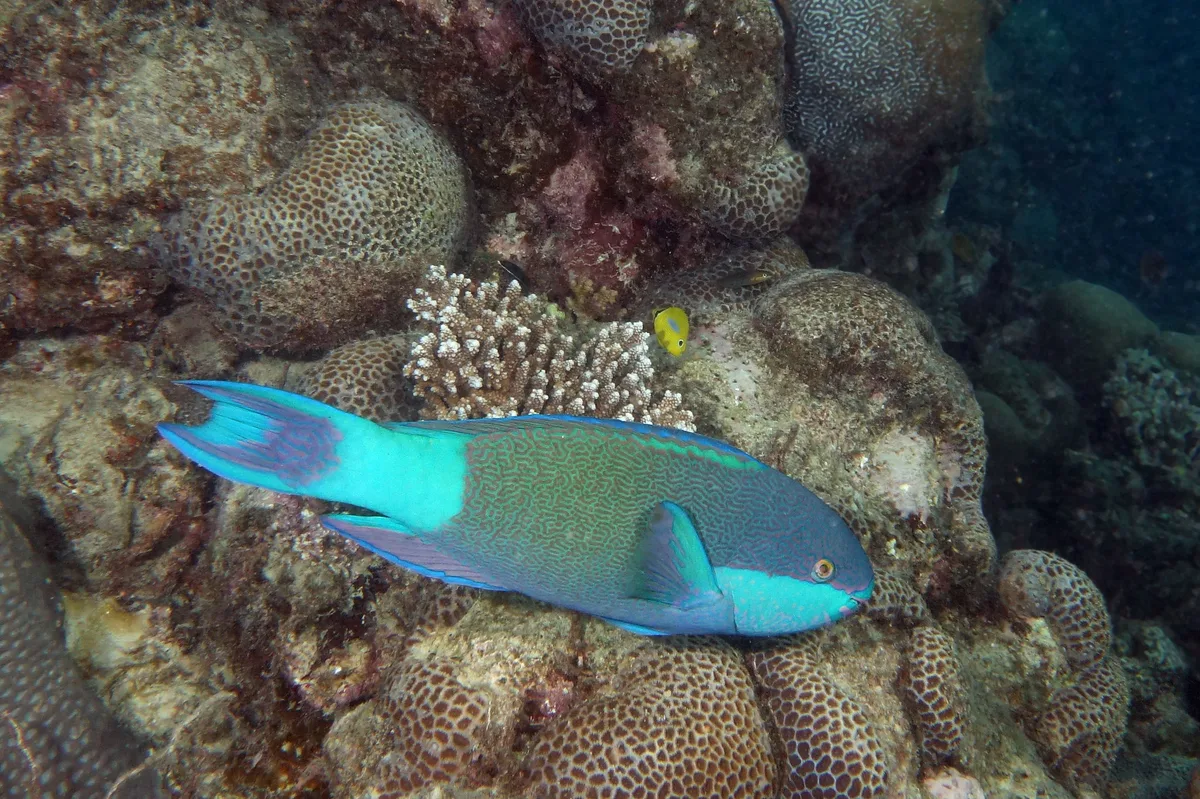
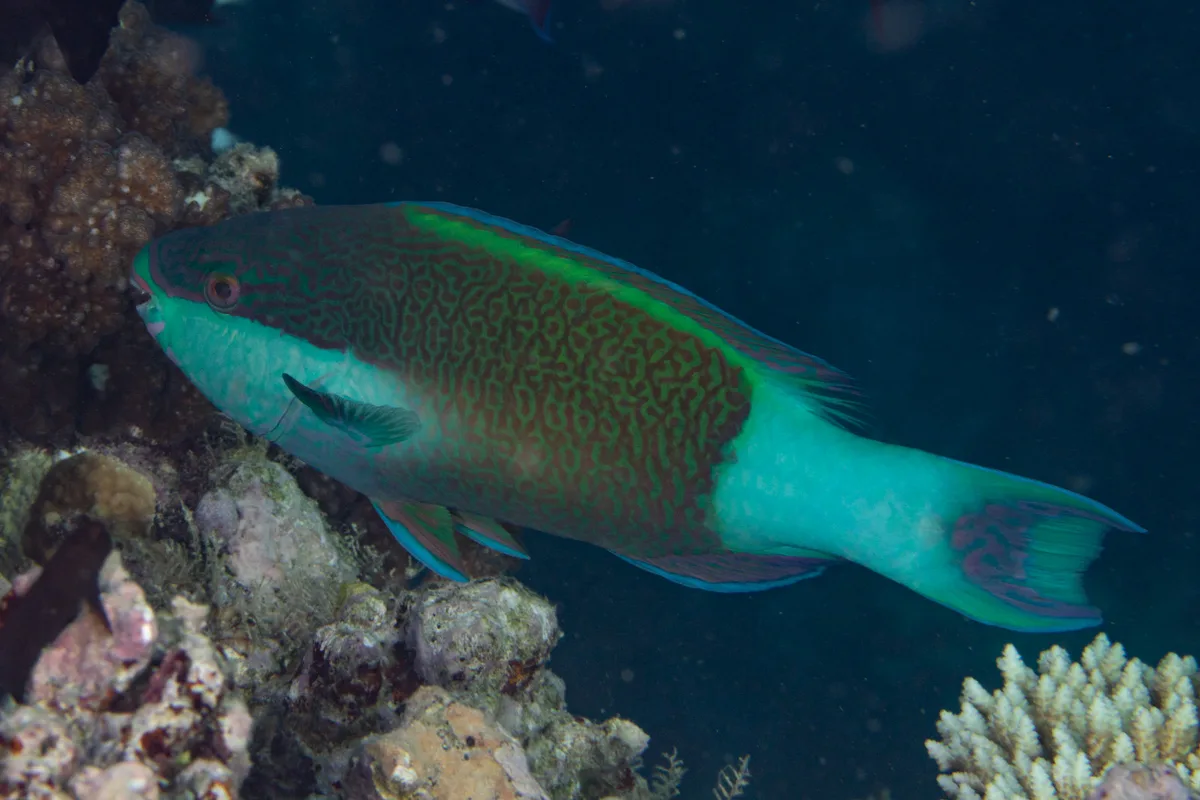
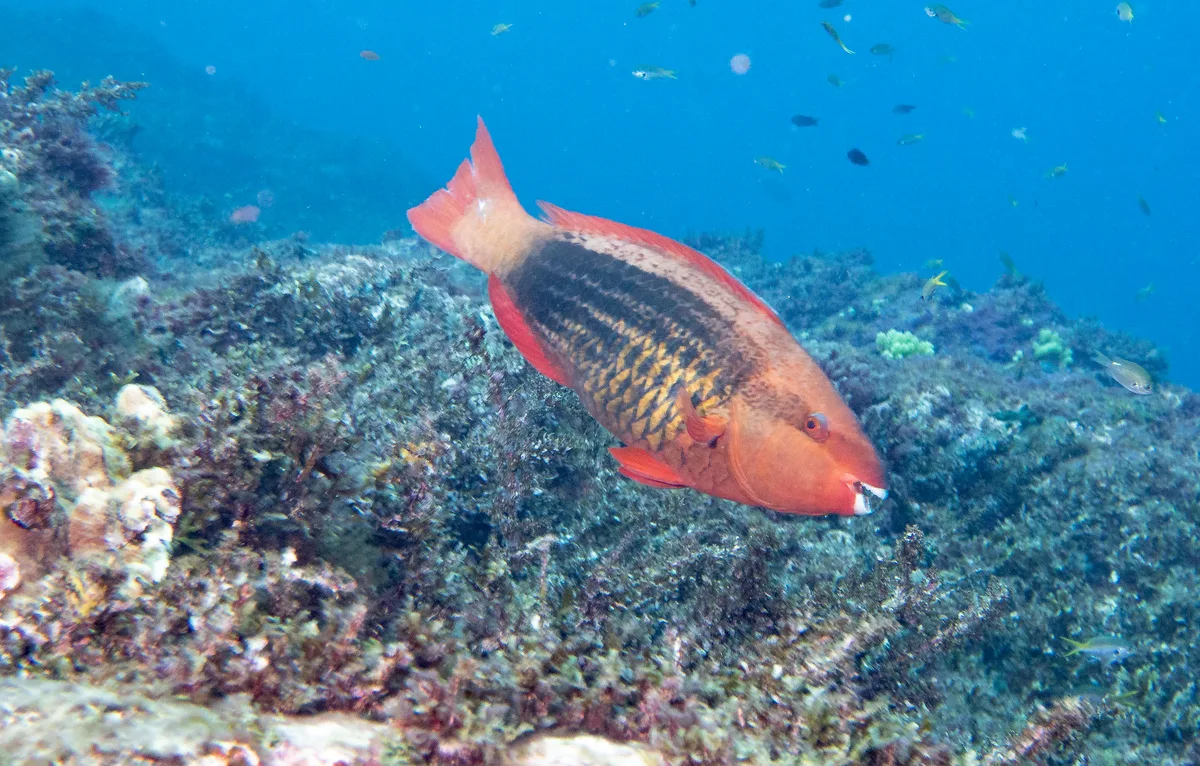
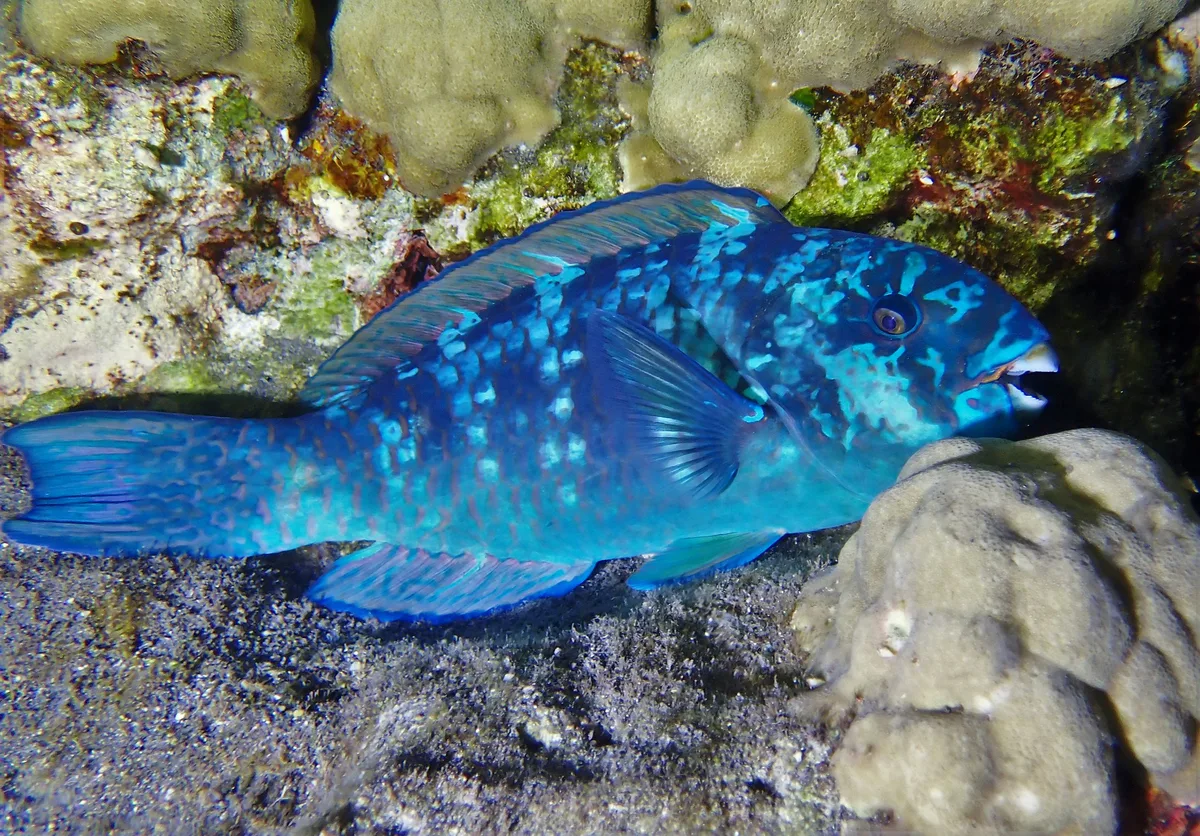
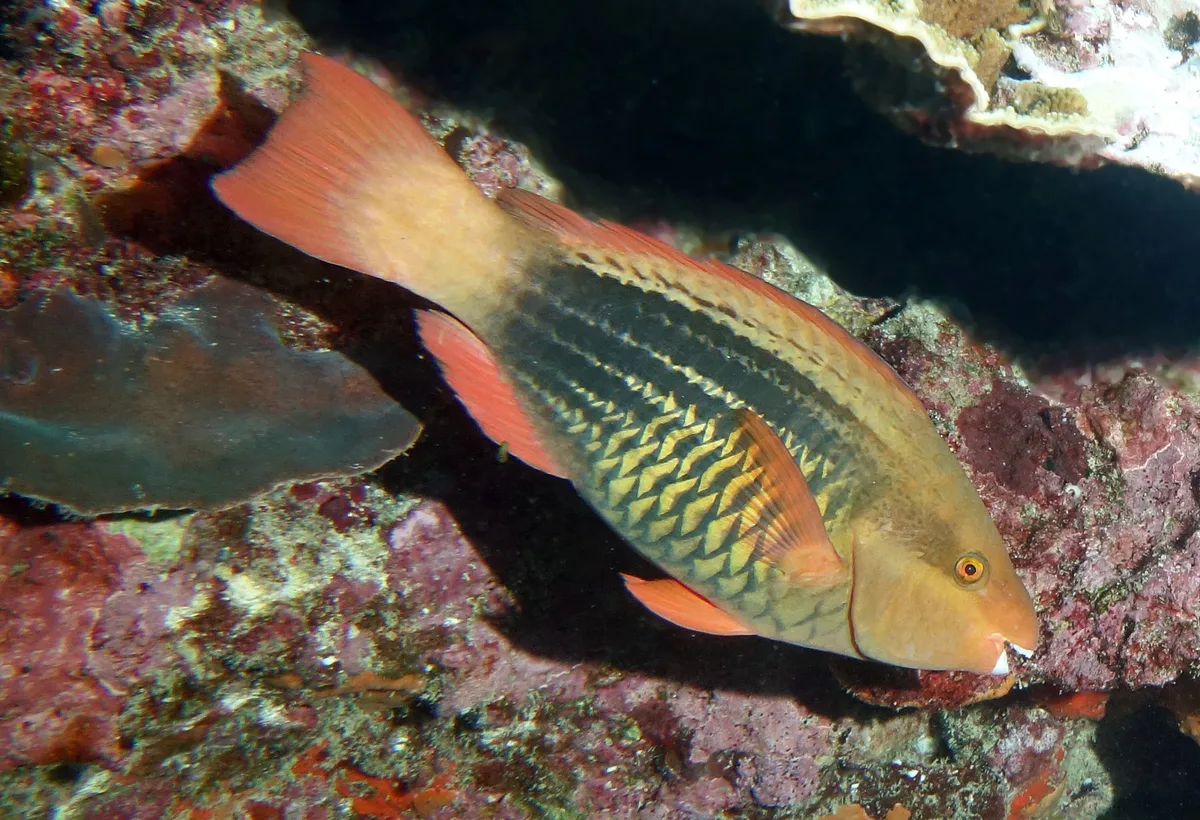
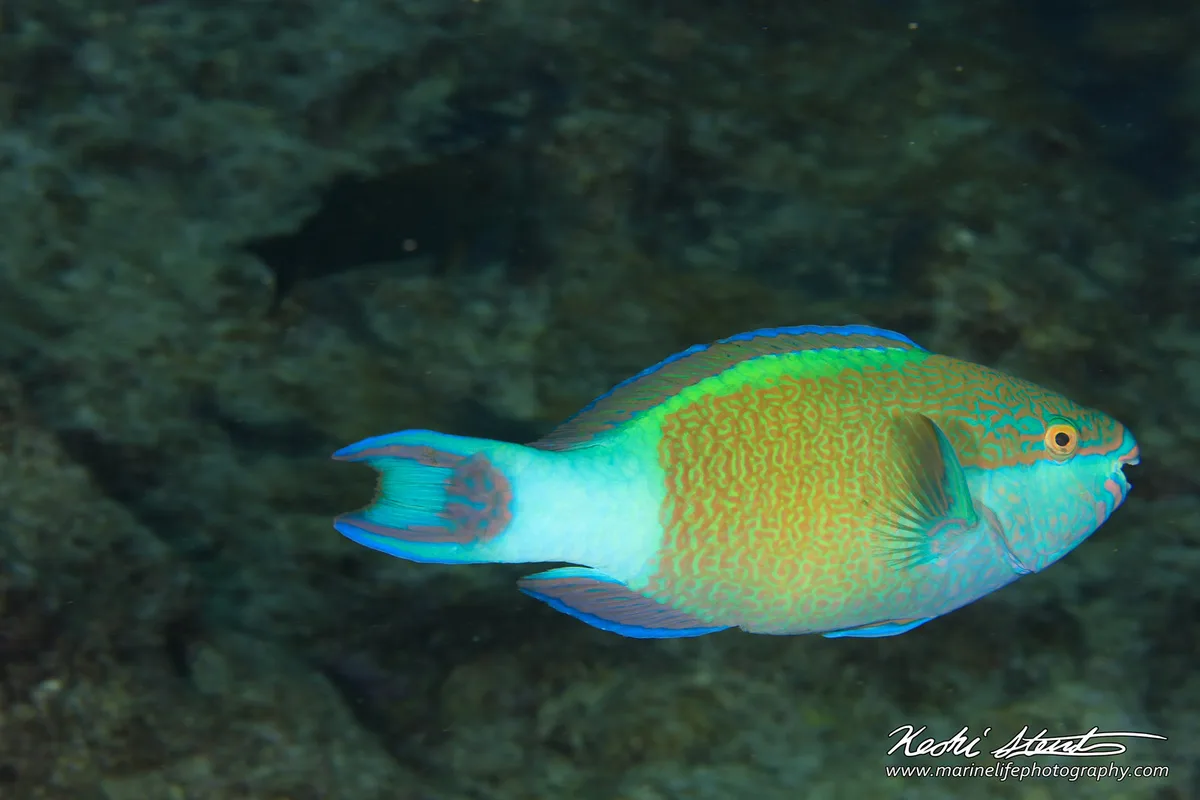
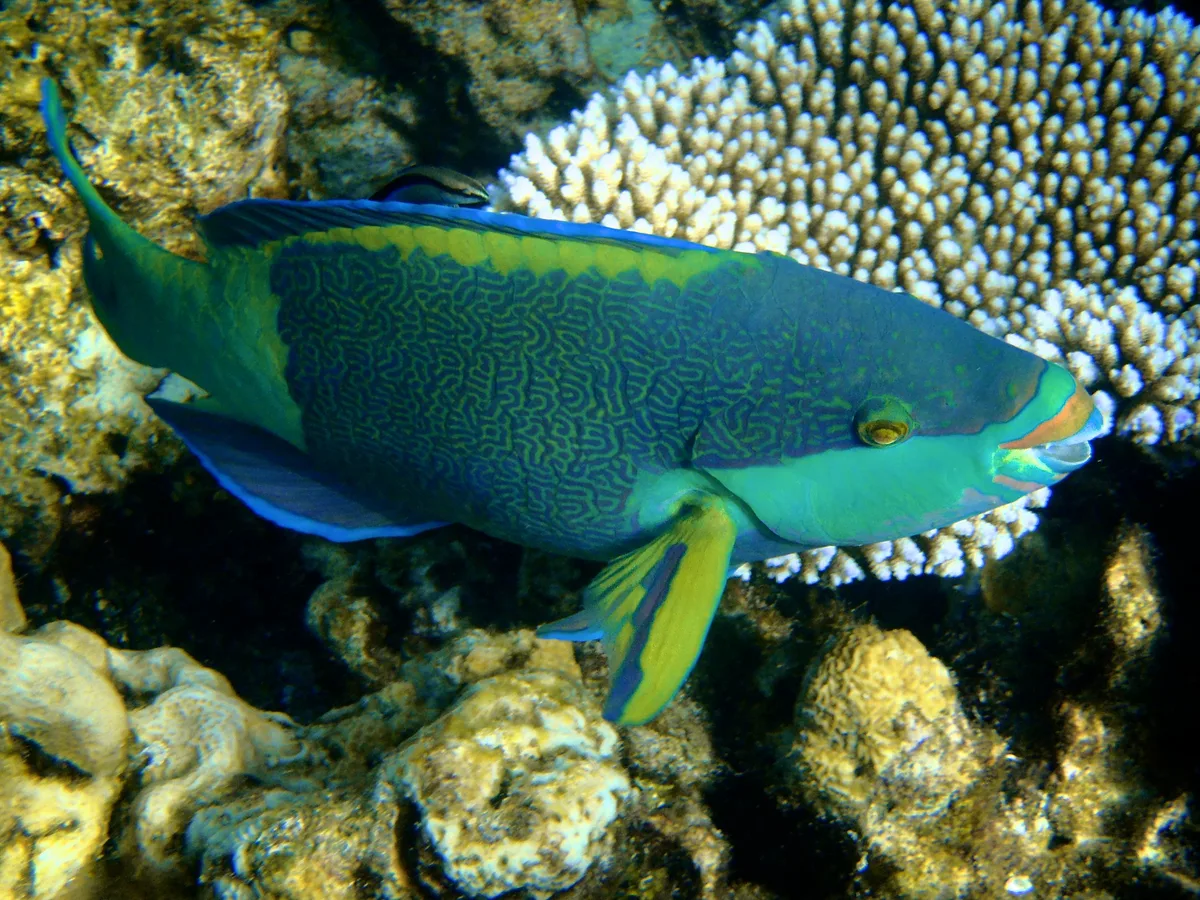
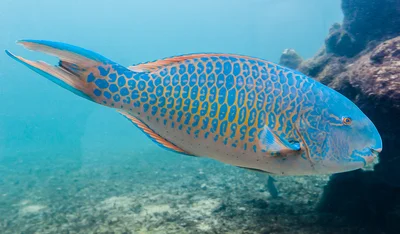
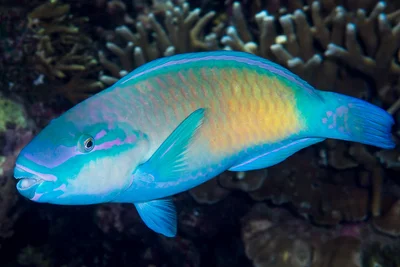
The males are the dark green ones with a fine lavender scribble across the head; females carry pinkish-red fins and a dark line across the cheek that gives the species its name.
The genus.Scarus Forsskål 1775 - skaros (ancient Greek name of Sparisoma cretense). ETYFish
The species.Scarus frenatus Lacepède 1802 - bridled. ETYFish
How to recognise it
males dark green with a fine lavender vermiculate pattern on the head and forebody
females with pinkish-red dorsal, anal and pelvic fins
dark bridle-like line across the cheek in initial-phase fish
This species is fished in some parts of its range where destructive fishing practices and habitat destruction are prevalent. However, these threats are not considered to affect the overall status of its population.
Parrotfishes show varying degrees of habitat preference and utilization of coral reef habitats, with some species spending the majority of their life stages on coral reefs, while others primarily utilize seagrass beds, mangroves, algal beds, and /or rocky reefs. Although the majority of the parrotfishes occur in mixed habitat (primarily inhabiting seagrass beds, mangroves, and rocky reefs) approximately 78% of these mixed habitat species are experiencing greater than 30% loss of coral reef area and habitat quality across their distributions. Of those species that occur exclusively in coral reef habitat, more than 80% are experiencing a greater than 30% of coral reef loss and degradation across their distributions. However, more research is needed to understand the long-term effects of habitat loss and degradation on these species populations. Widespread coral reef loss and declining habitat conditions are particularly worrying for species that depend on live coral reefs for food and shelter especially as studies have shown that protection of pristine habitats facilitate the persistence of adult populations in species that have spatially separated adult and juvenile habitats. Furthermore, coral reef loss and declining habitat conditions are particularly worrying for some corallivorous excavating parrotfishes that play major roles in reef dynamics and sedimentation (Comeros-Raynal et al. 2012).
Threat classification from the IUCN Red List.
Comments
Please, sign in to leave a comment
Continue with a social account - yours will be created automatically.