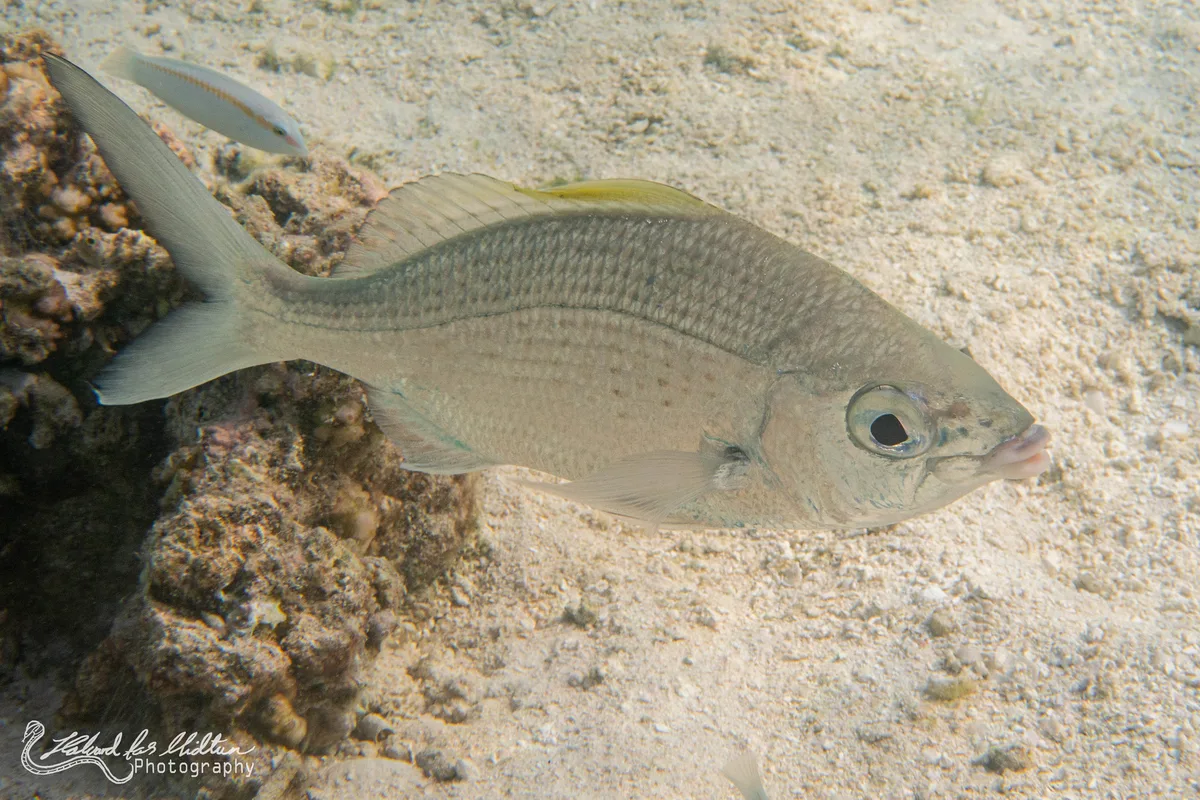
Longsnout Mojarra
Longsnout Mojarra
© François Libert
Fishes · Bony fishes · Mojarra

Longsnout Mojarra

Gerres longirostris (Lacepède, 1801)
syn. Diapterus poieti, Gerres acinaces, Gerres darnleyense, Gerres darnleyensis, Gerres lineolatus, Gerres longicaudus +8 more
44.5 cm1-50 mLeast Concern
844

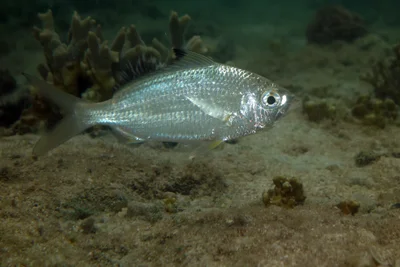
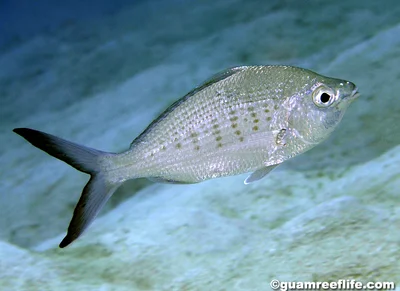
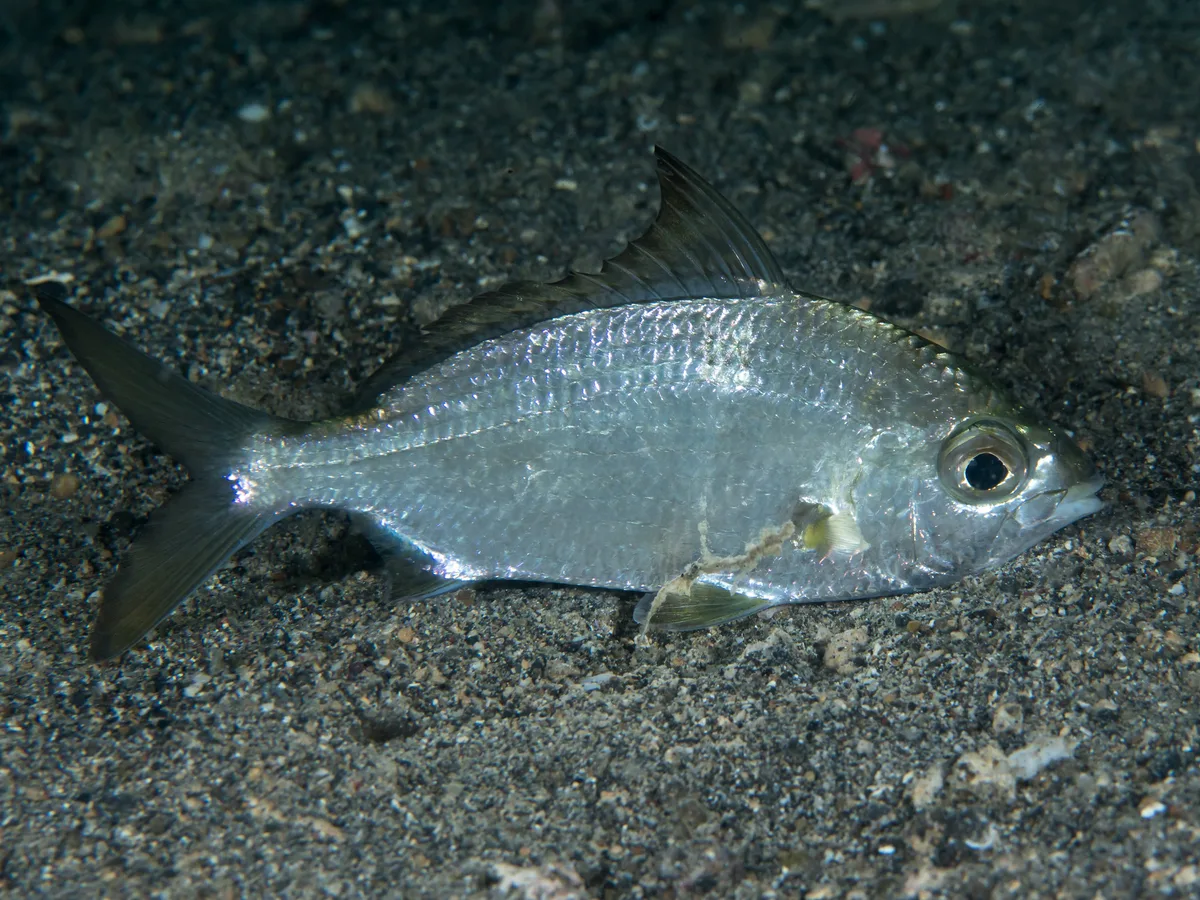
The Longsnout Mojarra (Gerres longirostris) is a species of marine fish belonging to the genus Gerres, within the family Gerreidae. Commonly referred to as the "Strongspine silver-biddy," this species is adaptable to marine, freshwater, and brackish environments, typically associated with reefs and classified as amphidromous, inhabiting depths ranging from 1 to 50 meters.

The Longsnout Mojarra can grow to a total length of 44.5 cm, with an average length of around 20 cm. It features a small head and mouth, with the upper jaw extending vertically beyond the leading edge of the eye's skin opening, sometimes reaching the line of the pupil. This distinctive jaw structure has inspired some of its synonymous names. The fish possesses a row of sharp, chisel-like teeth on the jaws, followed by bands of very fine needle-like teeth.

Characterized by an oval, laterally compressed body, the Longsnout Mojarra is covered in ctenoid scales, which include thin, round, translucent plates with serrated edges covering the head and fin bases. The dorsal fin is relatively long with 10 soft rays and 9 spines, while the anal fin consists of 7 soft rays and 3 spines. The pectoral fins are elongated, extending to the base of the anal fin. The tail fin is deeply forked.

Its coloration includes an olive-green upper body transitioning to a silvery underside, with dark stripes running above the lateral line. The head is olive-green with a darker snout. The membranous portion of the dorsal fin displays faint black spots or small patches, with a silver hue on the initial segments. A dark brown spot is noted near the base of the pectoral fins, while the pelvic fin is yellow with a narrow white margin. The anal fin features a yellowish tint between the initial rays, and the caudal fin appears dark with a broad posterior dark edge.

Preferring coral reef habitats, the Longsnout Mojarra is capable of surviving in both saltwater and freshwater, migrating between these environments depending on the season. It typically inhabits depths up to 50 meters but shows a preference for sandy shallow waters. Juveniles measuring around 10 cm often enter estuaries, residing there until reaching sexual maturity. The species feeds on small benthic invertebrates and algae and generally exhibits social behavior, forming schools.

Sexual maturity is achieved at approximately 20.6 cm in length. Around the Gilbert Islands, the species forms spawning aggregations over several days.

The Longsnout Mojarra is of commercial significance in fisheries and is also processed into fishmeal. It is distributed from the 🌊 Red Sea in the west to the Marquesas Islands (🇵🇫 French Polynesia) in the east, extending northward to the Ryukyu Archipelago and southward to 🇦🇺 Australia and 🇿🇦 South Africa. There have been occasional reports of its presence in the 🌊 Persian Gulf.

Why it's threatened

Biological resource use
Intentional use: (subsistence/small scale) [harvest] · Intentional use: (large scale) [harvest]

One of the critical management issues for the demersal fishery in the southern Persian Gulf is that the selectivity characteristics of traps result in a high level of juvenile retention (Grandcourt et al. 2006). However, in the case of Gerres longirostris, the low juvenile retention rate of 11.6% for this species places it well out of such a risk category. Though, intense fishing may select for smaller size fish, possibly causing the capture of juveniles to increase.

Threat classification from the IUCN Red List.

Comments

Please, sign in to leave a comment

Continue with a social account — yours will be created automatically.

No comments yet — be the first.

Last Update: June 28, 2026