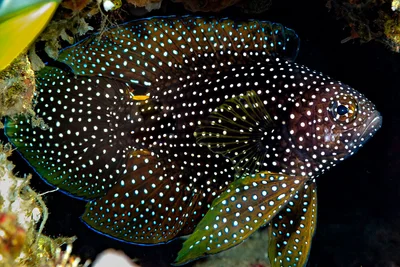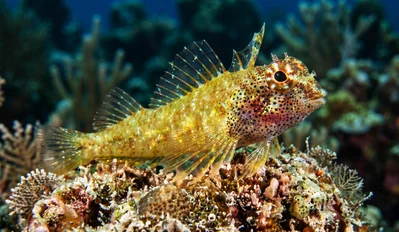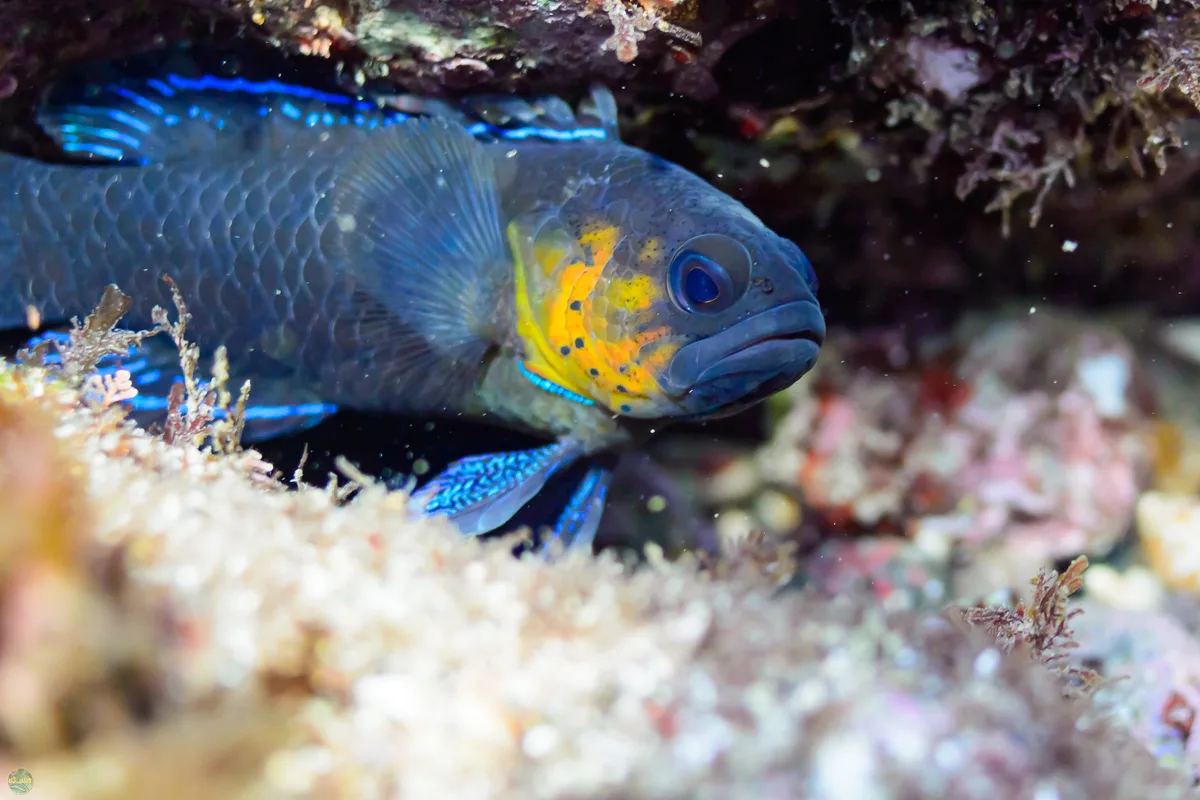
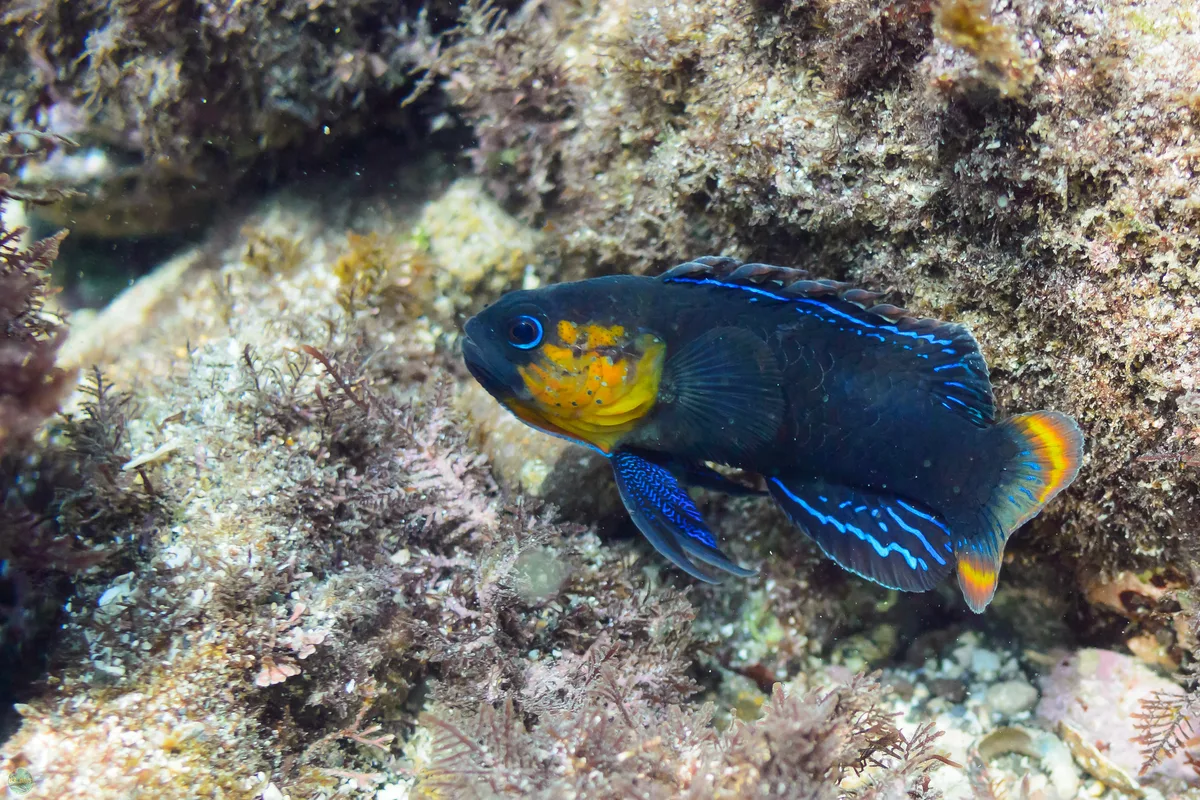
The male of this family sits with the eggs, and it is not a small commitment.
A female lays a mass of eggs bound together by fine filaments and attached to the roof of a crevice, and the male stays with it. He fans it with his fins to keep oxygenated water moving over the mass, cleans it, and drives off anything that approaches for the days it takes them to develop. Guarding is not compatible with hunting, so he eats little through it, and in a family whose whole life is spent inside cracks in the reef it means one fish is fixed in one hole for the duration.
Why it pays is the same arithmetic that runs through most of the small fish here. Broadcast eggs into the water and a rounding error survives; put a few hundred in a hole with a guard and most of them make it. Small fish cannot produce millions of eggs, so they buy survival with care instead of numbers.
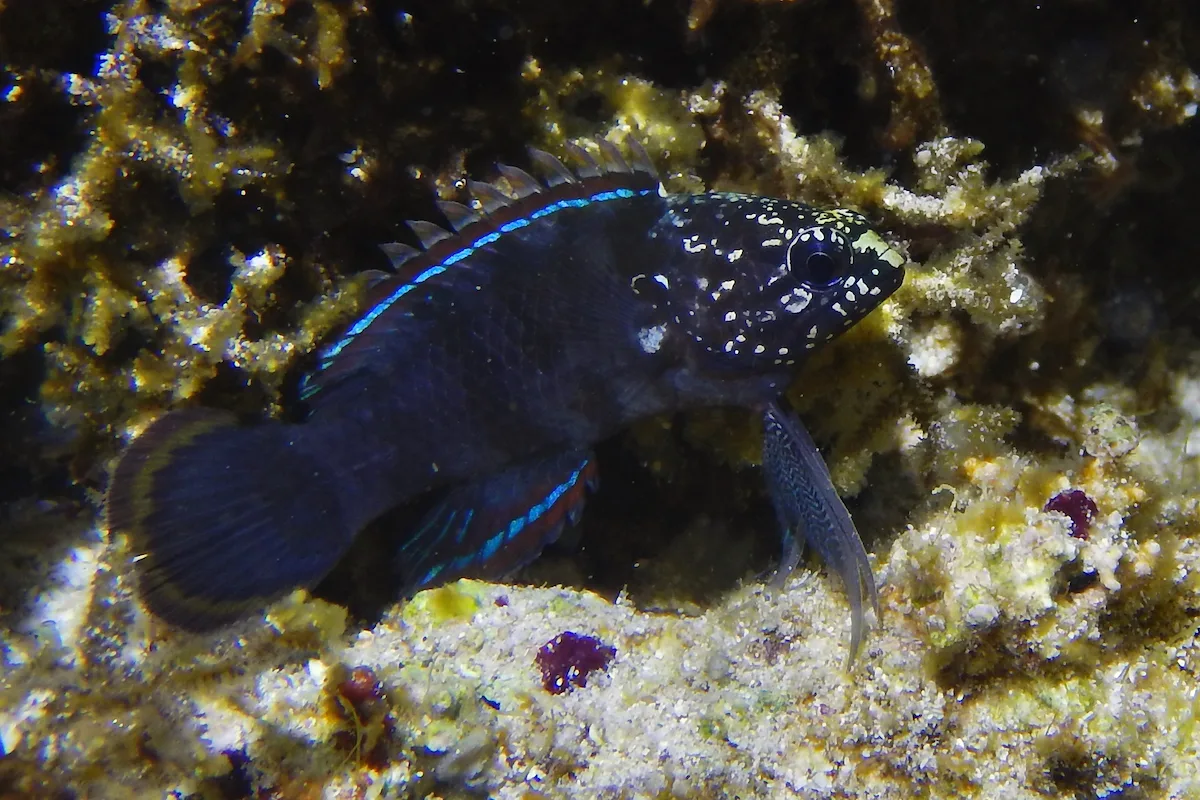
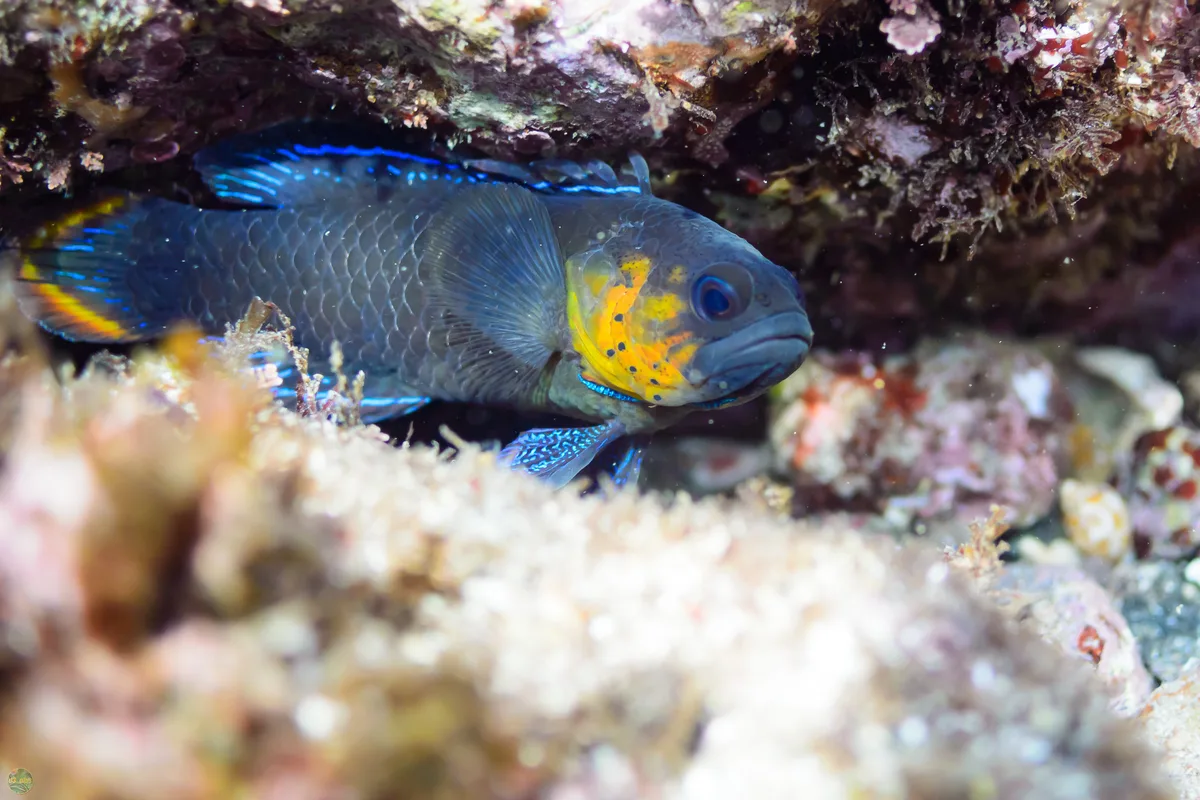
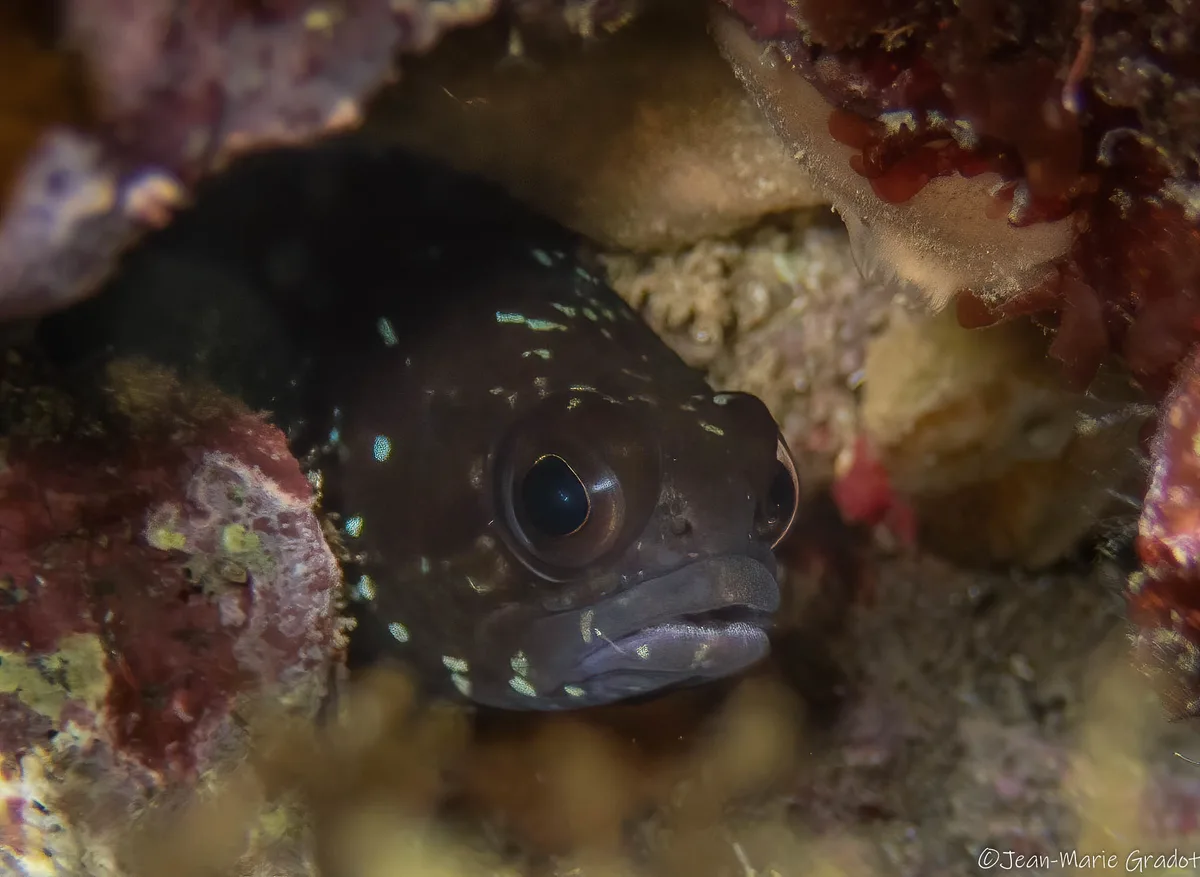
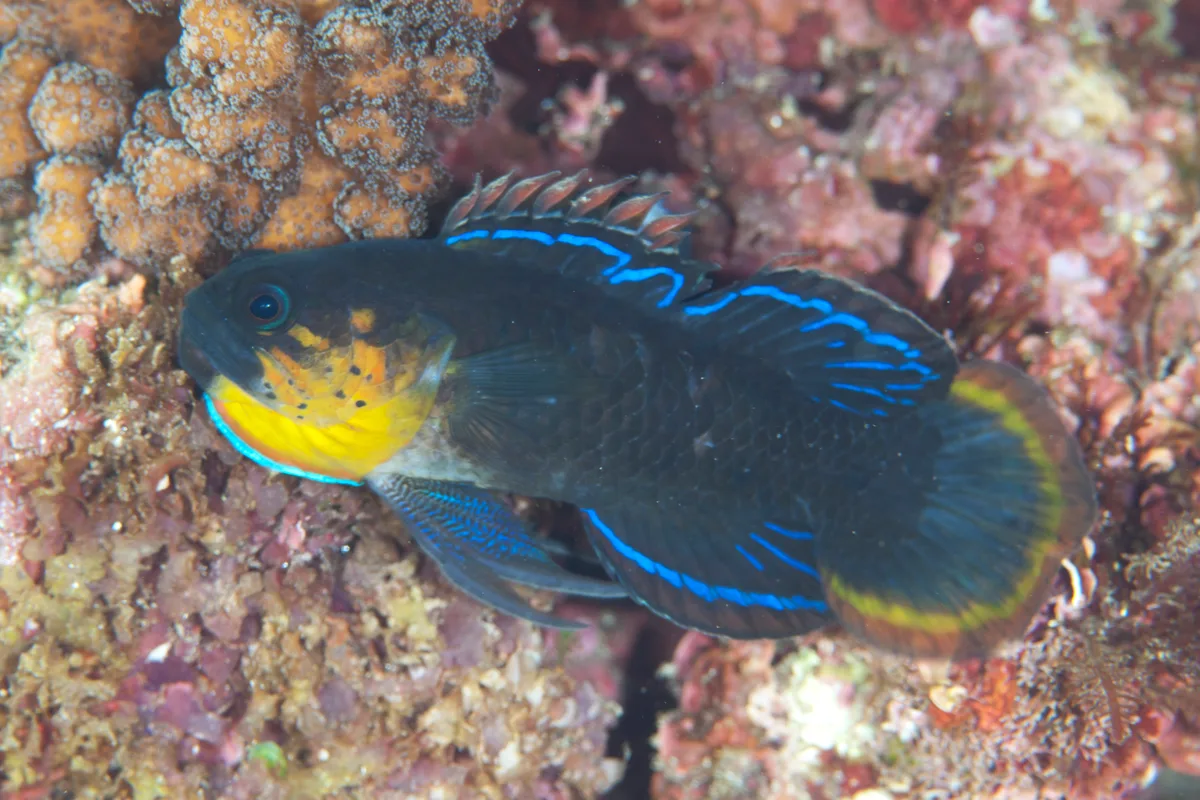
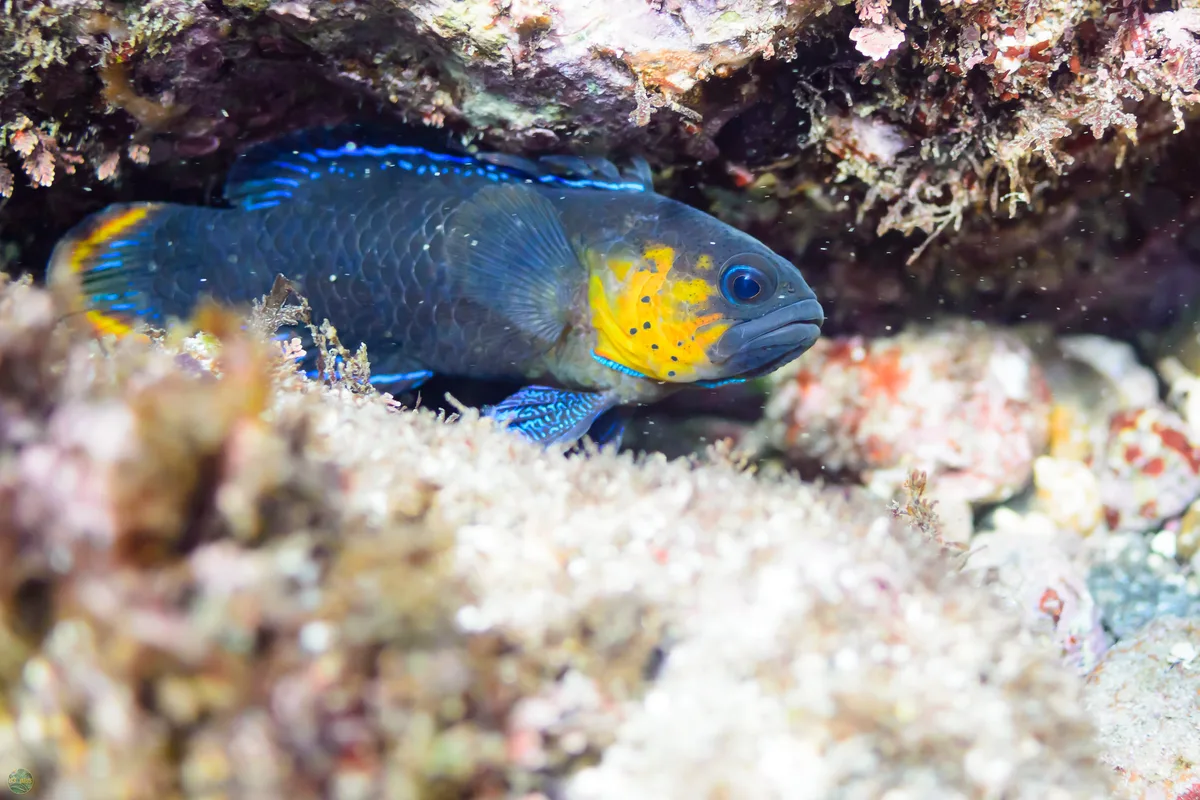
The fish itself is dark and unremarkable in daylight because you will never see it in daylight. At night it comes out on shallow reef flats and rubble, and a torch picks up the thin blue line along the top of the dorsal fin that gives it its name.
The genus. Plesiops Oken 1817 - ops (eye). ETYFish
The species. Plesiops coeruleolineatus Rüppell 1835 - coerulea (blue) + lineatus (lined). ETYFish
- dark body with a thin blue line along the edge of the dorsal fin
- rounded fins and a blunt head, always close to a hole
- out only after dark, in the shallows
- up to 10 cm
Why it's threatened
There are no known major threats to this species.
Threat classification from the IUCN Red List.