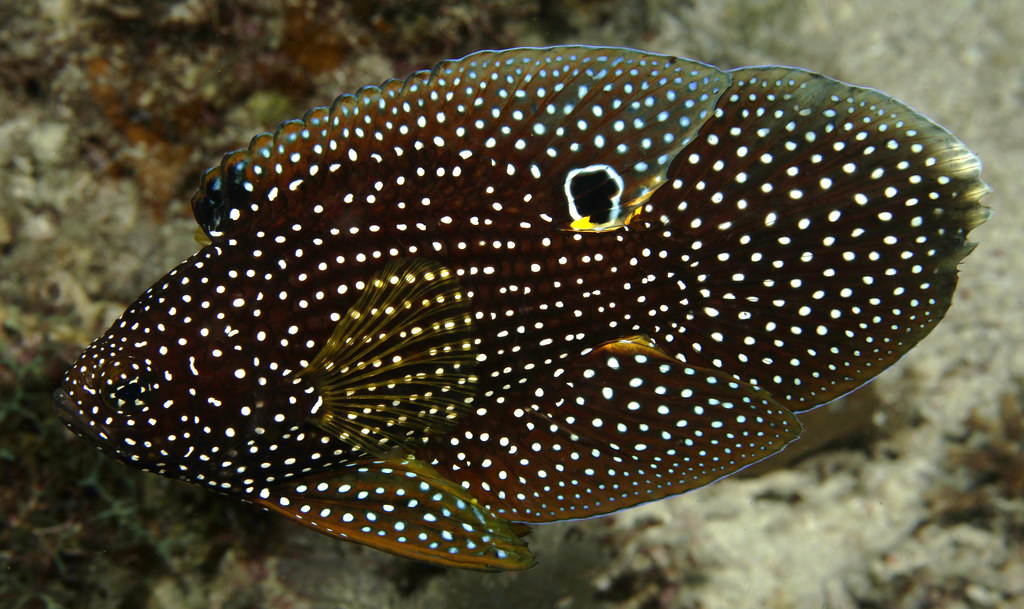
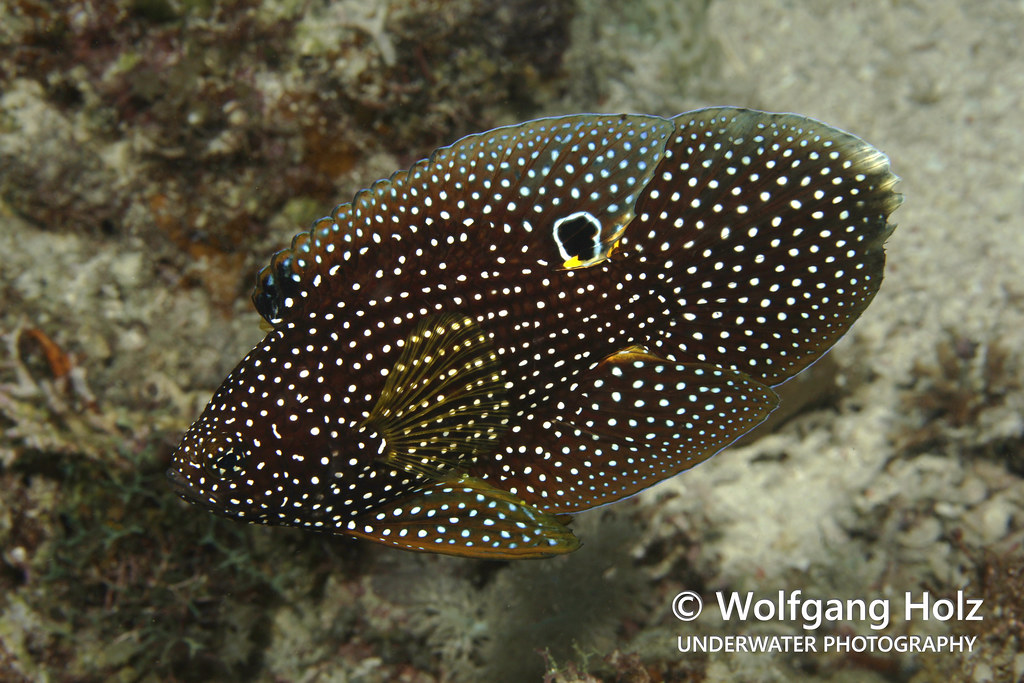
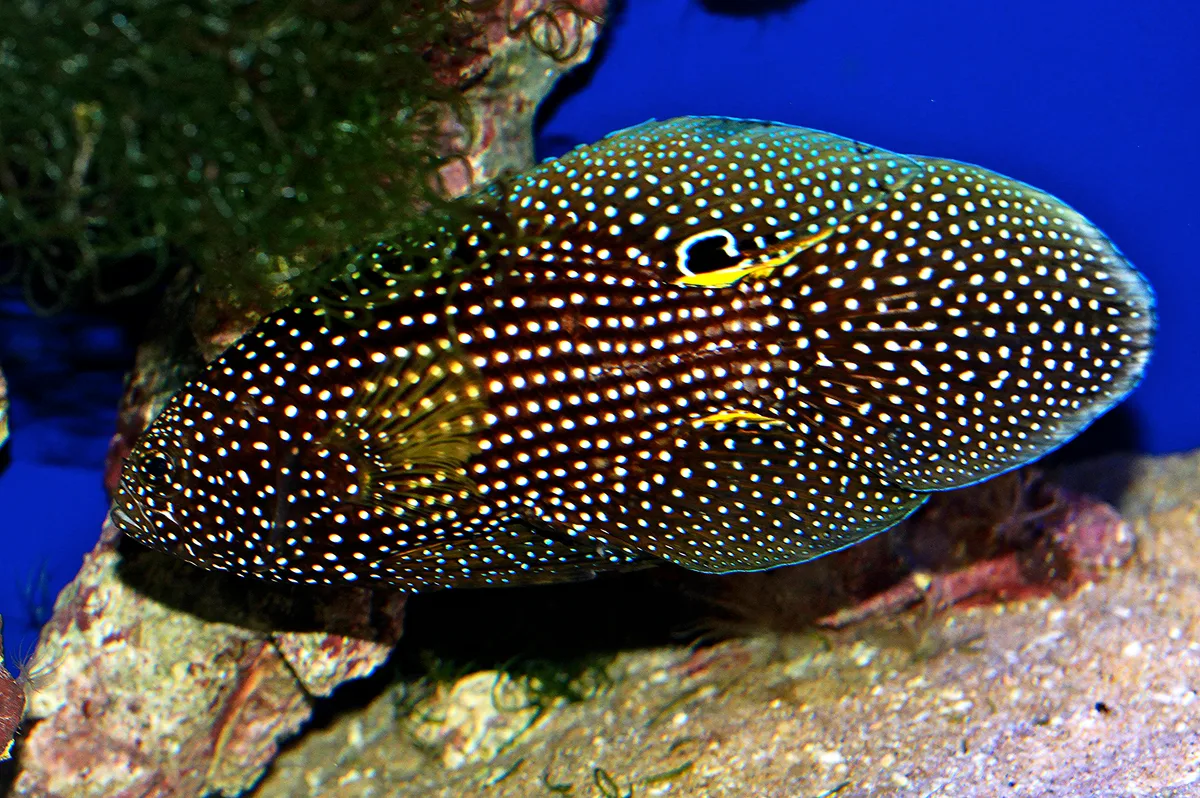
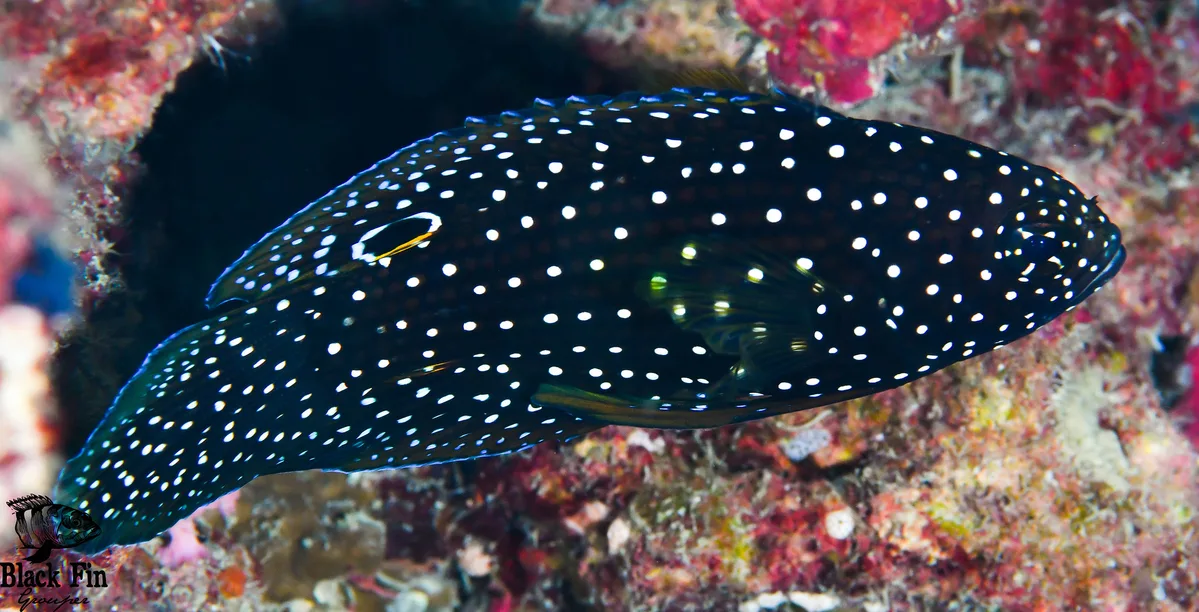
Frighten this fish and it turns into a moray eel.
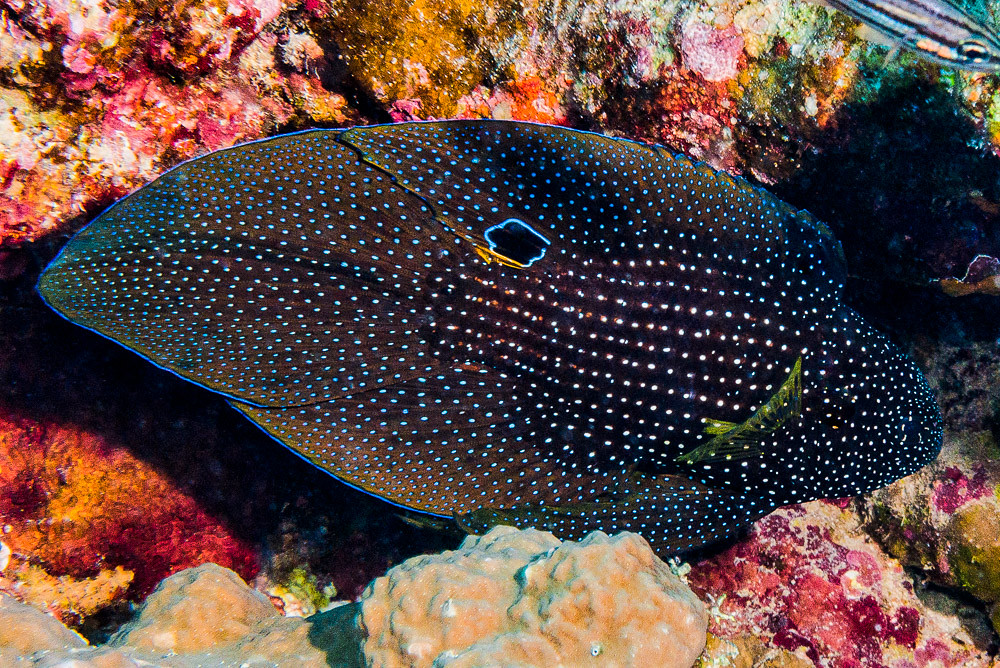
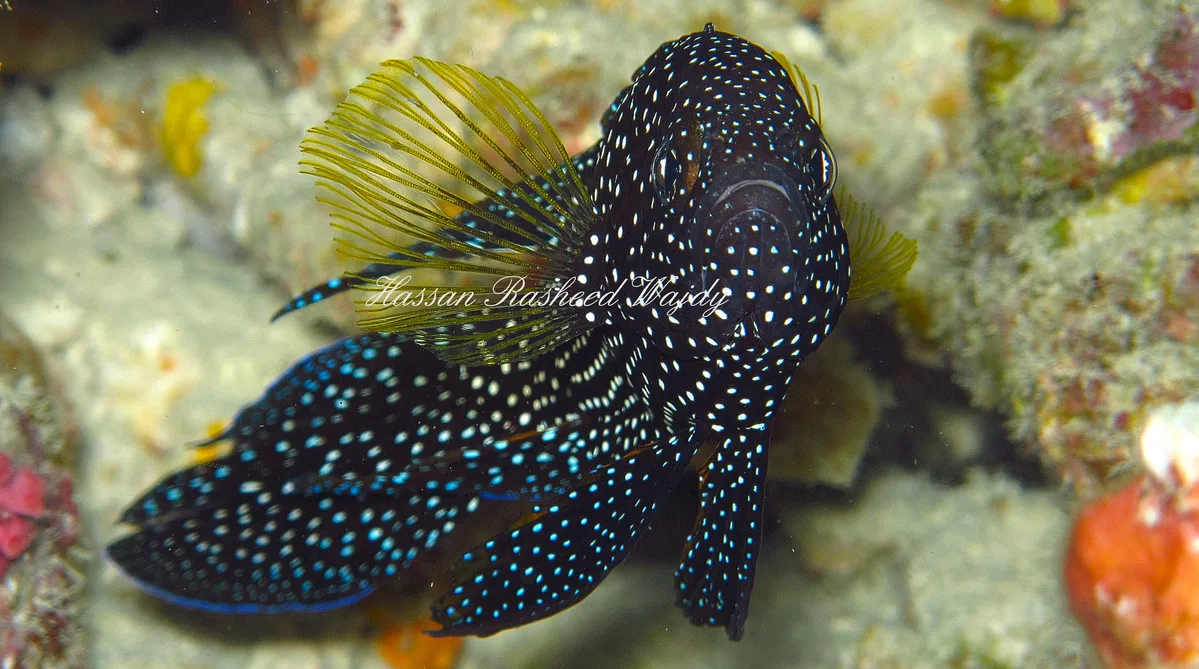
The display is precise. It pushes its head into a hole and leaves the back half of its body outside, spreading the dorsal, anal and tail fins into one continuous dark surface. The false eye at the rear of the dorsal fin becomes the eye of the eel; the pale-spotted dark fins become the head and open jaws of a whitemouth moray, right down to the pattern; and the whole assembly is held facing the intruder. What is looking at you is the wrong end of a twenty-centimeter fish, and it looks exactly like the business end of something that will bite.
What makes it convincing is that the model lives in the same holes. A predator working the reef meets real morays in exactly these places, and any hesitation is enough, because the fish only needs a second to be gone into the rock.
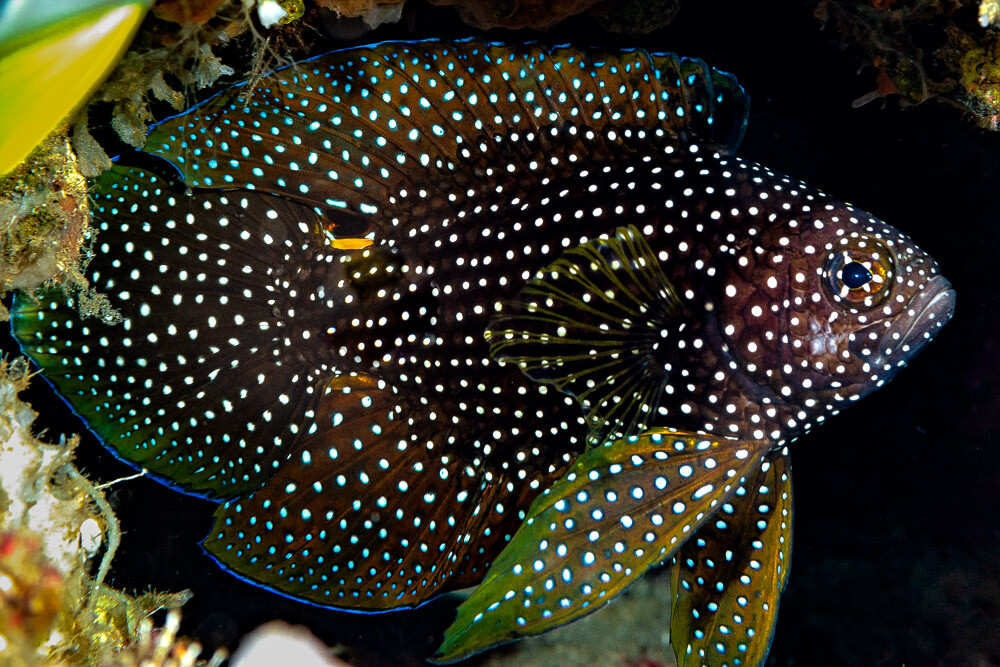
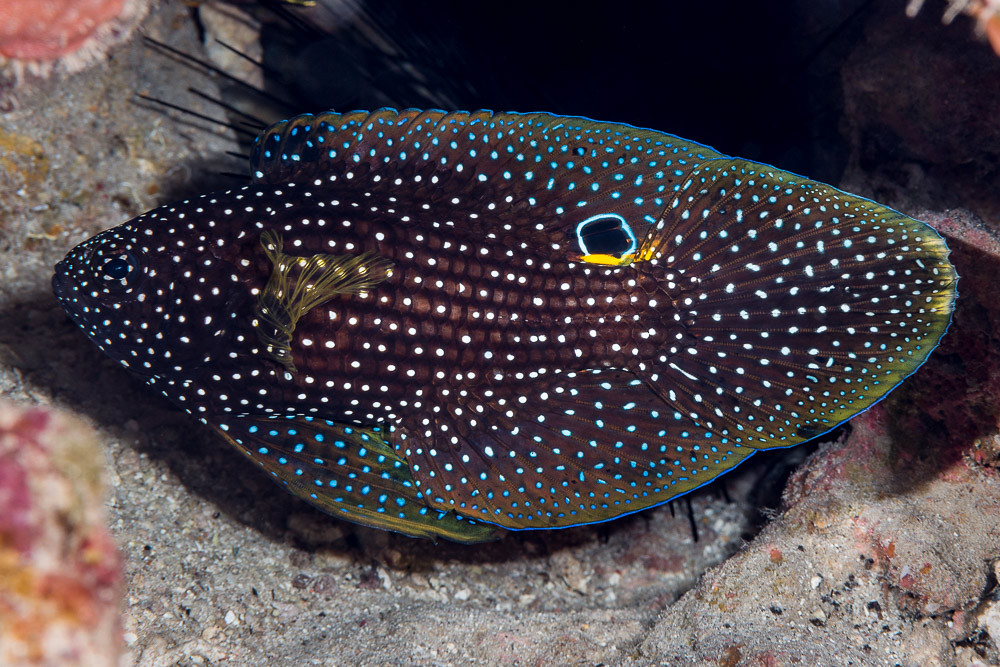
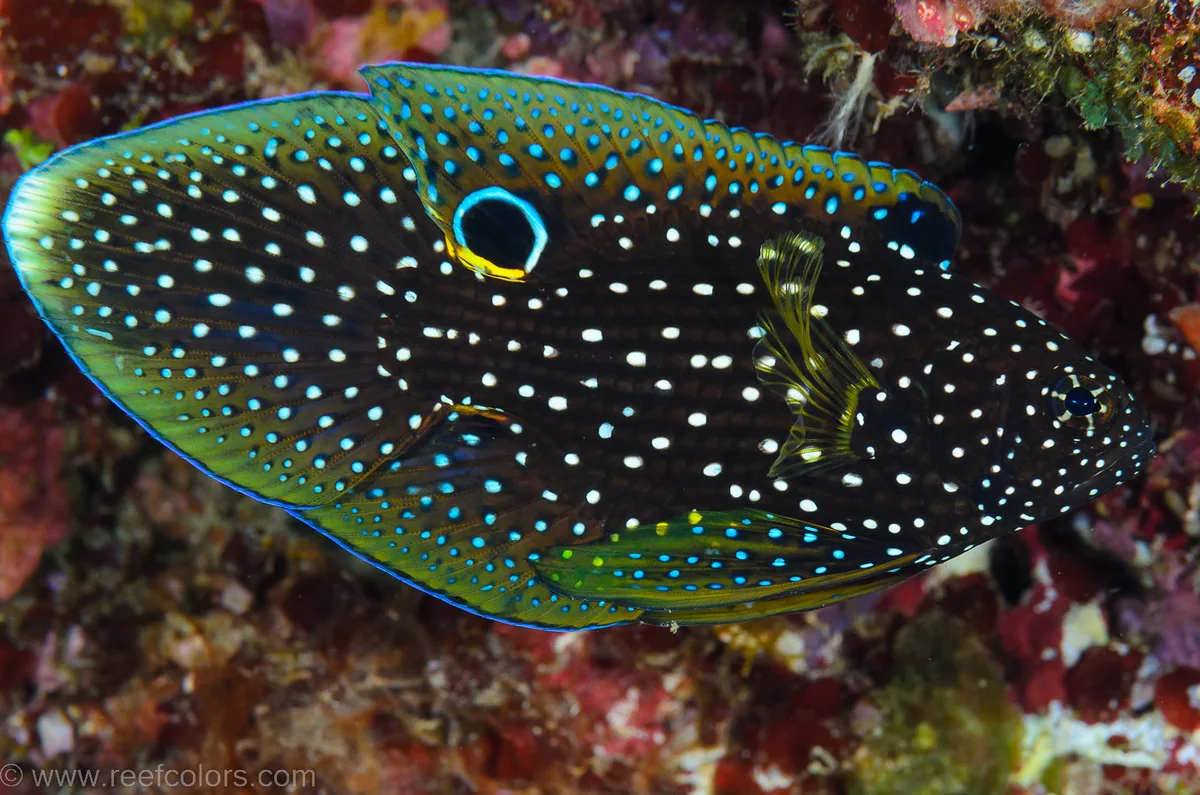
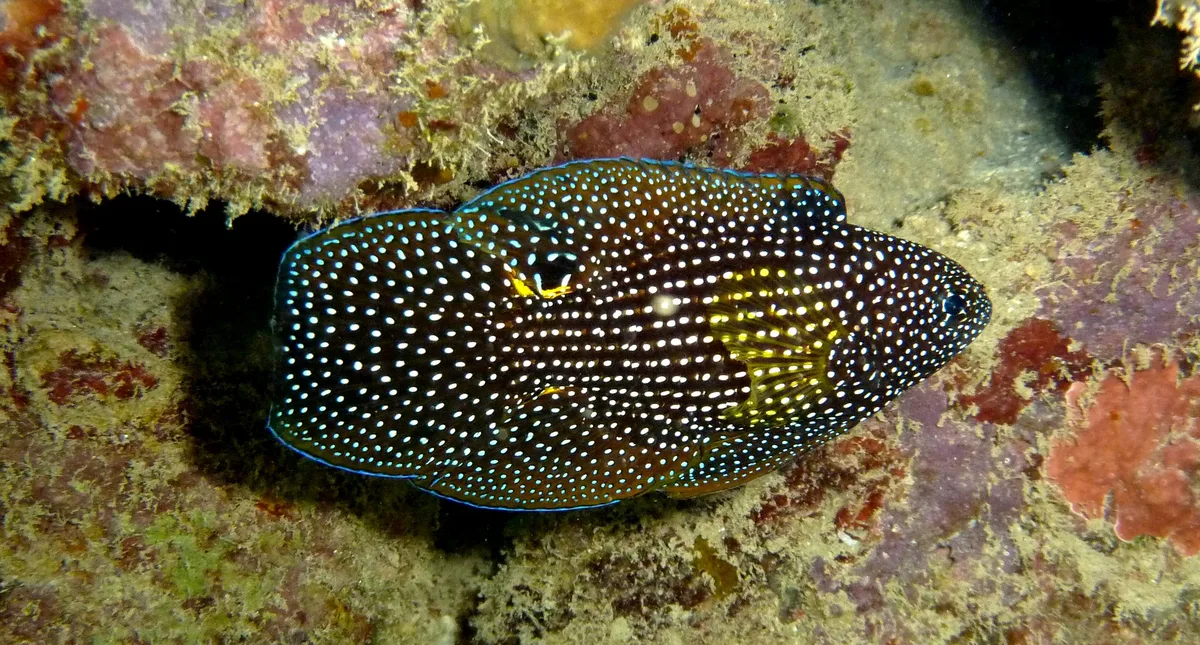
The rest of the time it is one of the more beautiful things in a cave: deep black-brown scattered with small white spots, with fins so large and rounded that the animal appears twice its actual size drifting slowly along the ceiling.
It spends the day inside and comes out at night to hunt small fish and crustaceans.
The genus. Calloplesiops Fowler & Bean 1930 - callos (beautiful). ETYFish
The species. Calloplesiops altivelis (Steindachner 1903) - altus (high) + velum (sail). ETYFish
- black-brown body covered in small white spots, like a night sky
- large ocellus at the rear of the dorsal fin
- enormous rounded fins that double the apparent size of the fish
- up to 20 cm
Why it's threatened
No major known threats. A minor to moderate threat is the wild capture of this species, since the ornamental fish trade has been increasing yearly (Redsodihardjo-Lilley and Lilley 2007).
Threat classification from the IUCN Red List.