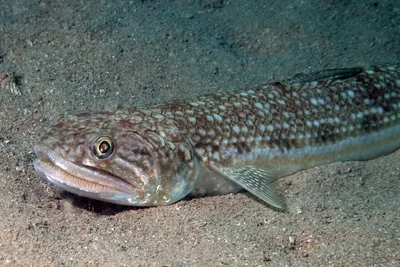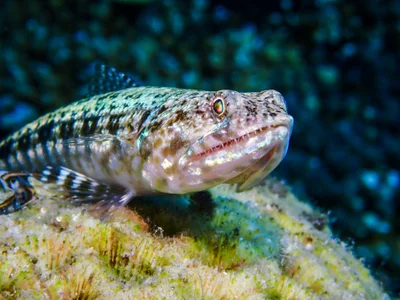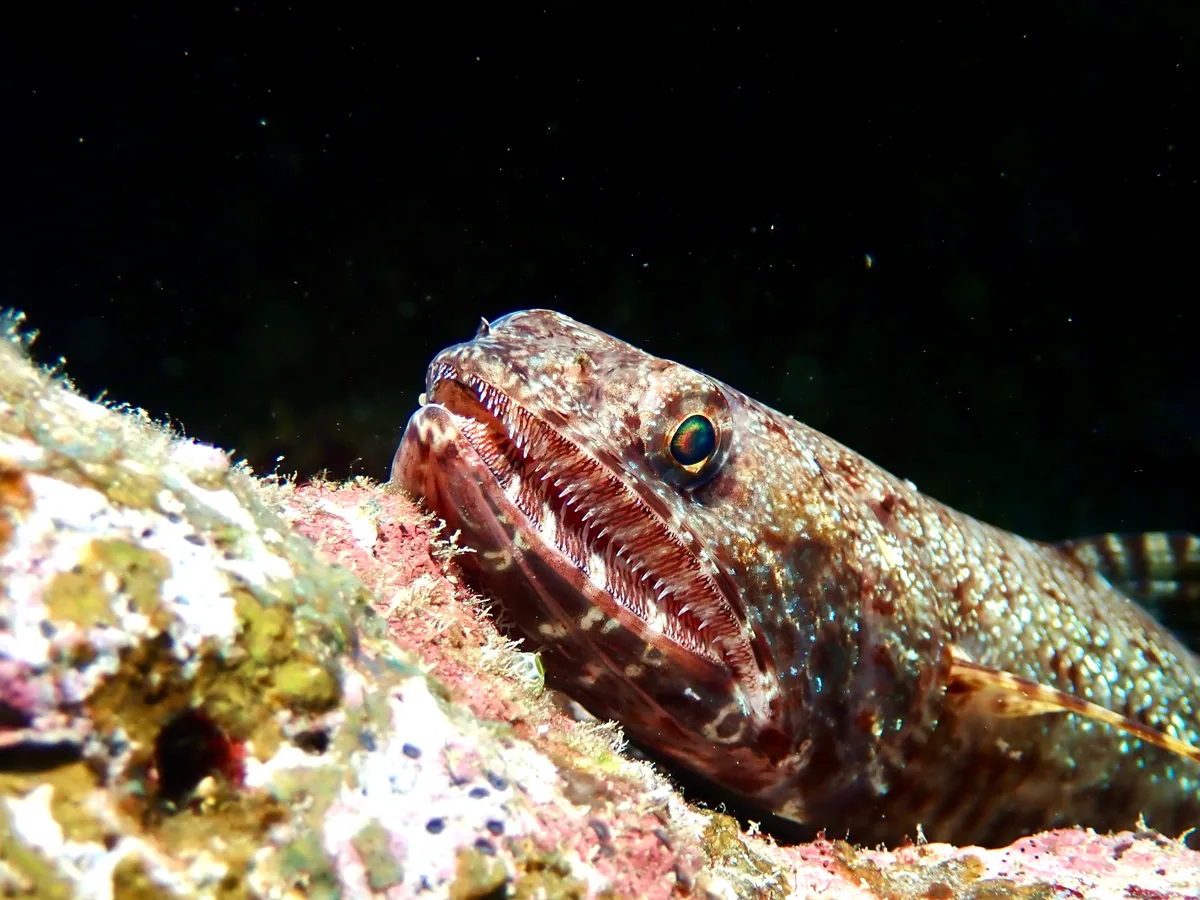
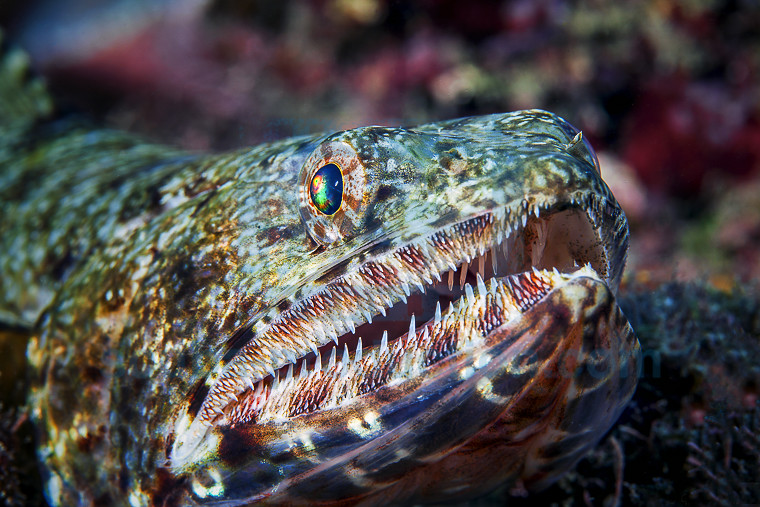
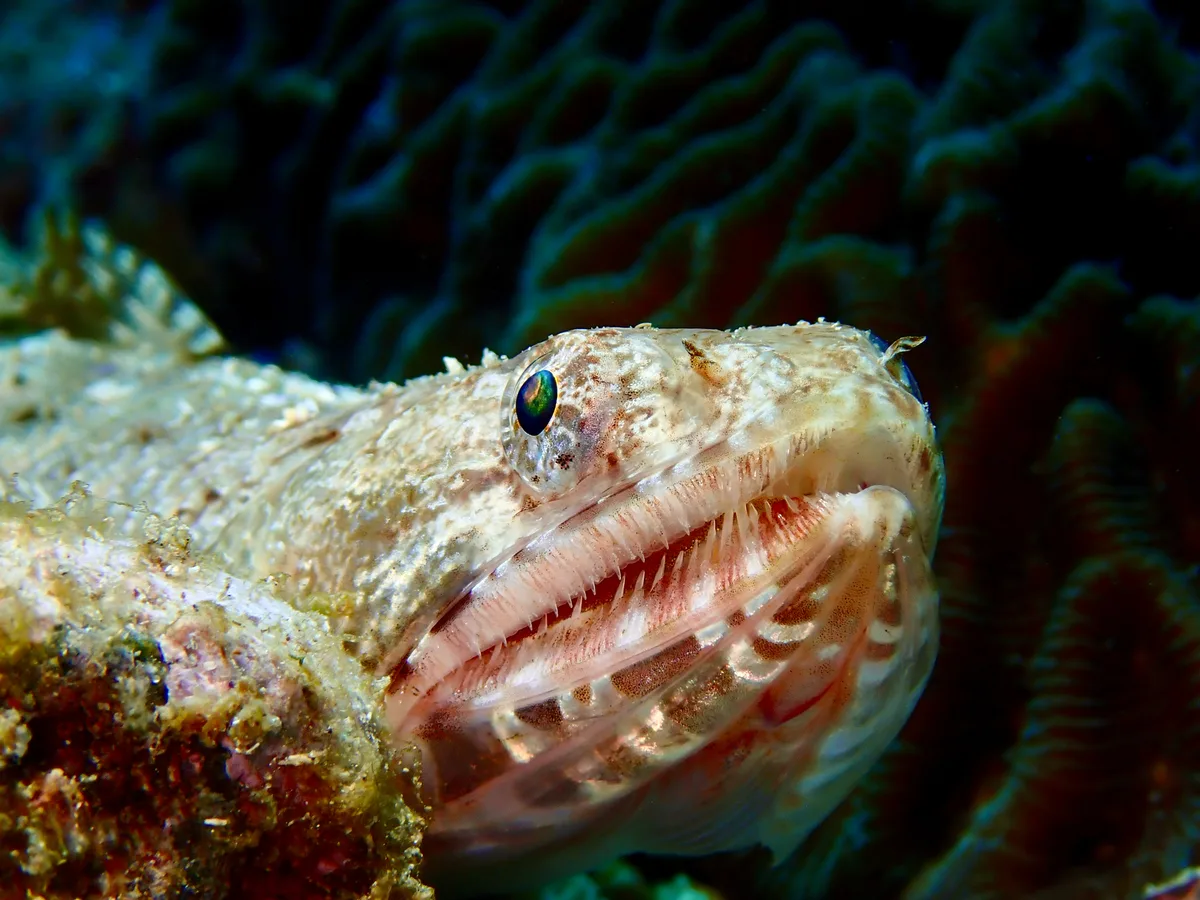
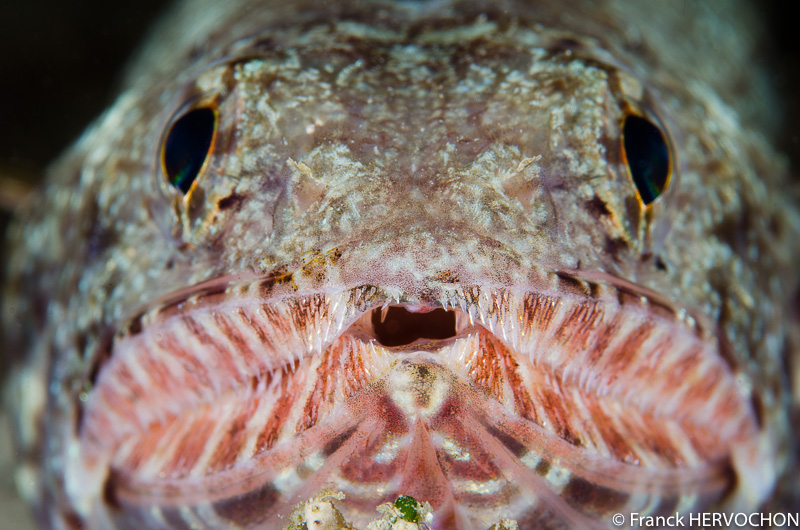
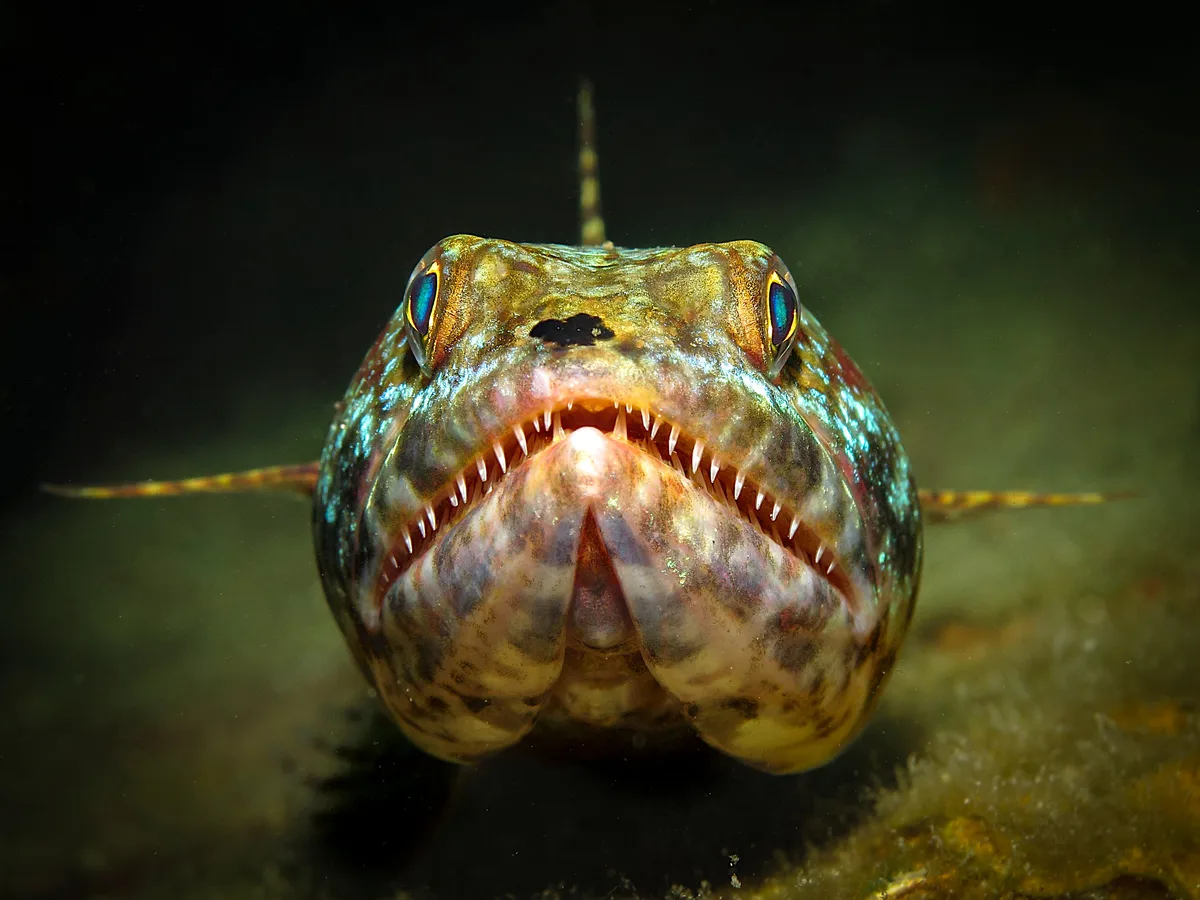
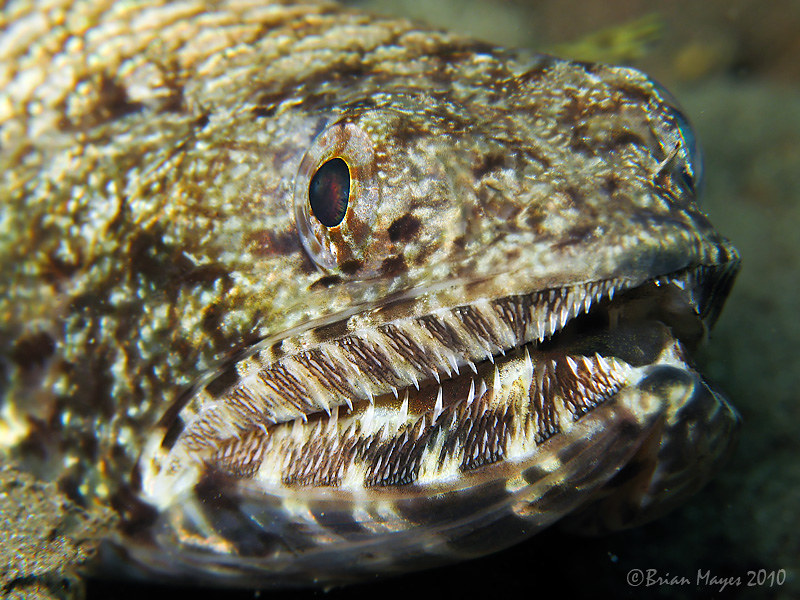
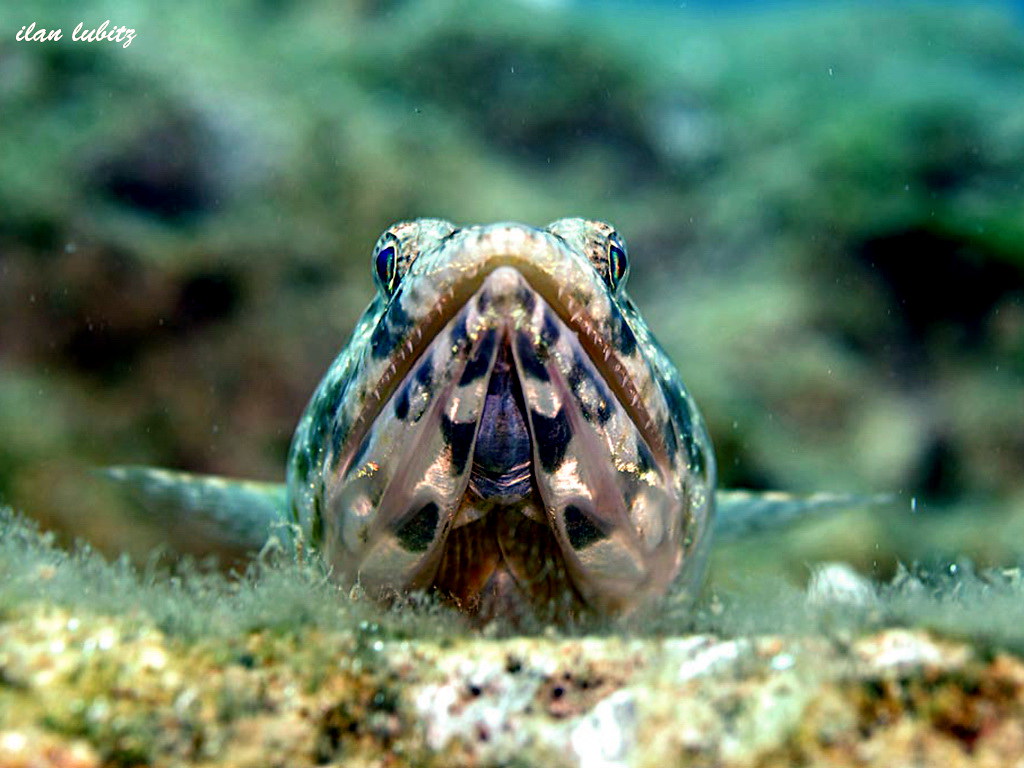
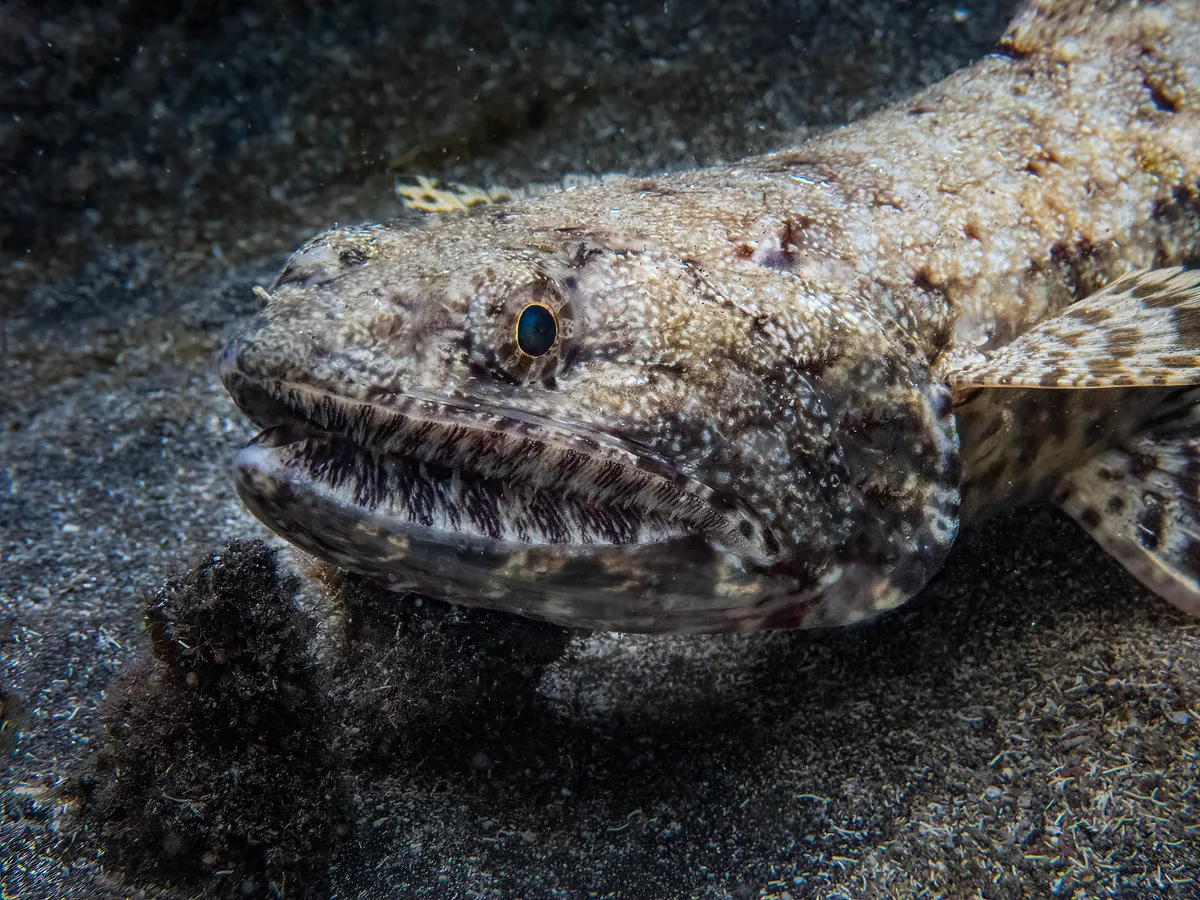
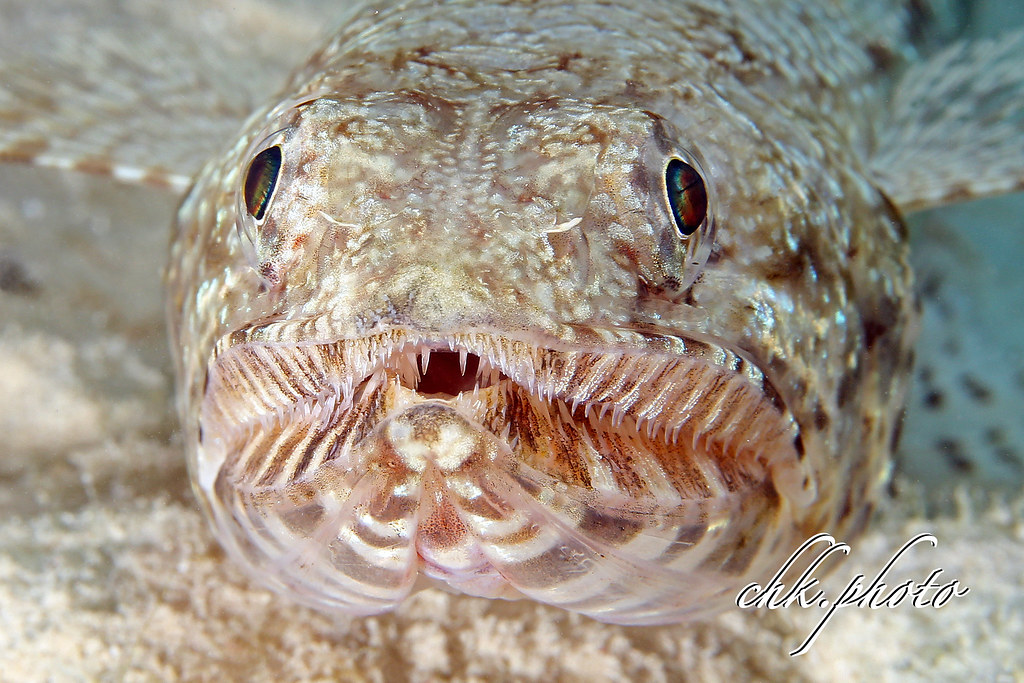
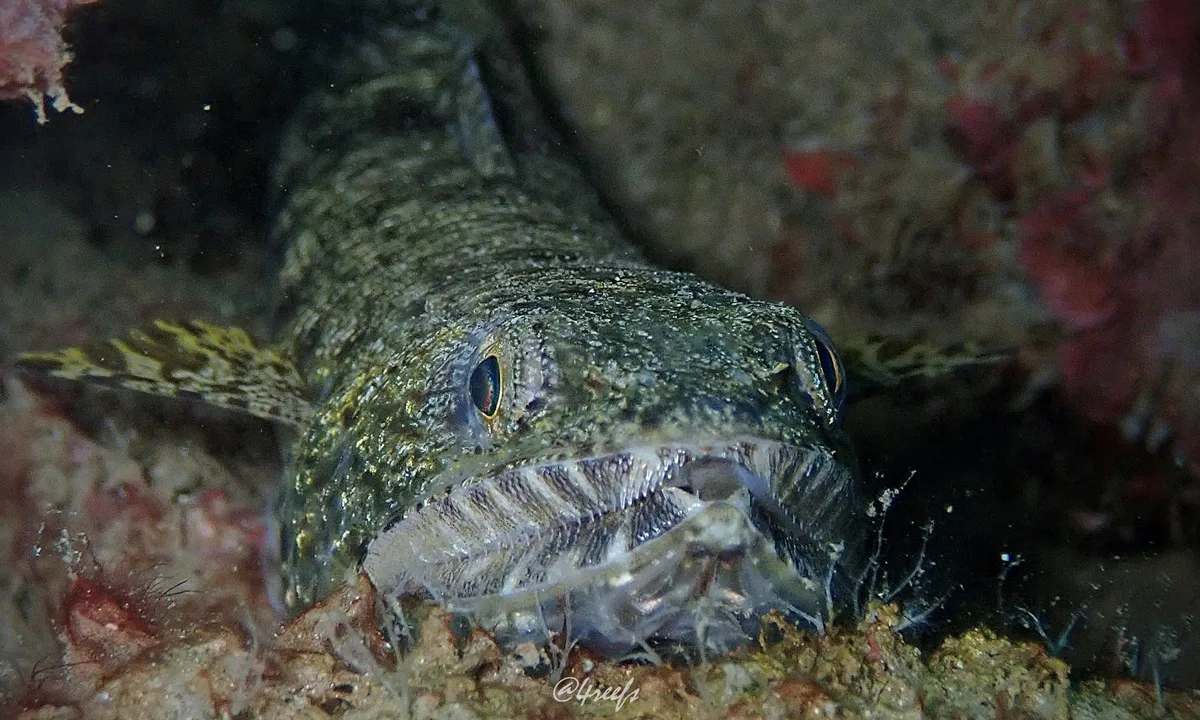
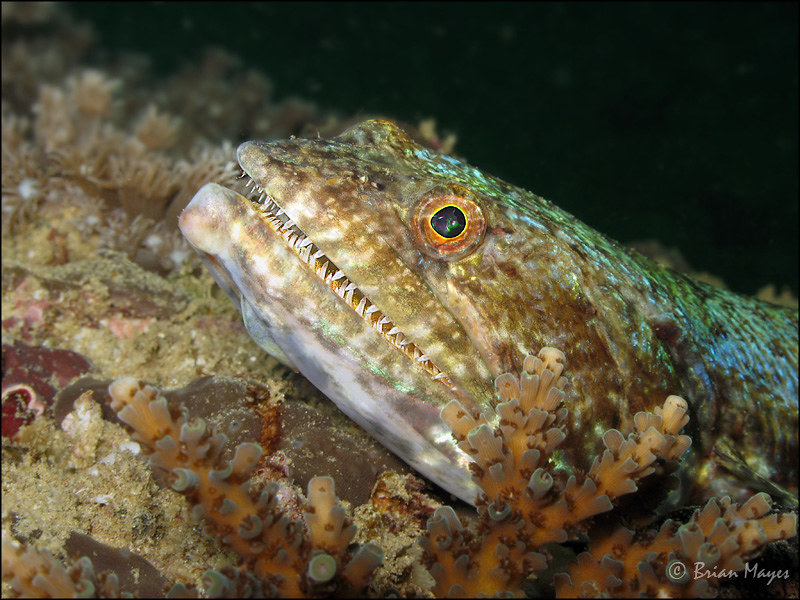
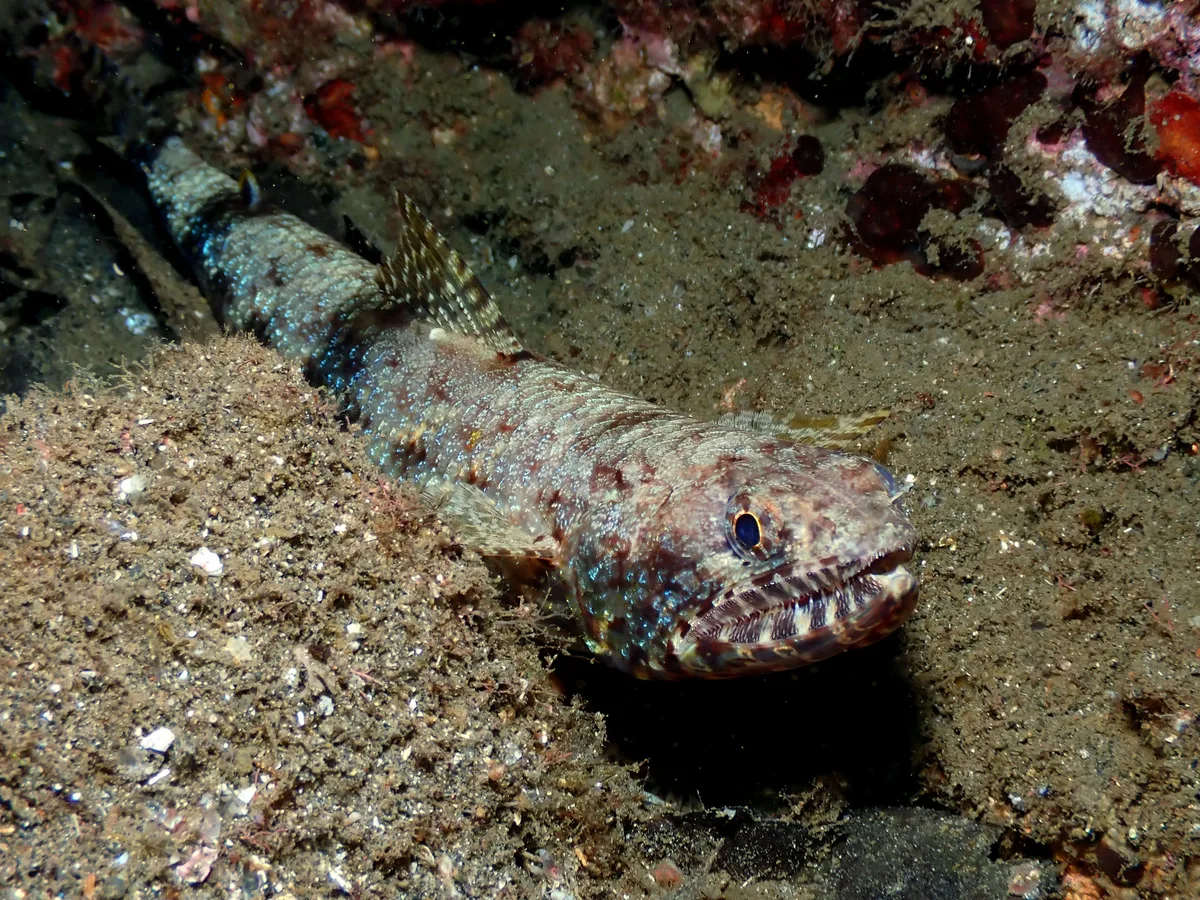
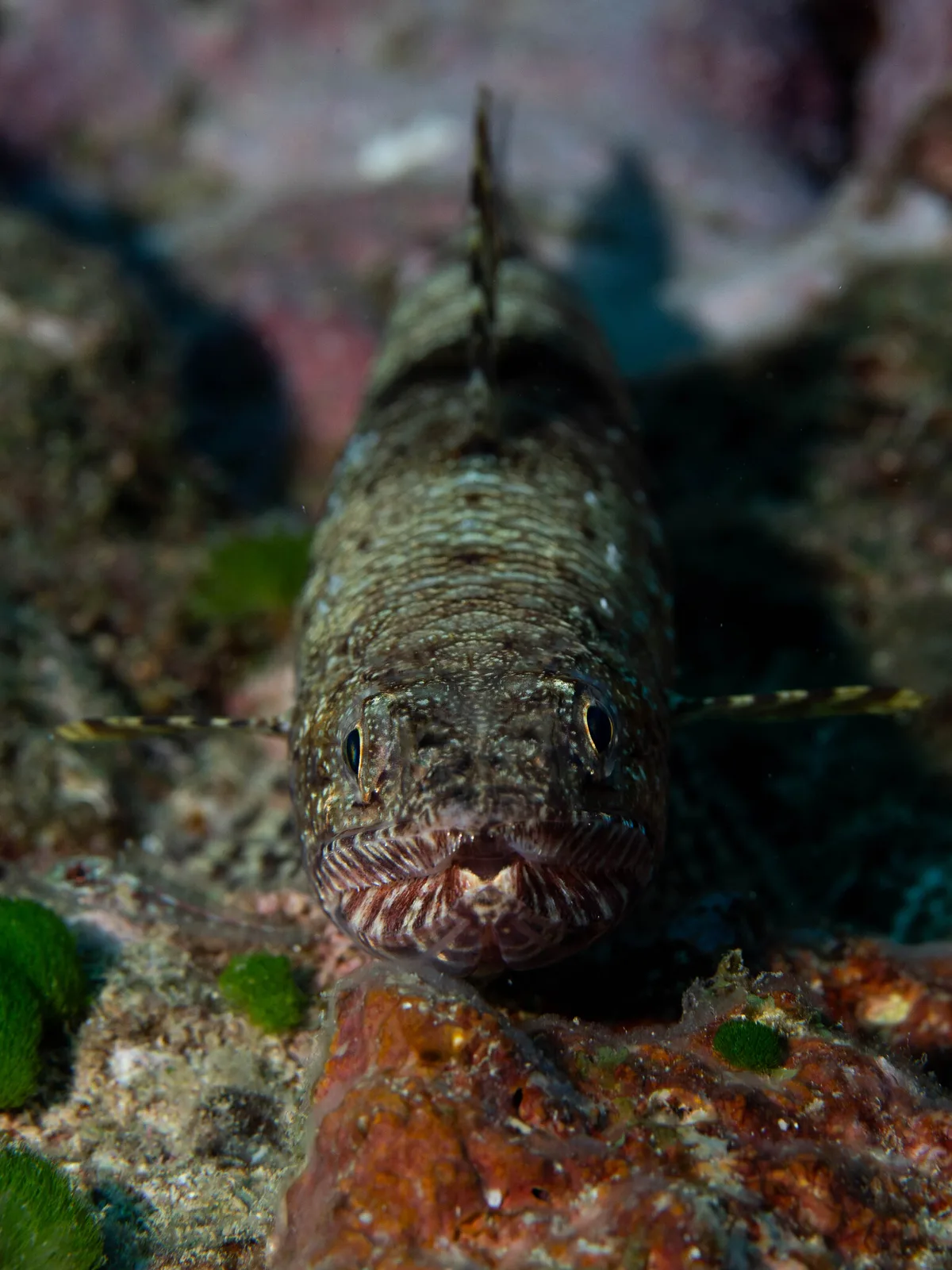
It cannot shut its mouth over its own teeth. Every lizardfish in this genus shows a fringe of fine needles along the jaw line with the jaws closed, and on a fish lying still on the sand that is what a photograph picks up first.
The teeth do not stop at the jaws. There are teeth on the roof of the mouth and teeth on the tongue, all of them slender and slanting backward, so a fish grabbed sideways can be worked around and taken down whole, head first, and cannot back out over them. A lizardfish does not chew and does not tear pieces off. It swallows prey nearly as long as its own head, entire, and then sits with the tail still showing.
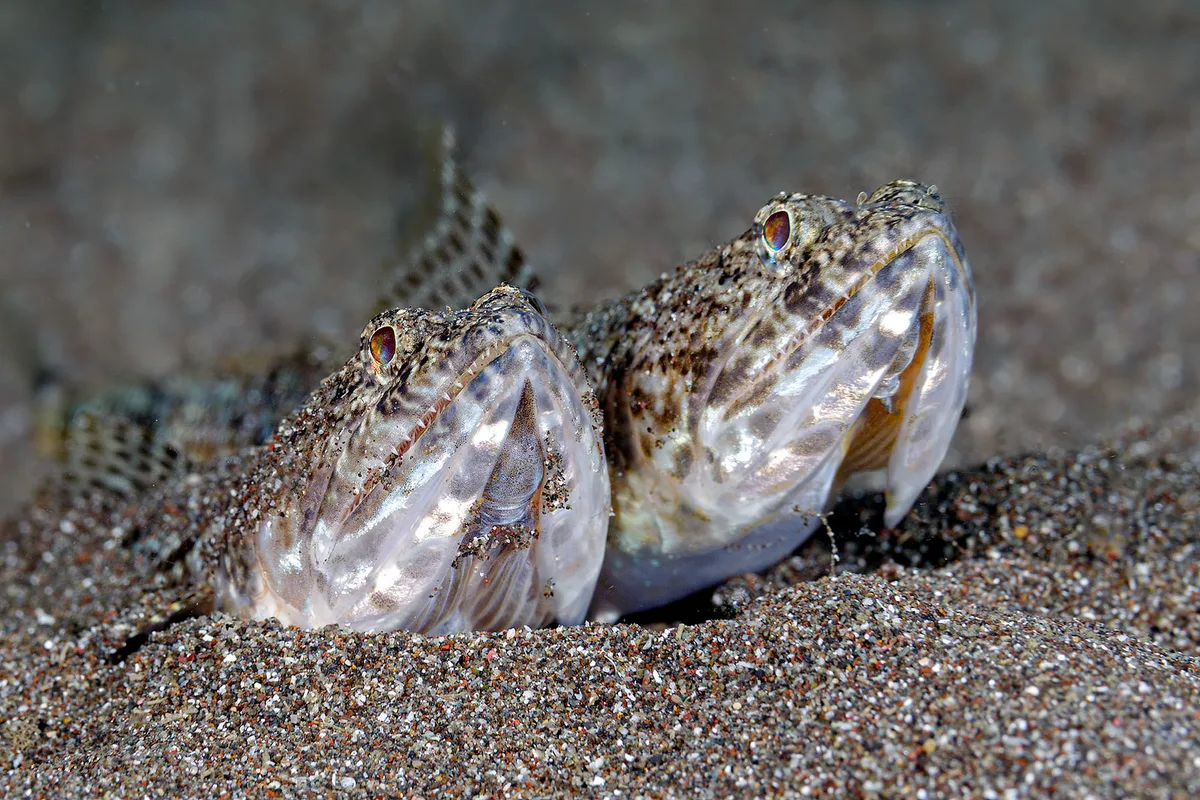
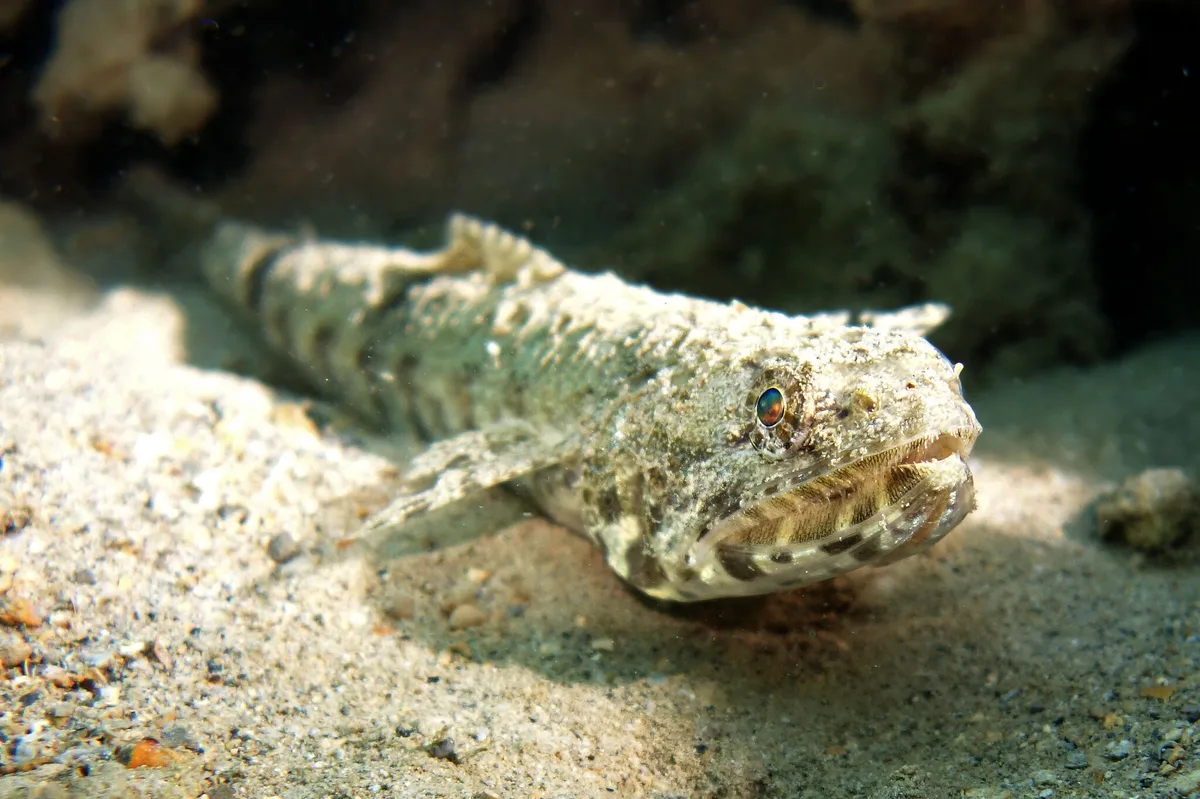
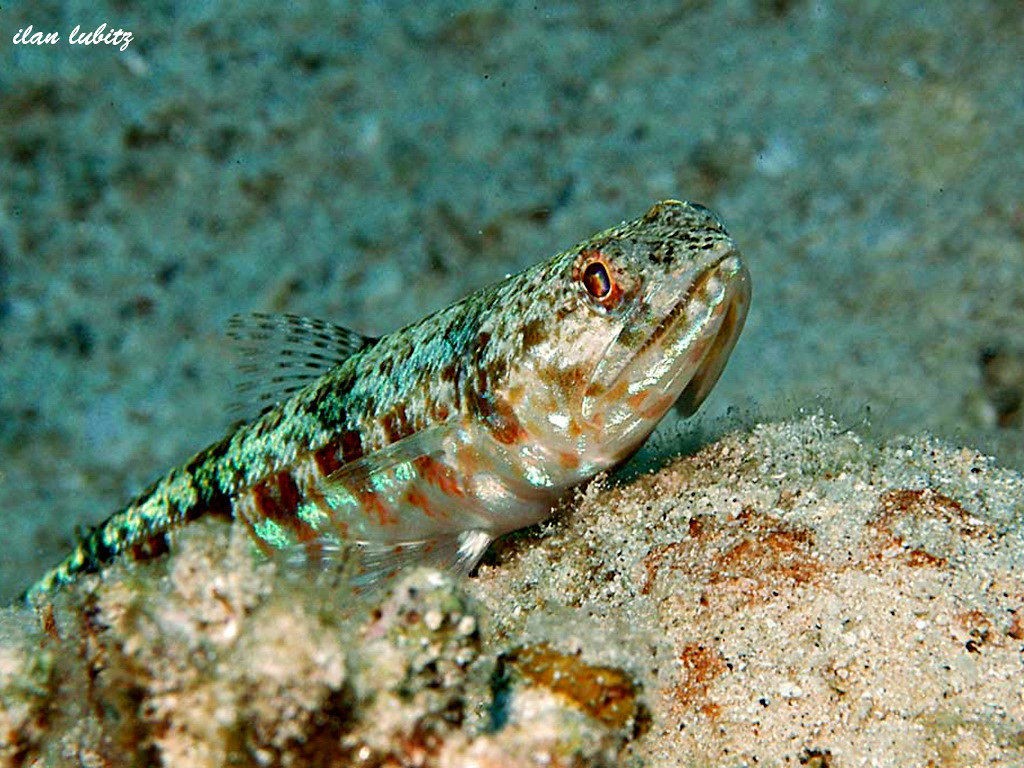
It hunts by not moving. The fish rests propped on its pelvic fins on open sand or rubble, or reverses into the sand until only the eyes and the top of the head are above it, and waits for something small to pass within a body length. The strike is one upward lunge and a return to the same spot. FishBase lists it as active at night; by day it is usually the motionless one, and divers run their eyes straight over it.
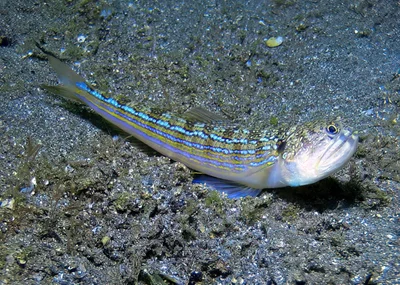
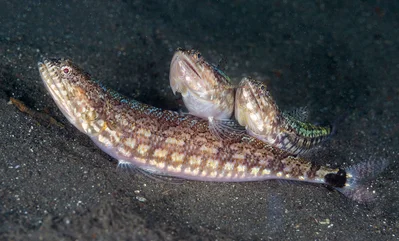
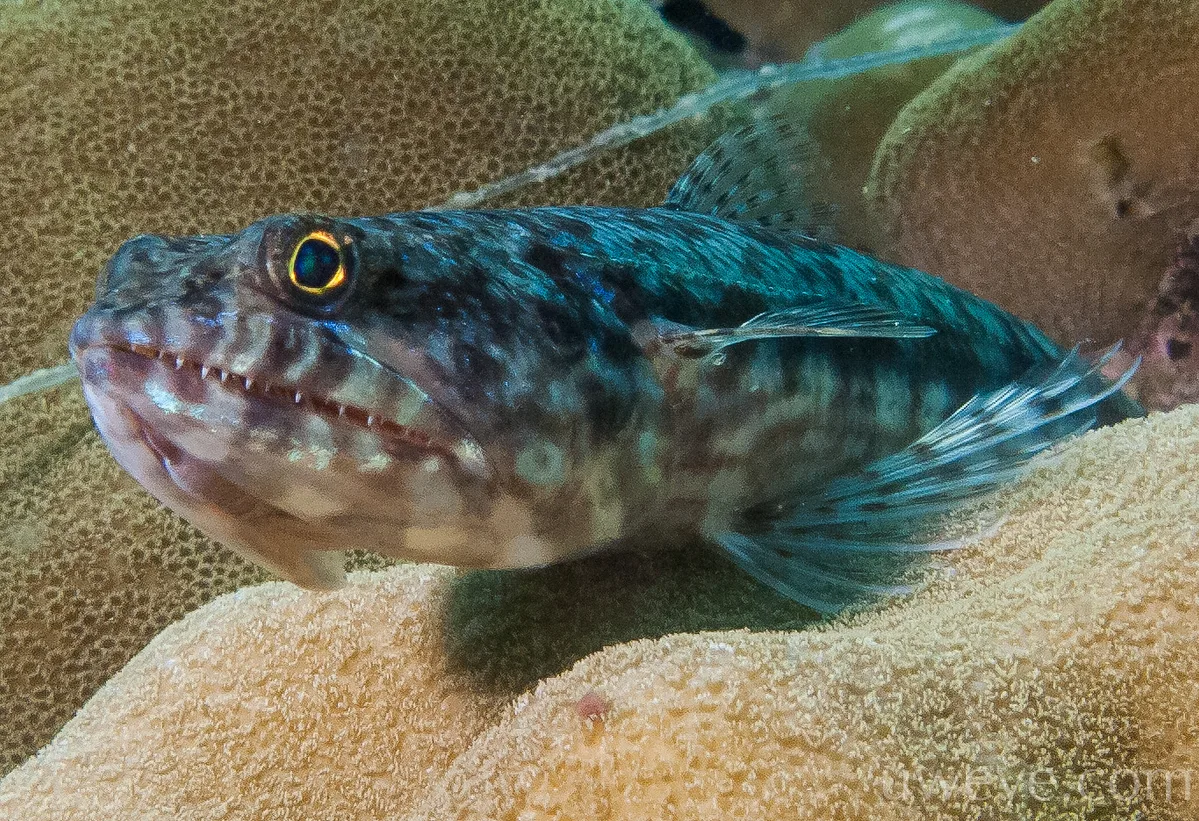
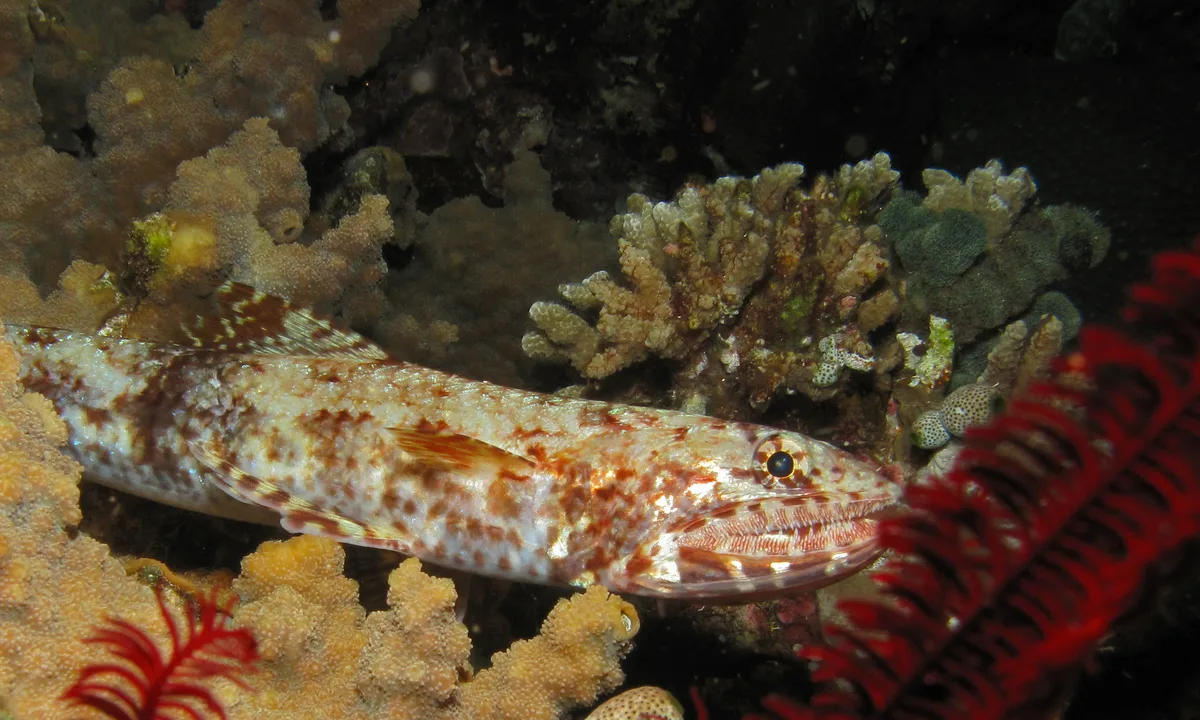
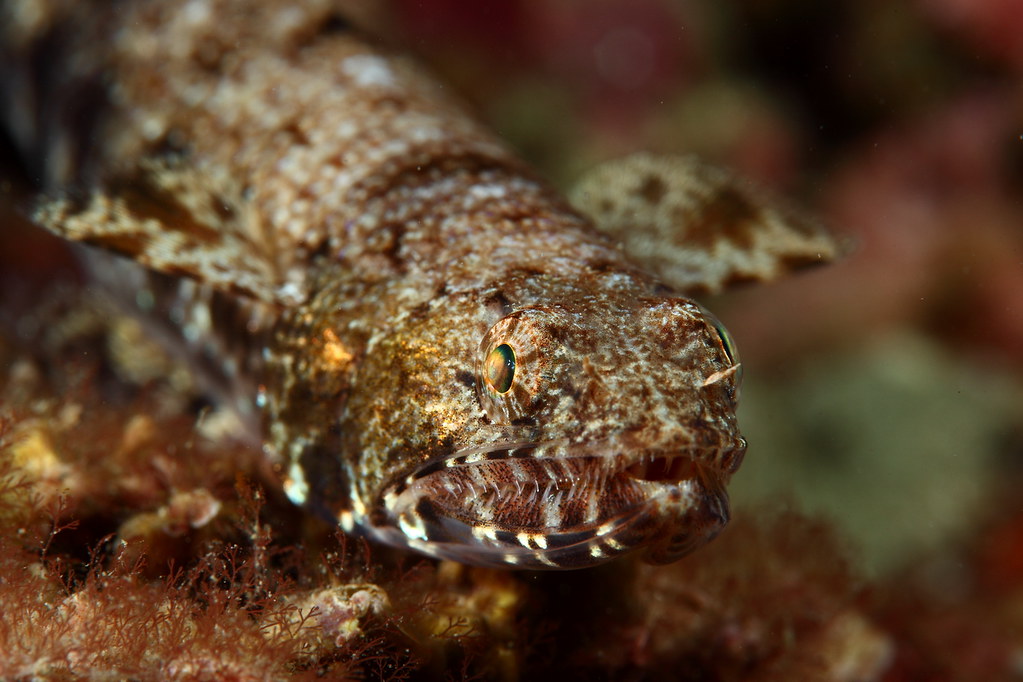
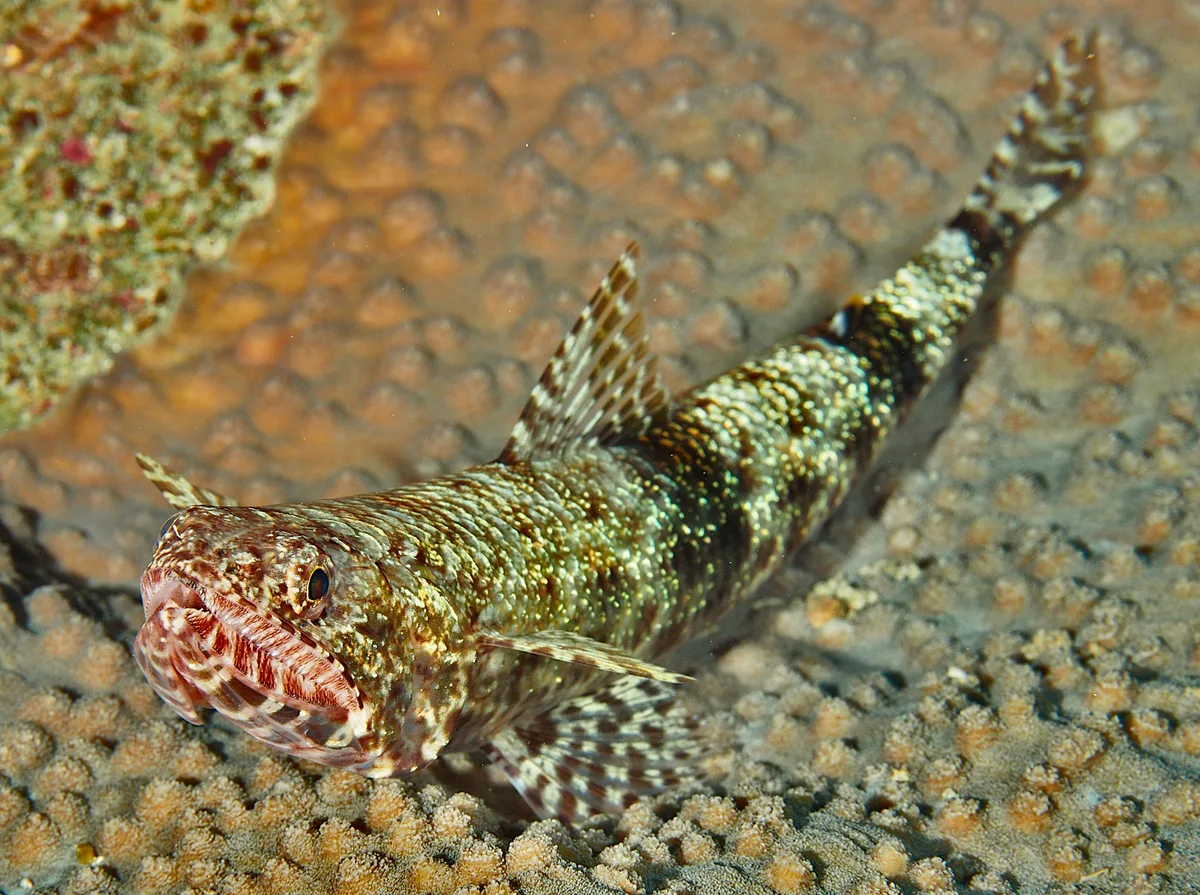
The body is slender and nearly cylindrical, the head flat on top, the mouth long. The color is mottled brown, red-brown and white with about four darker saddles across the back and blotching that carries on into the fins, which resolves into sand and rubble at any distance at all. Where it sits is half the identification: this is the lizardfish of sand and rubble patches inside the reef, in lagoons and on reef flats, usually in the top 12 m, though it has been recorded down to 135. The blunt-faced one that buries in bare sand away from the coral is a different animal, and so is the one perched on top of a coral head.
It reaches 32 cm. It is harmless to divers and takes no notice of them, and the teeth that look alarming in a close-up are there to hold a fish that is already halfway down.
- needle teeth visible along the jaw with the mouth shut
- slender, almost cylindrical body with a flattened head
- mottled brown and white with about four darker saddles across the back
- propped on the sand on its pelvic fins, or buried to the eyes
- up to 32 cm
Why it's threatened
Threat classification from the IUCN Red List.