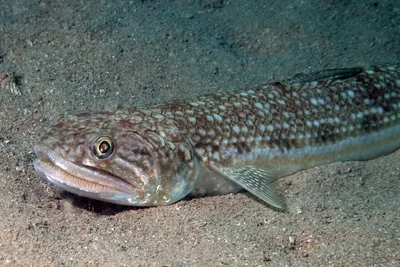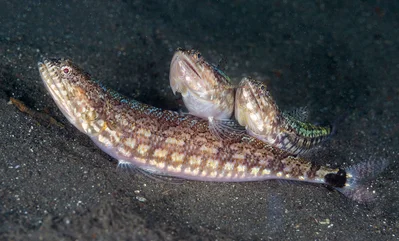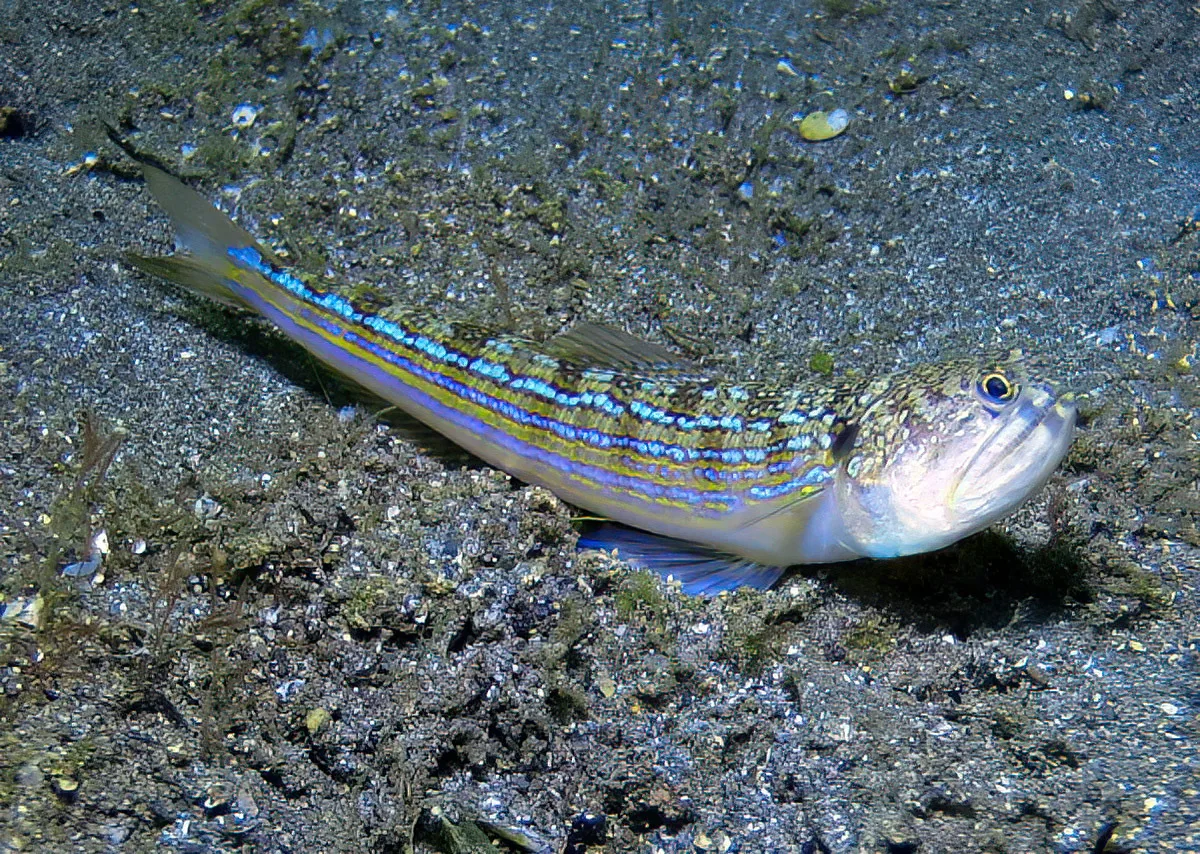
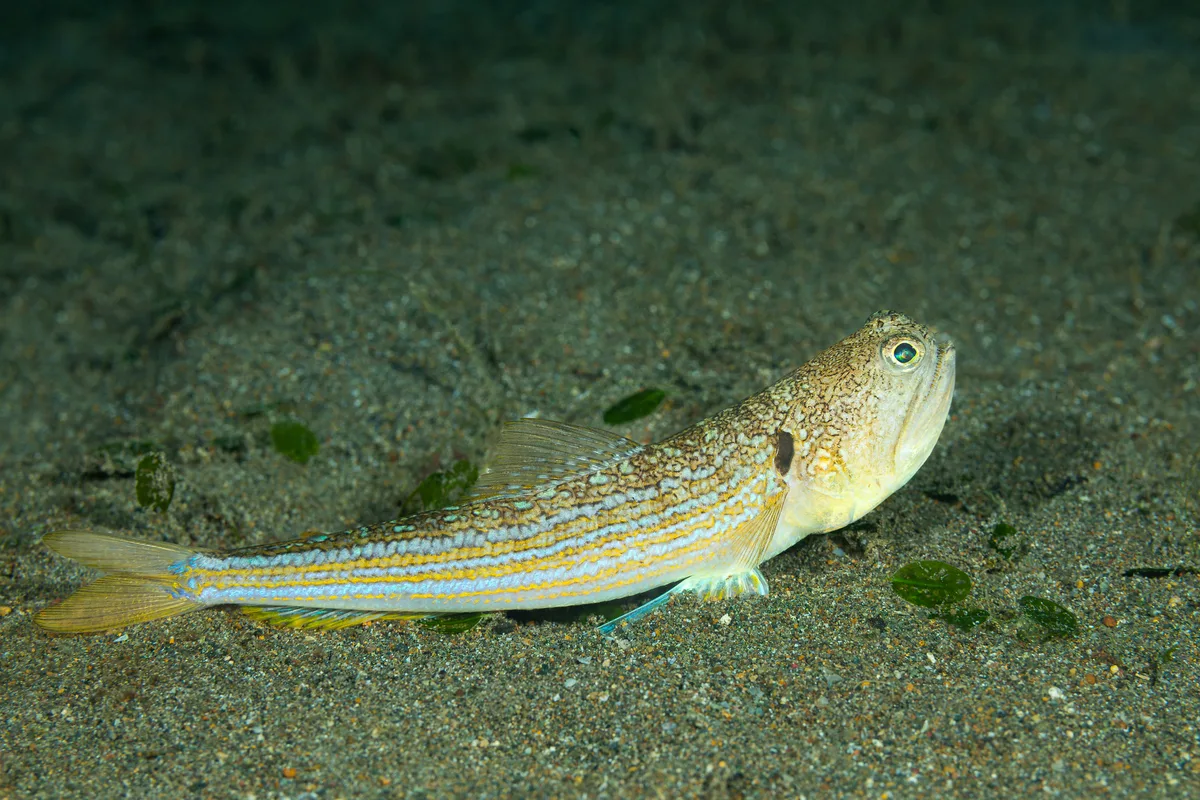
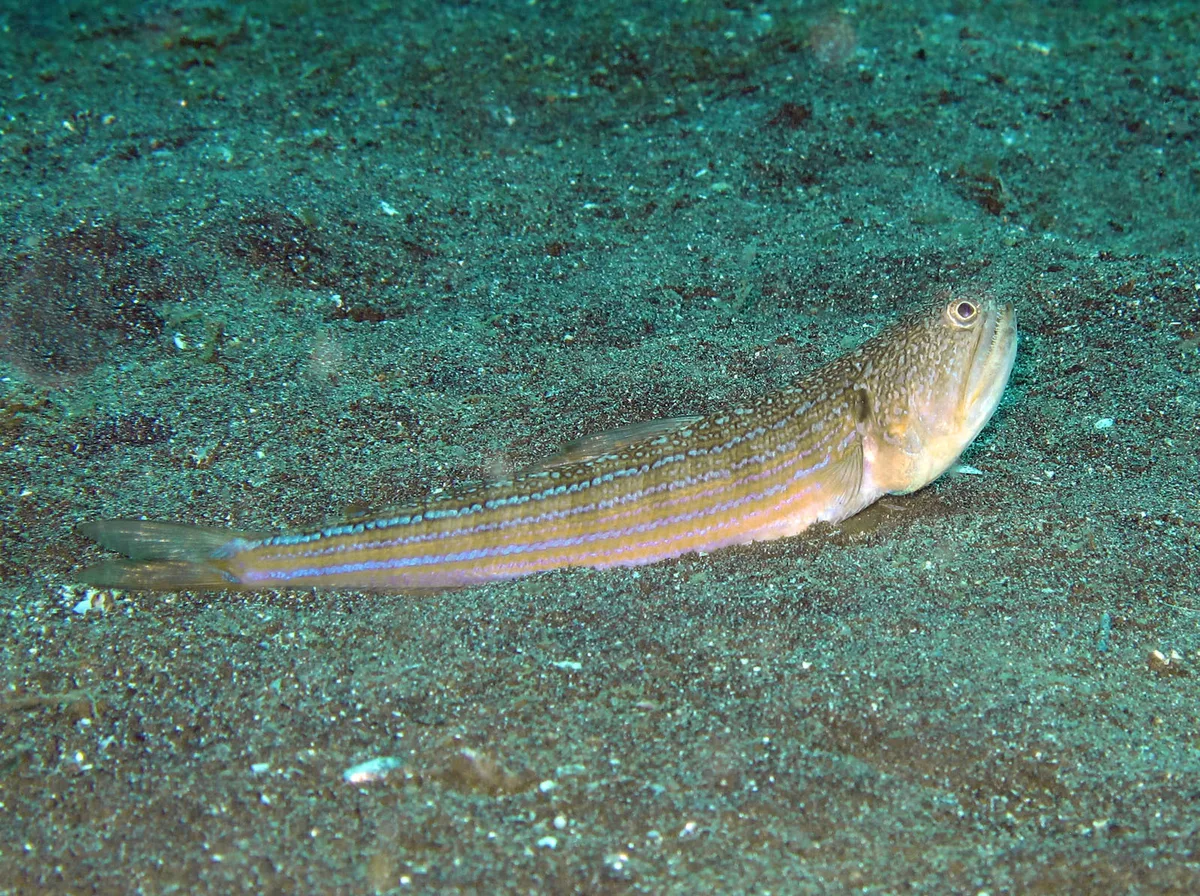
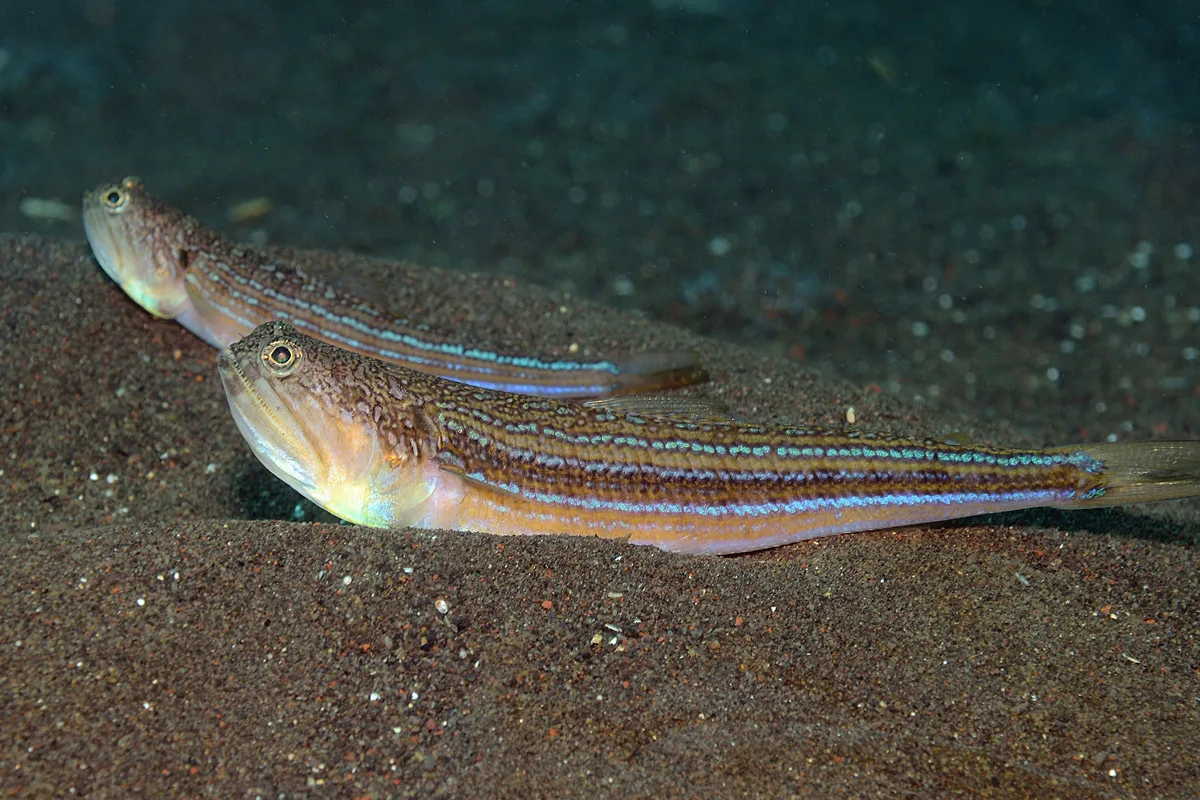
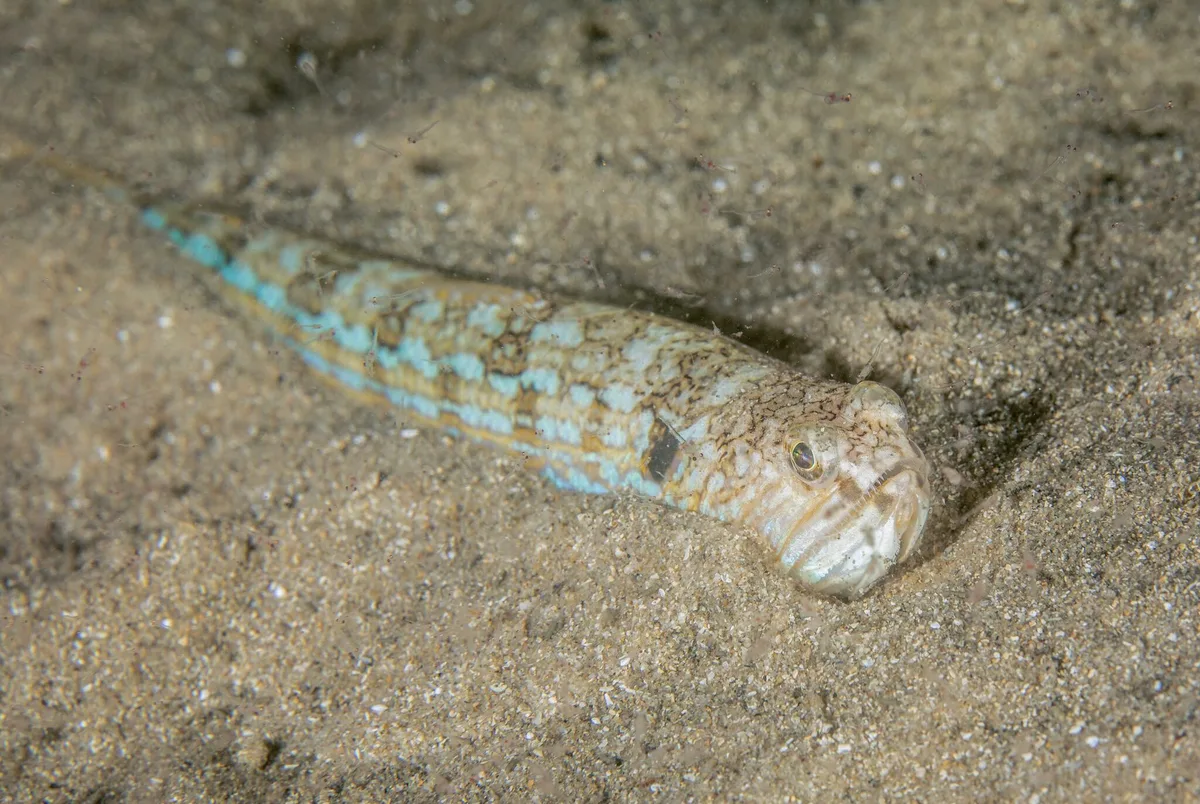
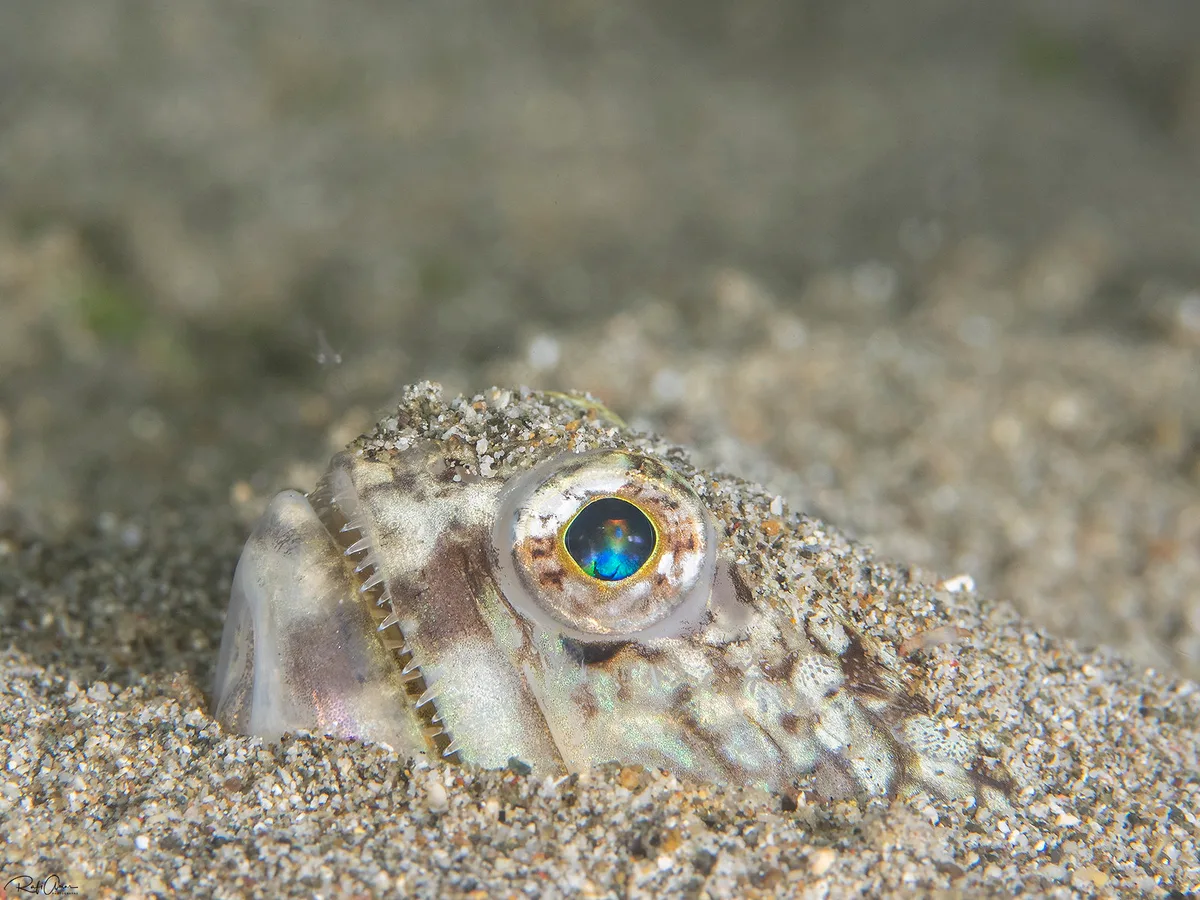
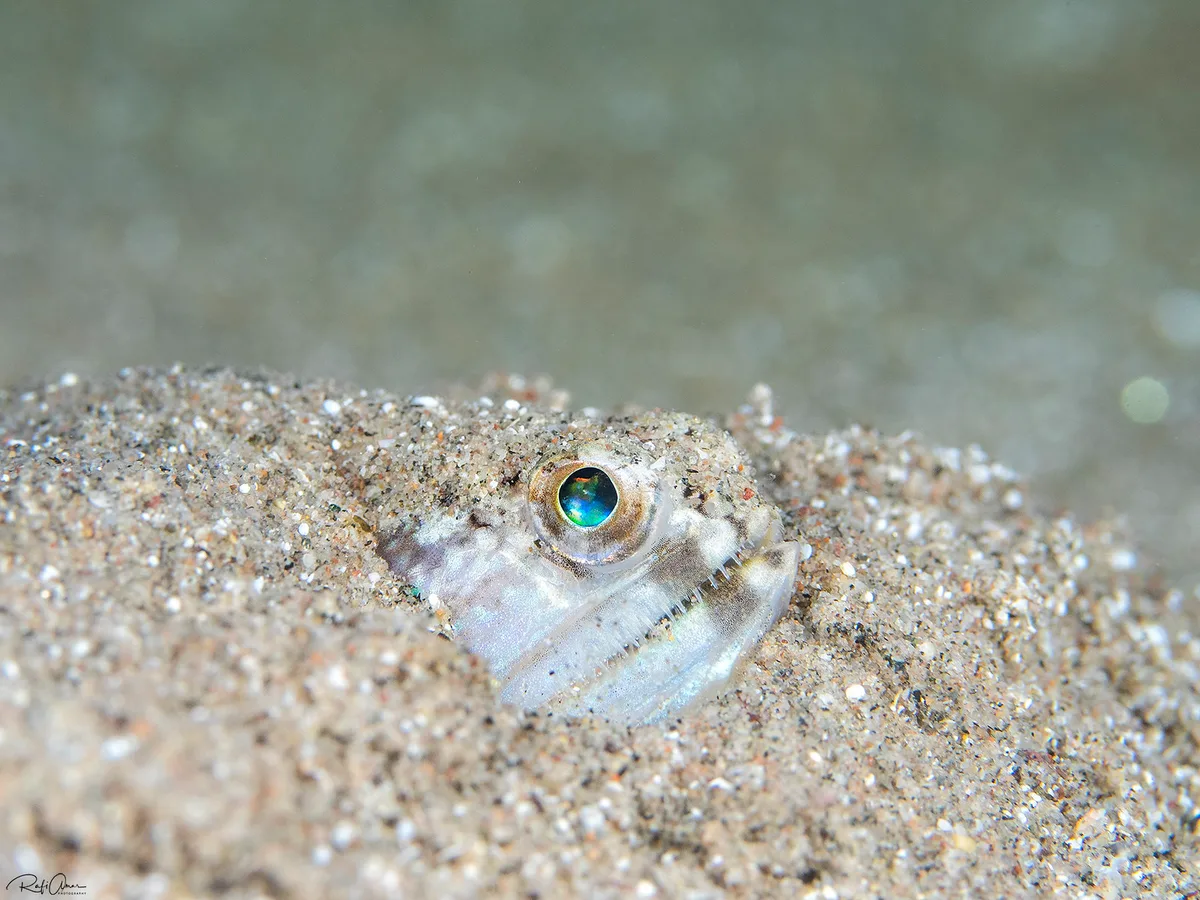
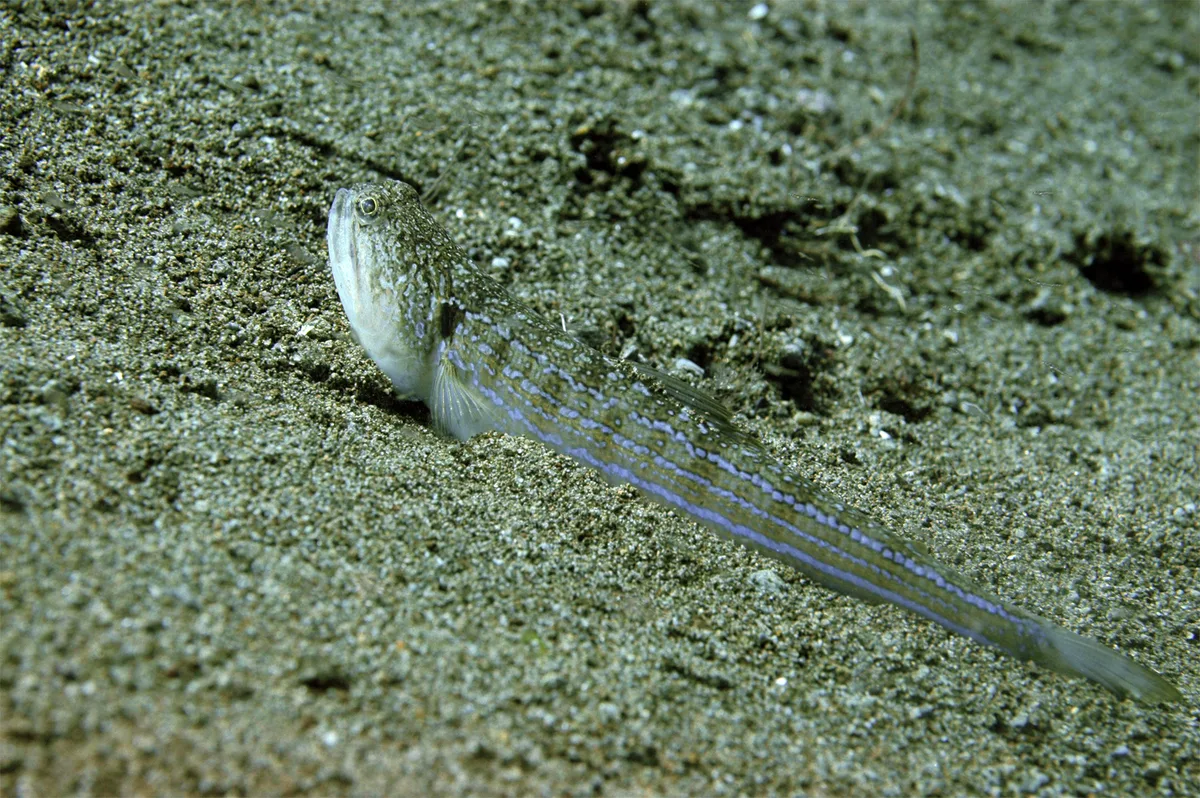
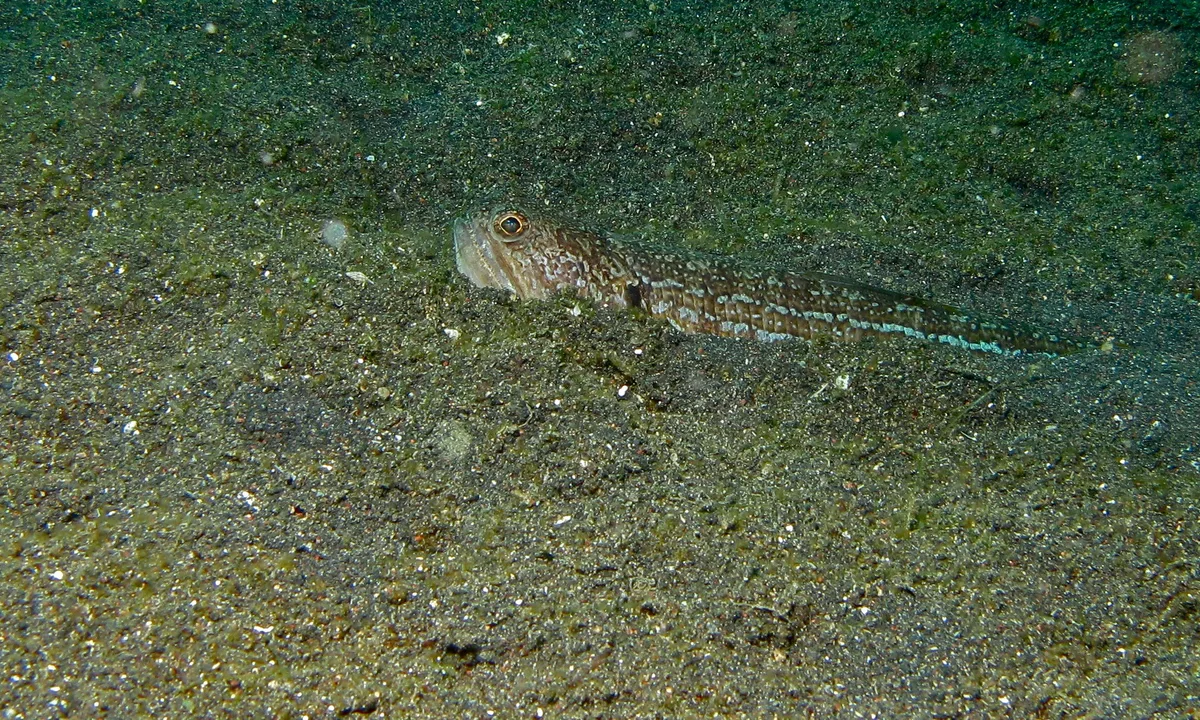
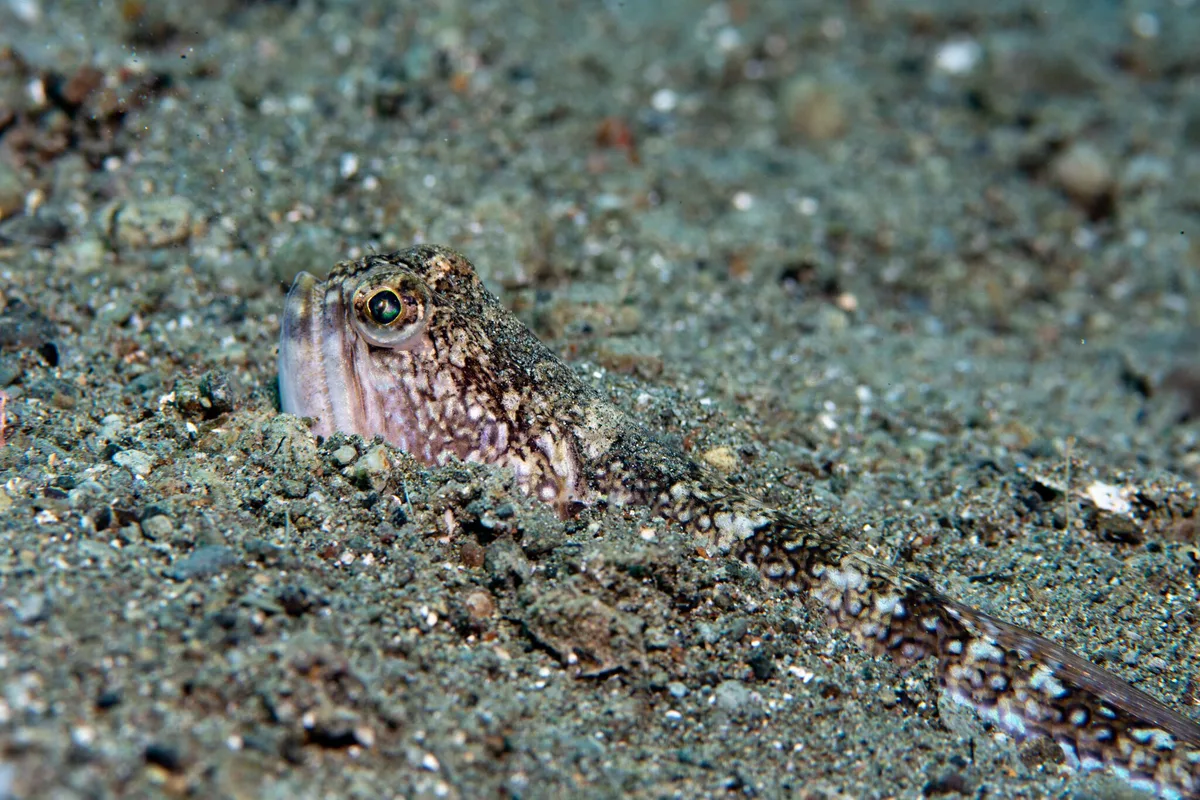
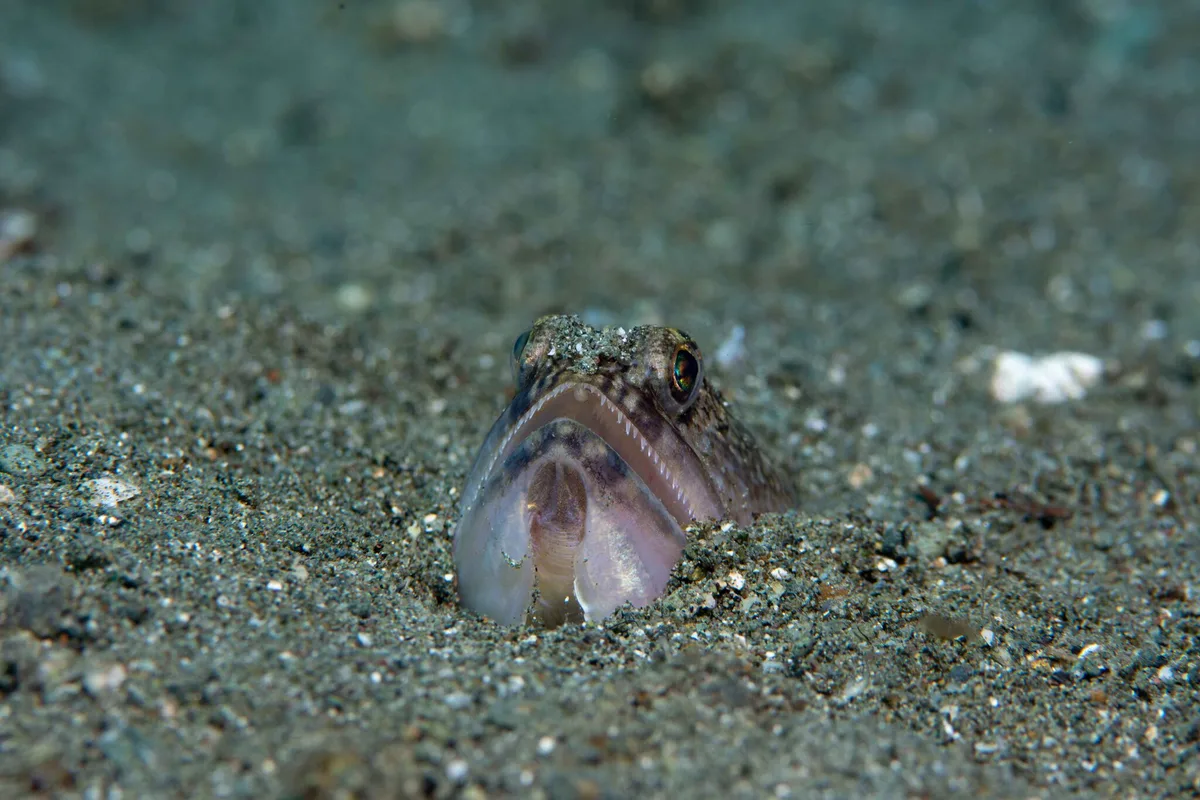
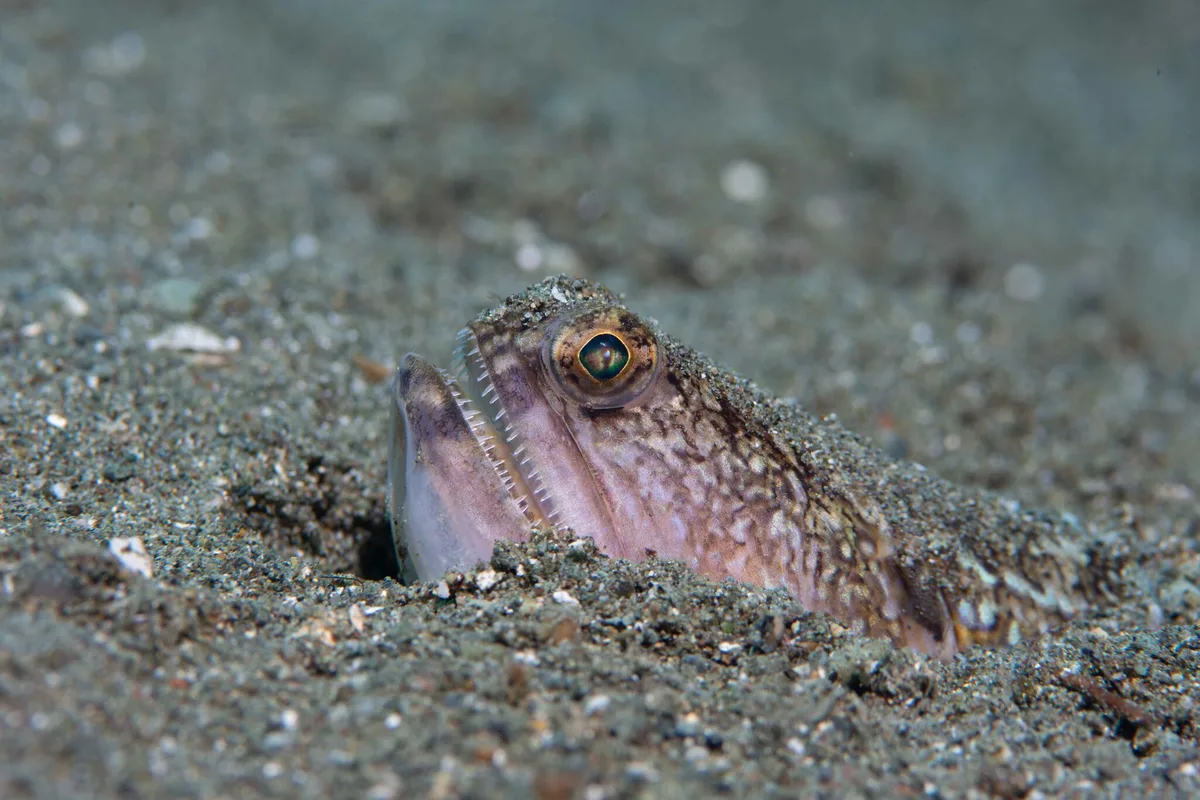
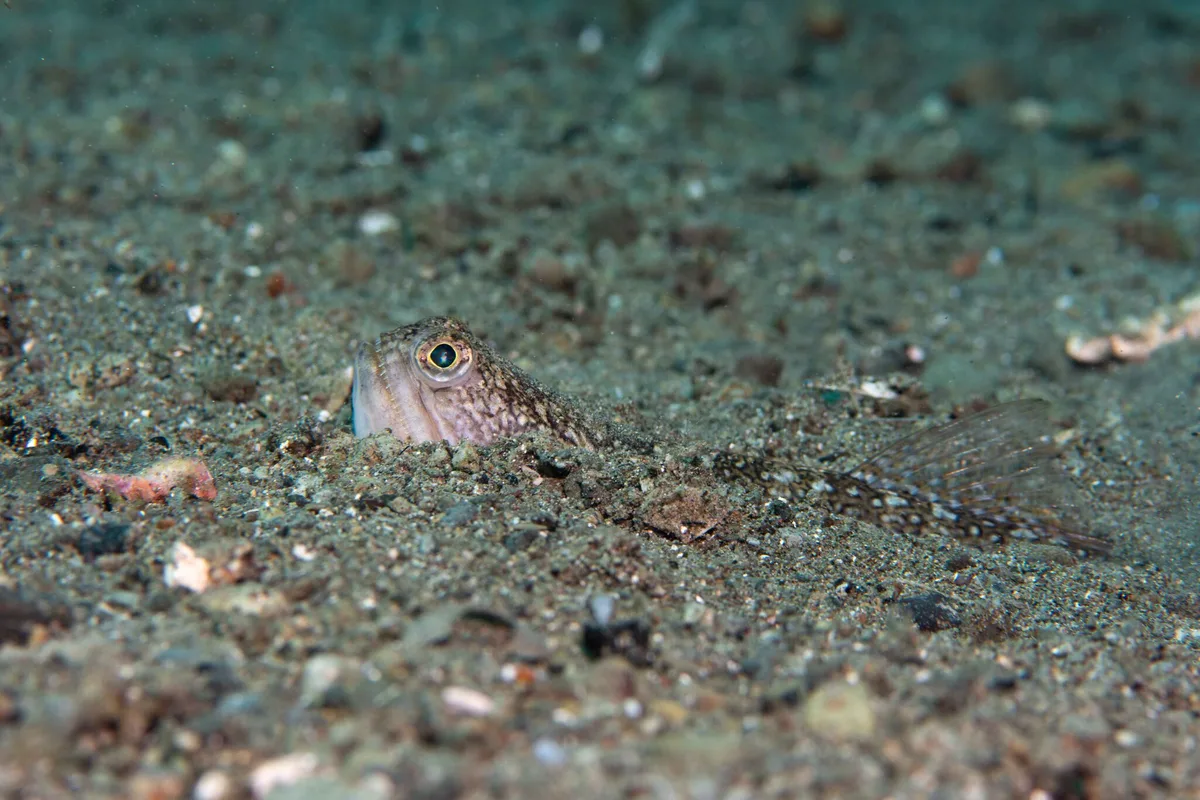
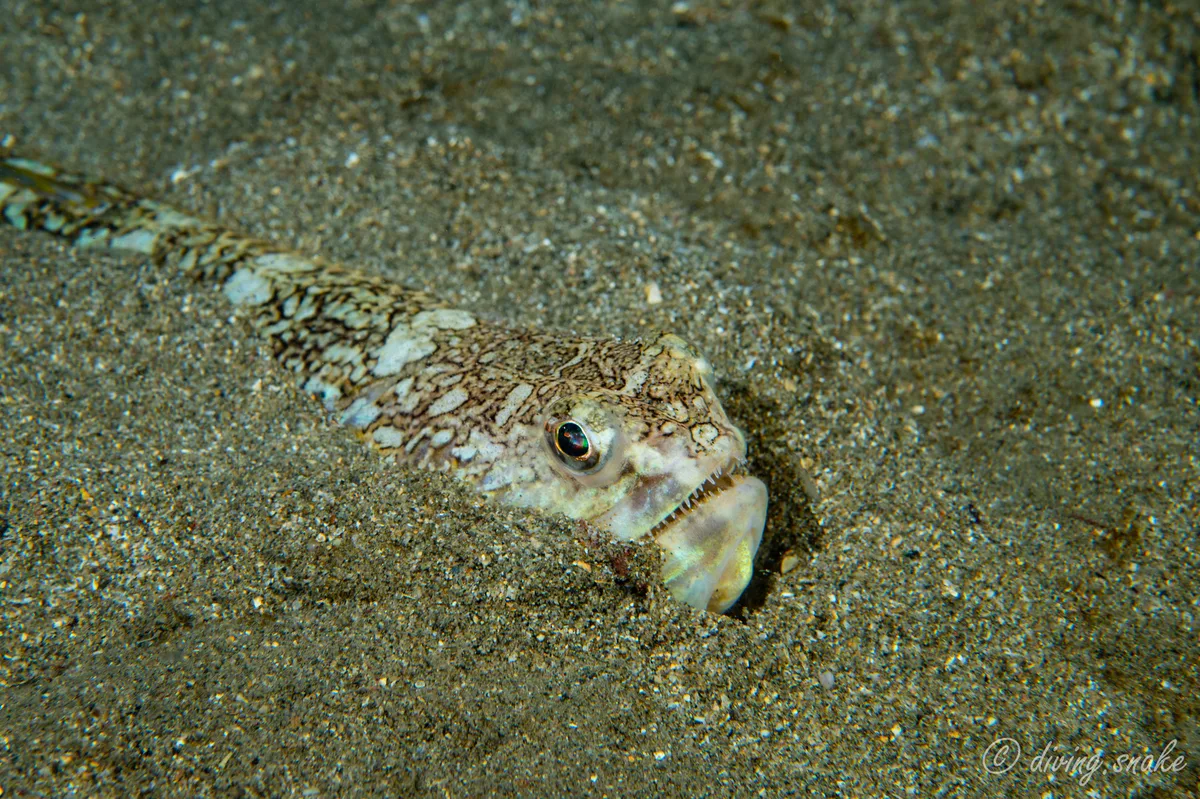
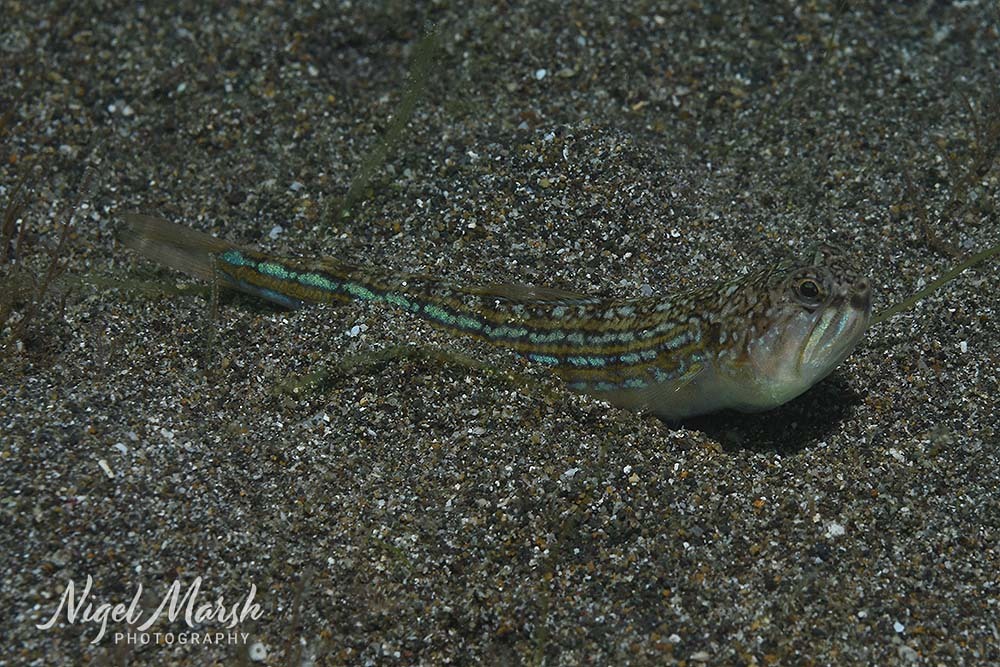
There is no fish on the sand, and then there is. This lizardfish spends most of its time buried in open sand with only its eyes above the surface, and when a diver comes too close it swims a short distance, drops, and shovels itself back under. Half the sightings of it start with sand erupting somewhere no fish was.
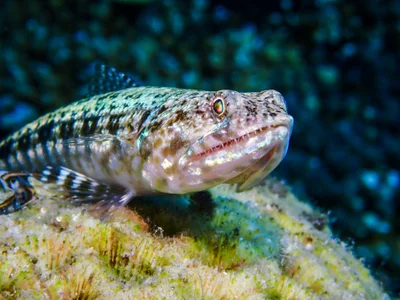
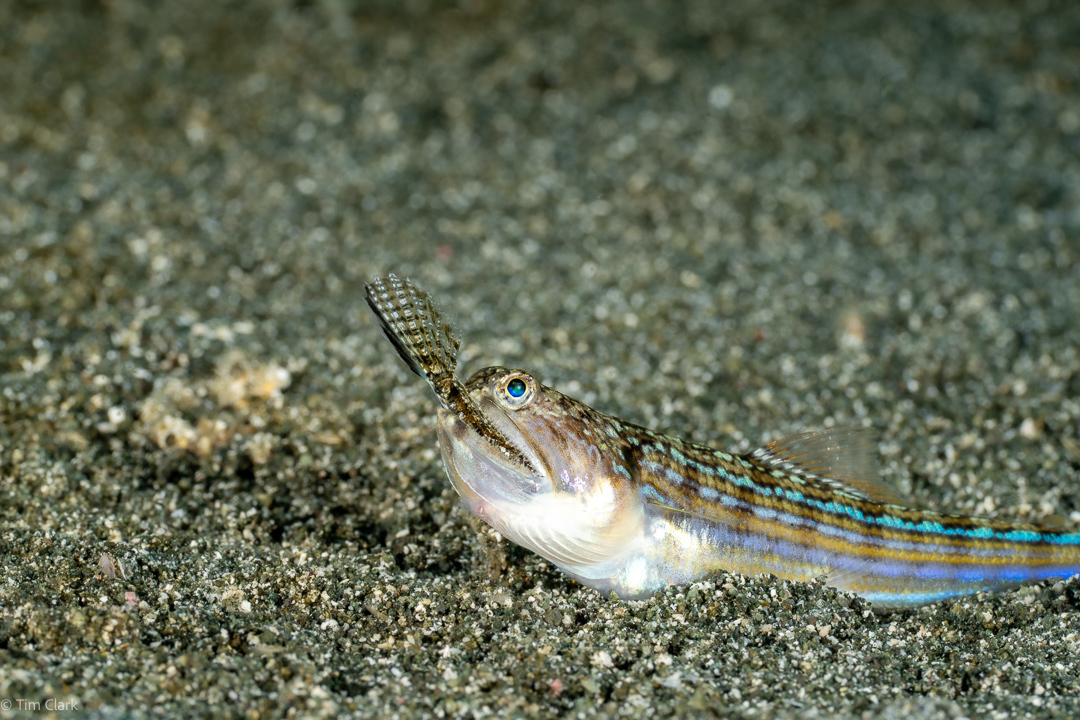
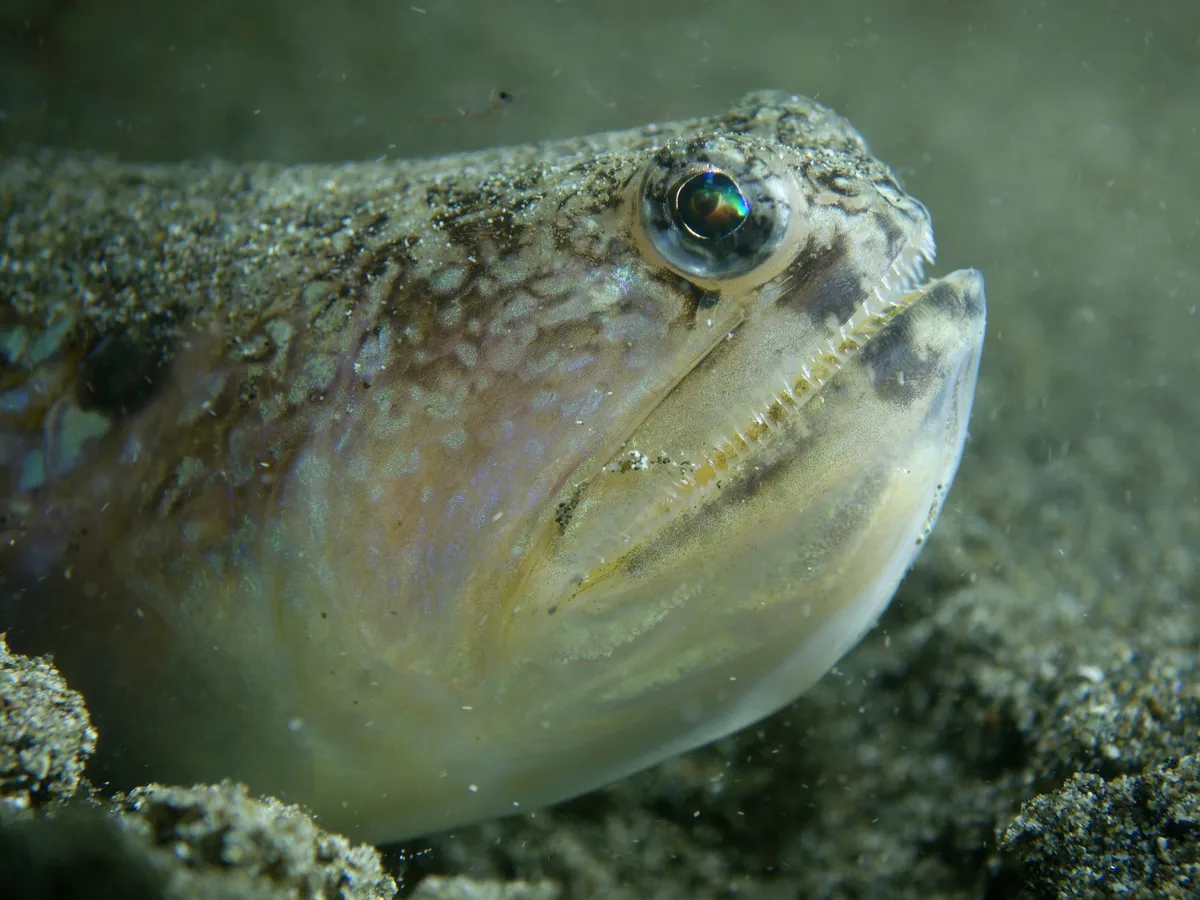
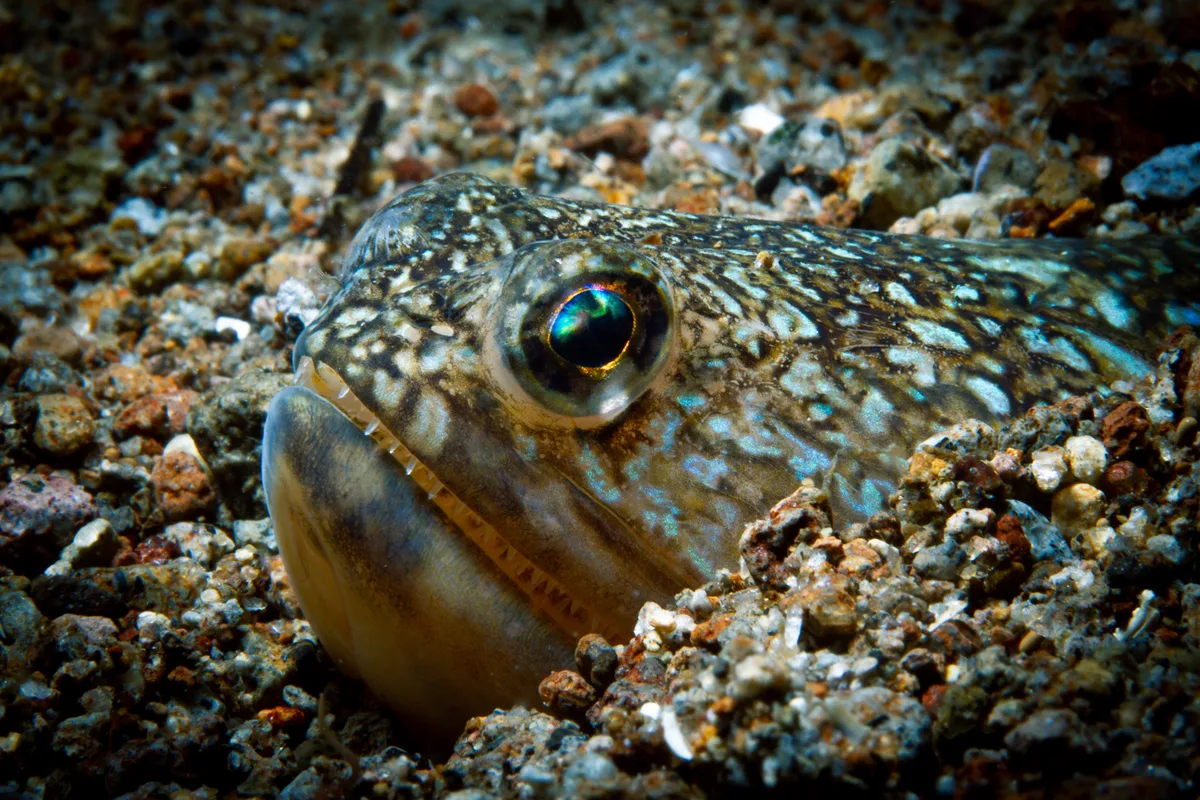
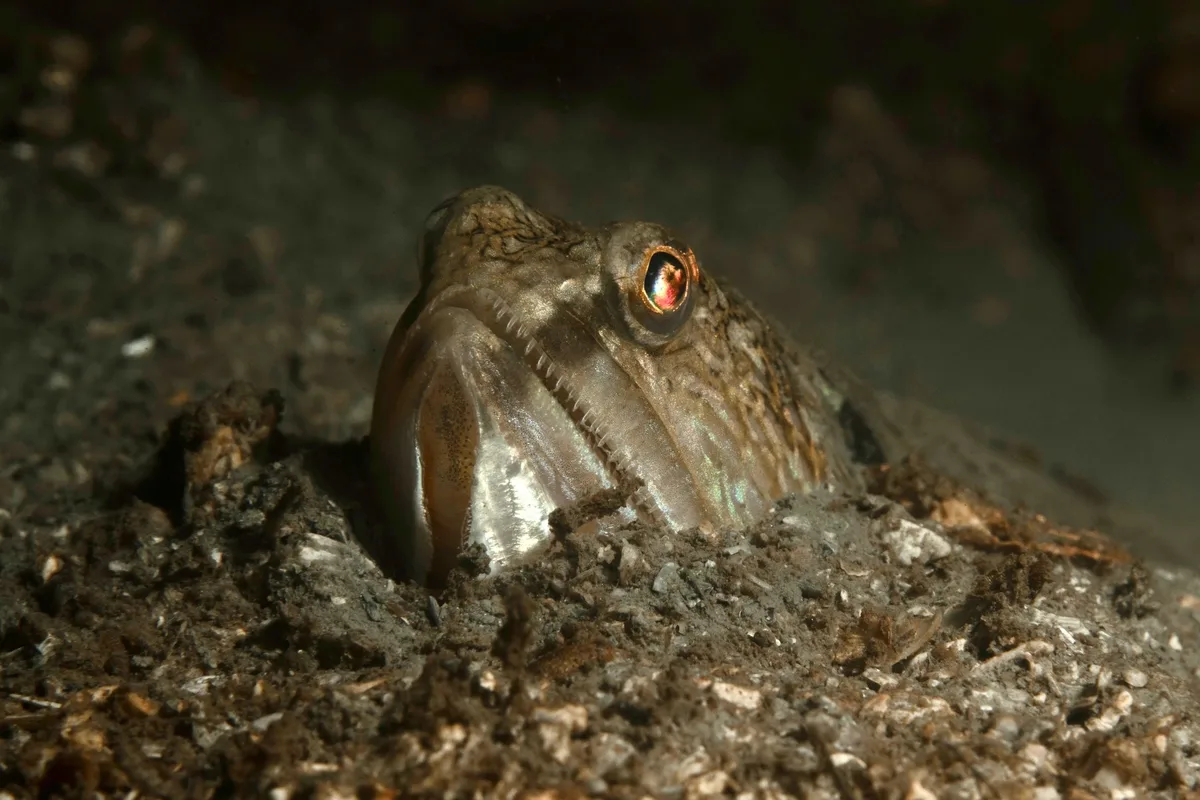
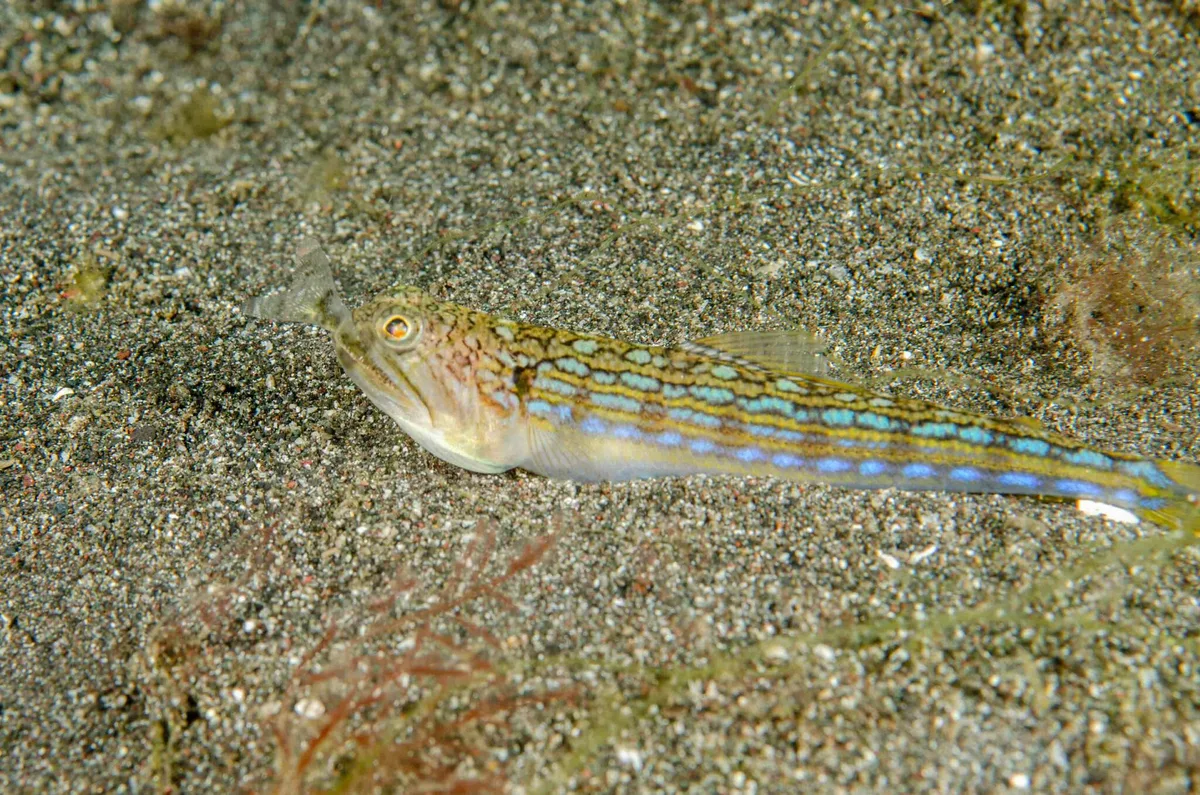
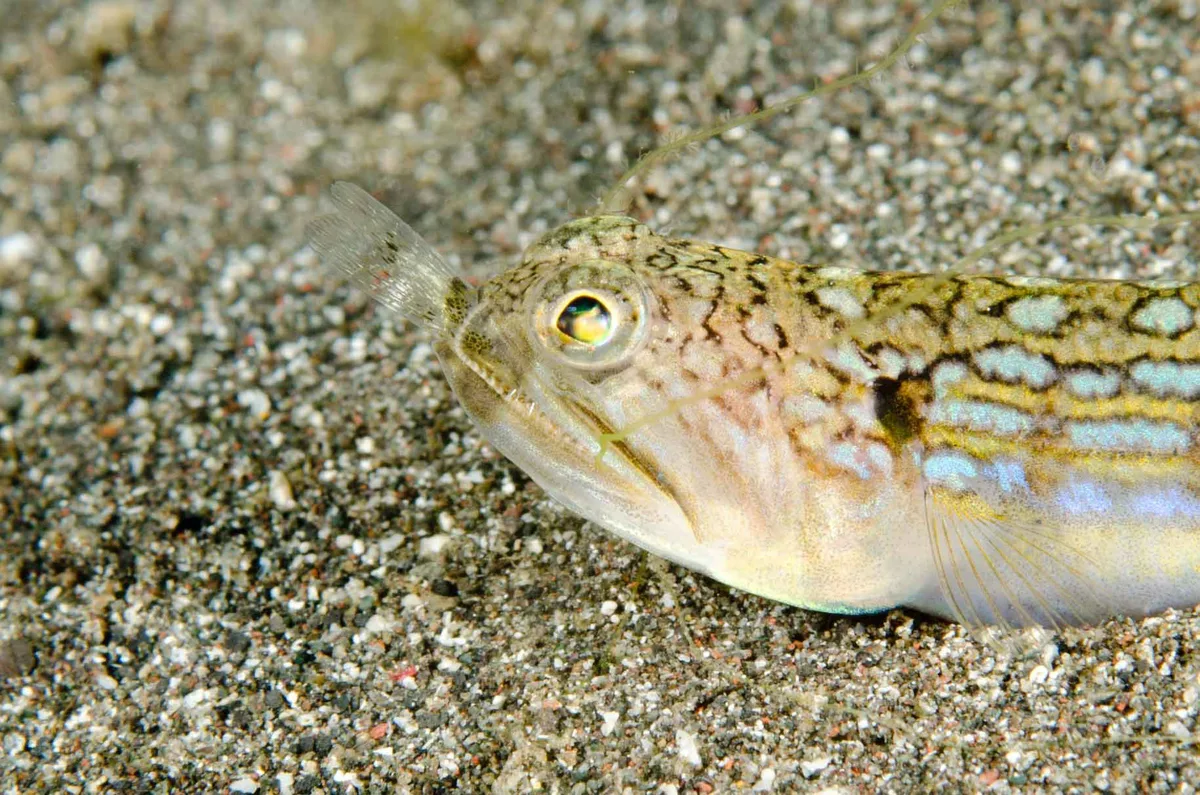
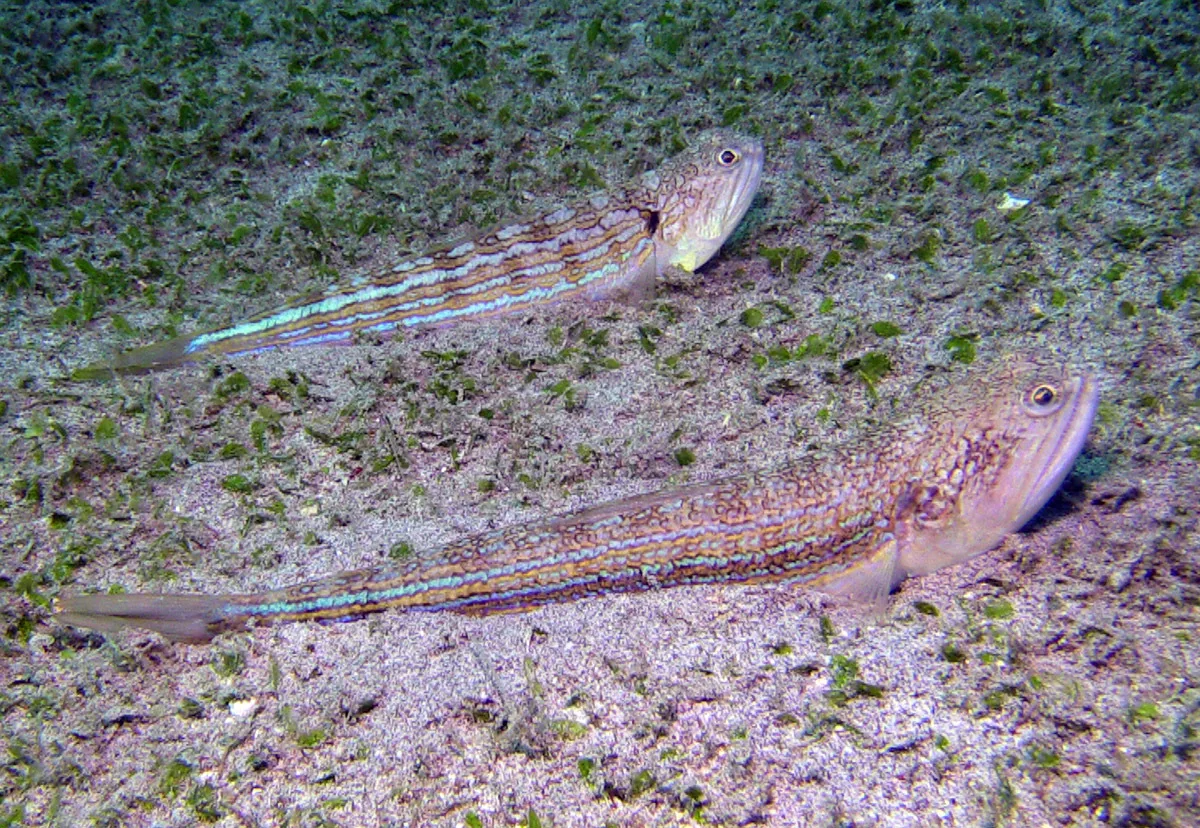
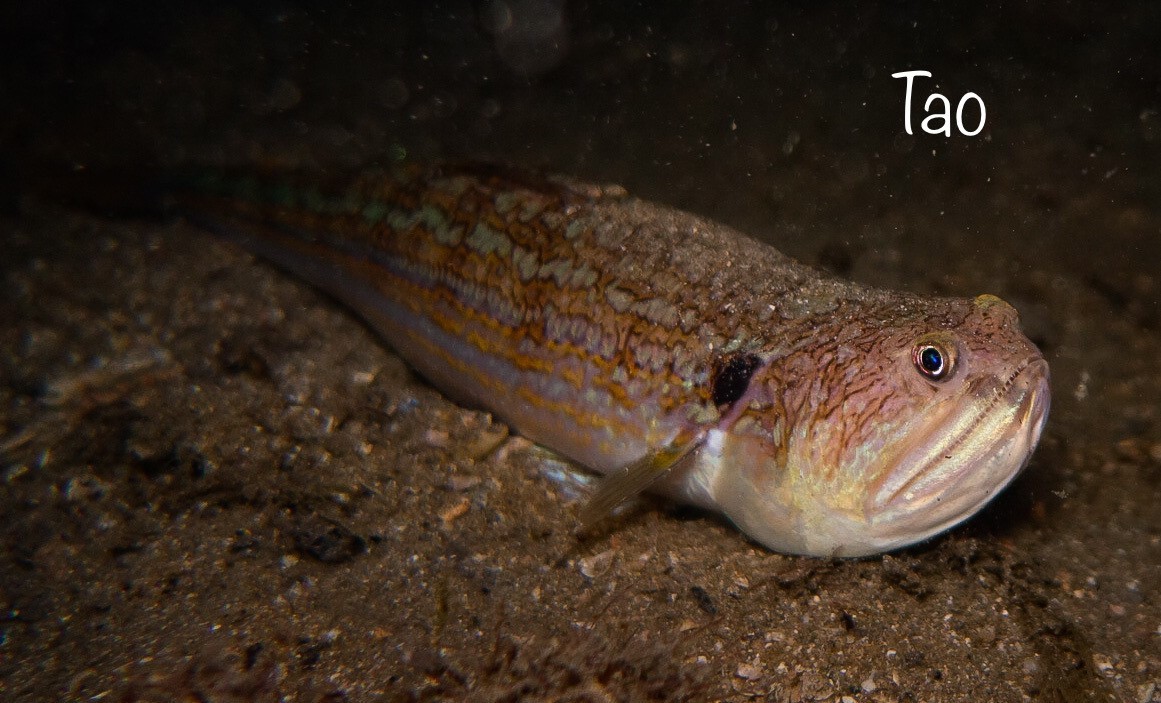
The face gives it away when it is out. The snout is short and blunt, the front of the head almost vertical, the eyes set right at the leading edge, and the large mouth is angled upward beneath them. That is the geometry of an animal that lies flat on the bottom and strikes upward at whatever passes over it. Along the sides run alternating blue and yellow stripes, which is the mark to look for on a fish sitting on clean sand.
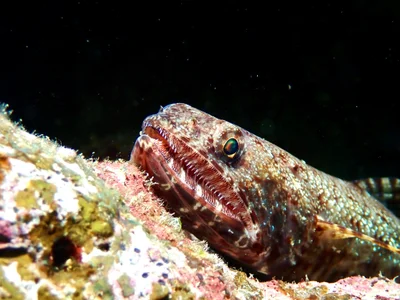
Inside the mouth is the family arrangement: needle teeth in the jaws, more teeth on the roof of the mouth, and teeth on the tongue as well, all of them slanting backward. Prey is not cut up or chewed. It is turned head first and swallowed whole, and the backward-facing teeth mean it goes one way only. Small fishes make up most of it, with crustaceans taken as well.
Unlike the other lizardfishes here, this one is not a reef animal. It works bare sand and silt, often out on the flats at the foot of a reef slope or in the sand channels between coral heads, and it has been recorded from 3 m down to nearly 400.
Its name is recent. Until 2016 this fish and its Atlantic counterpart were treated as one species worldwide, and the split, made on lateral-line scale counts and other countable characters, left the Indo-Pacific population as Trachinocephalus trachinus. One consequence is a disagreement on size: the printed regional guide gives 40 cm, a figure inherited from the old combined species, while FishBase's maximum for the Indo-Pacific fish is 23 cm. A genuinely large one is worth photographing next to something for scale.
The genus. Trachinocephalus Gill 1861 - cephalus (head). ETYFish
- blunt steep face with the eyes right at the front of the head
- large mouth angled upward
- alternating blue and yellow stripes along the sides
- usually buried in bare sand with only the eyes showing
- up to 23 cm