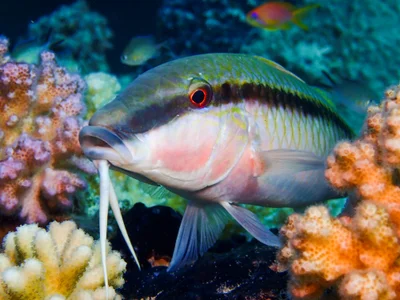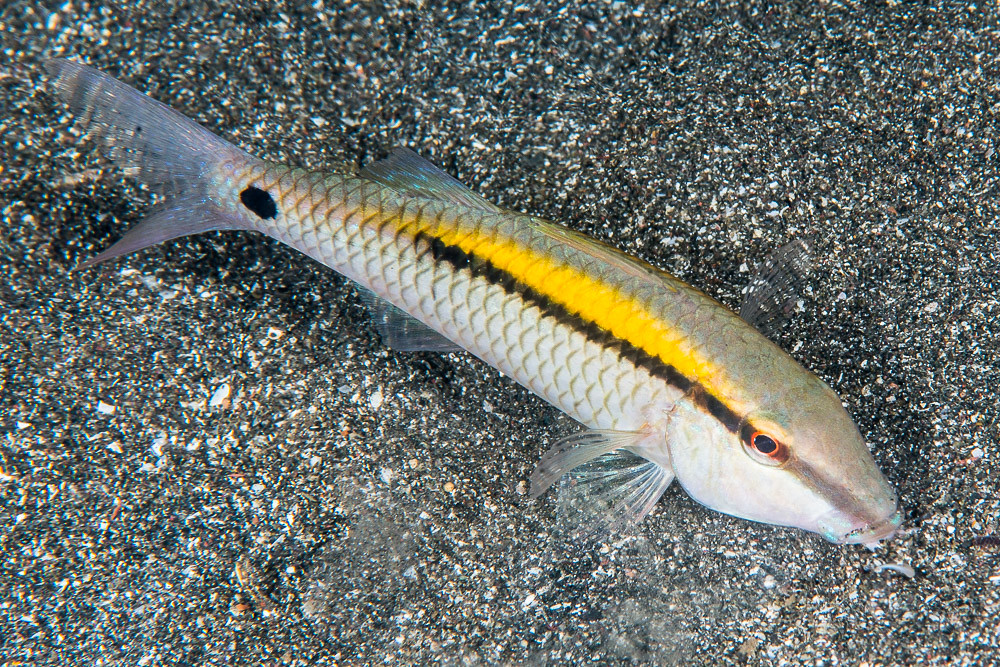
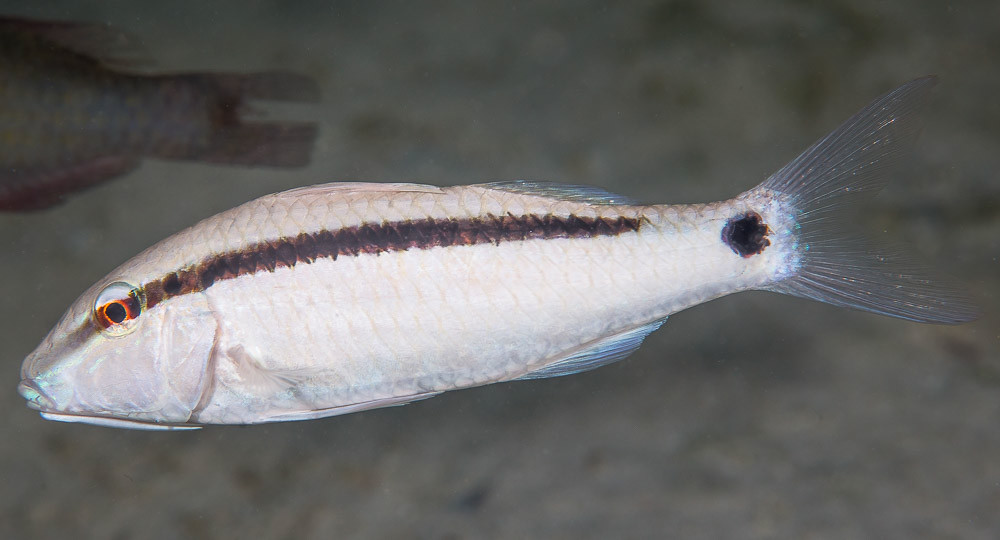
A pale goatfish to 60 cm (2 ft) with a black stripe running from the snout through the eye to a dark spot at the base of the tail. Most of the time it is a plain fish over plain sand; the interesting part is folded under its chin.
Goatfish hunt with a pair of barbels, mobile whiskers packed with taste and touch receptors, which they flick out and drive into sand to find buried worms, crustaceans and small fish. The fish tastes the sediment before it digs. When not in use the barbels fold into a groove under the jaw and vanish.
Digging feeds other animals too. Wrasses, jacks and small groupers follow a working goatfish to take whatever bolts out of the excavation, and a goatfish with three followers is a normal sight - the same arrangement that forms around a foraging octopus or a ray.
Color is not fixed: the same fish can flush red or pale within seconds, mostly around feeding and resting, which is why photographs of one species look like several.
The genus. Parupeneus Bleeker 1863 - para- (near). ETYFish
- pale body with a black stripe from the snout through the eye to a black spot at the tail base
- a pair of long barbels under the chin, folded away when not in use
- digs snout-down in sand, usually with small wrasses in attendance
- length up to 60 cm