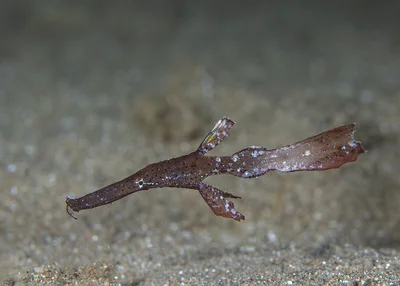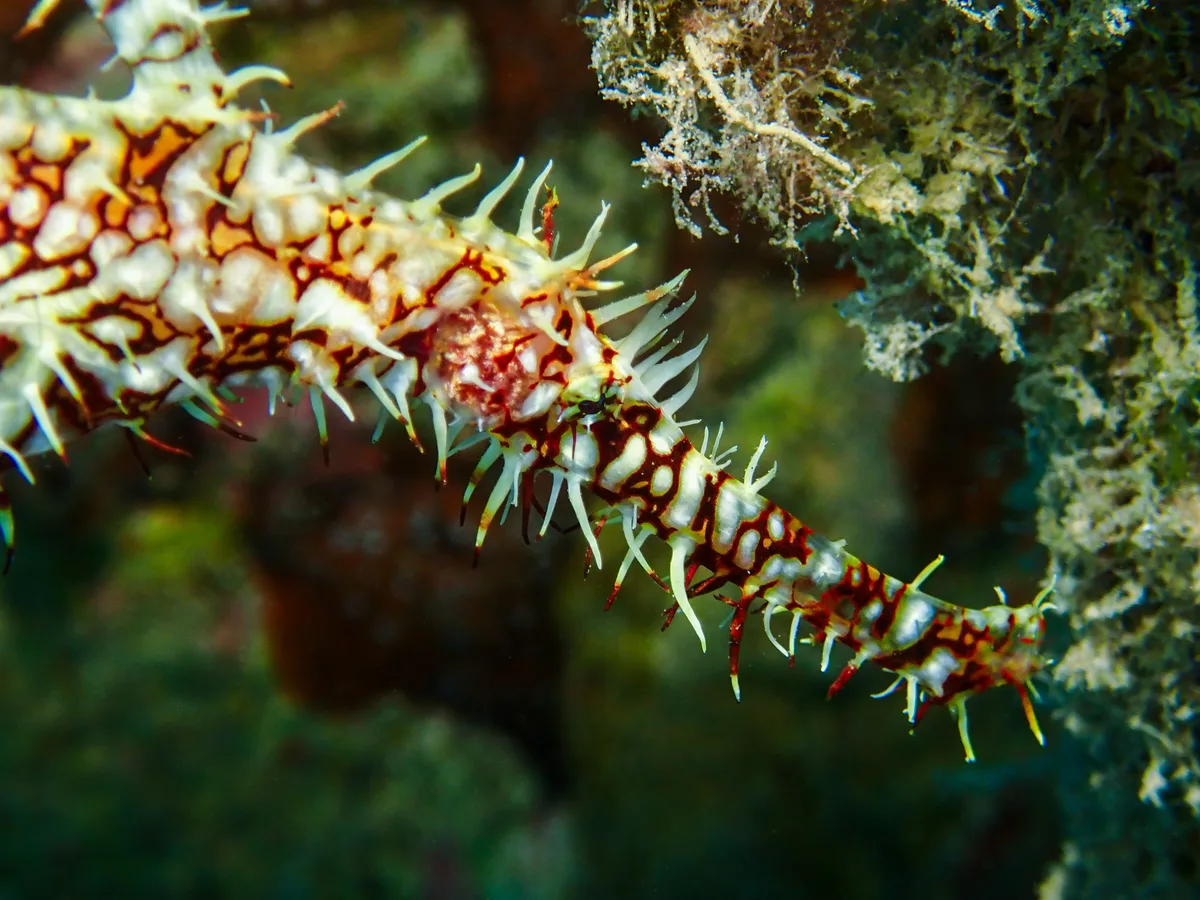
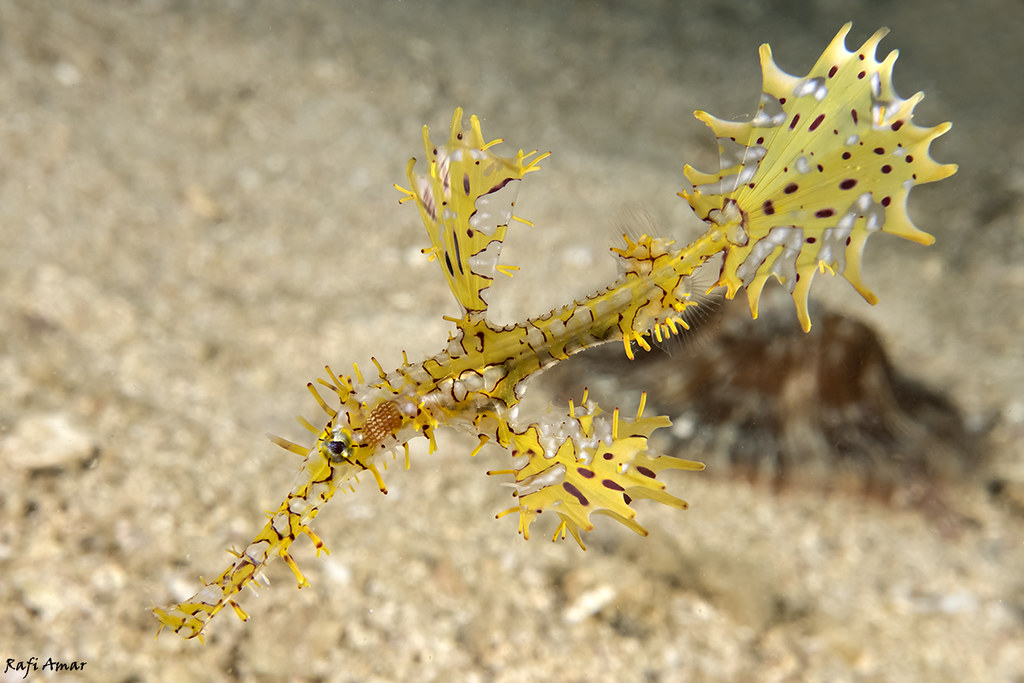
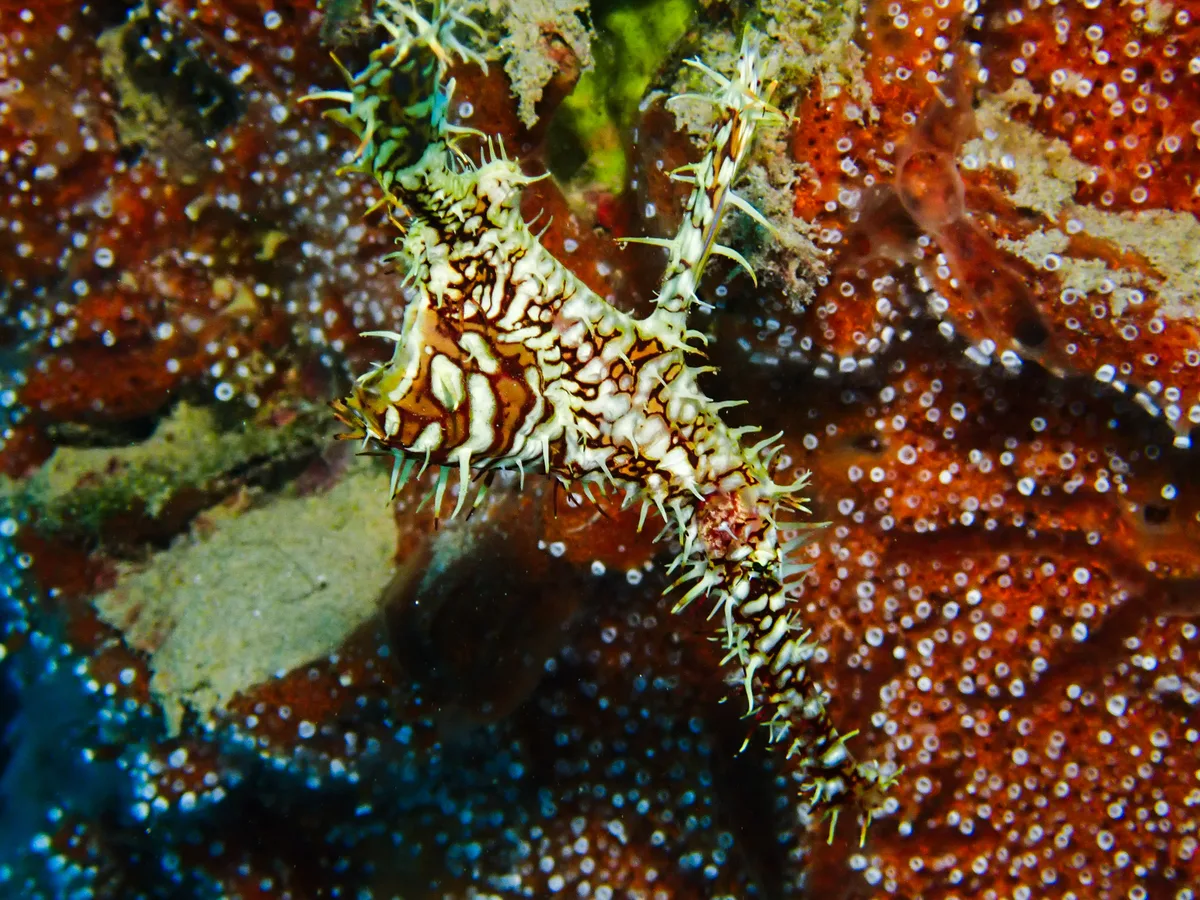
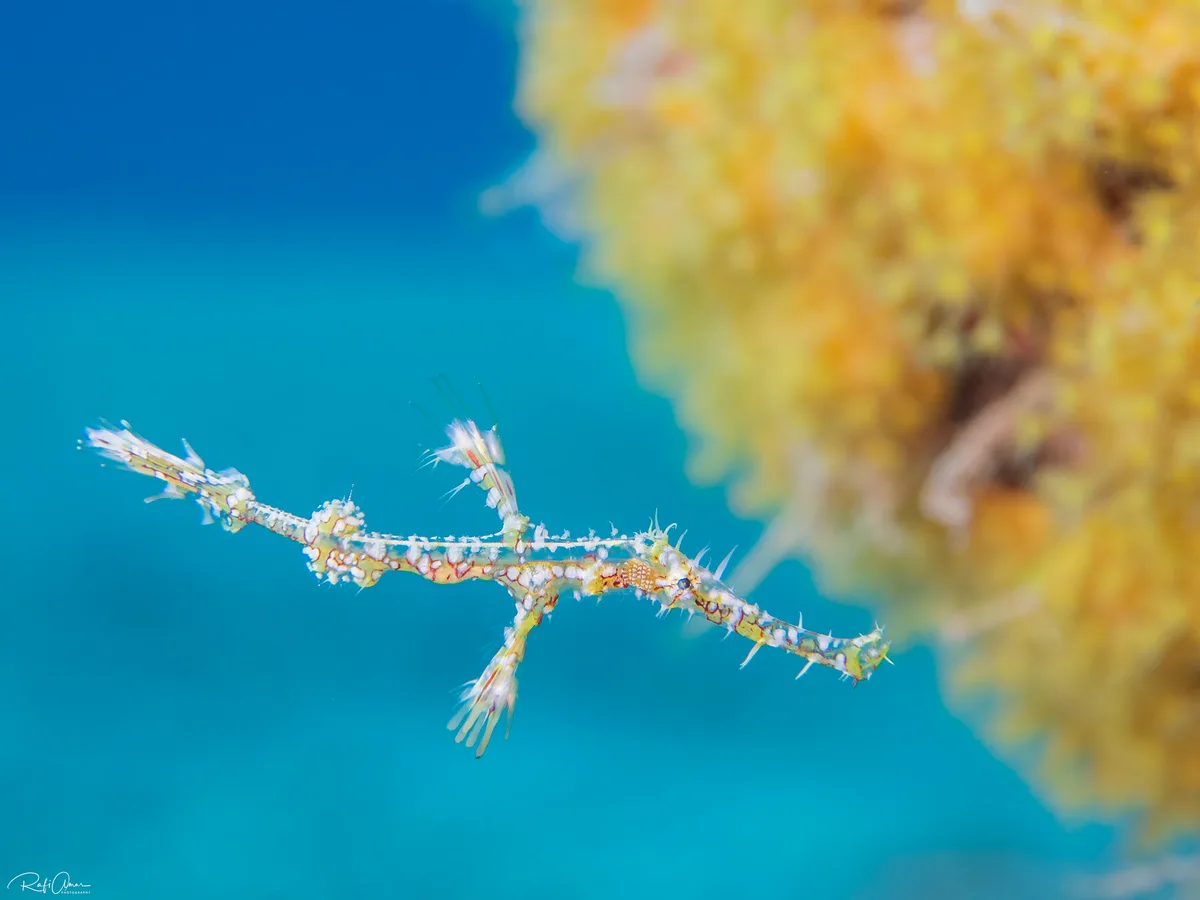
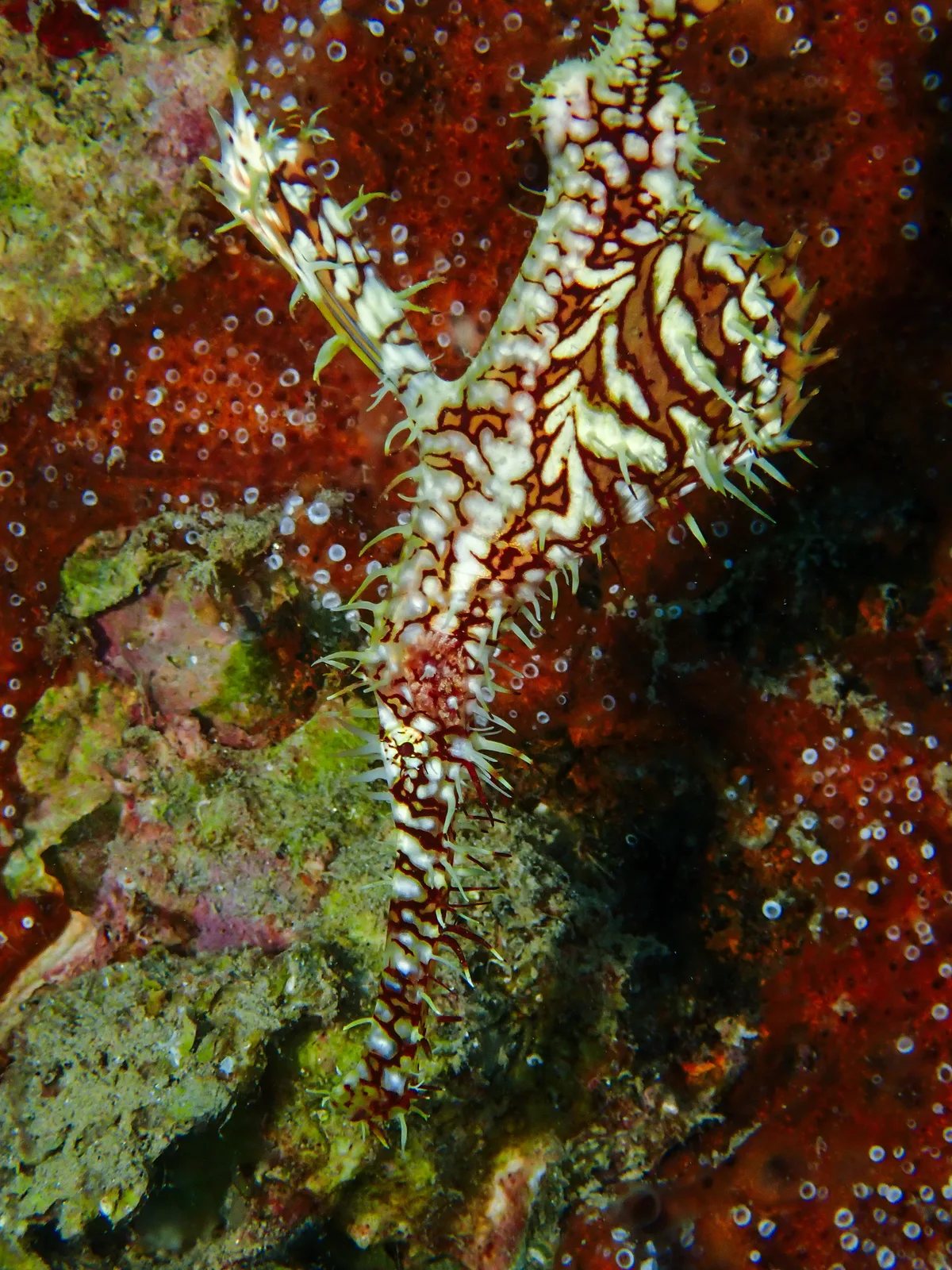
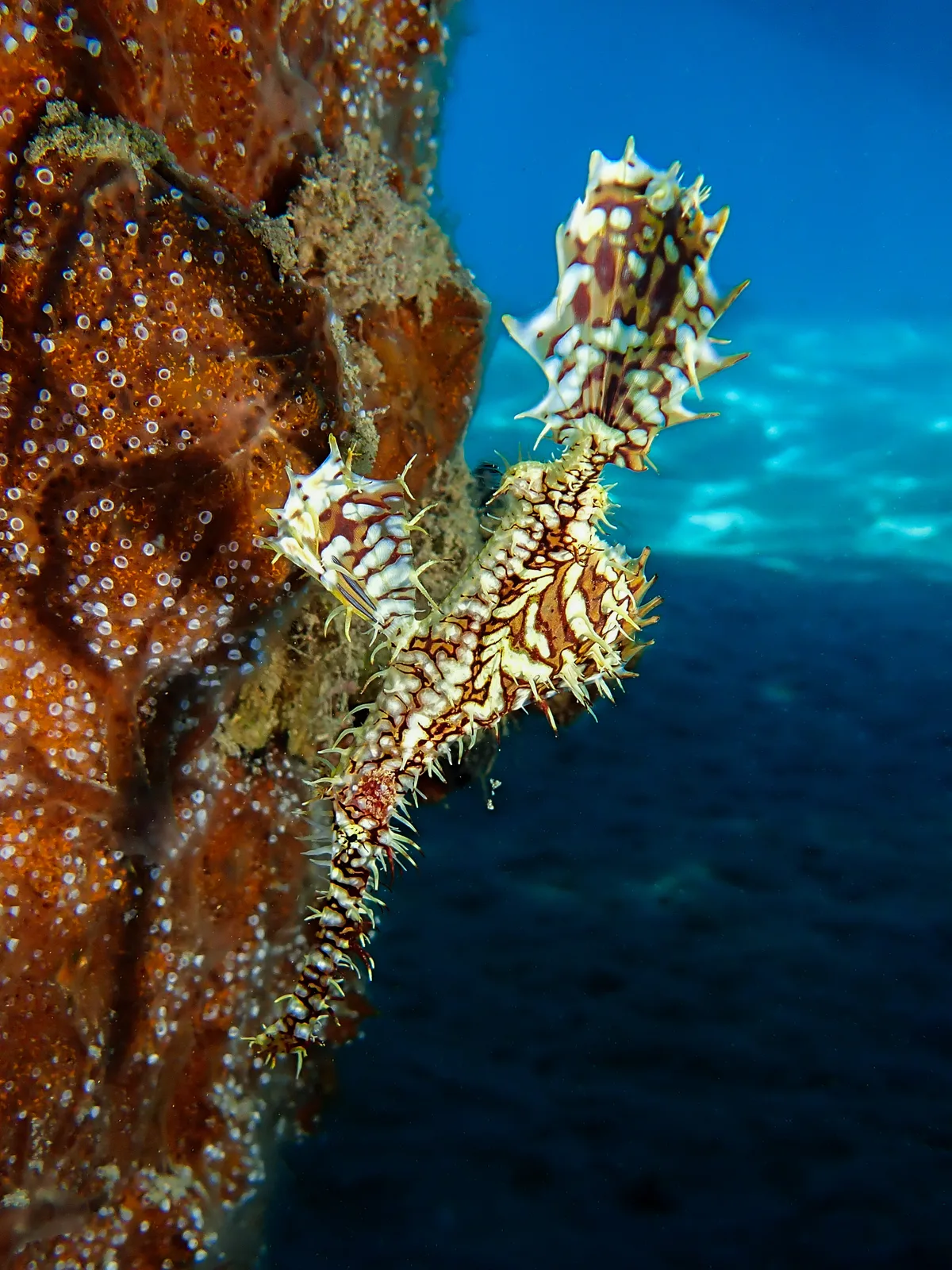
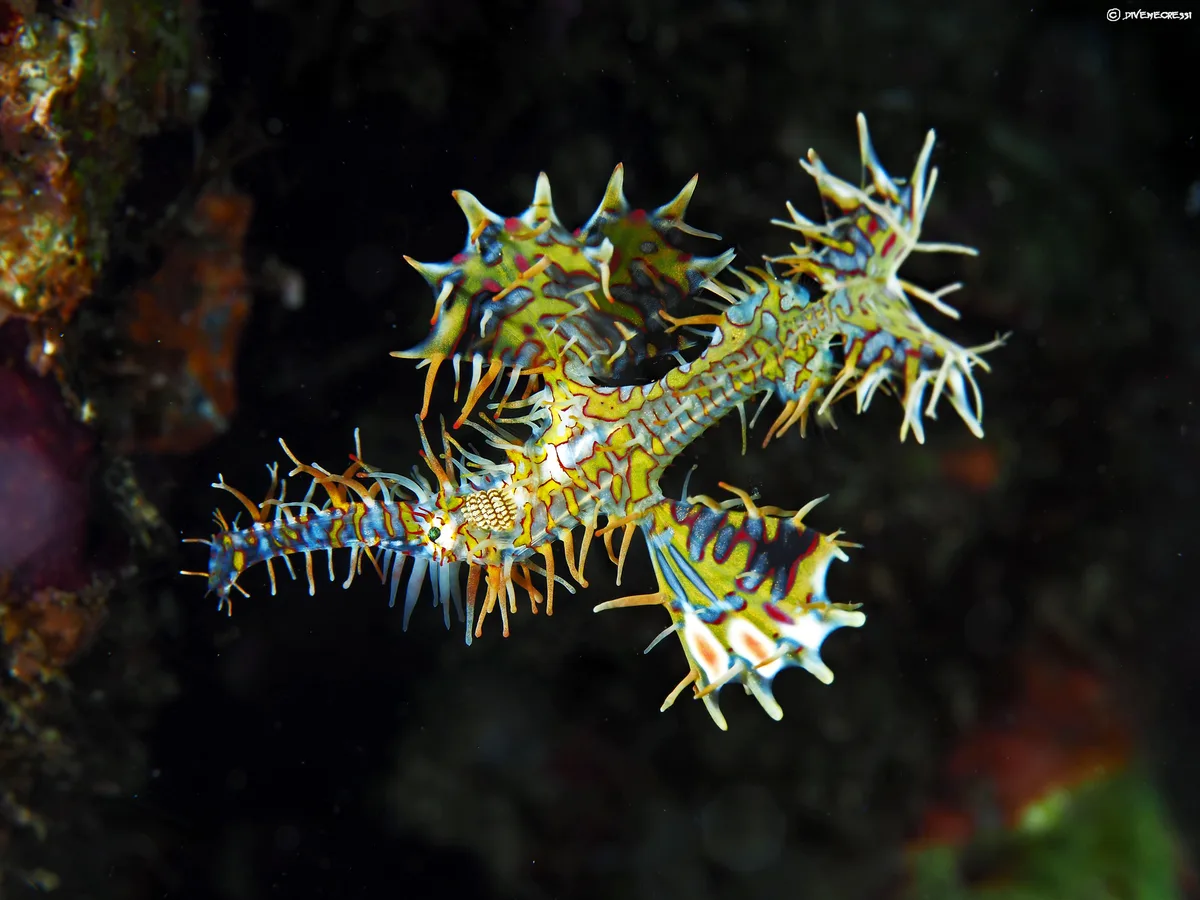
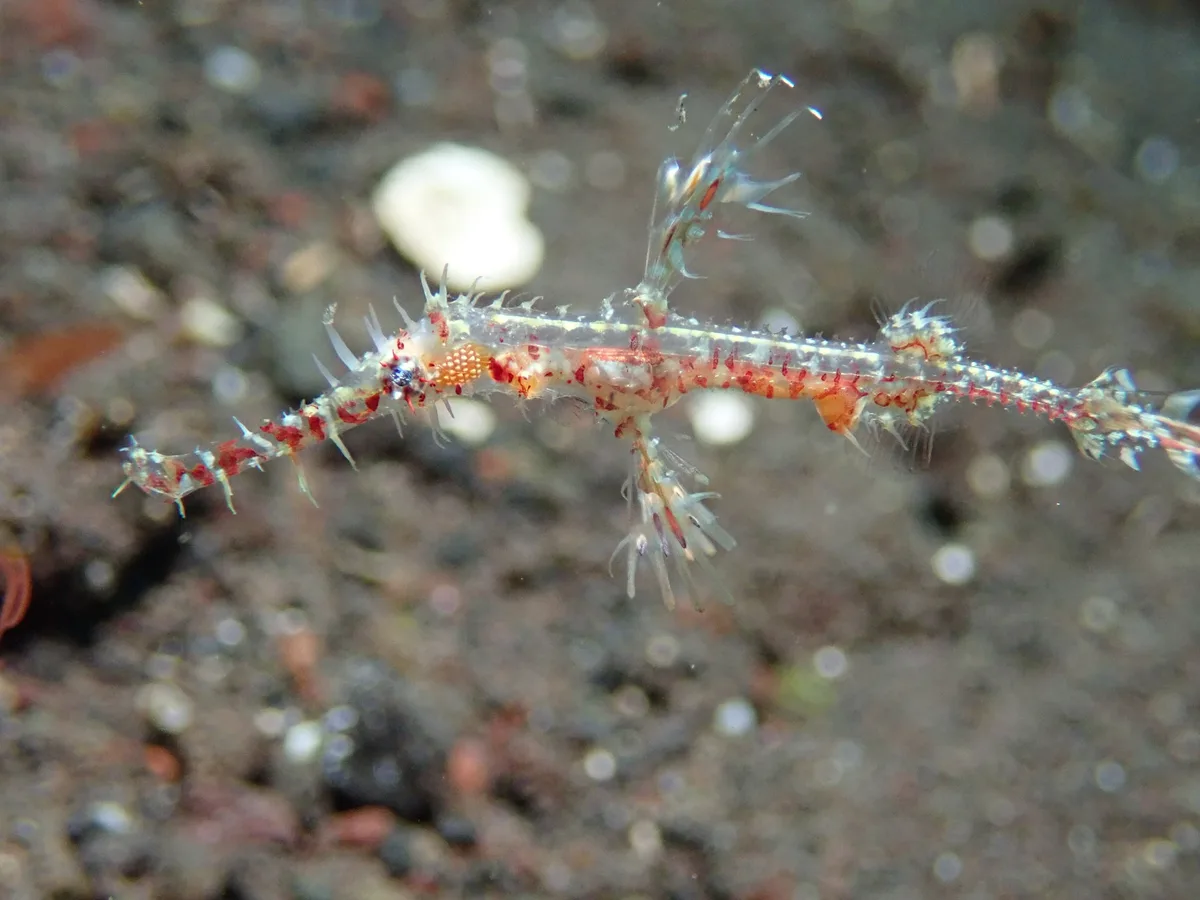
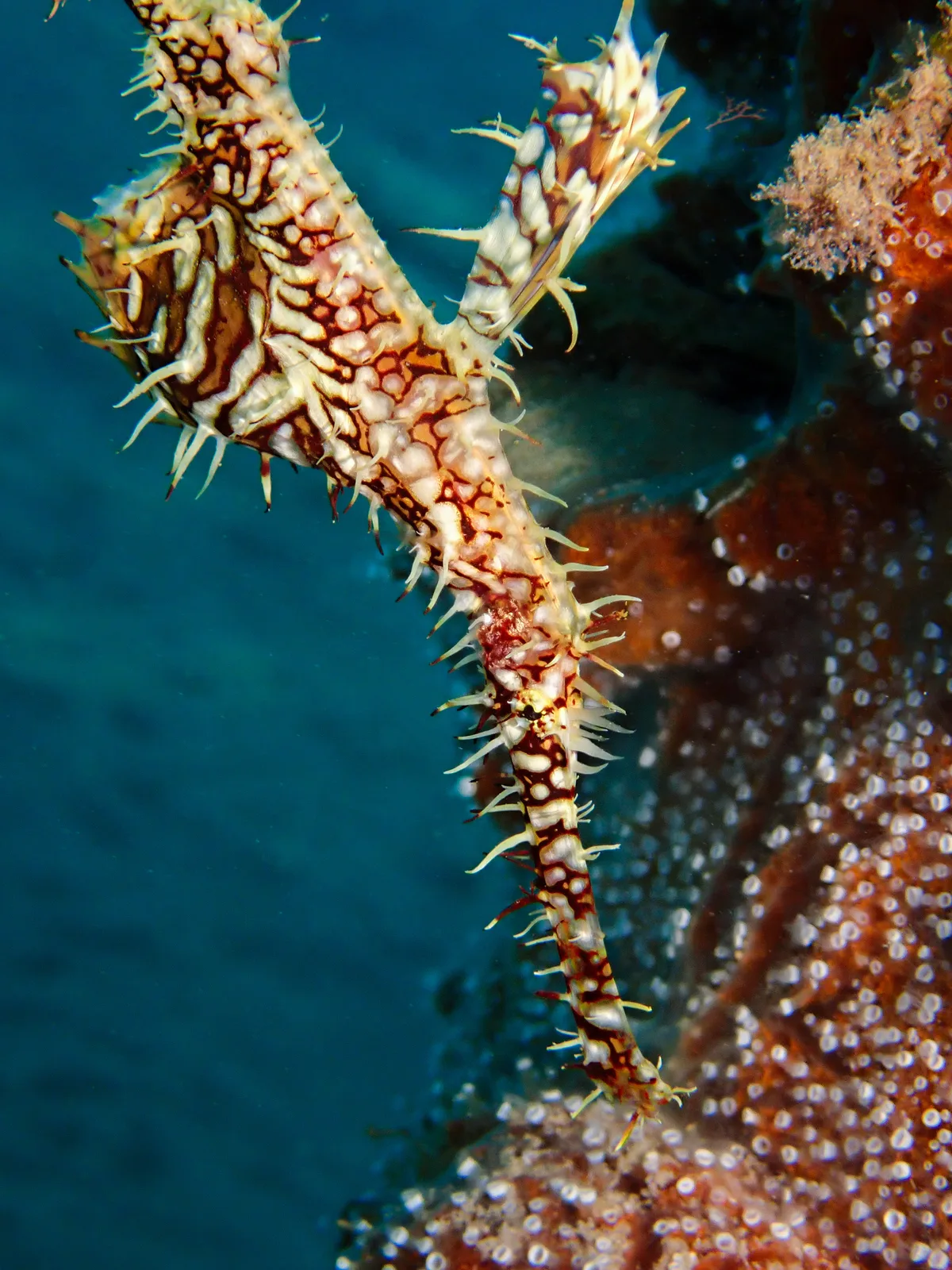
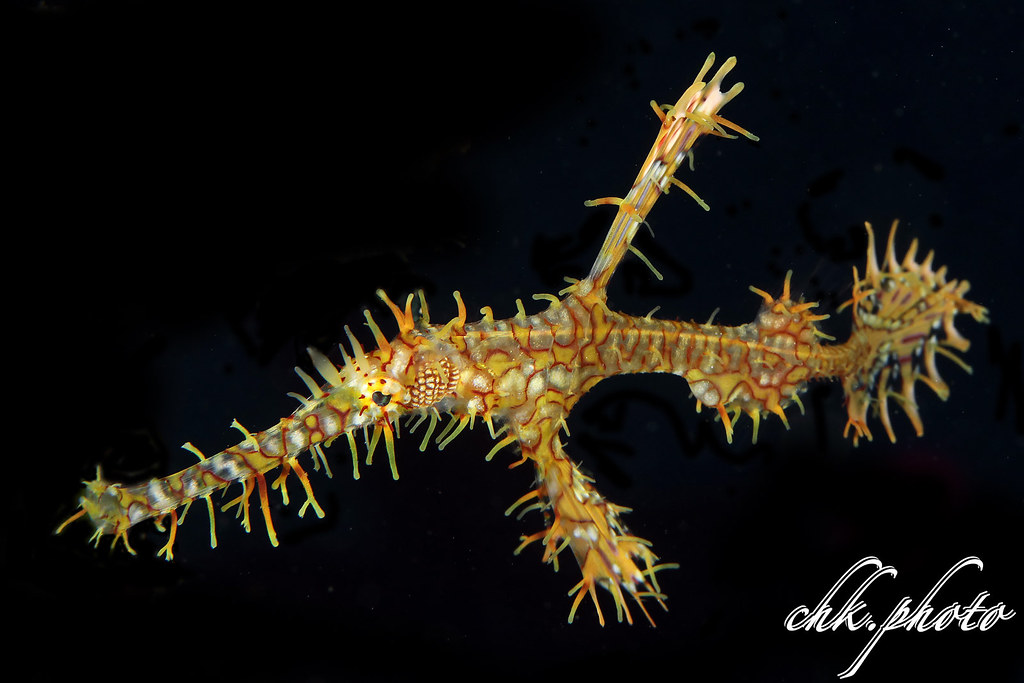
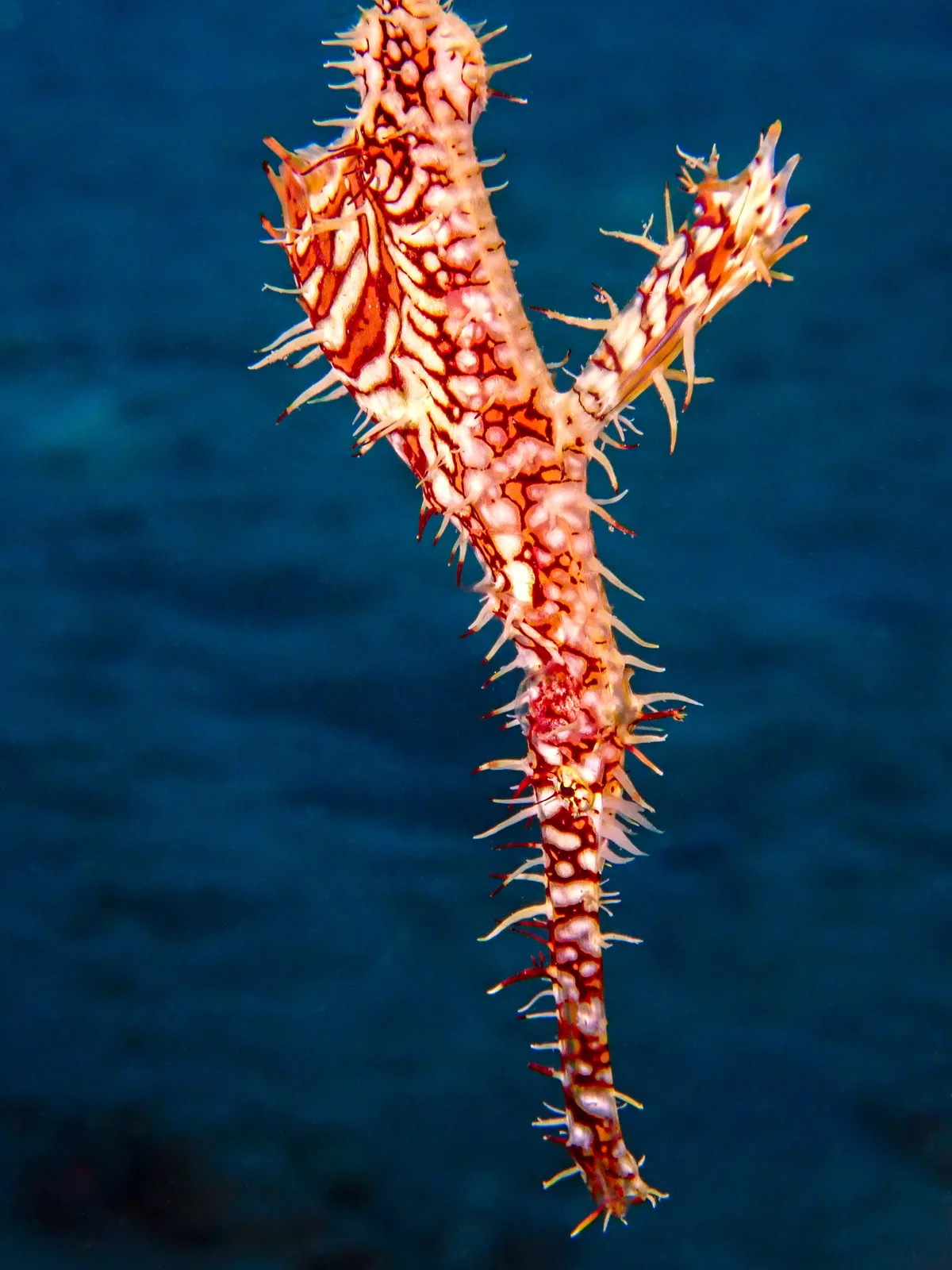
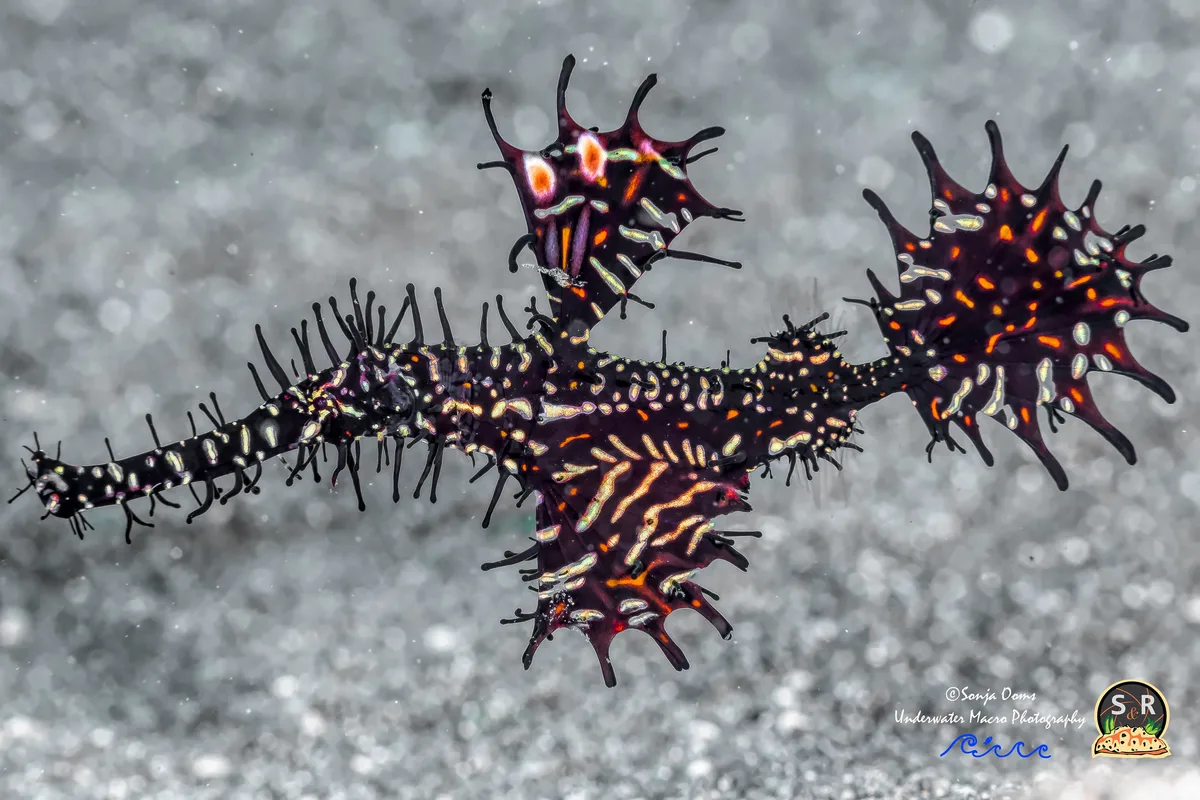
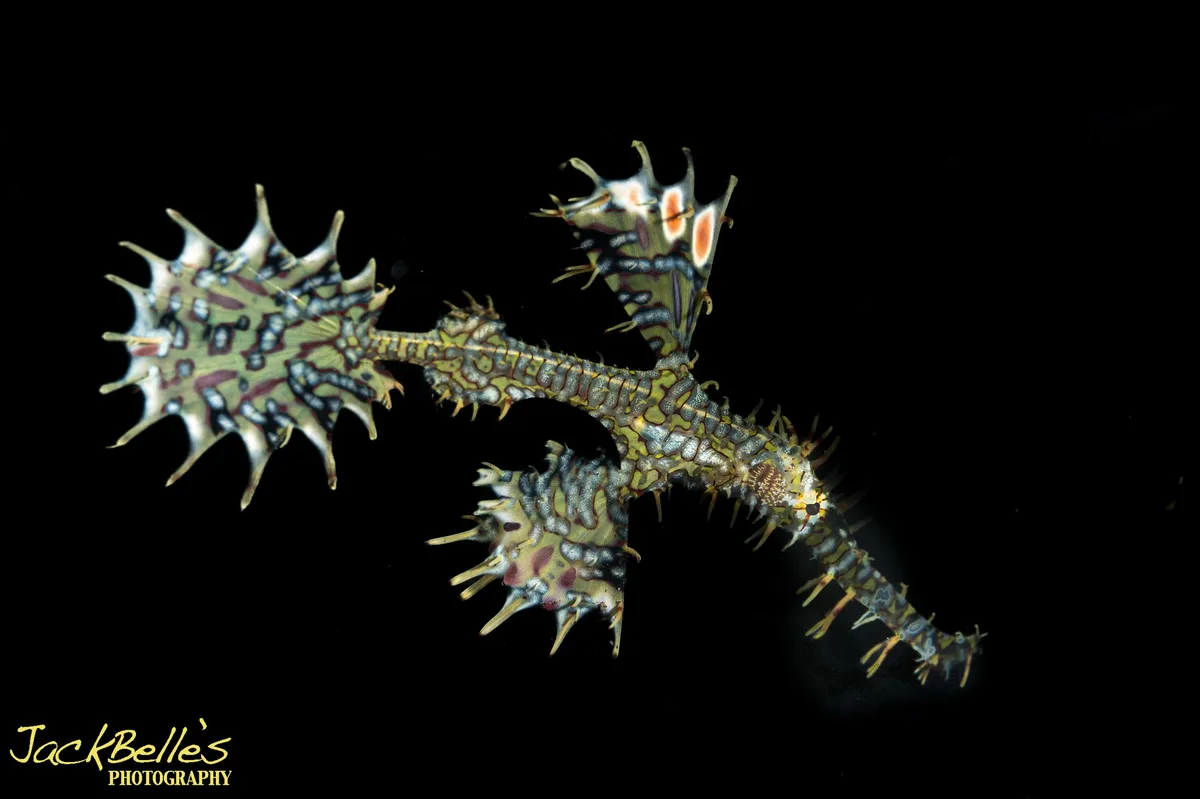
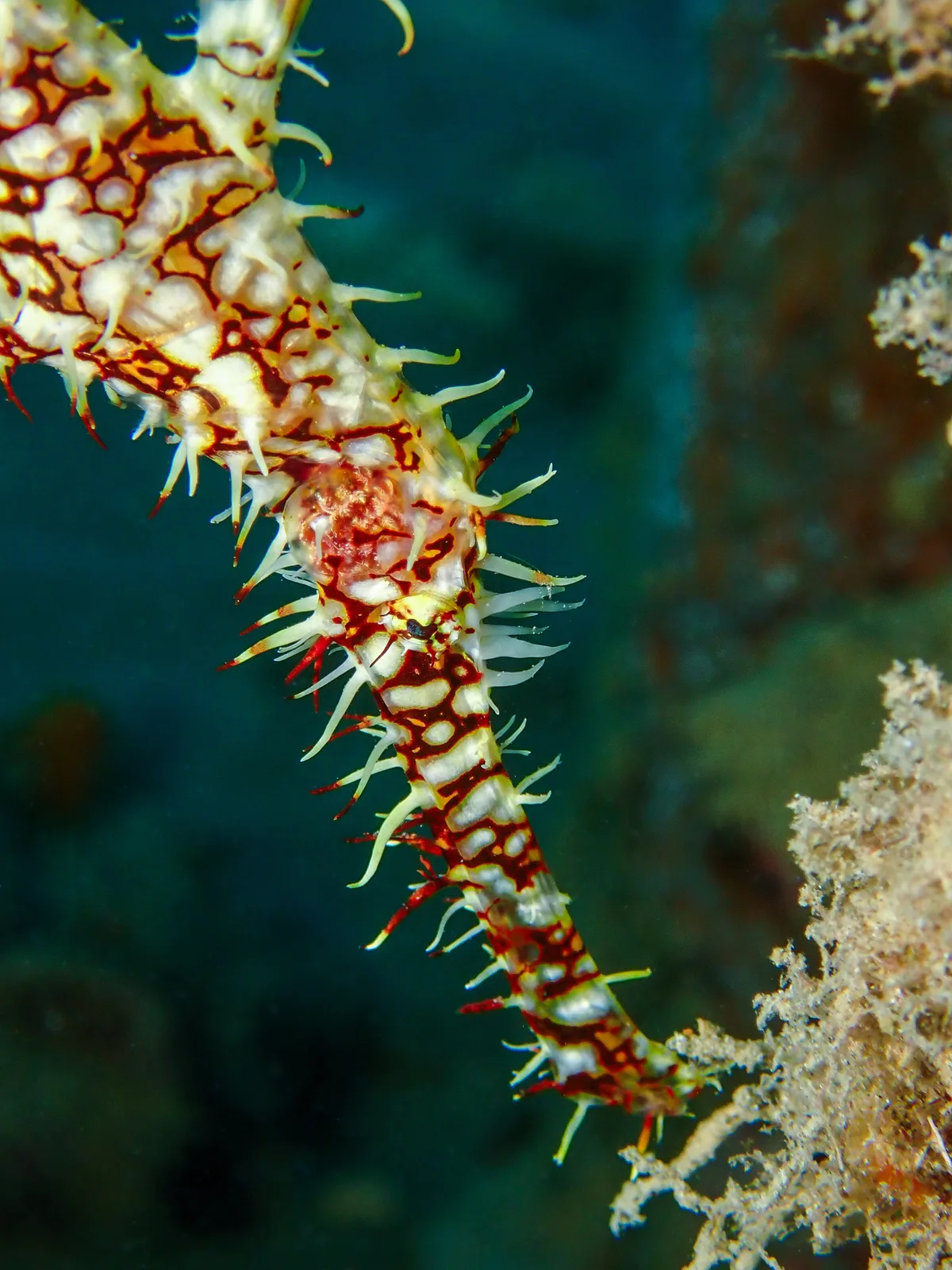
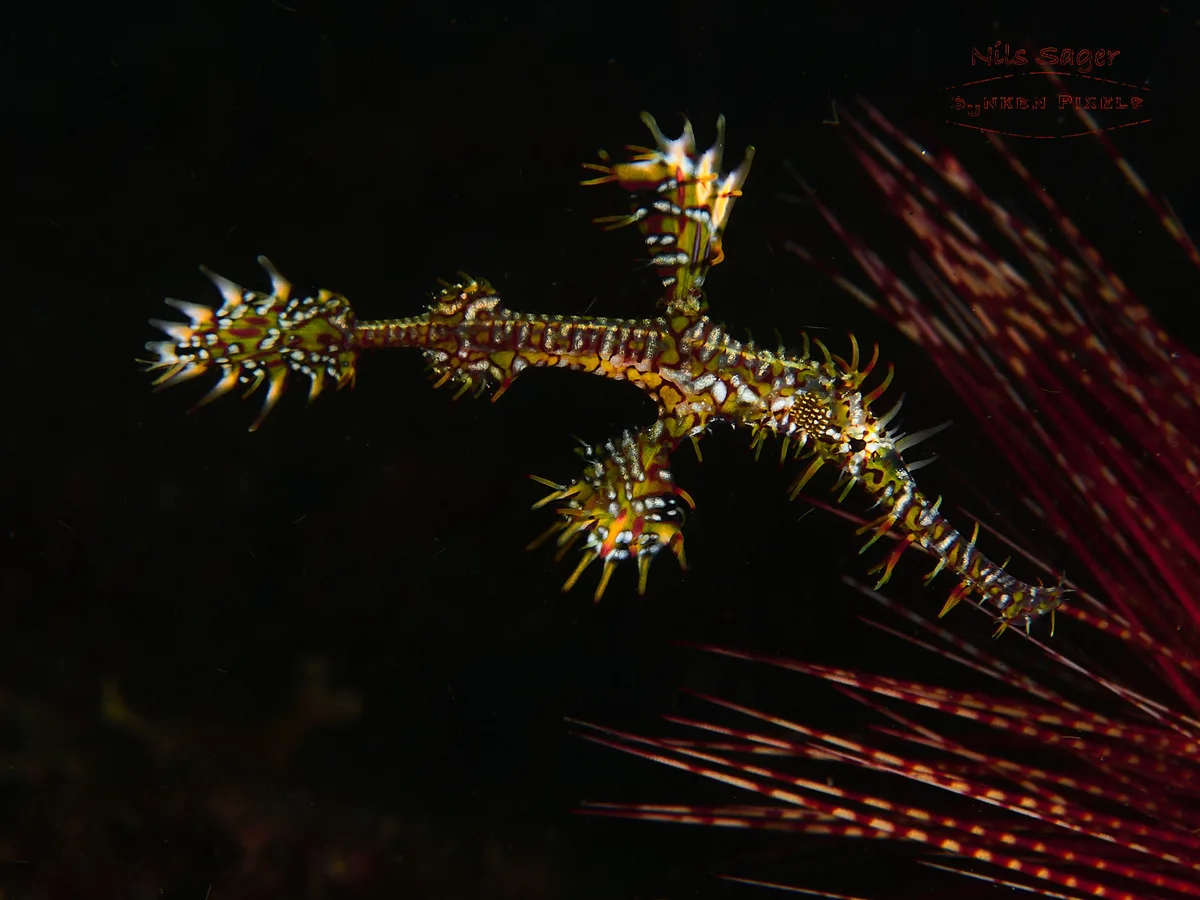
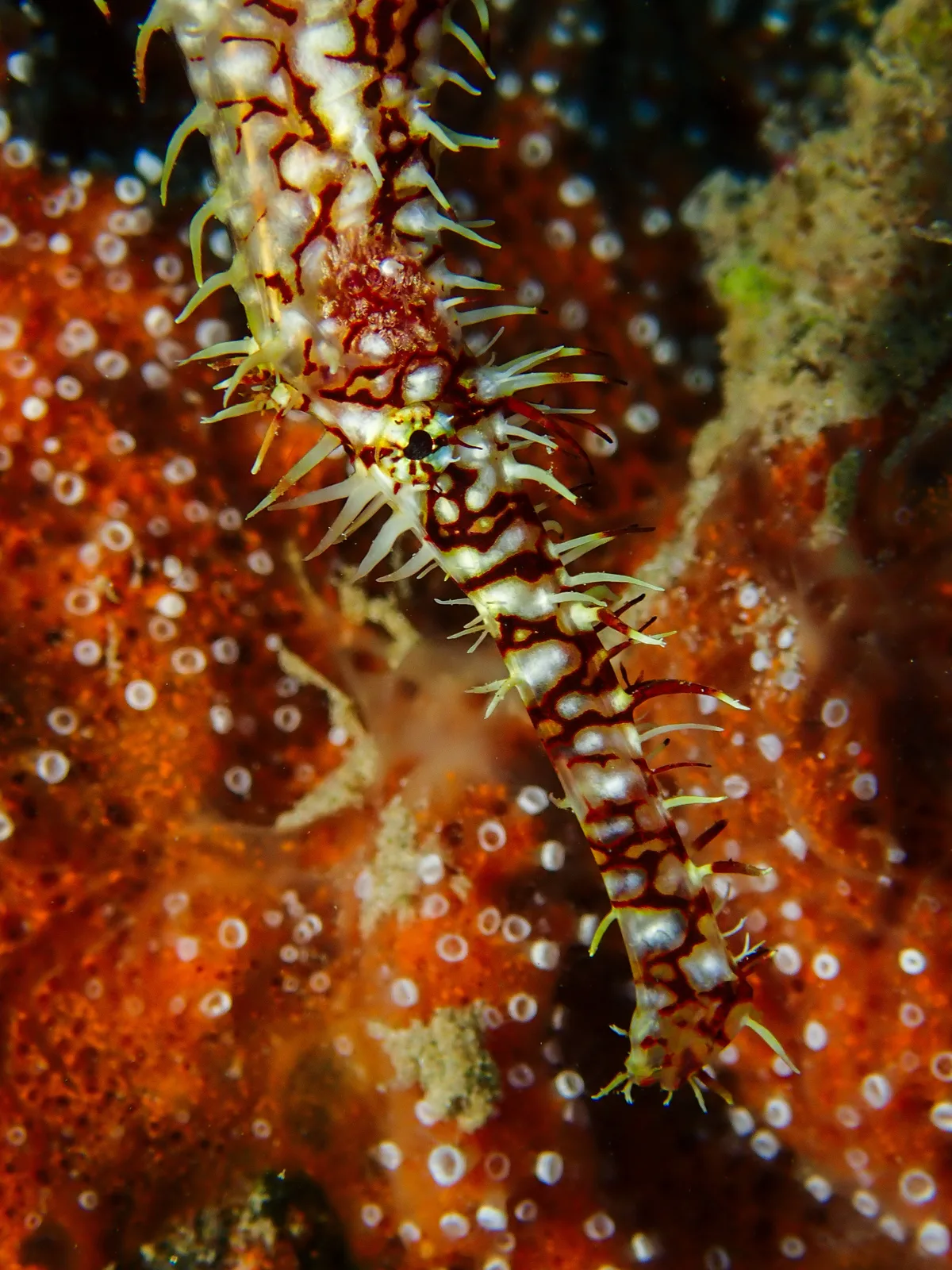
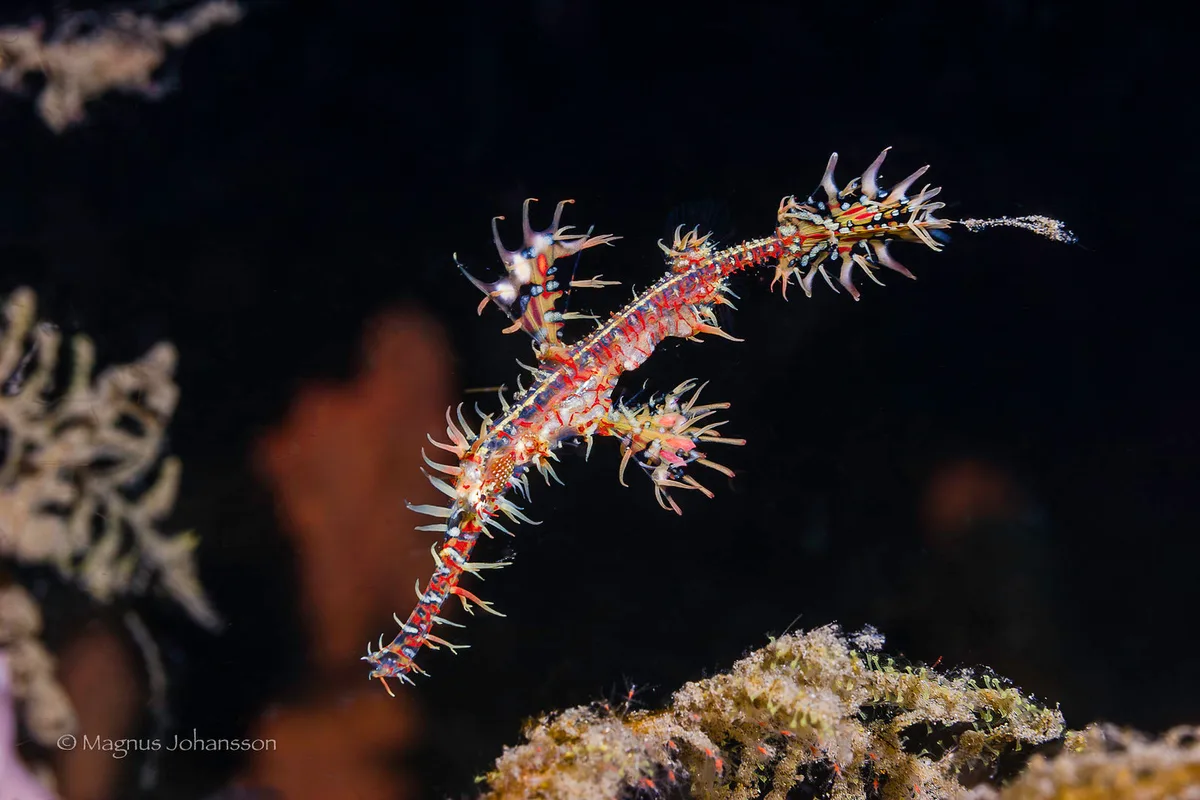
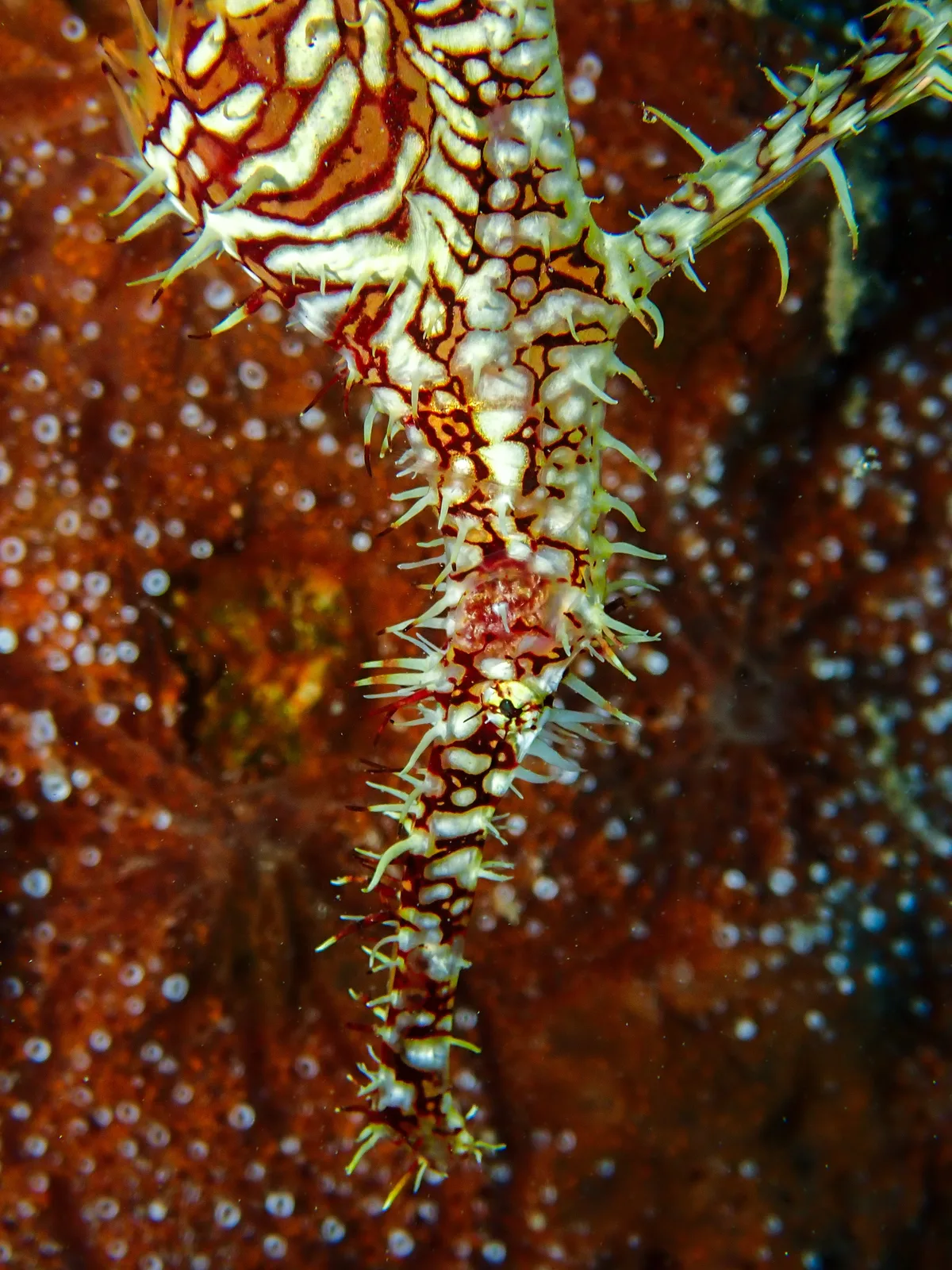
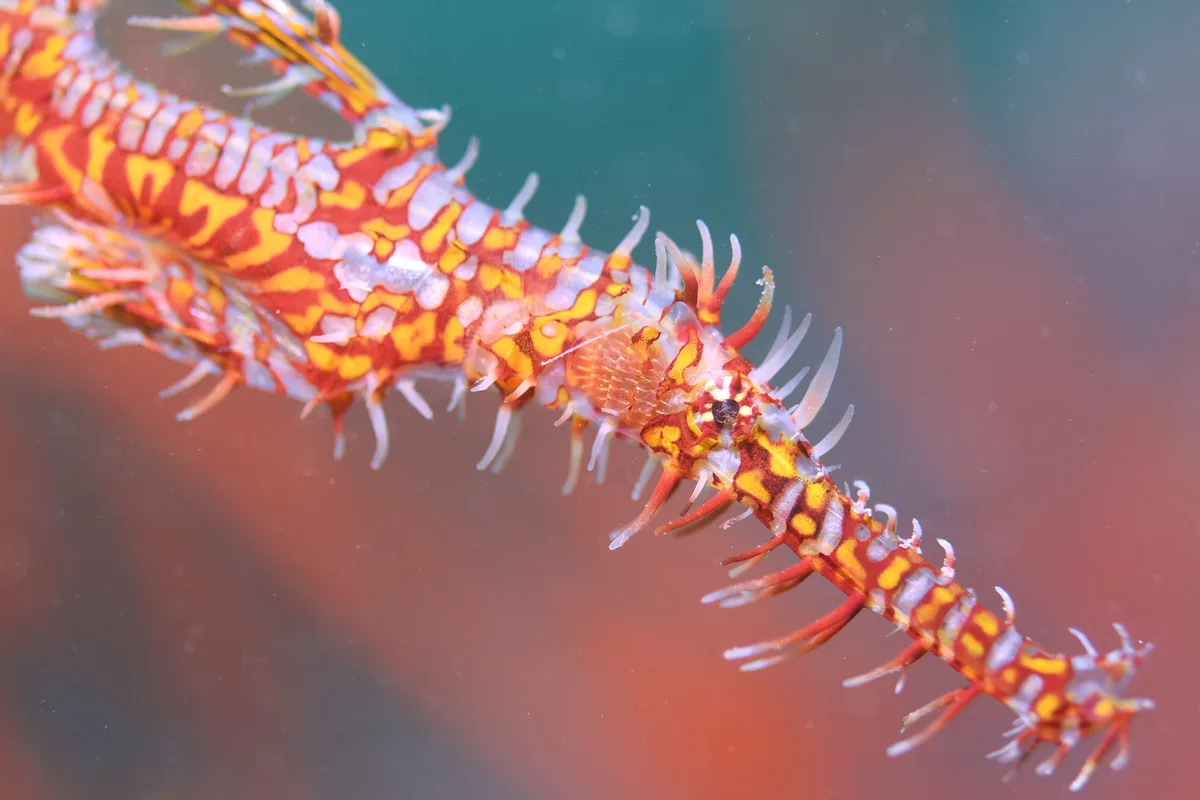
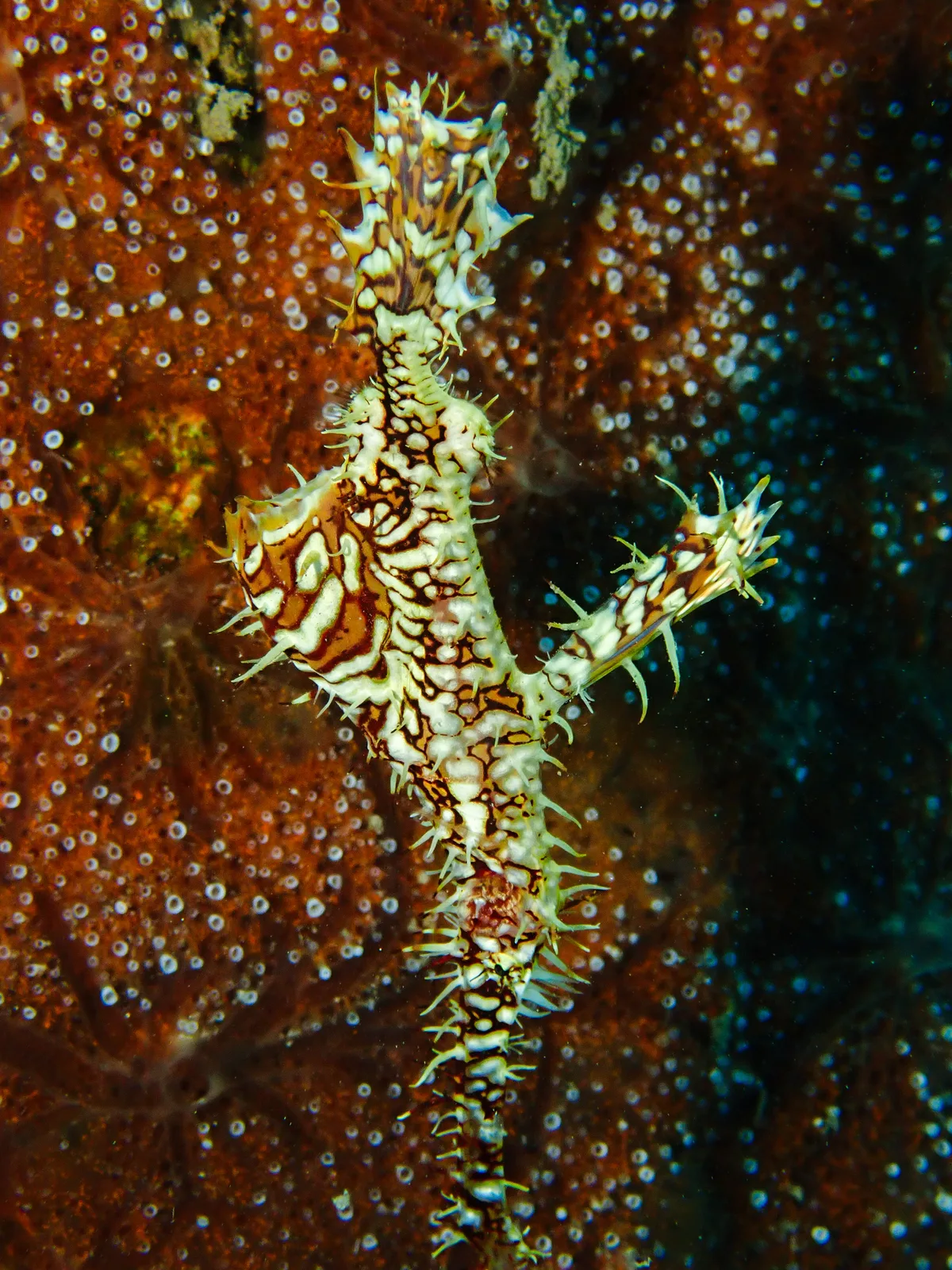
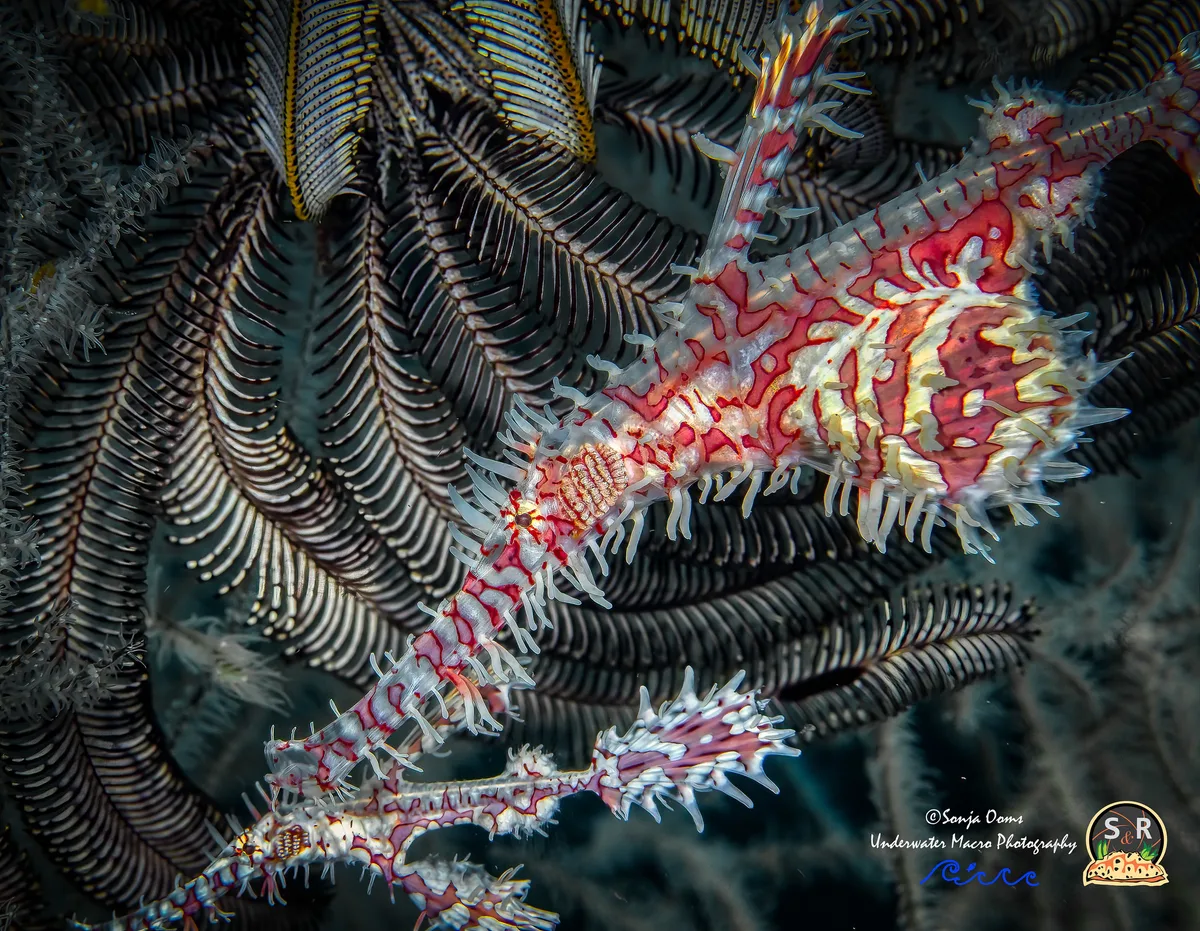
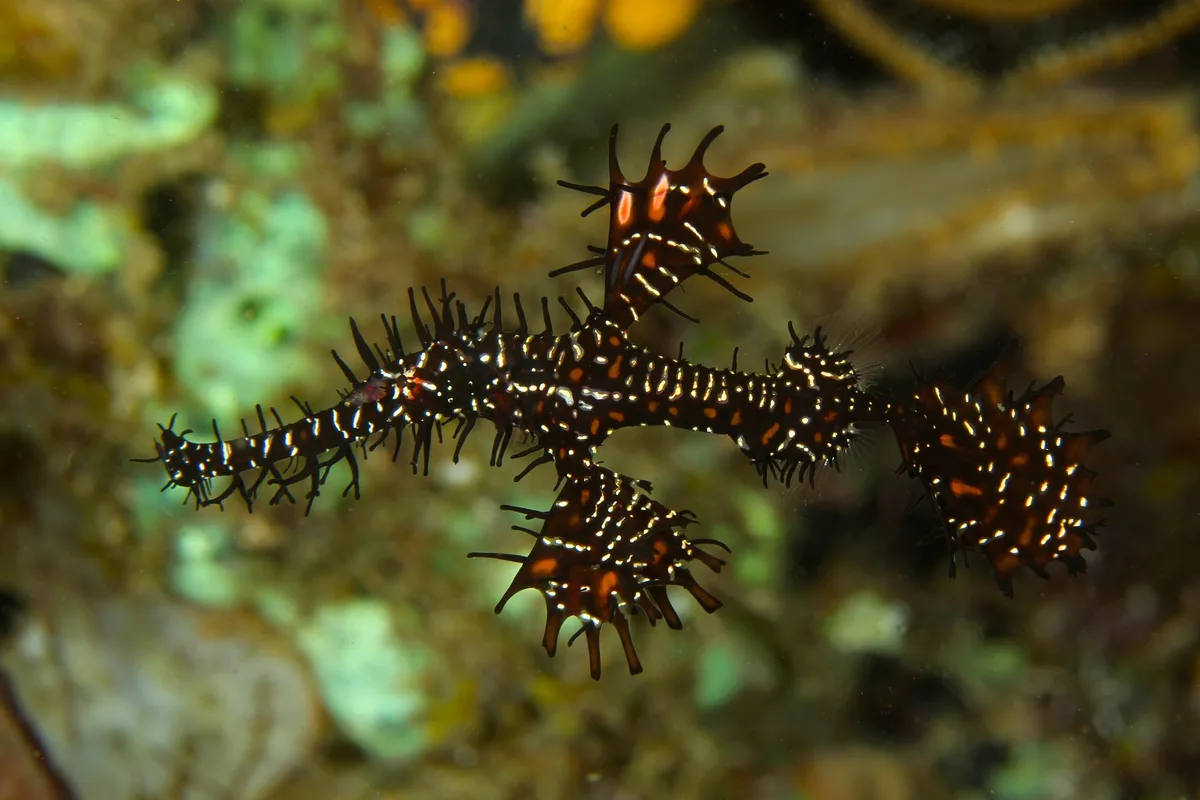
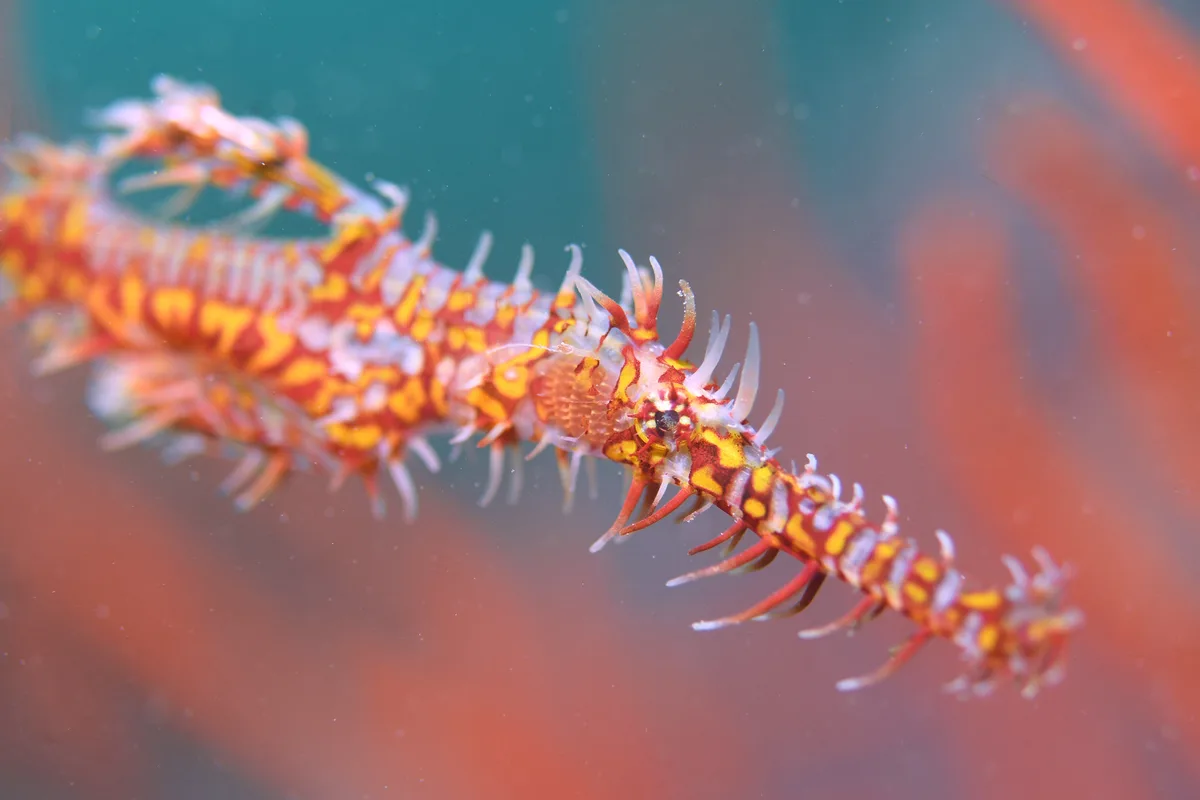
Everything about this fish is borrowed. It has no color of its own worth the name: it takes the red of the crinoid, the yellow of the weed or the black and white of the gorgonian it has settled into, and it grows branching skin filaments that copy the shape of the host as well. Divers swim past them constantly.
The breeding is what turns the family upside down. In seahorses and true pipefish the male carries the eggs, and it is one of the most repeated facts in the sea. Ghost pipefish are the exception. Here the female broods: her pelvic fins are fused into a pouch under the body, and she carries the whole clutch in it until they hatch. She is also visibly the larger of the pair.
They arrive as drifters. The young spend their early life in the plankton, clear as glass, then settle onto a host, take on its colors within days, breed, and die. The entire adult phase lasts a matter of months, which is why a site can be full of them one season and hold none at all the next.
The genus. Solenostomus Lacepède 1803 - solen (pipe) + stomus (mouth). ETYFish
The species. Solenostomus paradoxus (Pallas 1770) - contrary to expectation. ETYFish
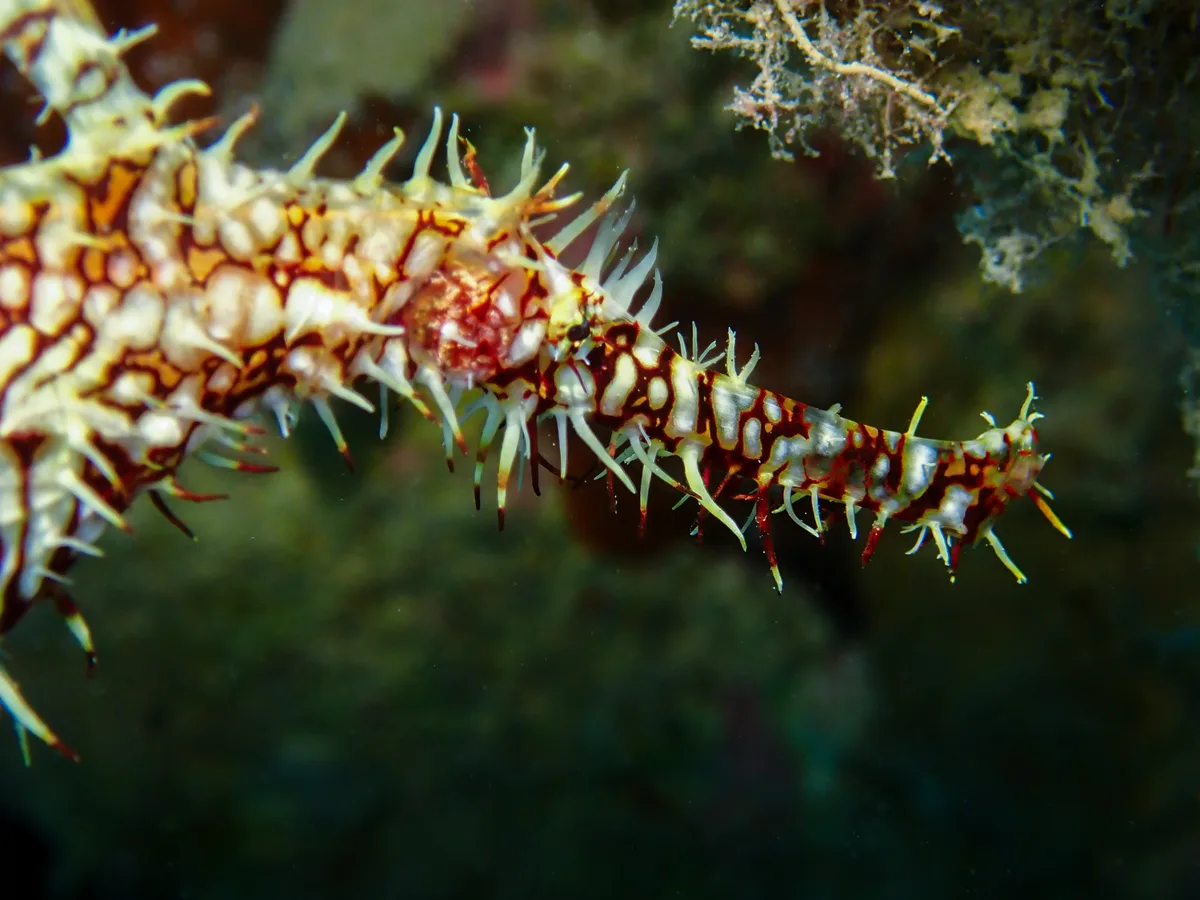
- body covered in branching skin filaments that copy the host crinoid or weed
- large fan-shaped pelvic and tail fins
- long tubular snout
- female noticeably larger, her pelvic fins fused into a pouch under the body
- up to 12 cm
Why it's threatened
Threat classification from the IUCN Red List.