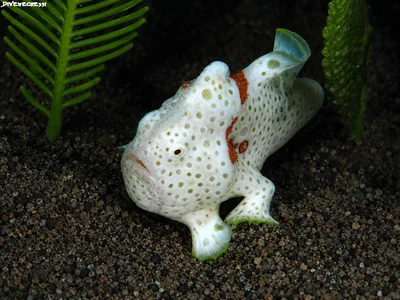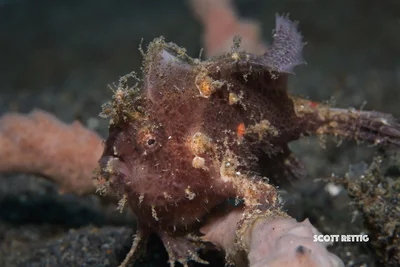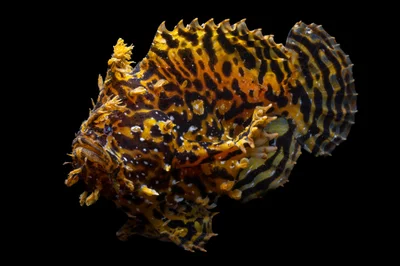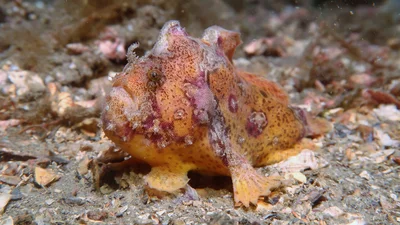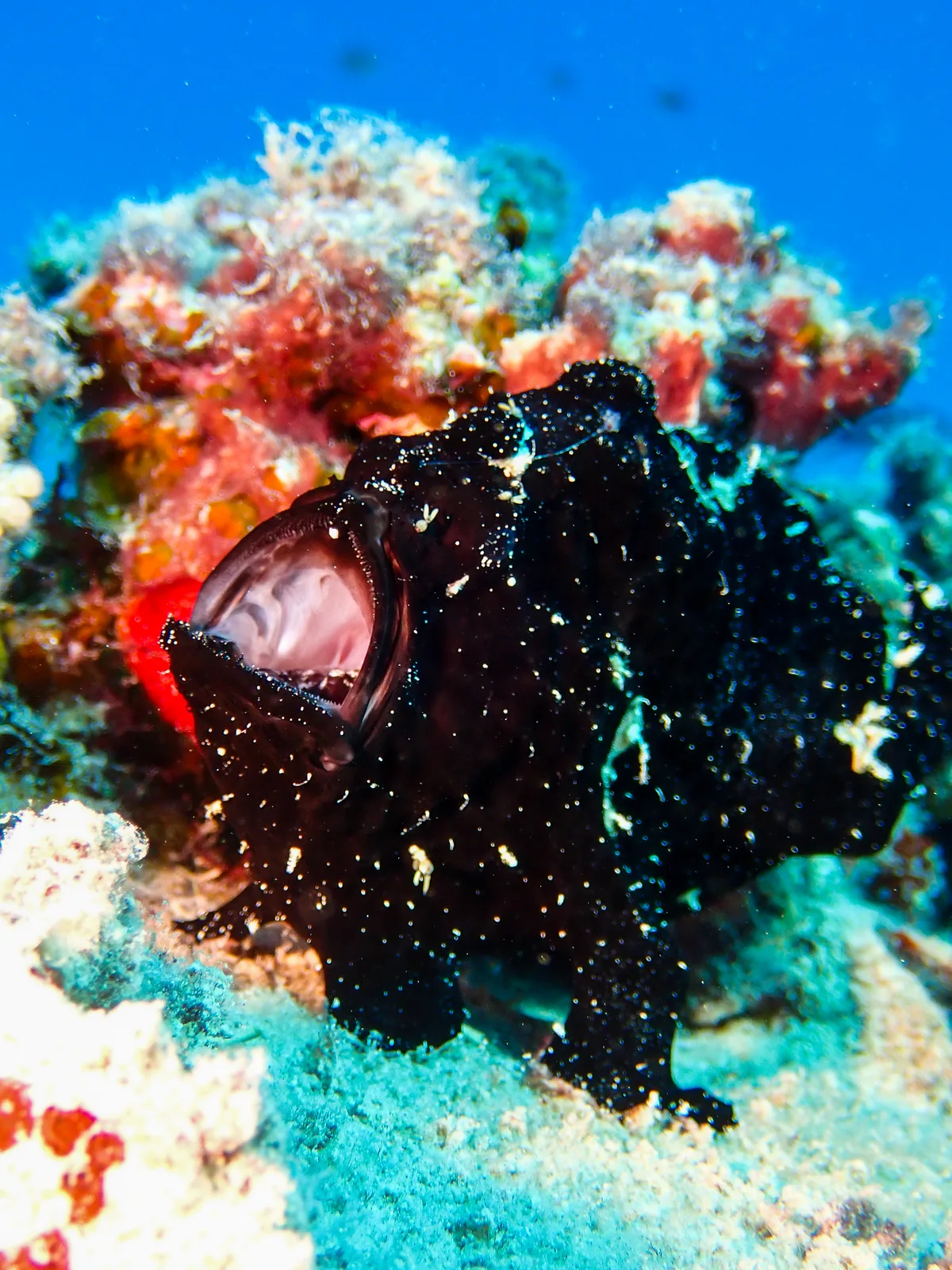
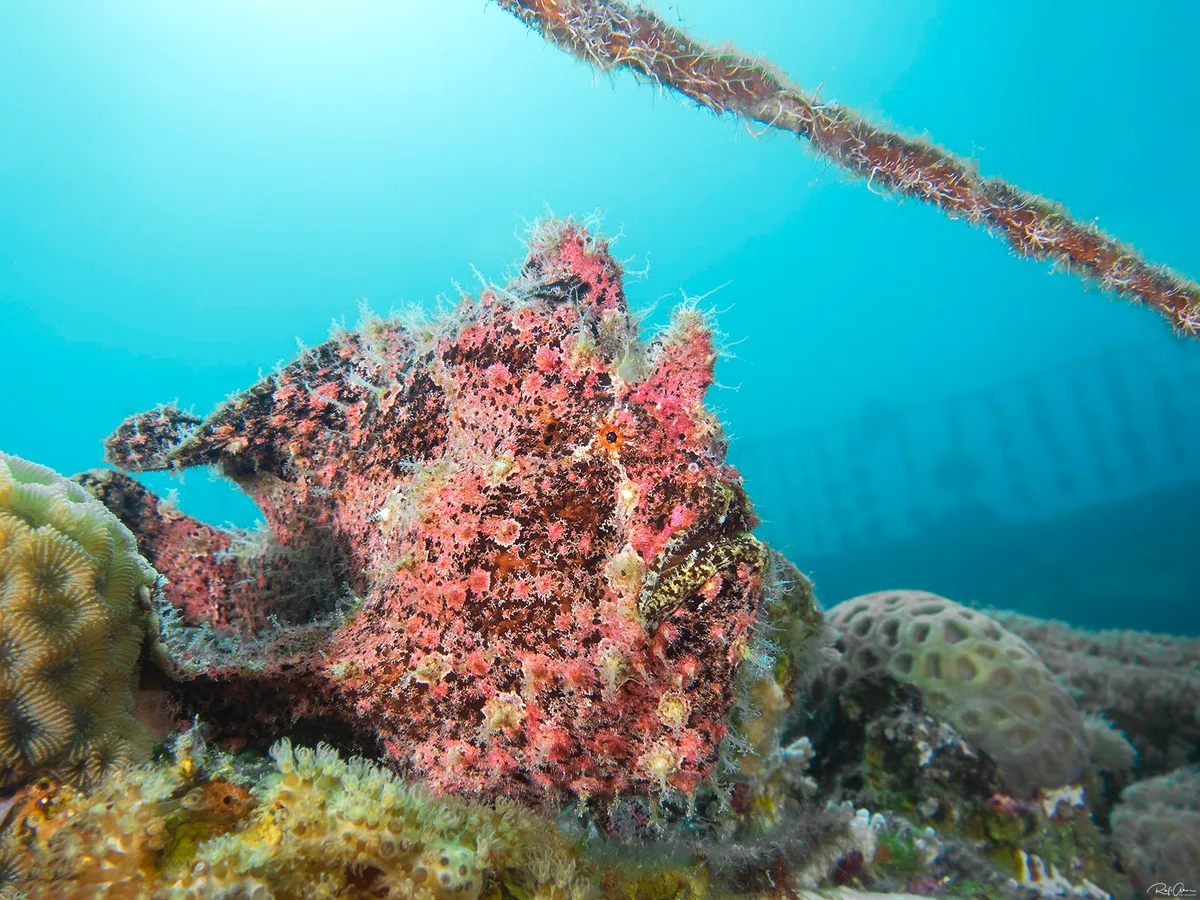
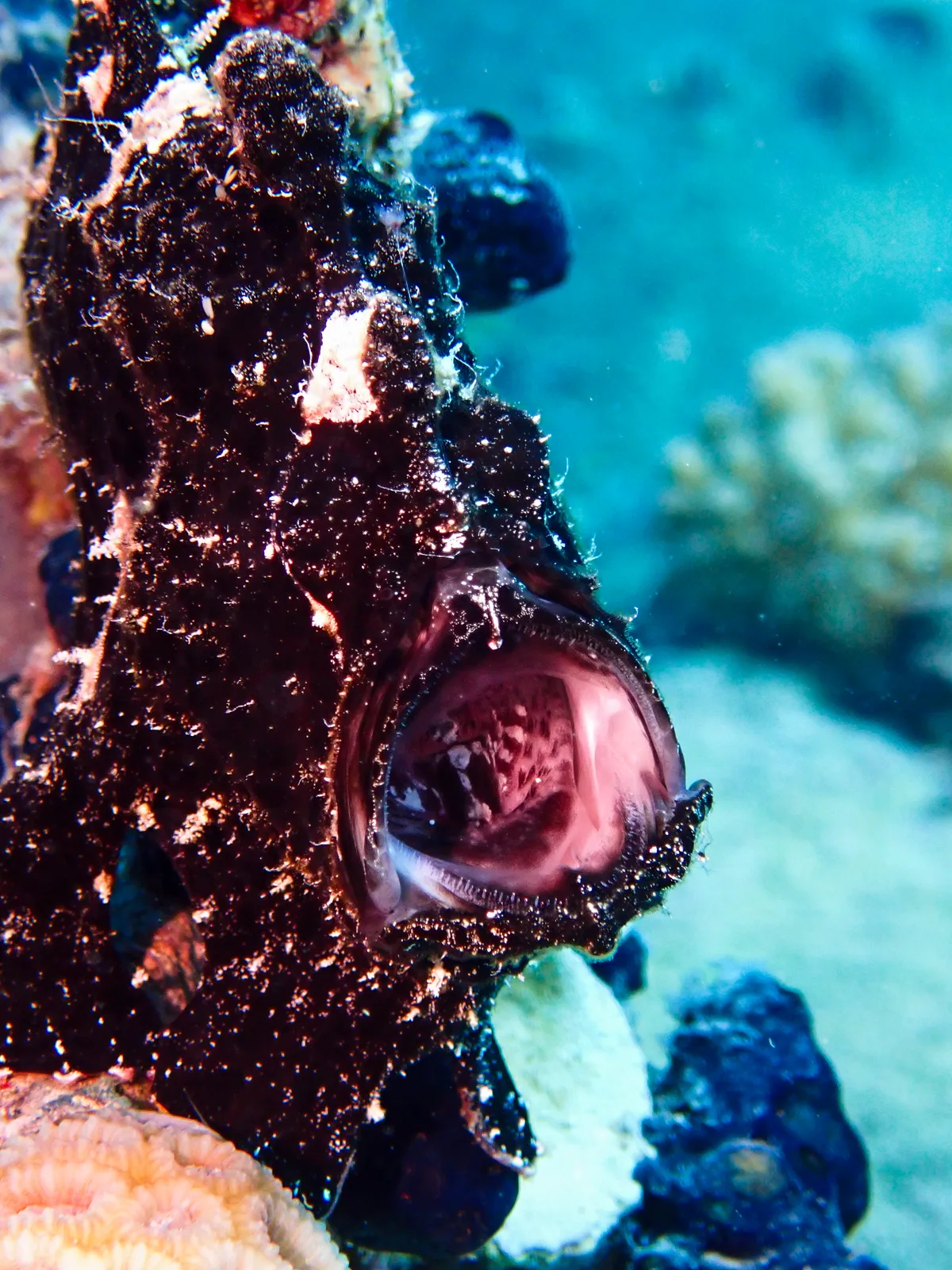
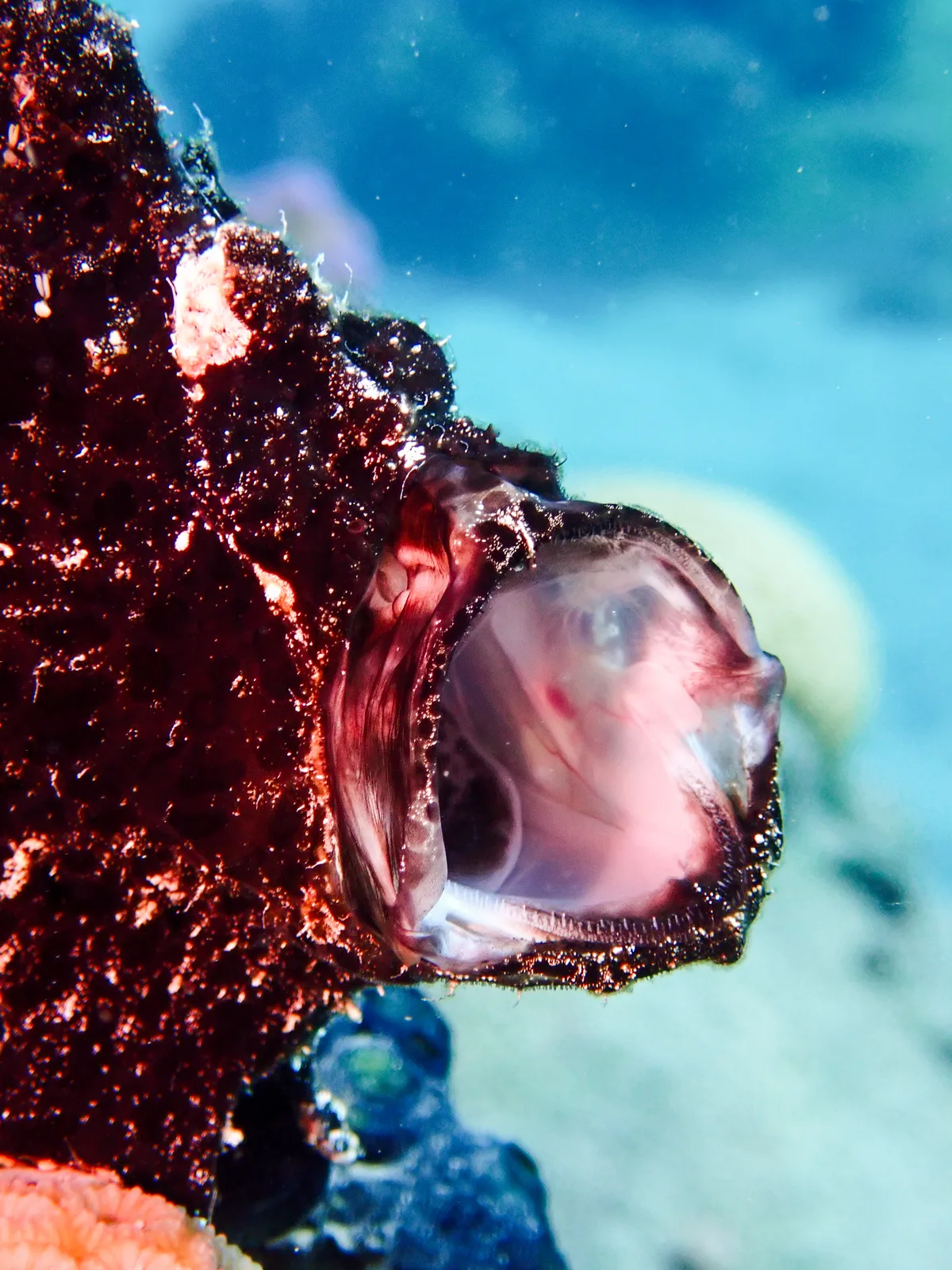
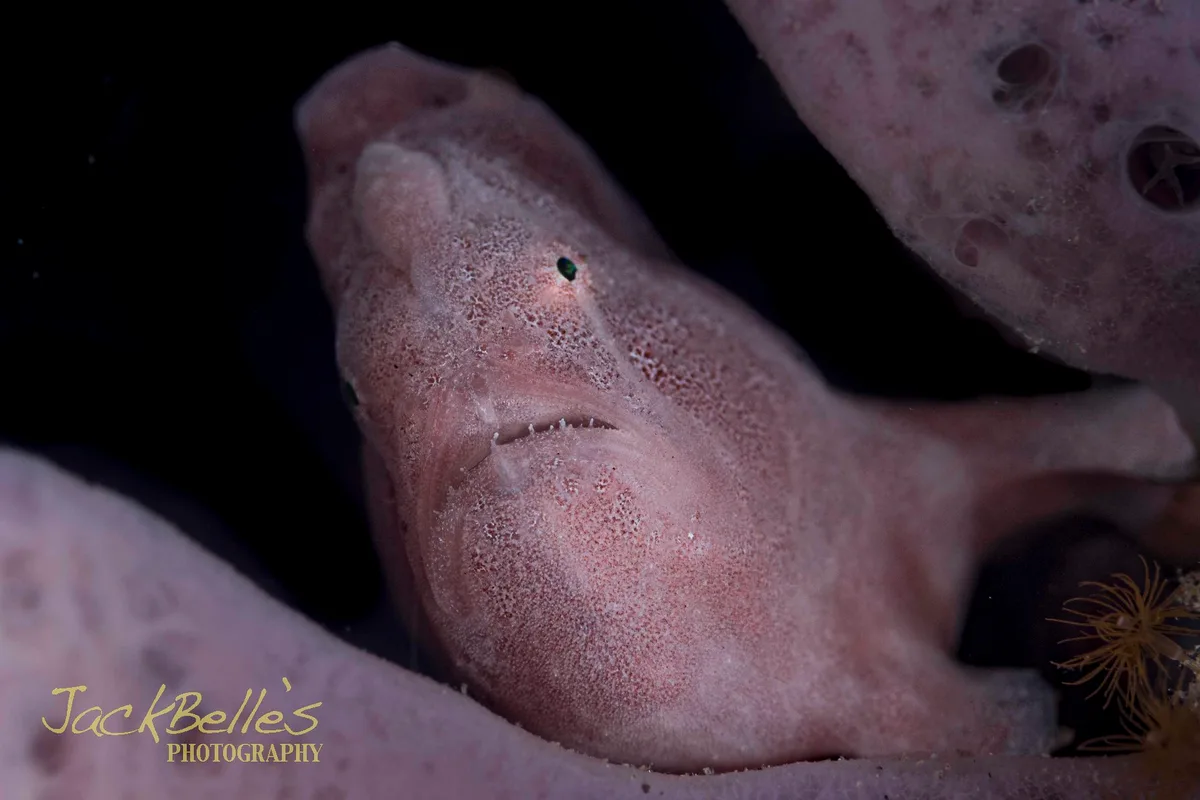
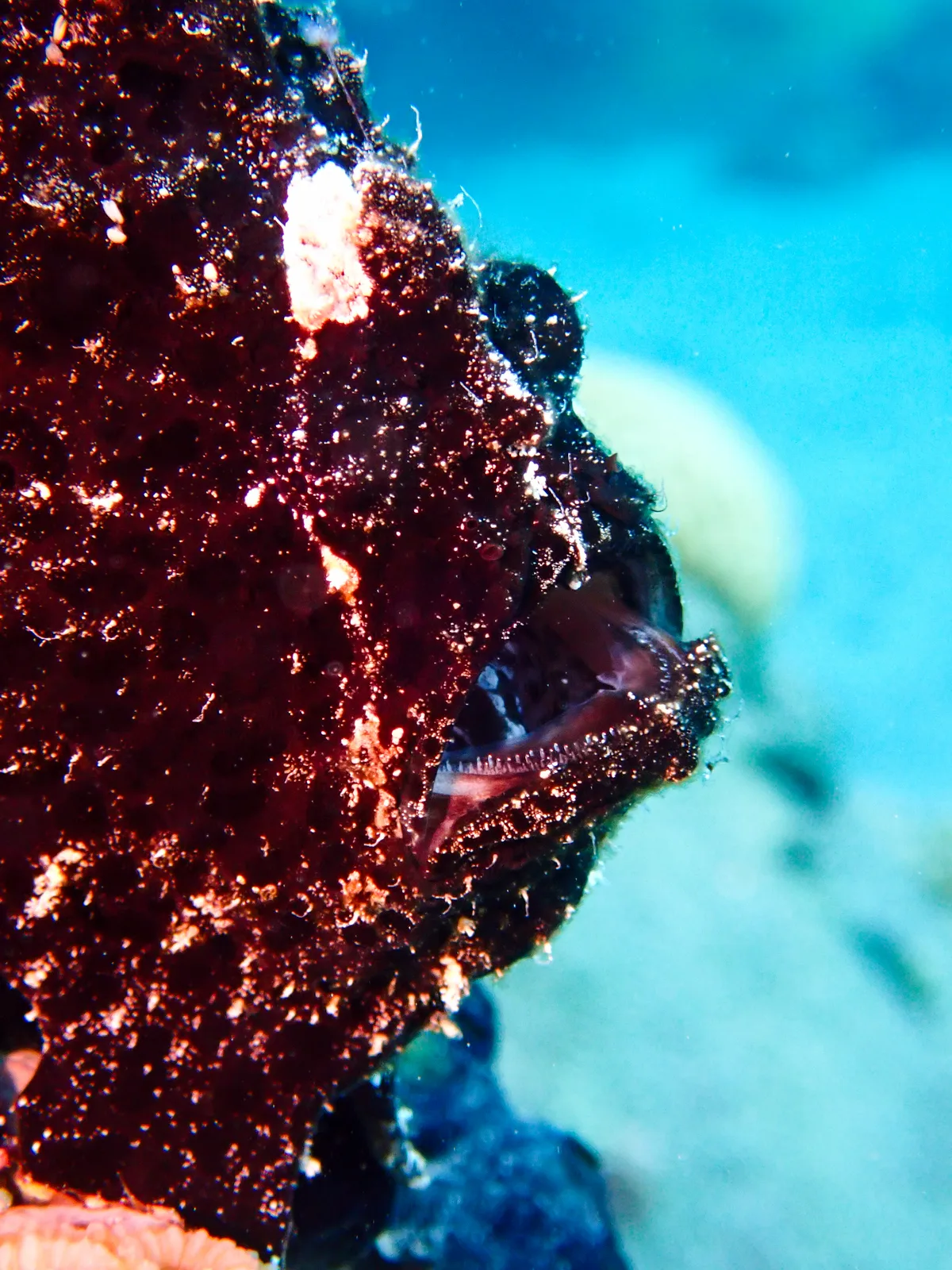
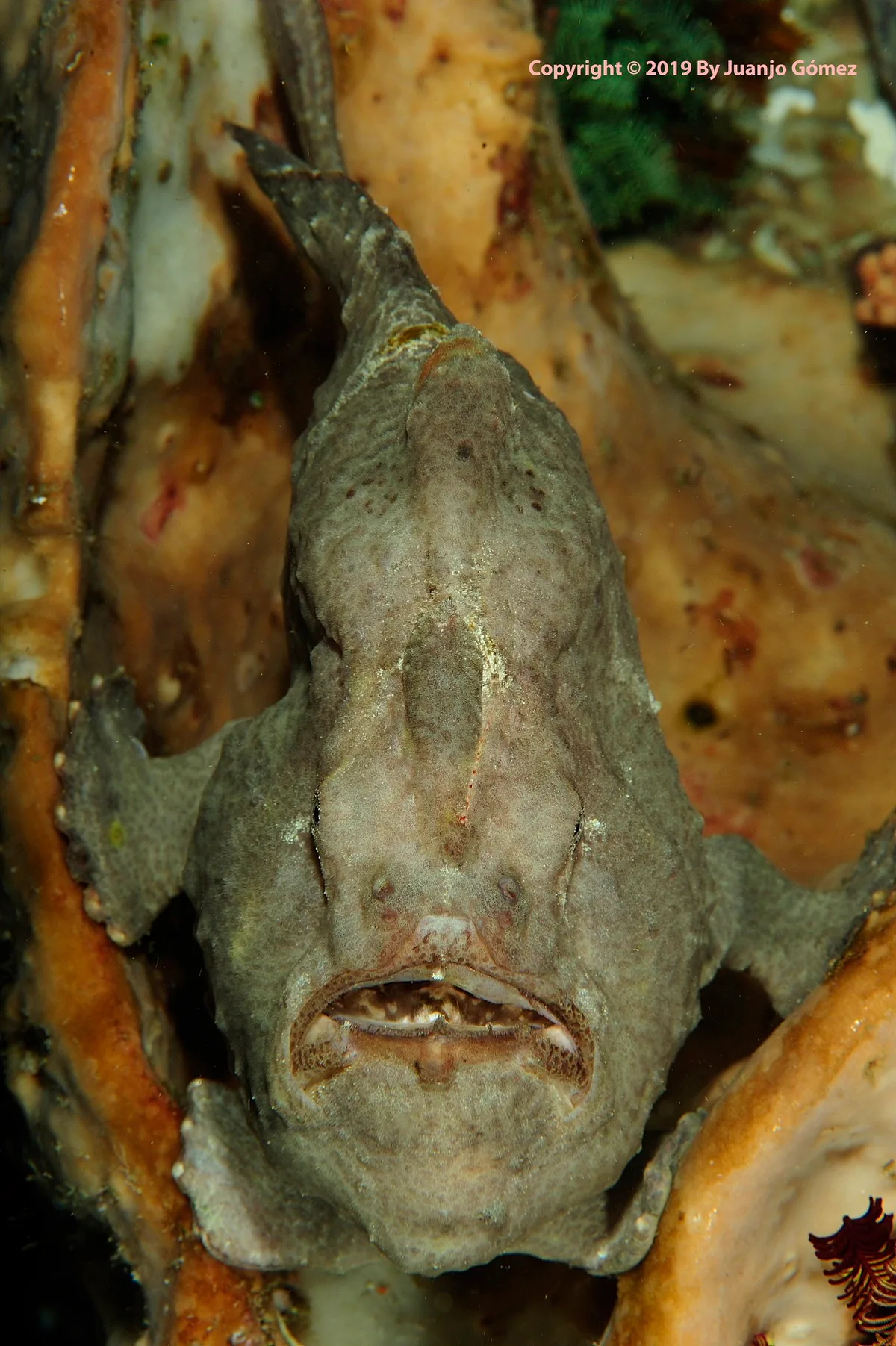
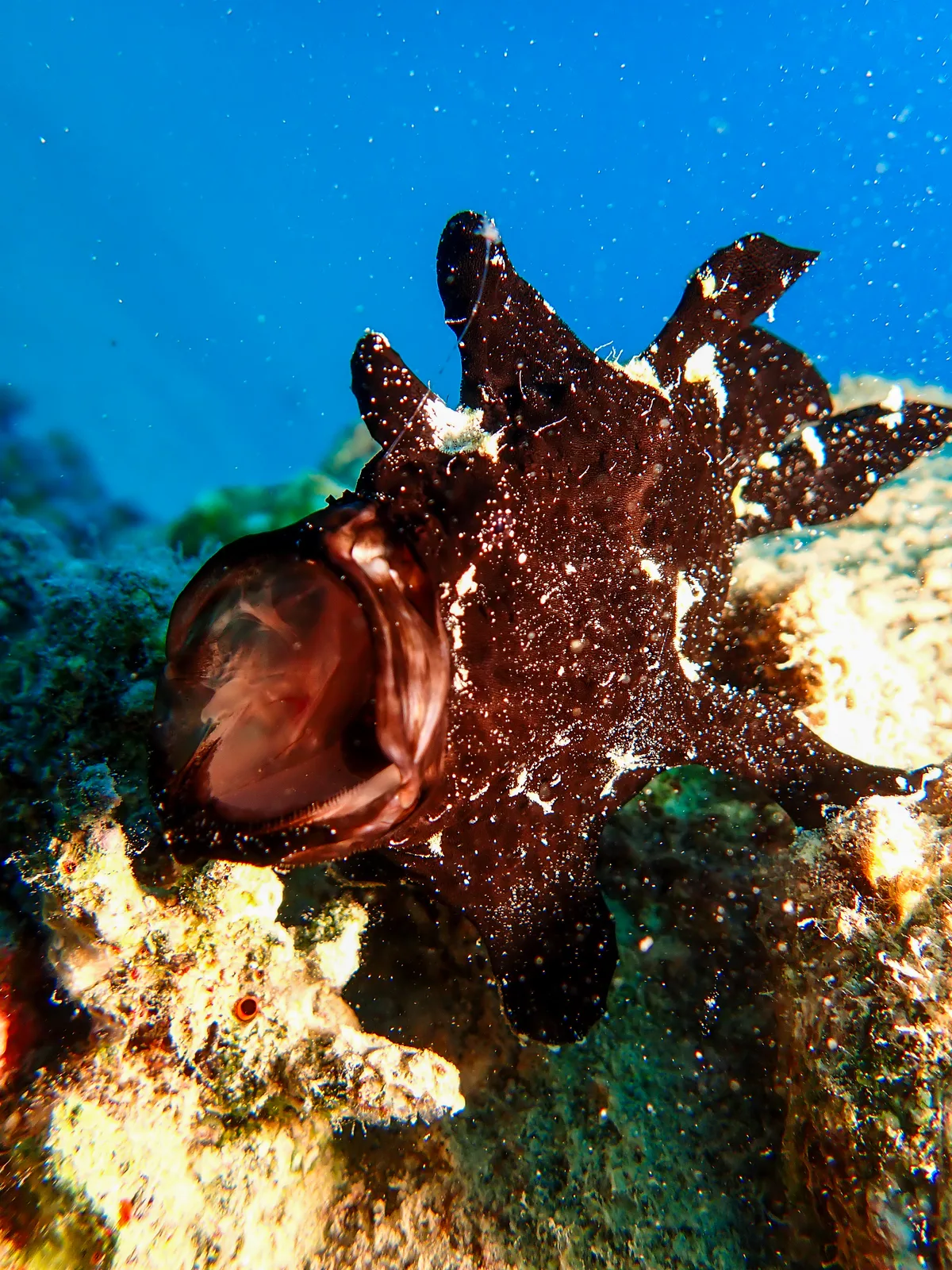
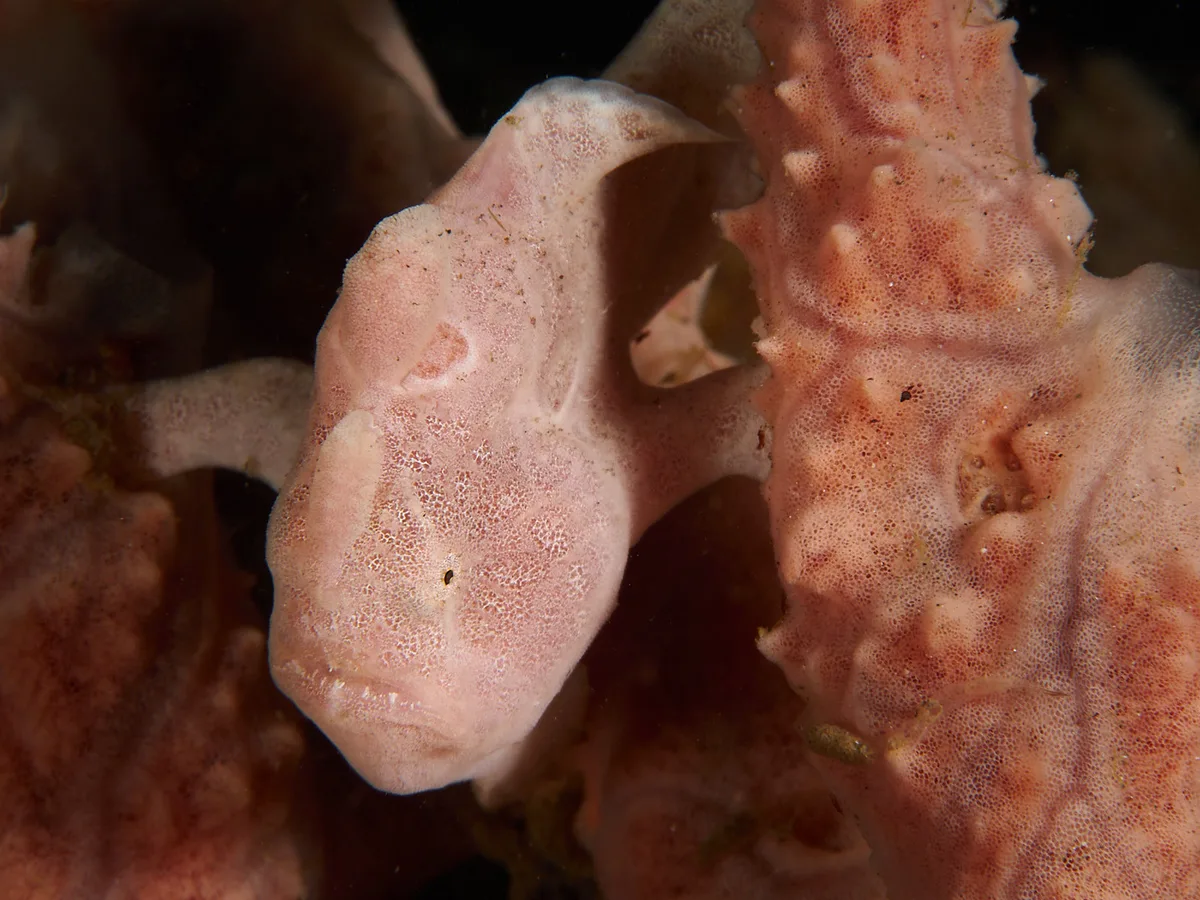
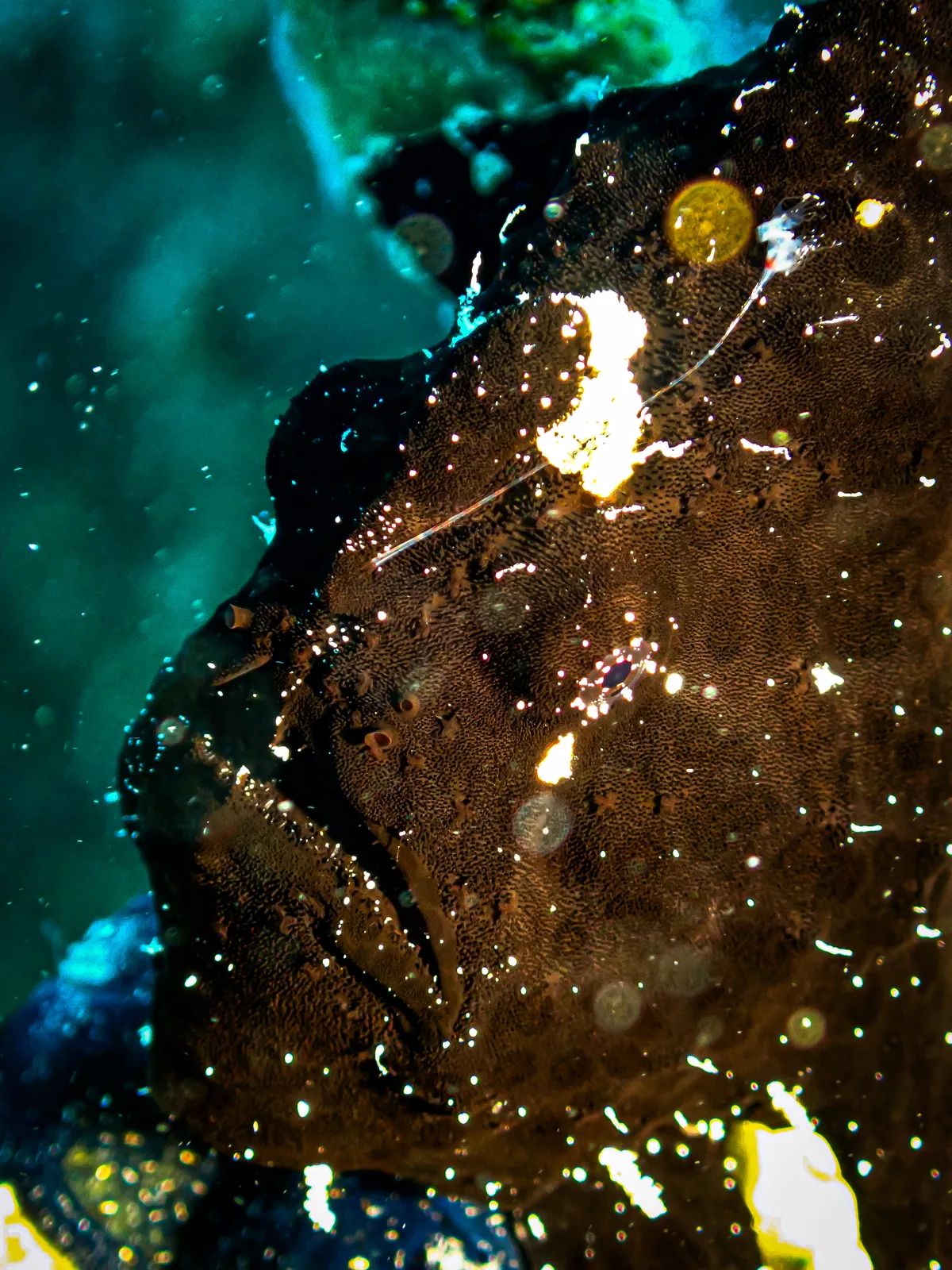
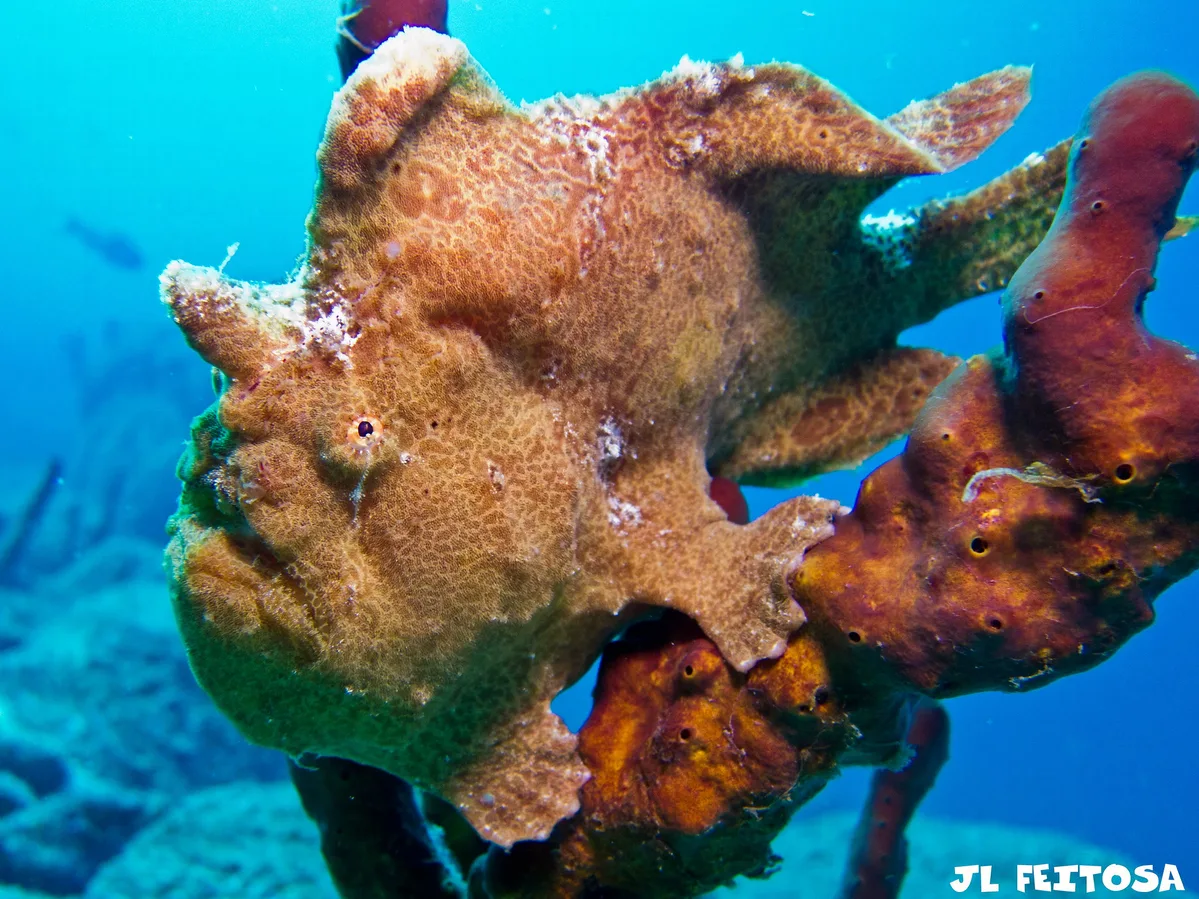
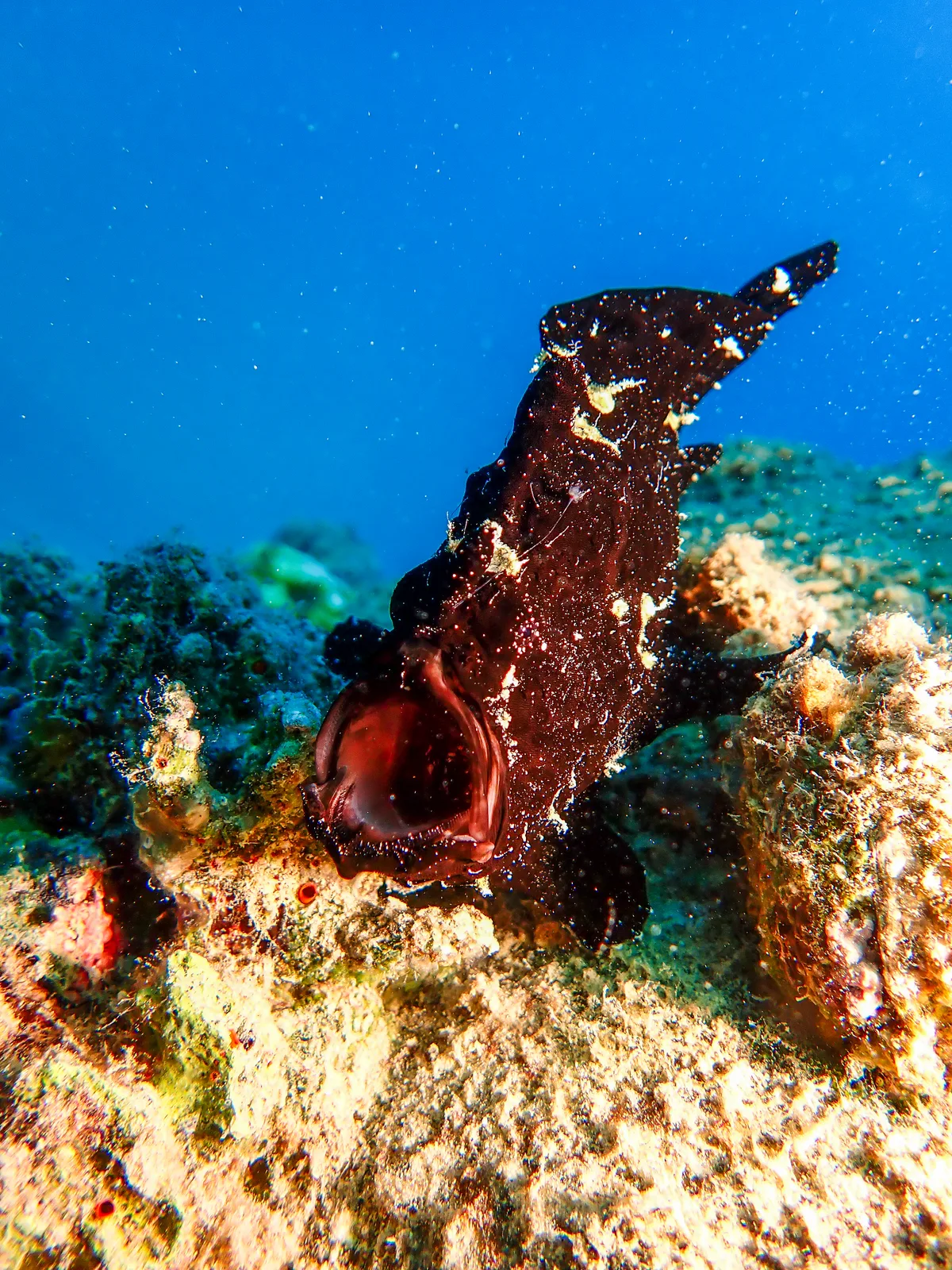
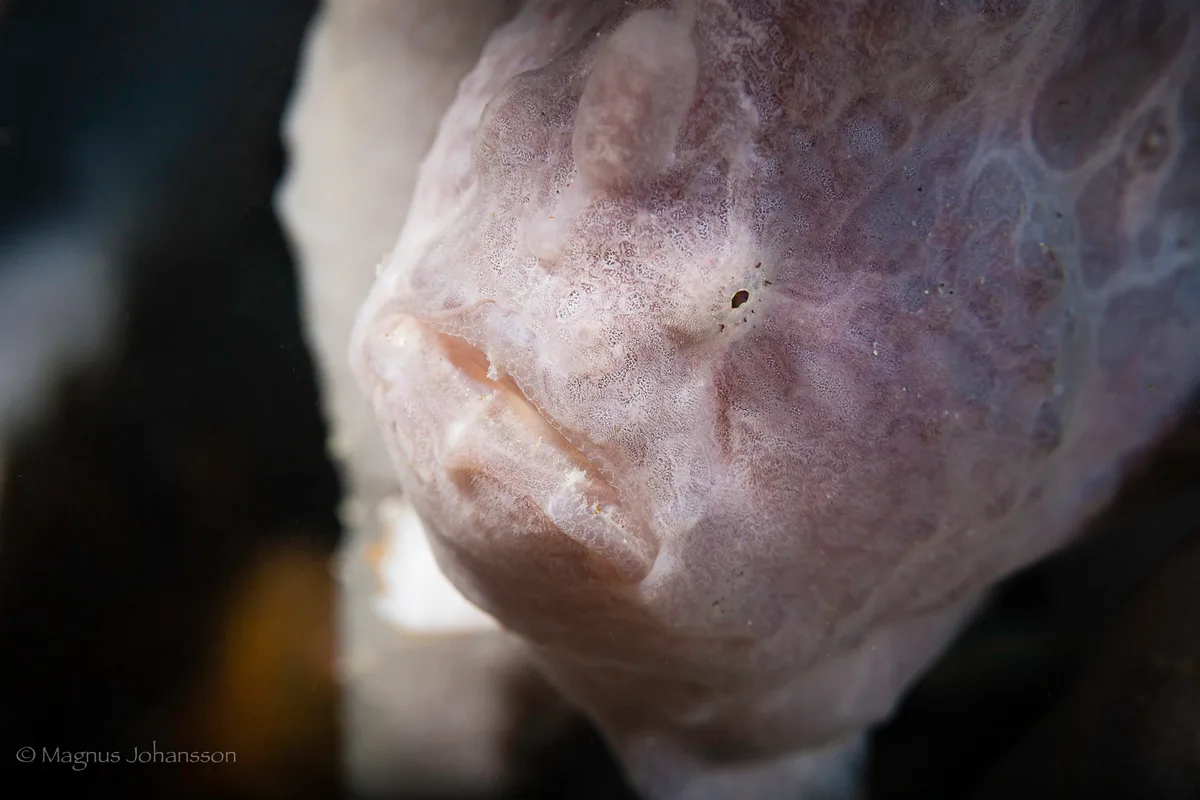
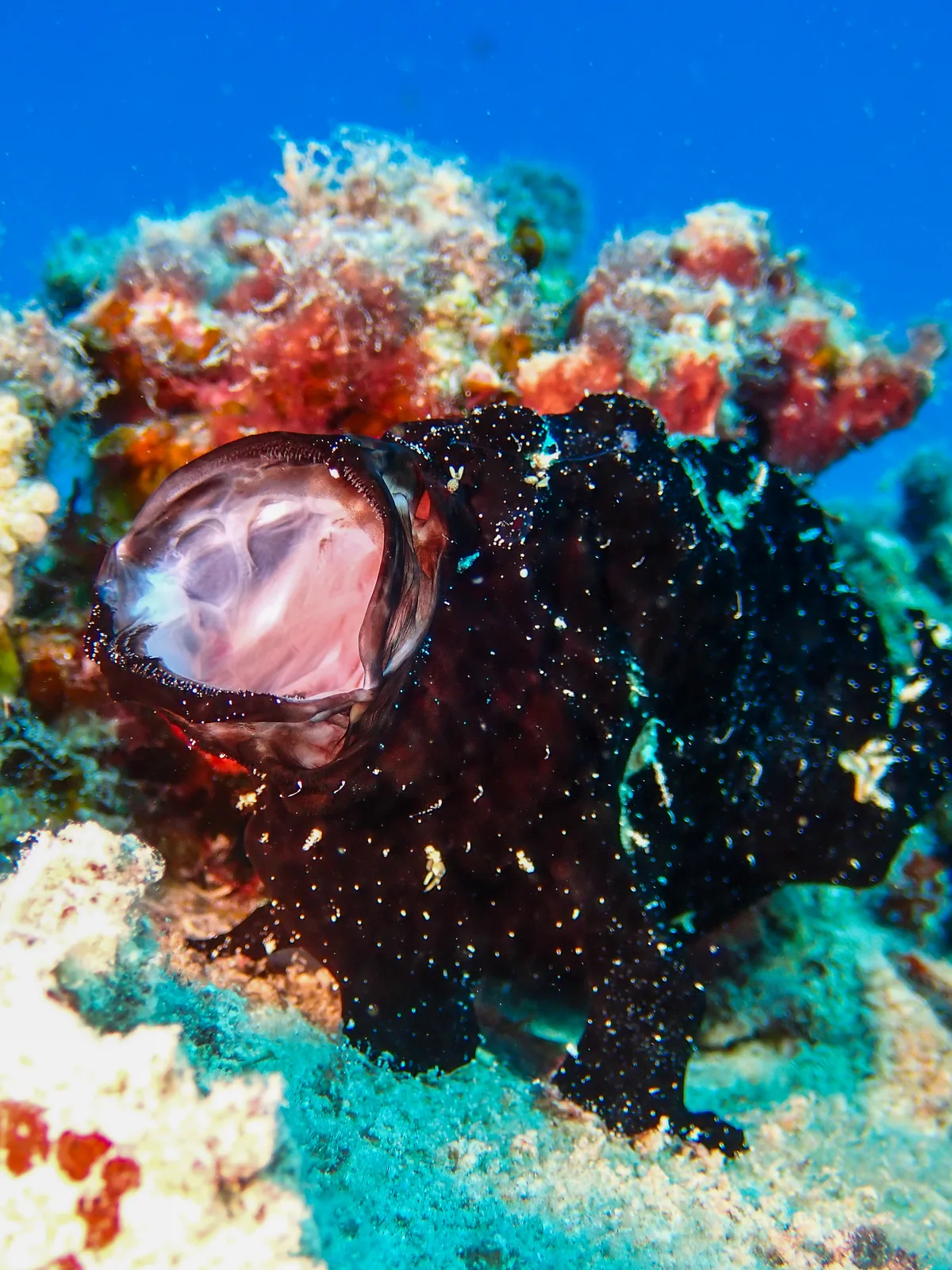
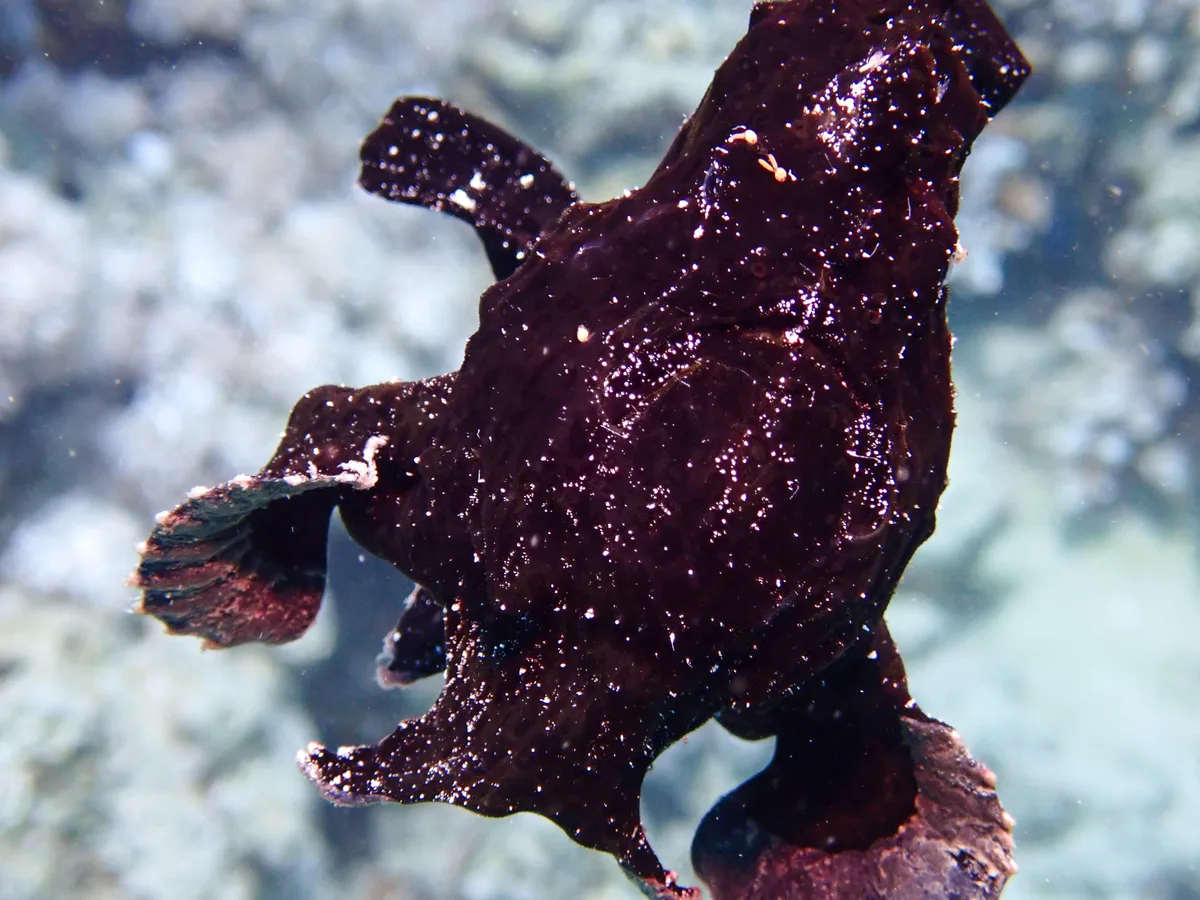
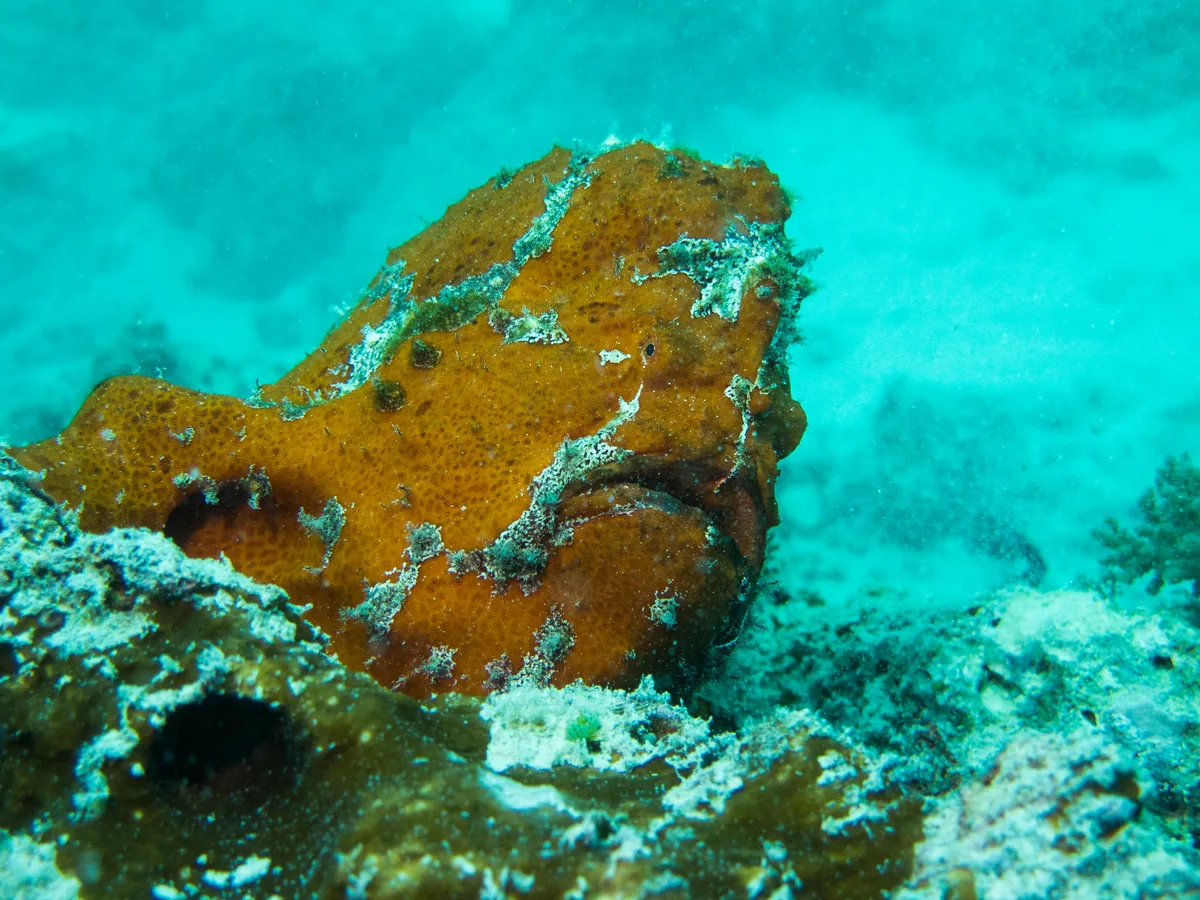
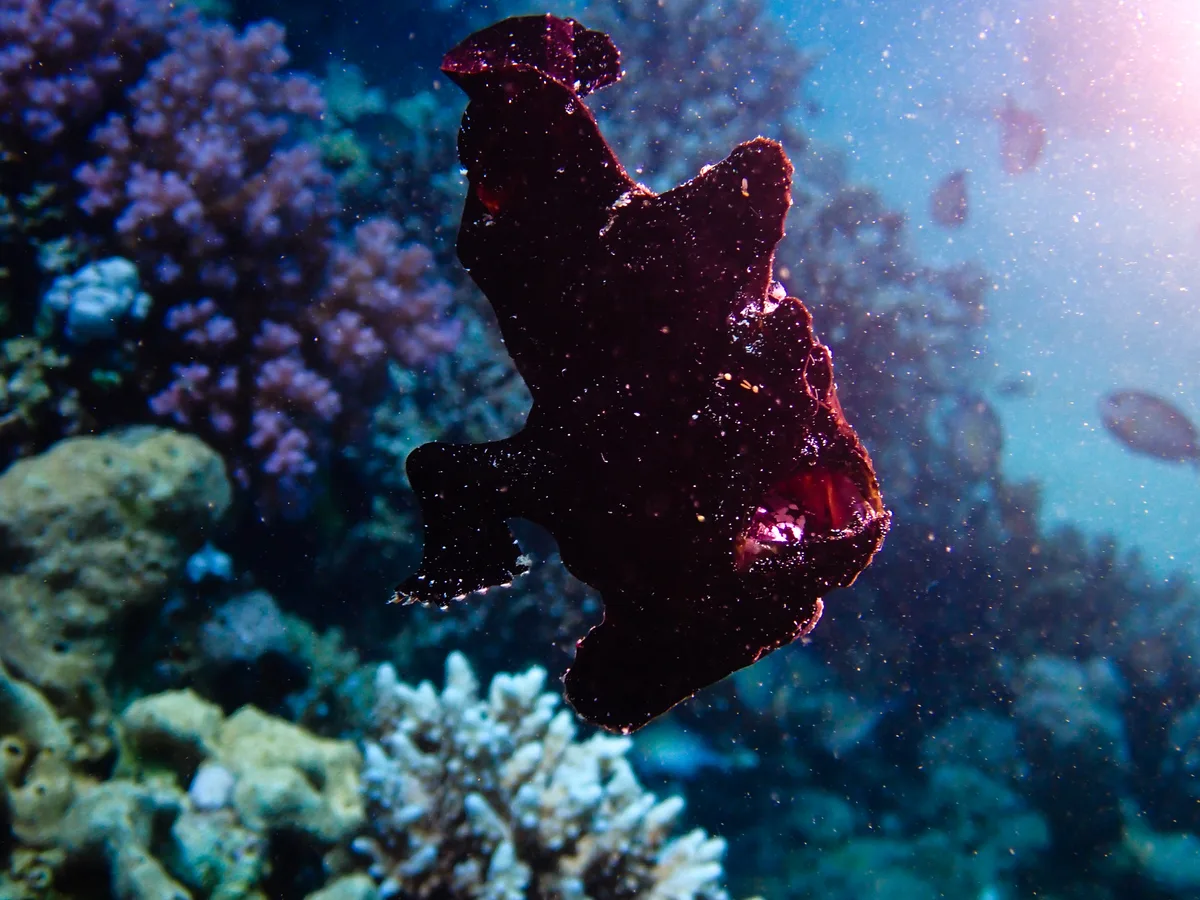
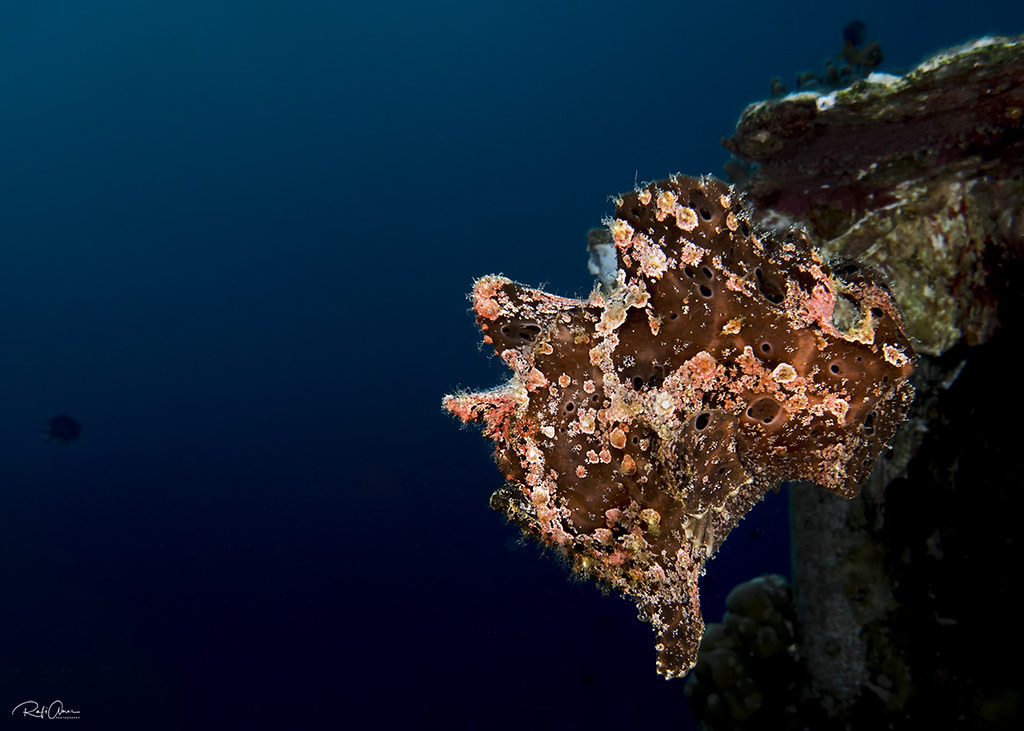
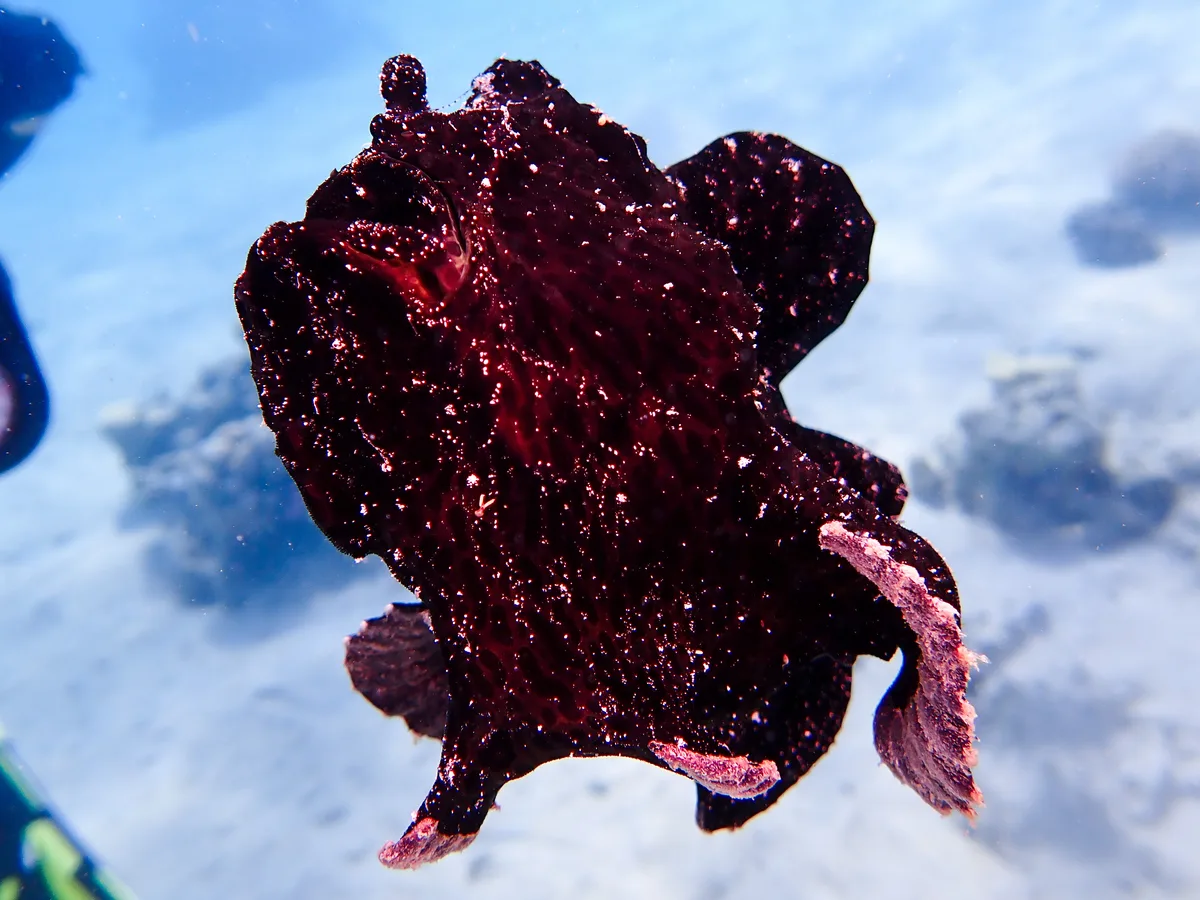
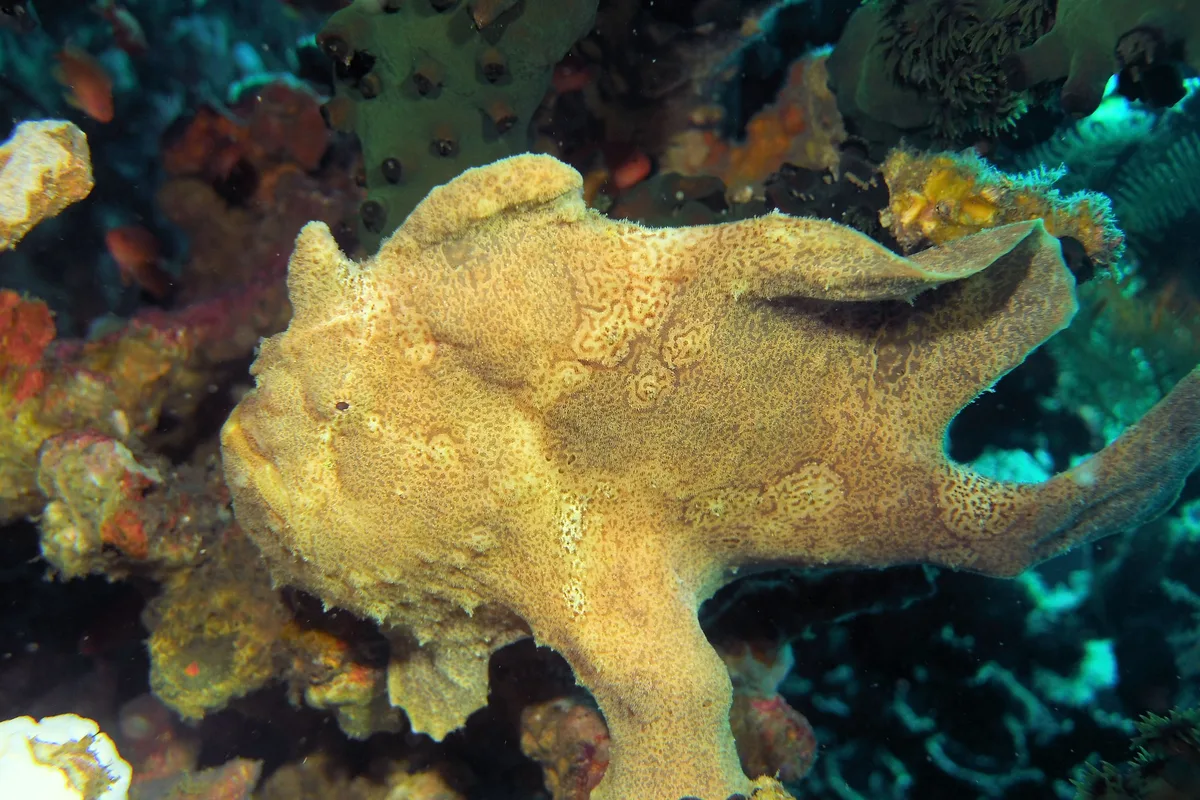
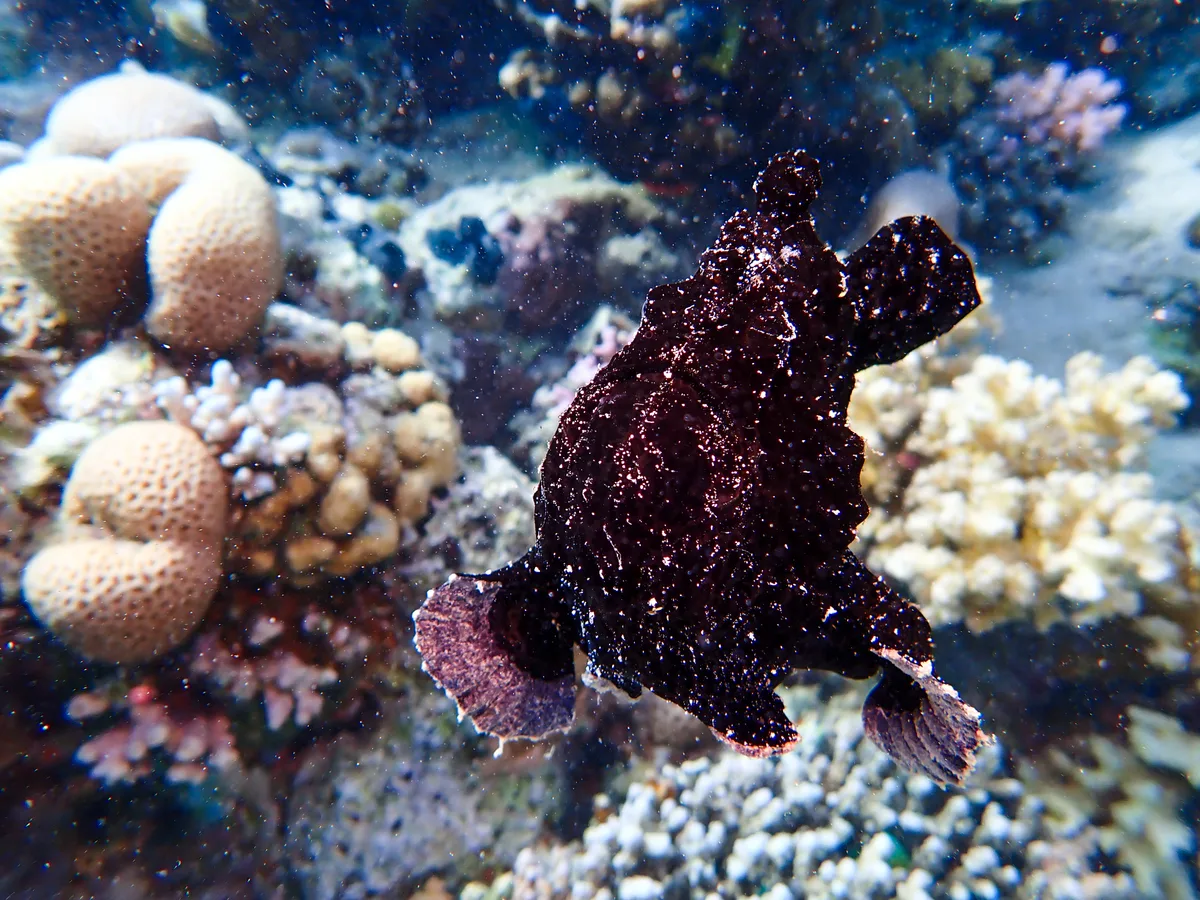
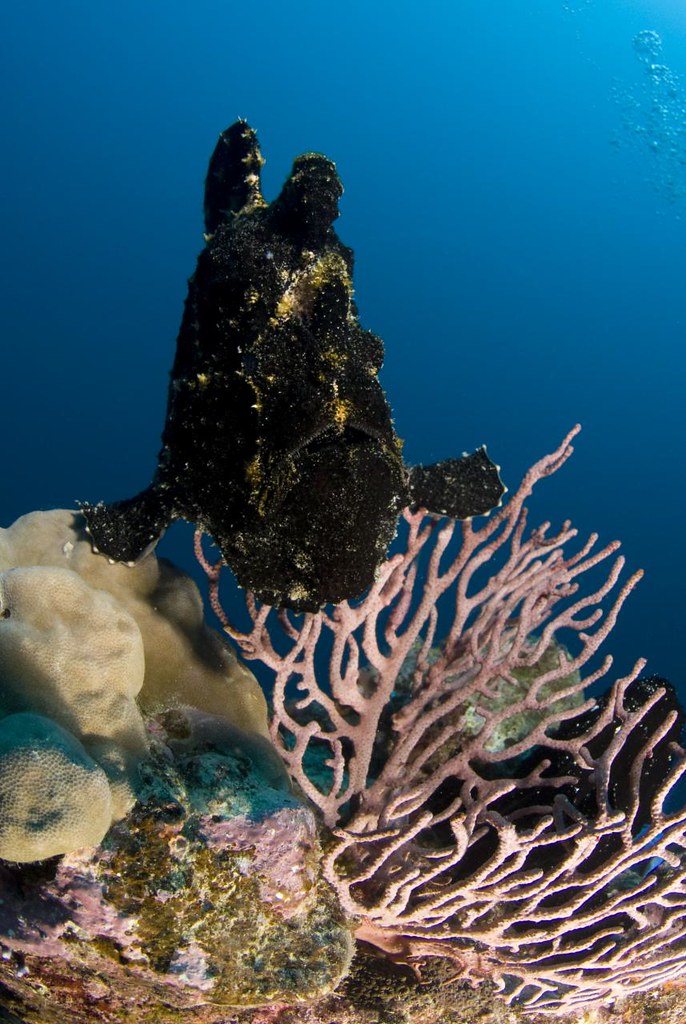
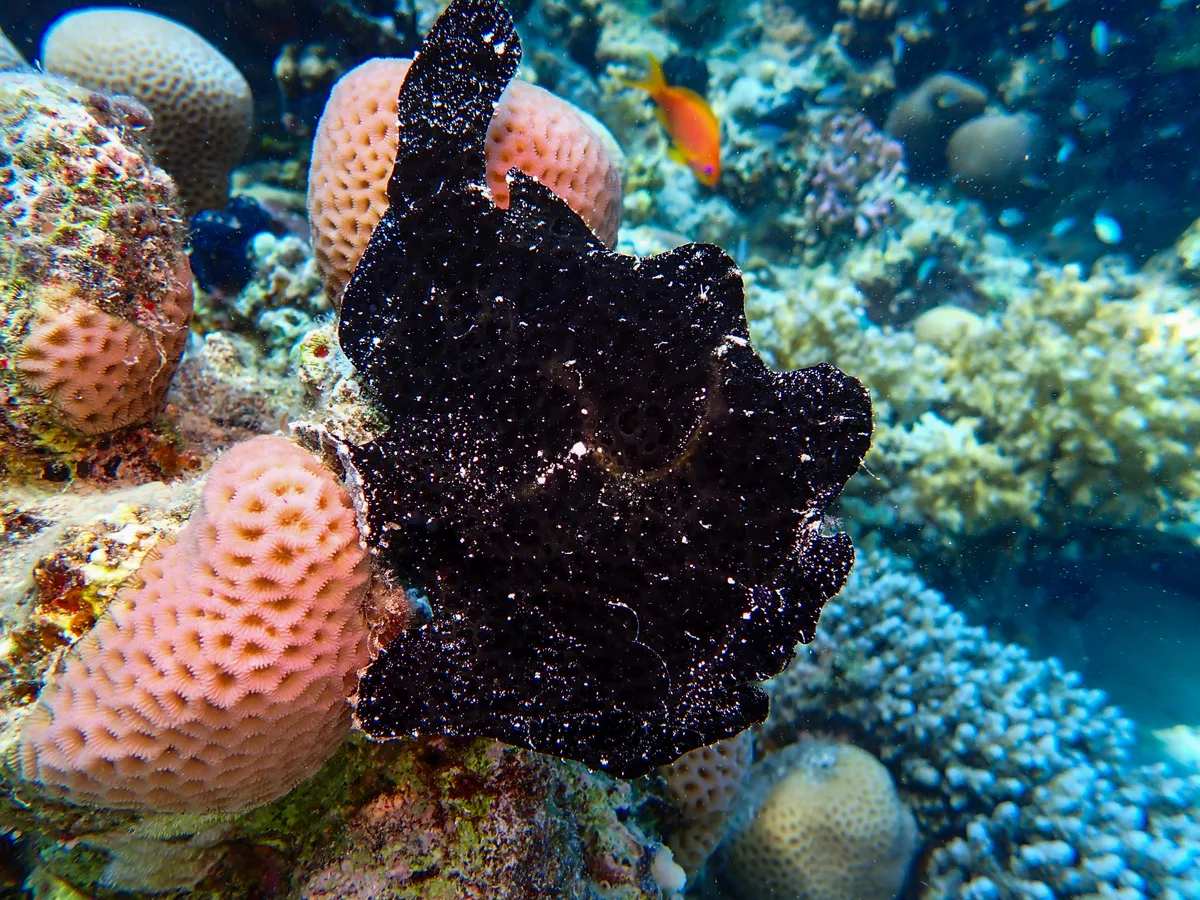
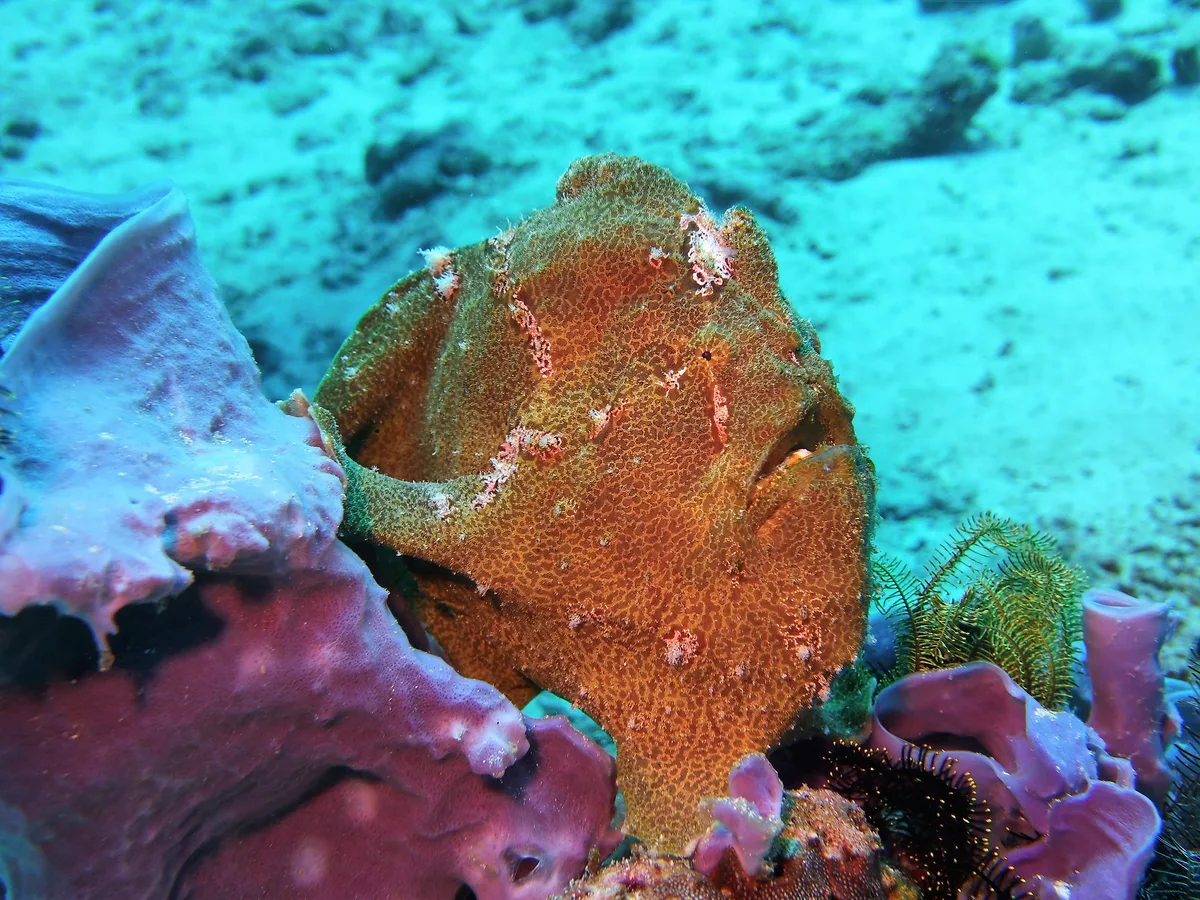
A lump of sponge with a mouth: up to 40 cm (16 in) of loose warty skin over a globe of a body, propped on thick pectoral fins that work as arms rather than fins. It does not swim if it can help it, and it does not run away, which is why divers walk past it and photographers who know what to look for do not.
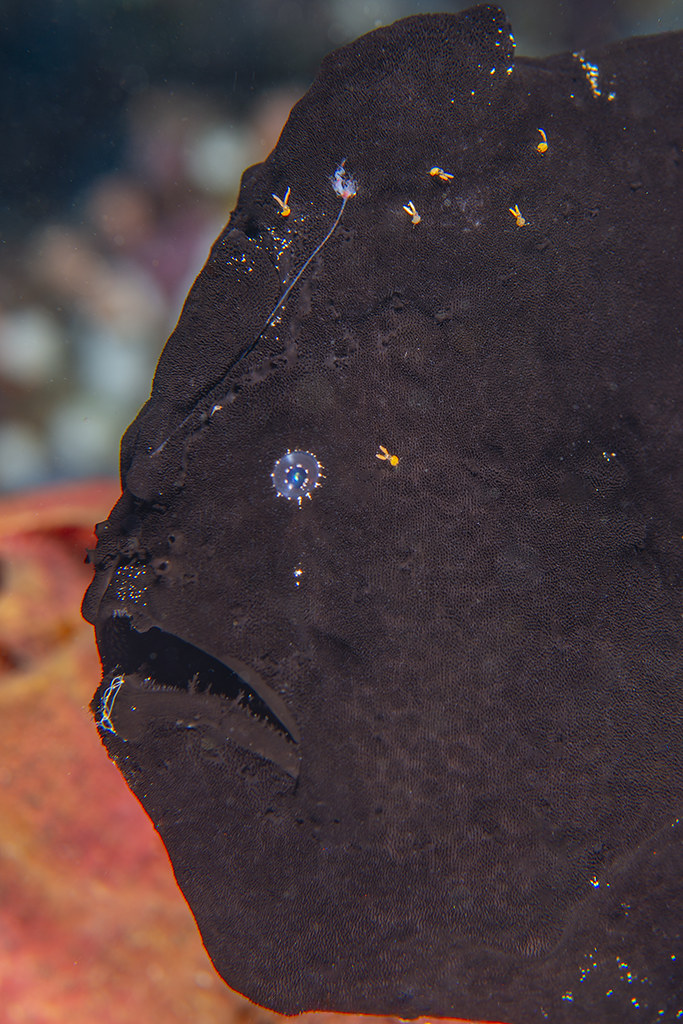
It fishes. The first dorsal spine has been rebuilt into a rod carried folded back between the eyes, tipped with a fleshy lure that the fish waves in front of its own mouth in the exact rhythm of a swimming worm. Small fish come to eat it, and the lure keeps twitching until they are close enough.
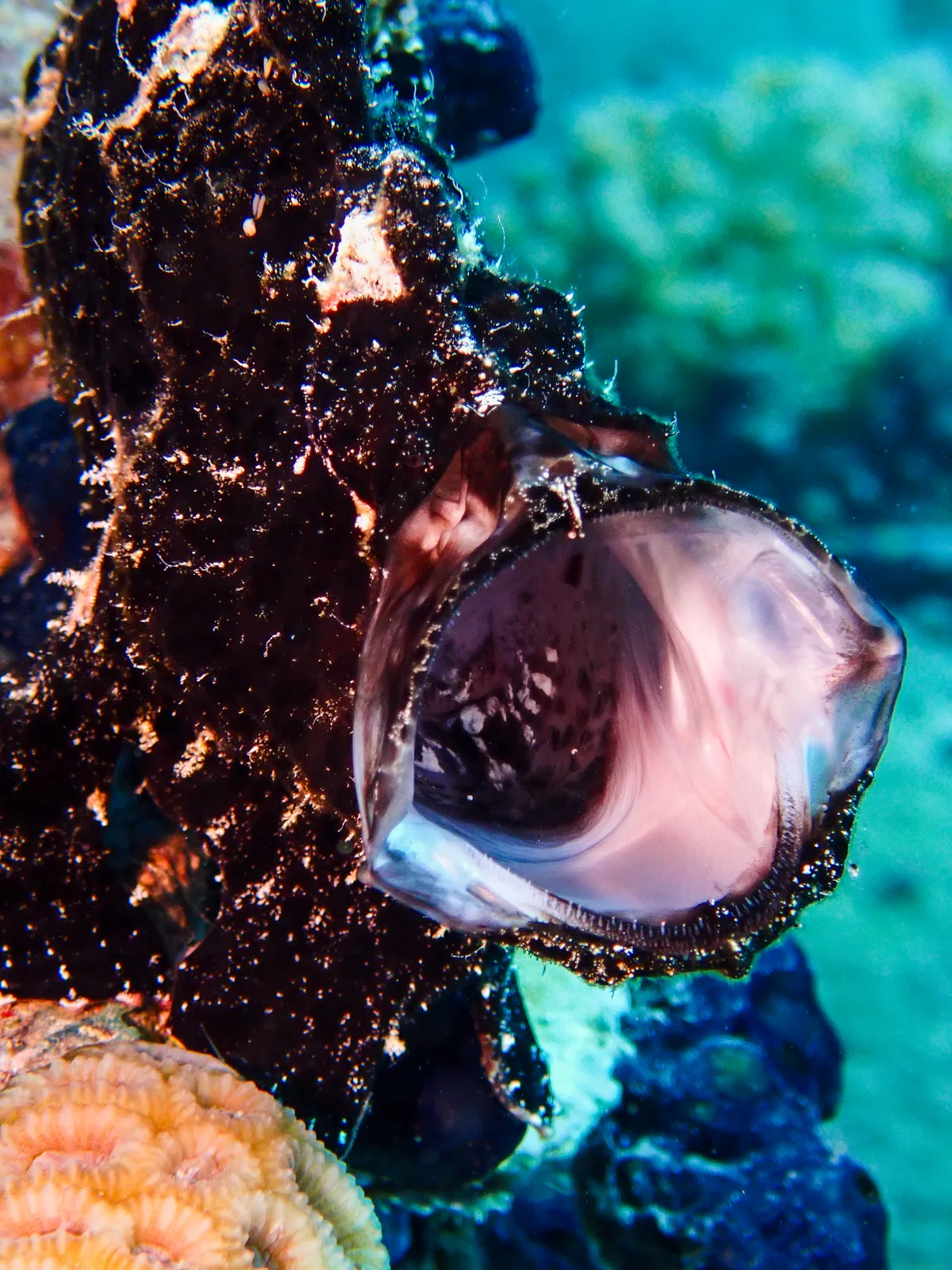
The strike is the fastest feeding movement measured in any fish. The mouth expands to twelve times its resting volume in about six milliseconds and the prey is pulled in with the inrush of water before it can register the movement. The stomach then stretches to hold animals as large as the frogfish itself.
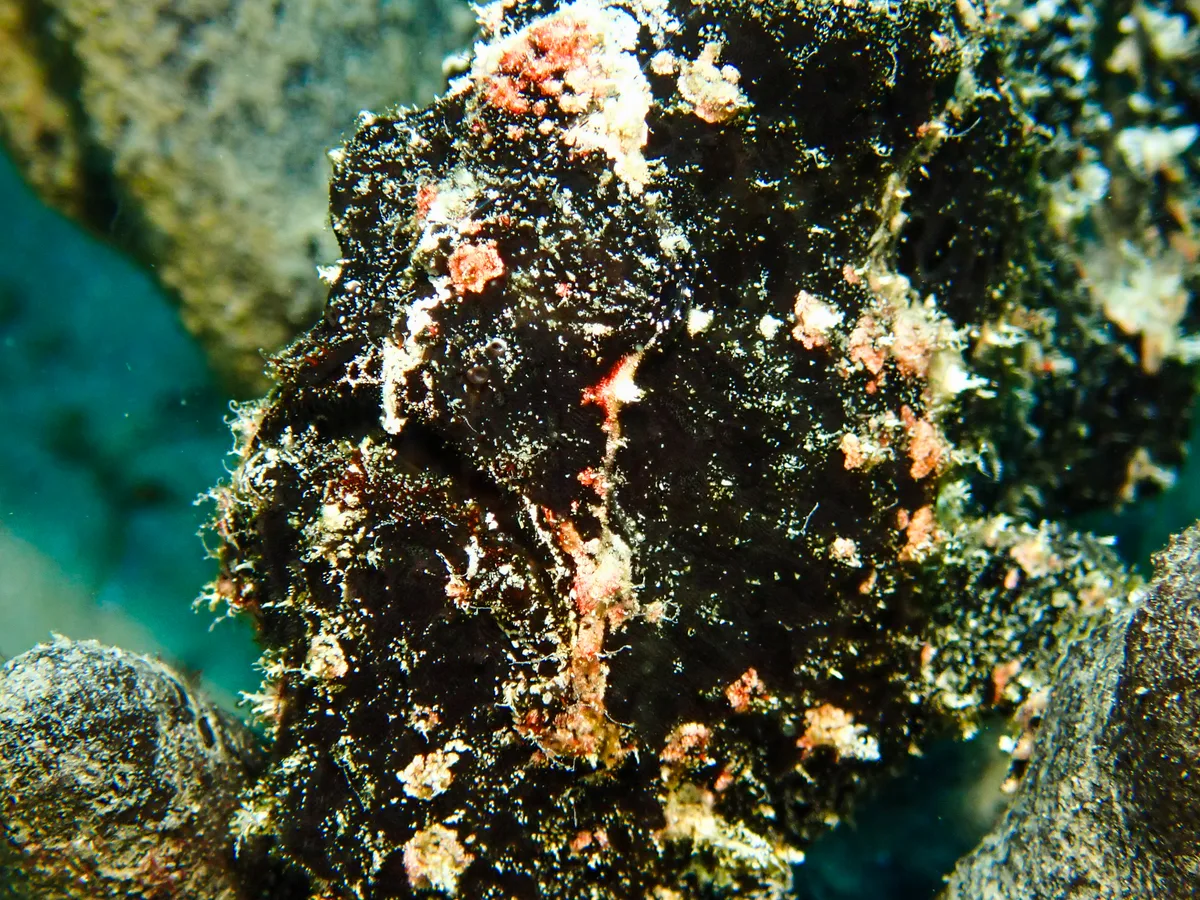
Color is not fixed. Over weeks an individual can shift between yellow, black, red and mottled cream to match the sponge it has chosen, and the skin grows filaments and lumps to complete the disguise. Two frogfish sitting a meter apart on different sponges can look like two different species.
The genus. Antennarius Daudin 1816 - -ius (pertaining to antenna). ETYFish
The species. Antennarius commerson (Anonymous 1798) - Honours French naturalist Philibert Commerçon. ETYFish
- lumpy stalked body sitting on arm-like pectoral fins, not swimming
- a fishing rod folded back between the eyes, tipped with a wormlike lure
- texture and color match whatever it is sitting on, including sponges
- length up to 40 cm
Why it's threatened
There are no known major threats.
Threat classification from the IUCN Red List.