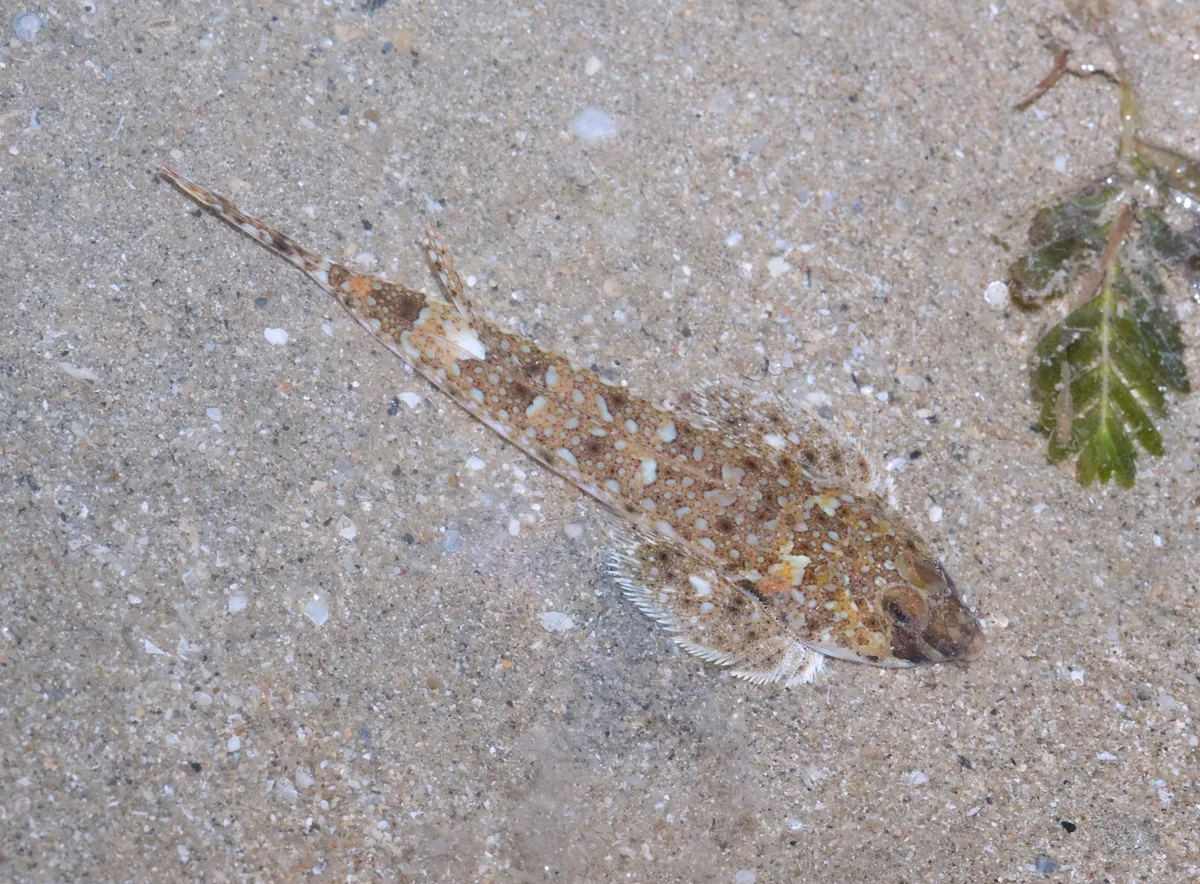
The name is not a description of the fish. Nothing about the animal is red. Ninni named it for the water it came out of, and said so in the title of the 1934 paper: a work on the dragonets of European seas, with an appendix on the exotic ones in Italian museums and one new dragonet from the 🌊 Red Sea. This is that fish, and the 🌊 Red Sea is where its type specimen was taken.
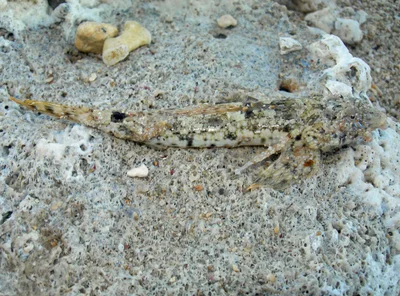
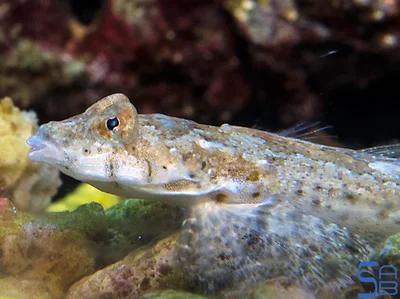
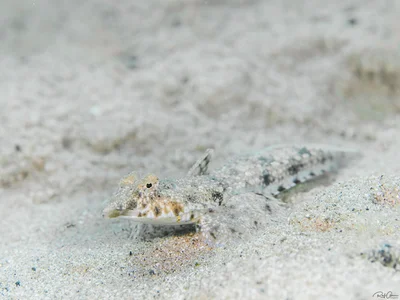
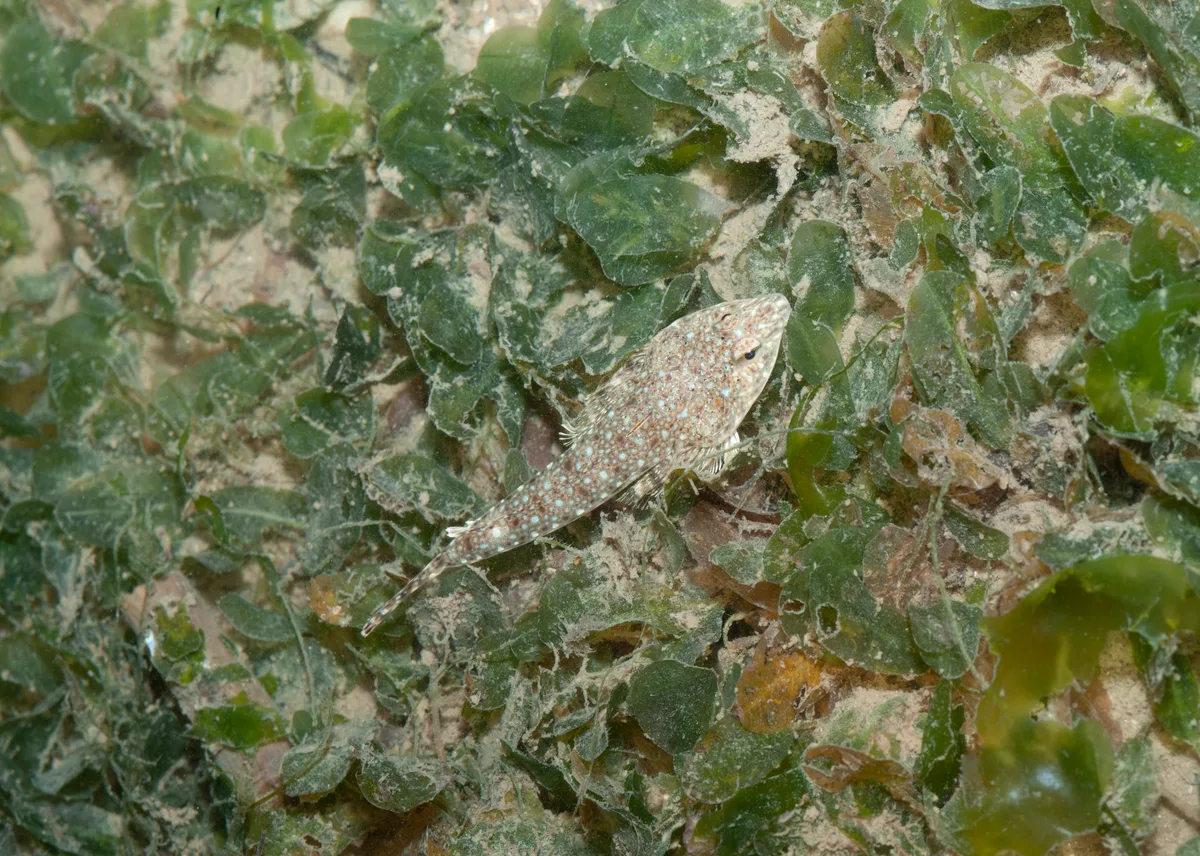
The body is plain and sand-toned, flattened from above, with a broad triangular head and the eyes set high on top of it so the fish can lie flush on the bottom and still watch the water. The color is all in the fins. The first dorsal is black, and each of its four spines carries a fine filament off the tip. The second dorsal is pale with a black bar across it, the anal fin is black with a white base, and the tail is pale with three black bands, with a dark brown spot where it joins the body. Along the flank run six black blotches.
Like every dragonet it has no scales at all. Bare skin, and over it a thick bitter mucus that makes the fish unpleasant in a predator's mouth, is the whole of its armor. The one hard defense is a stout barbed spine on the rear edge of the gill cover, the character the entire family is identified by and the reason a dragonet is worth handling carefully if it comes up in a net.
It lives on sand and mud in shallow lagoons and beside reef, down to about 10 m, and it does not so much swim as walk. The thick pelvic fins act as legs, and the fish shuffles along the bottom on them, stopping to take small crustaceans and worms out of the sediment mouthful by mouthful.
Spawning is the exception to a life spent flat on the sea floor. The male spreads the black first dorsal at a female, and if she accepts the pair fits close together and rises off the bottom, releasing eggs and milt into open water at the top of the ascent before dropping straight back down to the sand.
- black first dorsal fin, with a fine filament off the tip of each of its four spines
- black anal fin with a white base
- pale tail crossed by three black bands, with a dark brown spot at its base
- six black blotches along the side of the body
- flat body and broad triangular head with the eyes set on top
- up to 10 cm
Why it's threatened
There are no known major threats to Callionymus _erythraeus_in the Persian Gulf.
Threat classification from the IUCN Red List.