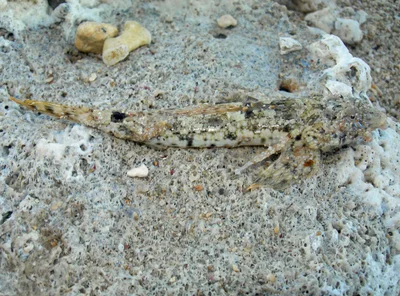
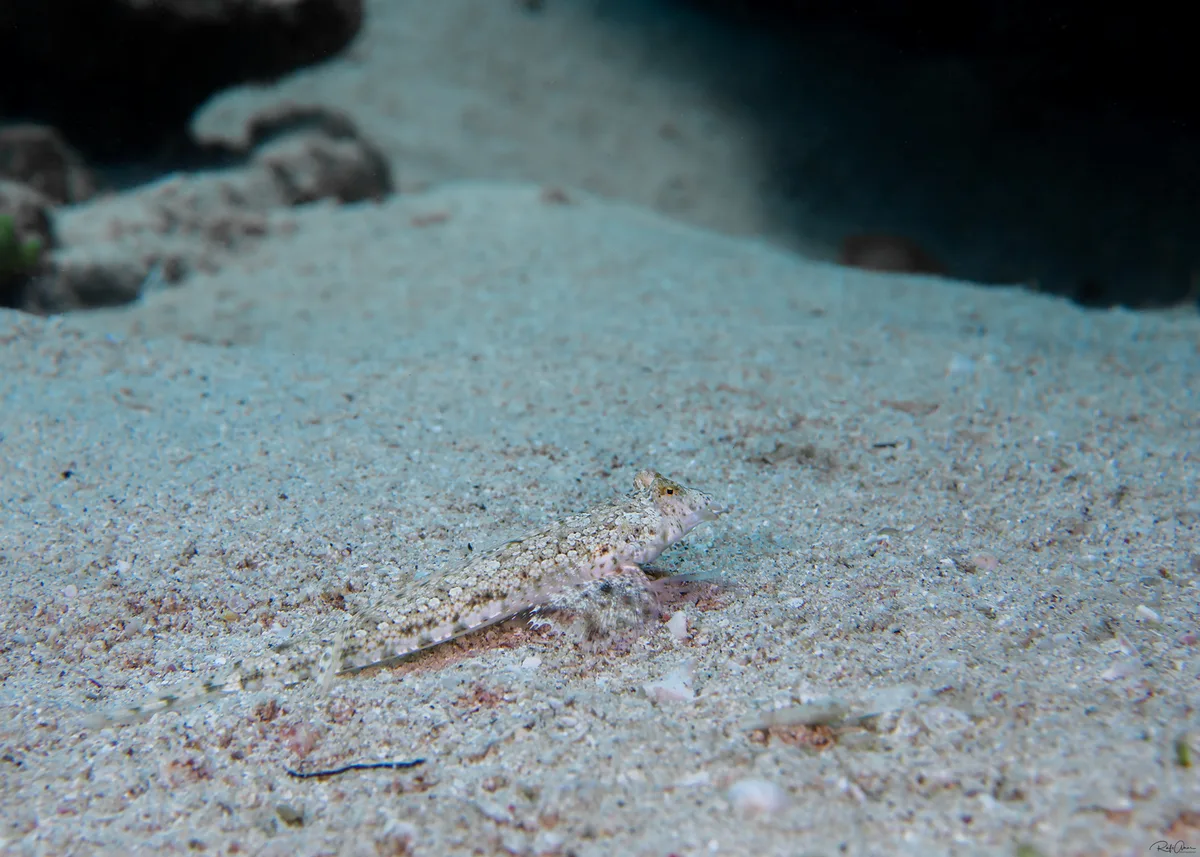
Almost every small fish that lives on sand answers a threat the same way: it goes into the sand. This one does not. Cornered, Randall's dragonet runs, sprinting flat across the open bottom rather than diving under it, and the habit is consistent enough that it is written into the regional guide as a way of telling the fish apart from its neighbors.
It is a 🌊 Red Sea endemic, described in 1983 and named for John Randall, whose collecting and describing accounts for a large share of what is known about the fish of this sea. Its natural range is this water and nothing else. The one place it has turned up outside is the eastern Mediterranean, at the far end of the Suez Canal (🇪🇬 Egypt), where it arrived the way dozens of other 🌊 Red Sea species did.
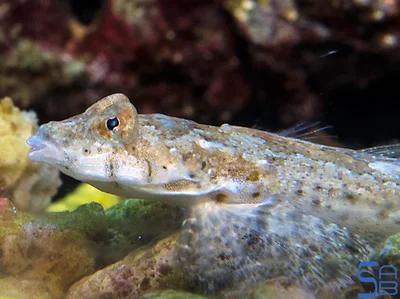
It belongs to Diplogrammus, a small genus set apart from the ordinary dragonets by a loose fold of skin running along the lower side of the body from behind the head nearly to the tail. Its English book name, fold dragonet, is taken from that ridge.
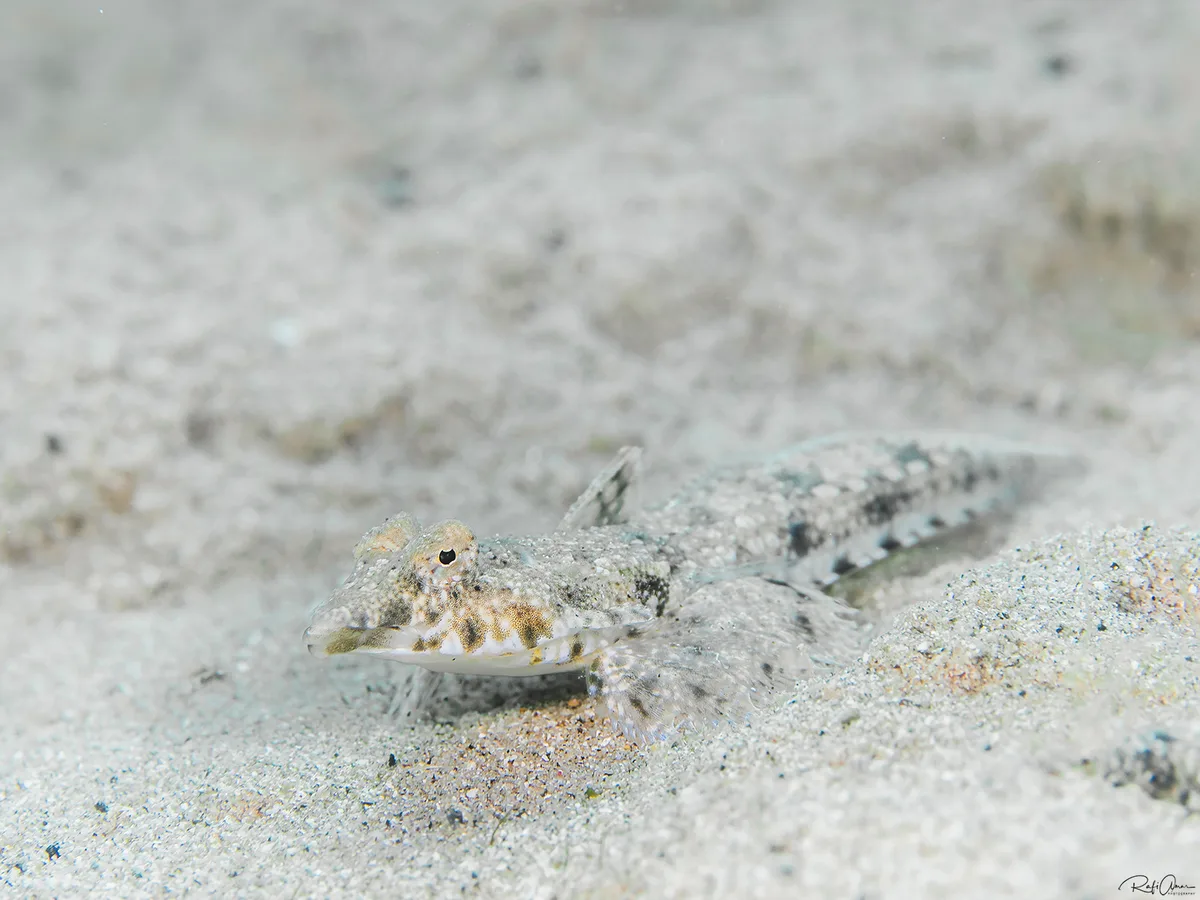
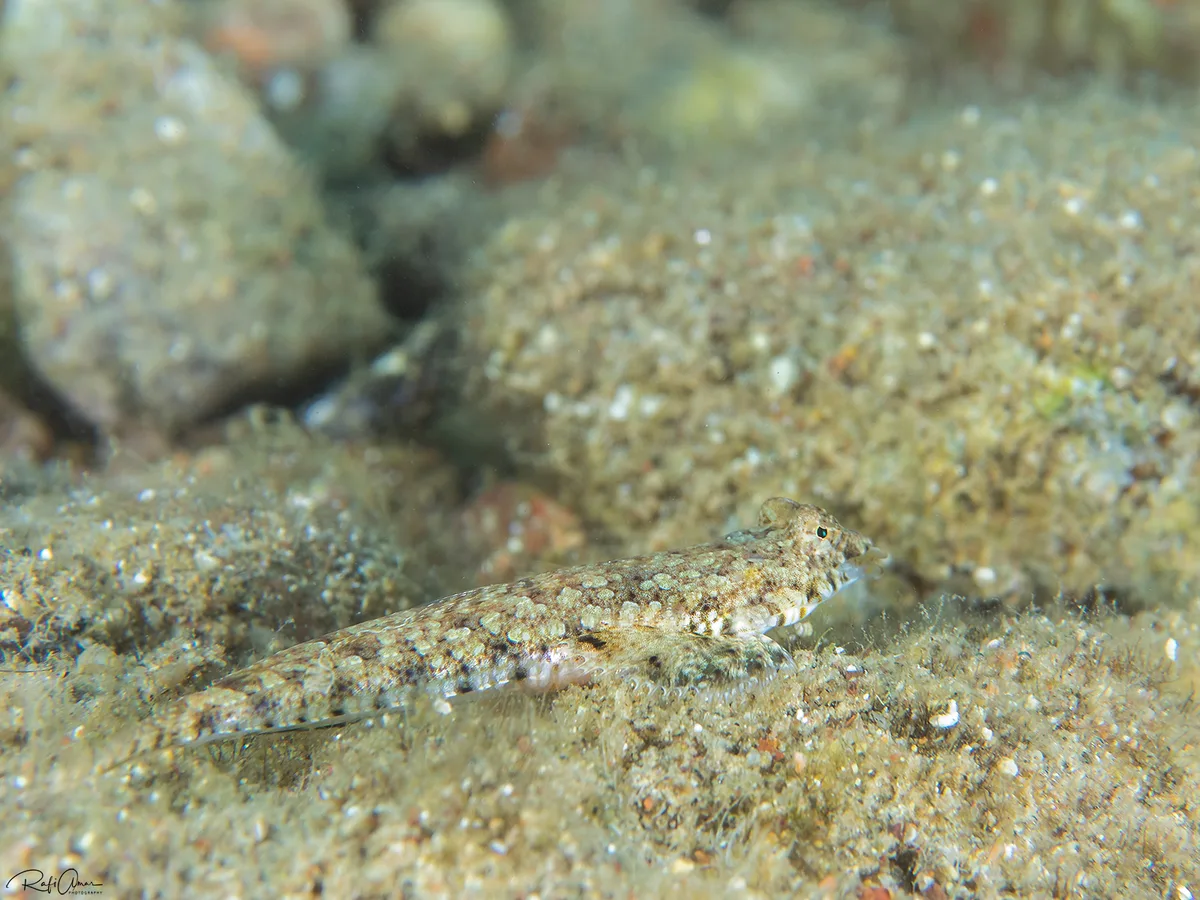
Like all dragonets it has no scales anywhere. Bare skin under a thick, bitter mucus is the whole covering, and the only hard defense is a barbed spine on the rear edge of the gill cover, the one feature every member of the family shares. It picks small crustaceans and worms out of coarse, gritty sand beside shallow reef, walking over the bottom on thick pelvic fins rather than swimming.
At around 7 cm on open sand it is easy to swim past, and most divers do.
The genus. Diplogrammus Gill 1865 - diplo- (twofold) + grammus (line). ETYFish
- loose fold of skin running the length of the lower side of the body
- runs across the sand when disturbed instead of burying itself
- sits on coarse, gritty sand rather than fine silt
- walks on thick pelvic fins
- up to 7 cm