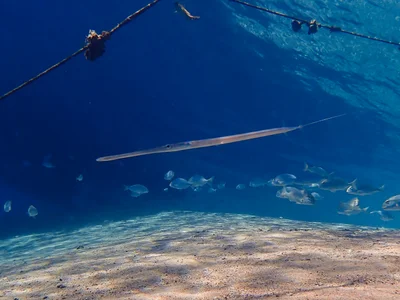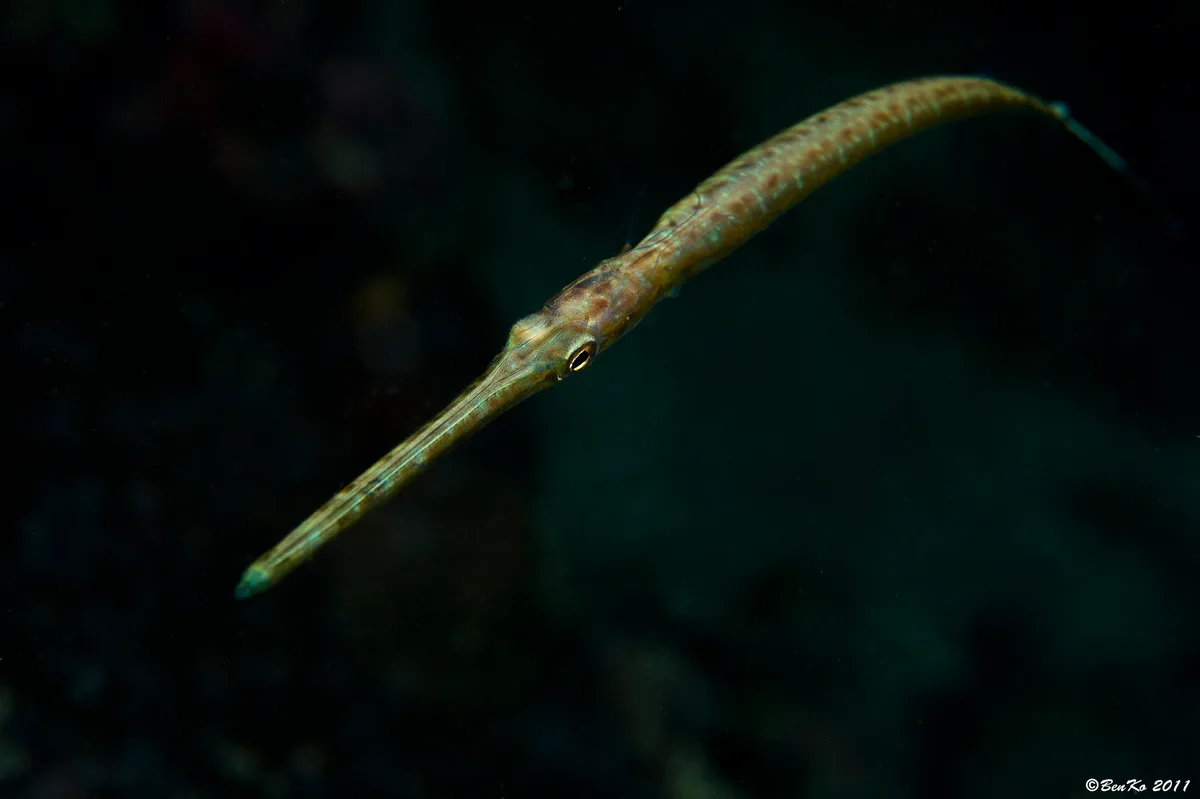
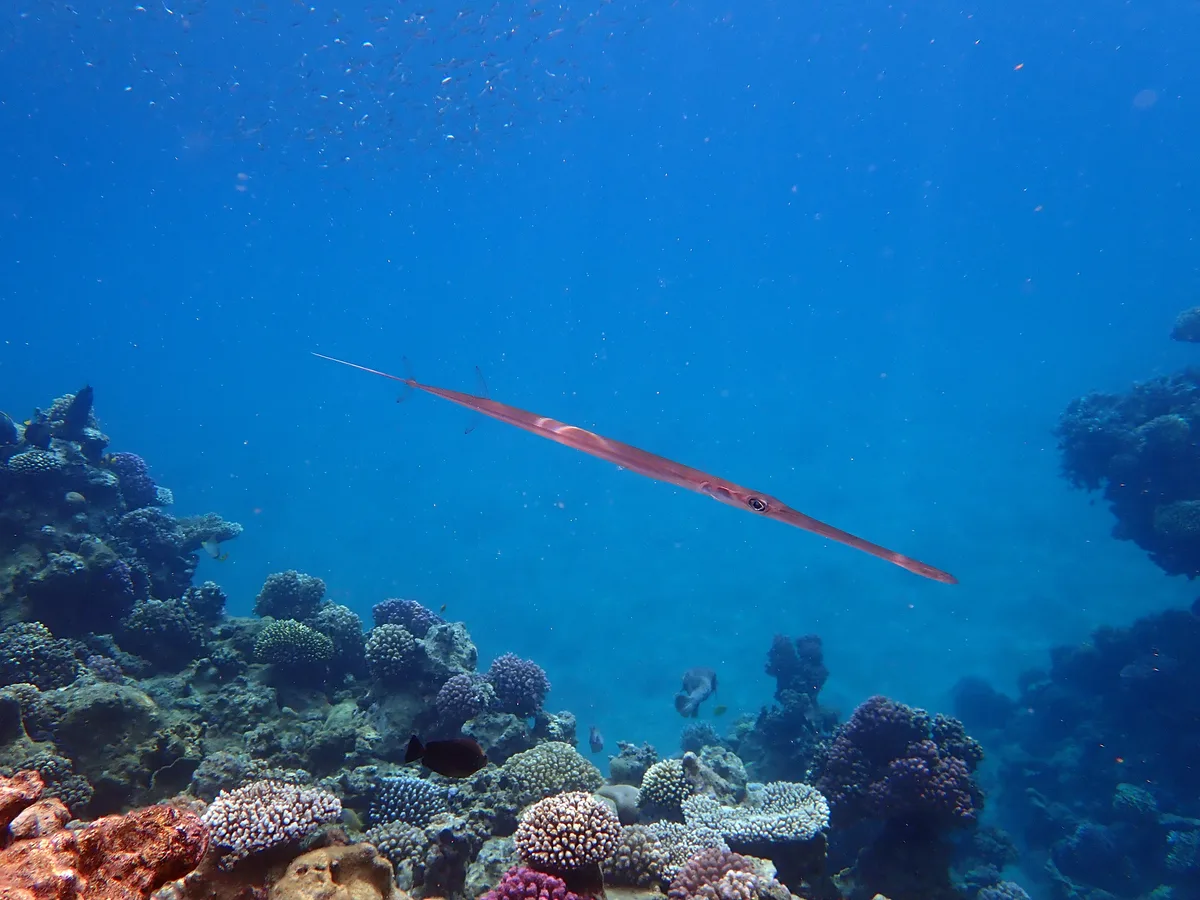
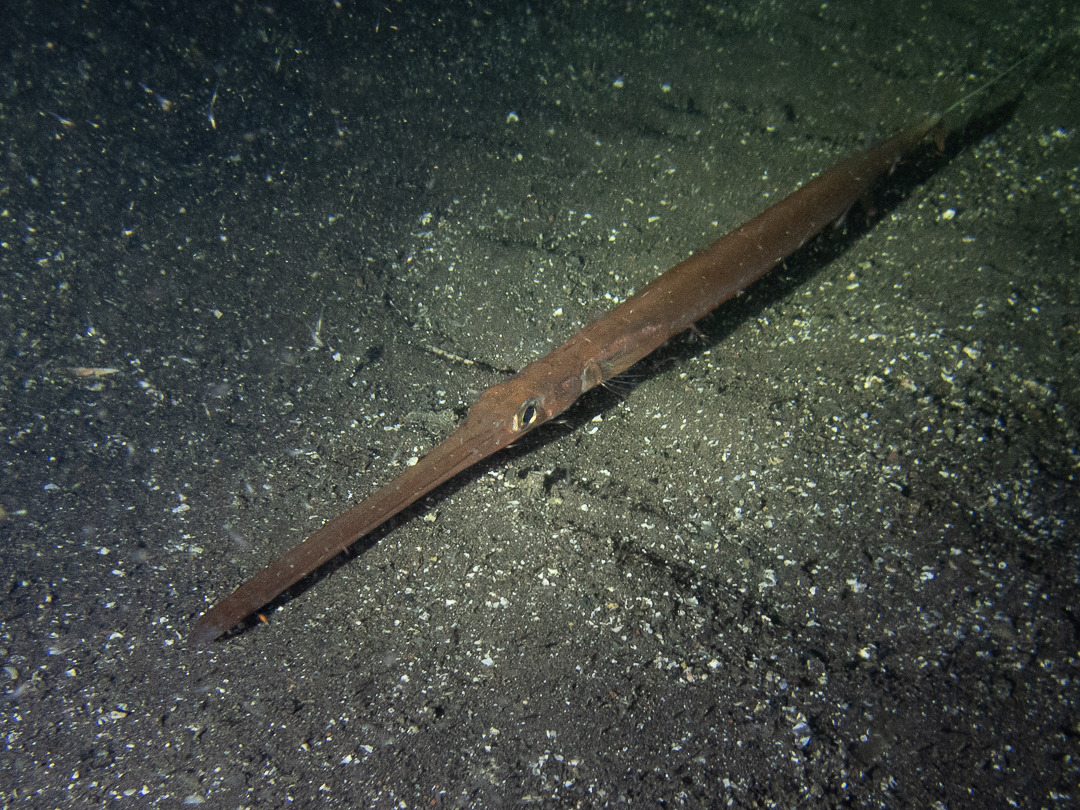
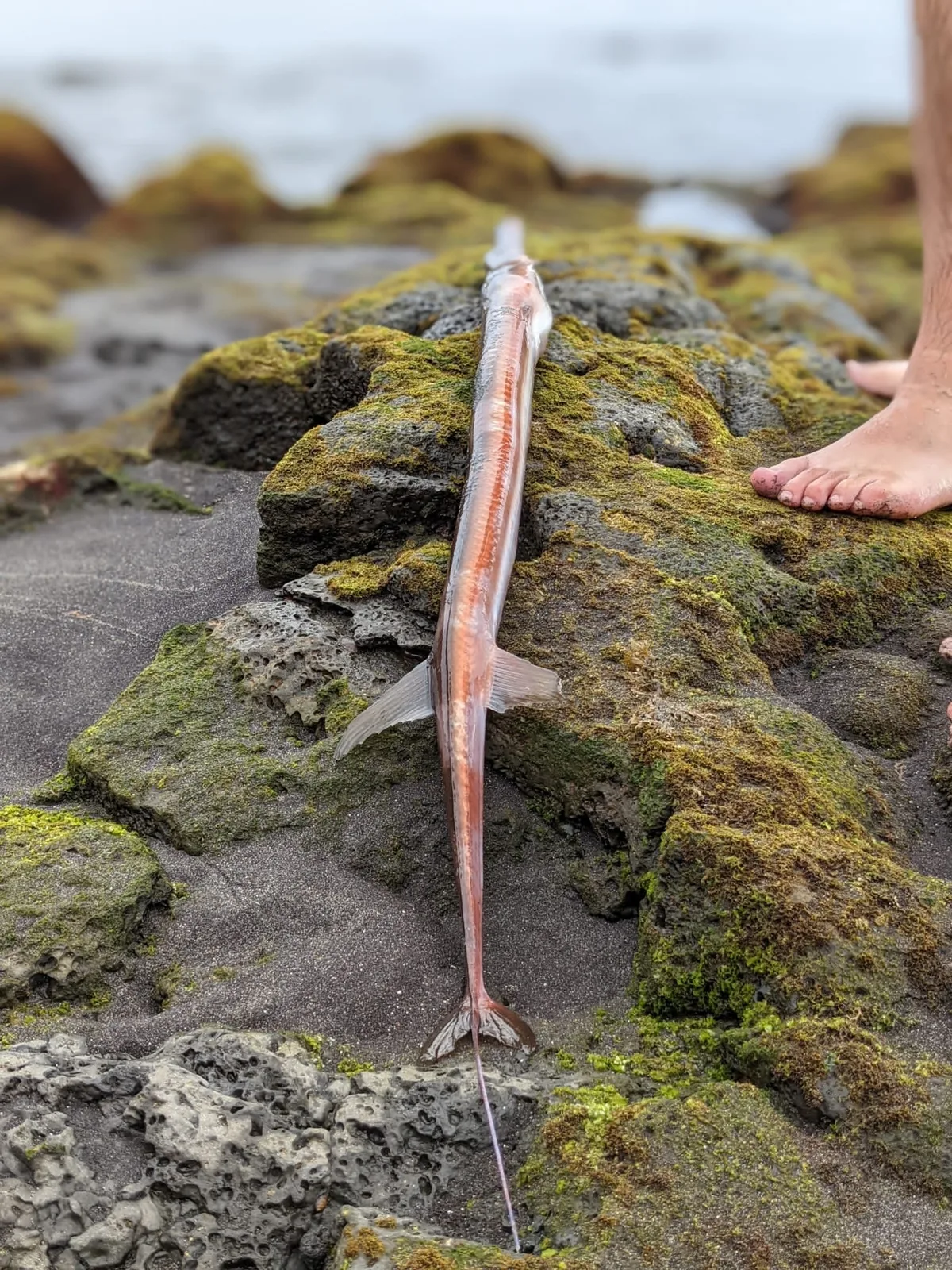
The whip trailing from its tail is not a decoration and not a rudder. It is a sense organ.
Both central rays of the tail are drawn out into a filament that can be a fifth of the animal's length, and the lateral line canal runs out into it. The lateral line is how a fish reads water: a chain of hair cells in a fluid-filled canal that detects pressure changes and flow, which is how fish hold formation in the dark and how a predator senses something moving nearby. Extending it behind the body gives this fish a trailing sensor in water it has already passed through, and in an animal this long and this thin, the far end is a long way from the head.
That matters because the whole design trades everything for length and thinness. A cornetfish is essentially a tube: seen head-on it disappears, which is how it gets close to prey, but it has almost no muscle and cannot turn quickly or accelerate.
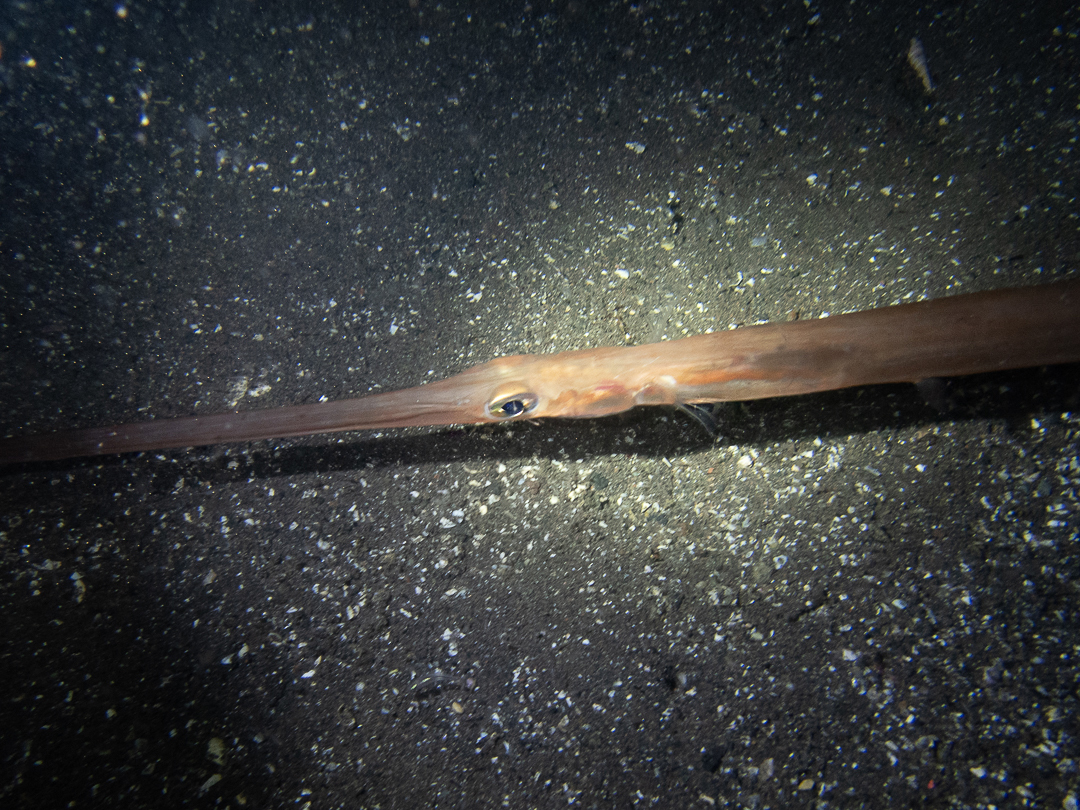
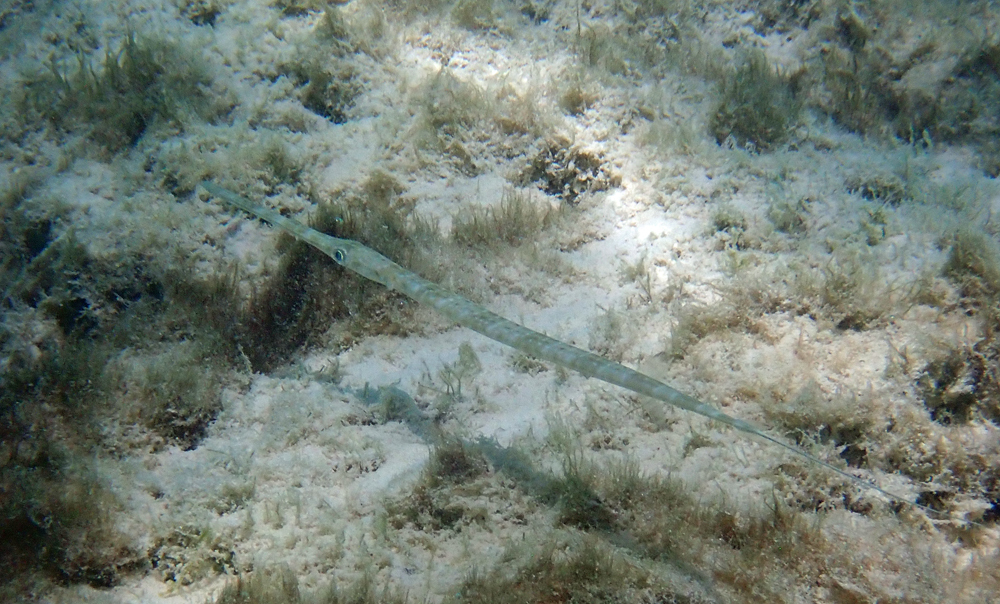
This is the deeper of the two cornetfish here, orange-brown rather than gray-green, without the blue spots its relative carries, and usually below ten meters over sand and rubble.
The genus. Fistularia Linnaeus 1758 - -ia (pertaining to fistula). ETYFish
The species. Fistularia petimba Lacepède 1803 - from Petimbuaba. ETYFish
- orange-brown, with none of the blue spots the smooth cornetfish carries
- long whip-like filament trailing from the middle of the tail
- deeper than its relative, from about ten meters down
- up to 2 m