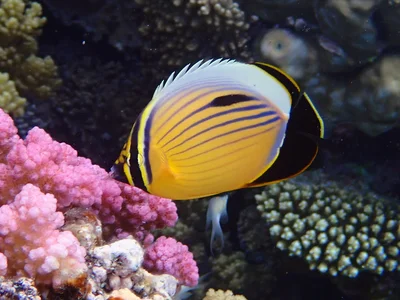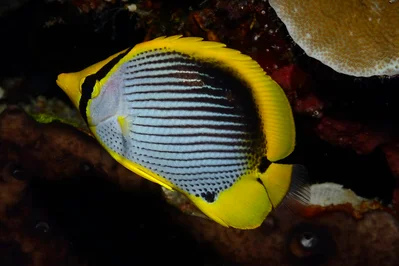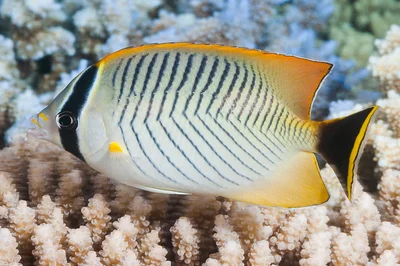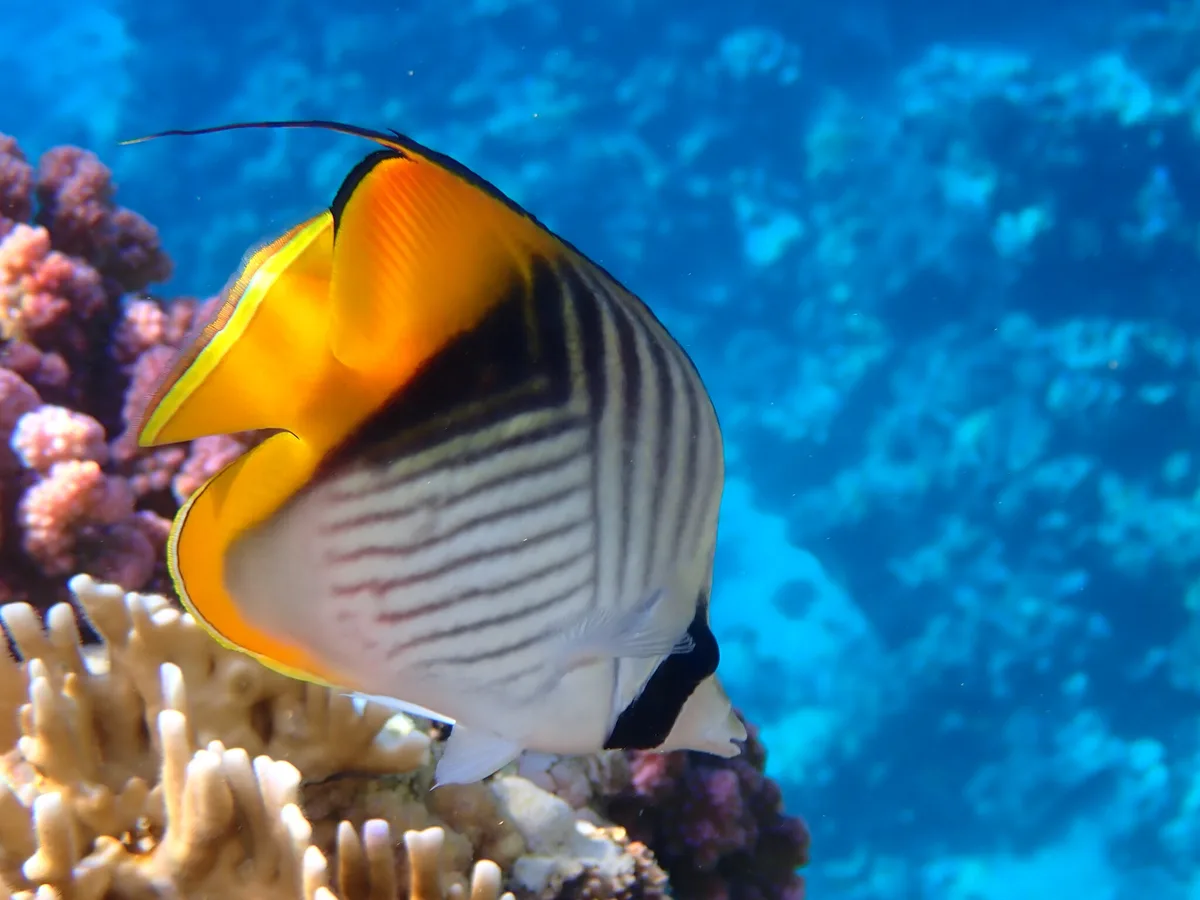
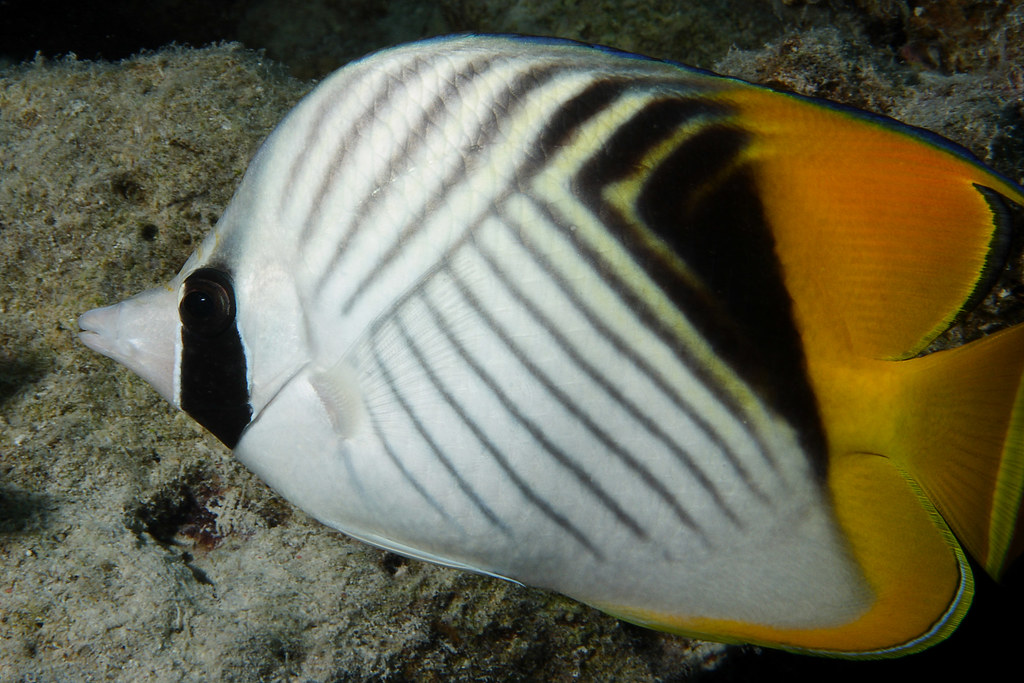
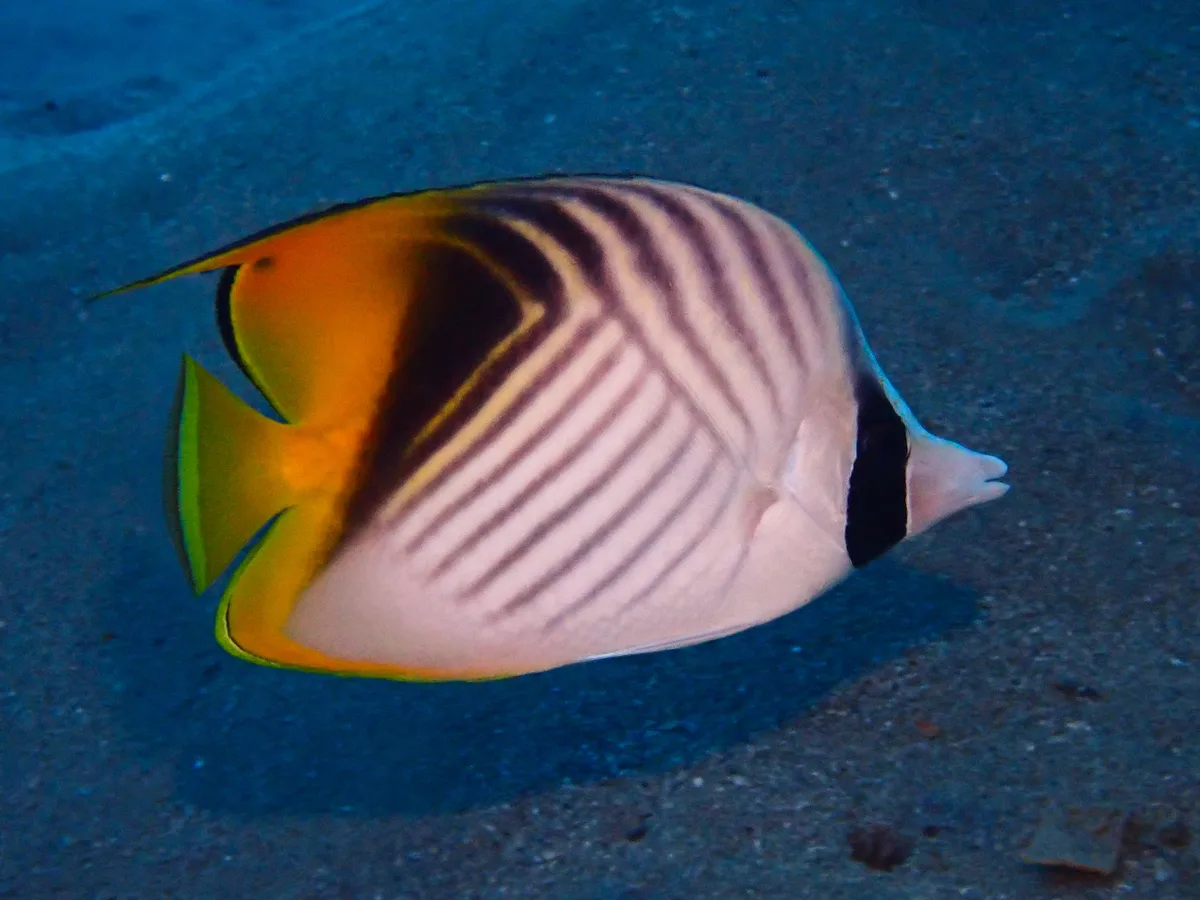
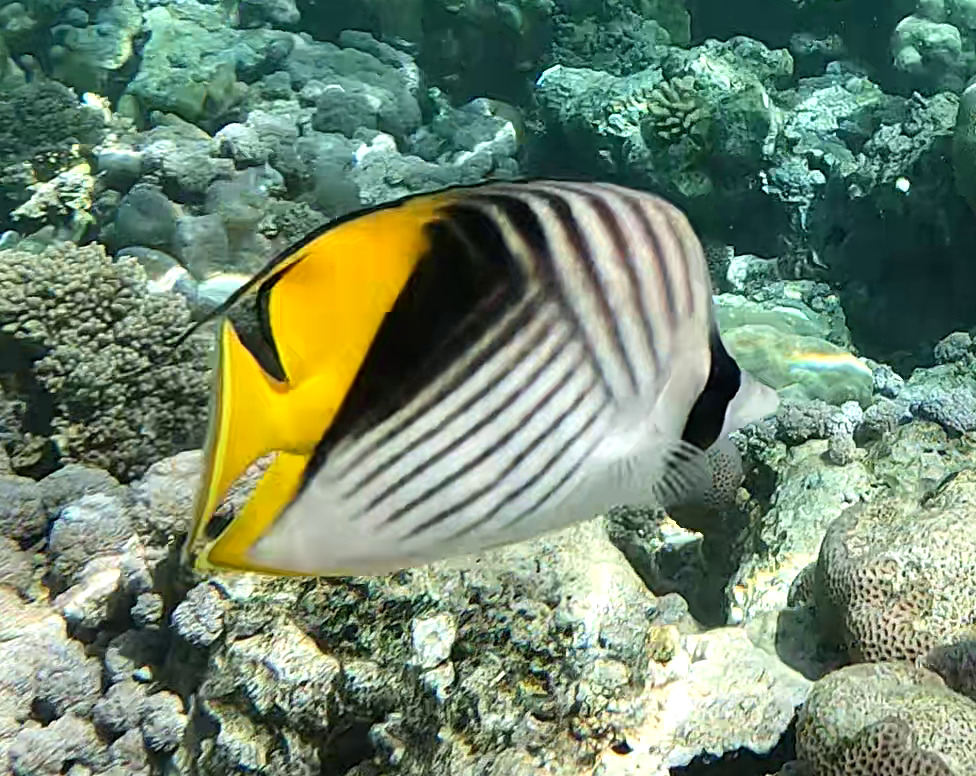
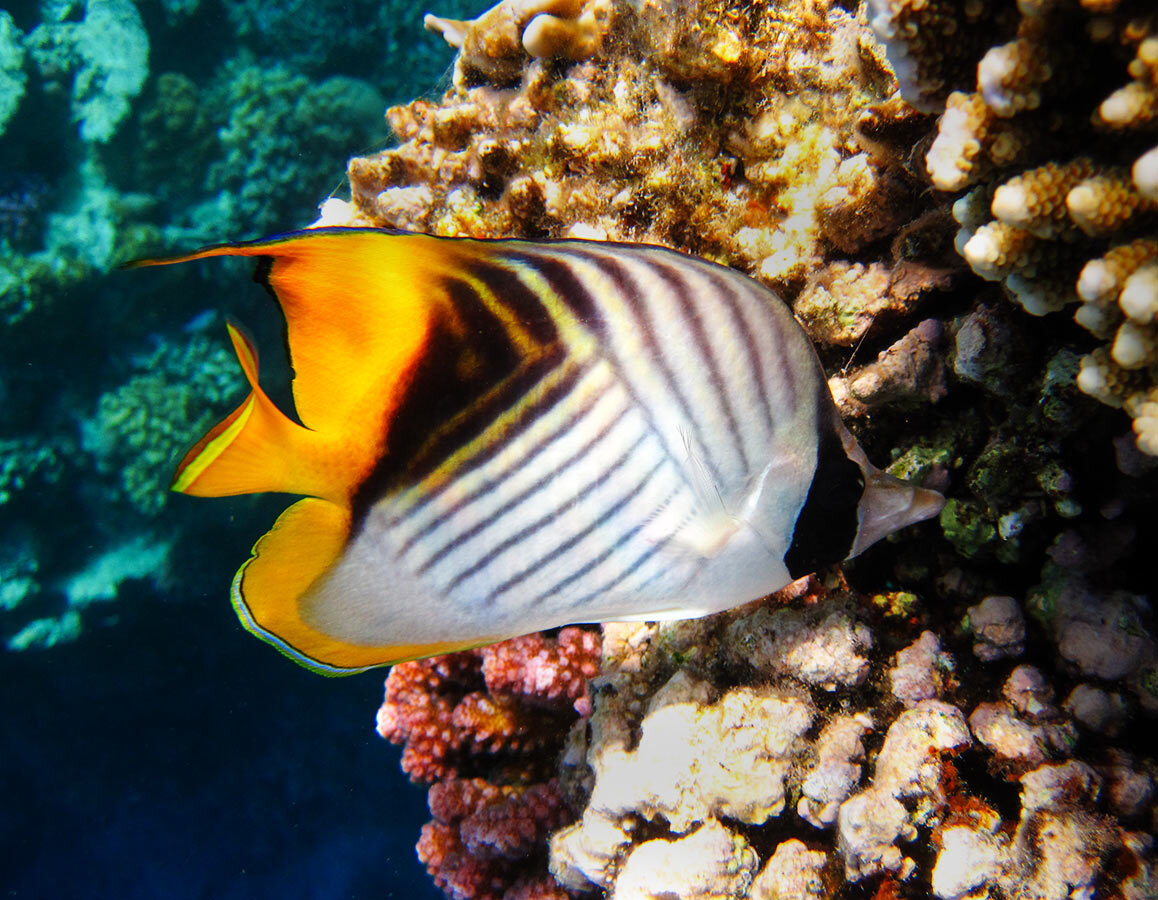
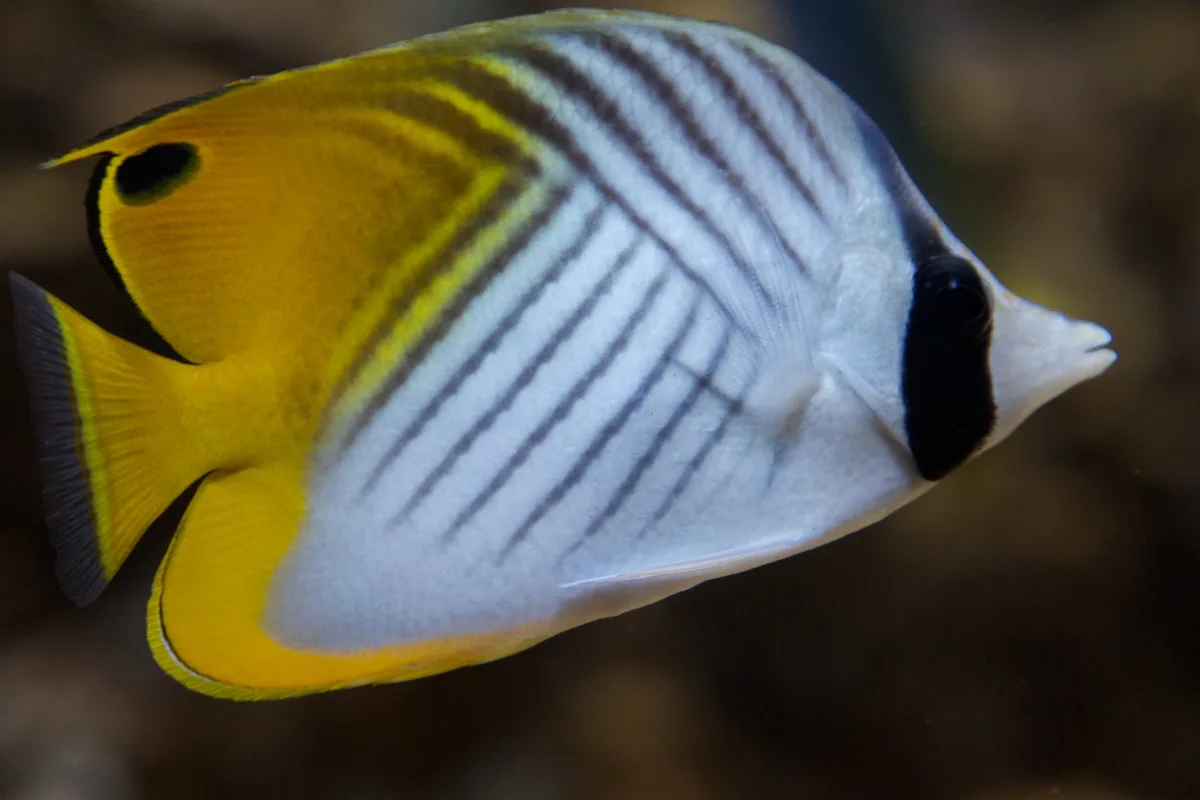
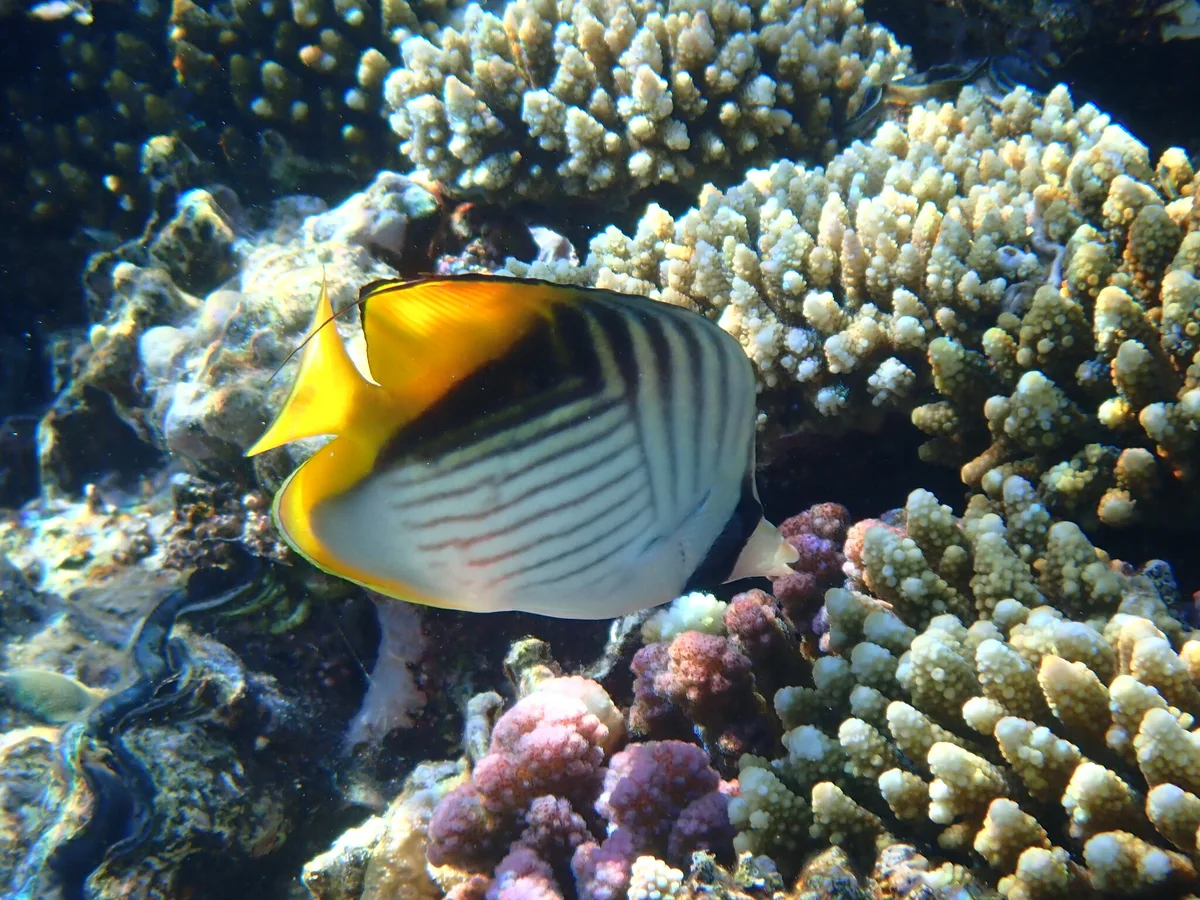
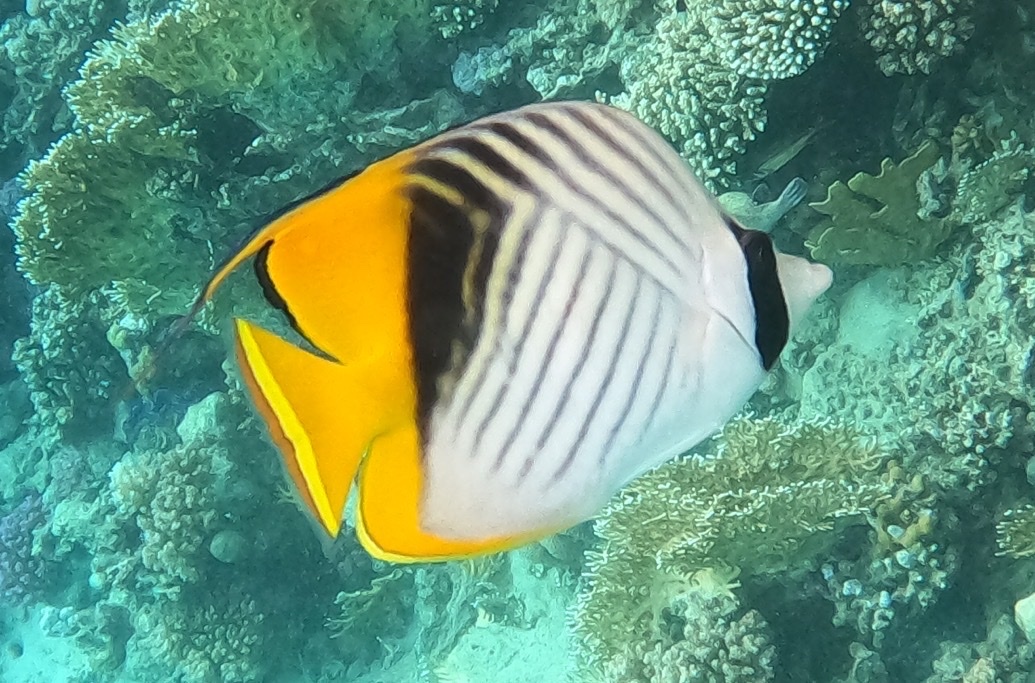
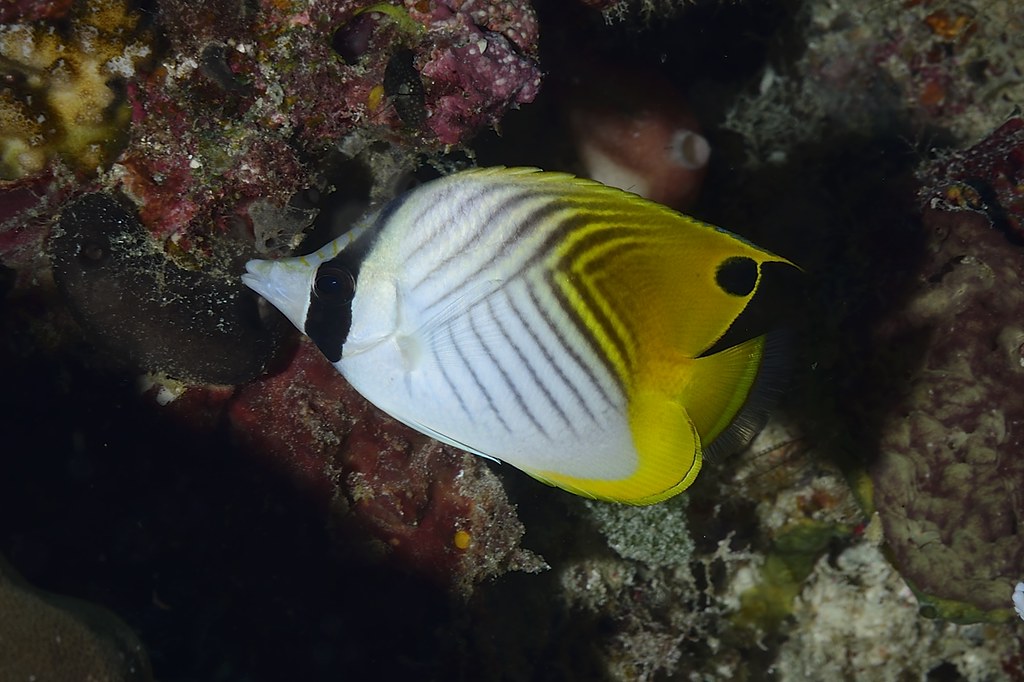
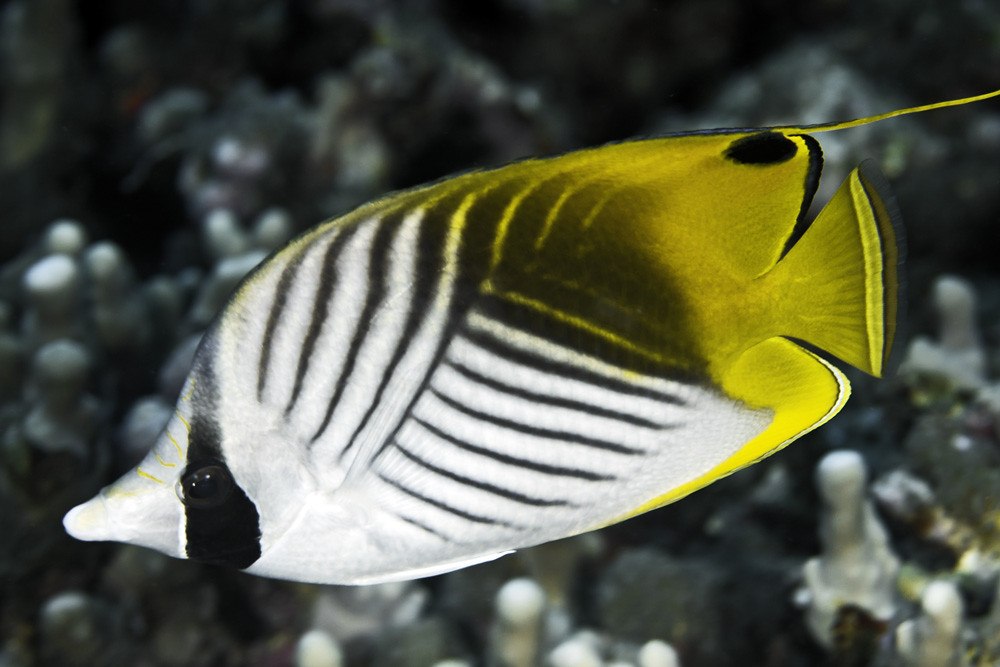
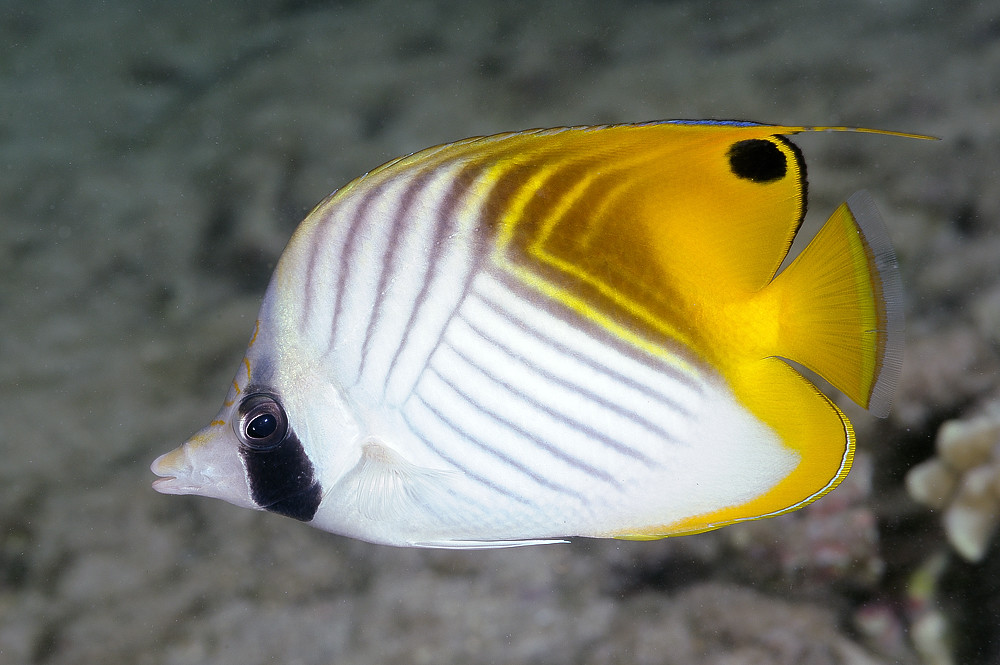
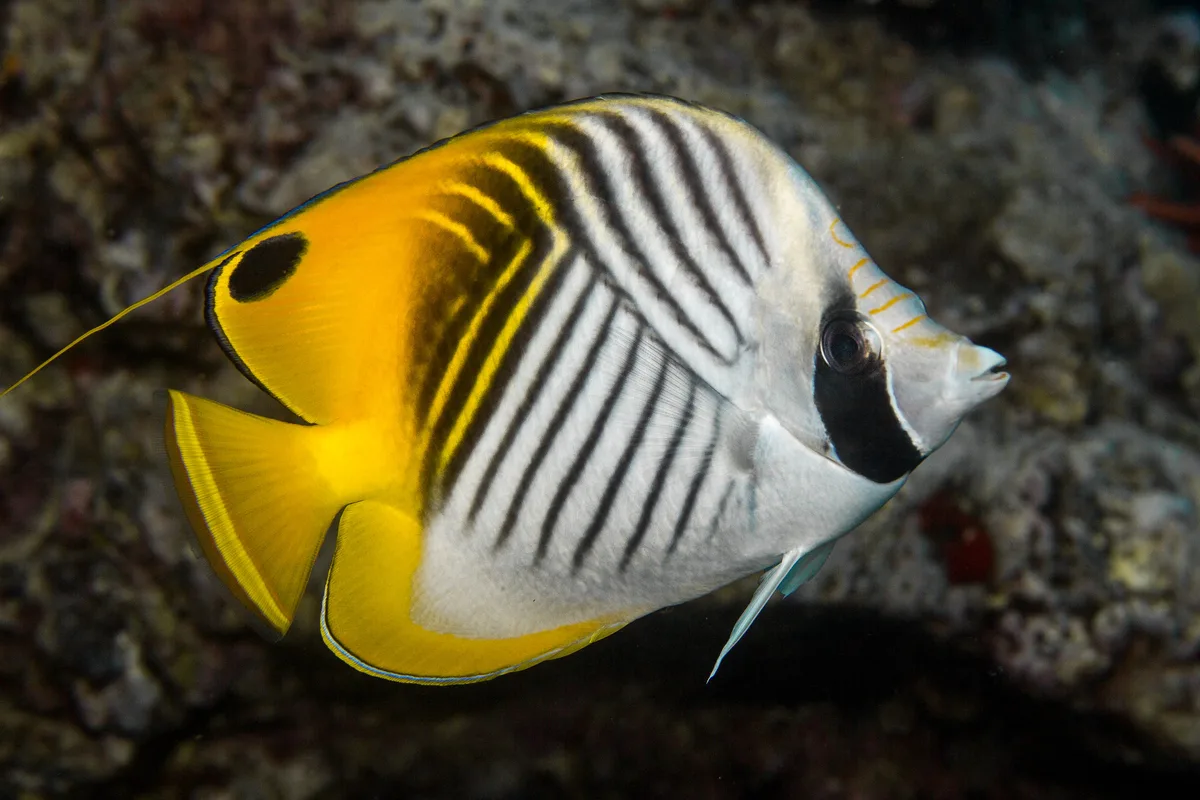
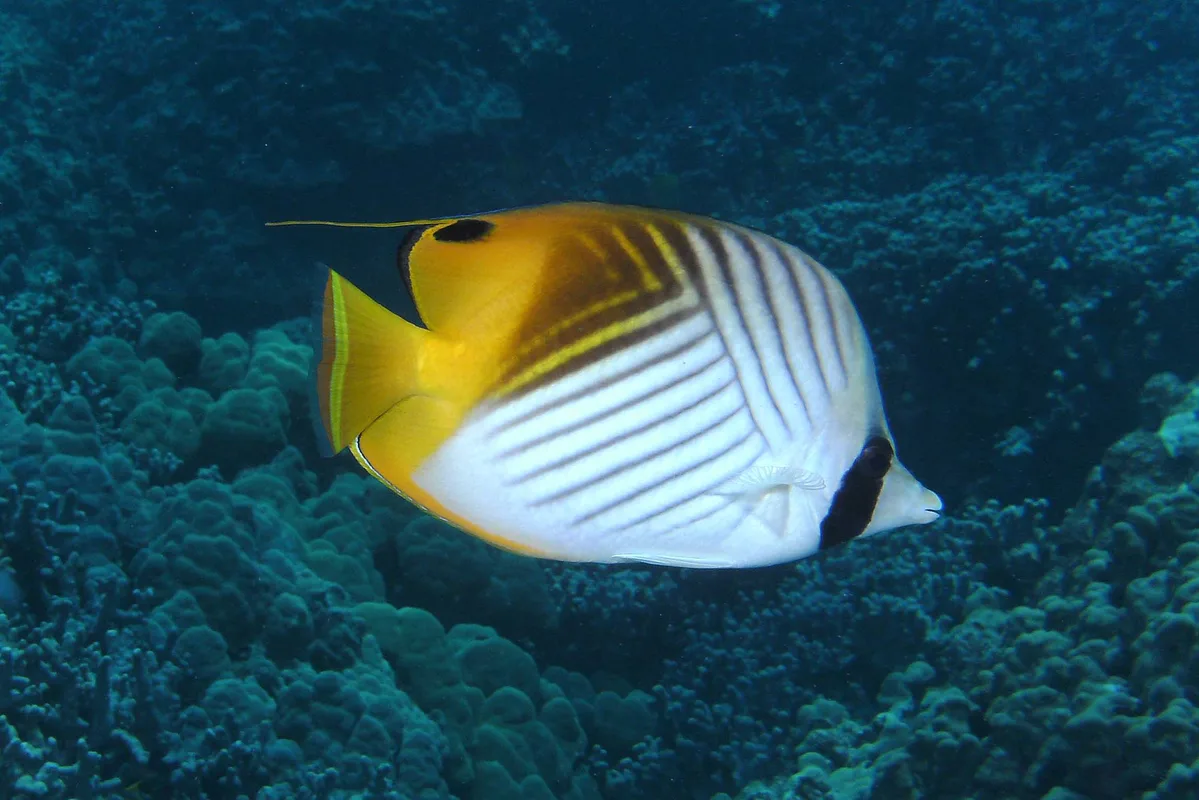
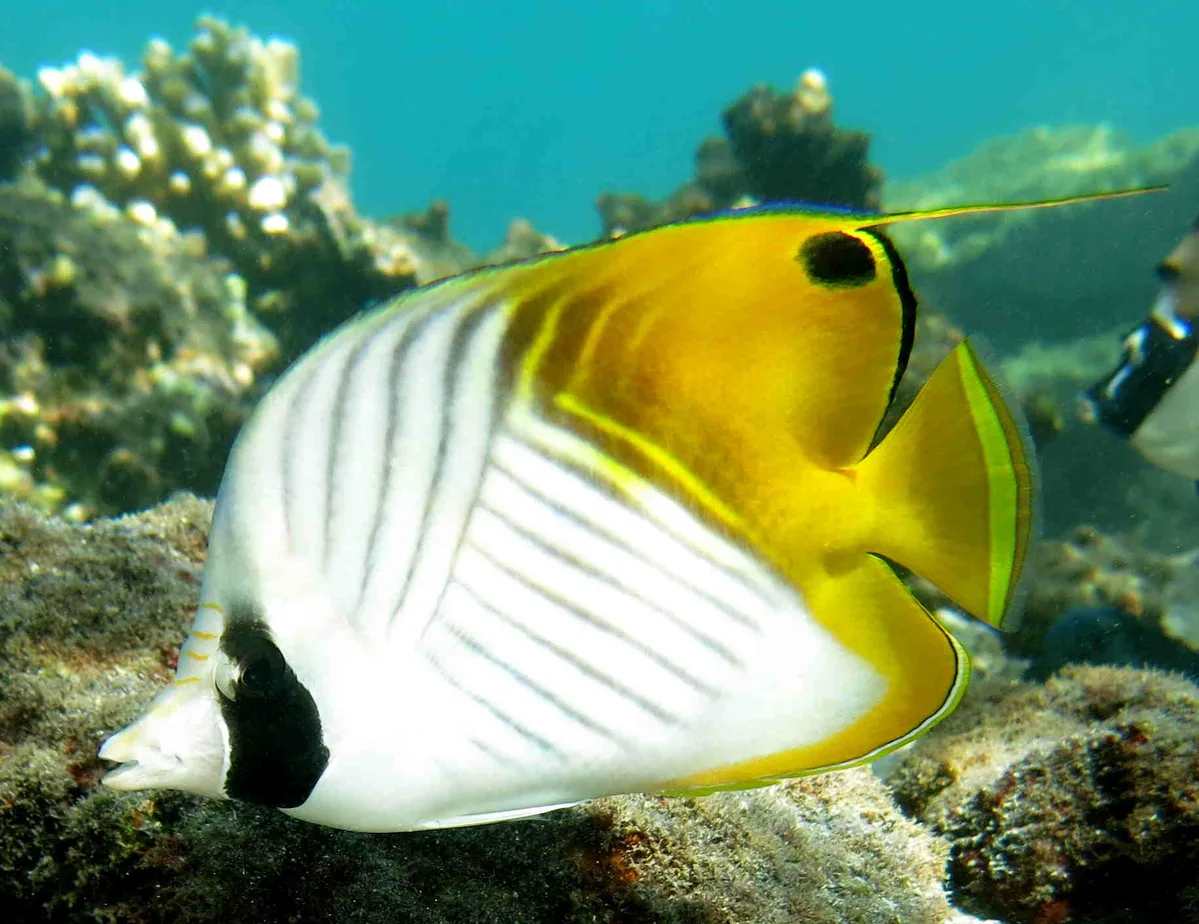
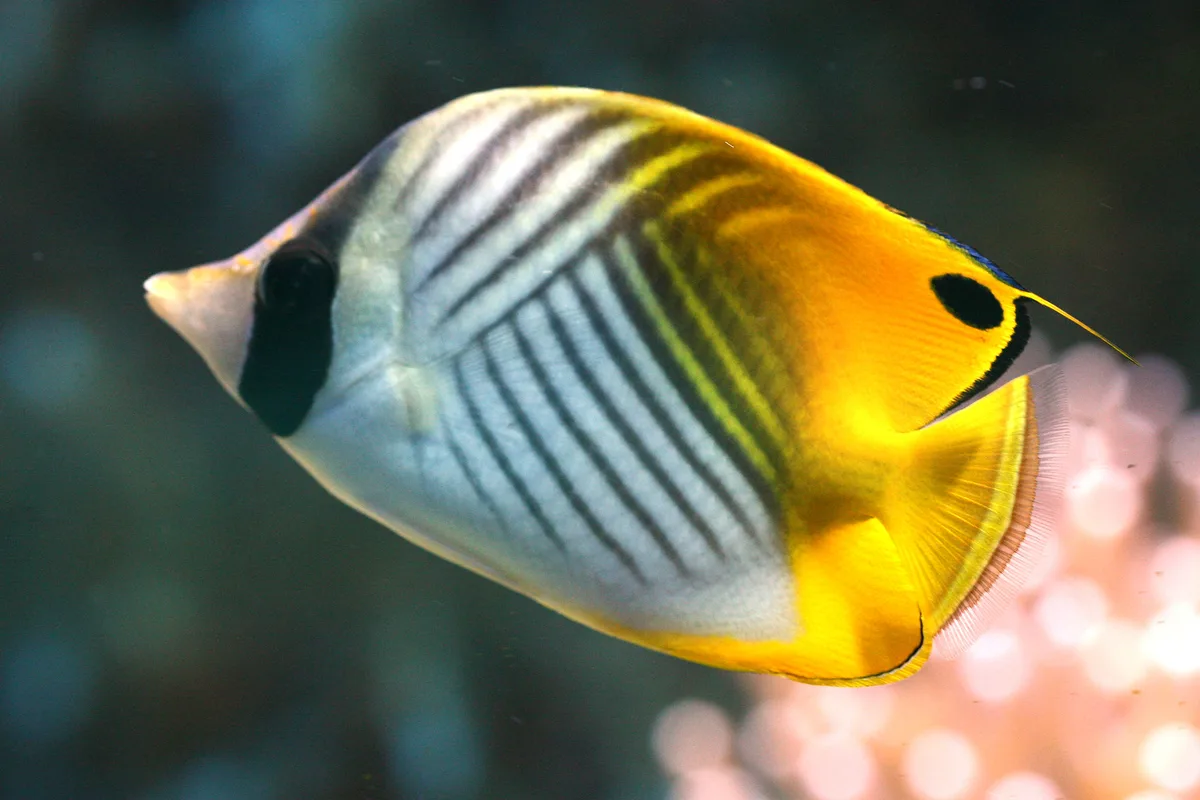
A photograph of this fish tells you which ocean it was taken in. Everywhere from East Africa to Hawaii (🇺🇸 United States), adults carry a black eyespot near the rear tip of the dorsal fin. 🌊 Red Sea adults do not. It is the same species, split by some authors into two subspecies, and the missing spot is a local signature you can check in your own picture.
The body is white with two sets of dark diagonal lines that run in different directions and meet at an angle, so the flank looks stitched rather than striped. The rear of the body and the fins are yellow, a black bar runs down through the eye, and a thin filament trails from the tip of the dorsal fin. That thread is where the name comes from, and it is usually the first thing that catches the eye when the fish turns.
The other common striped butterflyfish here, the diagonal butterflyfish, is yellow rather than white and its stripes all run the same way. If the lines cross, you are looking at this one.
It is a generalist, and on a damaged reef that matters more than anything else on this page. It tears pieces off polychaete worms, bites the tentacles of anemones, takes coral polyps and grazes algae, and it works rubble and weedy ground as readily as living coral. When bleaching kills a reef and the strict coral feeders vanish within a season, this fish is still there, which is why it is one of the most reliably seen butterflyfishes in the 🌊 Red Sea, from the shallows down to about 60 m.
Singles, pairs and loose roaming groups are all normal. It is harmless to divers, but it appears on the list of reef fishes implicated in ciguatera poisoning, so it is not a fish to eat.
The genus. Chaetodon Linnaeus 1758 - chaeto- (bristle) + odon (tooth). ETYFish
The species. Chaetodon auriga Forsskål 1775 - coachman. ETYFish
- two sets of dark diagonal lines meeting at an angle on a white body
- trailing filament from the rear tip of the dorsal fin
- black bar through the eye, yellow rear body and fins
- Red Sea adults have no black eyespot on the dorsal fin
- up to 25 cm
Why it's threatened
Threat classification from the IUCN Red List.