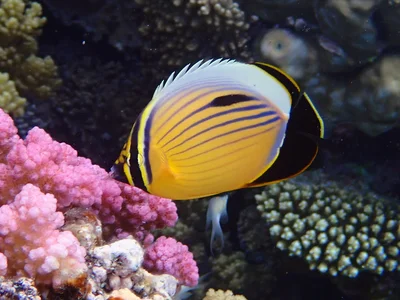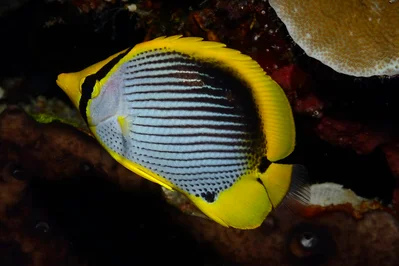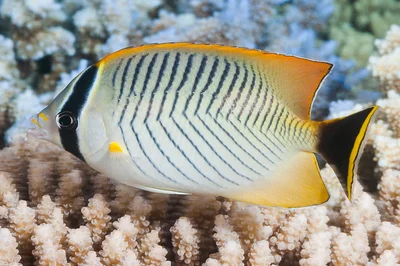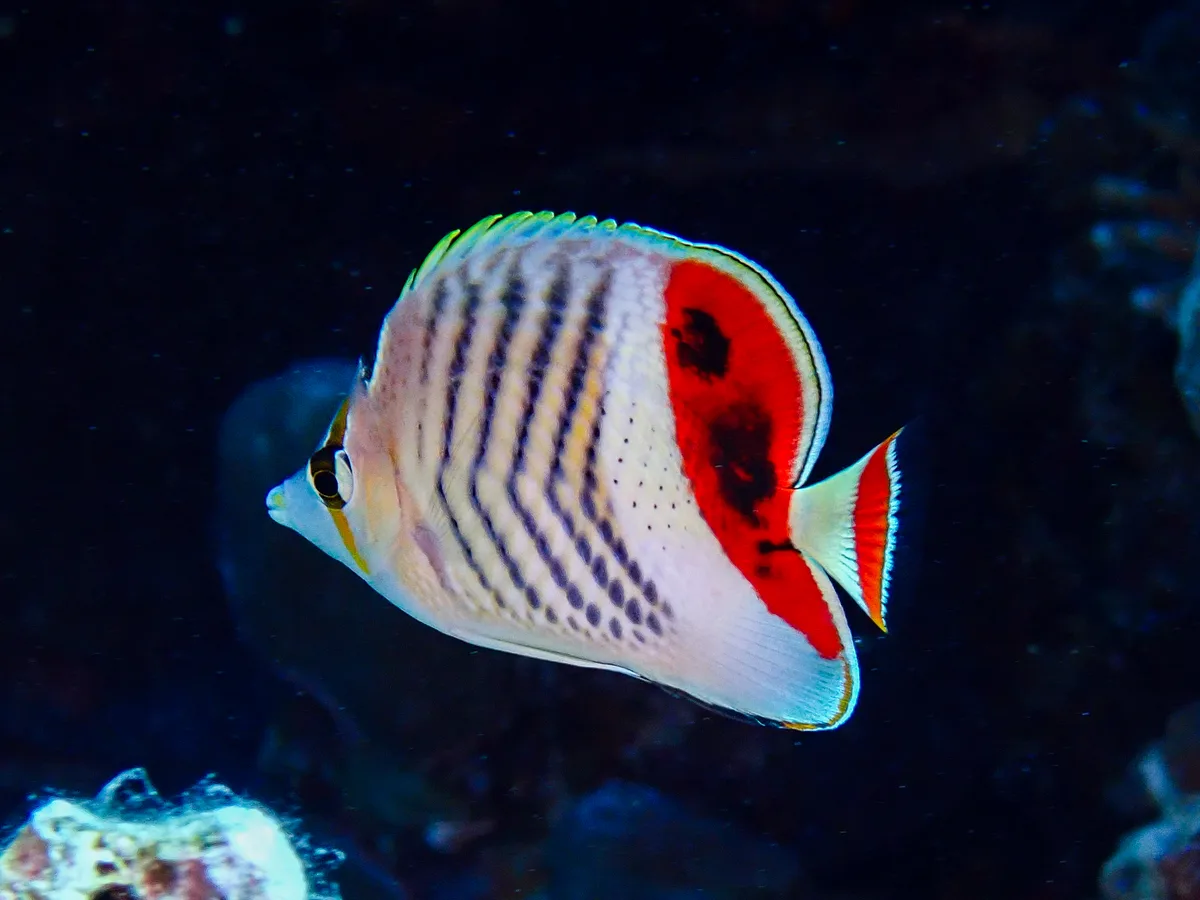
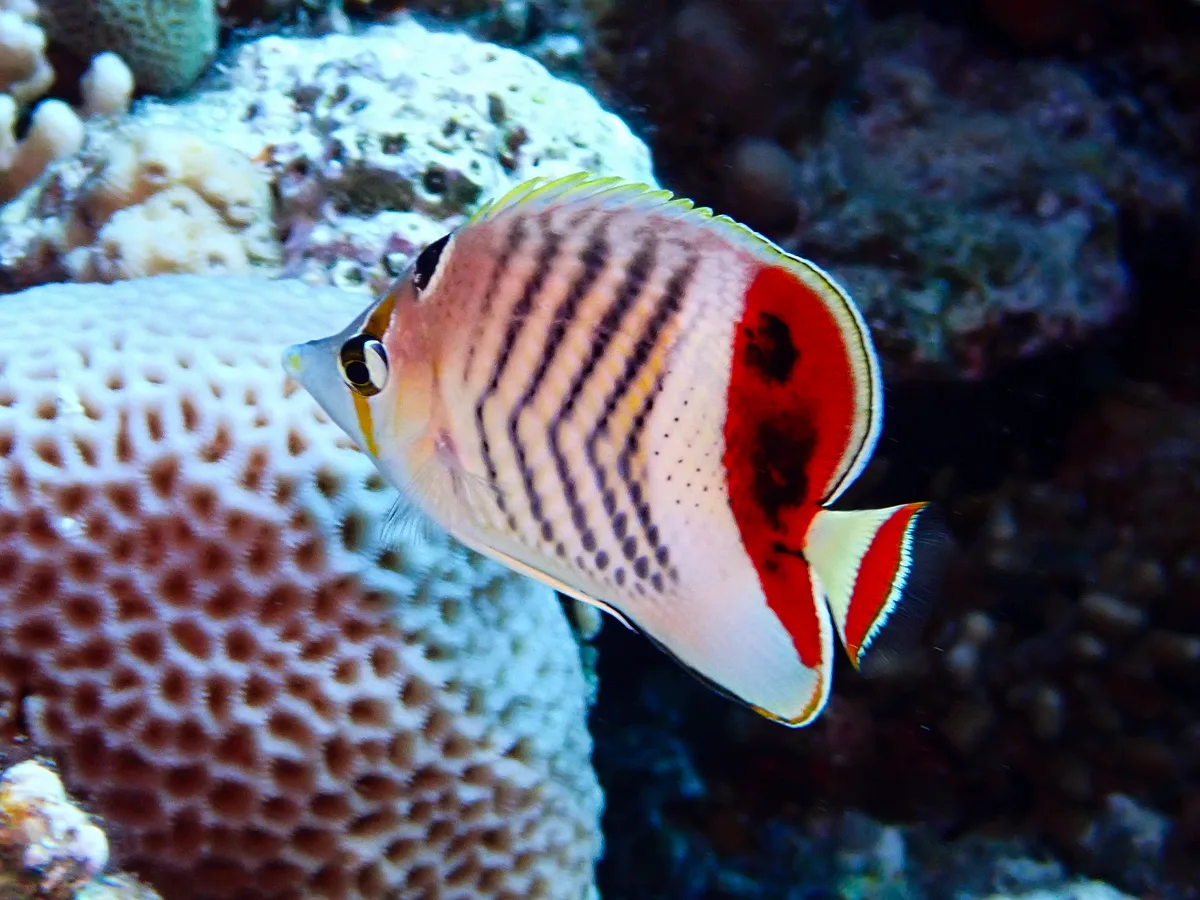
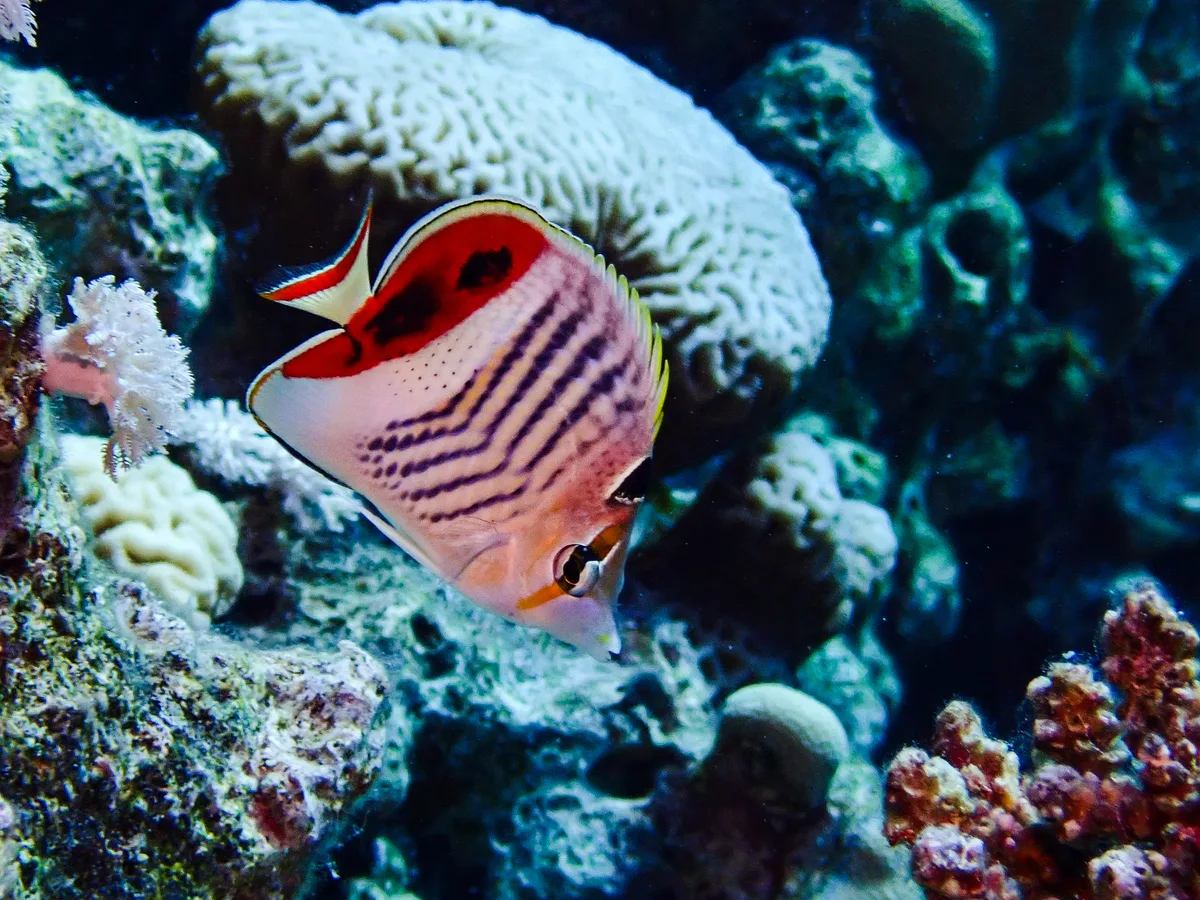
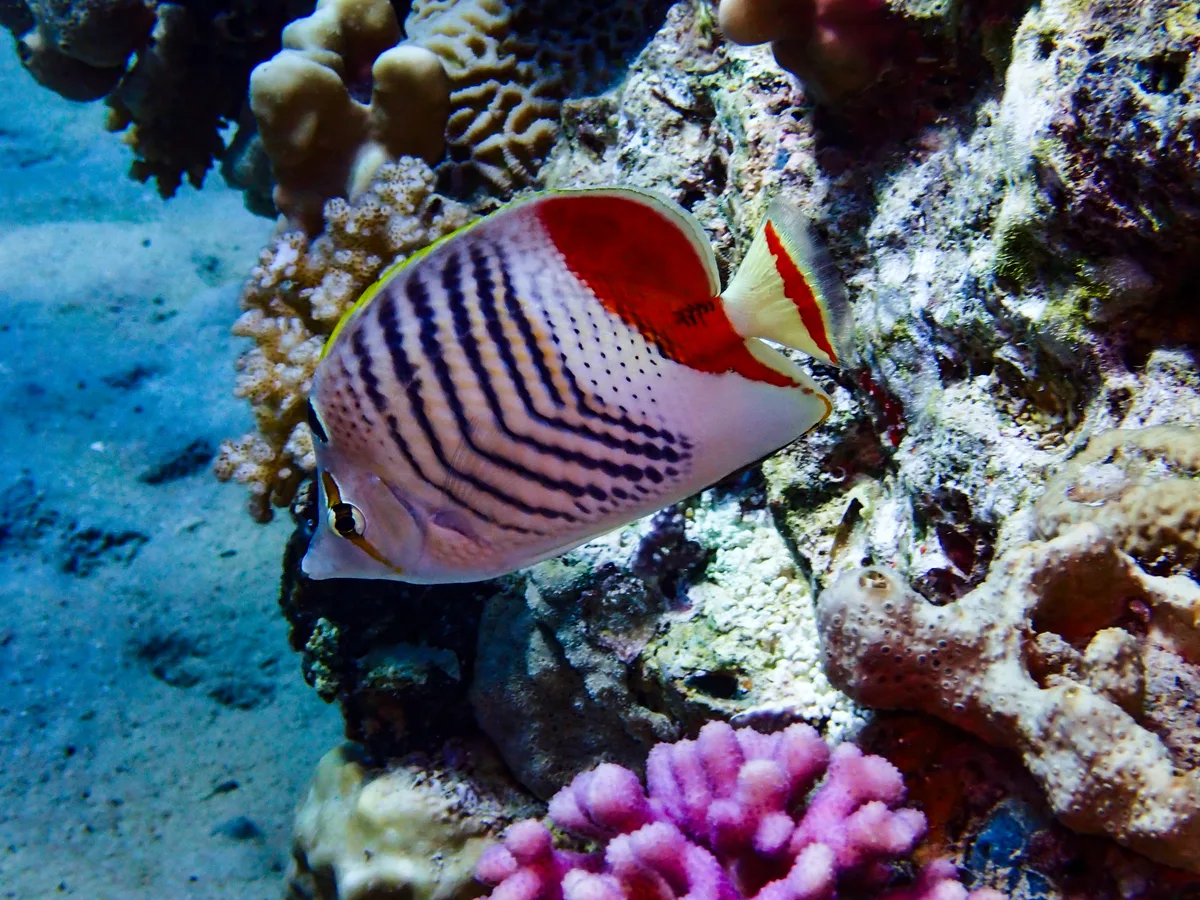
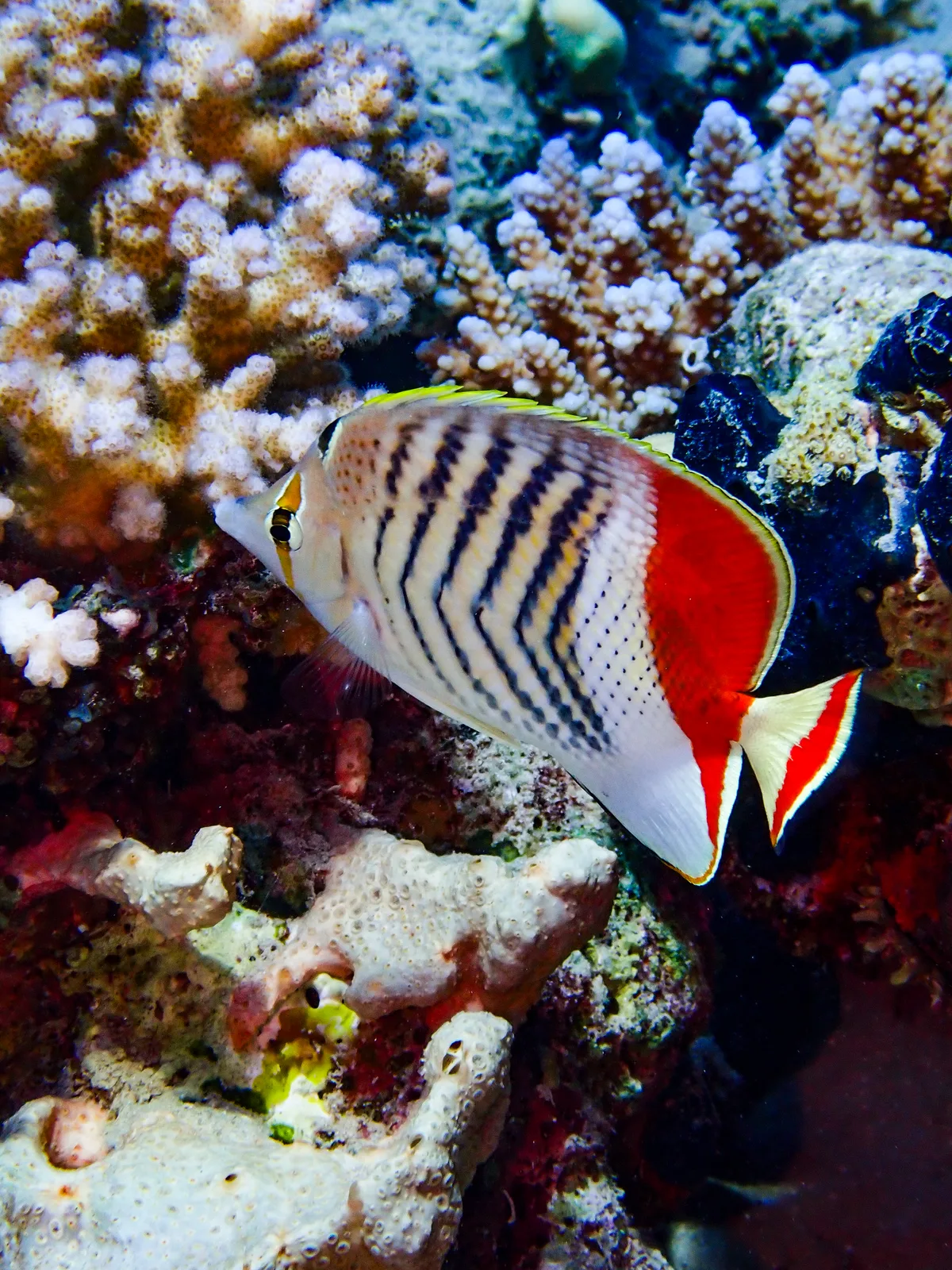
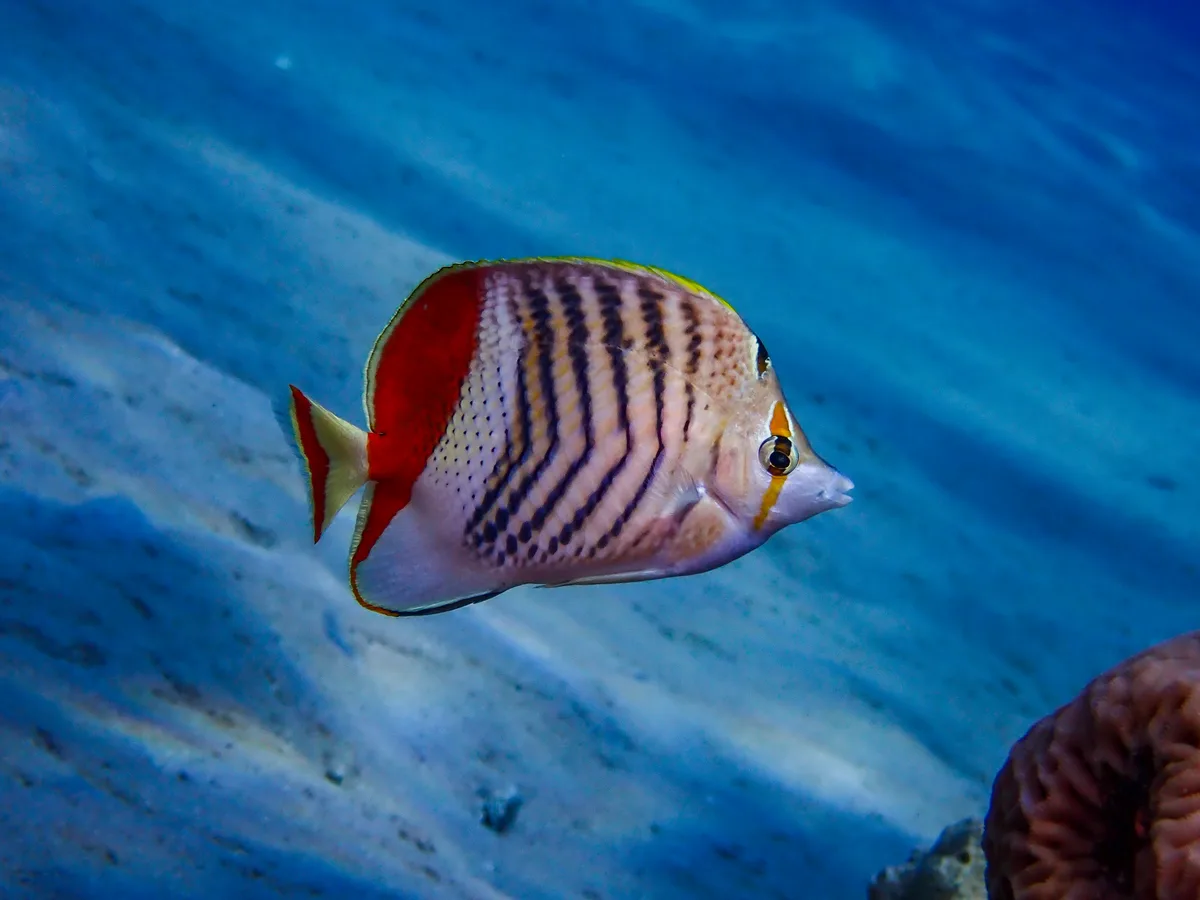
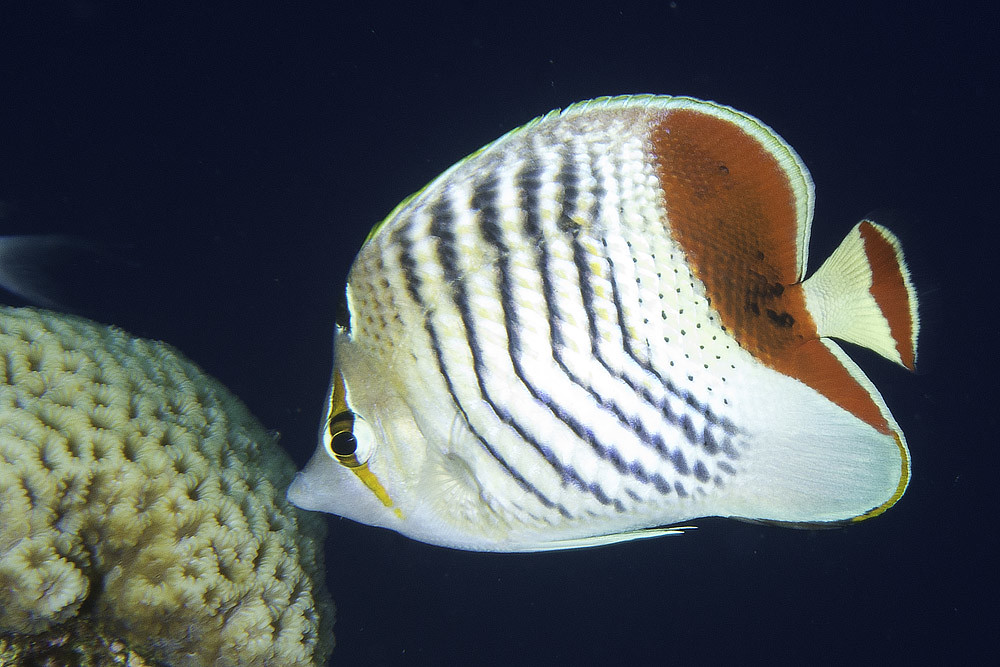
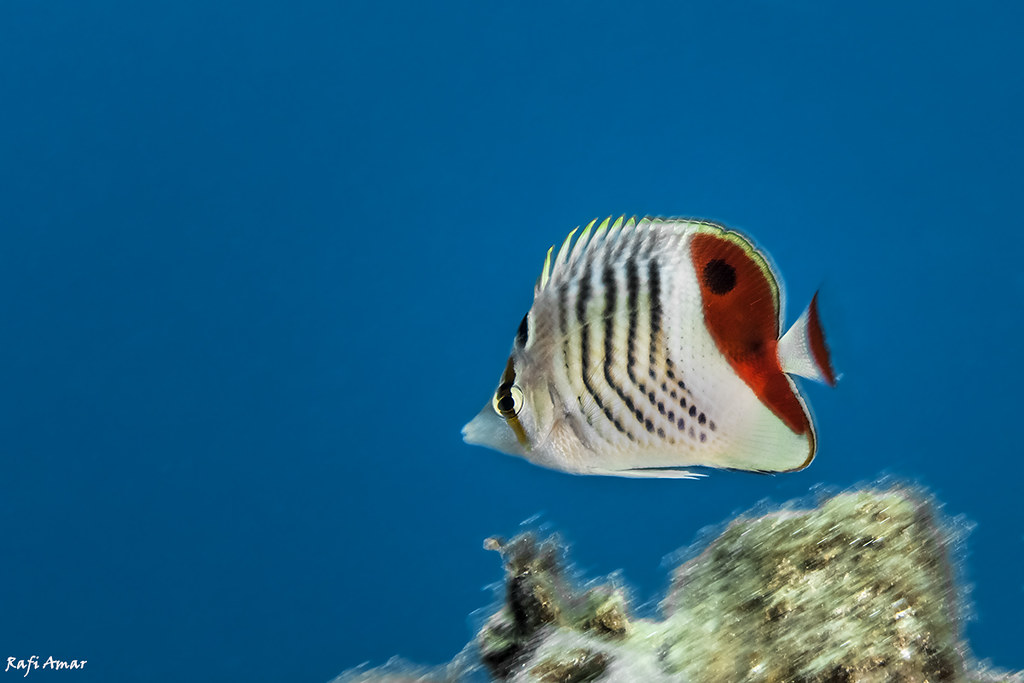
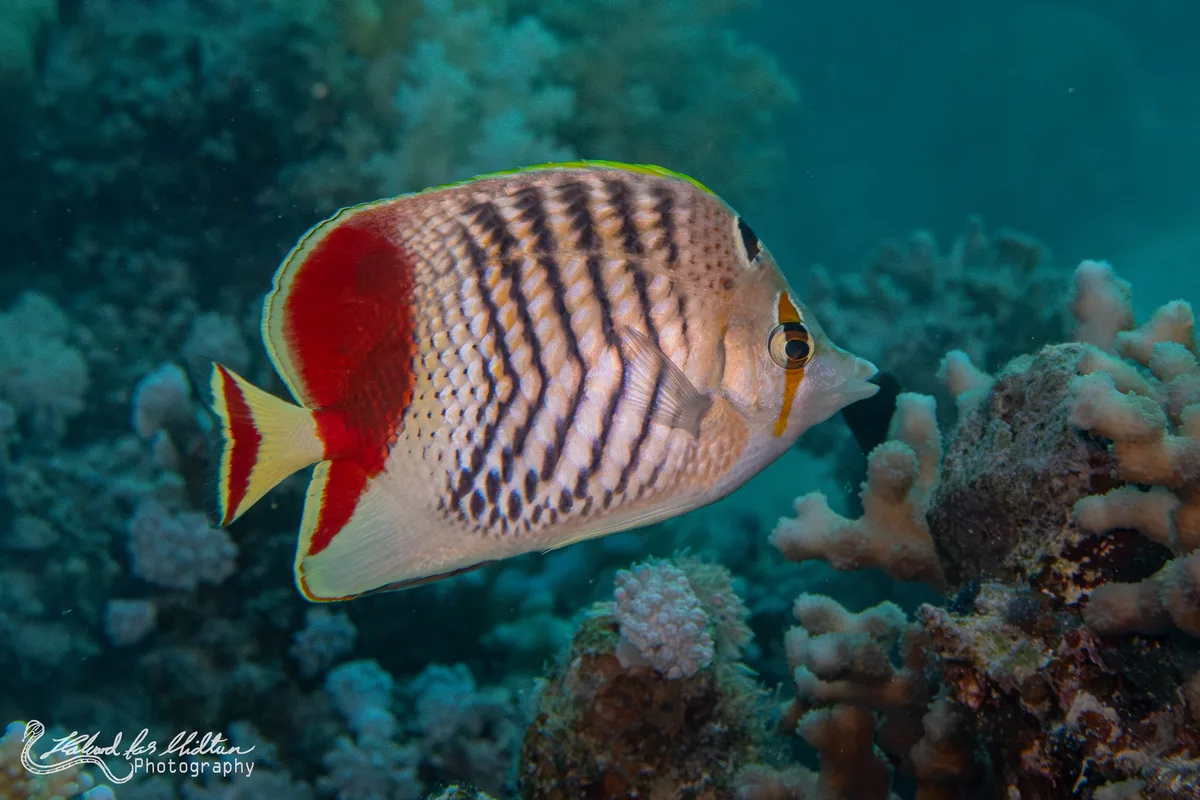
The butterflyfish you meet most often here, and one you cannot meet anywhere else. Apart from the 🌊 Gulf of Aden, this species lives in the 🌊 Red Sea and nowhere else on earth.
What keeps it common is that it is not a specialist. Many butterflyfish eat coral polyps and almost nothing else, and after a bleaching event those species disappear from a reef along with the coral. This one takes polyps, but also algae, polychaete worms and small crustaceans, and reef surveys through repeated bleaching have watched the generalists hold their numbers while the coral-only feeders crash.
They move in pairs, and the pairs are long term. Two fish work the same stretch of reef side by side for years, and a fish that loses its partner gets pushed around by the neighbors until it finds another.
The black cap over the head with its white edge is the quickest mark, and the orange-red wash across the back half of the body separates it from every other butterflyfish in this sea.
The genus. Chaetodon Linnaeus 1758 - chaeto- (bristle) + odon (tooth). ETYFish
The species. Chaetodon paucifasciatus Ahl 1923 - pauci- (few) + fasciatus (banded). ETYFish
- white body crossed by fine black chevrons
- orange-red wash over the rear body and the back of the dorsal and anal fins
- black cap on the nape edged in white, and a black bar through the eye
- red bar across the tail fin
- up to 14 cm
Why it's threatened
There appear to be no major threats to this species. Collection is limited and is not considered to be impacting the global population.
Threat classification from the IUCN Red List.