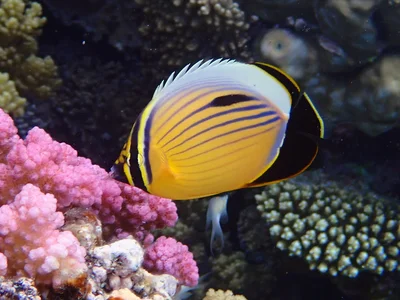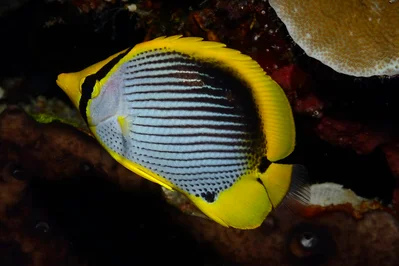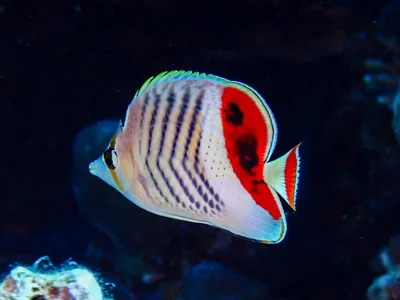
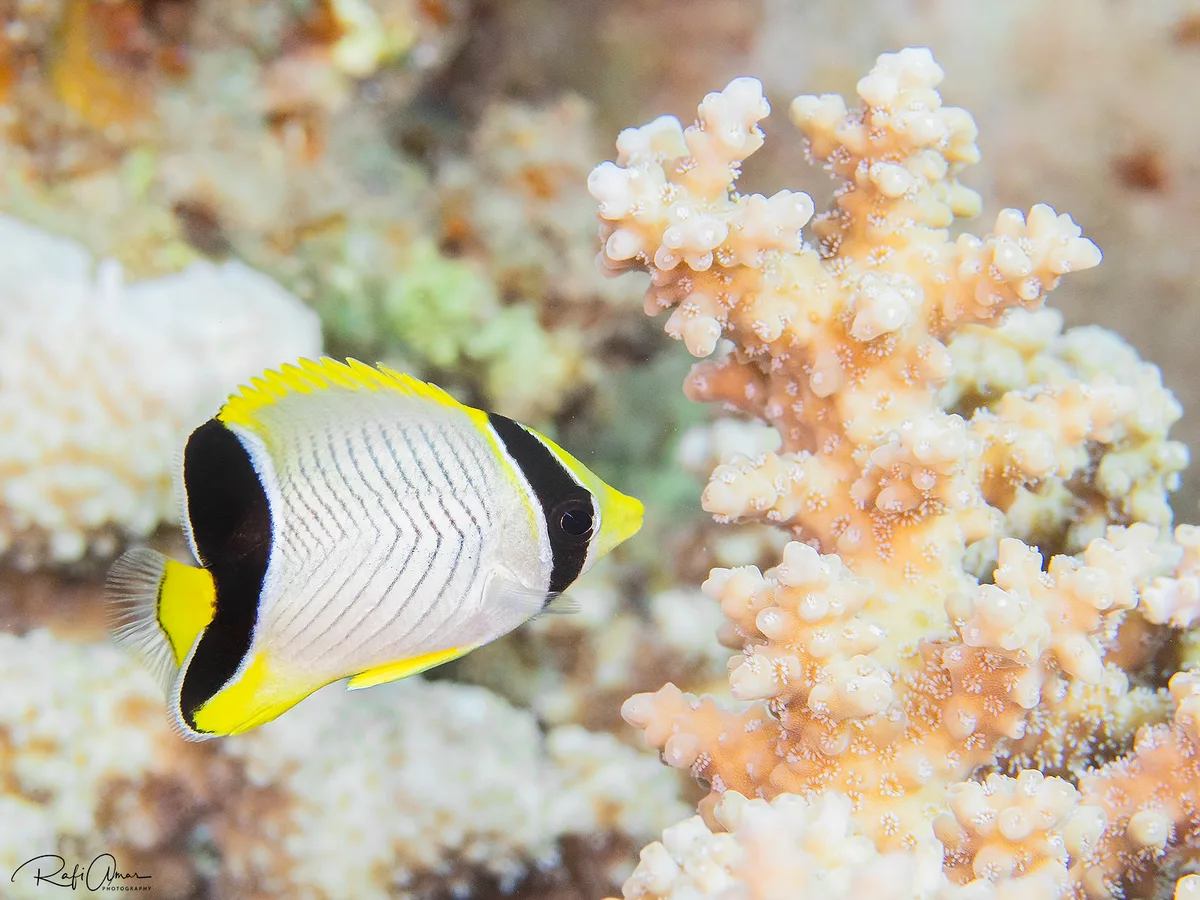
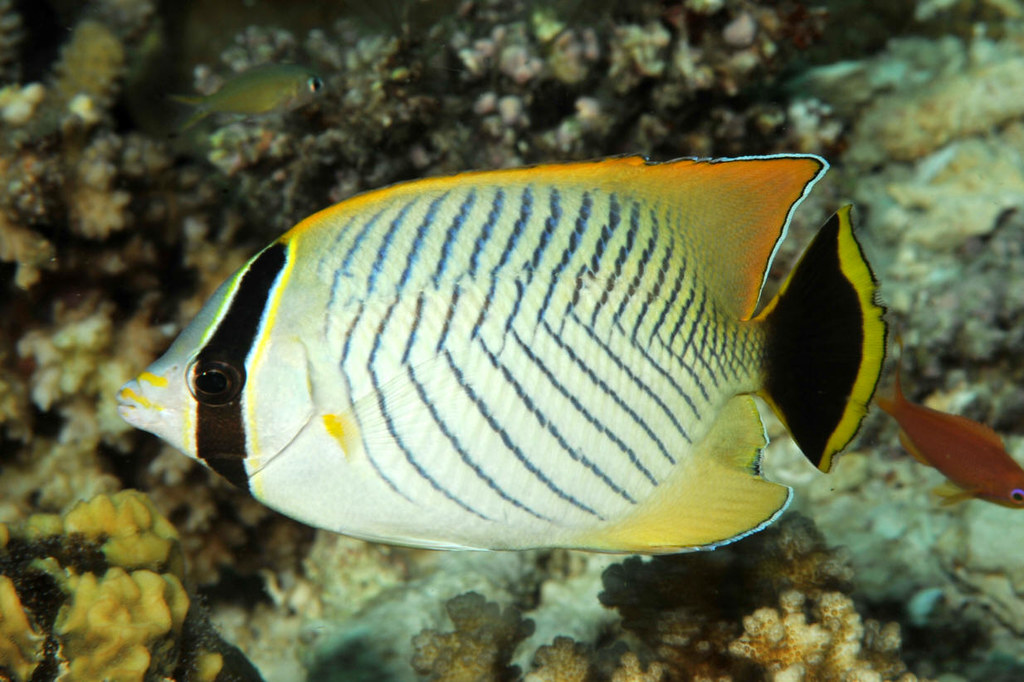
This is the most specialized butterflyfish in the ocean, and the specialization has a name: Acropora. It feeds on the polyps and mucus of table and staghorn corals, above all the big flat tables, and it does not do well on anything else. Find a healthy table coral on a sheltered slope and you have found the only place to look for it.
It does not share. A single fish claims a colony or a cluster of them and drives off other coral-feeding butterflyfishes and its own species alike; males hold larger territories than females and pick more fights over them. On a good reef the slope is a mosaic of these claims, each one a fish and its table.
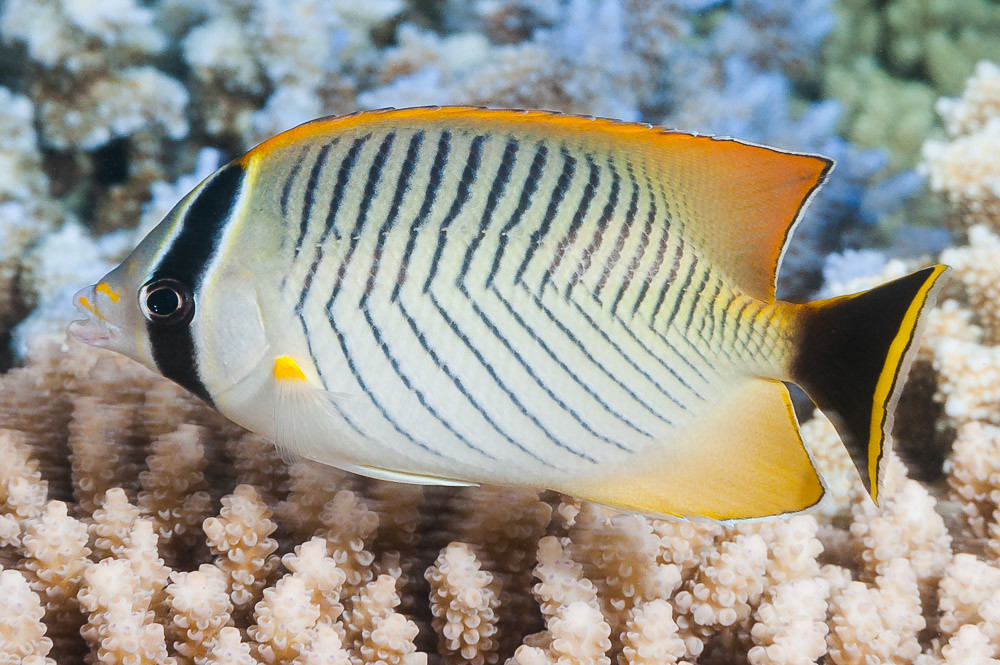
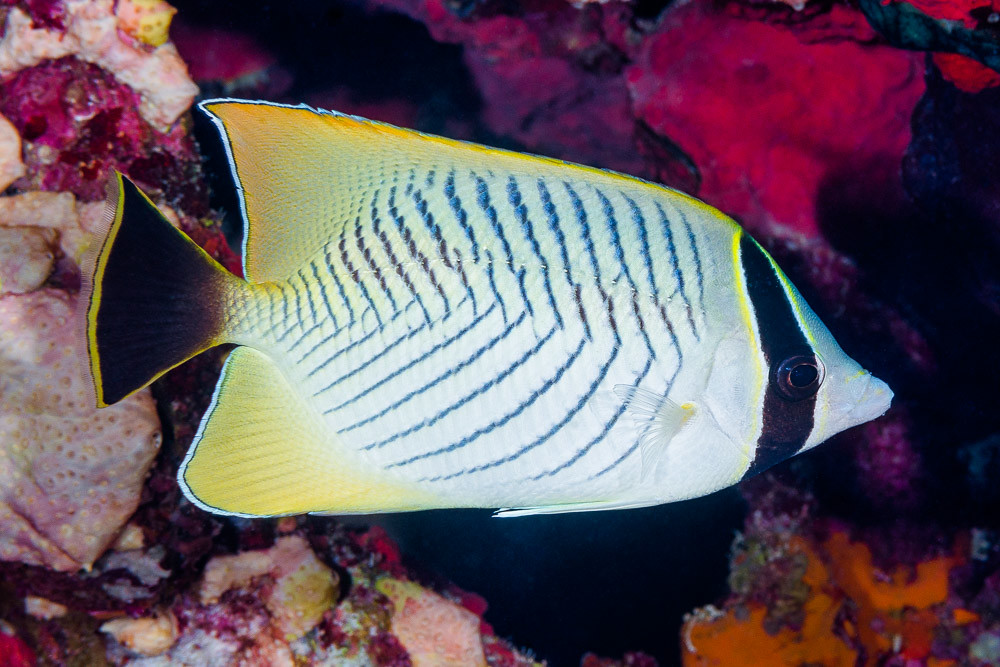
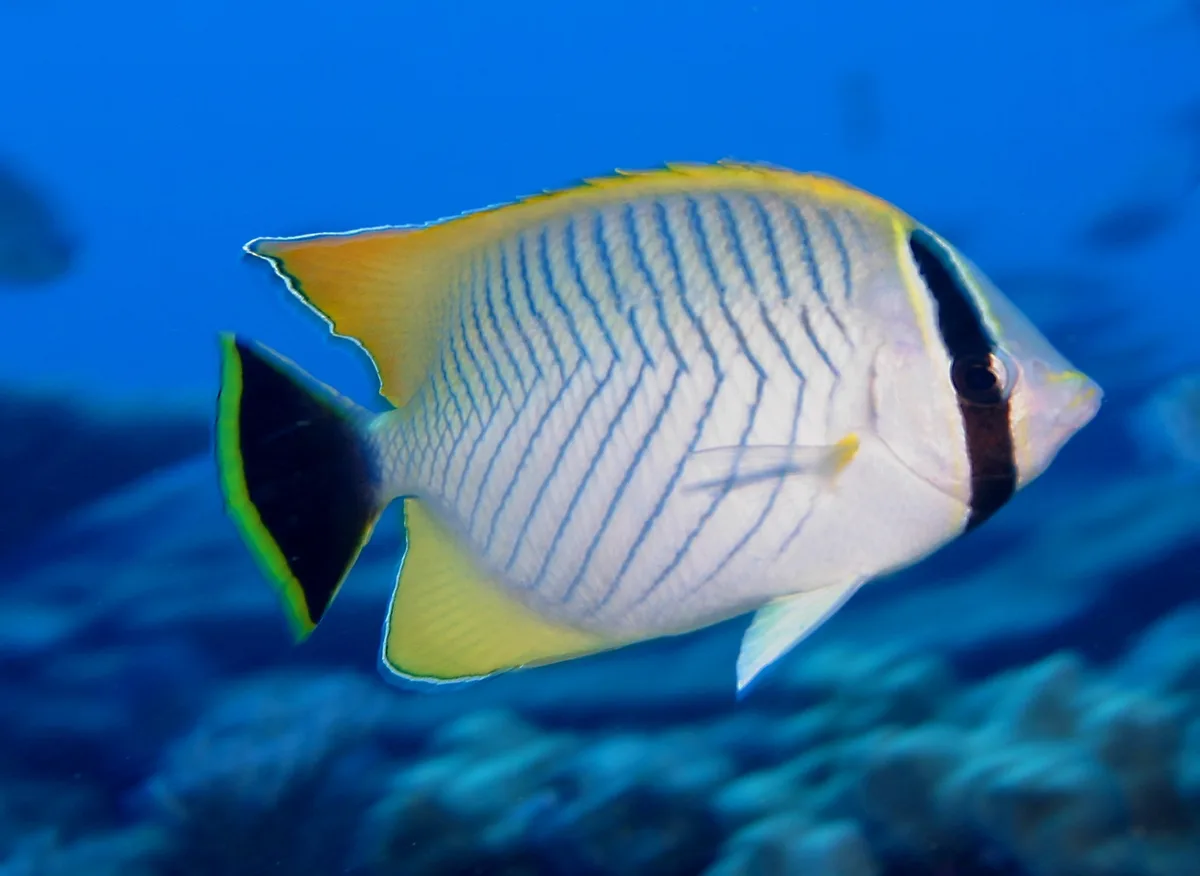
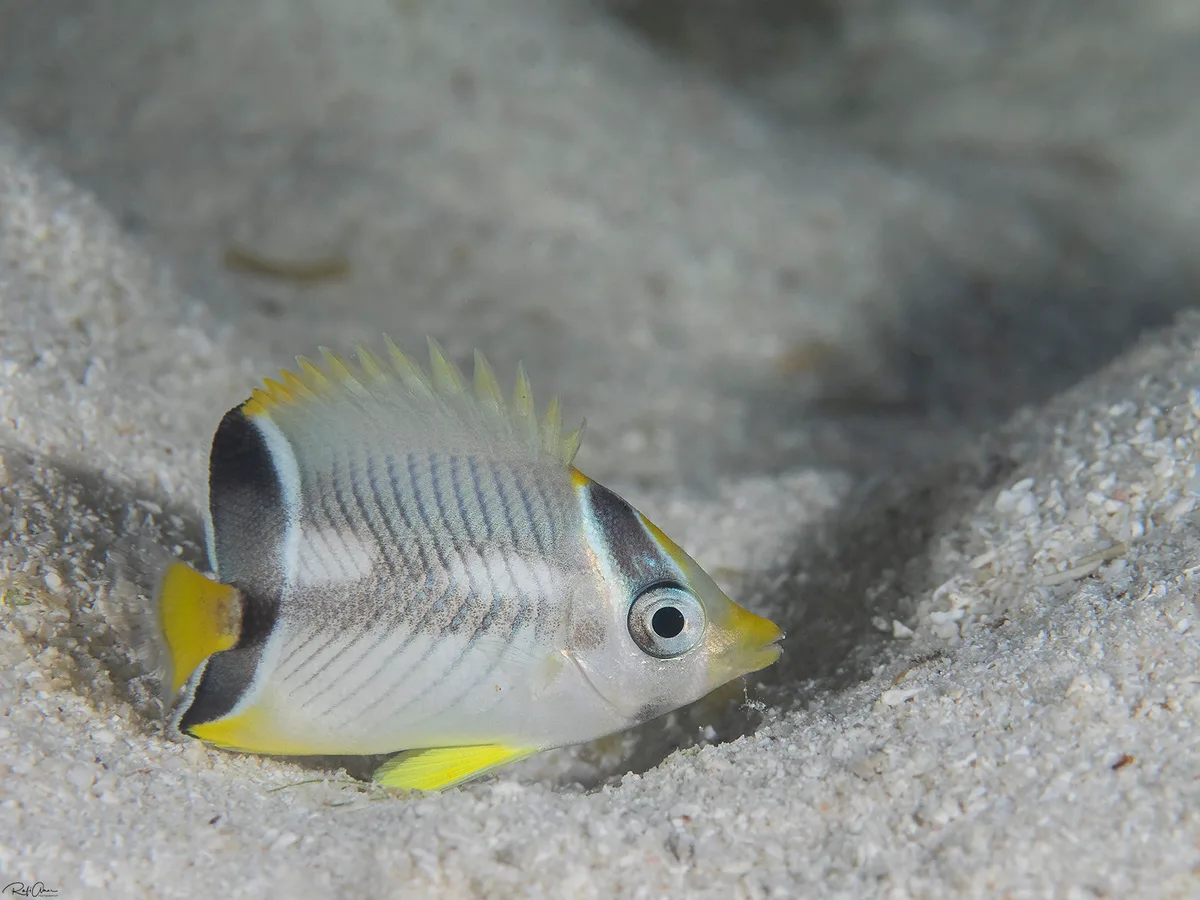
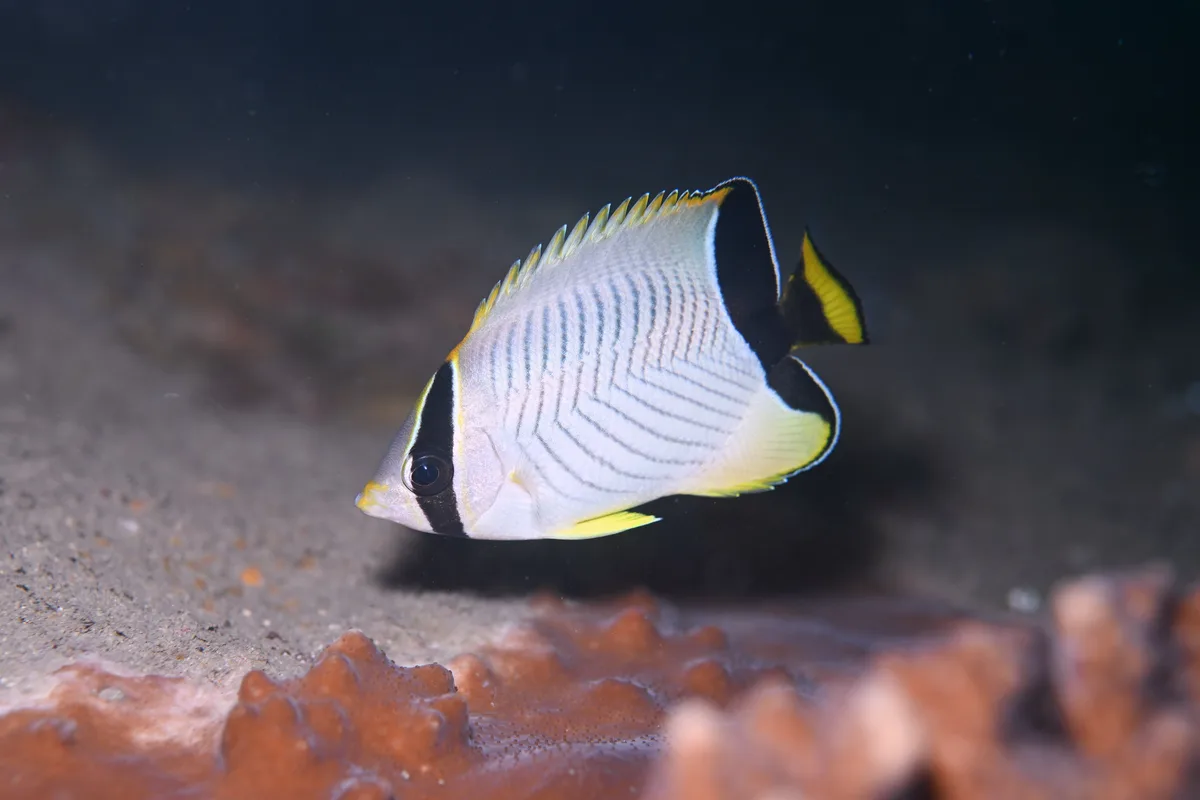
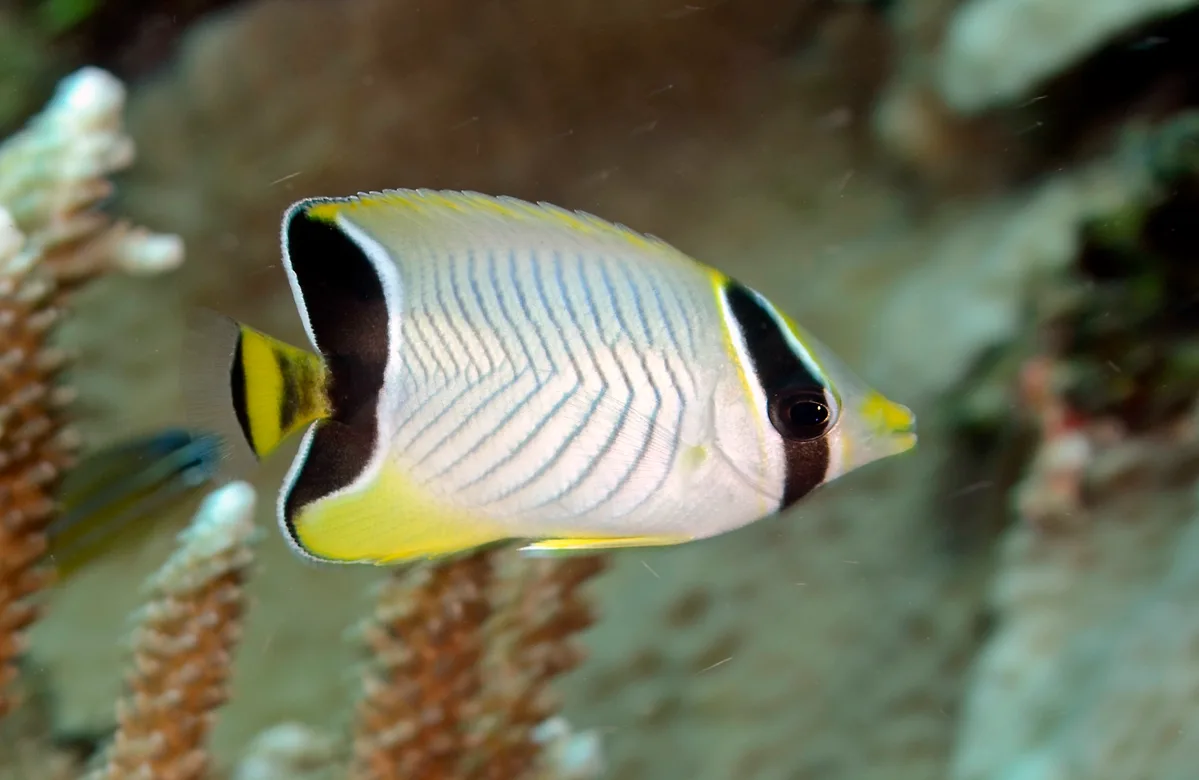
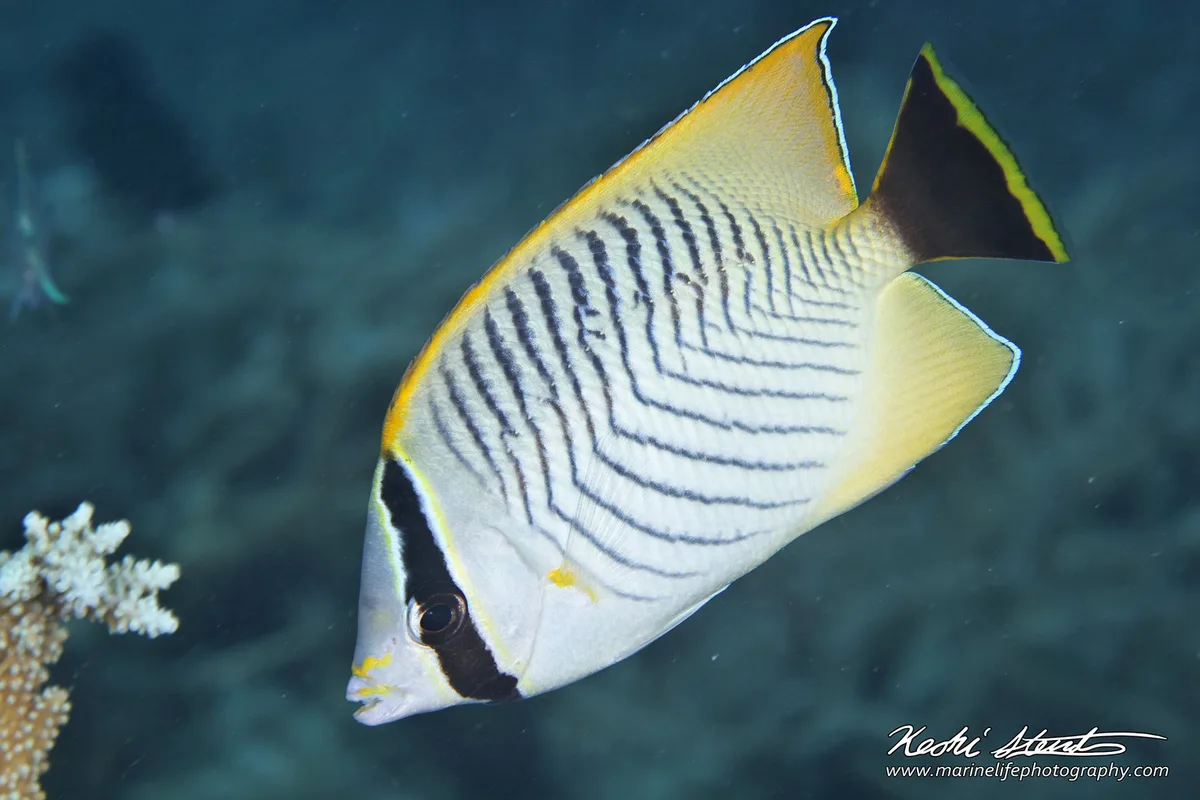
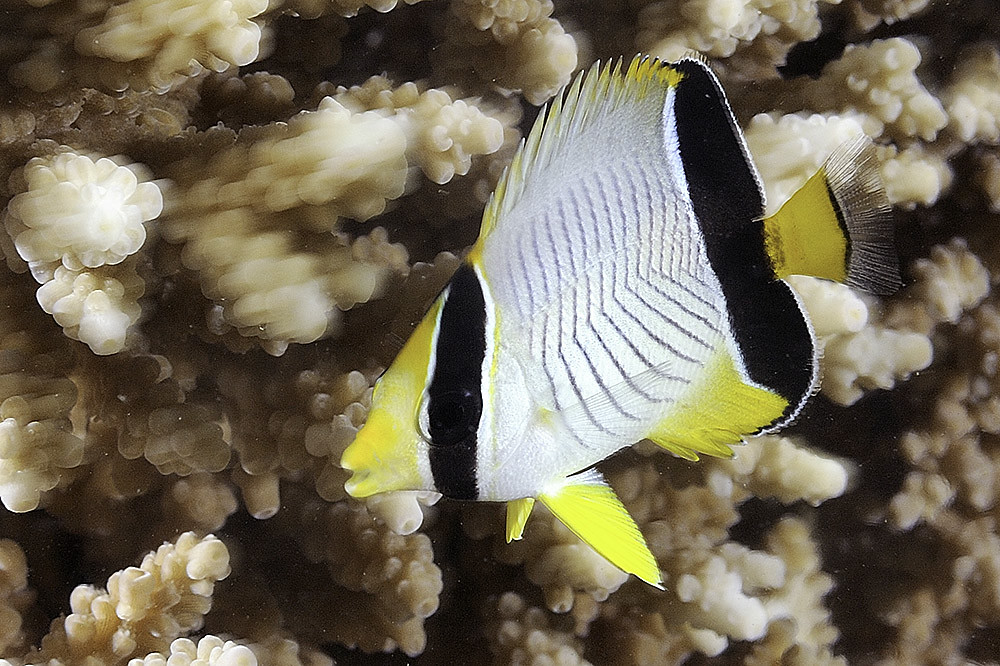
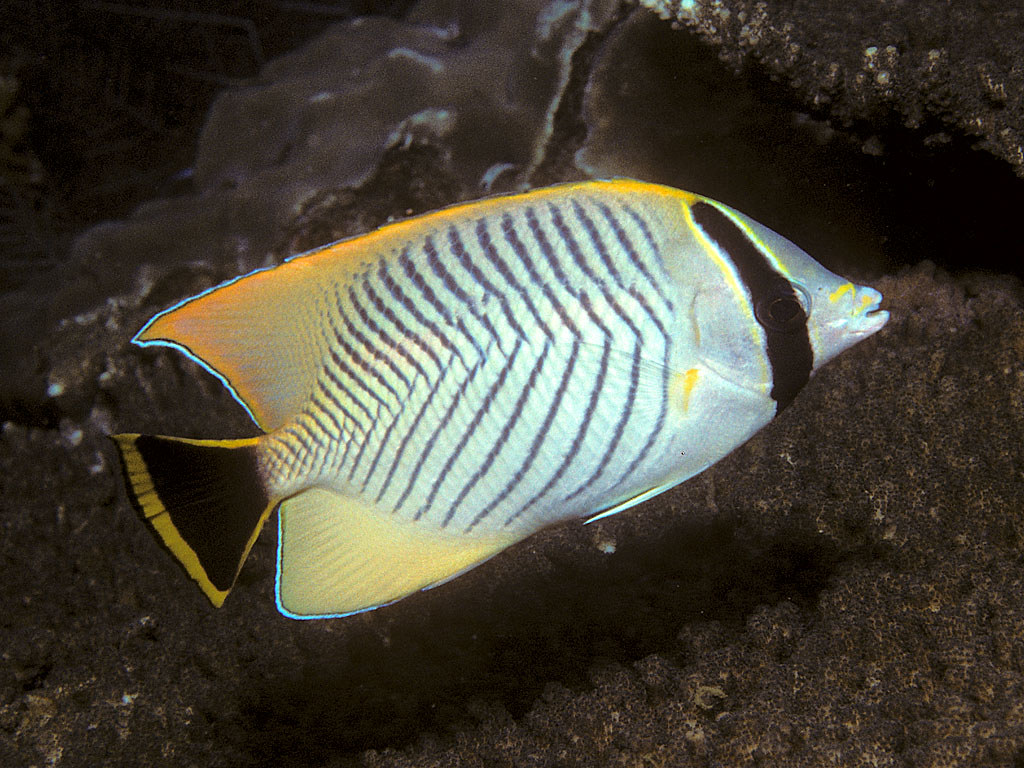
The pattern is unmistakable once you have it. The body is pale and covered in dark lines that bend forward into a stack of chevrons, the tail is black with a yellow rear margin, and a black band edged in pale runs through the eye. Juveniles look nothing like that, being largely black with a yellow tail base and yellow pectoral fins, and they hide inside coral branches.
The cost of the specialization comes due in a warm year. Tabular Acropora are among the first corals to bleach and die, and when they go this fish goes with them. After mass bleaching in the western 🌊 Indian Ocean it disappeared from reef flats altogether, and declines of a fifth to a third have been reported across parts of the Indo-Pacific. The IUCN lists it as Near Threatened, which is unusual in a family where nearly everything is Least Concern.
It is a normal 🌊 Red Sea fish rather than a rare one, but it is only as common as its coral, so you will see it over live Acropora between 1 and 30 m and nowhere else. Some authors take it out of Chaetodon and put it in a genus of its own, Megaprotodon; the world register still keeps it where it is.
The genus. Chaetodon Linnaeus 1758 - chaeto- (bristle) + odon (tooth). ETYFish
The species. Chaetodon trifascialis Quoy & Gaimard 1825 - tri- (three) + fascialis (banded). ETYFish
- pale body covered in dark chevrons that point forward
- black tail with a yellow rear margin
- black band through the eye with pale edges
- juveniles black with a yellow tail base and pectoral fins
- up to 18 cm
Why it's threatened
Threat classification from the IUCN Red List.