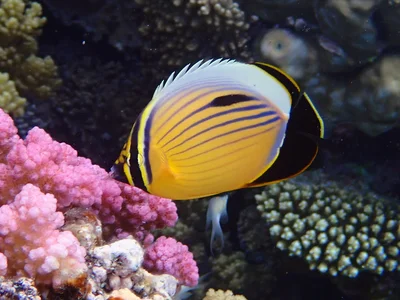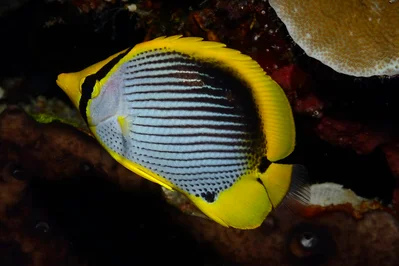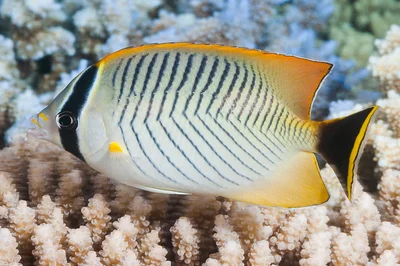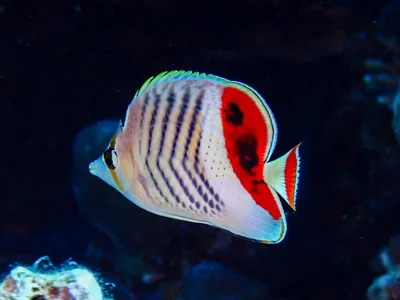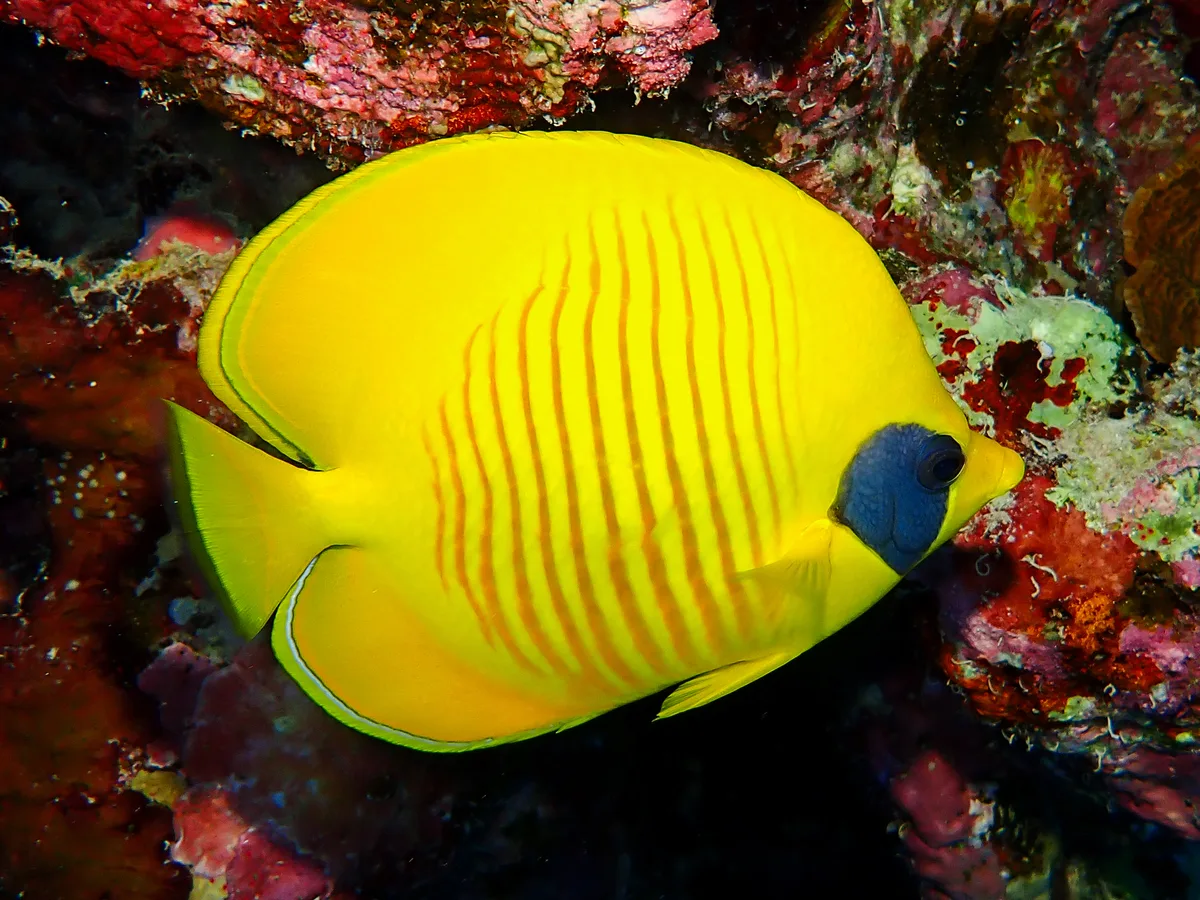
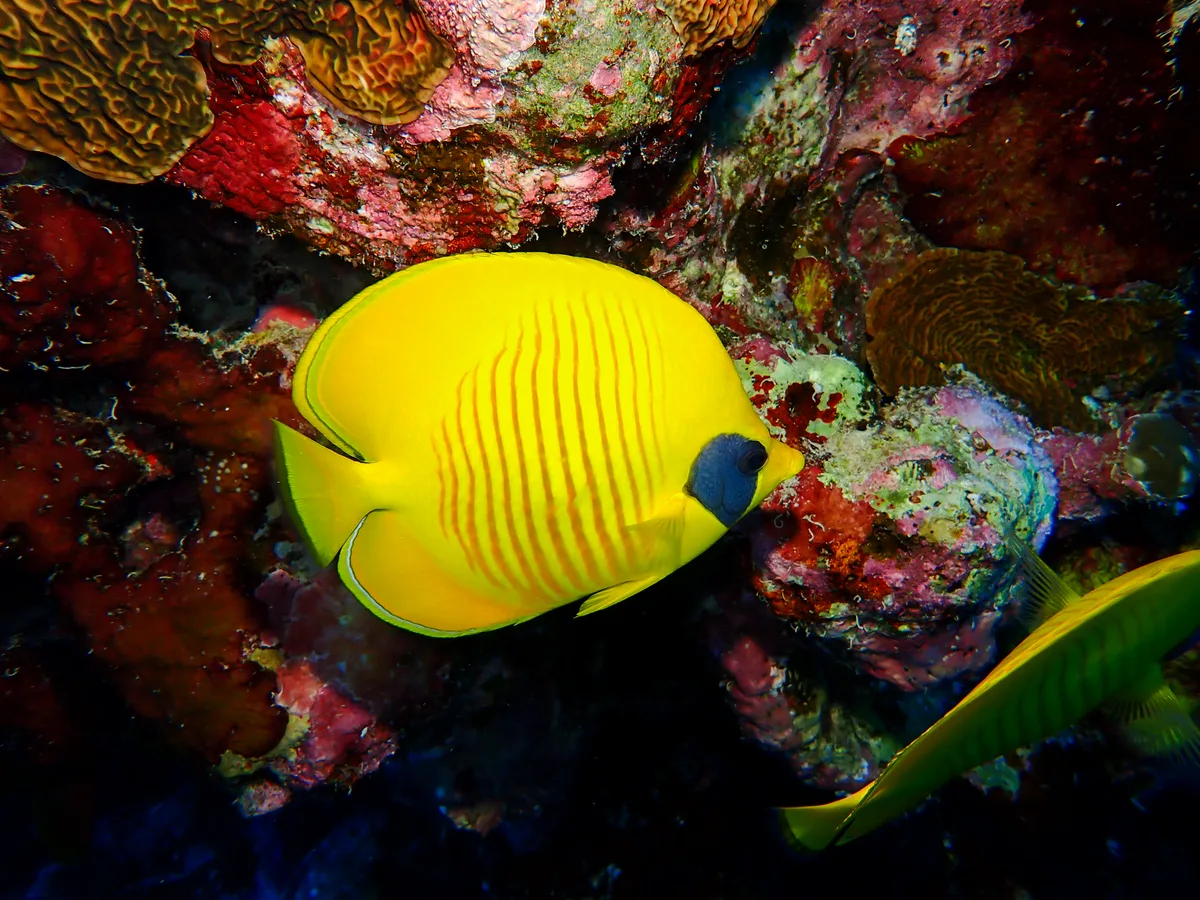
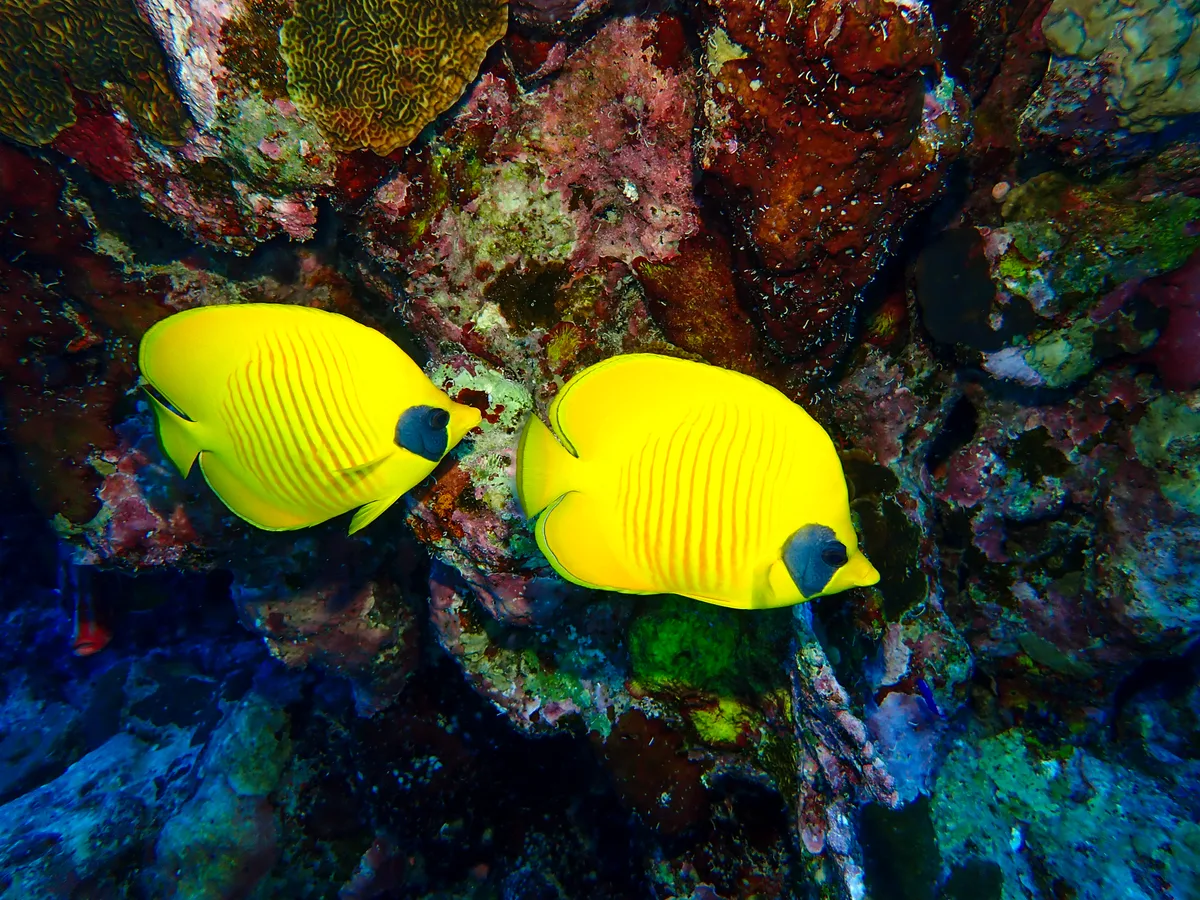
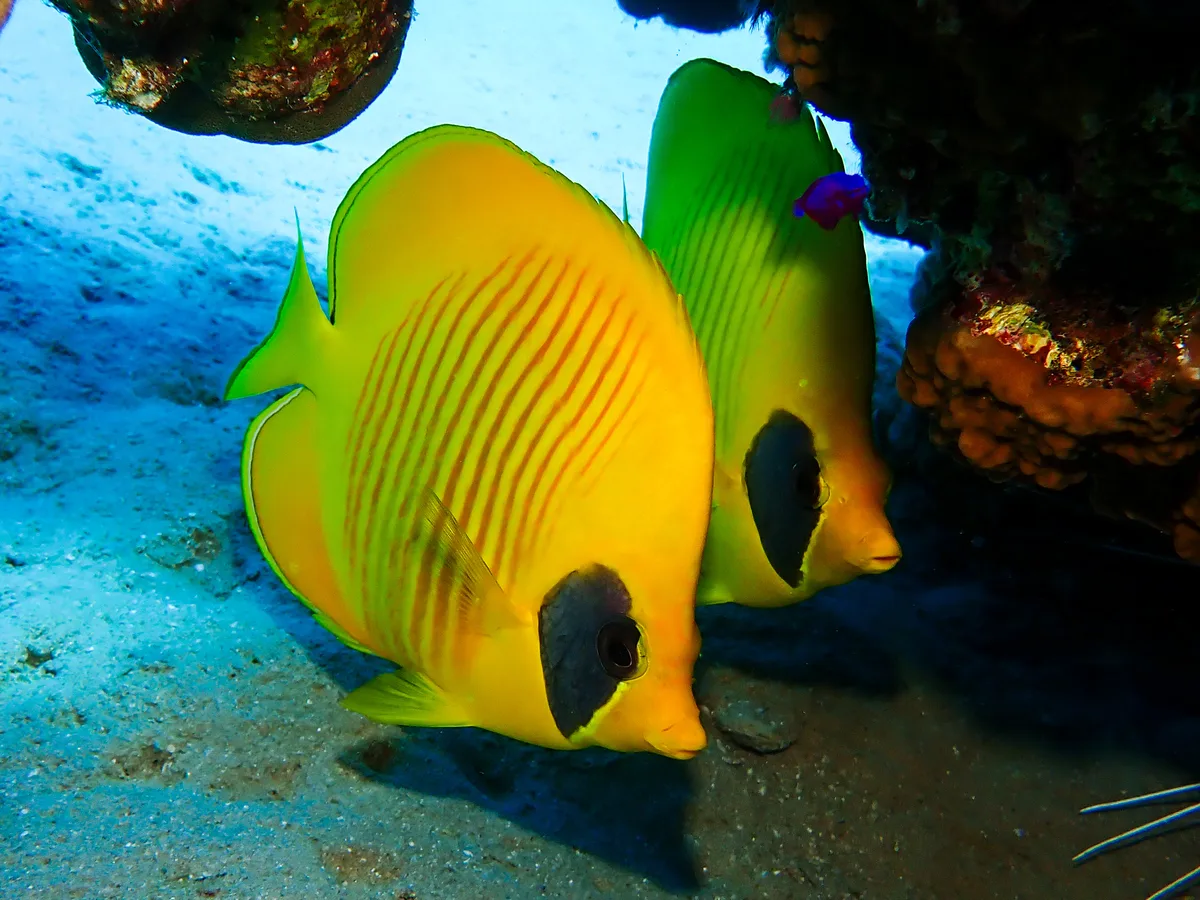
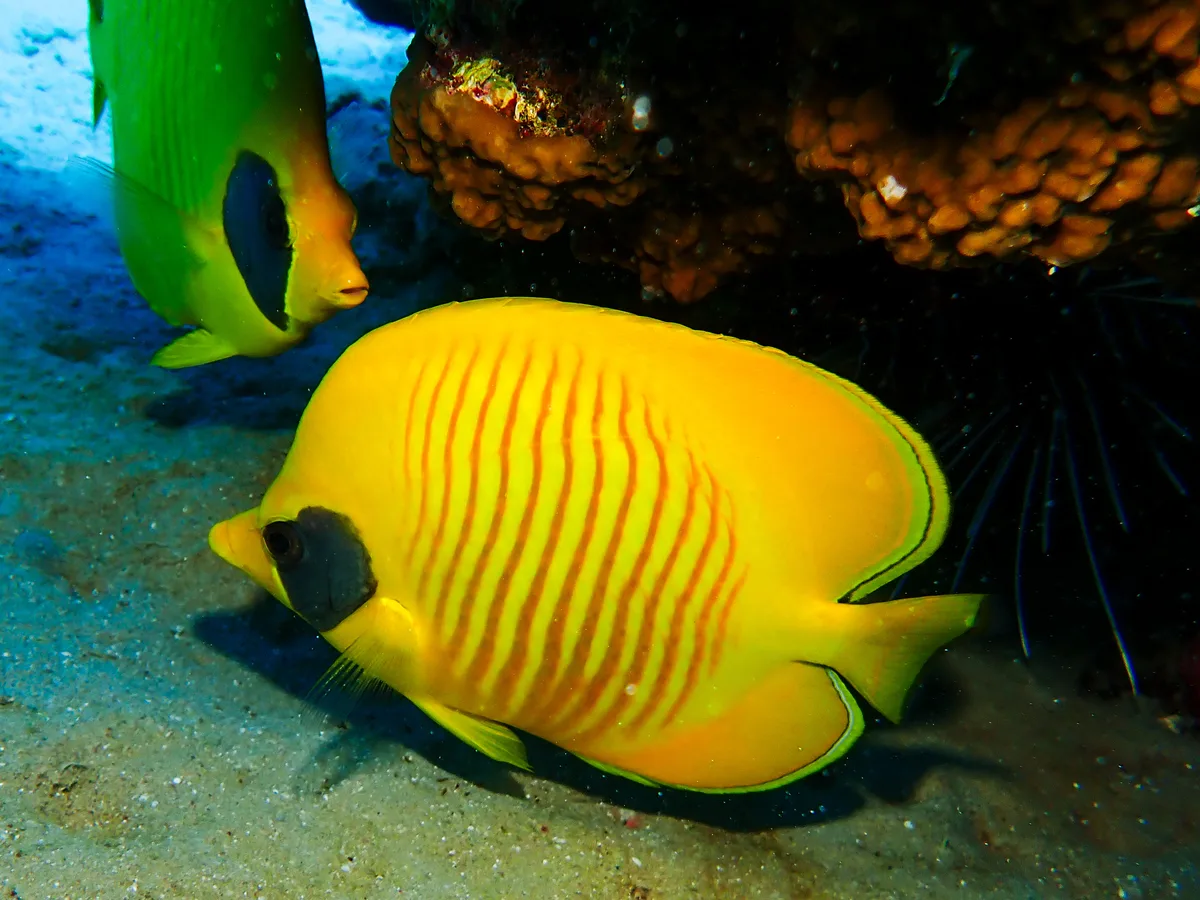
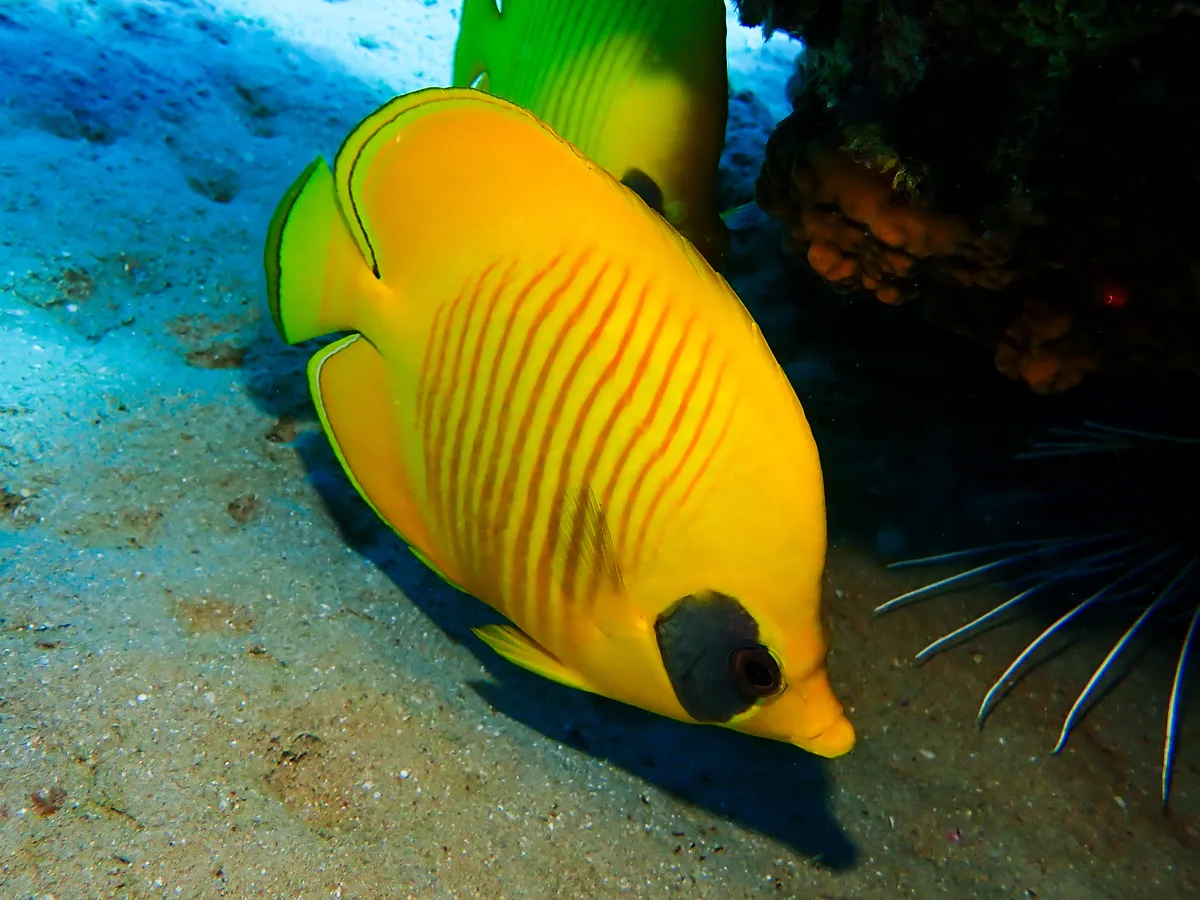
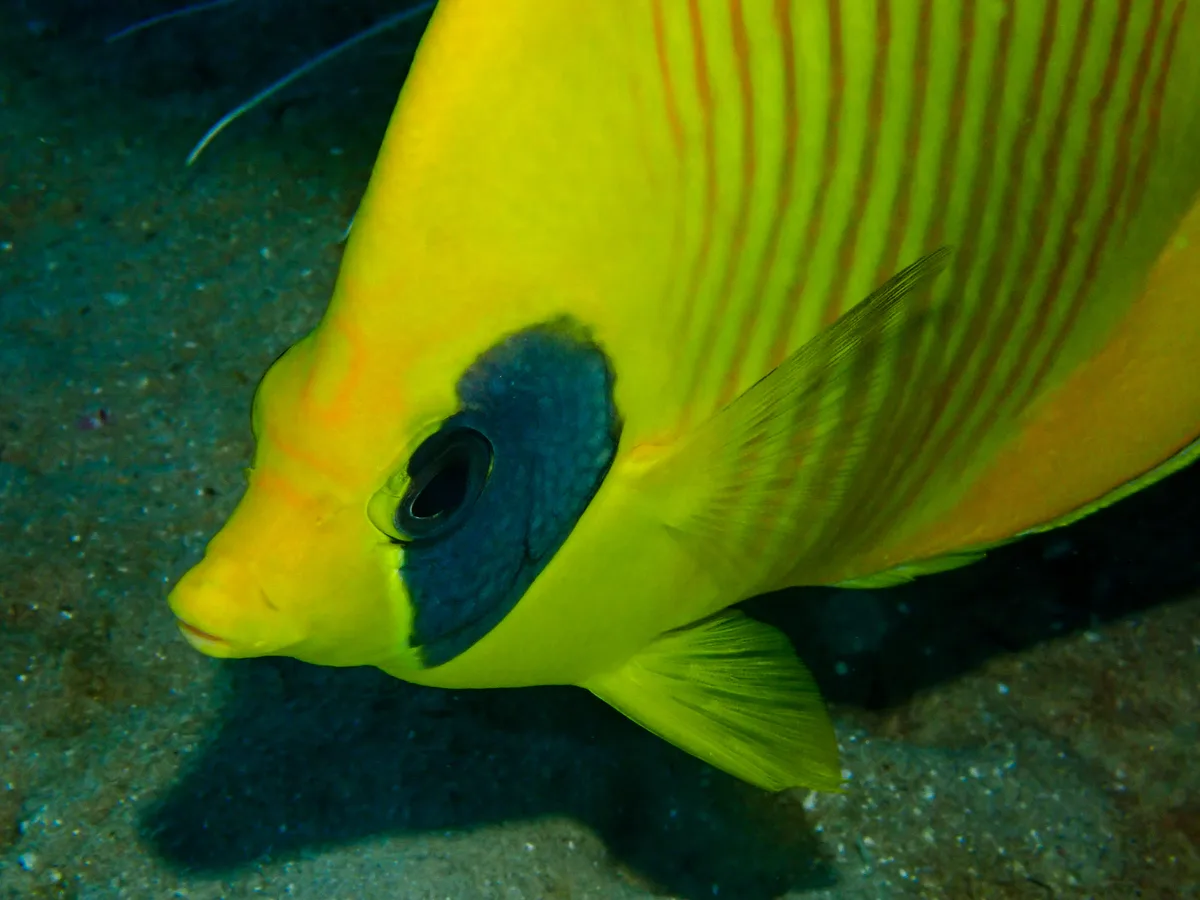
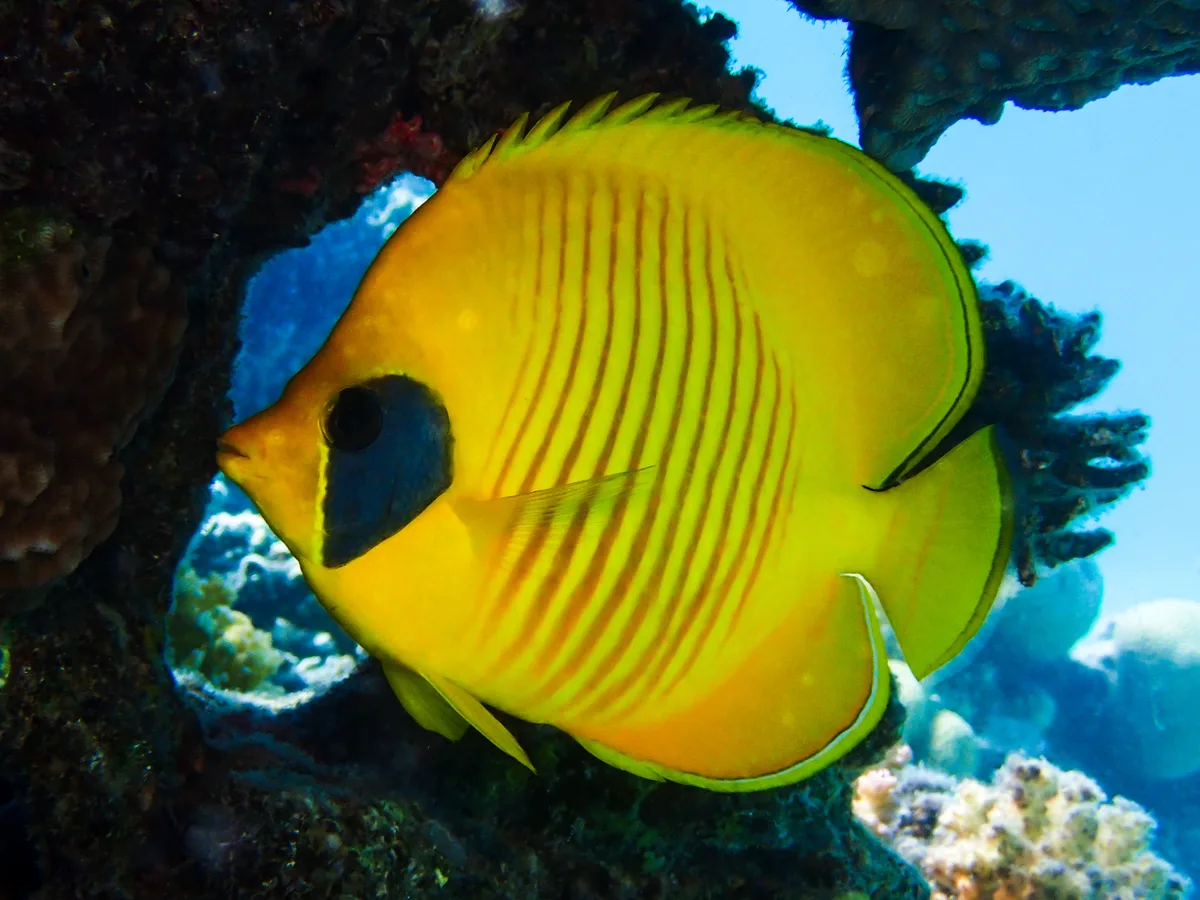
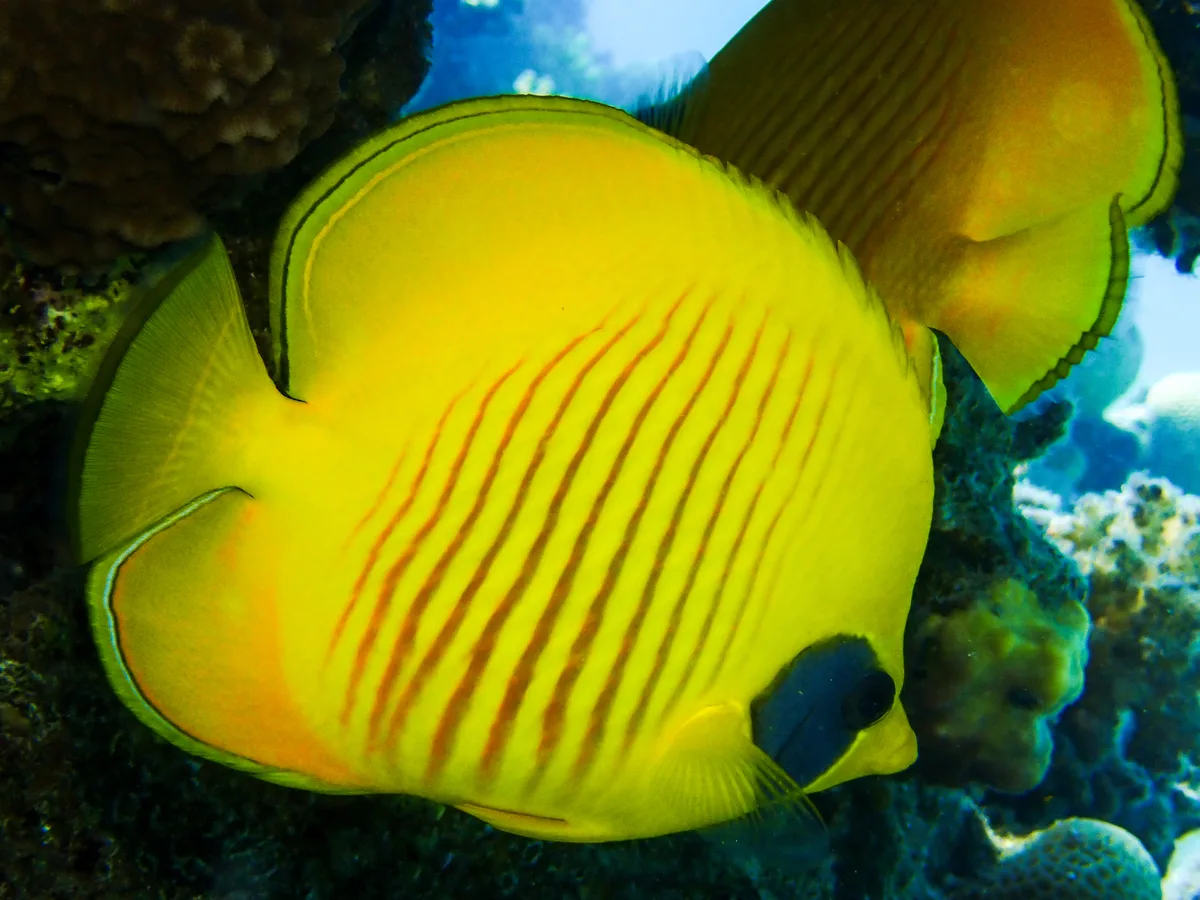
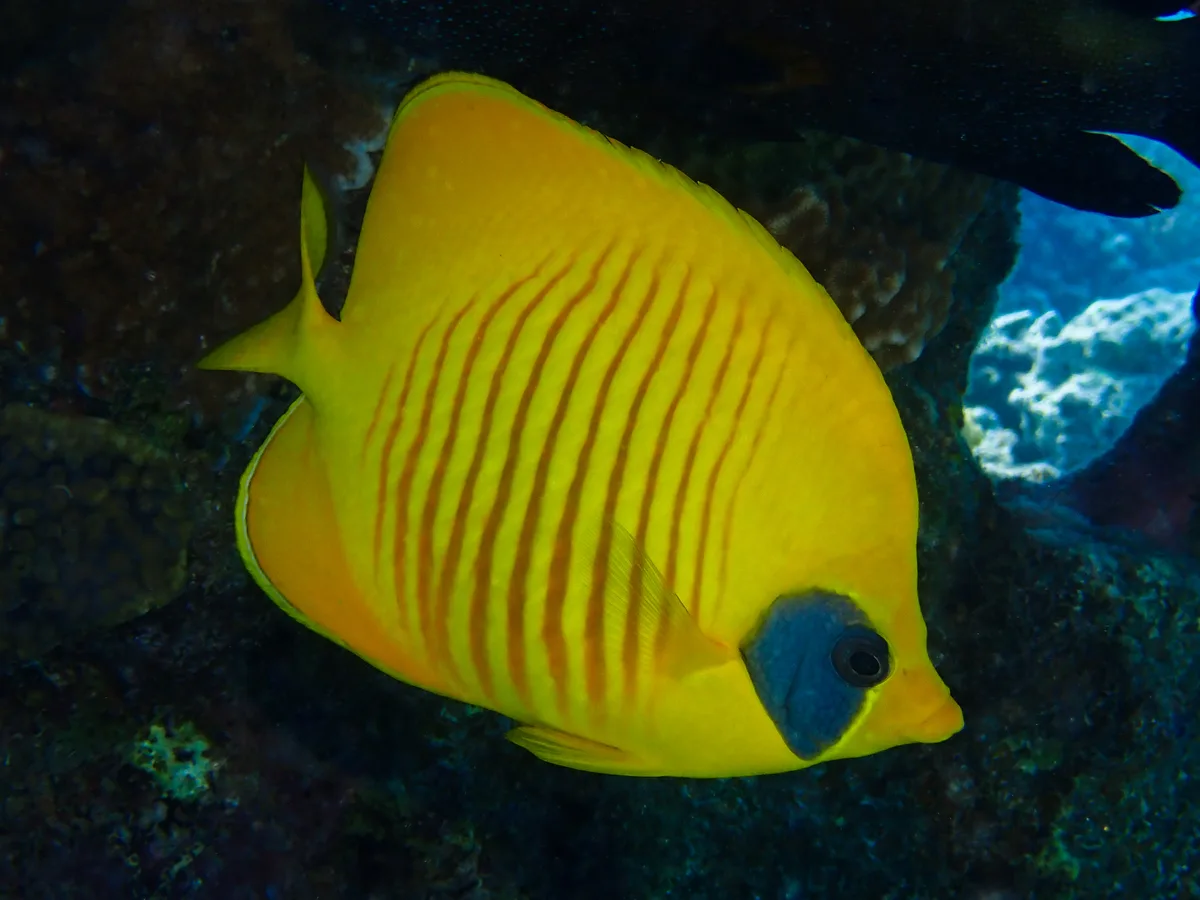
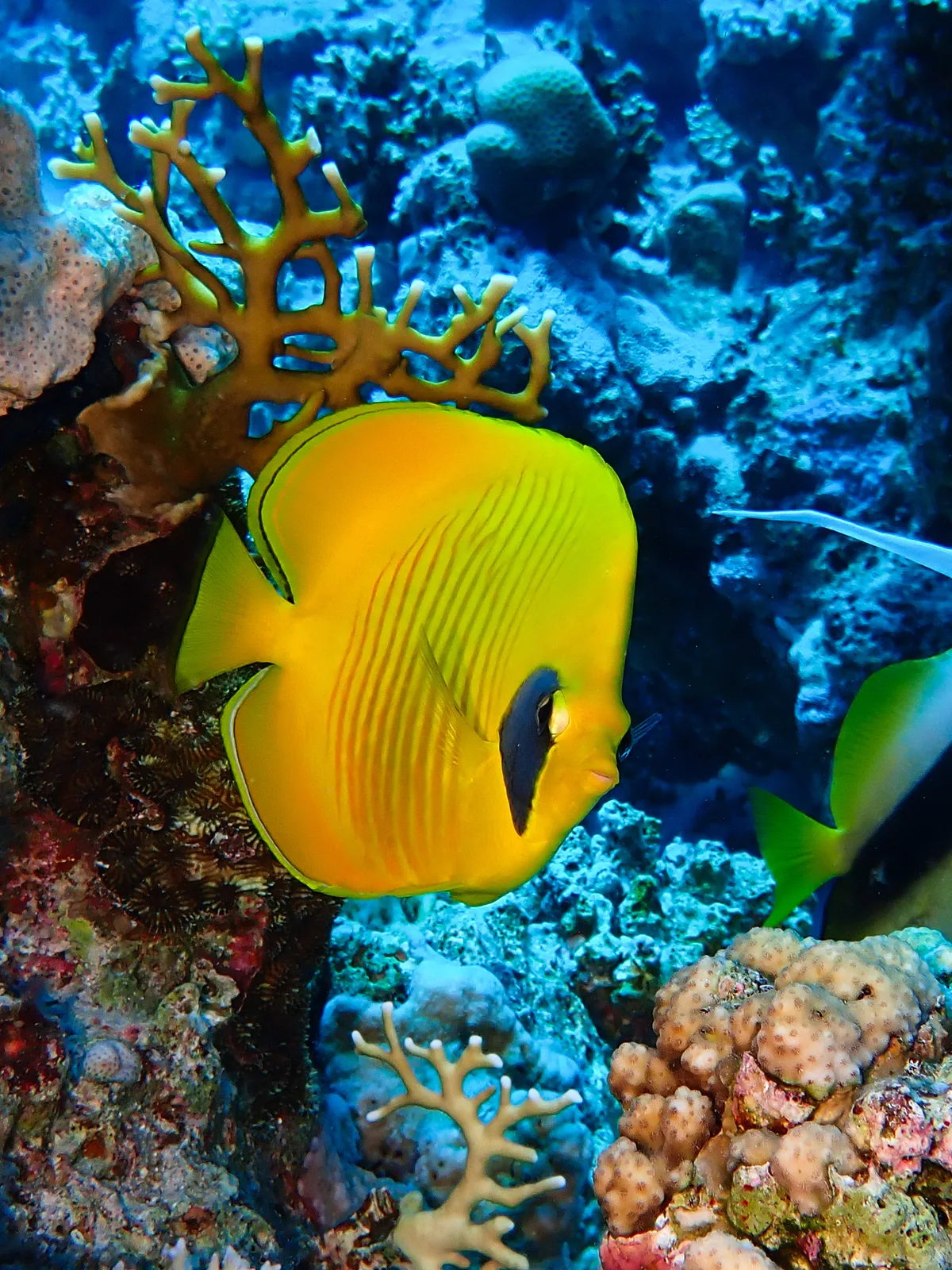
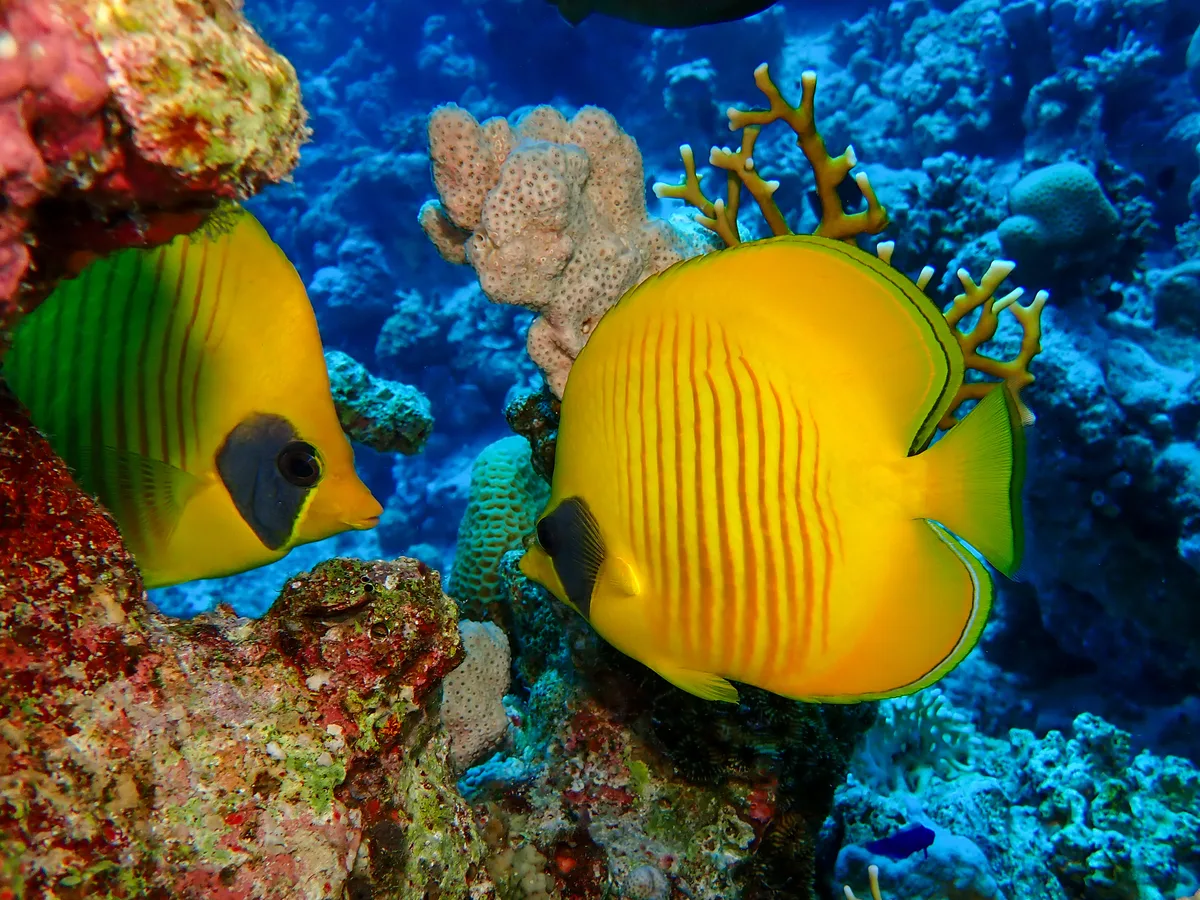
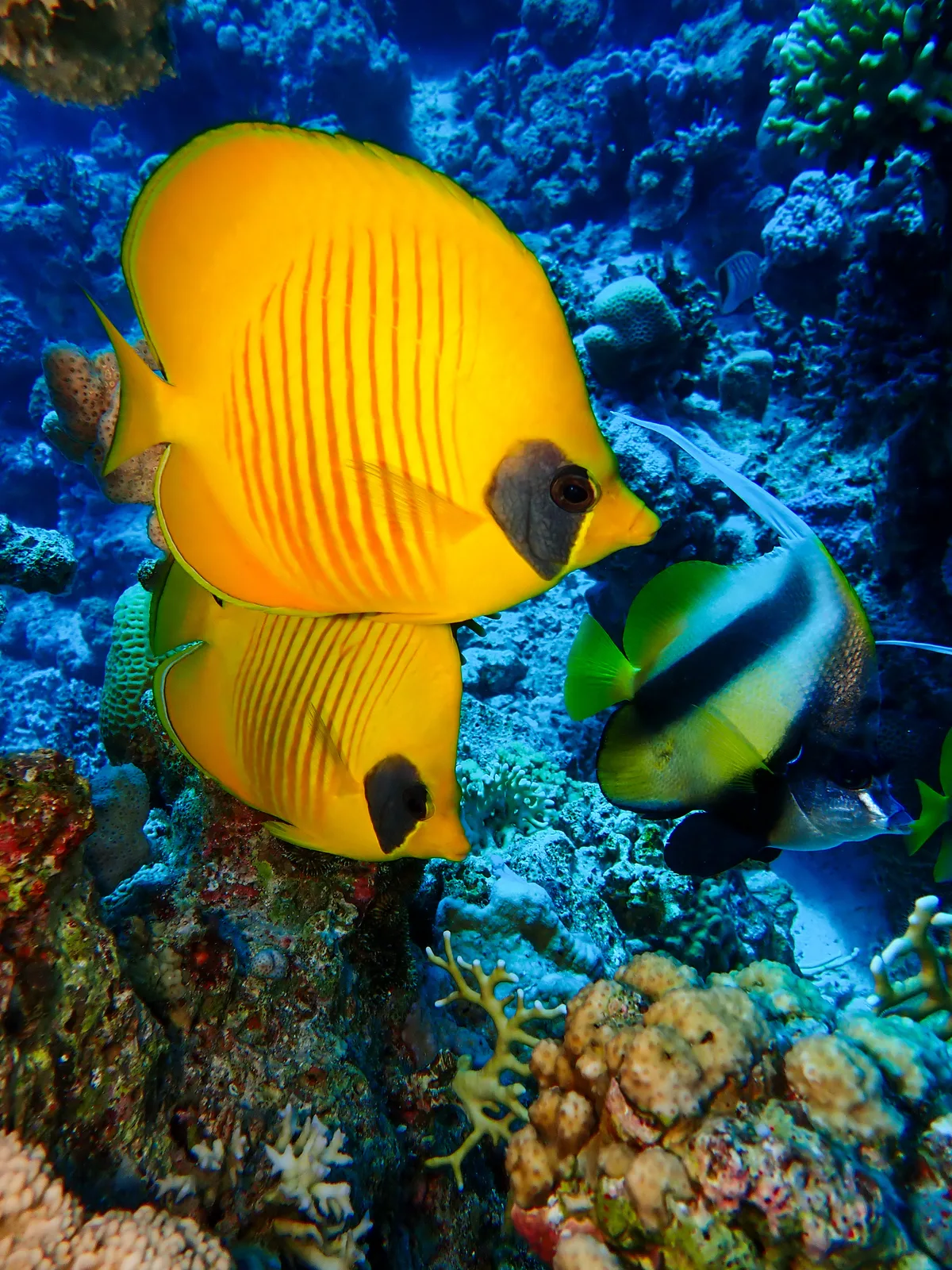
Lemon-yellow, ruled with fine orange lines, with a blue-gray patch over the cheek where most butterflyfishes wear a black bar through the eye. Up to 23 cm (9 in), and one of the signature fish of this sea: it lives here and in the 🌊 Gulf of Aden, and almost nowhere else.
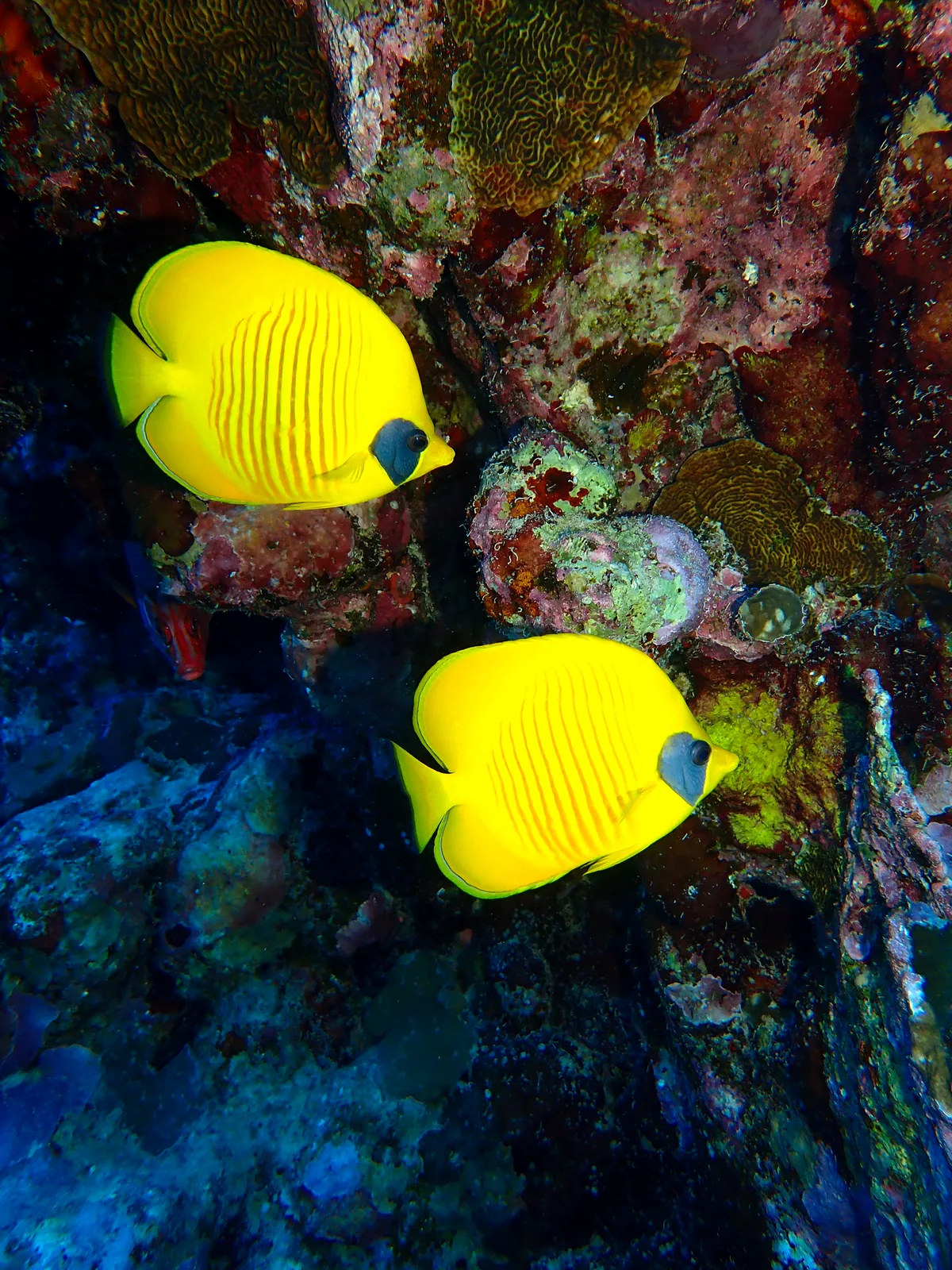
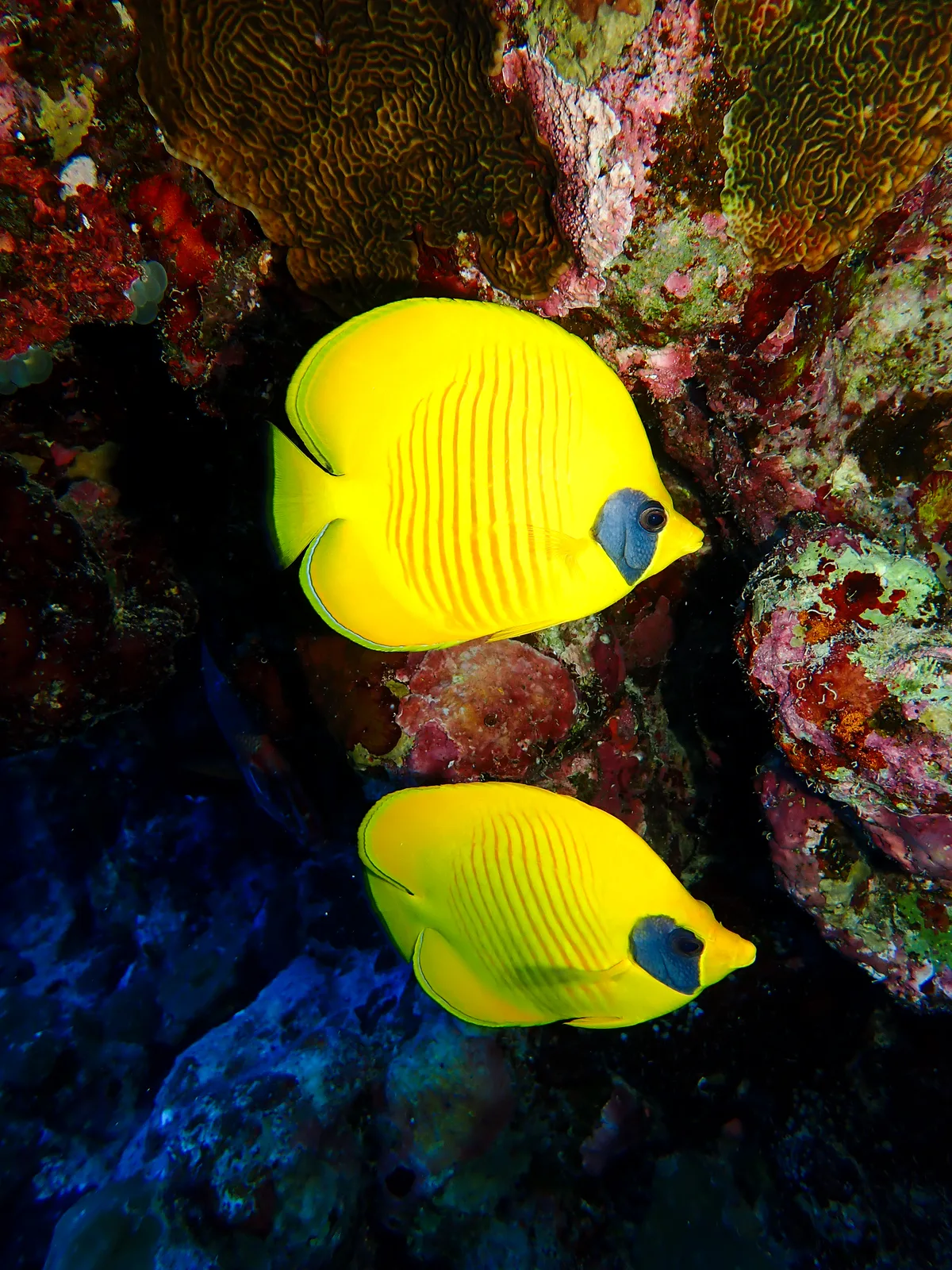
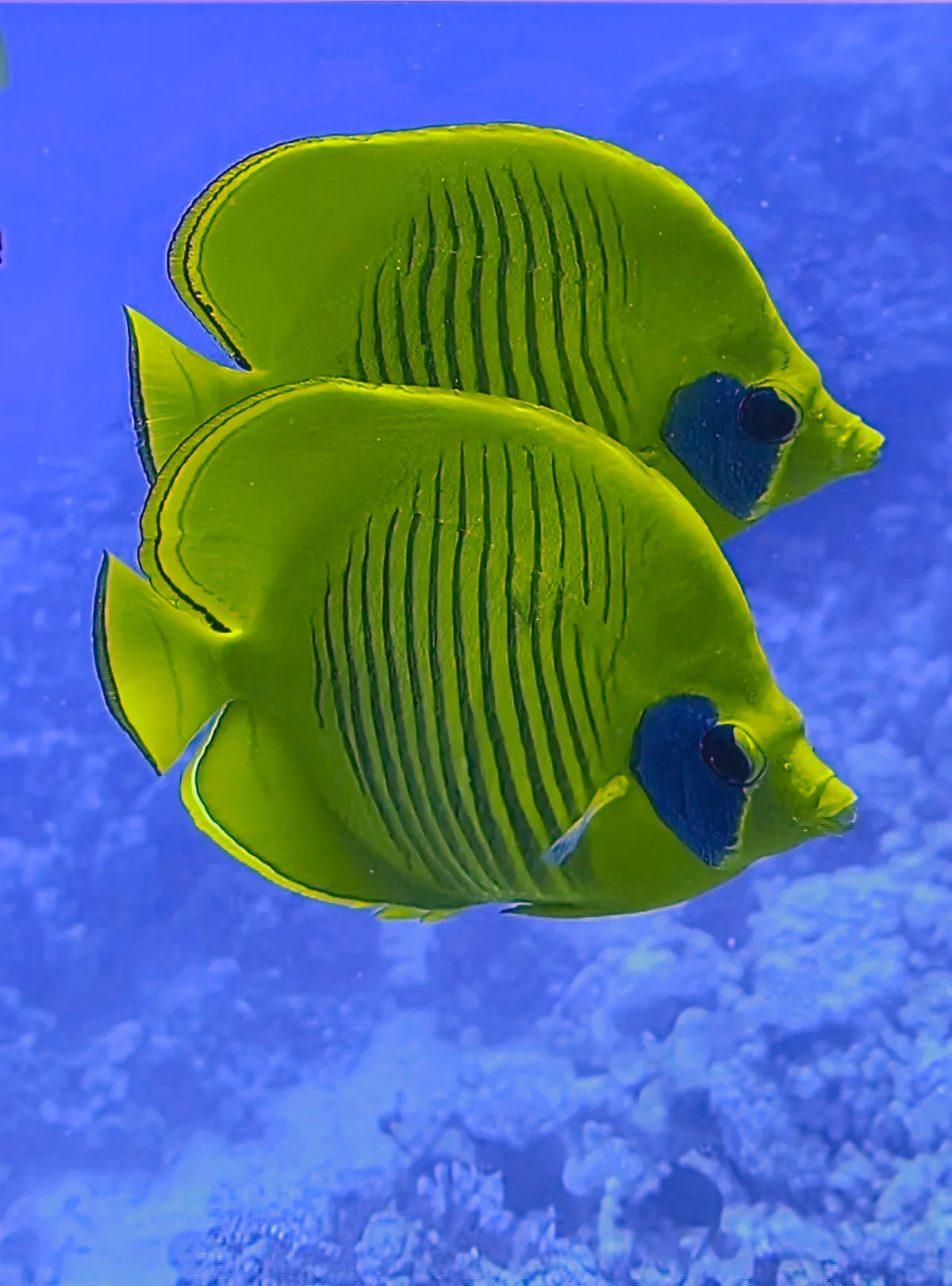
It is nearly always in a pair. Pairs are long-term and travel together over a shared range, and a solitary individual is usually a fish that has lost its partner. Groups of pairs hang in the shade under table corals through the middle of the day, doing nothing much, which is when photographers find them stacked like plates.
It eats coral. The small protruding mouth is built to pick polyps and mucus off hard coral, plus small invertebrates, and that diet ties the fish to reef health directly - butterflyfish counts are a standard proxy for how much live coral a reef has left.
The blue cheek patch is worth a second look at night: it darkens and the whole fish takes on a blotched nocturnal pattern, so a torch beam finds an animal that looks nothing like the daytime one.
The genus. Chaetodon Linnaeus 1758 - chaeto- (bristle) + odon (tooth). ETYFish
The species. Chaetodon semilarvatus Cuvier 1831 - semi- (half) + larvatus (masked). ETYFish
- deep lemon-yellow body ruled with fine orange vertical lines
- blue-gray patch behind and below the eye instead of a black eye bar
- almost always in a pair, and often several pairs together under one coral
- length up to 23 cm
Why it's threatened
Threat classification from the IUCN Red List.