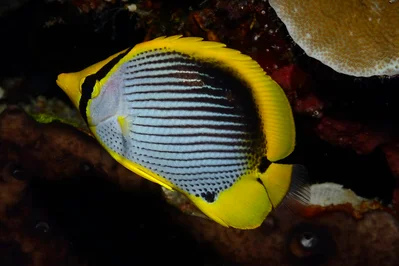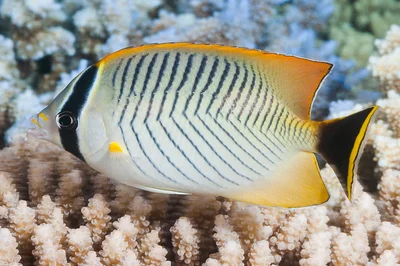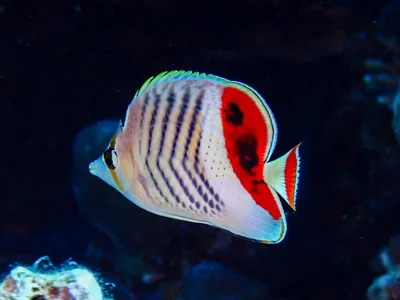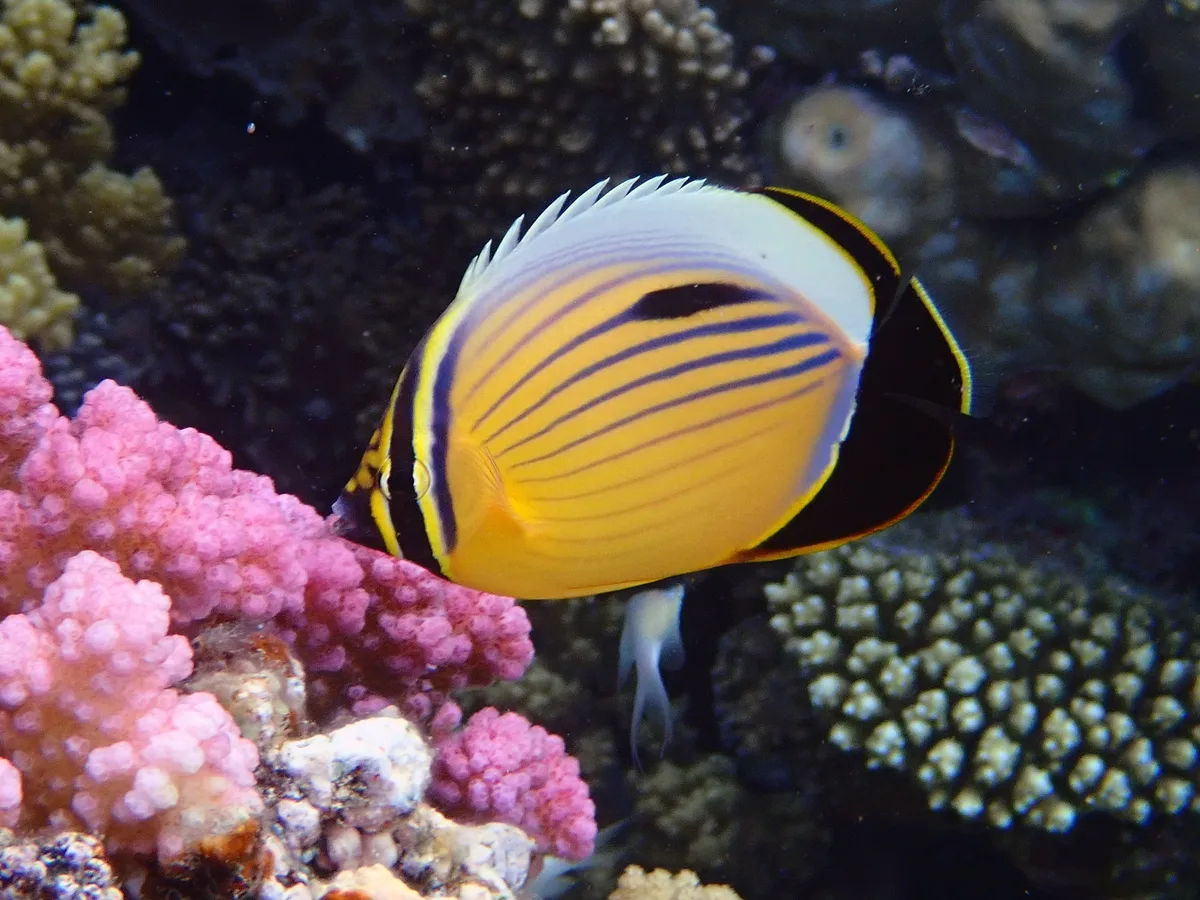
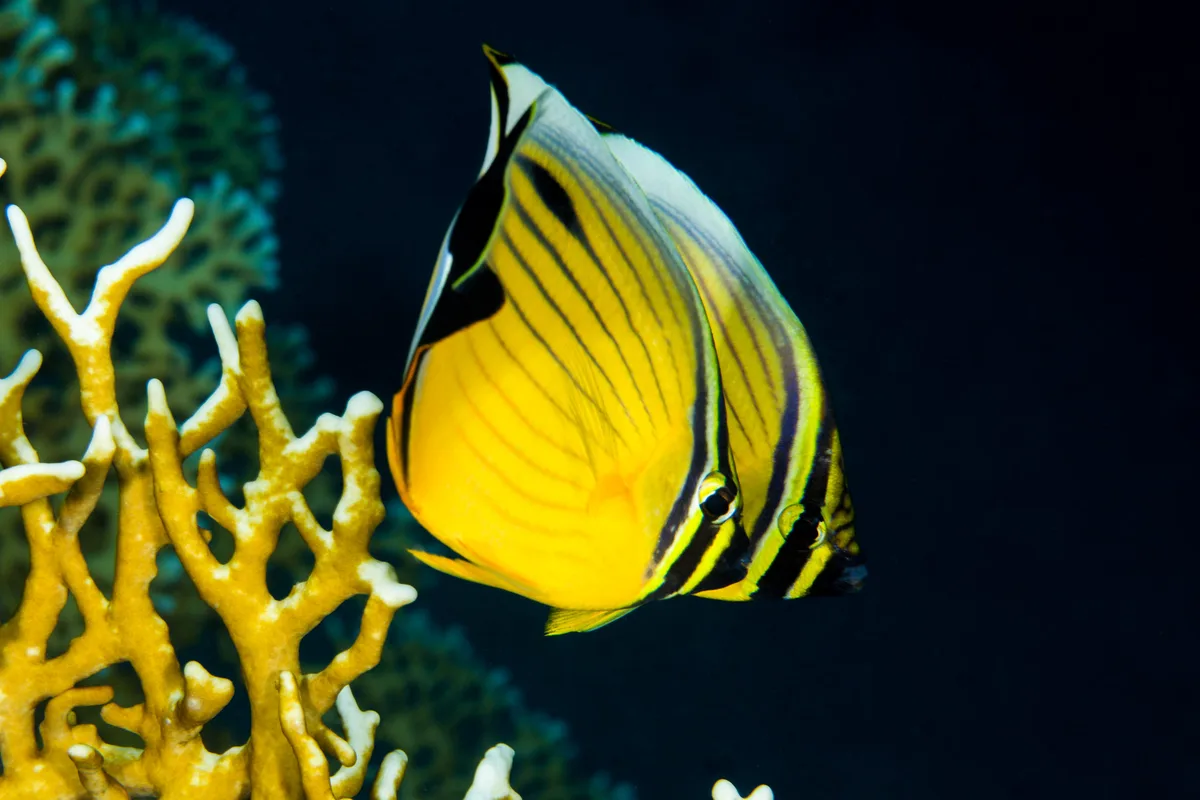
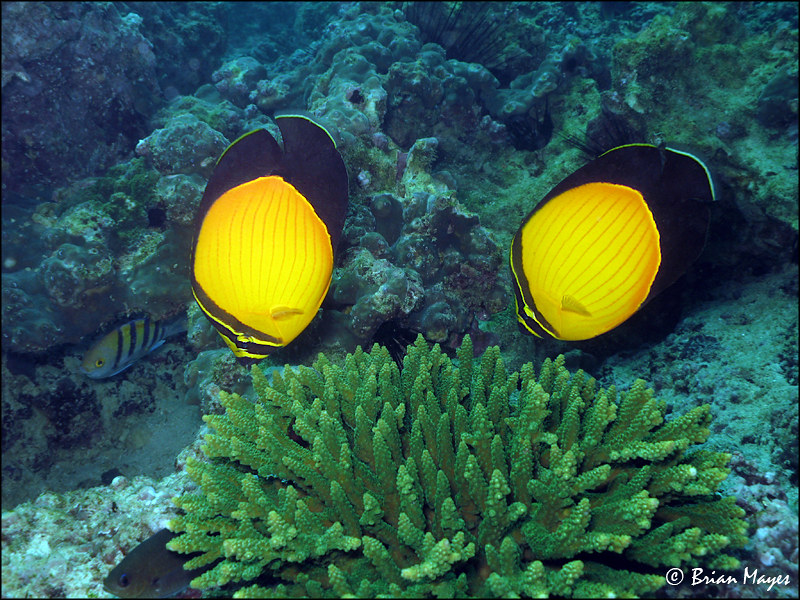
A small butterflyfish cut in two by color: bright yellow-orange in front, the whole rear third black including the fins, with a black mask through the eye. Up to 13 cm (5 in), and effectively always in a pair.
It is a regional fish, living in this sea, the 🌊 Gulf of Aden and around into the 🌊 Persian Gulf and nowhere else - one of the endemics that make this fauna distinct from the wider Indo-Pacific, where a dozen similar butterflyfishes take its place.
It eats coral polyps and almost nothing else. The small protruding mouth picks tissue and mucus off live hard coral, which means the fish cannot exist without it: butterflyfish counts drop within months of a bleaching event, and this species is used as a health indicator for exactly that reason.
Pairs are long-term and defend a shared feeding range, moving between colonies in a fixed circuit. A fish seen alone is usually one whose partner has died, and it will not feed as efficiently until it finds another.
The genus. Chaetodon Linnaeus 1758 - chaeto- (bristle) + odon (tooth). ETYFish
The species. Chaetodon melapterus Guichenot 1863 - melas (black) + pterus (fin). ETYFish
- bright yellow-orange body with a black mask through the eye
- black rear third: dorsal, anal and tail fins all dark, cutting the fish in two
- always in a pair, moving between coral heads together
- length up to 13 cm
Why it's threatened
Threat classification from the IUCN Red List.