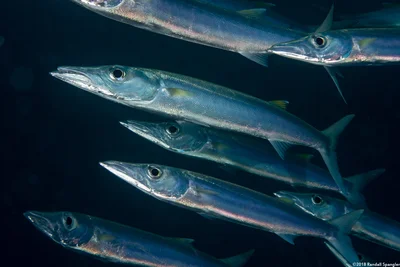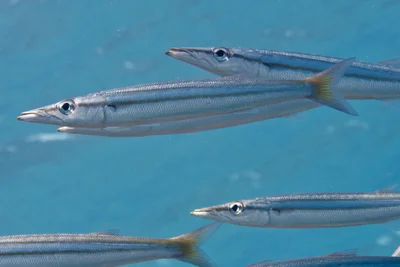
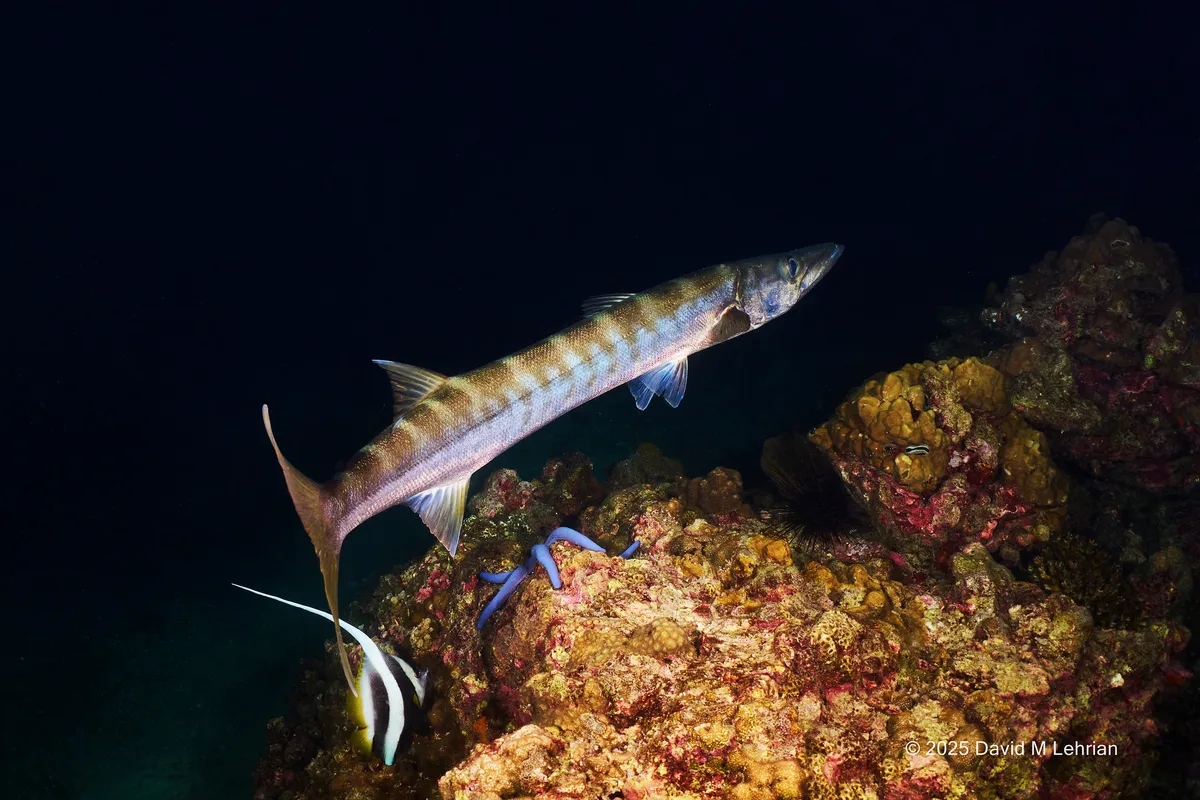
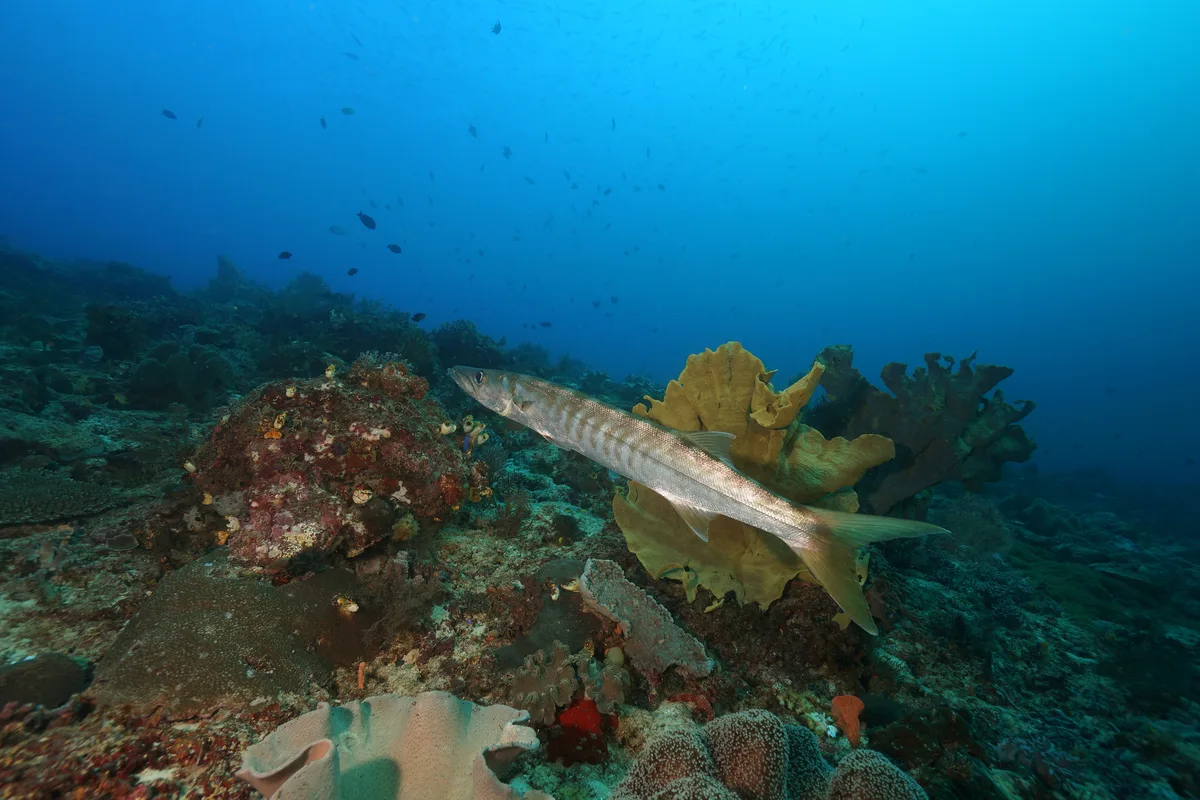
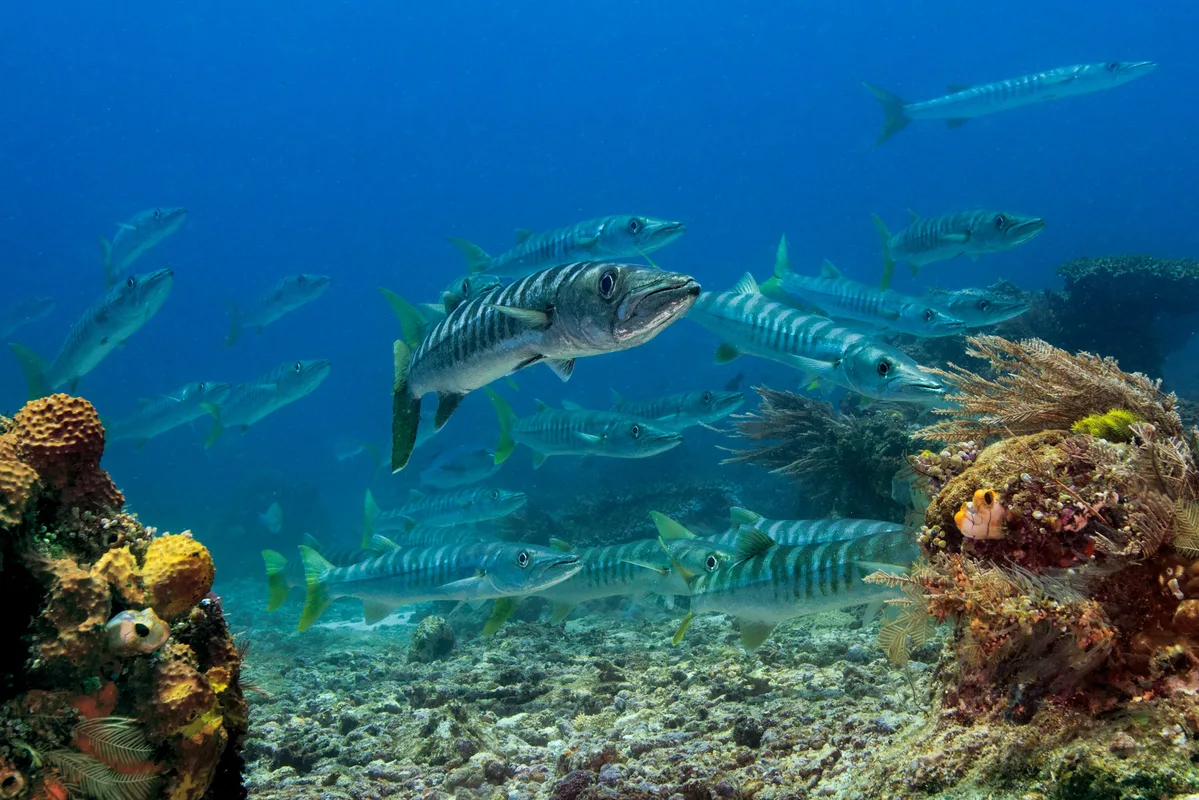
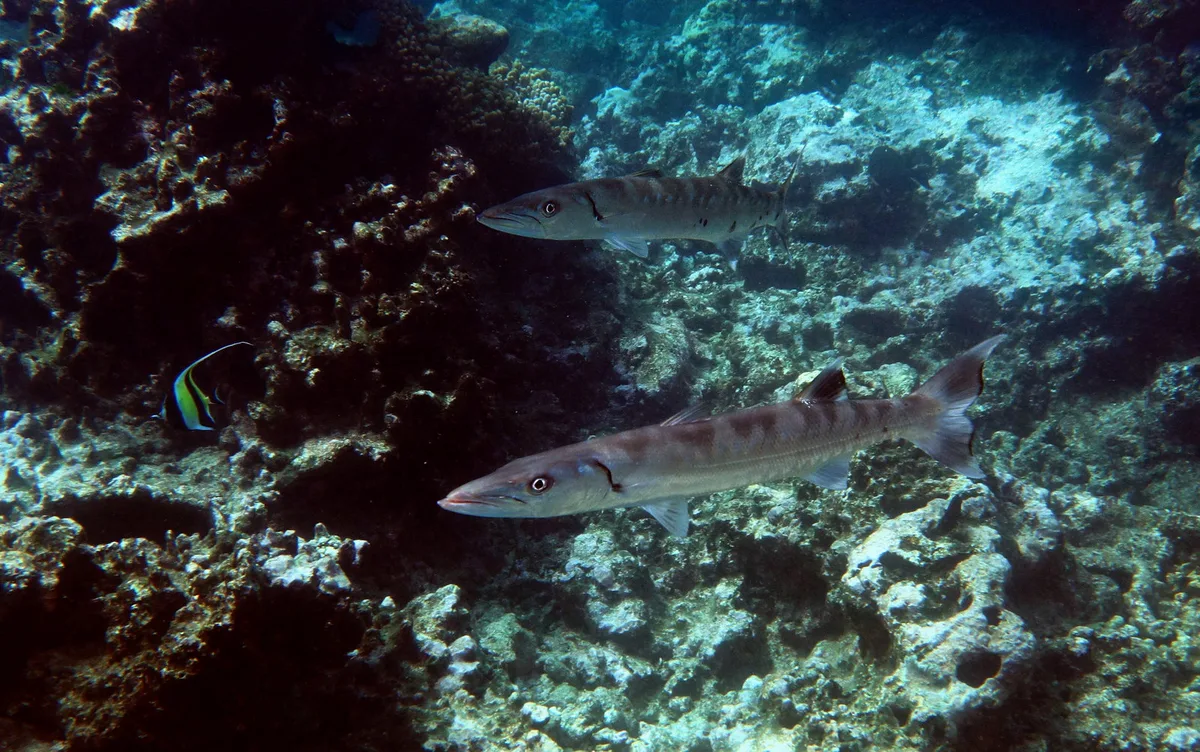
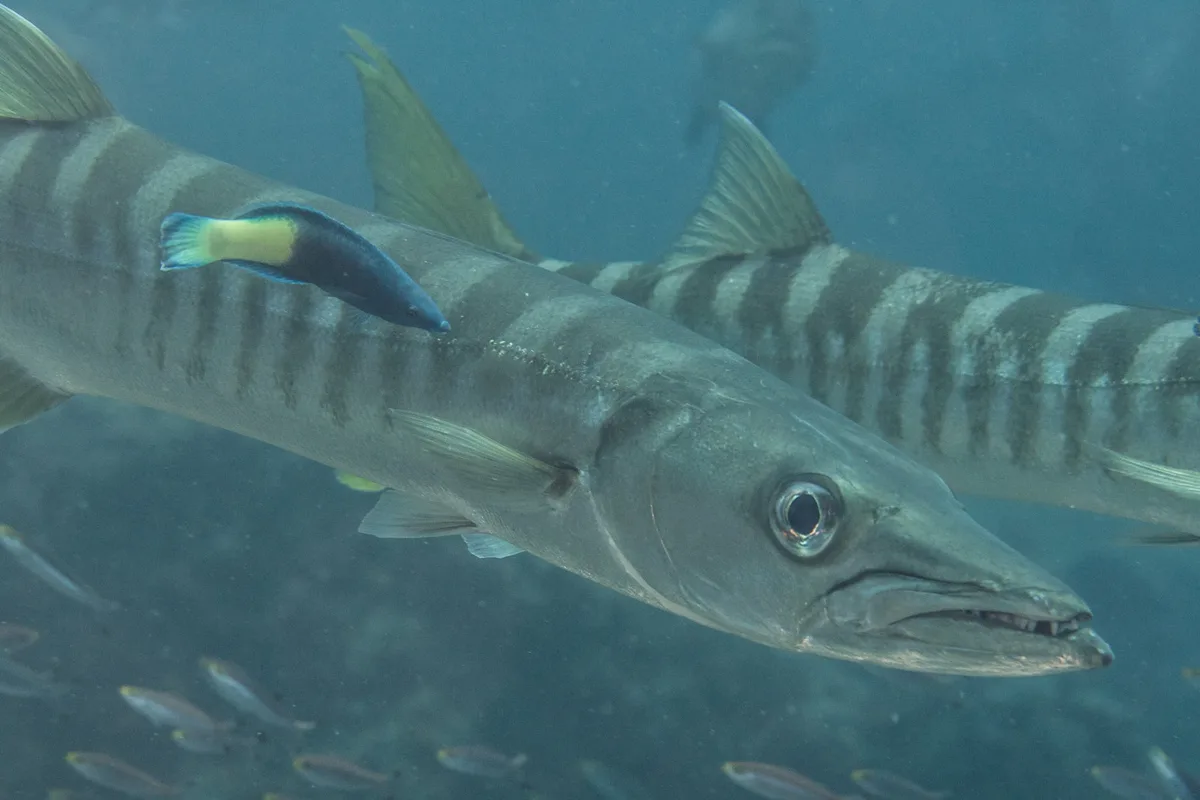
A meter and a half of barracuda hanging motionless three meters away, watching, is a genuinely unsettling thing to swim past, and the reputation that goes with it is mostly unearned.
Barracudas hunt by sight and by an explosive short strike, and the strike is triggered by a flash. Attacks on people are rare, and the ones that get recorded share a pattern: murky water, and something bright and small on the swimmer - a watch, a ring, a knife, a dangling gauge. The fish takes it for a fish, commits, and finds out at the last moment. It does not come back for a second try. The wound is a single deep clean cut, which is exactly what a mistake looks like rather than an attack.
So the rule is simple and it works: nothing shiny in murky water.
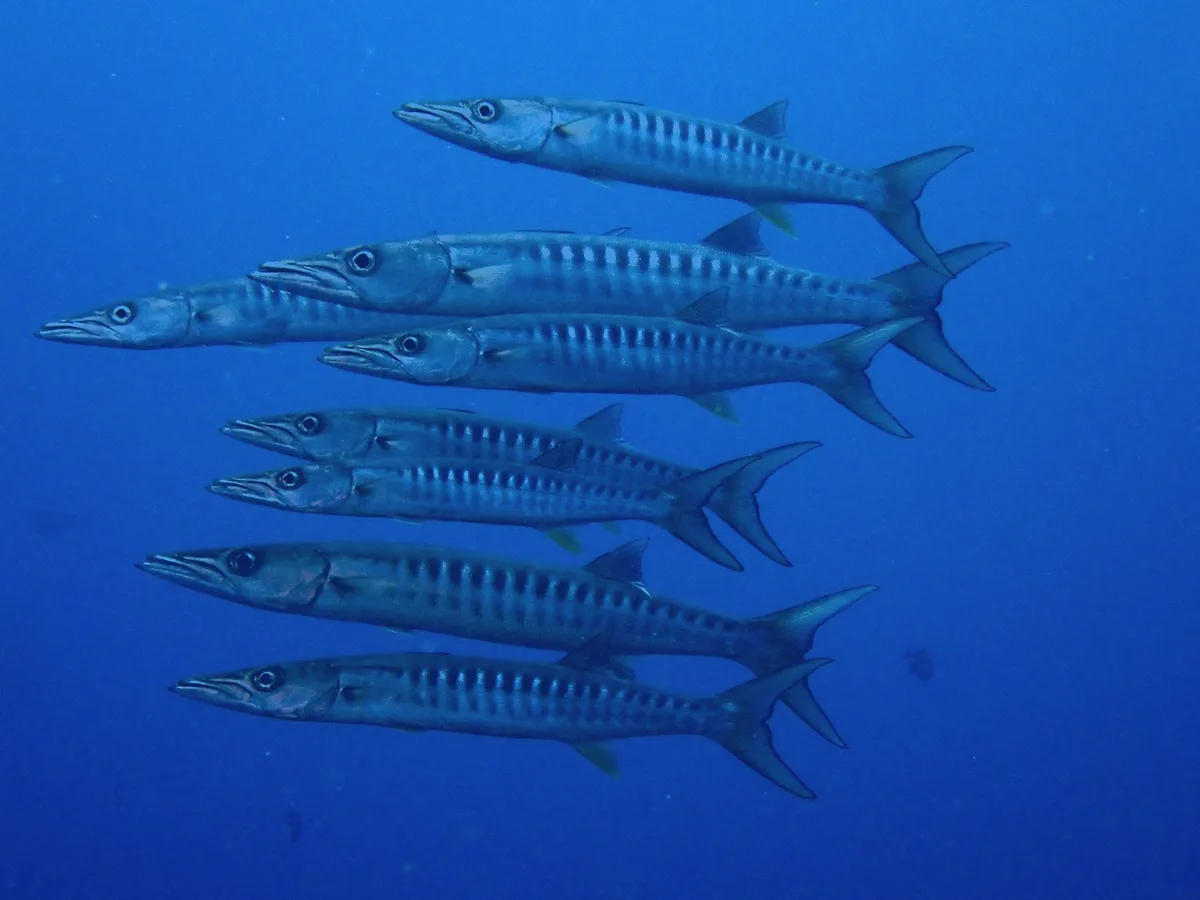
The rest of the time they follow divers out of curiosity, and a school of them slowly rotating over a drop-off is one of the better things to hang under.
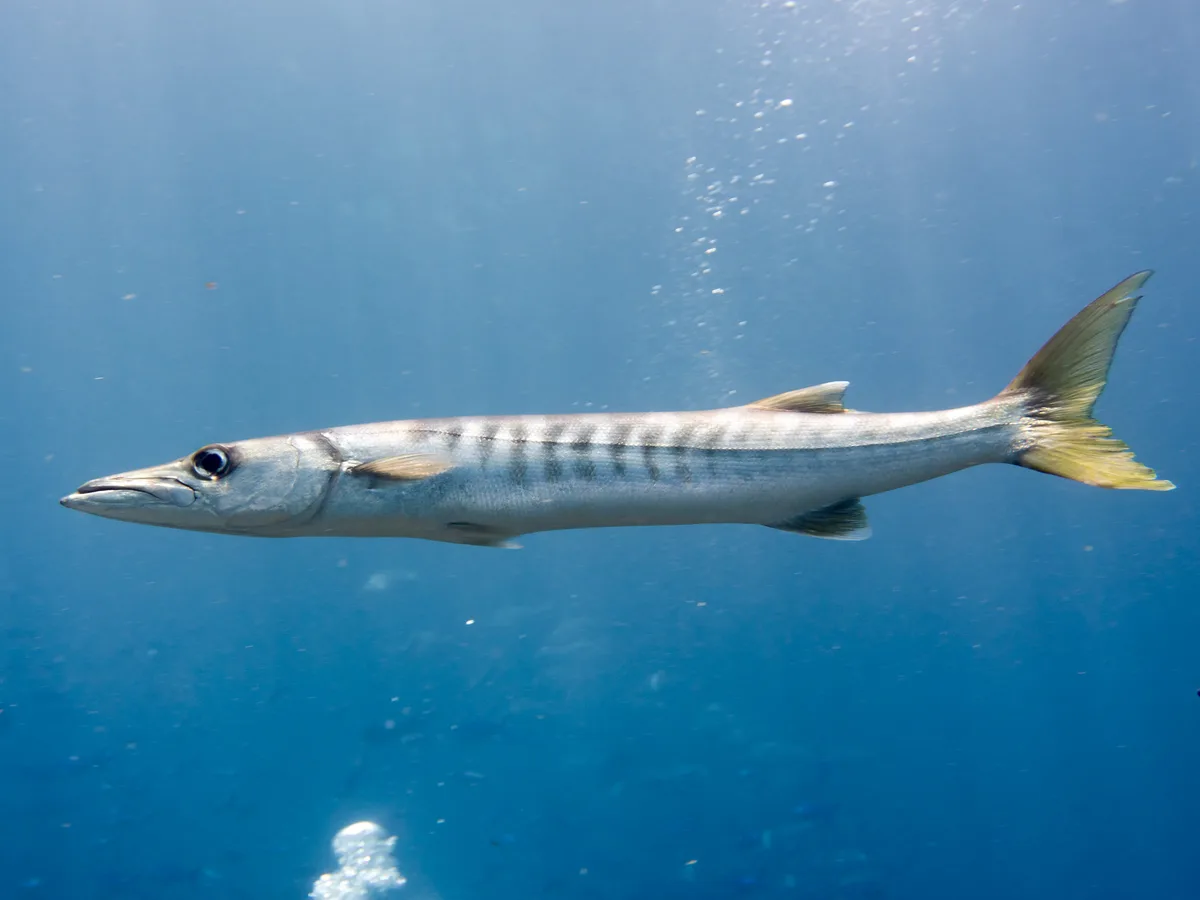
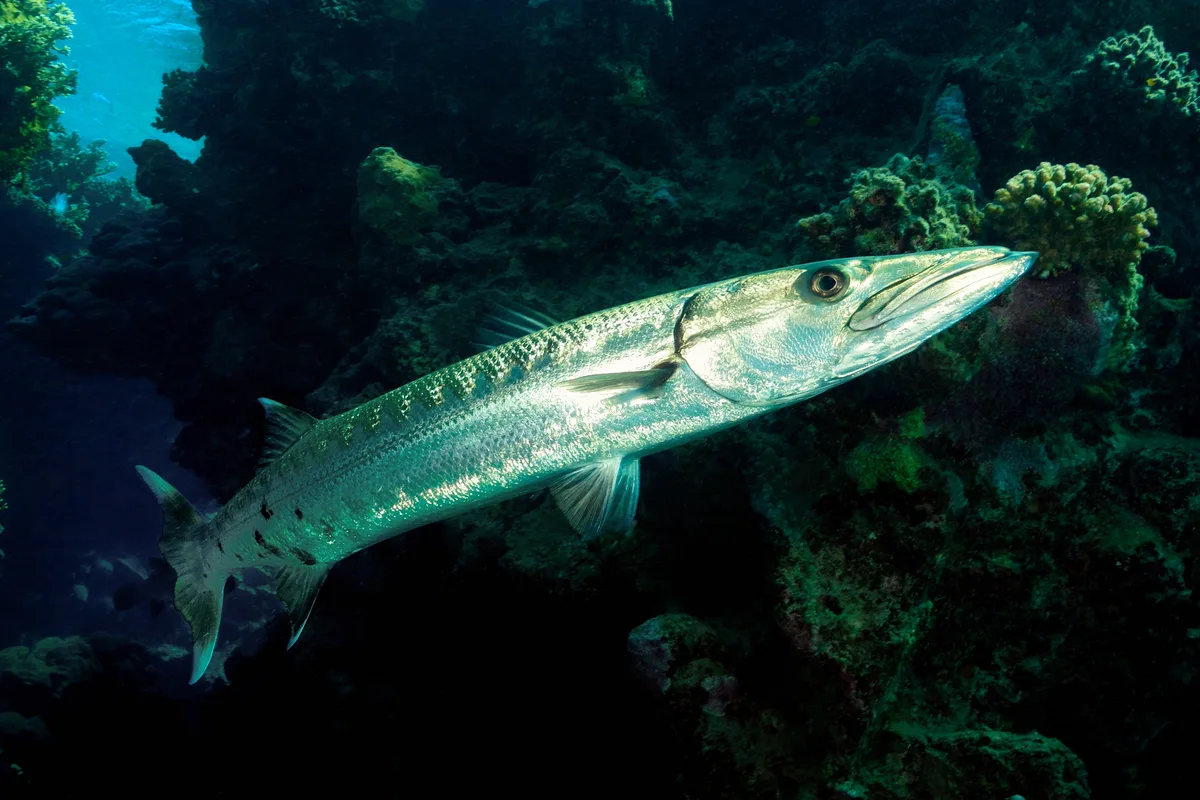
The name is about the marks, not the teeth: the dark blotches along the side were thought to resemble the thick ends of pickaxe handles.
The species. Sphyraena jello Cuvier 1829 - from jellow. ETYFish
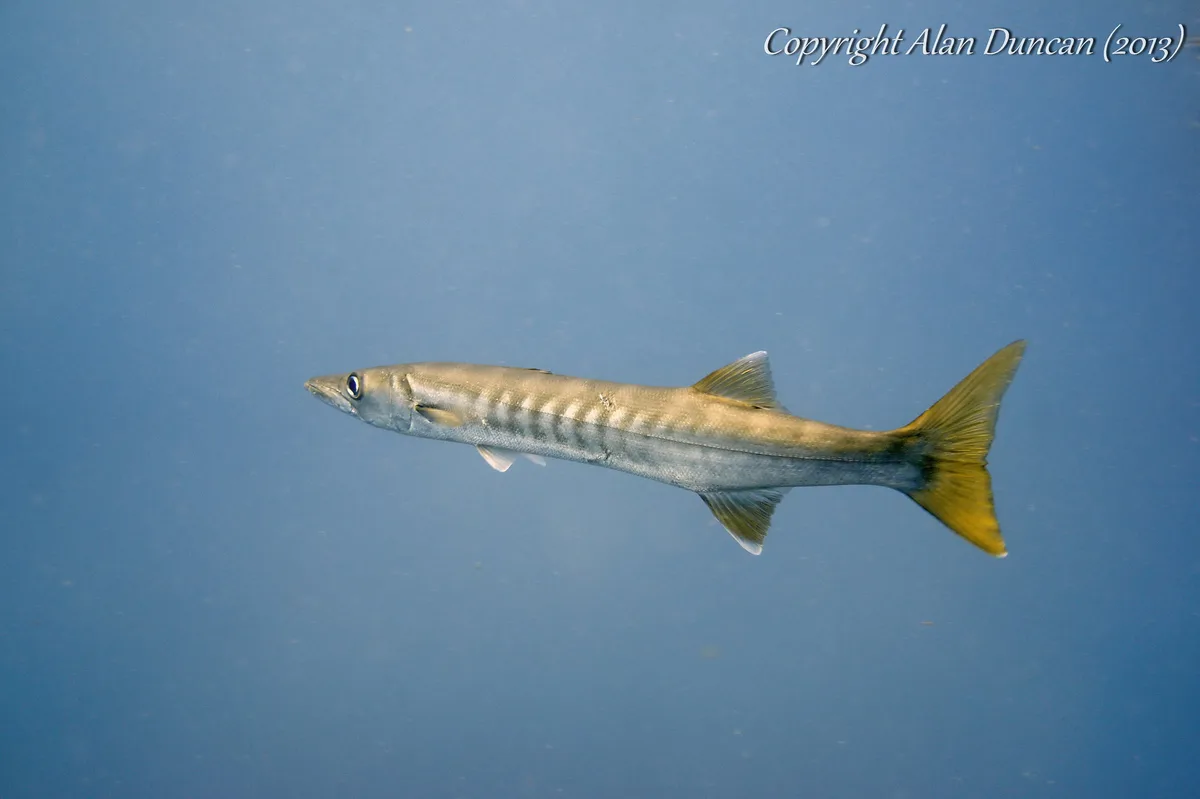
- silvery body with about twenty wavy bars and thick dark blotches along the side
- yellow tail fin
- underslung lower jaw, with the teeth showing when the mouth is closed
- hangs motionless in midwater, often in a slow-turning school
- up to 150 cm