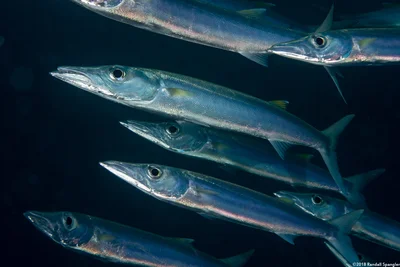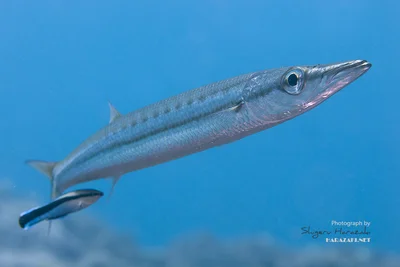
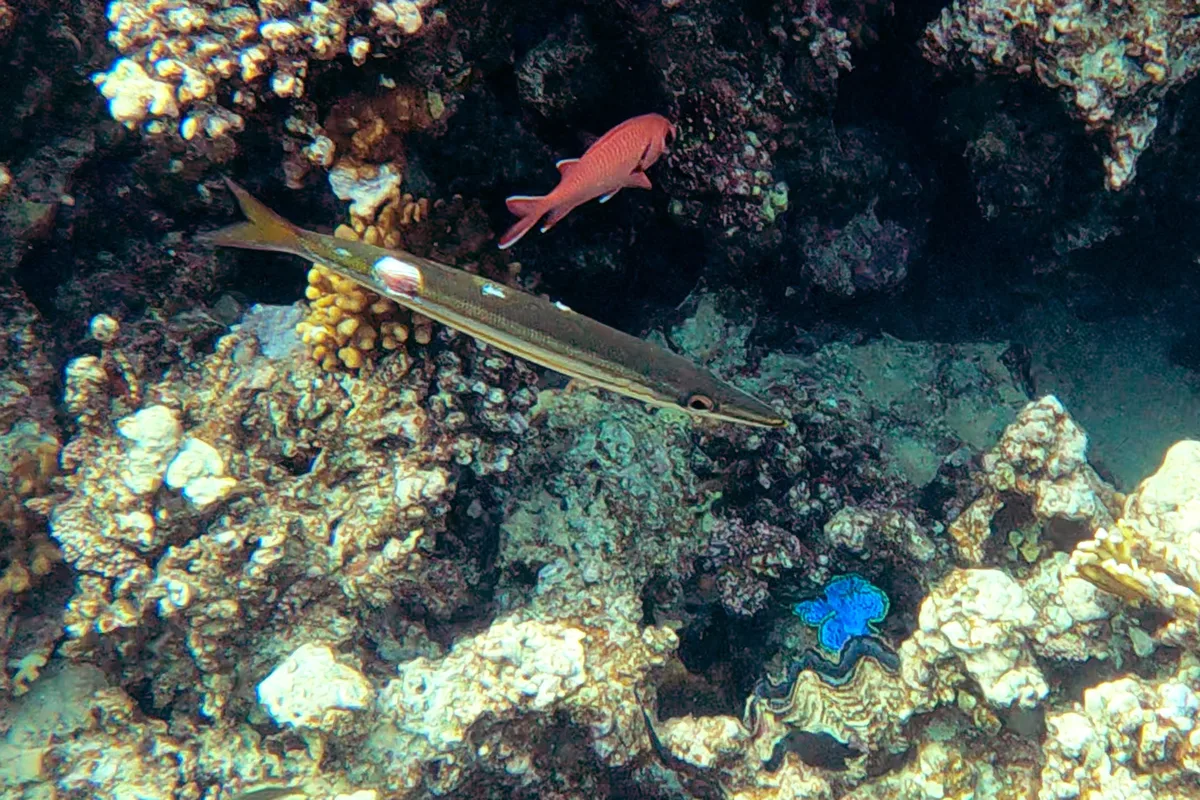
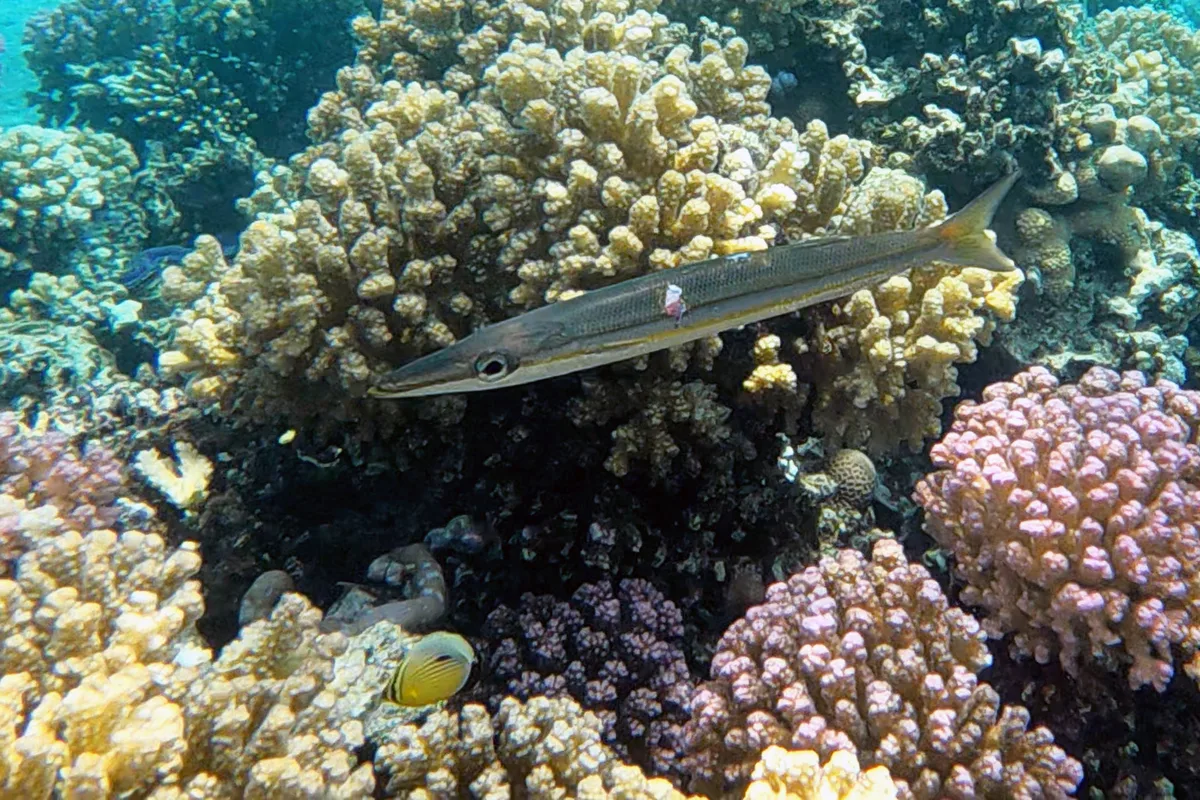
Start with the question everybody asks. No. This is a barracuda about the length of a forearm, and it has no interest in a diver. The fish behind the reputation is the great barracuda, which reaches 1.7 m, and even that one bites people only occasionally and, as the regional guide puts it, usually without serious consequences. Most of those incidents involve a spear, a fish on a stringer, or something shiny flashing in murky water. A barracuda hanging motionless in front of you is watching, not stalking.
What you get instead is a puzzle. The species was described in 2005 from Iburi in Kochi, 🇯🇵 Japan, and for six years it was known only from Japanese waters. Then in 2011 the same authors published an underwater photograph taken in the 🌊 Red Sea as the first record of the fish outside 🇯🇵 Japan. Not a specimen in a jar: a picture, taken by a diver.
That matters, because the identification turns on things a photograph does not show. It is separated from its close relative the Pondicherry barracuda mainly by the number of scale rows above the lateral line, roughly 8.5 to 9.5 against 5 to 7.5, which is a count made with a specimen in hand. The printed regional guide is not convinced by the 🌊 Red Sea fish at all and lists it as Sphyraena cf. iburiensis, a 🌊 Red Sea population that is probably a separate, undescribed species. It also gives 40 cm for the fish here, against 23 cm for the Japanese types, which is part of why the doubt exists.
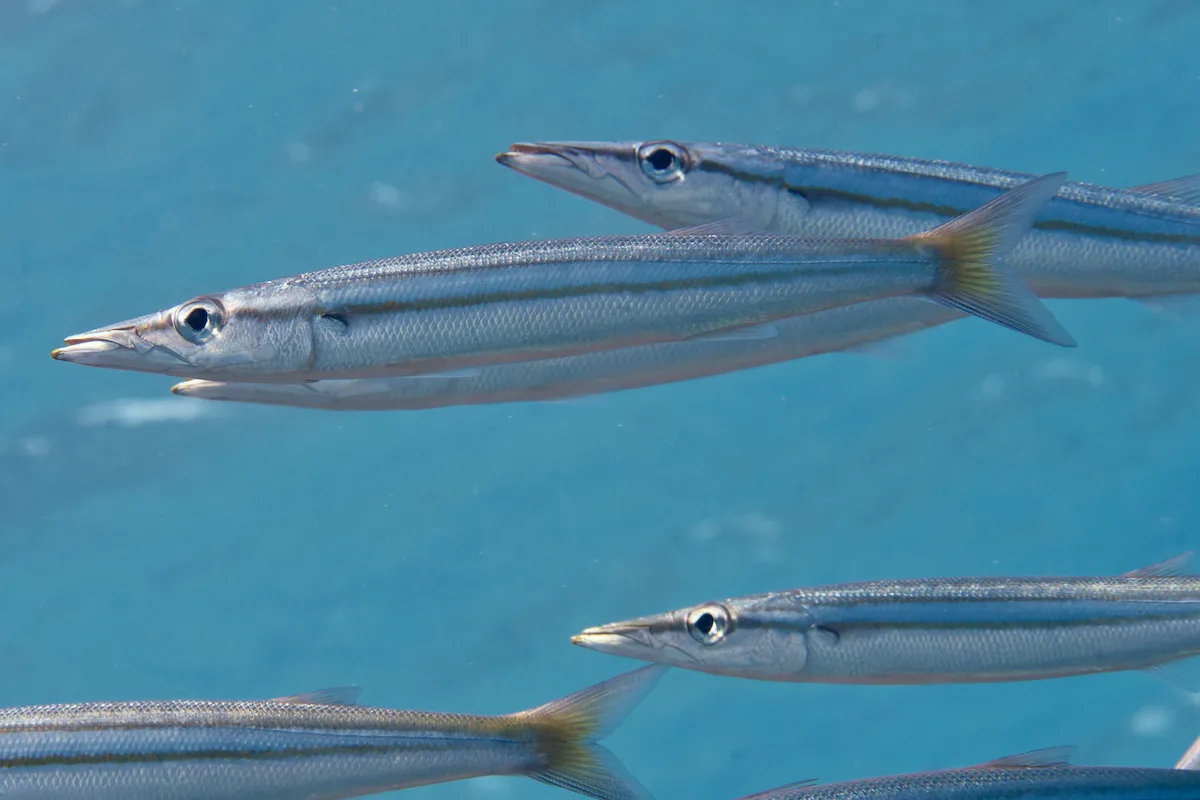
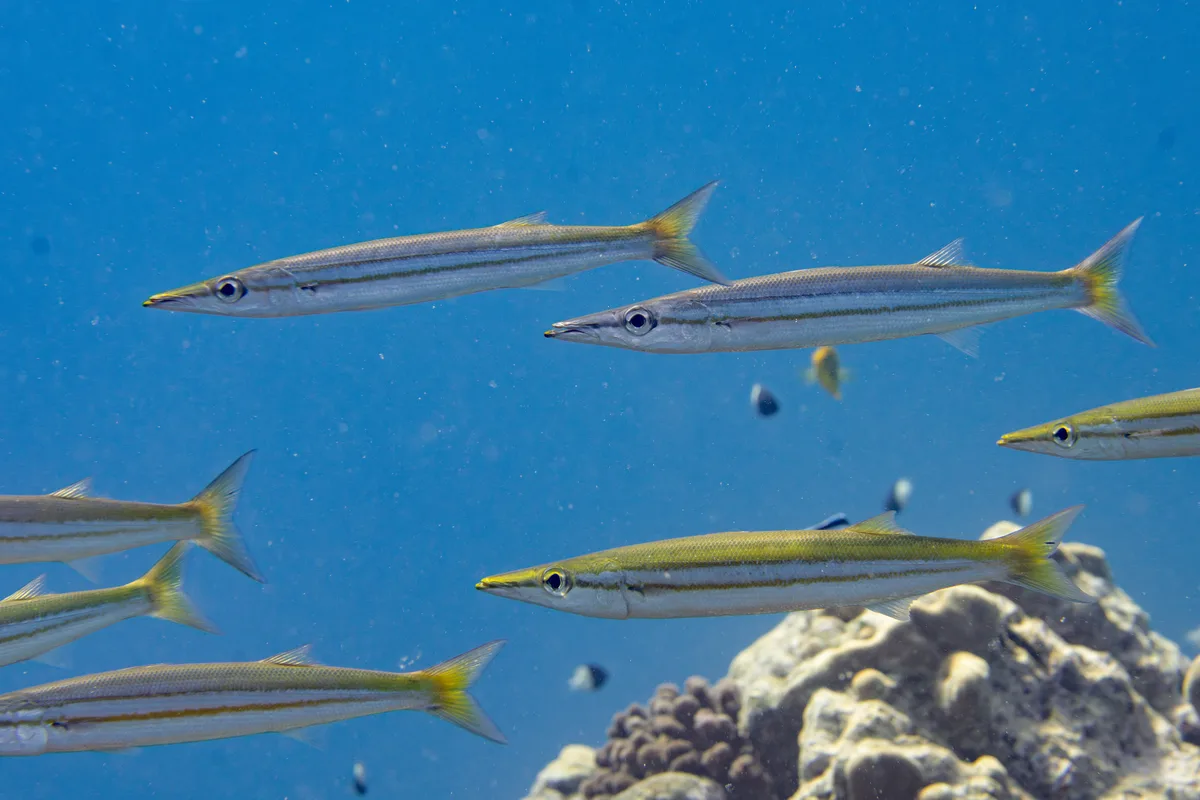
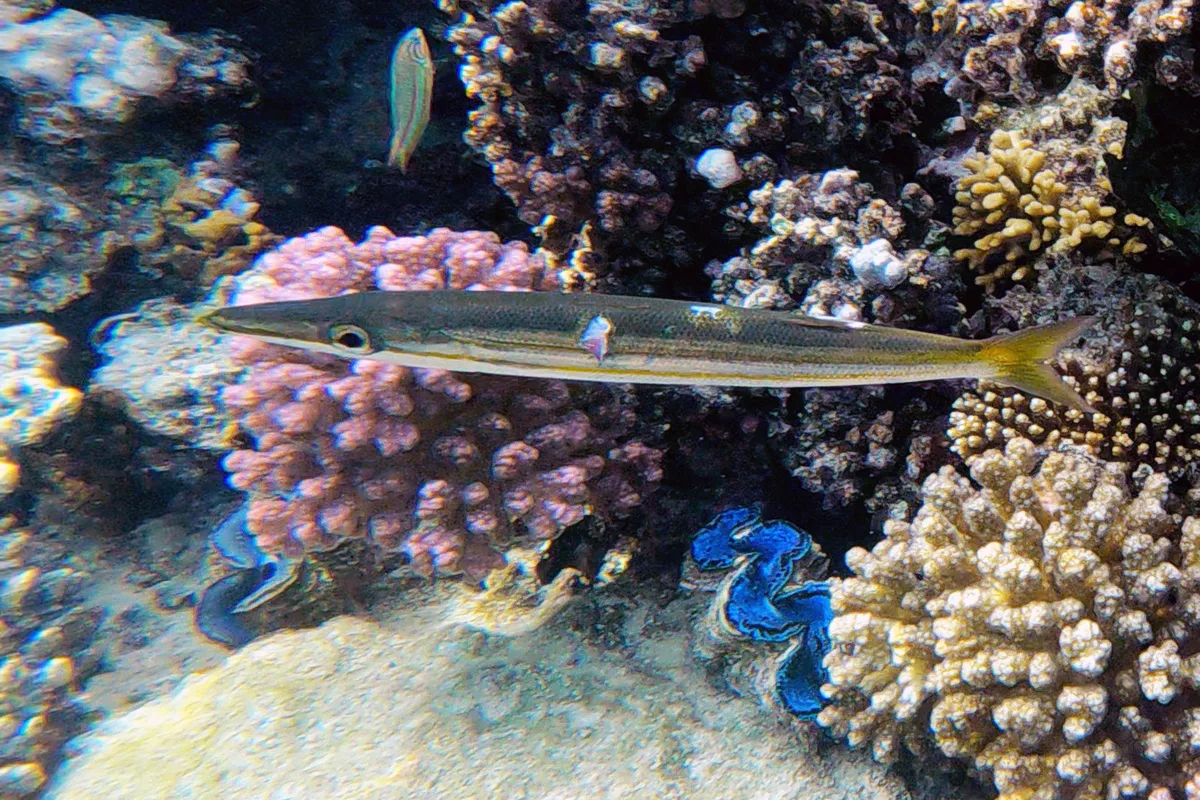
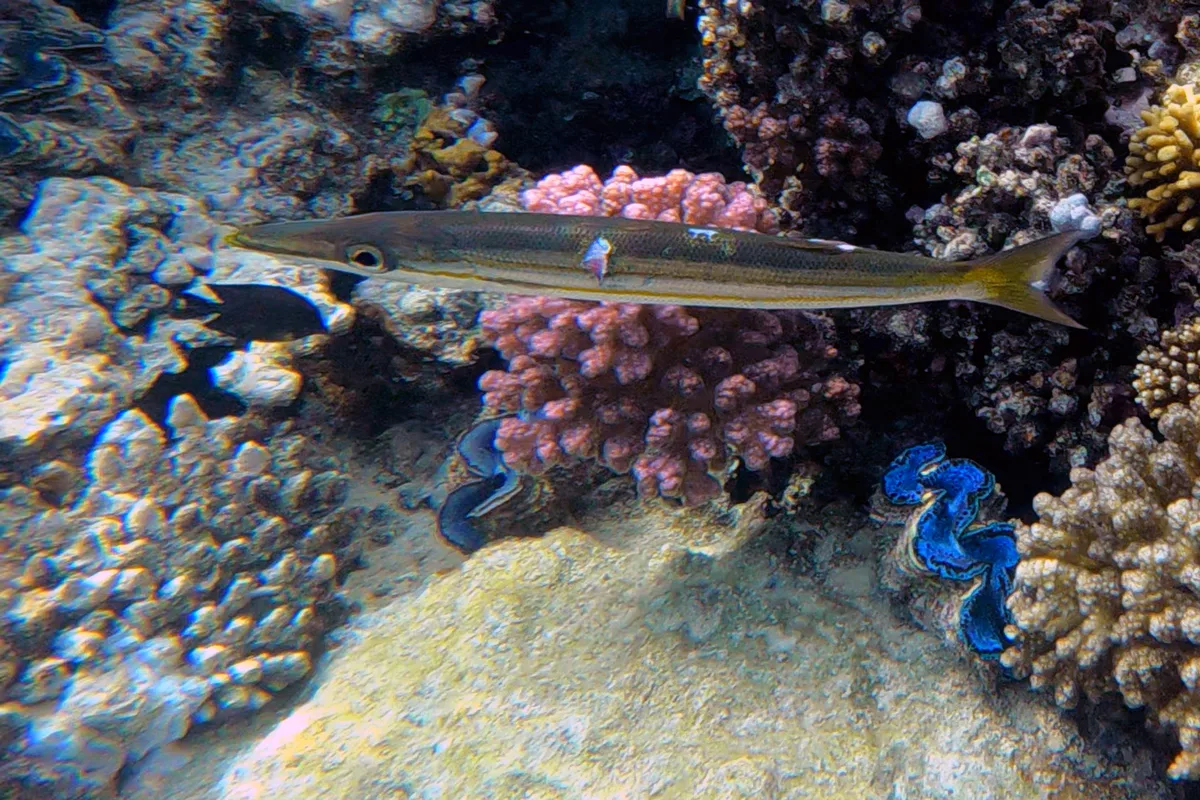
What you can see: a slim silver barracuda with two dark stripes running the length of the upper side, the lower one carrying on from the snout to the base of the tail just beneath the lateral line, and a first dorsal fin whose membrane is clear rather than dark. It hunts small fish in shallow coastal water in daylight.
If you photograph one, photograph the whole flank sharp and level. Somebody is eventually going to settle this.
- small slim barracuda with two dark stripes along the upper side
- lower stripe runs from the snout to the tail base just under the lateral line
- clear membrane in the first dorsal fin
- jaw long, lower jaw projecting past the upper
- up to 40 cm