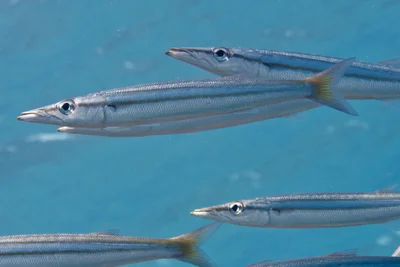
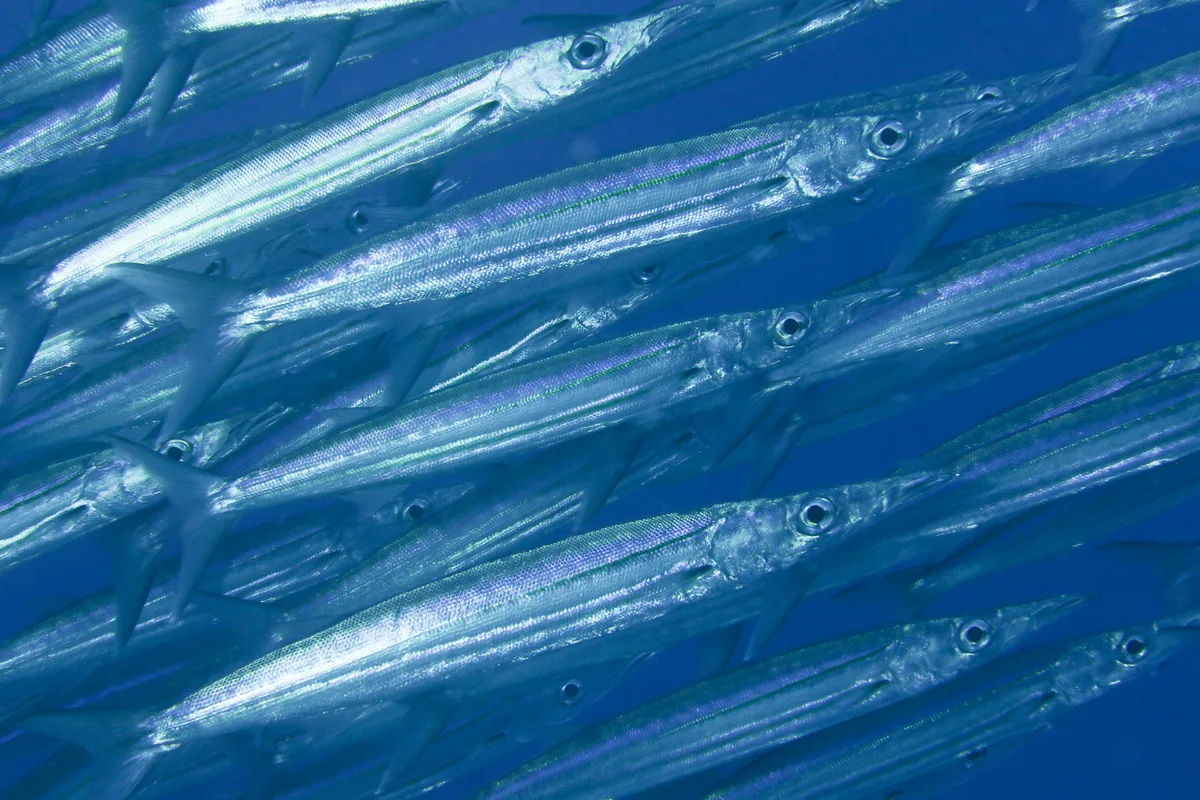
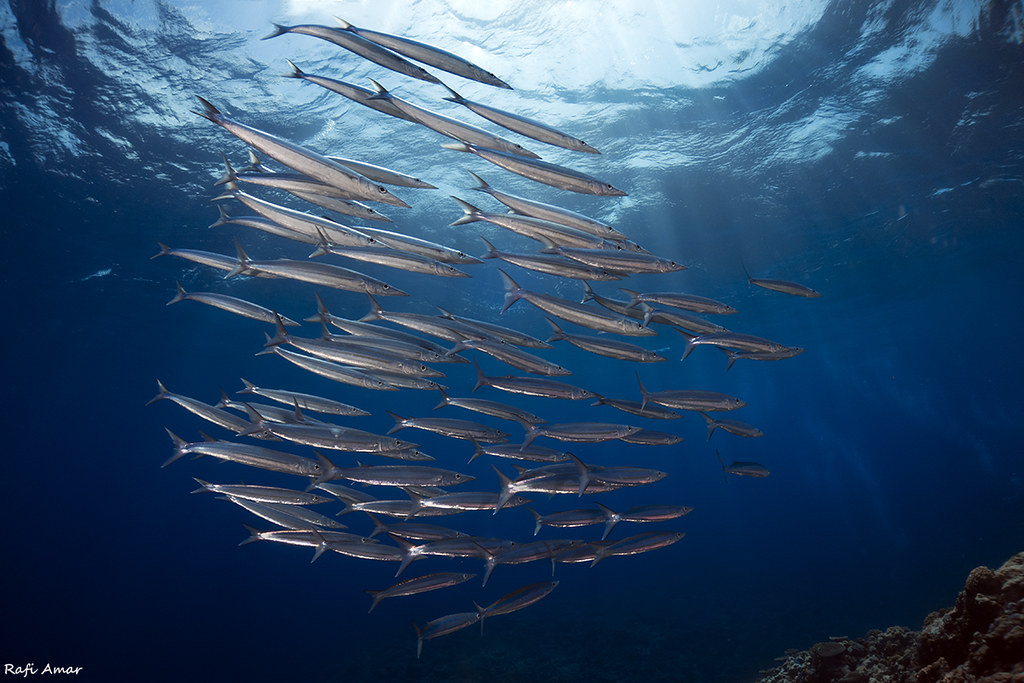
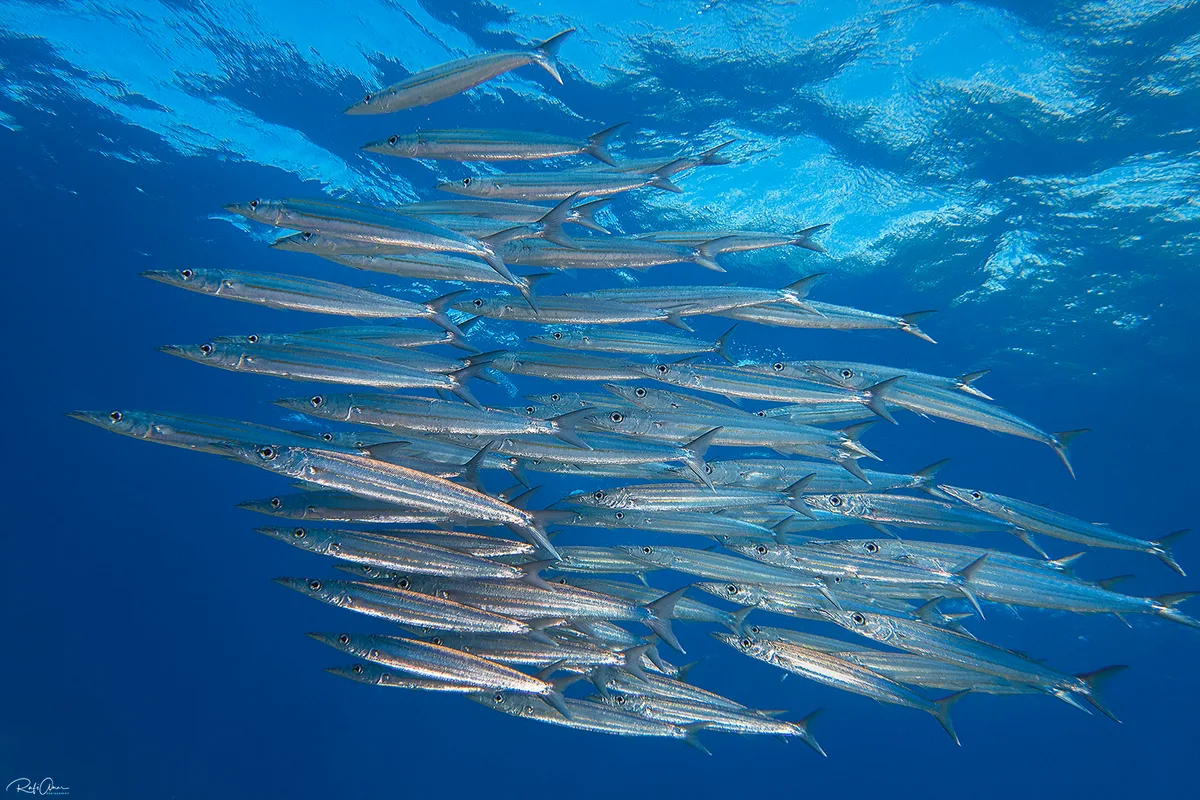
A barracuda school hanging motionless over a slope is not hunting. It is waiting for dark.
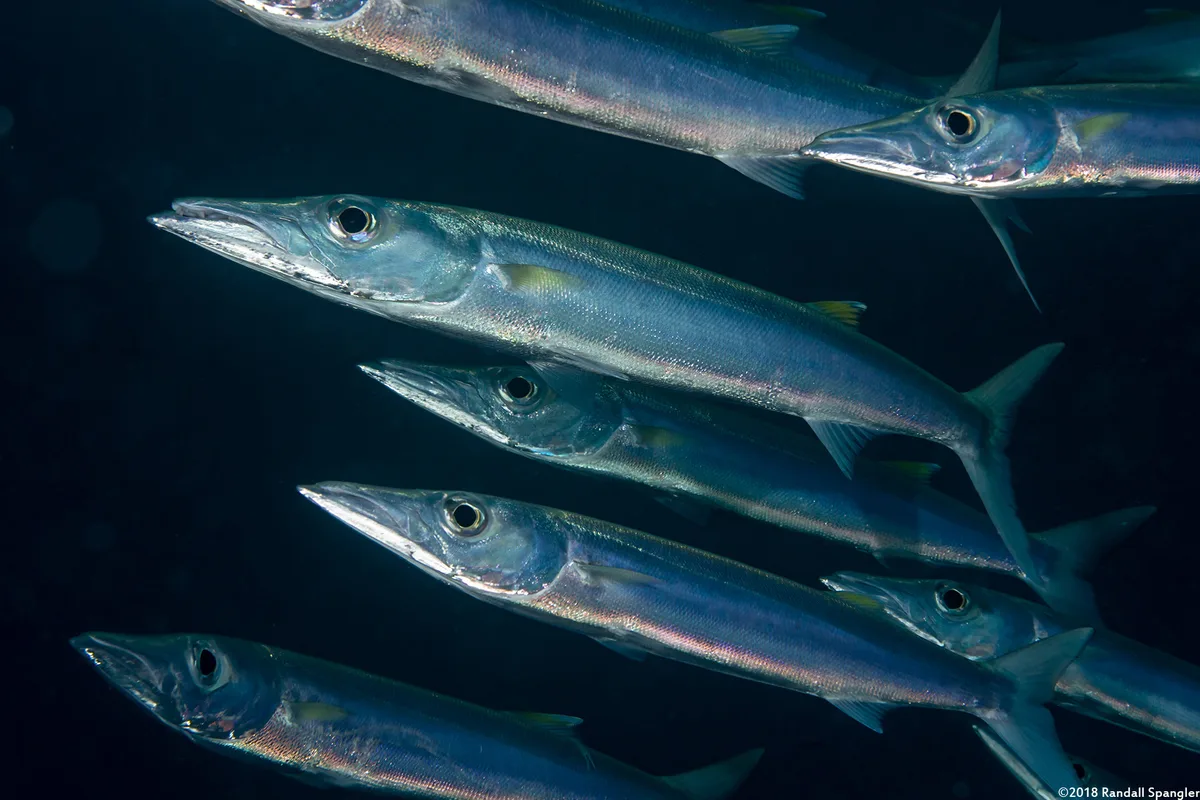
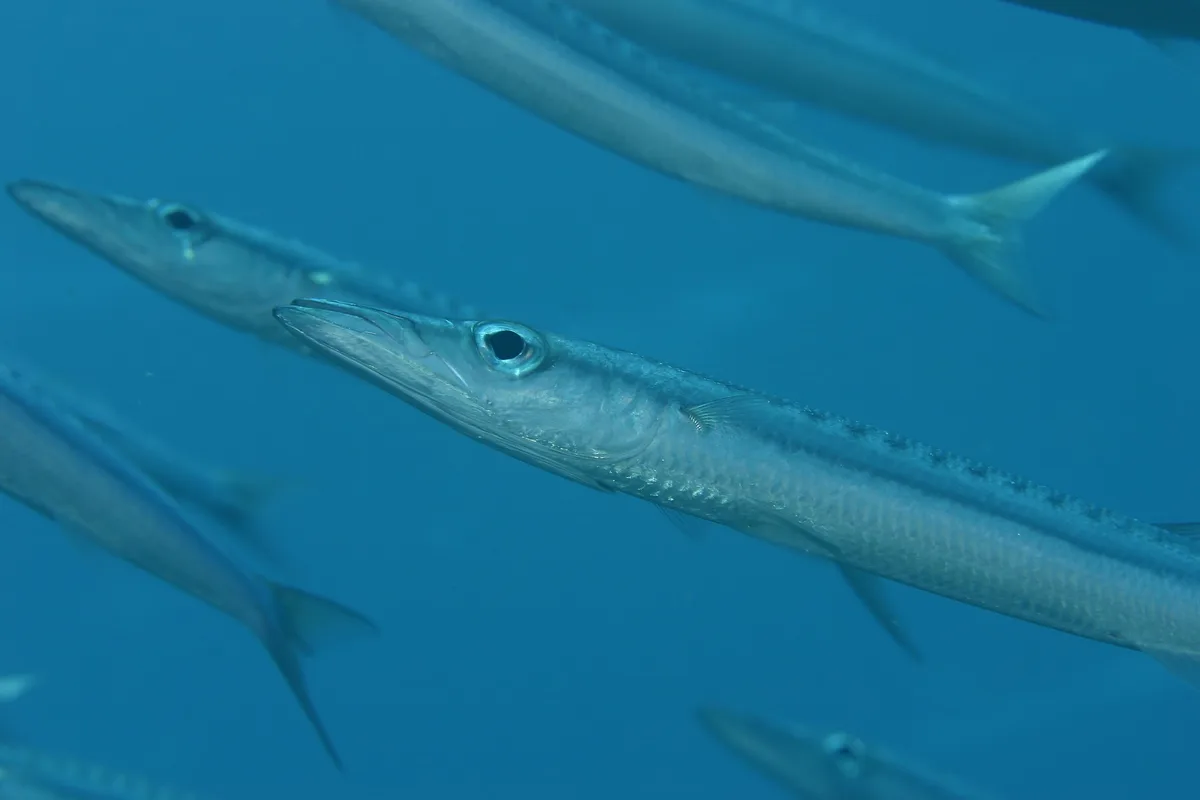
This species spends daylight packed into a dense, slowly rotating shoal, sometimes hundreds strong, doing nothing at all, and breaks up at dusk to hunt alone or in small groups through the night. The eye is the giveaway and the reason: it is noticeably larger than in the other barracudas here, which is what a fish that does its serious work in the dark needs.
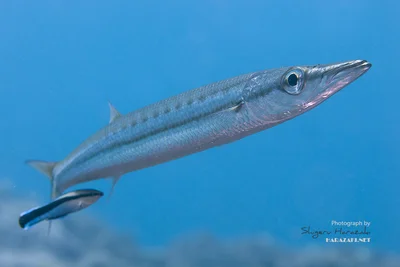
Telling the barracudas apart is worth ten seconds. This one is plain, slim and silver with a dark line along the back and no markings on the flank. The pickhandle carries thick dark blotches down the side and a yellow tail. The great barracuda, the big one, has scattered black smudges low on the body and a much heavier build. Size alone will mislead you, because a young great barracuda and an adult bigeye overlap.
It goes deep, recorded past two hundred and seventy meters, but the fish divers meet are in the top thirty.
On ciguatera: this species appears in poisoning reports, like most large reef predators here, and the risk rises with size.
The species. Sphyraena forsteri Cuvier 1829 - Honours Johann Reinhold Forster. ETYFish
- slim silver body with a dark line along the back and no bars on the side
- very large eye, larger than in the other barracudas here
- usually in a dense stationary school by day
- up to 69 cm