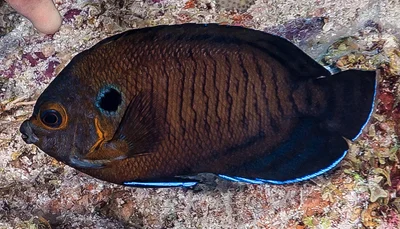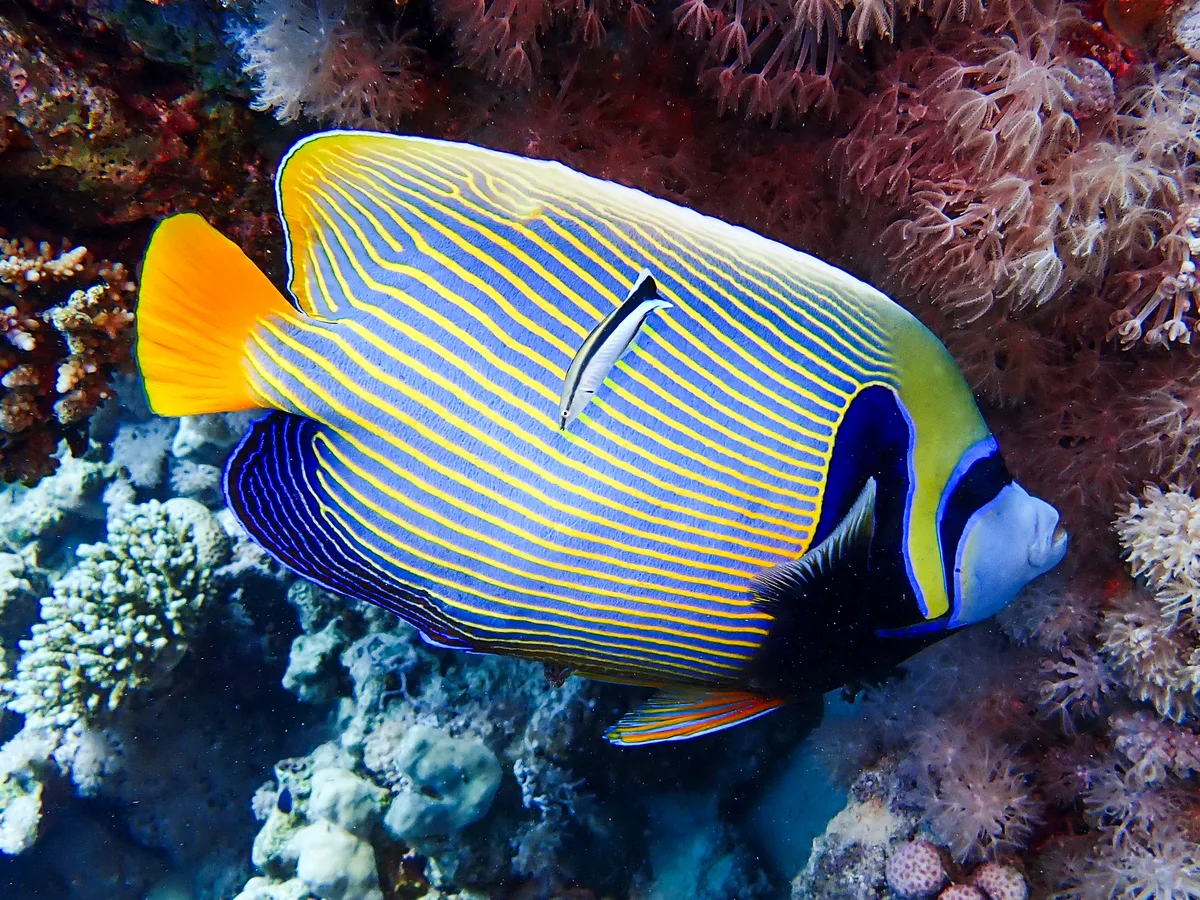
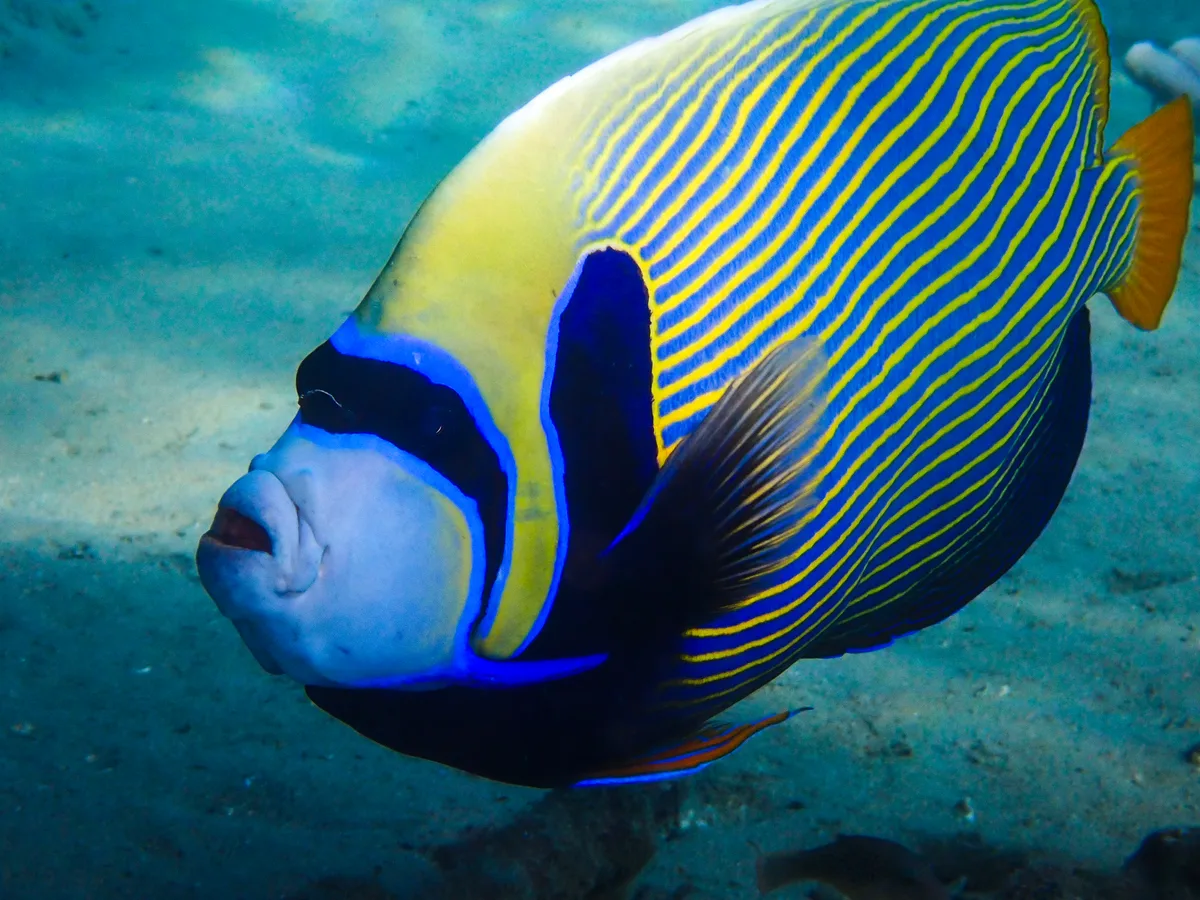
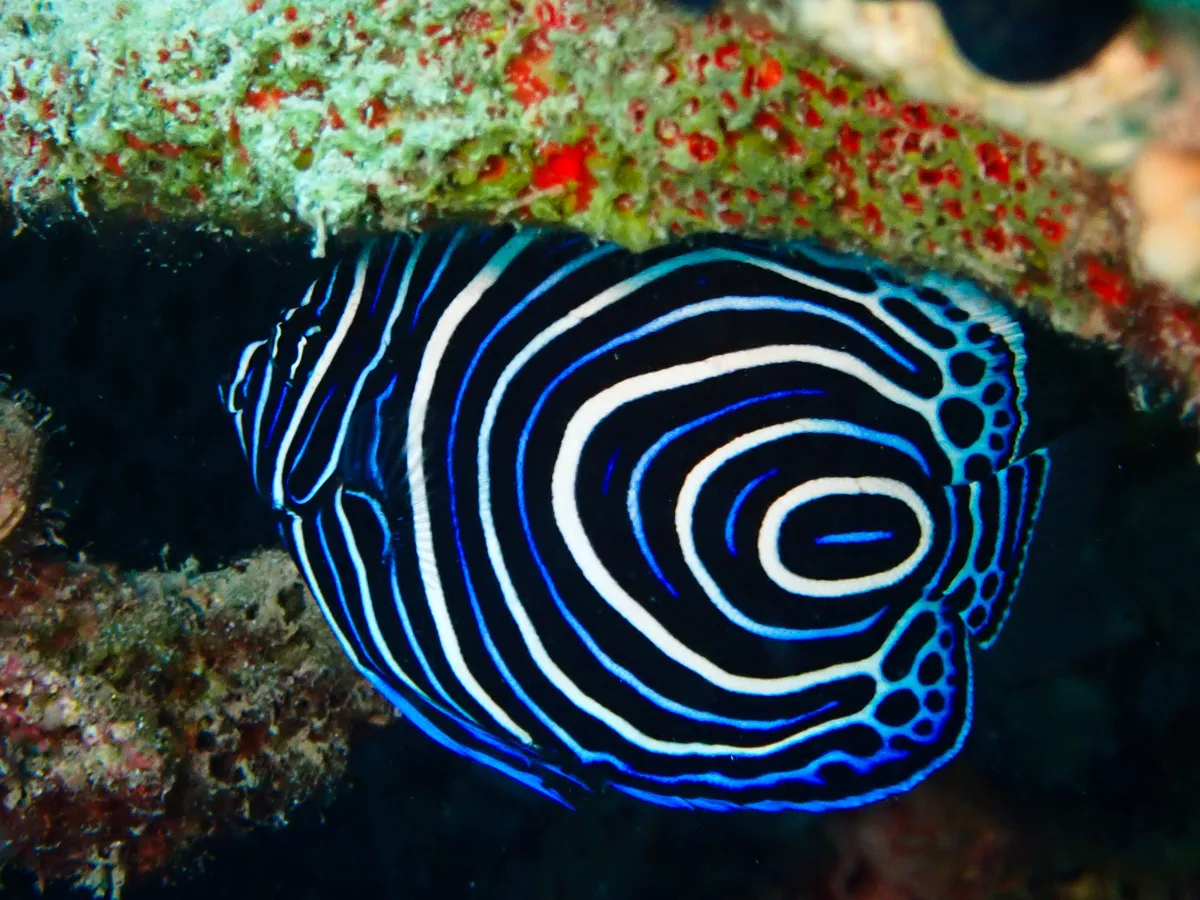
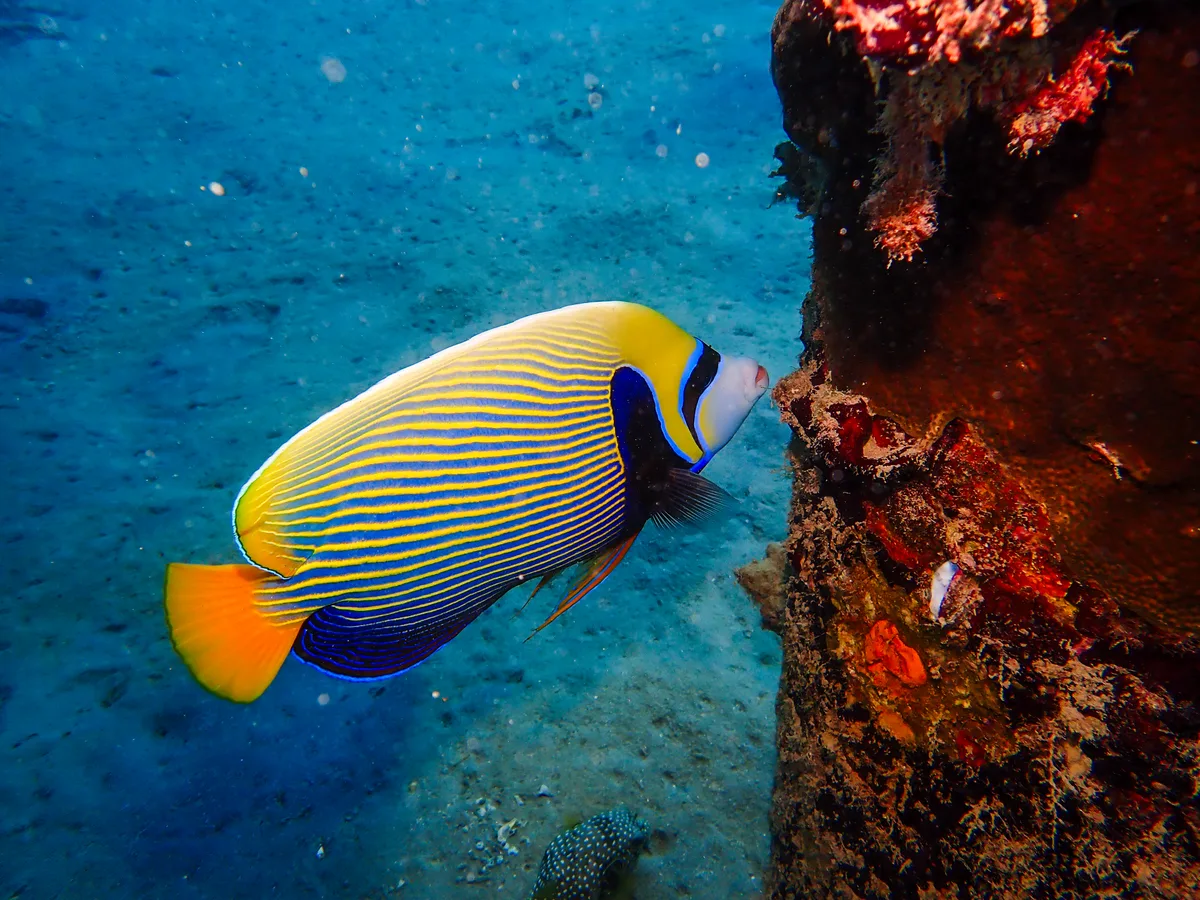
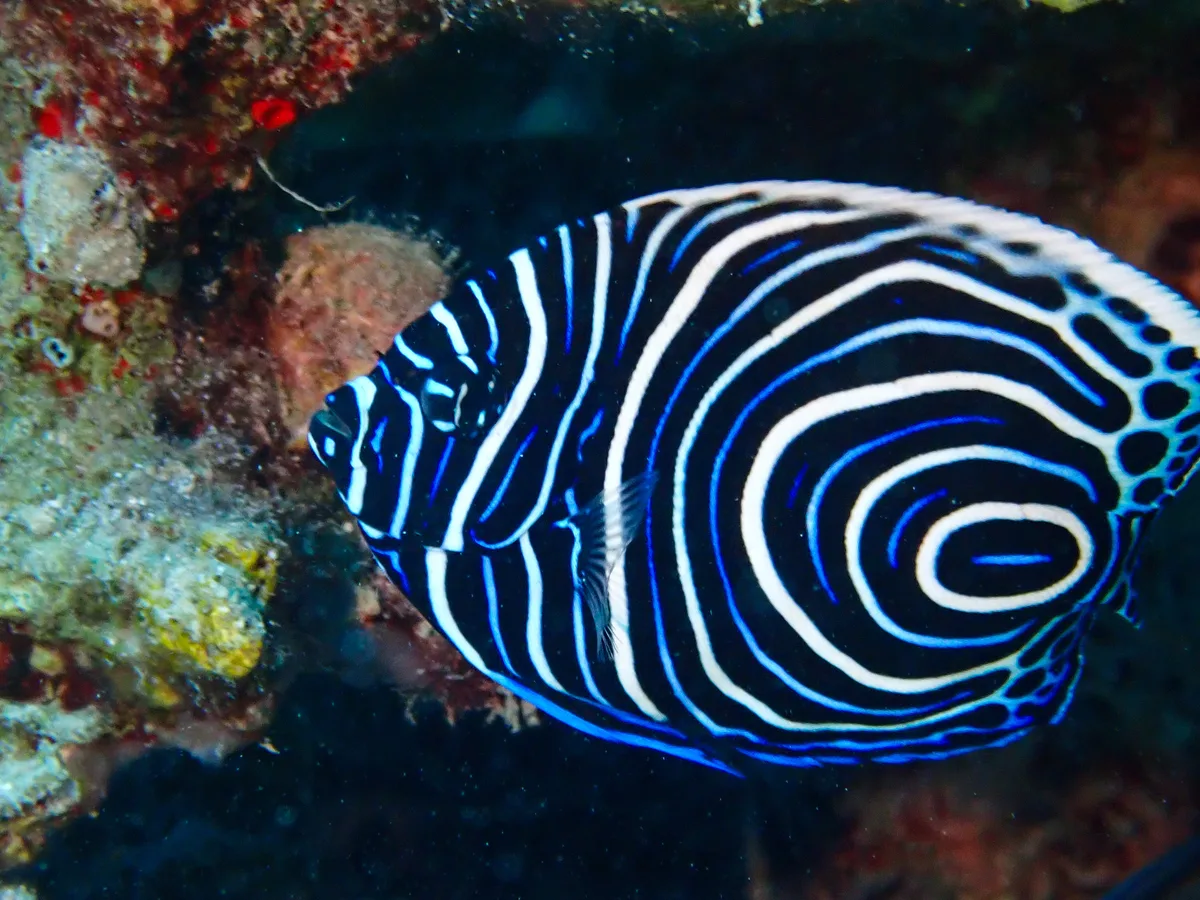
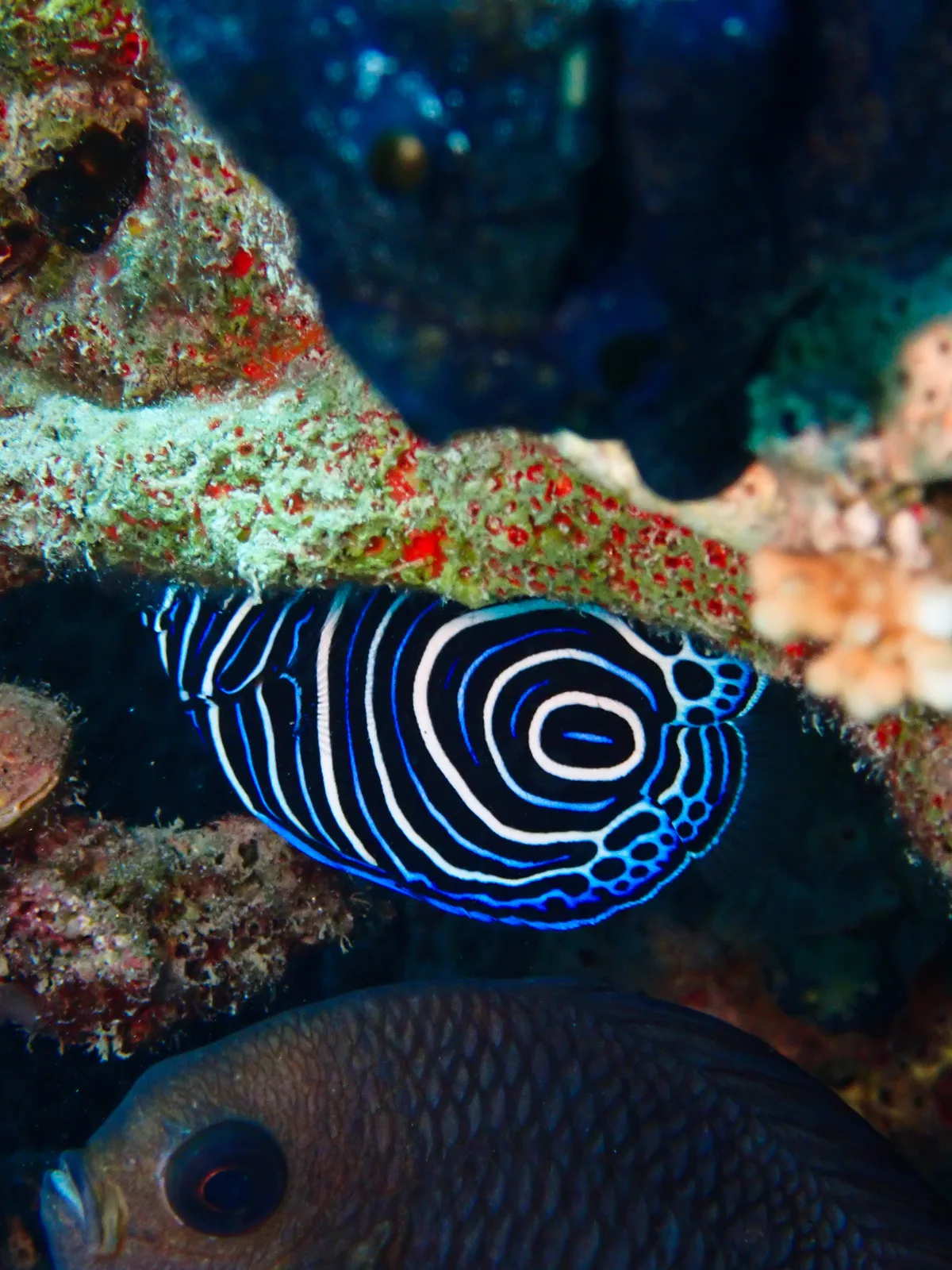
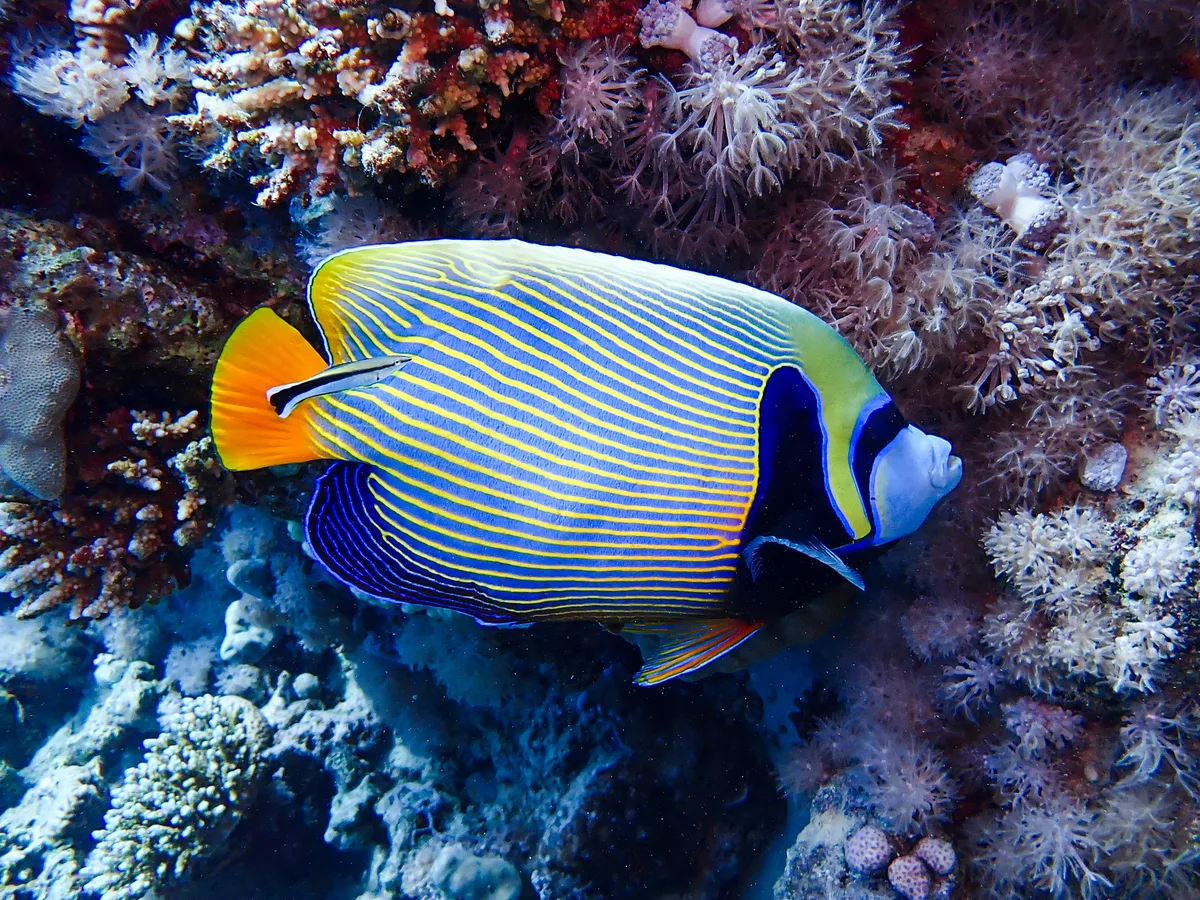
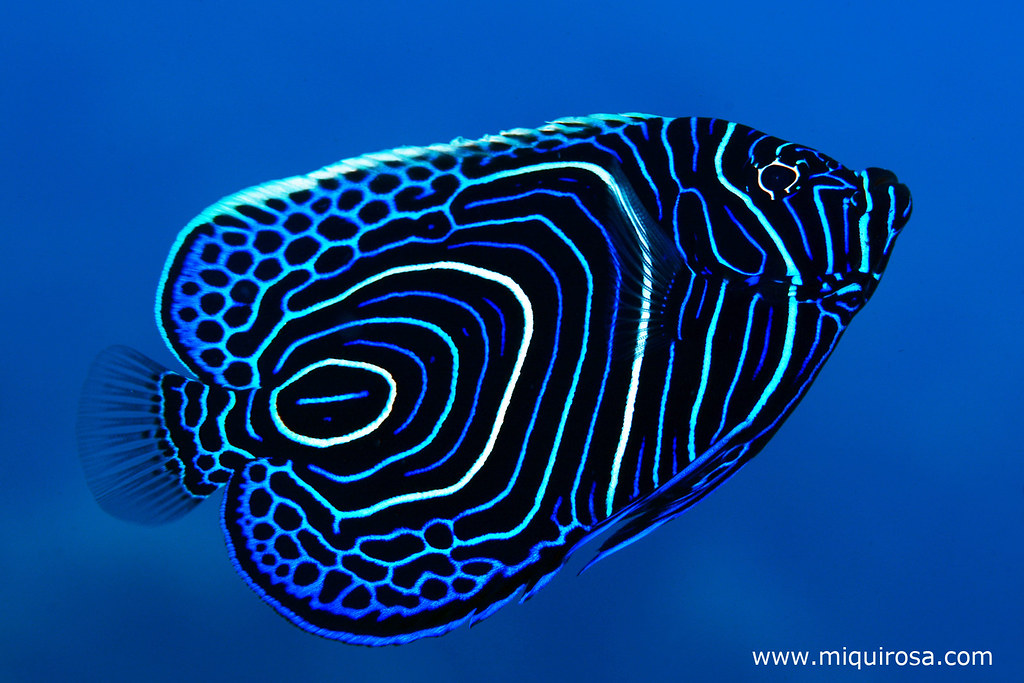
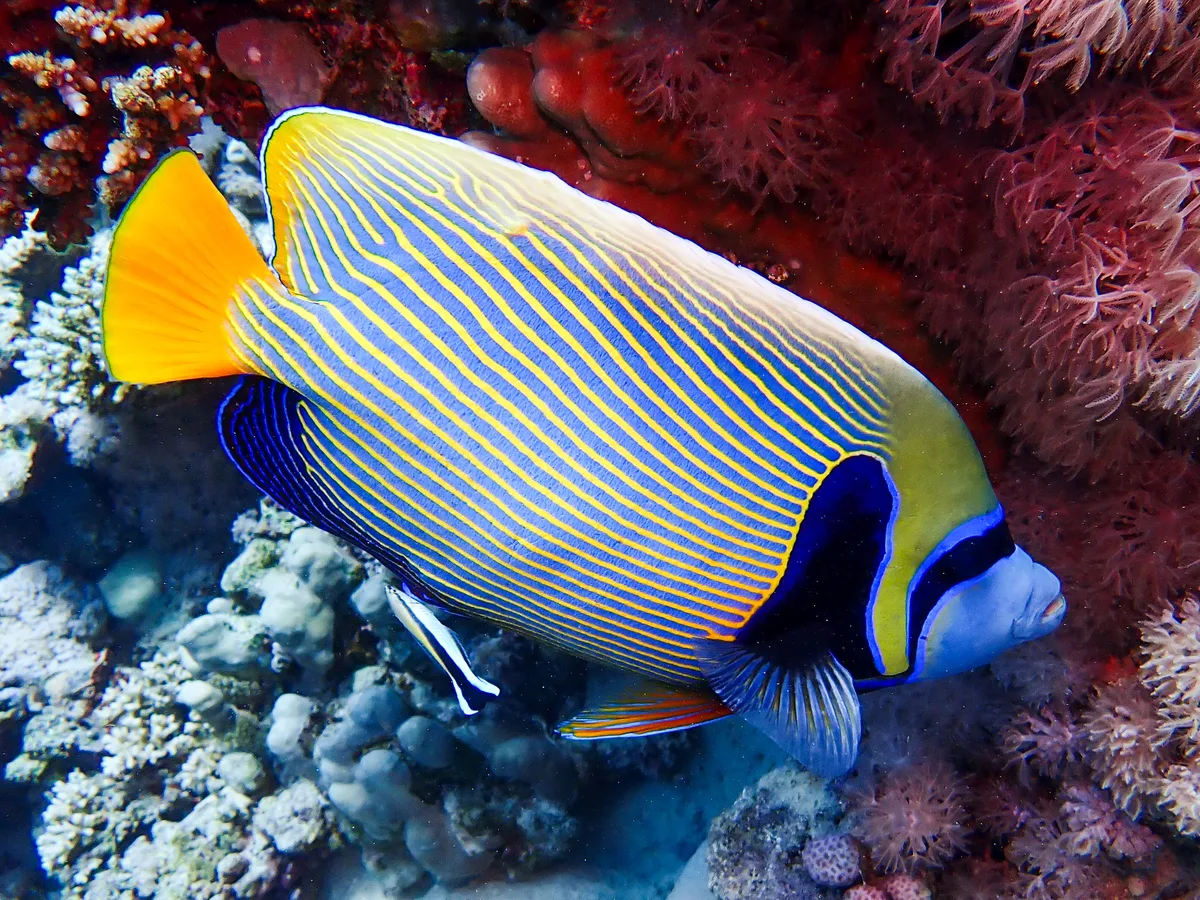
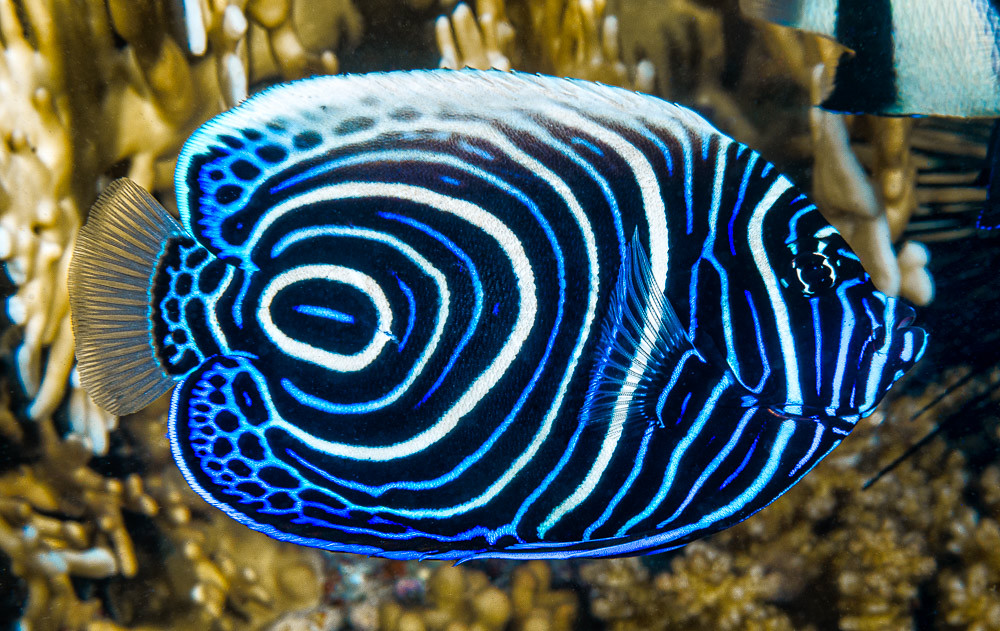
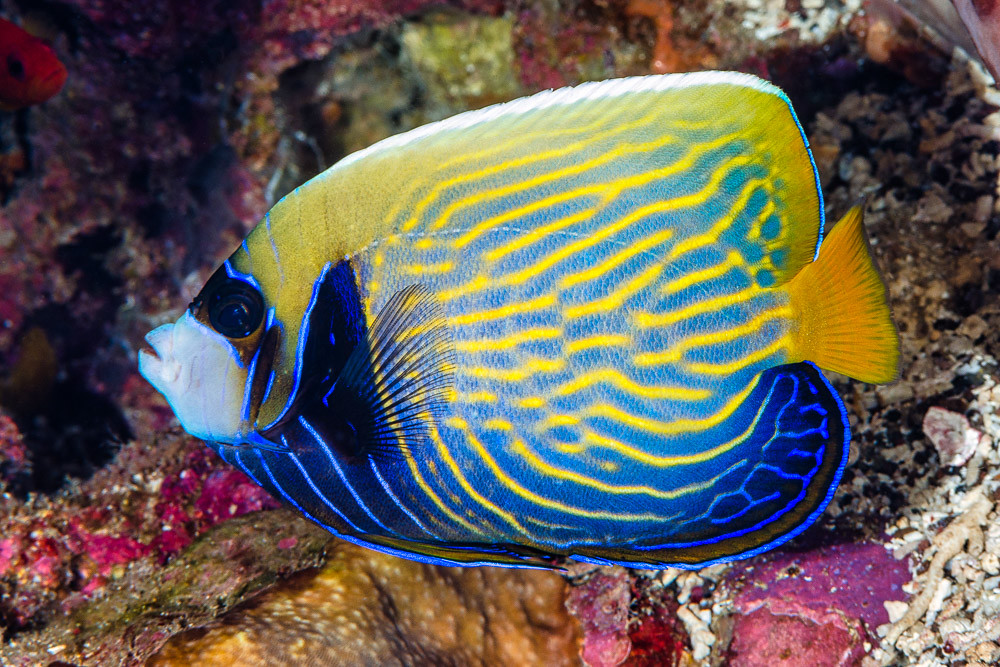
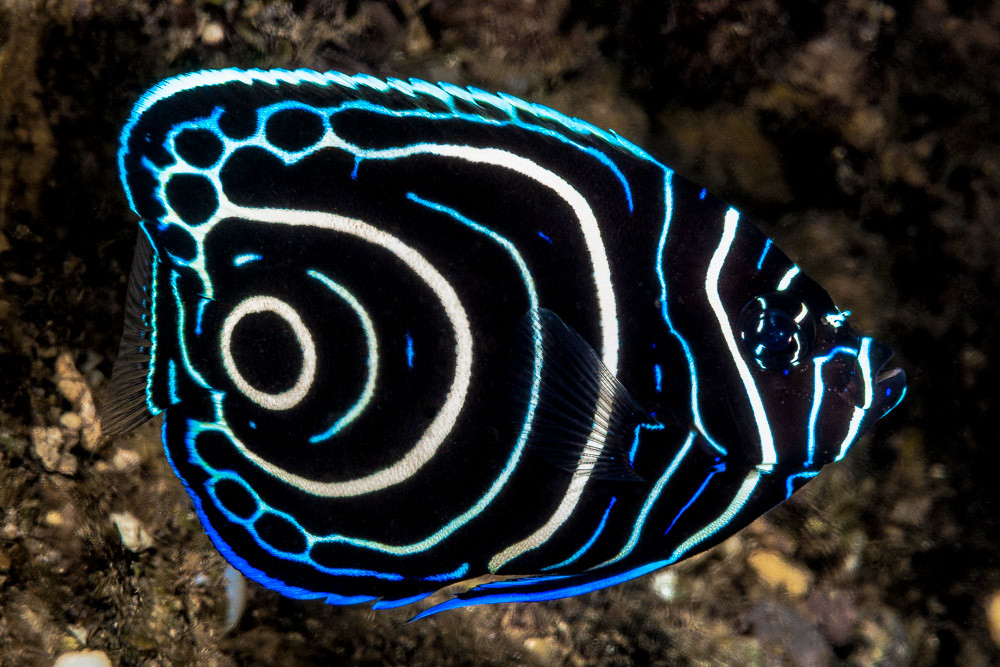
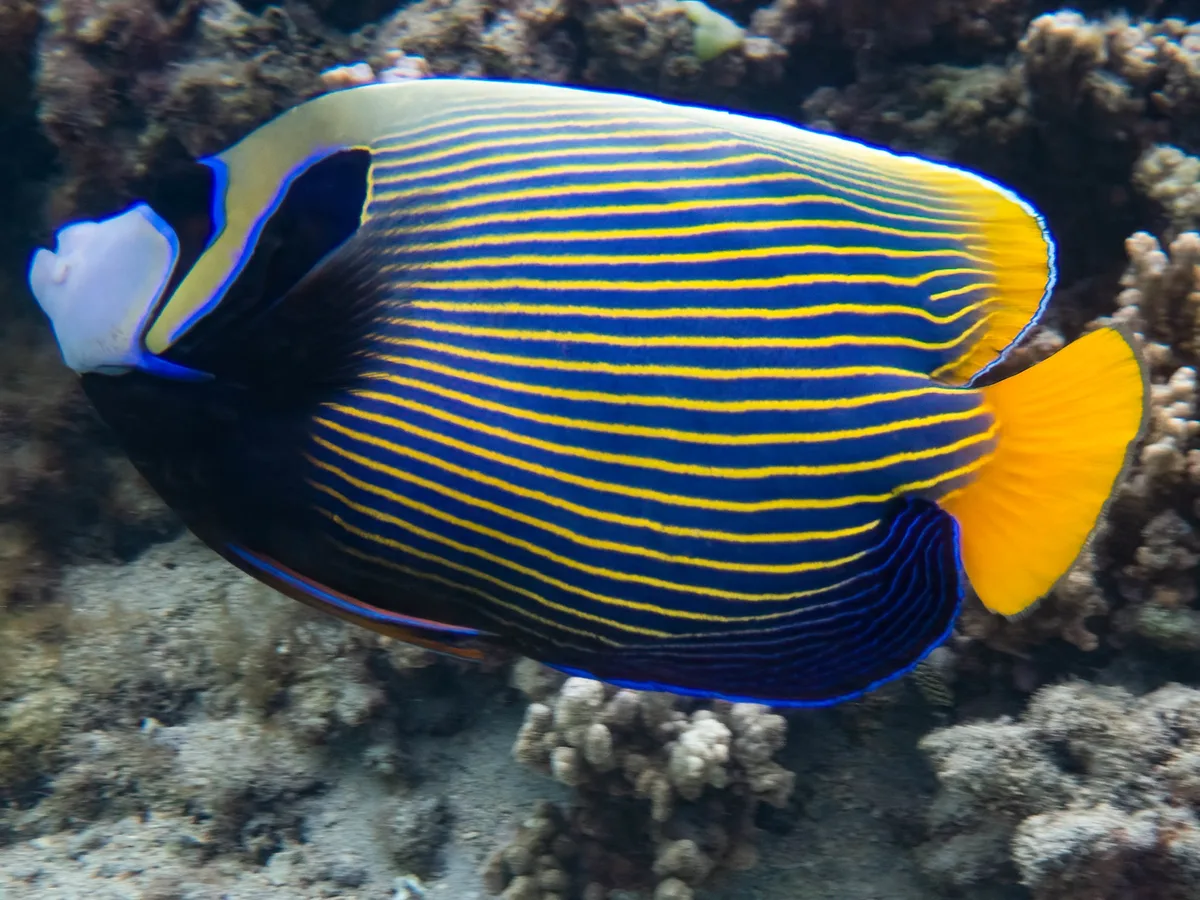
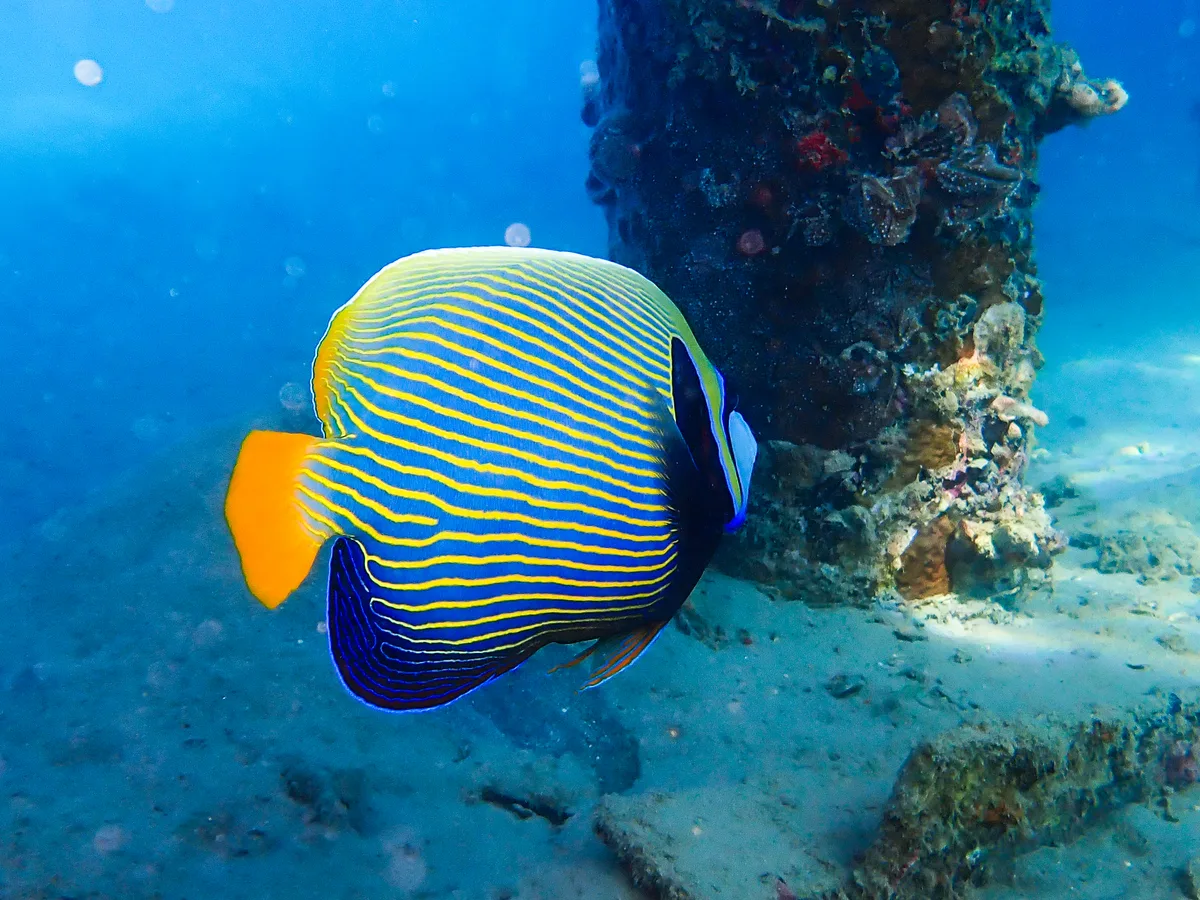
An adult is ruled with diagonal yellow and blue lines from head to tail and wears a black mask across the eye. A juvenile is deep blue with white concentric rings and semicircles, and looks so unlike the adult that the two were described as separate species in the nineteenth century. The change takes about two years and passes through a stage that looks like neither.
The rings probably keep the young alive. A juvenile angelfish lives in a small cave in shallow rubble and is treated as a non-competitor by adults, which are otherwise strongly territorial; the pattern seems to work as a badge that says small, harmless and not worth chasing.
Adults are noisy. Angelfishes drum by vibrating muscles against the swim bladder, and this species produces a low thump audible to a diver several meters away, used in disputes and when startled.
Diet is sponges and tunicates, which are chemically defended and largely unavailable to other fish - the reason the family can afford a slow, conspicuous life in the open. Pairs hold a territory and spawn at dusk, rising into the water column together.
The genus. Pomacanthus Lacepède 1802 - poma (lid or cover) + acanthus (thorn or spine). ETYFish
The species. Pomacanthus imperator (Bloch 1787) - emporer. ETYFish
- adults ruled with 25 or more diagonal yellow and blue lines, black mask through the eye
- juveniles deep blue with white concentric rings and semicircles - a different fish entirely
- yellow tail in adults, black-edged gill spine at the cheek
- length up to 40 cm
Why it's threatened
There appear to be no major threats to this species. Collection for the aquarium trade is localized and does not seem to affect the global population.
Threat classification from the IUCN Red List.