
7 species in Angelfishes
Apolemichthys
1Small pale angelfishes with a dark mask over the eye, working the reef surface for sponges and tunicates. They are shy in a specific way: the fish puts a coral head between itself and a camera rather than fleeing, and keeps it there.

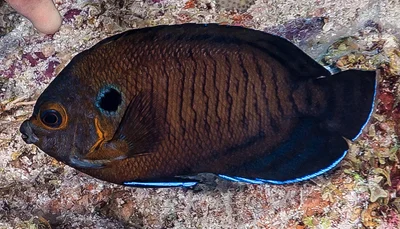
Centropyge
1Dwarf angelfishes: the whole genus stays under fifteen centimeters and lives inside the reef rather than over it, ducking into rubble and coral at any approach. A male holds a harem of several females, and if he is lost the largest female becomes male - so a group has no spare males in it at any time.
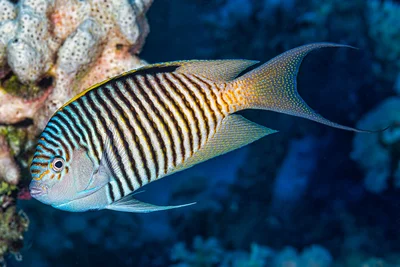
Genicanthus
1The angelfishes that left the reef surface. These hover in midwater off drop-offs picking plankton out of the current - the only genus in the family to do so - and they are also the only one where males and females are marked differently: the male barred, the female plain. They change sex in one direction, female to male.
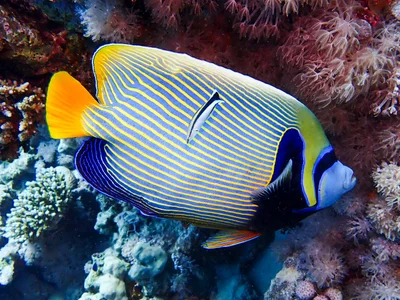
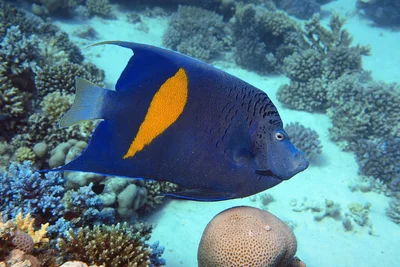
Pomacanthus
3The big angelfishes, and the juveniles are the point: each is patterned completely differently from its own adult - blue and white concentric rings or bars that break up and fade as the fish matures - so a juvenile and an adult of one species were often described as two. The spine at the lower corner of the cheek is what separates every angelfish from a butterflyfish.

Pygoplites
1A genus of one species, and the sharpest-marked angelfish here: orange crossed by blue-edged white bars, so precisely drawn that it looks printed. It feeds almost entirely on sponges and tunicates, which is a diet with very little energy in it, and it never goes far from a hole.

Other disc-shaped groups
Similar silhouette underwater - worth a look if this was not your animal.


Last Update: September 11, 2026