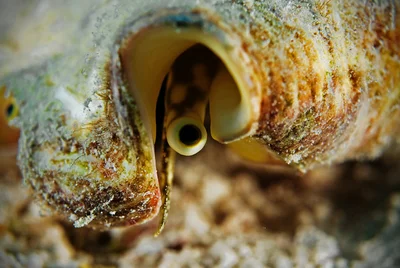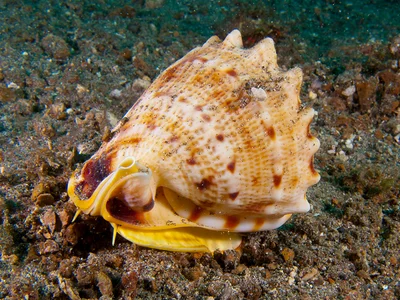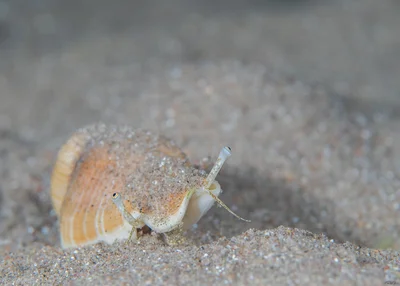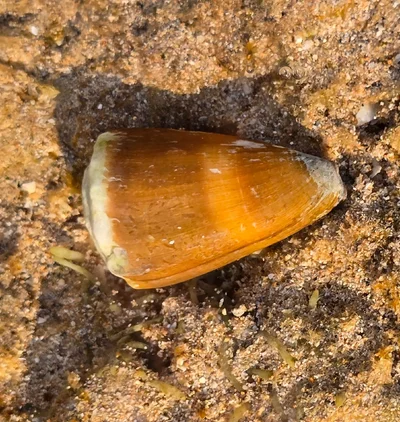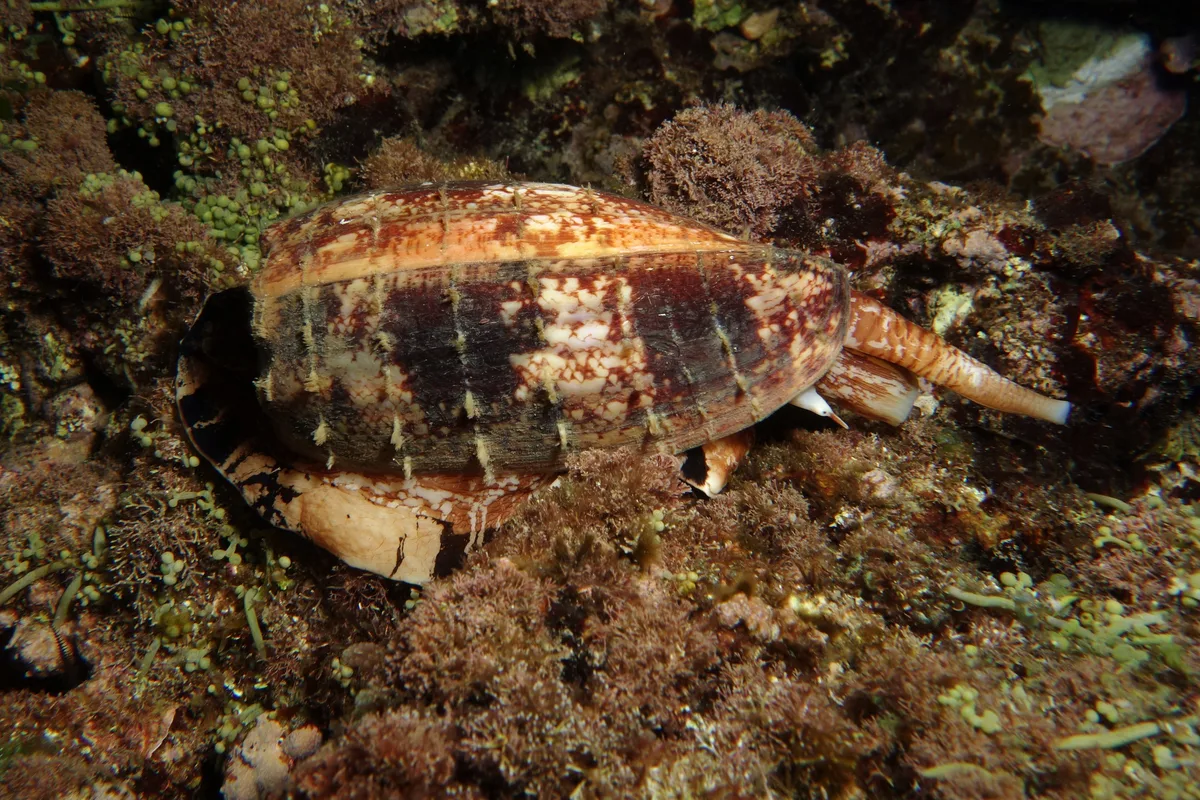
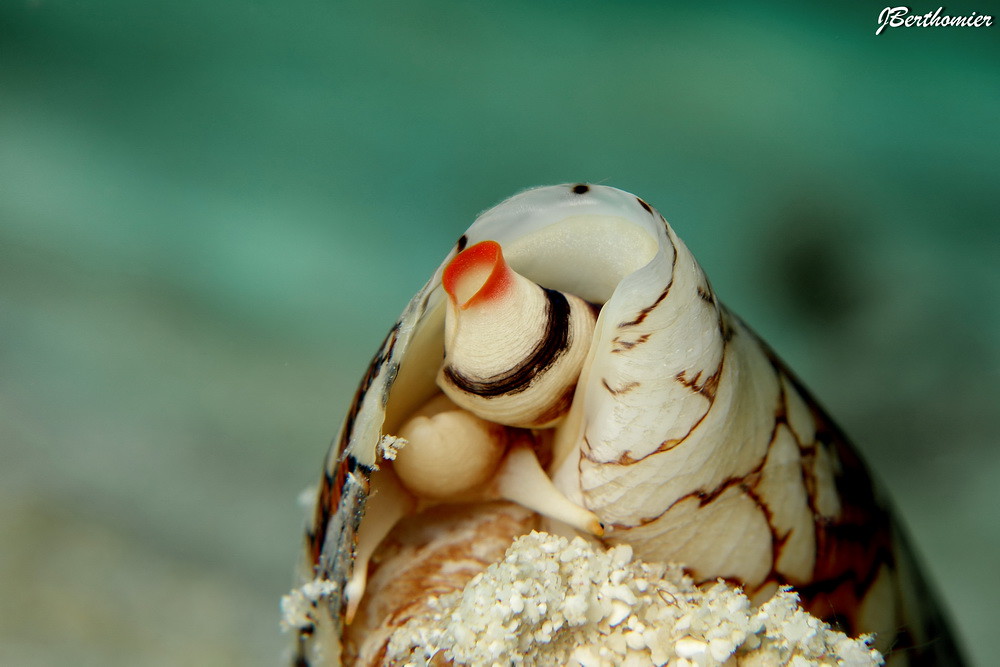
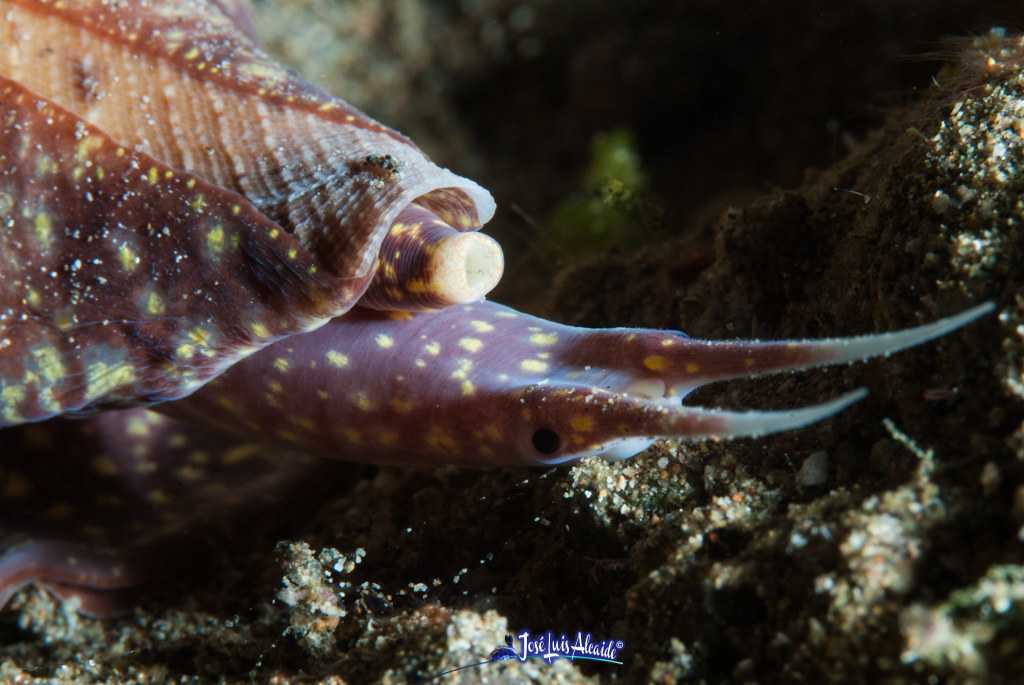
The most dangerous snail in the sea, and one that looks like a souvenir. The shell is a broad, low cone up to 16.6 cm (6.5 in), patterned in fine brown mesh over cream with darker cloudy bands - the map-like markings that give it its name. It lies buried in sand and rubble on shallow reef flats by day and hunts at night.
Everything about the hunt is built for fish. Where most cone snails harpoon prey and hold on, this species first releases insulin into the water, crashing the blood sugar of any fish nearby and leaving it too sluggish to flee. Then it engulfs the stunned fish with a mouth that unfolds into a wide net, and only then fires the harpoon. It is the only known case of an animal weaponizing insulin.
That harpoon is a hollow, barbed tooth loaded with venom, fired from a proboscis that can reach anywhere on the shell, including the broad end that looks safe to hold. There is no safe way to pick one up, no reliable warning pain, and no antivenom anywhere in the world.
What a sting does
- First minutes - a jab like a wasp sting, sometimes almost painless, with numbness spreading around the wound.
- 10 to 30 minutes - the numbness climbs the limb, then reaches the lips and face.
- 30 minutes to 2 hours - weakness, drooping eyelids, double vision, trouble swallowing and speaking.
- 1 to 5 hours - the breathing muscles fail. This is what kills.
The victim stays conscious throughout. Conotoxins block the signal from nerve to muscle and leave the mind untouched, so a person who stops breathing is fully aware of it.
The treatment is equally simple and equally brutal: keep the patient breathing. There is no antidote, because the venom is not one toxin but a hundred or more short peptides, each tuned to a different nerve channel and each unique to the species. A diver who reaches a ventilator survives, usually without lasting damage, once the peptides clear. First aid is a pressure bandage on the limb, complete stillness to keep the venom from spreading, and the fastest possible evacuation.
Around thirty human deaths have been recorded from cone snails worldwide, and most of them belong to this species. Every documented case involves someone who picked up a live shell - off the sand, out of a rock pool, or into a pocket while wading. The nickname "cigarette snail", meaning you have time to smoke one before you die, is folklore rather than medicine, but the instruction behind it is sound: this is a shell to photograph, never to hold.
The same venom is the reason the animal is studied so intensely. Cone snail peptides are precision tools for nerve research, and one of them, from a related Pacific species, became ziconotide, an approved painkiller for patients that morphine cannot reach.
- broad low cone with a flat spire, not the tall narrow shape of most cones
- fine brown mesh over cream, broken by two darker cloudy bands
- living shell covered by a thin brown furry layer that hides the pattern
- long white siphon and a wide unfolding mouth, shell to 16.6 cm
Why it's threatened
There are no known threats to this species.
Threat classification from the IUCN Red List.