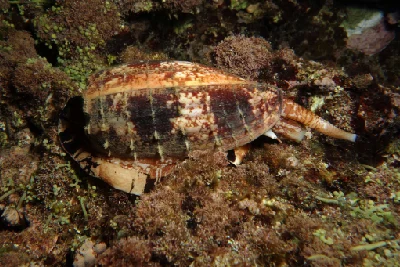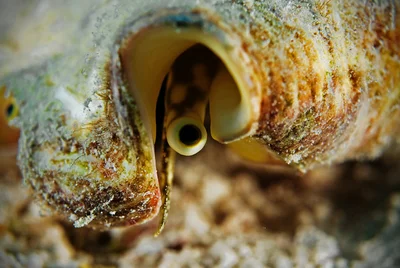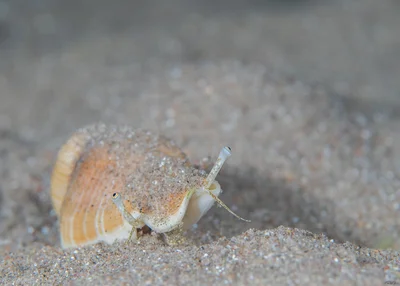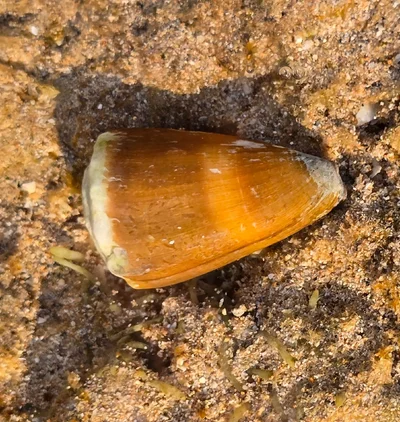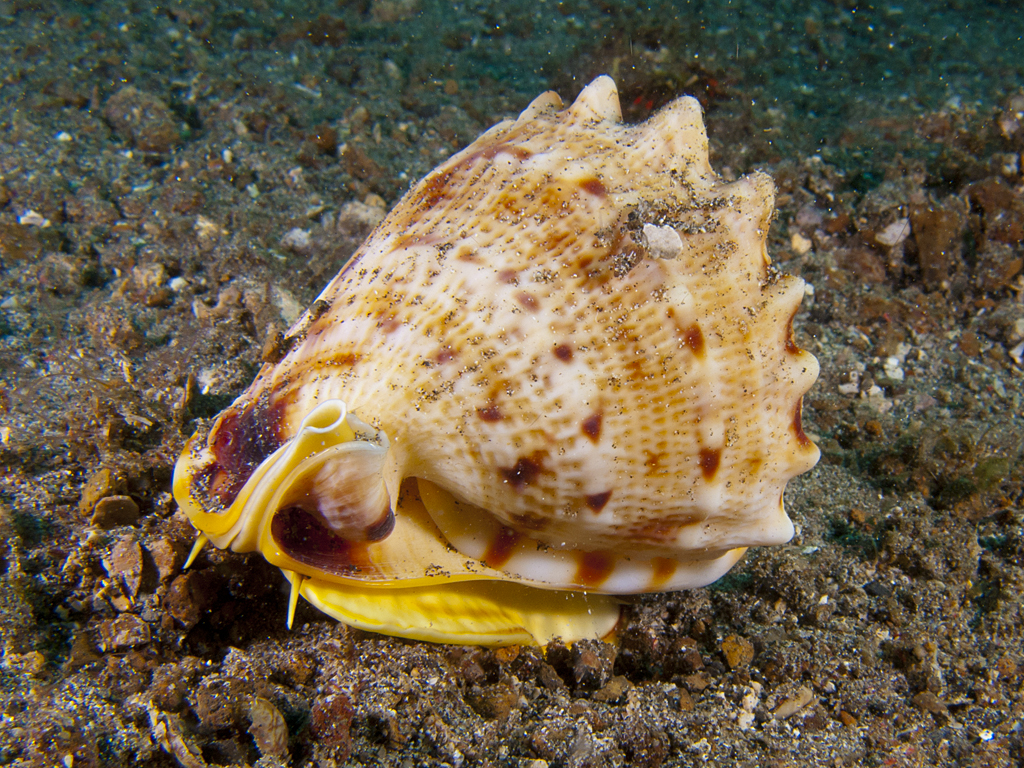
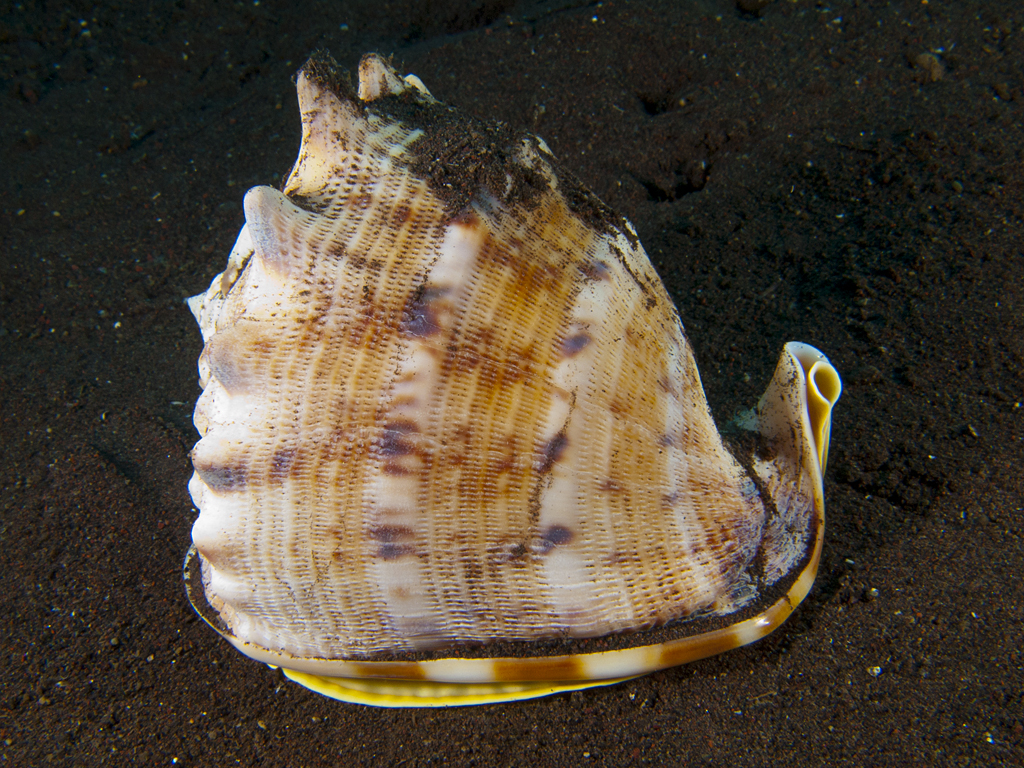
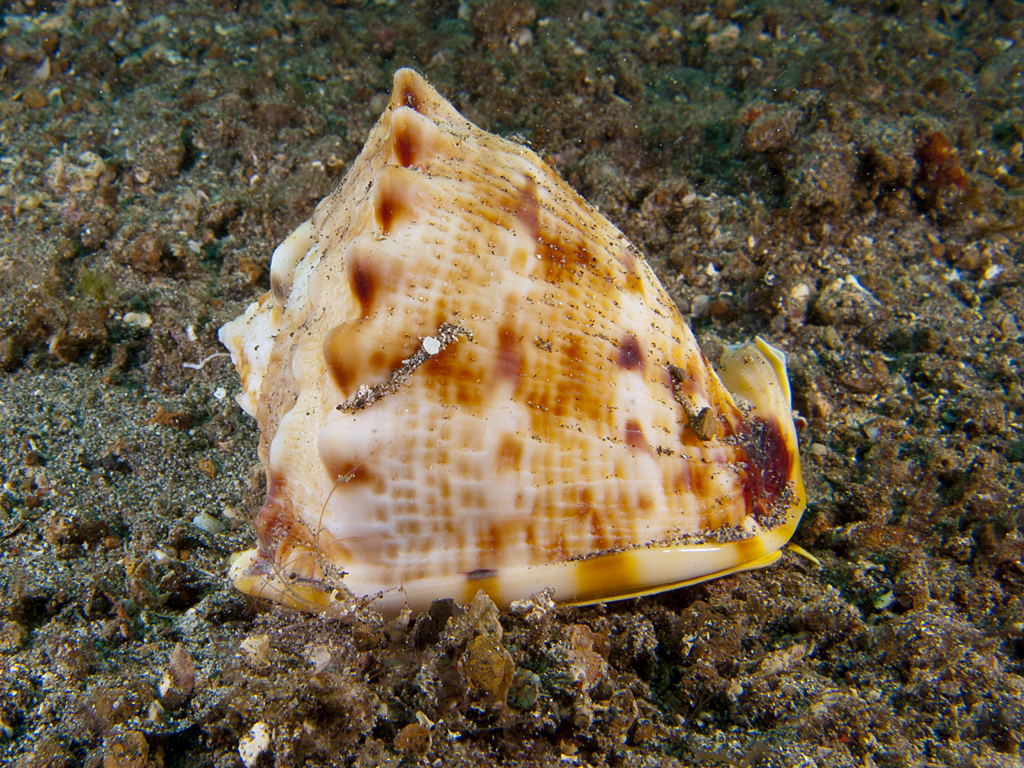
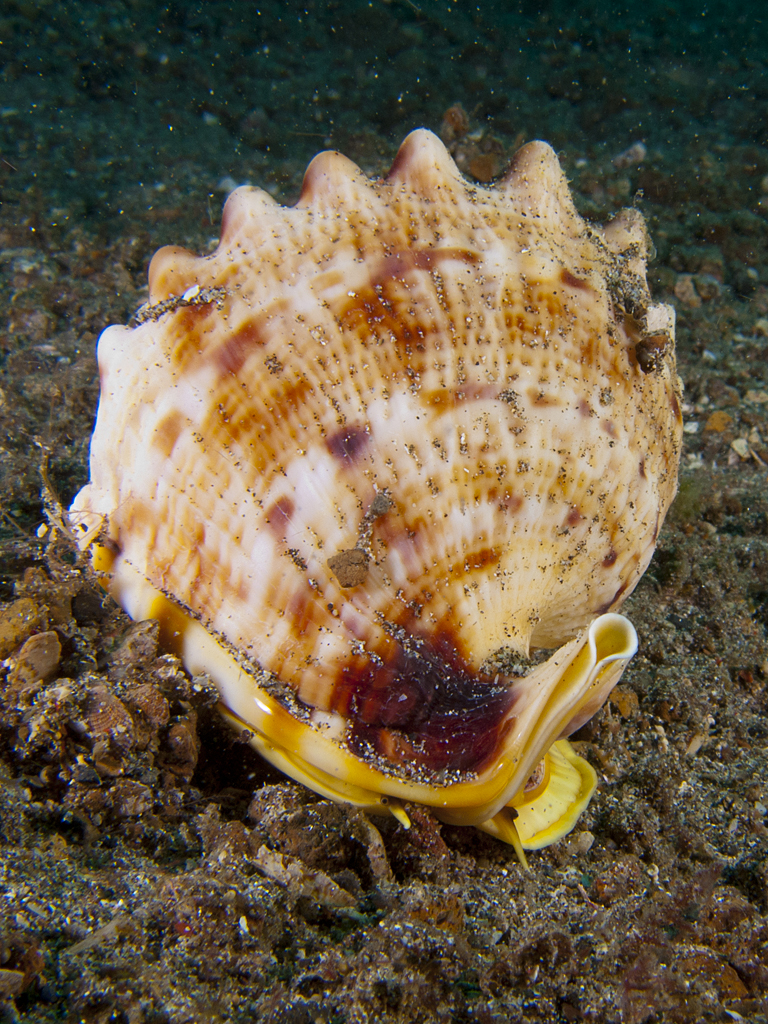
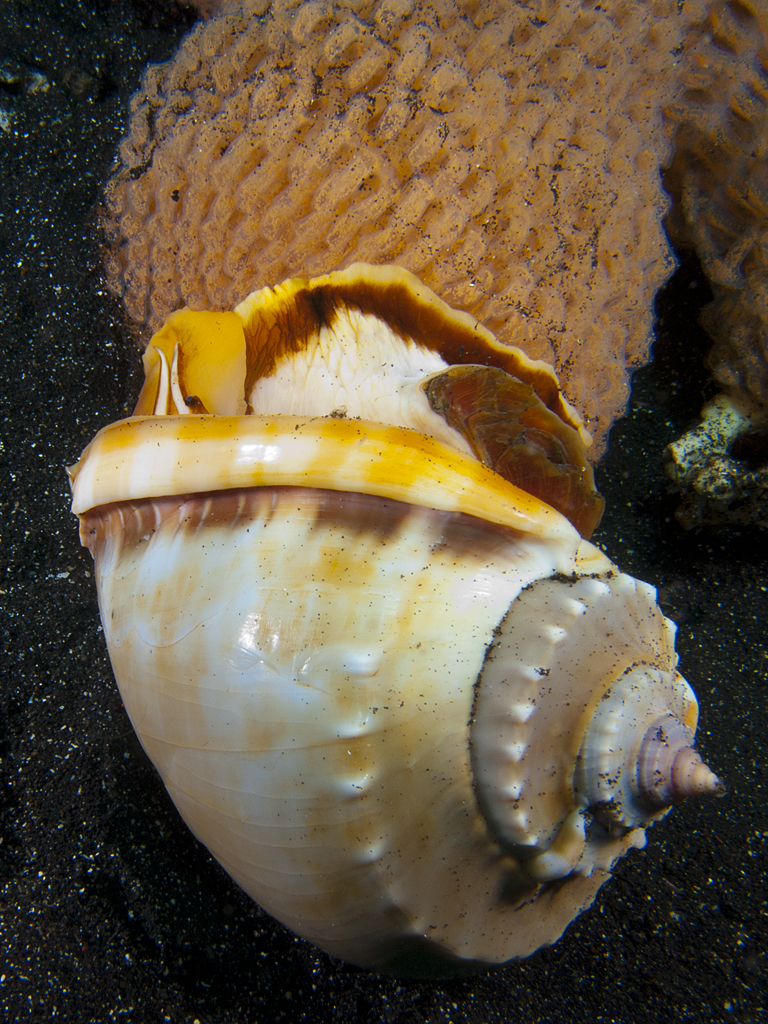
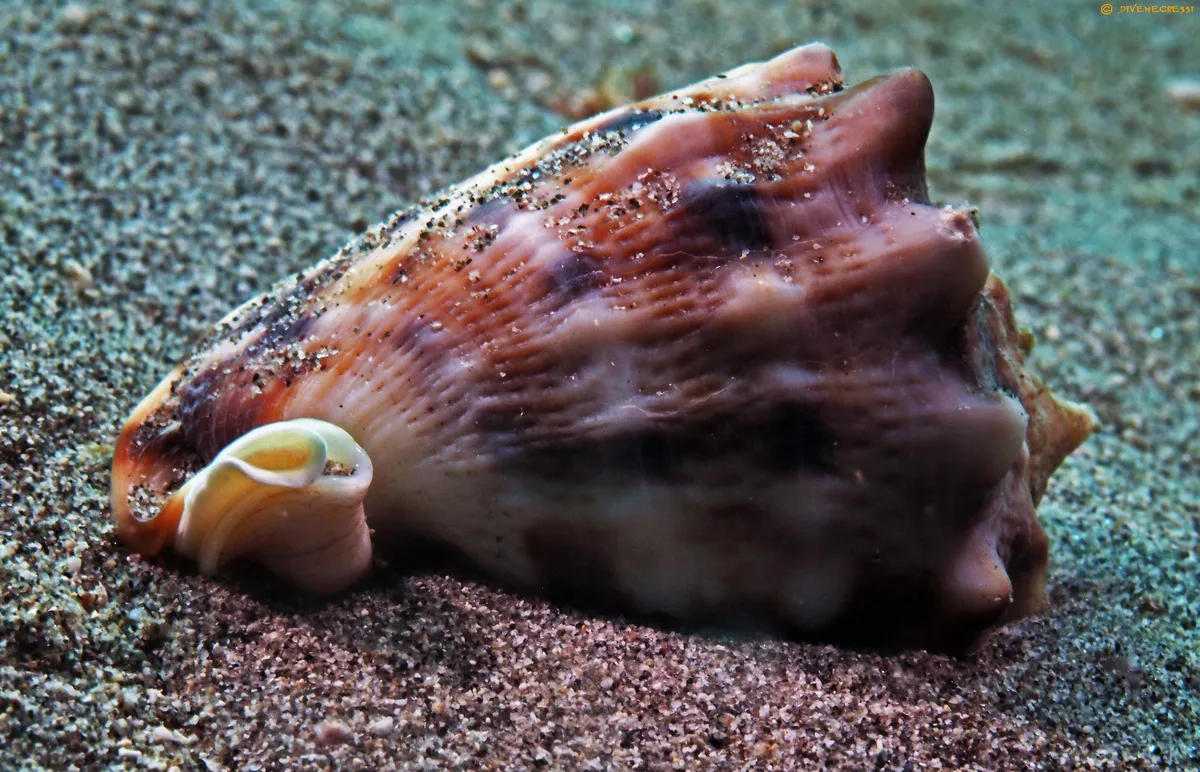
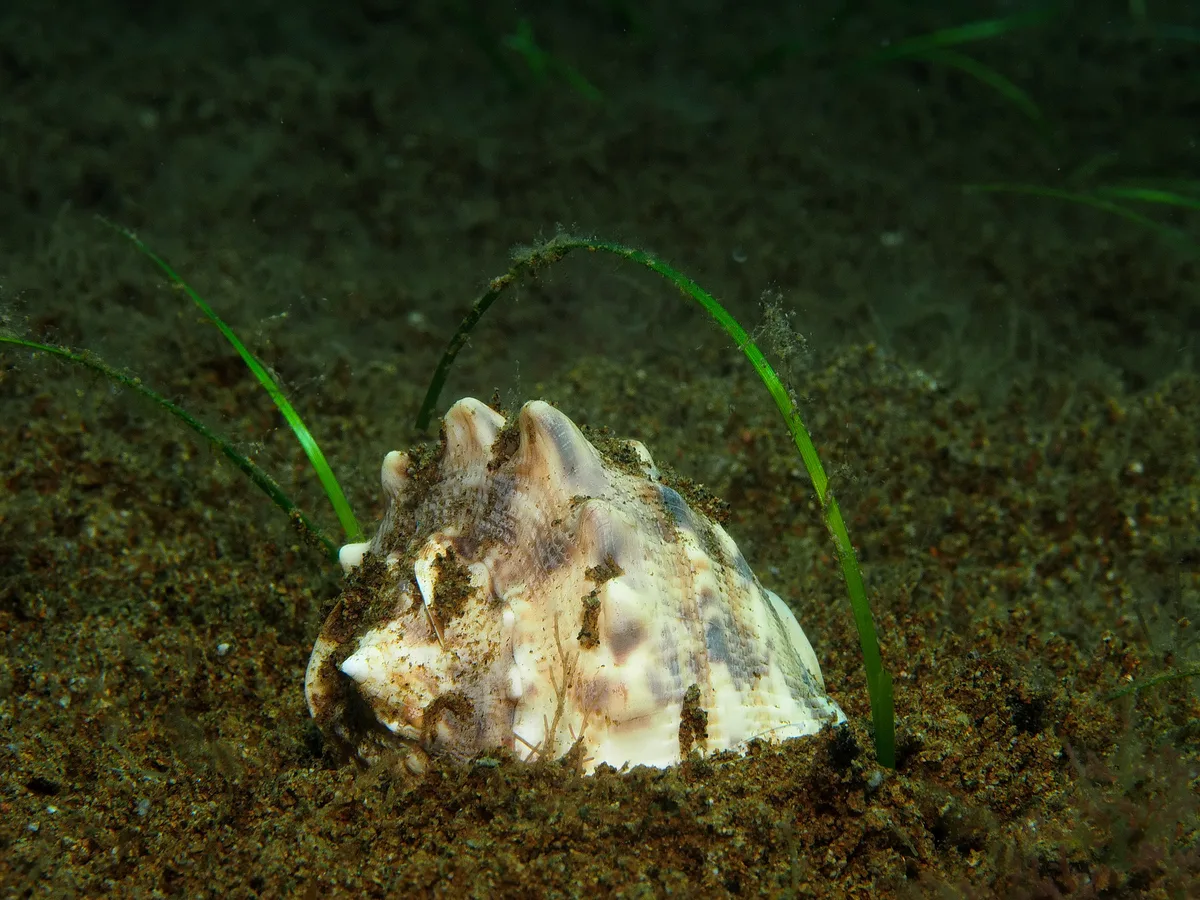
The biggest snail most divers here will ever see: a slab of shell up to 40 cm (16 in), knobbed like a crown around the shoulder and finished underneath with a broad glossy shield in orange and cream. Females grow far larger than males, and a full-sized one takes two hands to lift, which is the main reason to admire it and put it back.
It eats sea urchins. The snail engulfs one with its foot, secretes acid from a gland to soften the test, drills through it with the radula and consumes the animal from the inside, spines and all. Where these snails have been fished out, urchin numbers climb and reefs are grazed harder - one large predator missing from a sand flat is felt across the whole system.
That shield underneath is why it has been fished out over much of its range. It is the classic cameo shell: carvers cut through the white outer layer into the orange beneath to leave a raised figure, a trade running from Roman times through Victorian Europe to modern souvenir stalls. A live one on the sand is now a genuinely rare find in the 🌊 Red Sea.
- enormous heavy shell with a broad glossy orange-cream shield underneath
- row of blunt knobs like horns around the shoulder
- females much larger and heavier than males
- shell to 40 cm