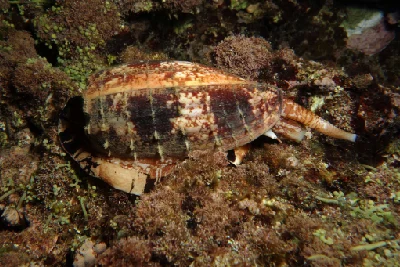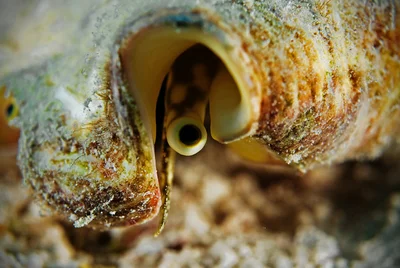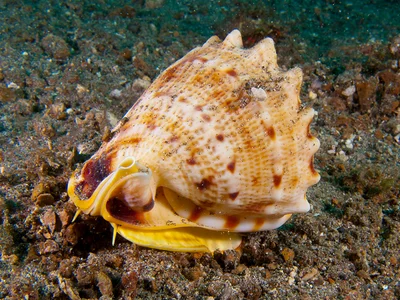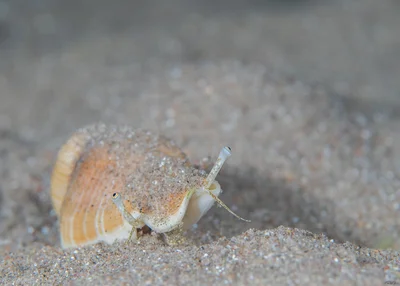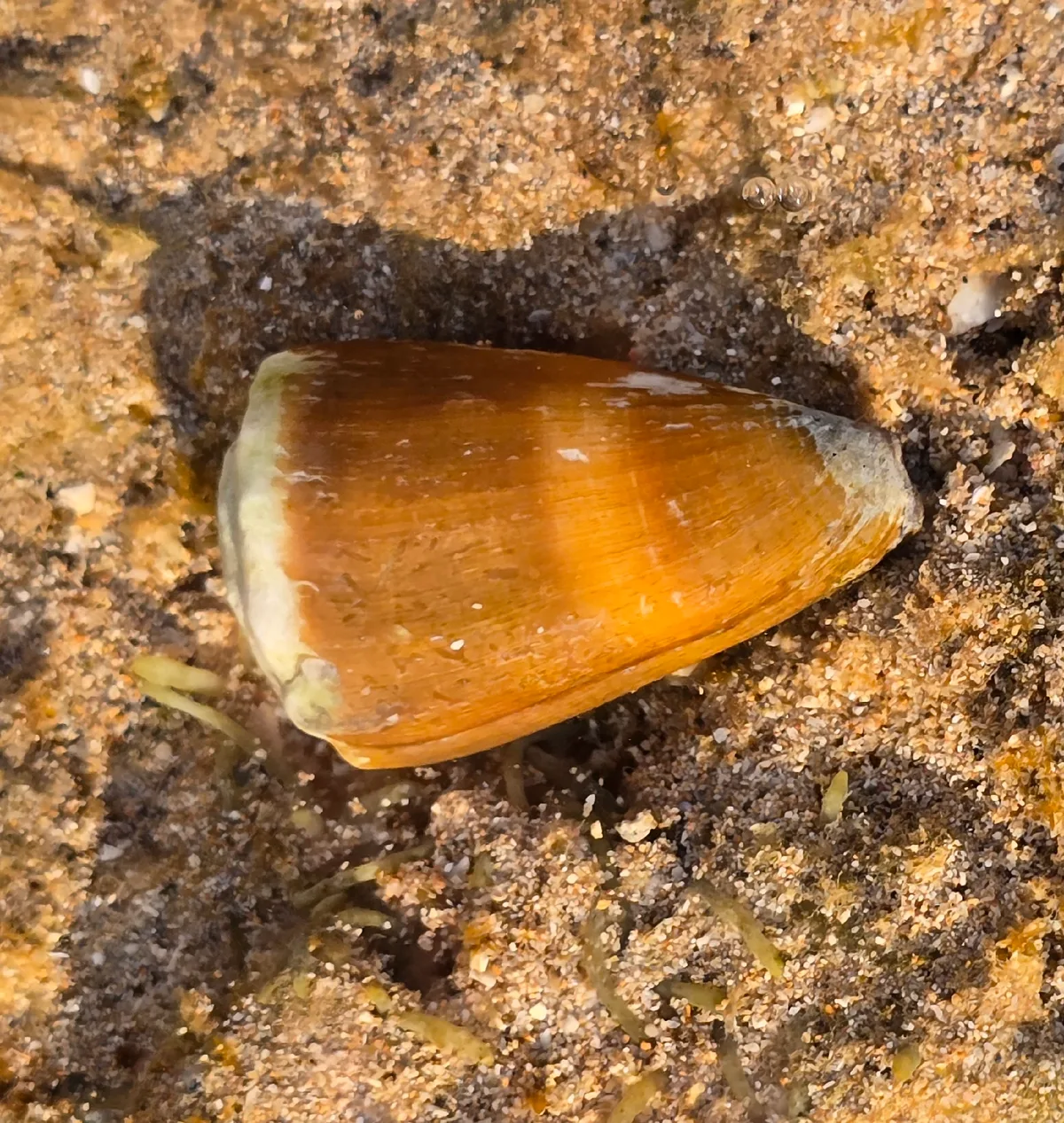
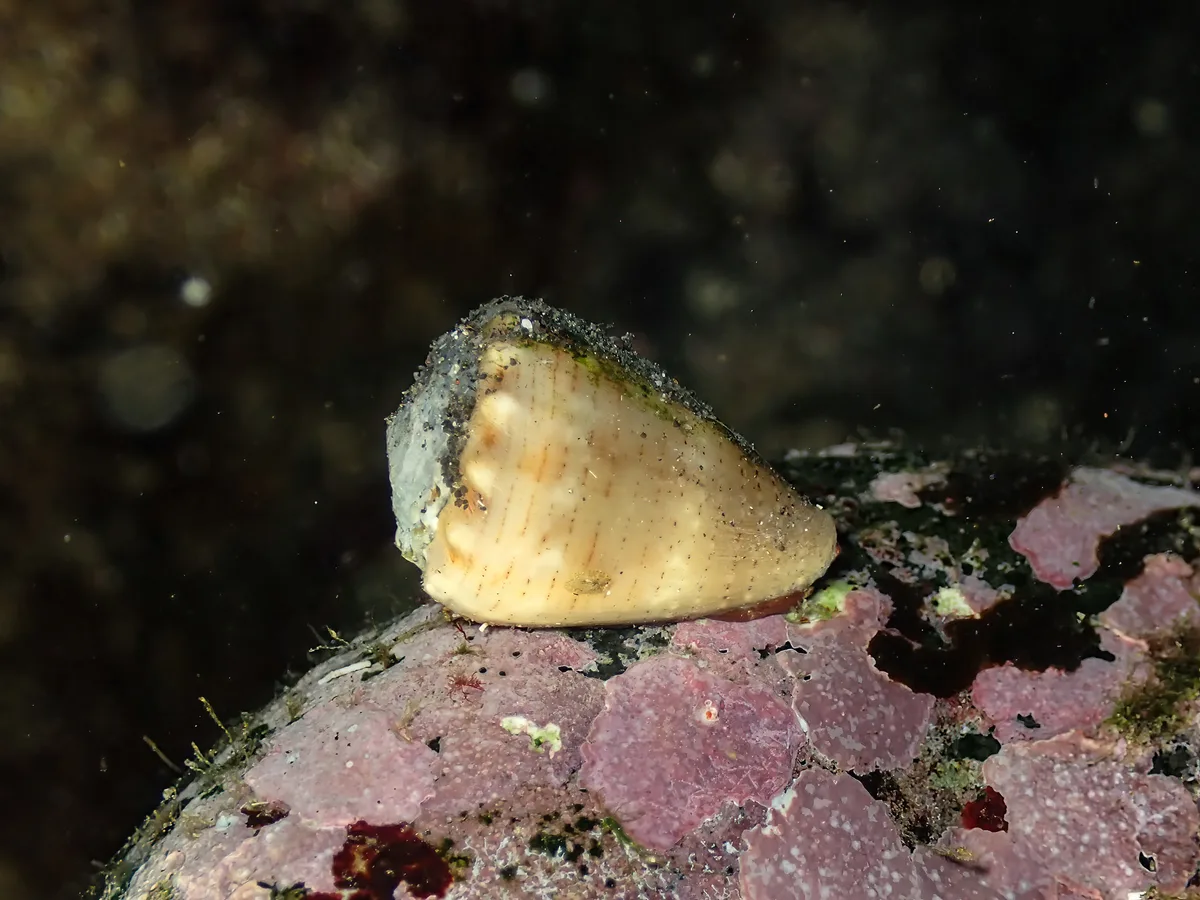
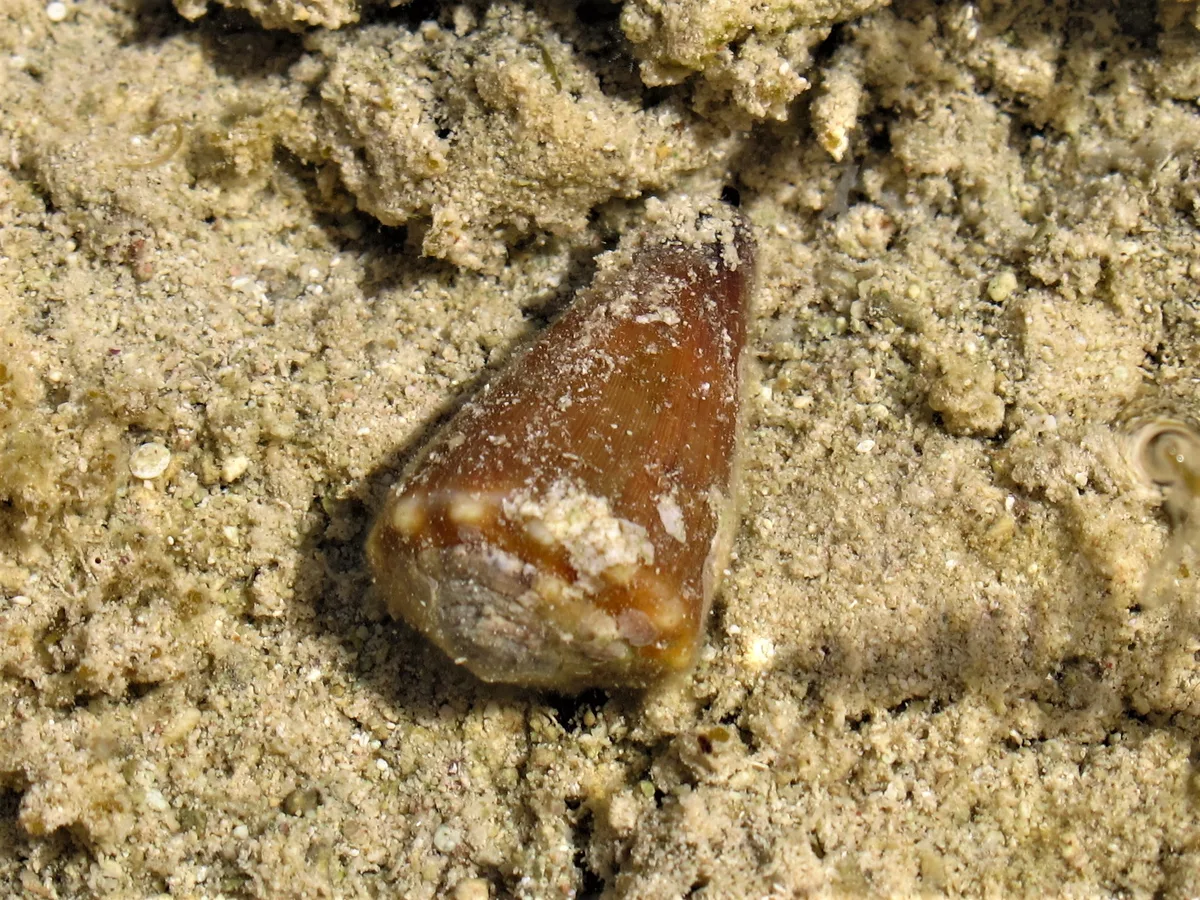
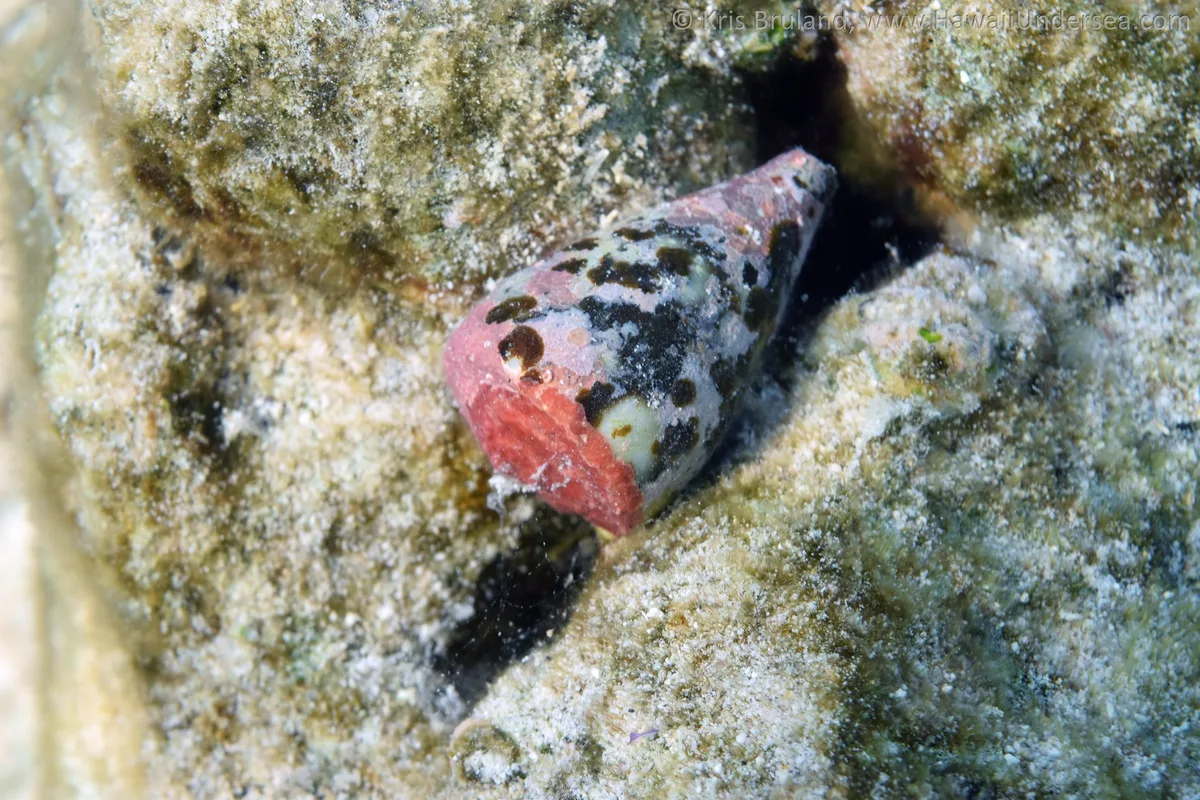
A squat olive-brown cone with a pale band around its waist and a knobbed shoulder, rarely more than 5.5 cm (2.2 in). The dark furry outer layer that covers a living shell flakes off in patches, so the animal on the reef looks nothing like the polished specimen in a collection.
This is the common cone of shallow reef flats, wedged under rubble by day and out hunting at night. Unlike its tent-patterned relatives it eats worms rather than snails or fish, which makes it far less dangerous - the venom of a worm hunter is tuned to a worm's nervous system. A sting still hurts like a bad wasp, and the animal still deserves to be left where it is.
How a cone hunts depends on what it hunts. Worm eaters like this one hold the harpoon and pull the prey in like a fishing line; the fish hunters release the tooth entirely and let the venom do the work; the snail eaters do both. All three strategies run through the same organ, and the family has been rewriting it for fifty million years.
- squat olive-brown cone with a pale band around the middle
- shoulder ridged and knobbed, unlike the smooth shoulder of the tent cones
- dark brown periostracum often flaking off in patches
- shell to about 5.5 cm
Why it's threatened
As it is very wide-ranging, there are no known major threats to this species.
Threat classification from the IUCN Red List.