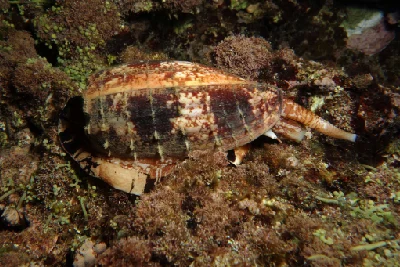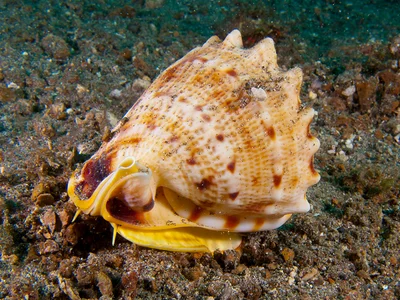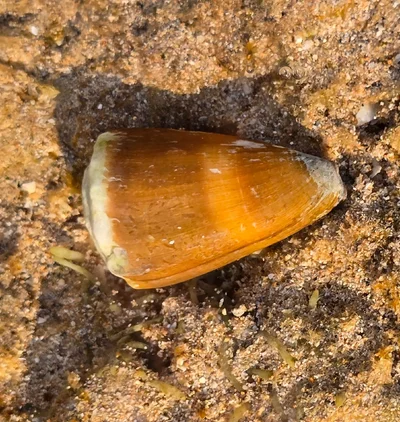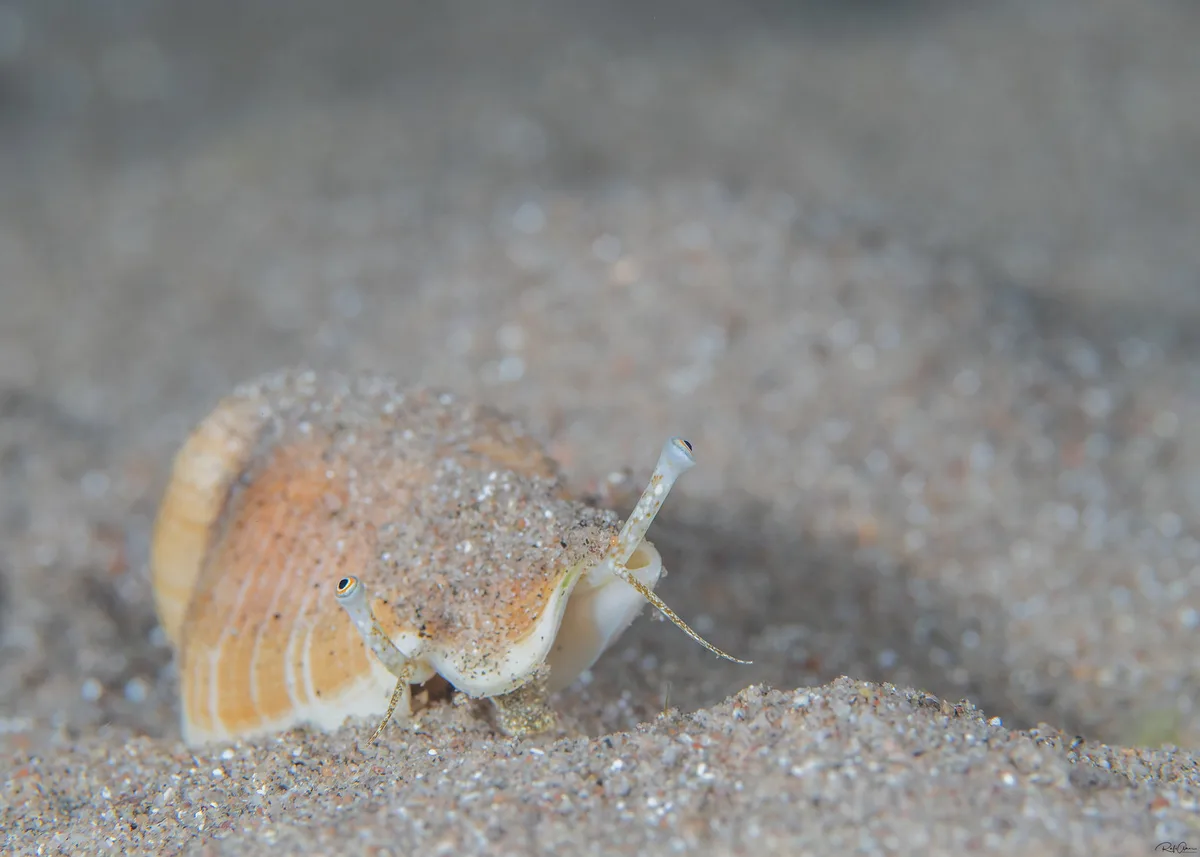
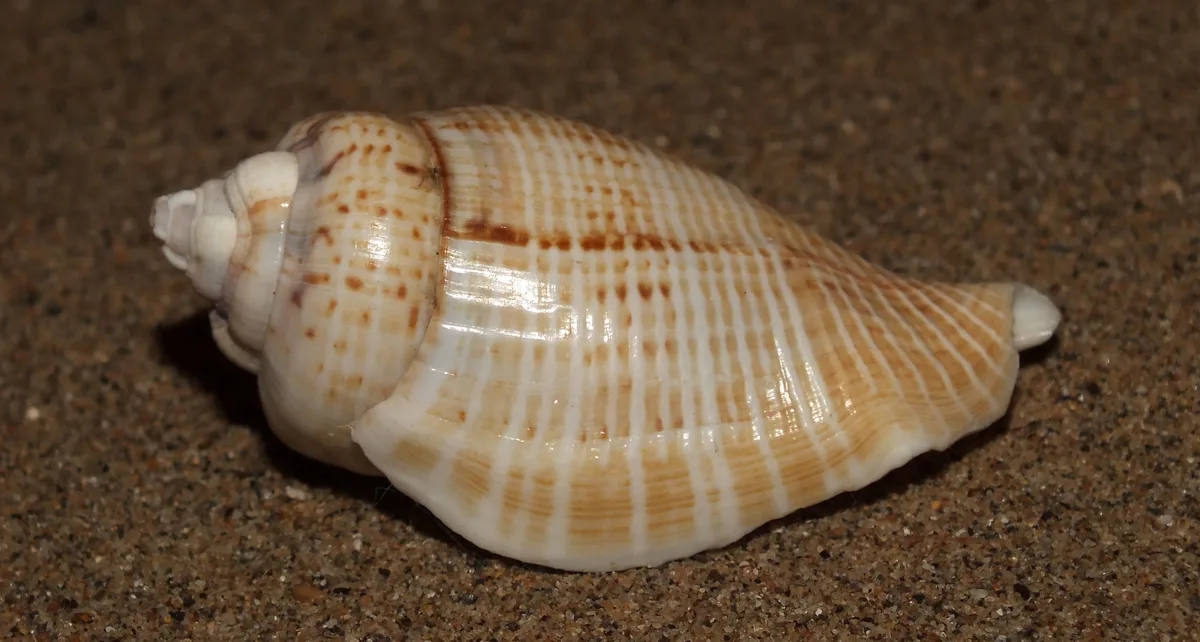
A small smooth conch, cream to gray with fine brown zigzags and a distinct swelling on the last whorl that gives it the name. Rarely over 6 cm (2.4 in), and rarely alone - shallow sand flats can hold dozens per square meter, with nothing showing but pairs of eye stalks.
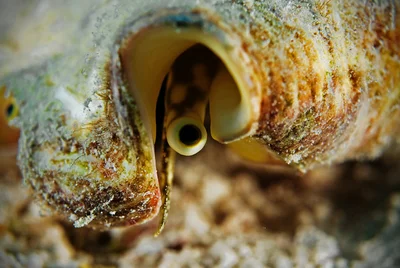
The eyes go up first. Long, orange-ringed and startlingly alert for a snail, they emerge from the sand well before the animal commits to moving, and they are the reason a patch of apparently empty sand suddenly turns out to be watching you. Anything that looks like a cone snail - their main predator - gets an immediate response.
That response is the leap. The claw-shaped operculum drives into the sand and the whole animal flips itself backward, again and again, in a scramble that clears a surprising distance. High-speed footage of this species was used to work out how the whole family moves, and the answer was that a conch does not crawl at all - it hops.
- small smooth conch with a distinct swelling, or hump, on the last whorl
- cream to gray with fine brown zigzag markings
- long orange-ringed eye stalks that emerge before the animal moves
- shell to 6 cm