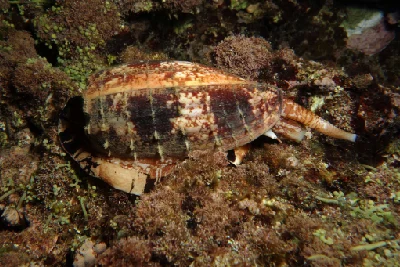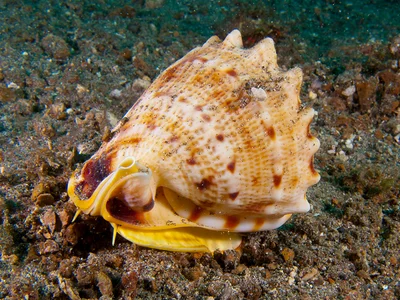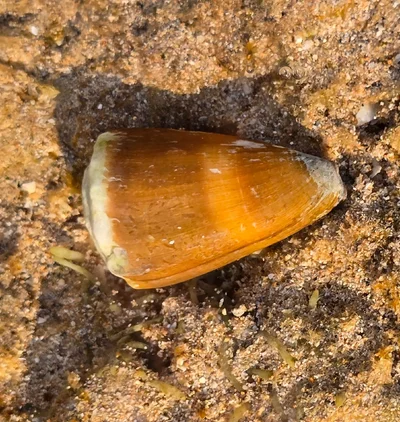
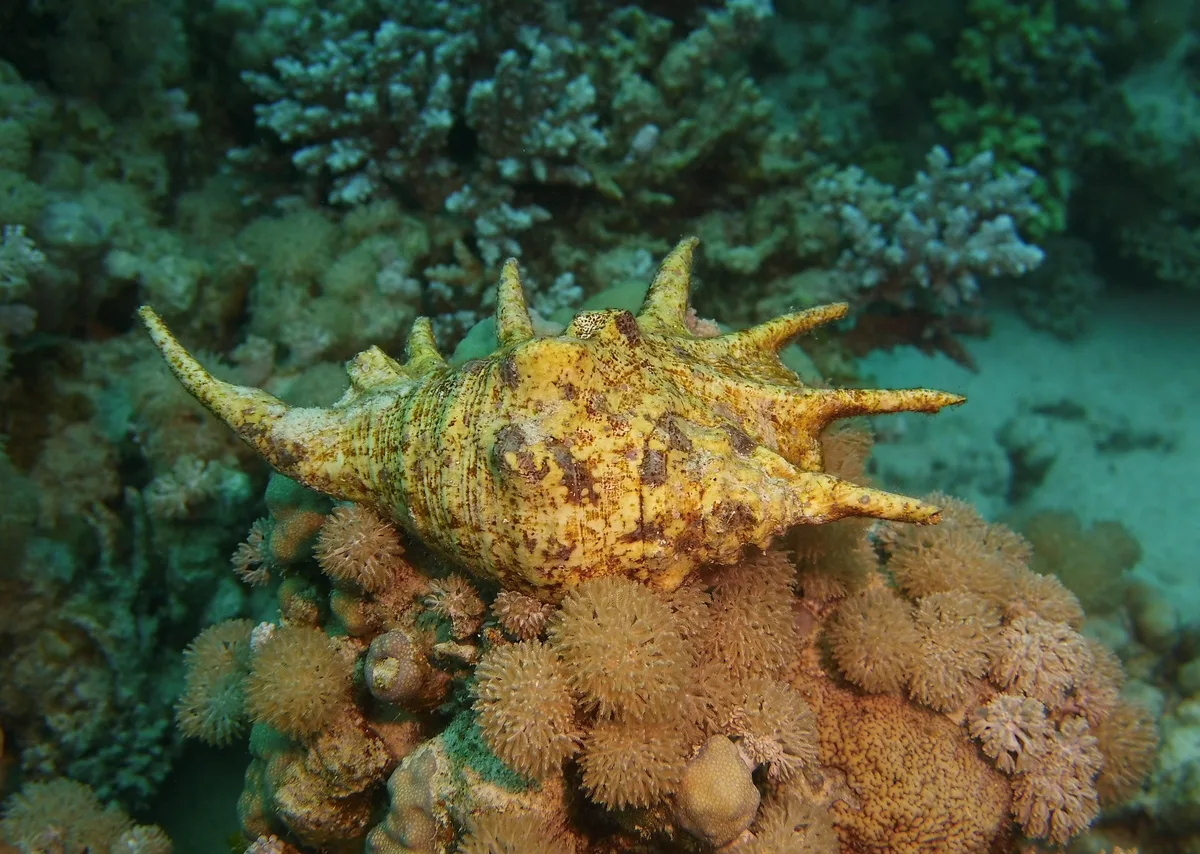
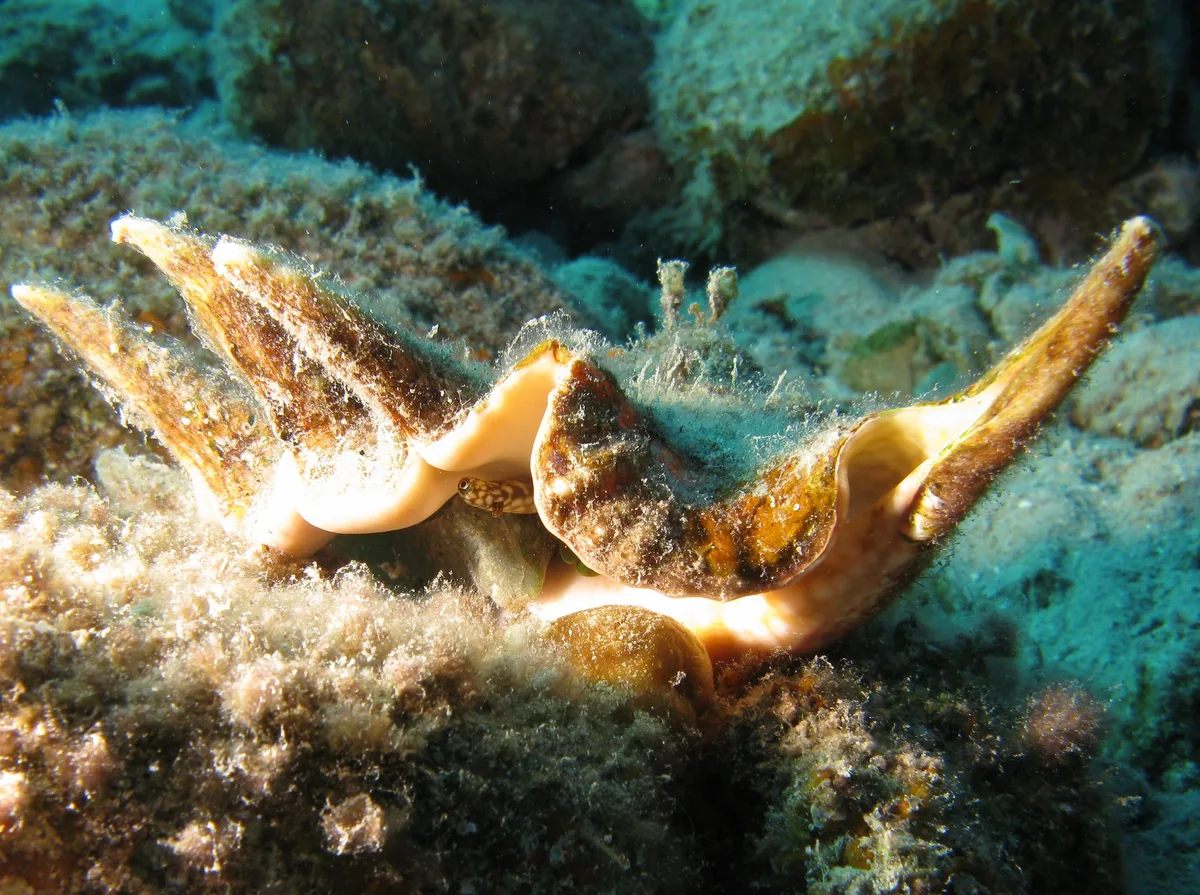
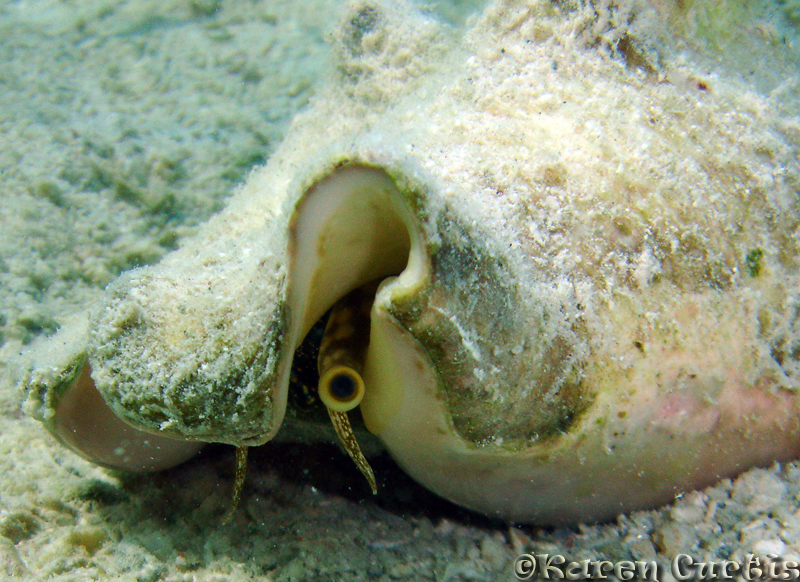
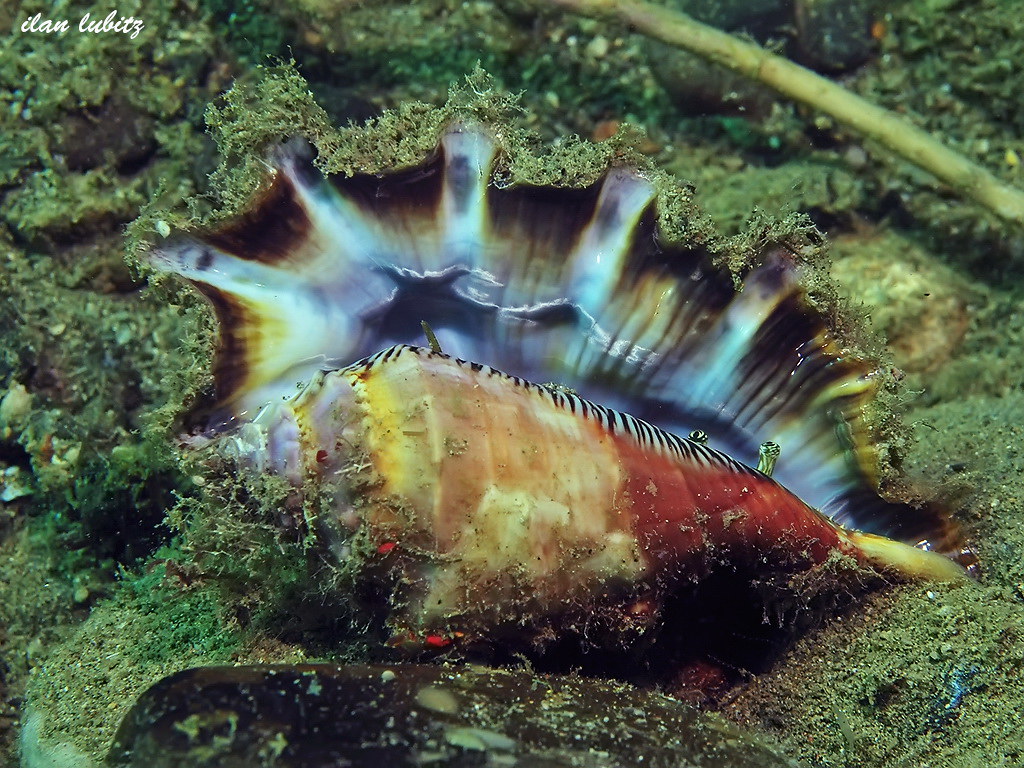
A massive shell with six long curved spines fanned out from the lip like fingers, up to 33 cm (13 in), and a spire that looks cut off flat at the top - the truncata of the name. Empty ones sit on shelves all over the world; live ones sit half-buried on sand and seagrass beside the reef, covered in algae and easy to walk past.
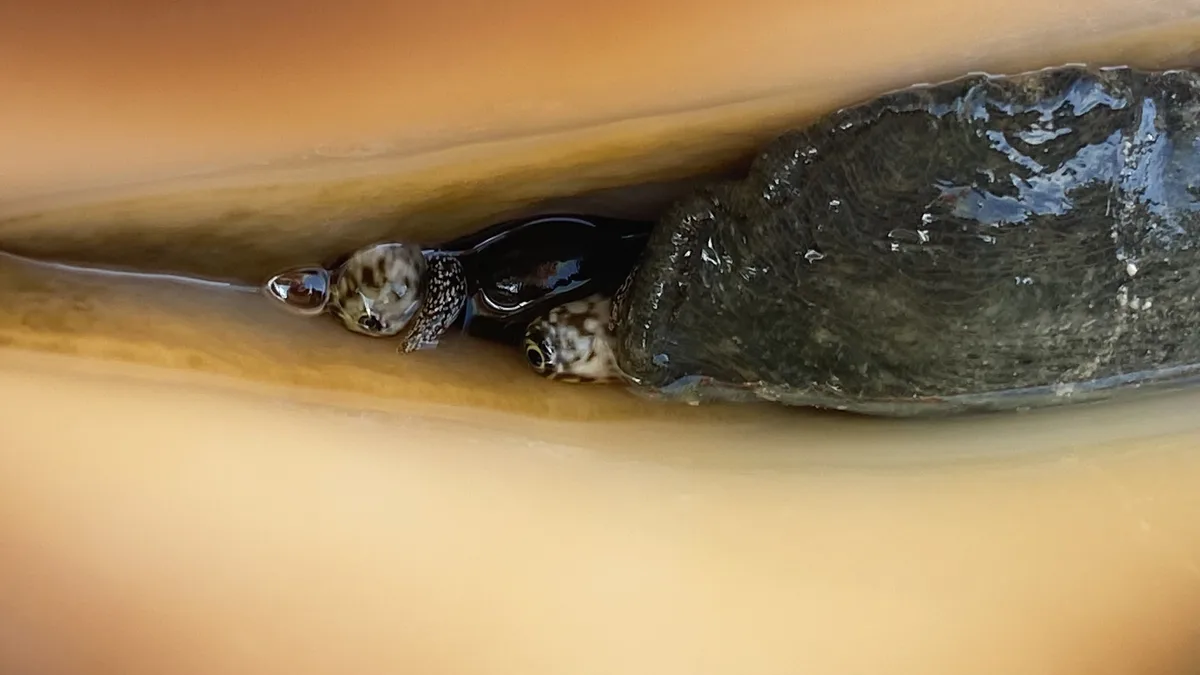
A conch does not glide like other snails. The foot is narrow and ends in a hard claw-shaped operculum, which the animal jams into the sand and uses as a pole vault, throwing itself forward in a series of lurches. Watching one flee is a lesson in how little a snail resembles the animal in the diagram, and it is fast enough to be startling.
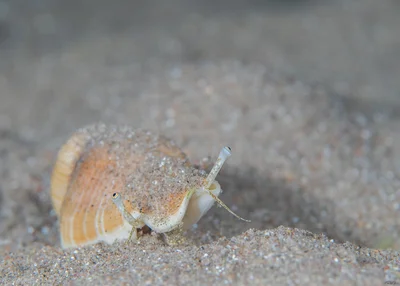
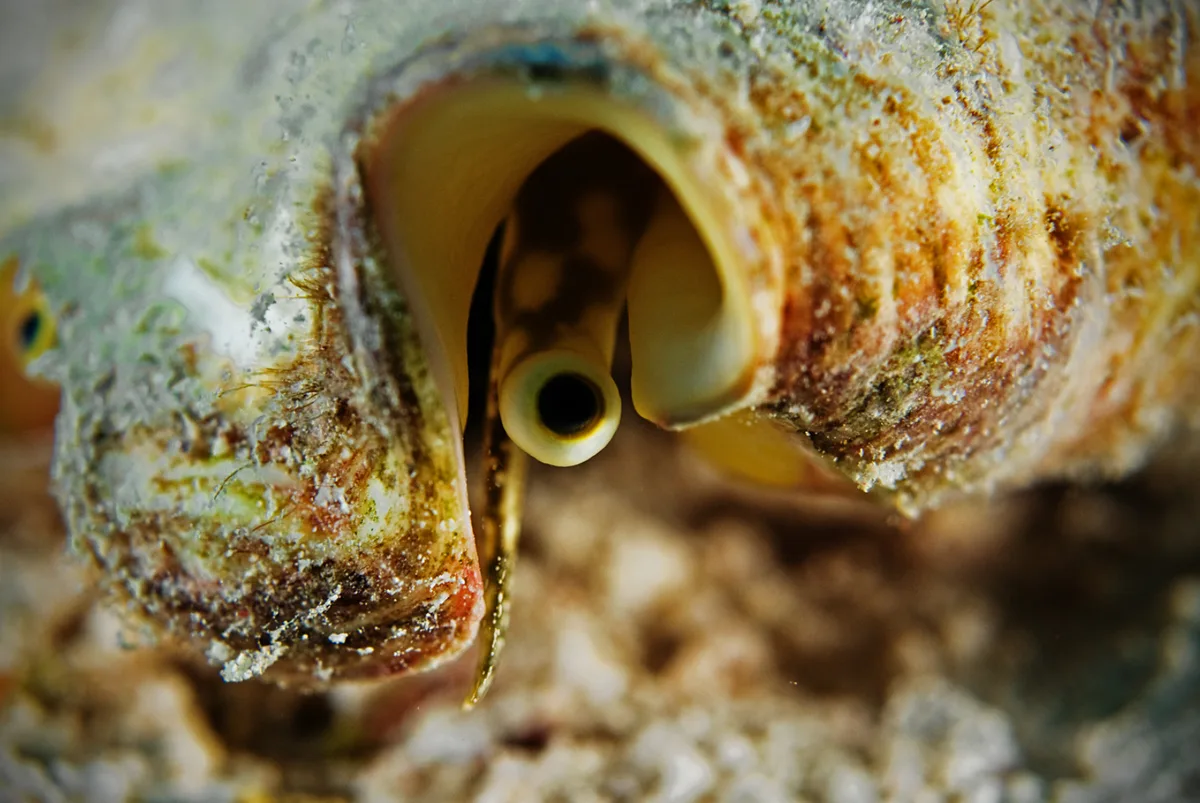
And it watches back. Each eye sits at the end of a thick stalk, with a real lens and enough resolution to react to a shape moving overhead, poking out through a notch in the shell lip built for exactly that purpose. If a stalk is bitten off - and they often are - the animal grows a new one.
- massive shell with six long curved spines fanned out from the lip
- spire flattened at the top, cut off rather than pointed
- notch beside the front of the aperture where one eye looks out
- shell to 33 cm