
FlatwormsPseudocerotidae
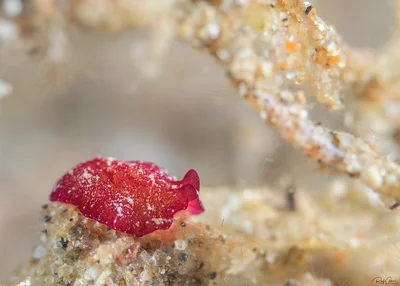
Most of the flatworms photographed on this coast get labeled as nudibranchs, and they are not even distant relatives. A nudibranch is a snail: a mollusc with a head, a rasping tongue and a shell somewhere in its ancestry. A flatworm has none of that, and belongs to a phylum of its own.
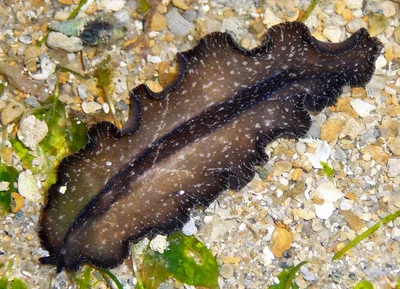
It is close to the simplest an animal with a front end can be. No gills, no heart, no blood, no body cavity. Oxygen soaks in through the skin, and the only way that works is to stay thin, so the animal is a sheet a fraction of a millimeter thick, with a branched gut spreading through it like the veins of a leaf and doing the delivery job a bloodstream would otherwise do. There is a single opening on the underside; food goes in through it and what is left comes back out the same way.
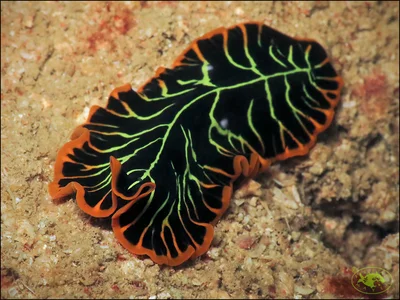
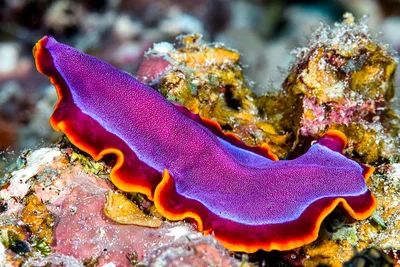
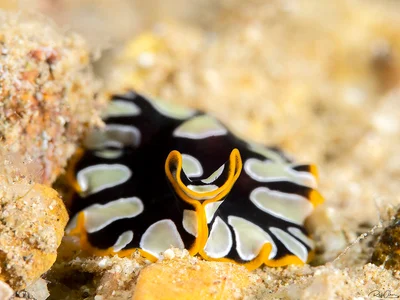
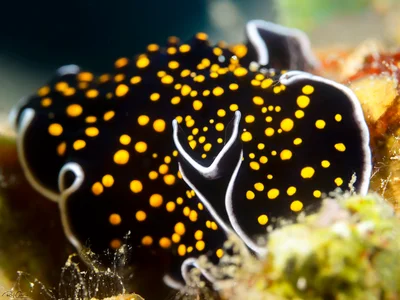
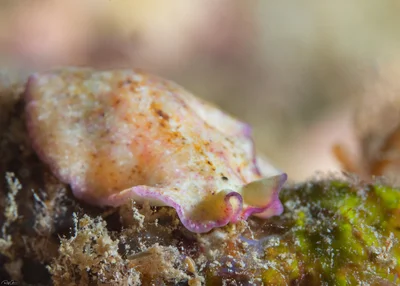
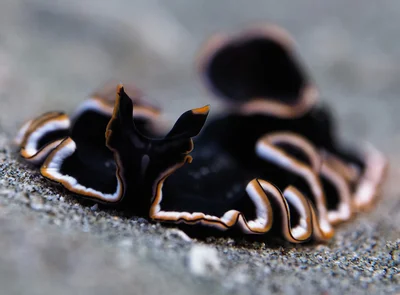
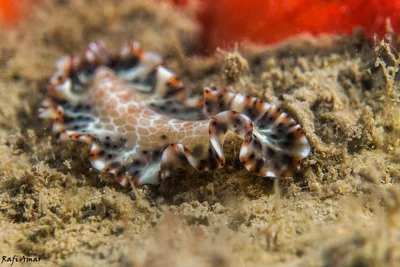
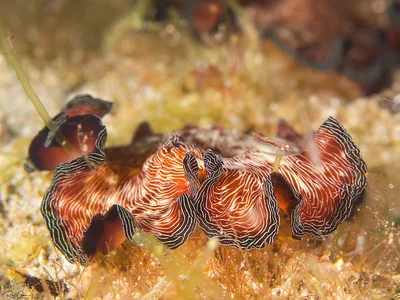
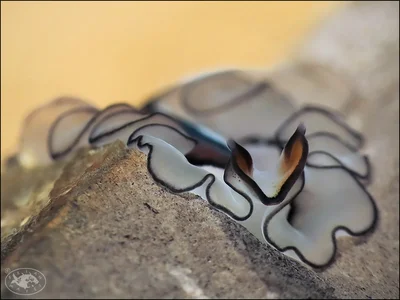
Underwater the difference is easy once somebody points it out. A flatworm has nothing standing up off its back, no gill rosette and no pair of horns, and the two apparent tentacles at the front are just folds of the body margin. It glides with no visible effort on cilia too small to see, the outer edge rippling like a dropped scarf, and when it wants to leave the bottom it swims by flapping that edge. A nudibranch is thicker, carries its gills in a plume and its rhinophores on its head, and crawls.
Both animals are loud for the same reason: many polyclads are toxic or foul enough that one attempt teaches a fish everything it needs to know, and the pattern is the label on the bottle.
Every one is male and female at once, and they fight over which role to take. Two flatworms rear up and fence with paired stylets, each trying to stab through the other's skin and inject sperm directly. Whoever gets hit first is inseminated and carries the cost of making eggs; the other glides off having spent almost nothing. It is one of the few contests in the animal world where the loser becomes the mother.
- broad, flattened, oval body
- small size, typically 1 to 10 cm long
- prominent sensory folds (pseudotentacles) on anterior margin
12 species in Flatworms

Other groups in Worms
Nearby in the catalogue.


Last Update: August 23, 2026