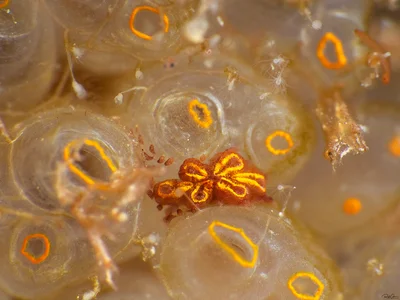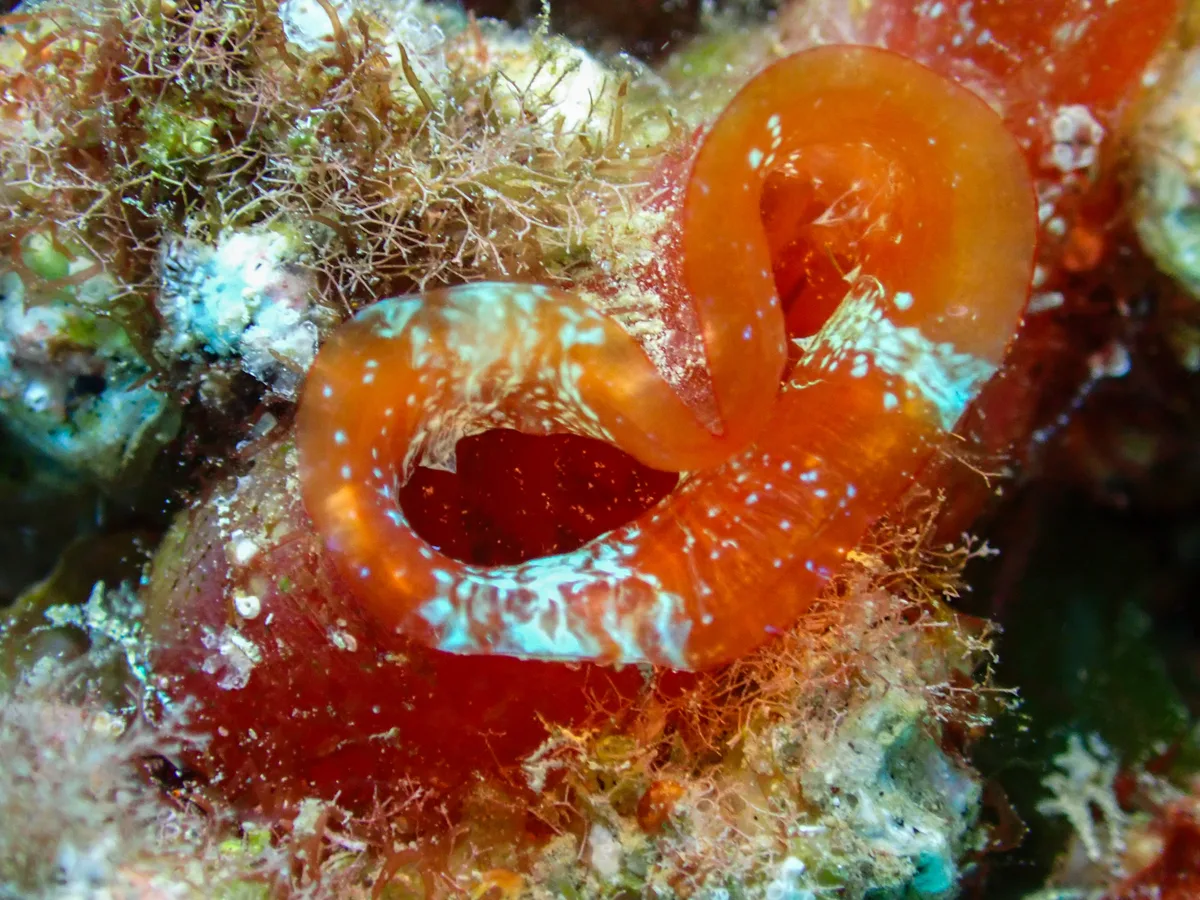
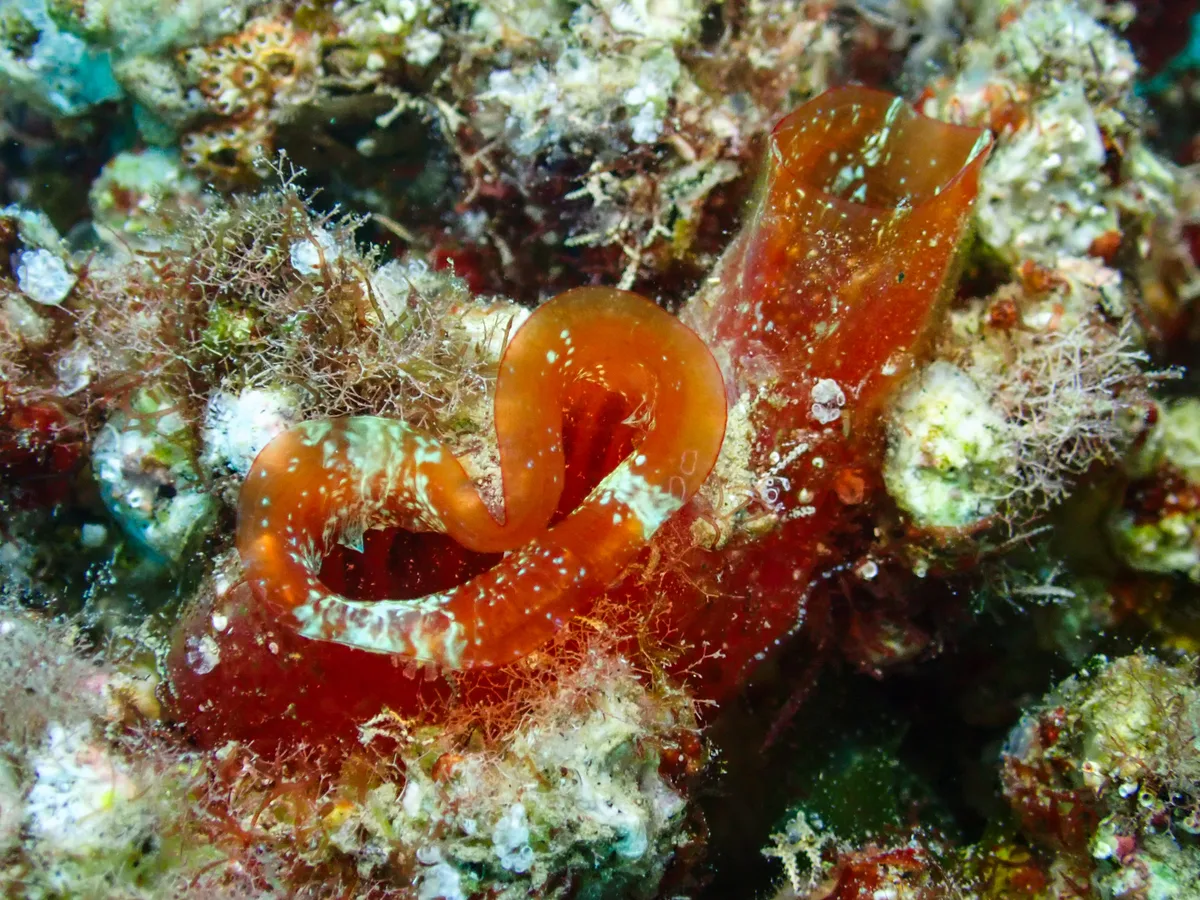
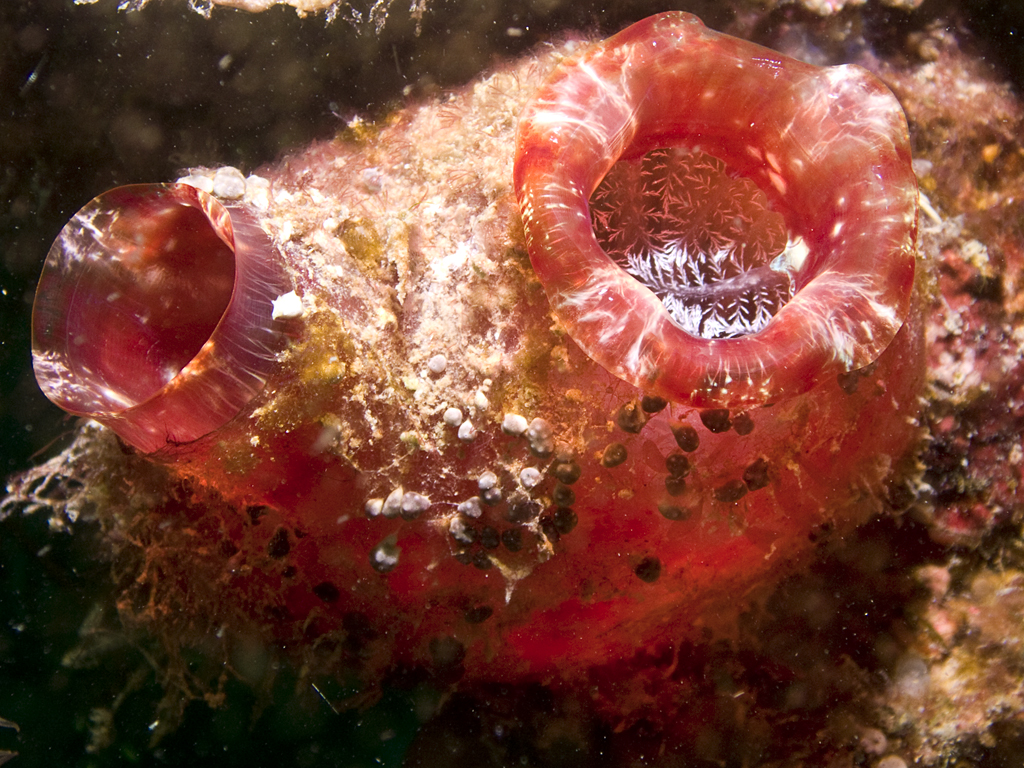
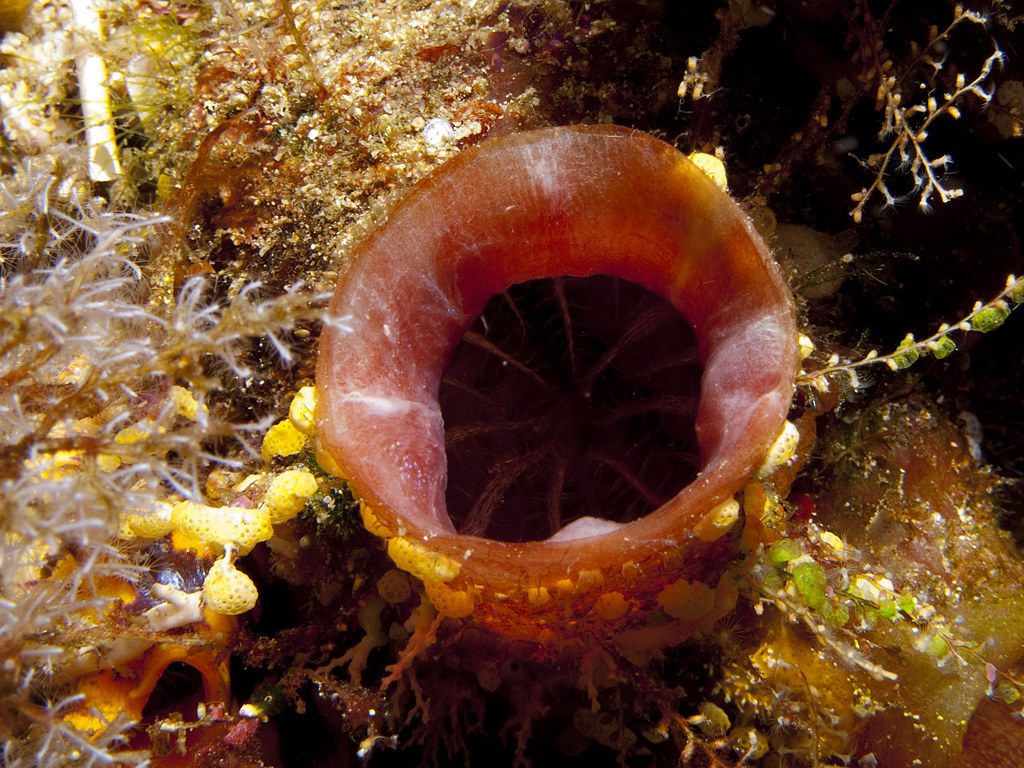
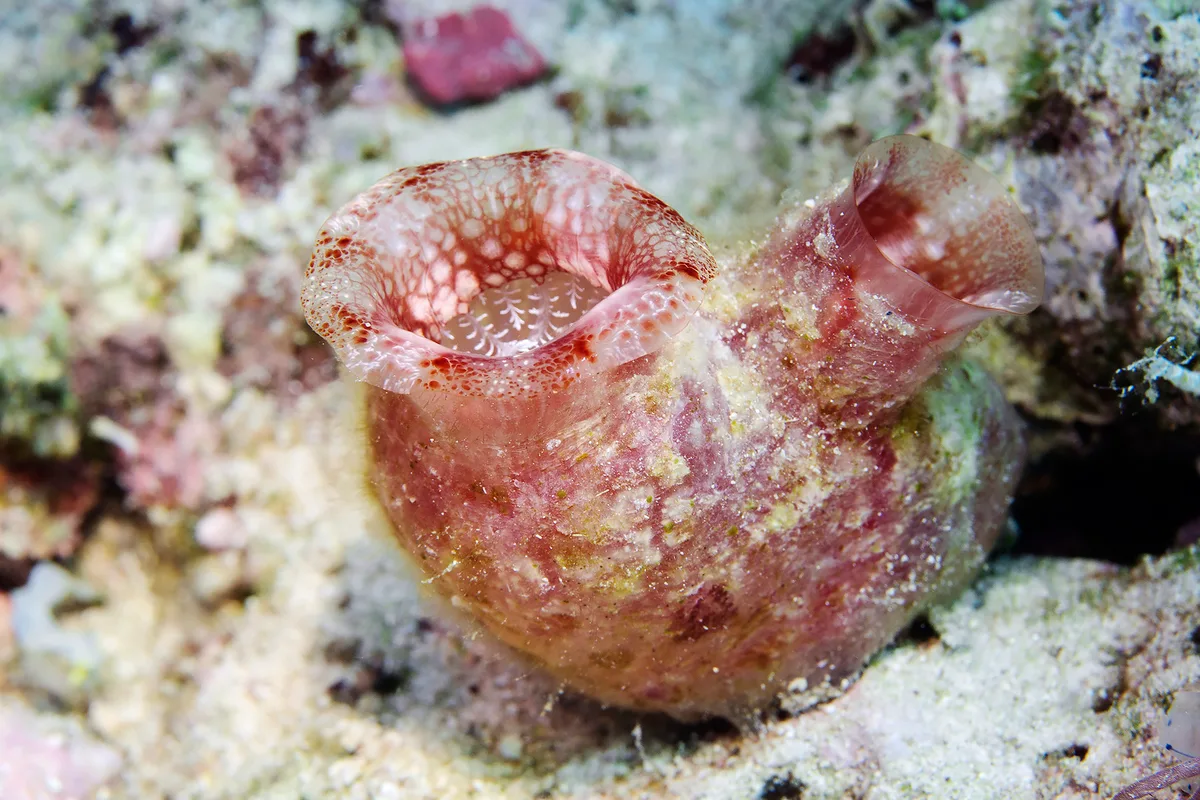
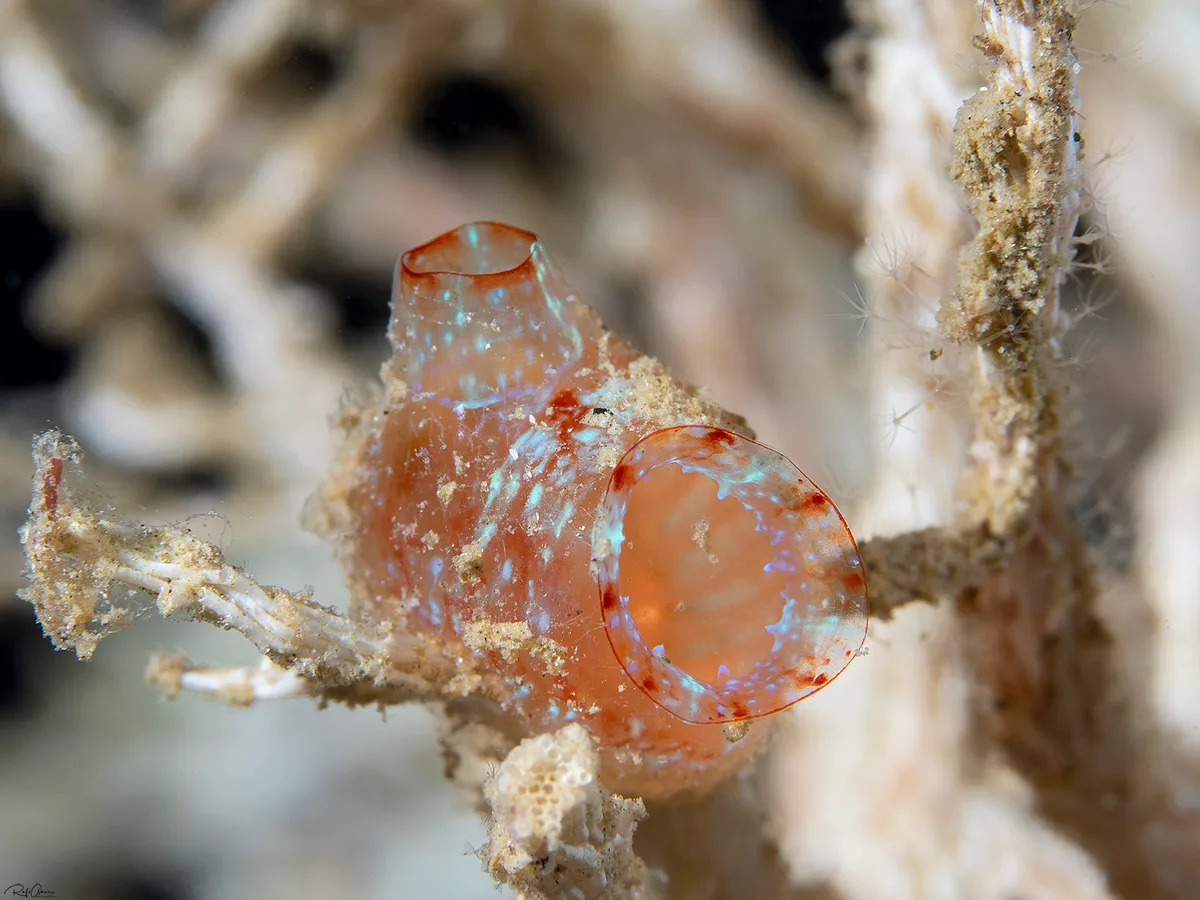
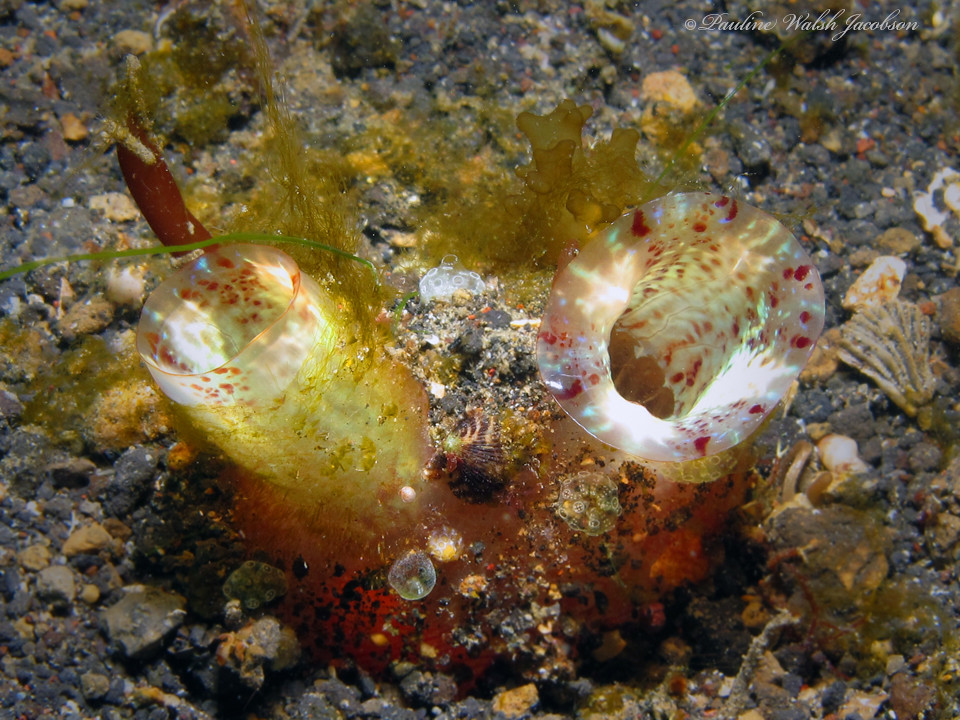
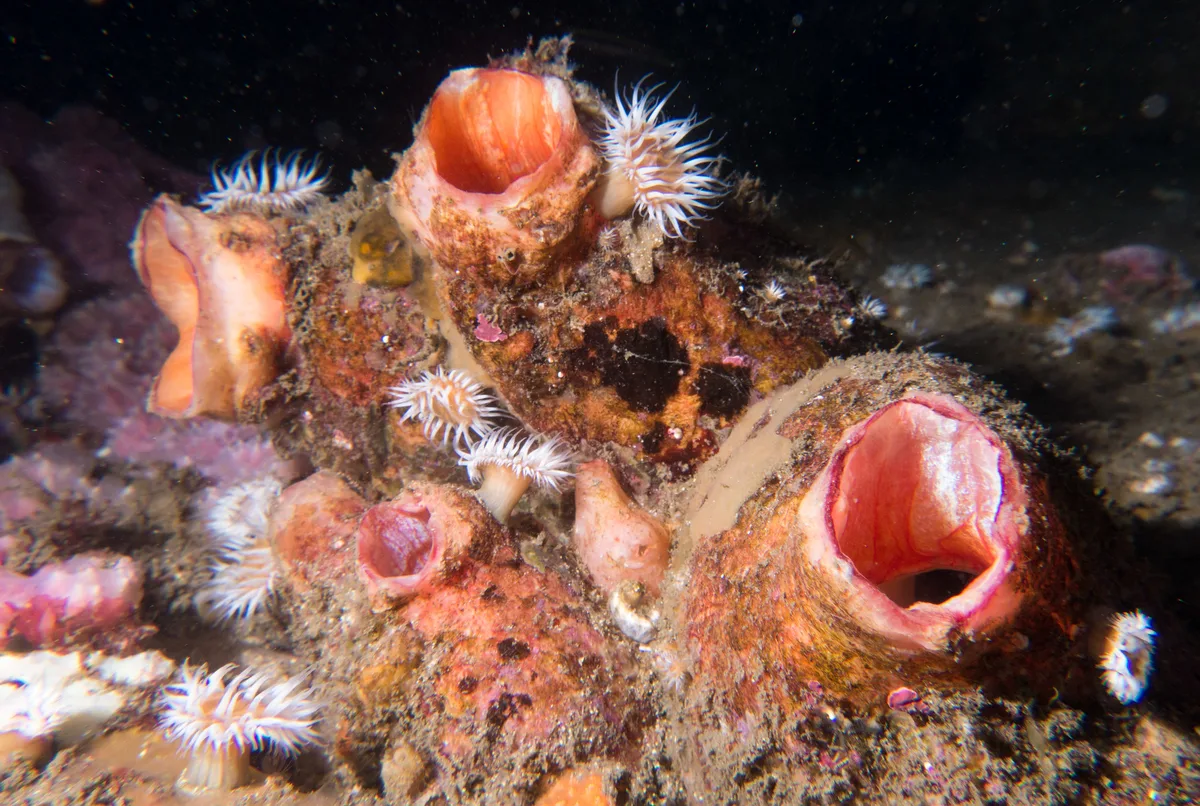
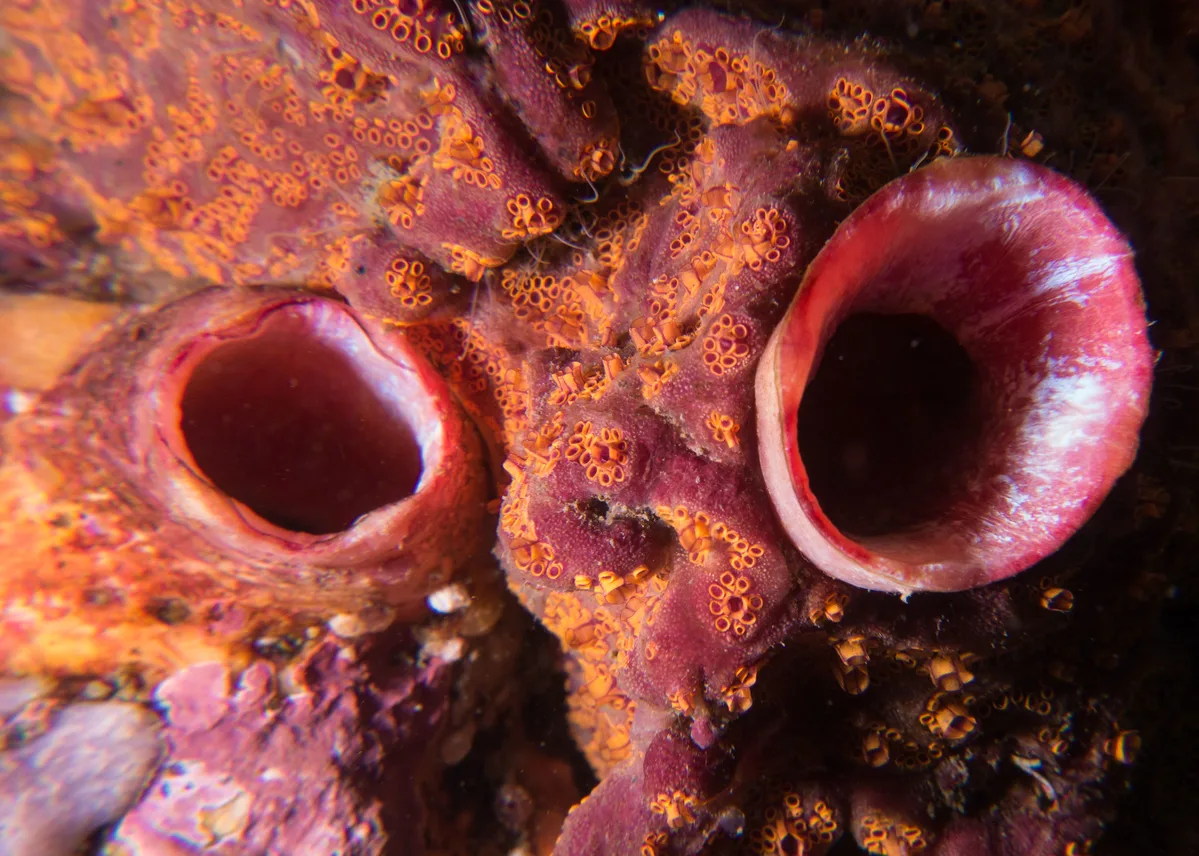
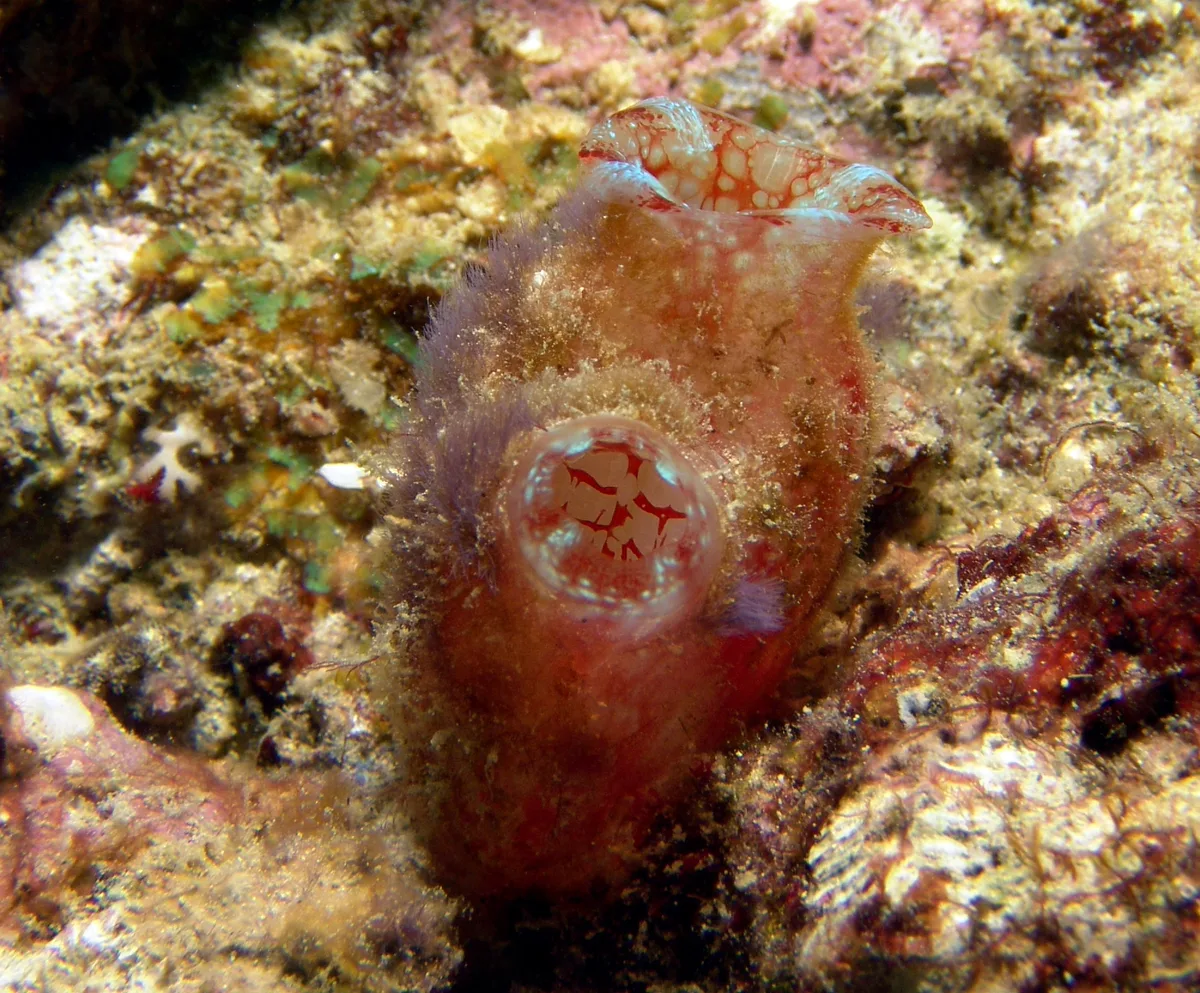
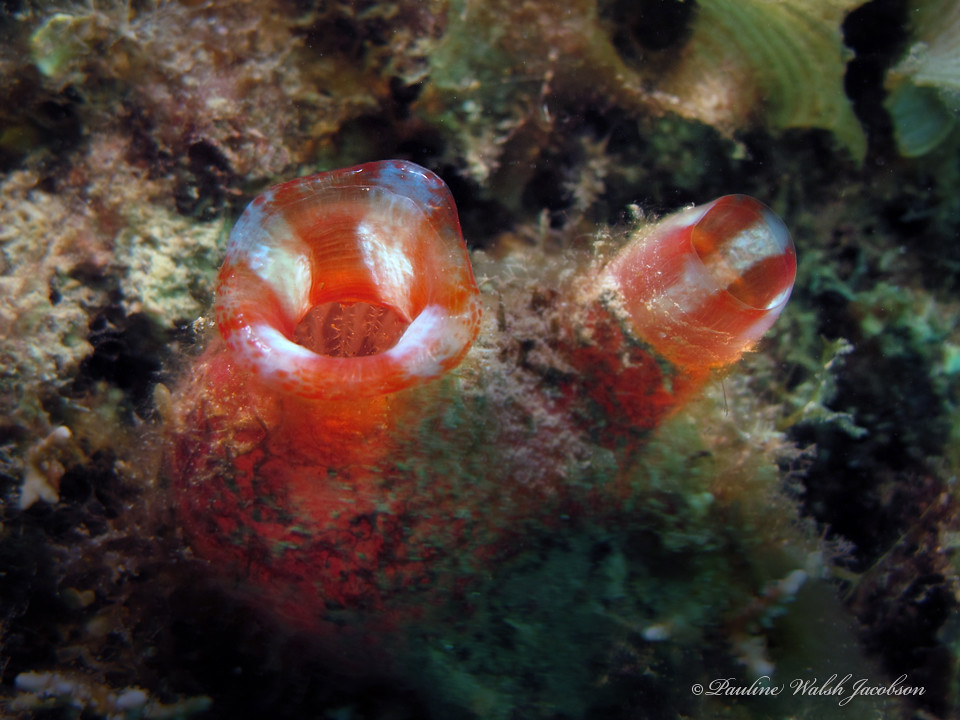
Look into the openings. The lining is red, and on a 🌊 Red Sea reef that red is the whole identification.
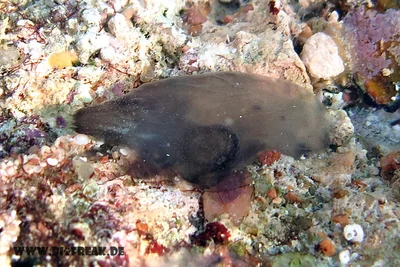
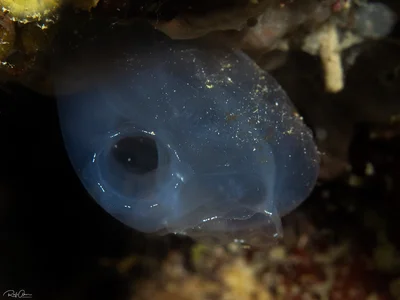
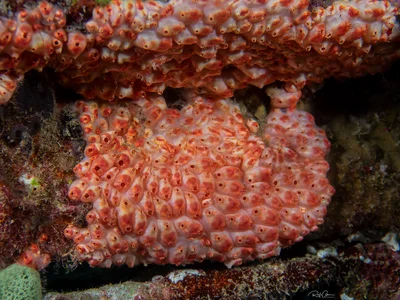
Everything else about the animal is usually hidden. It is a single leathery, translucent gray-pink bag cemented to rock, and it is normally covered in sponge, algae and silt to the point where it reads as rubble. This is one animal, not a colony of small ones sharing a tunic. Two openings sit at the top: water is pulled in through one, strained through a sheet of mucus stretched over an internal basket, and pushed out through the other. Below about 15 m the red drains away, because water absorbs red light first; a torch puts it back.
The body wall is loaded with spicules, spindles of calcium carbonate up to about 2 mm long, packed in their thousands through the mantle, the siphons and the gill basket. An animal that cannot run and cannot close a shell can still be a mouthful of needles.
Something lives inside it. Small shrimps of the genera Odontonia and Dactylonia live in the gill basket, in the current the host makes and eating what the host filters; in one survey at Eilat about one animal in seven had a shrimp aboard. They are almost transparent, and you will only see one by putting a light into an open siphon.
It is a chordate, which puts it closer to a diver than any snail or crab on the same rock. The proof is in the larva: a swimming tadpole with a stiff rod, a notochord, down its tail and a nerve cord above it. The larva swims a few hours, settles head first onto rock, glues itself down, and then reabsorbs its tail and most of its nervous system. It builds a brain to choose a place to sit, then takes the brain apart.
This species is native here and went the other way through the Suez Canal (🇪🇬 Egypt). It is now established across the eastern Mediterranean, from 🇮🇱 Israel and Lebanon to 🇹🇷 Turkey and Malta, and is one of the best-documented sea squirt invasions there.
- both siphon linings bright red
- translucent gray-pink body, usually crusted with sponge and silt
- solitary, cemented hard to rock, often under overhangs
- up to 18 cm