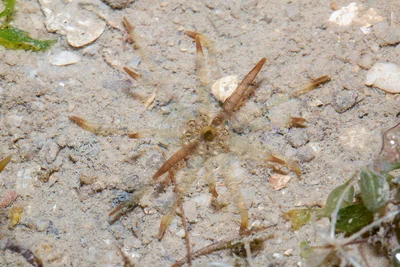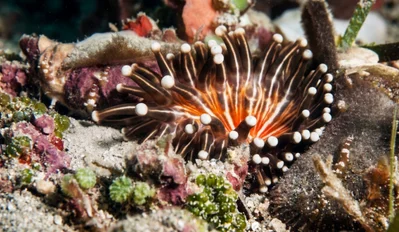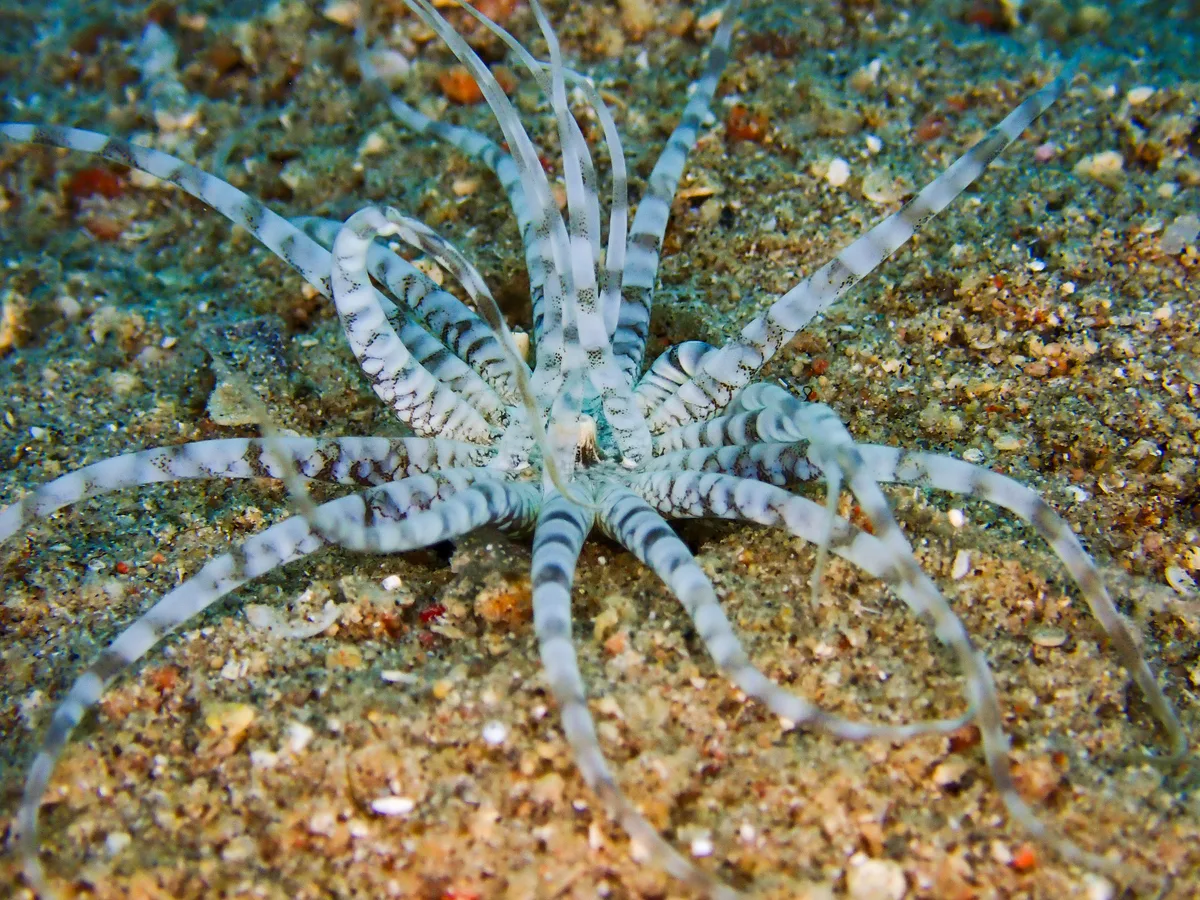
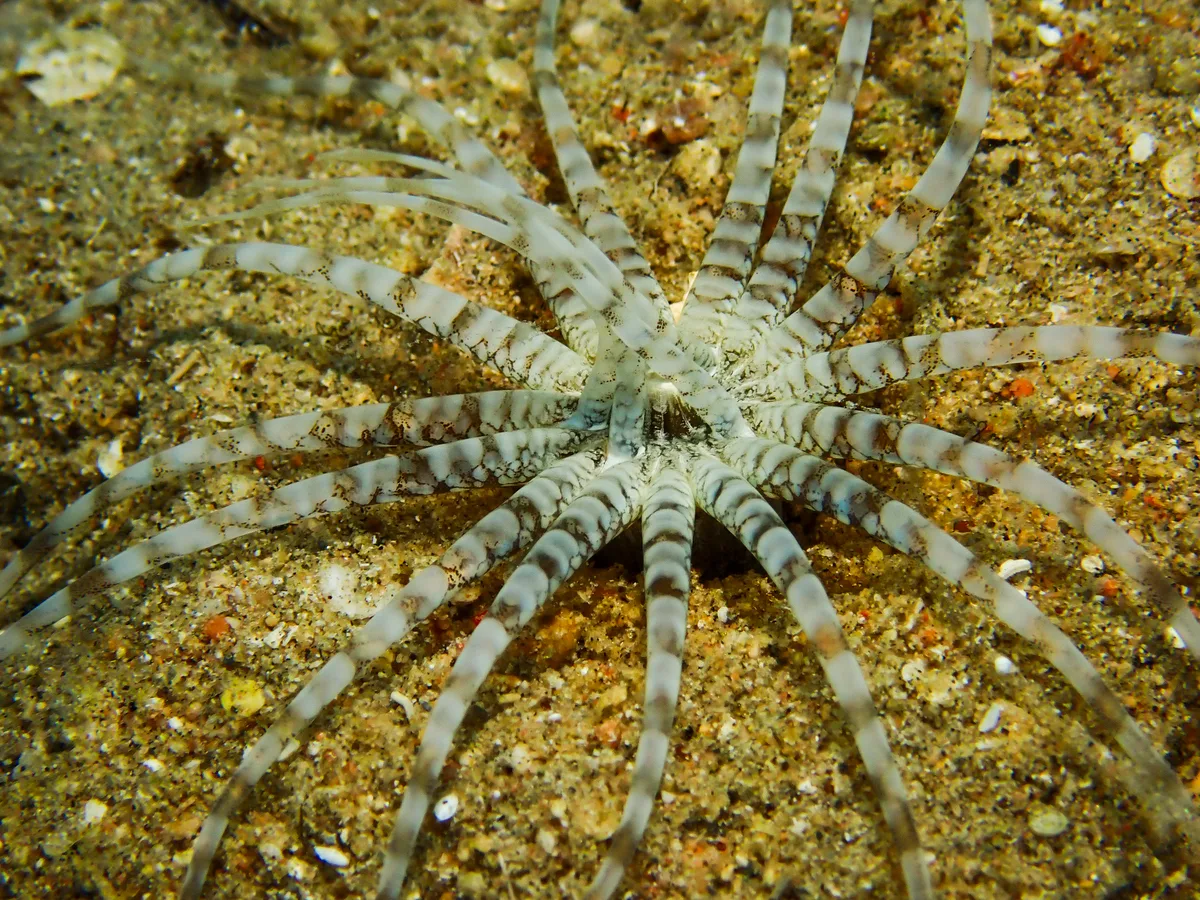
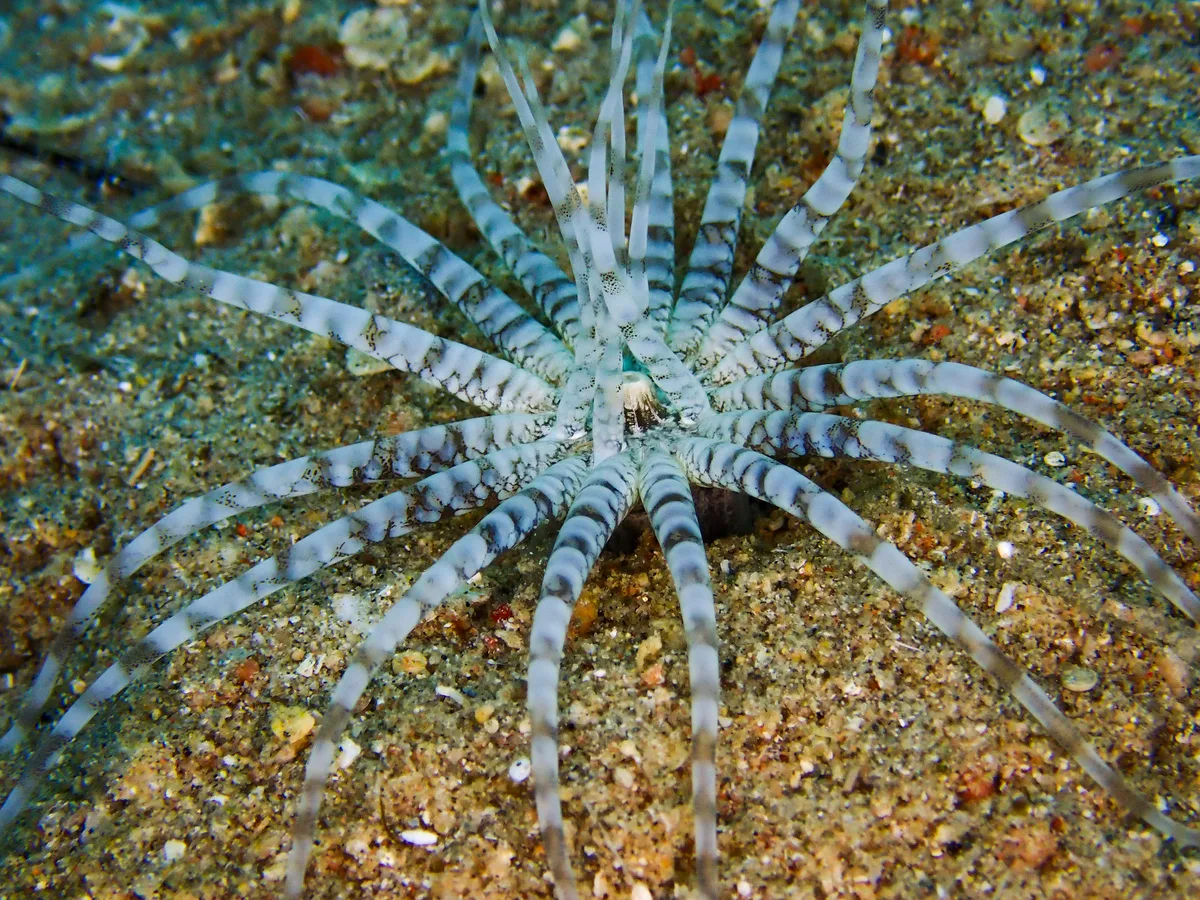
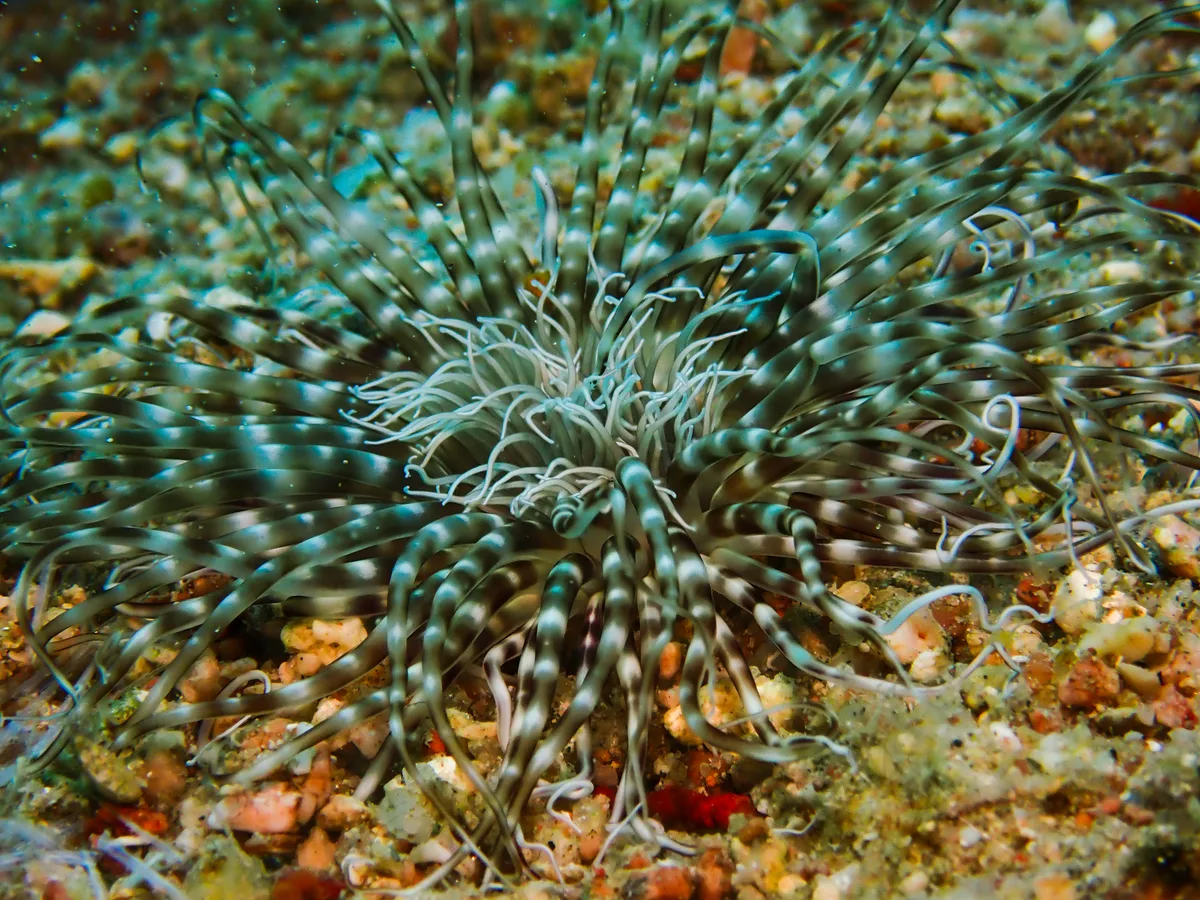
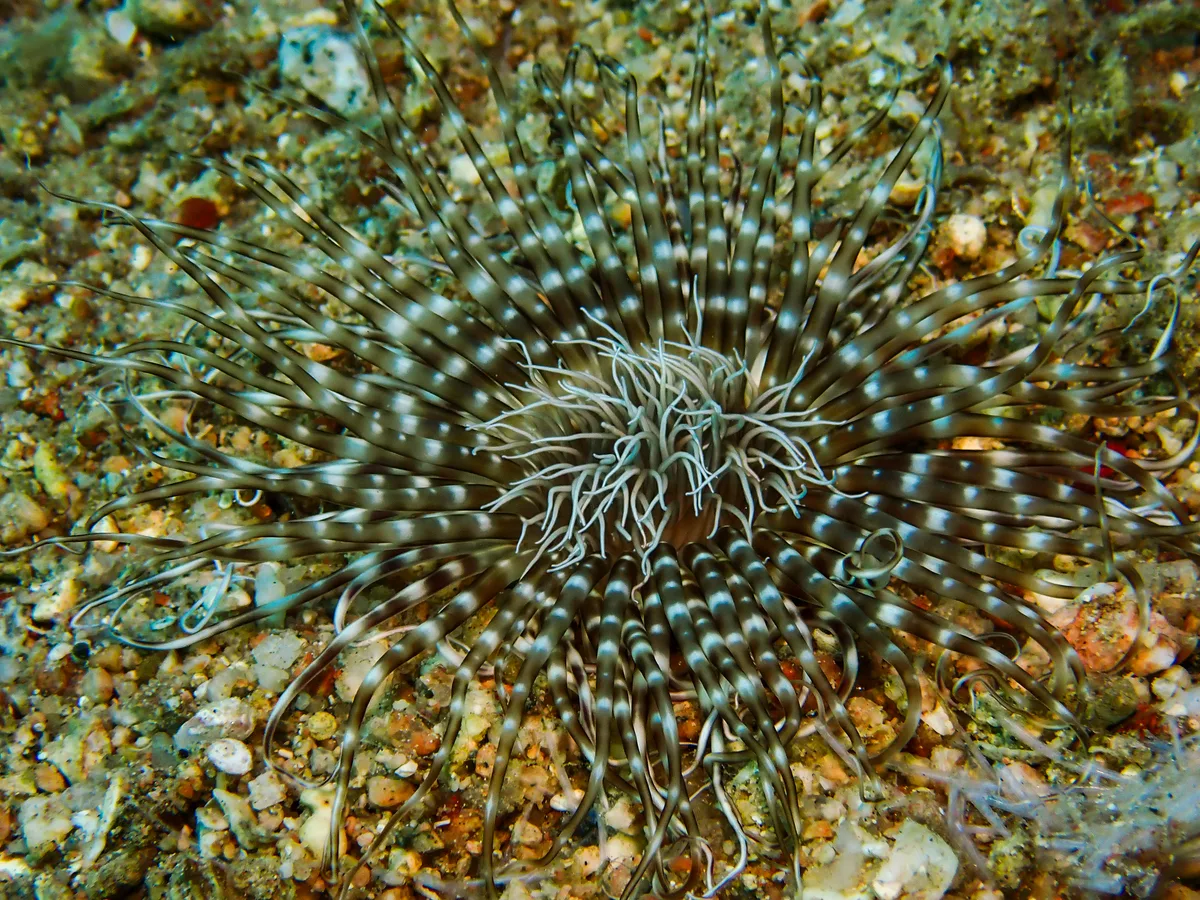
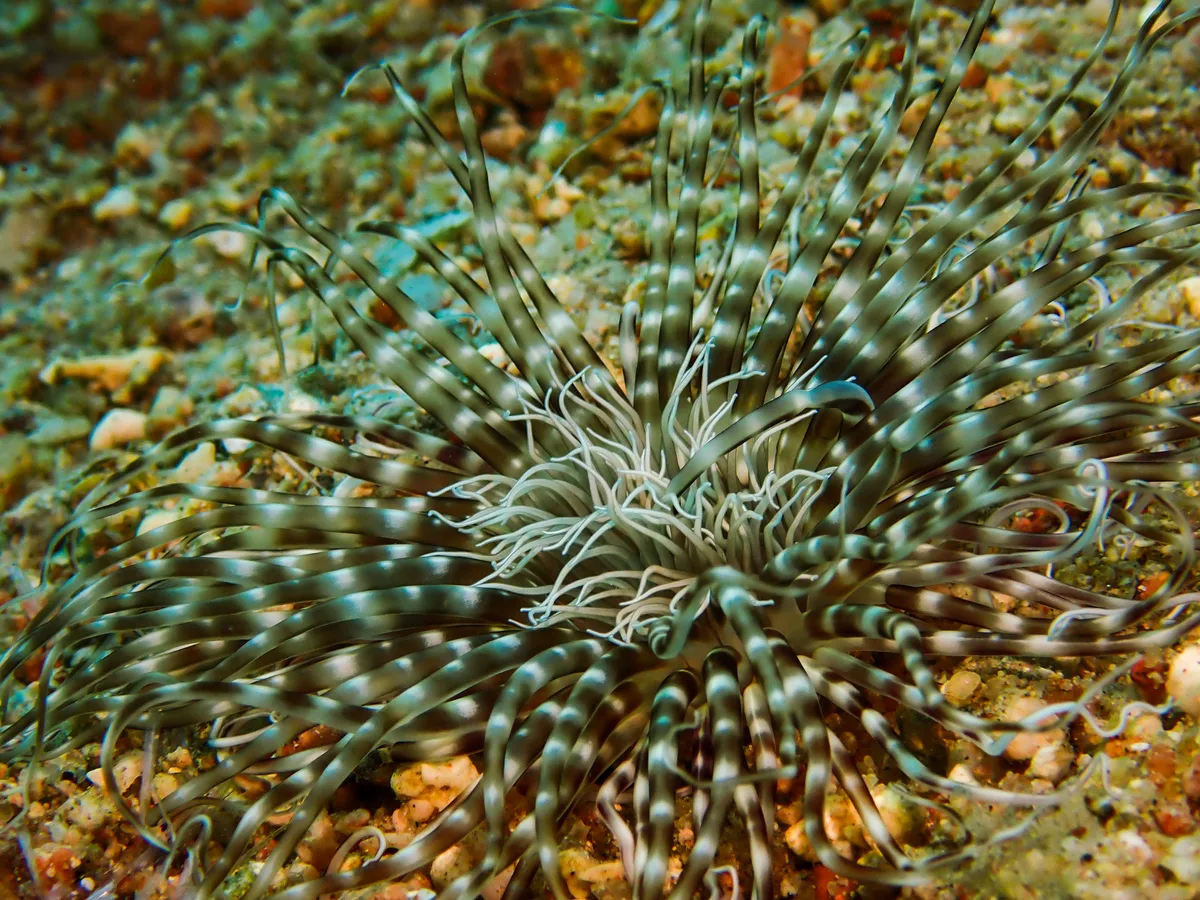
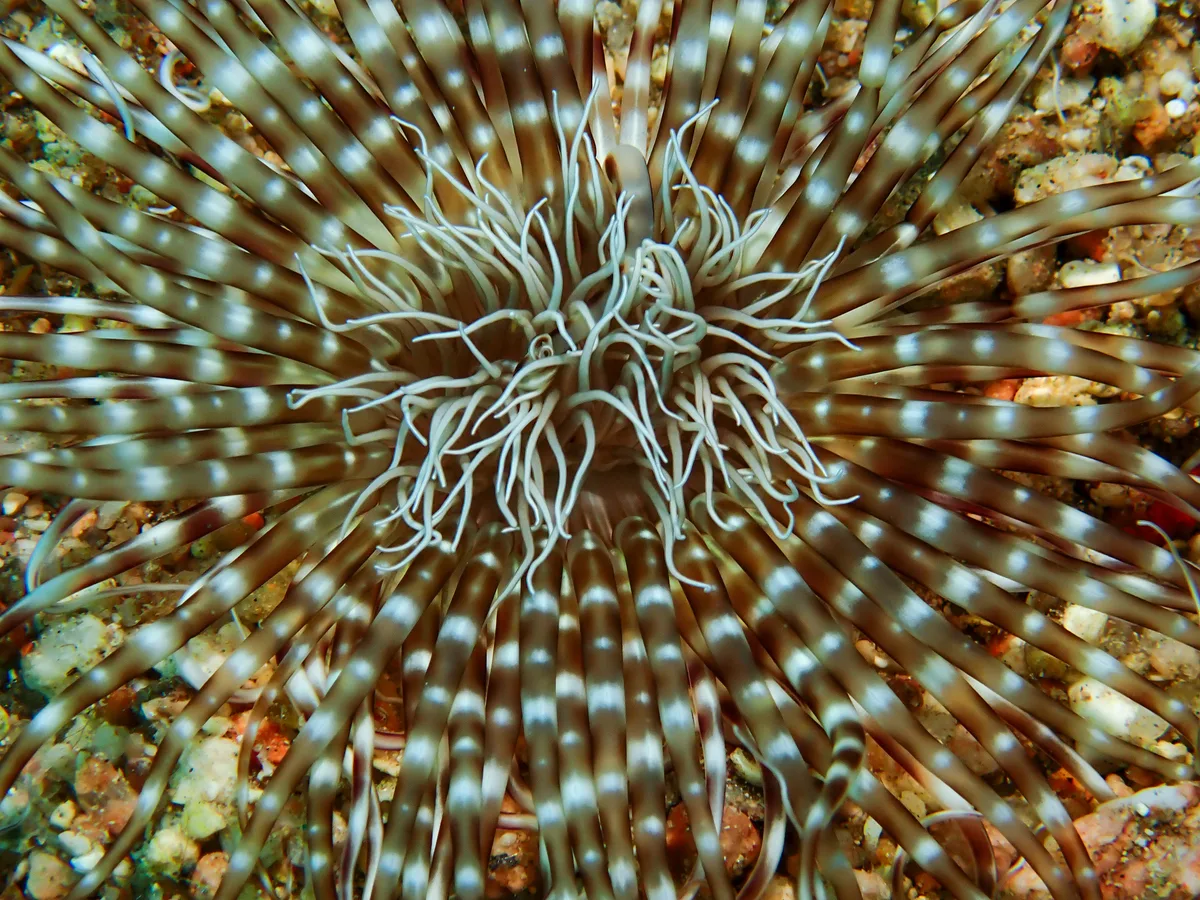
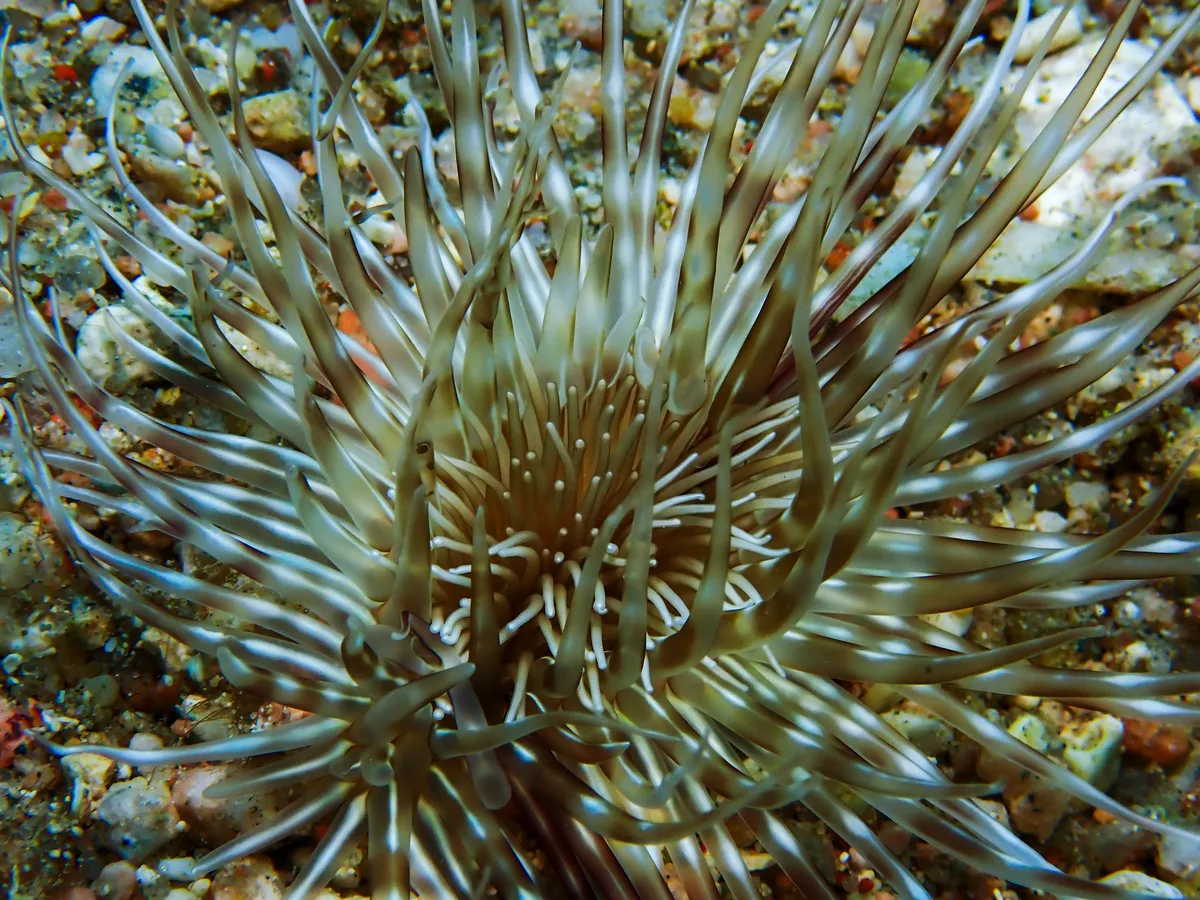
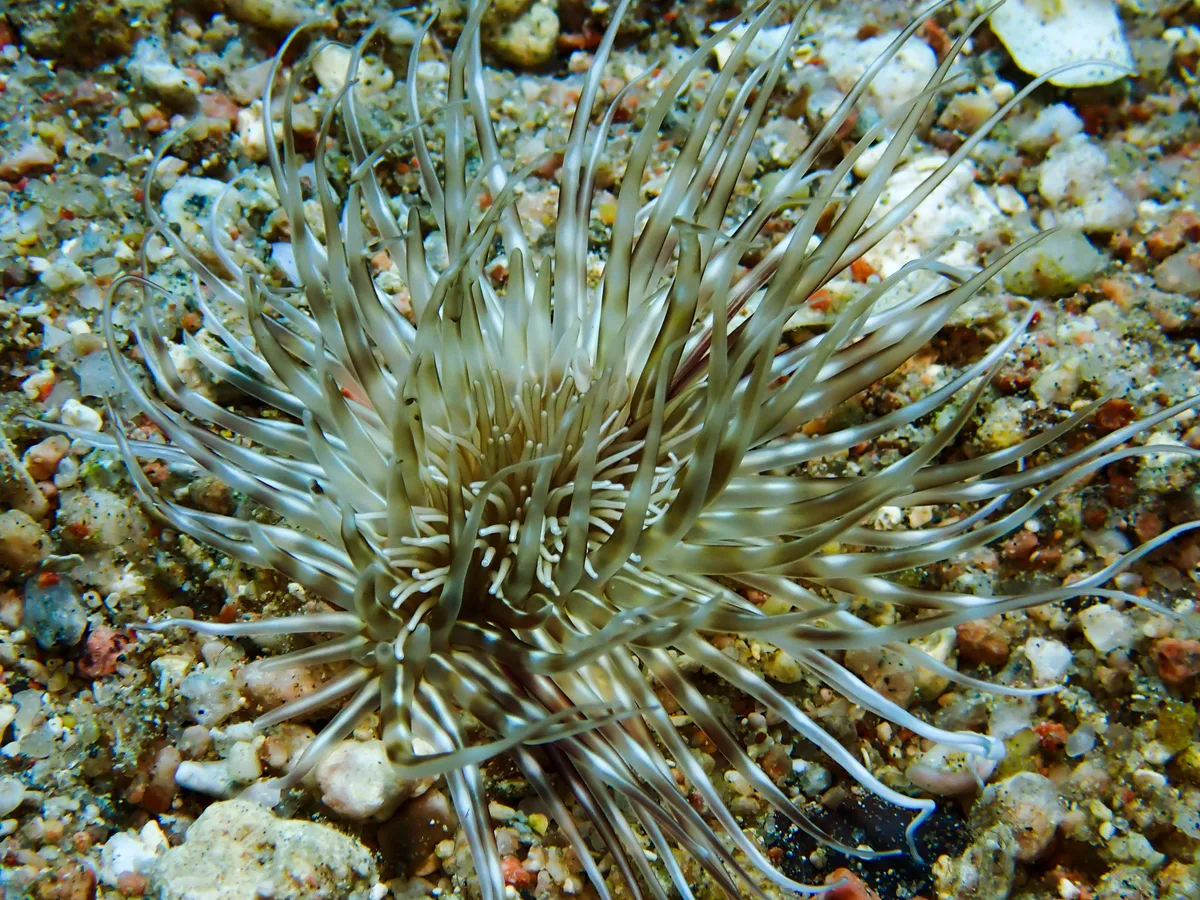
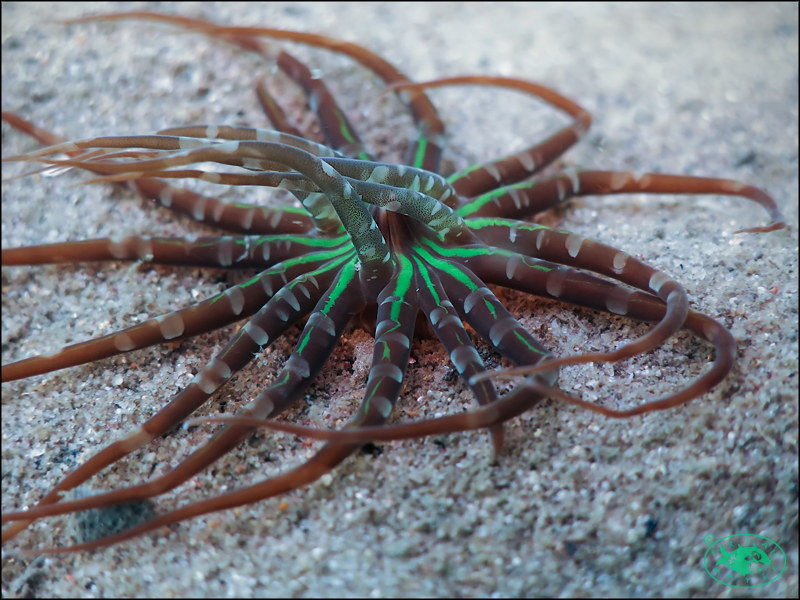
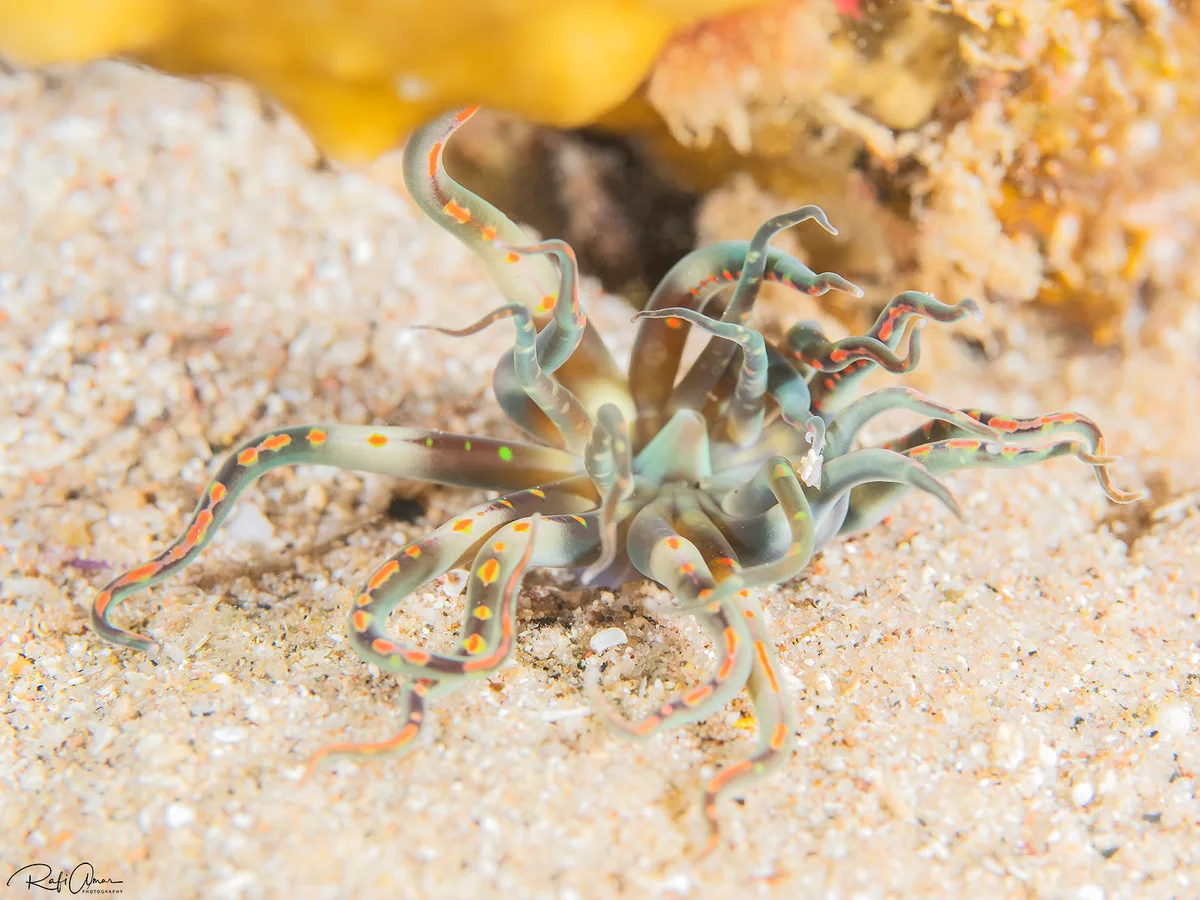
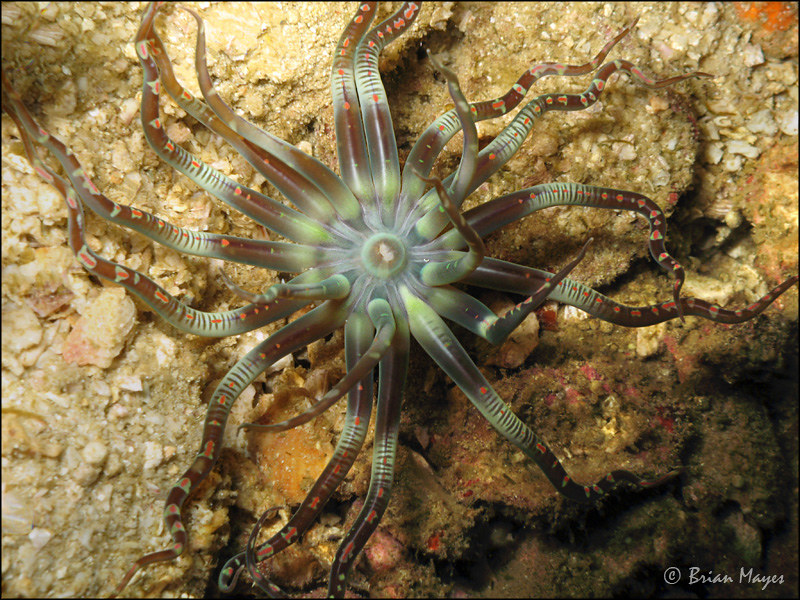
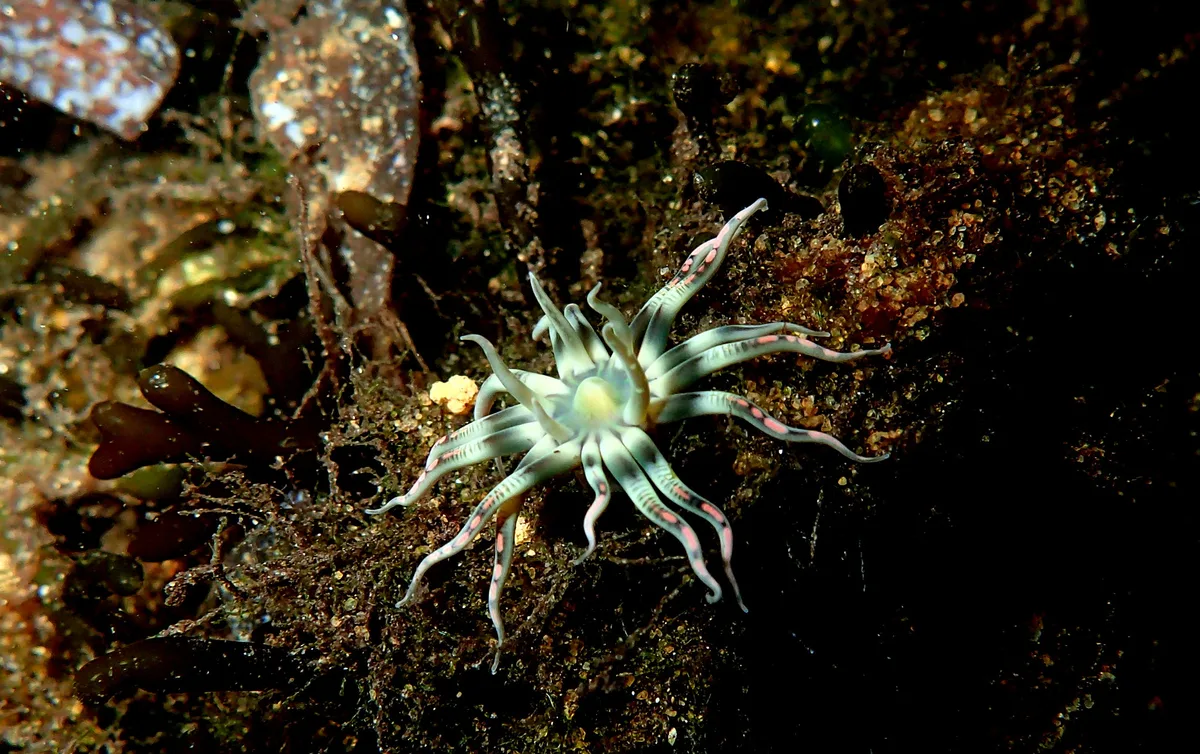
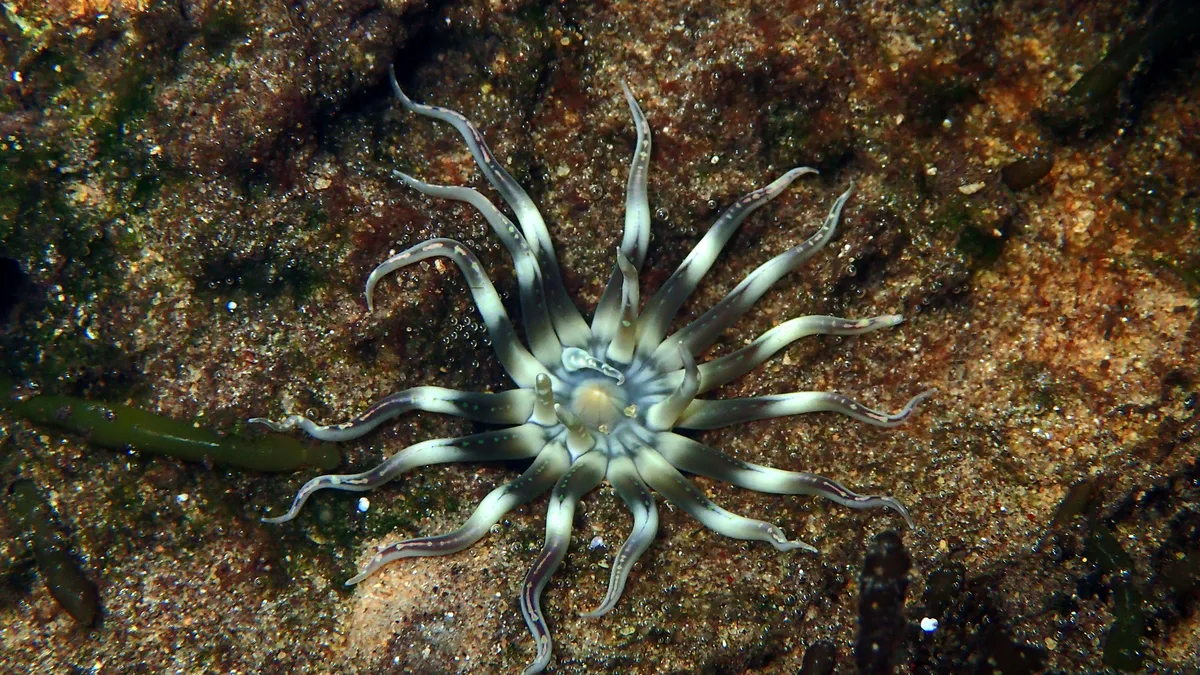
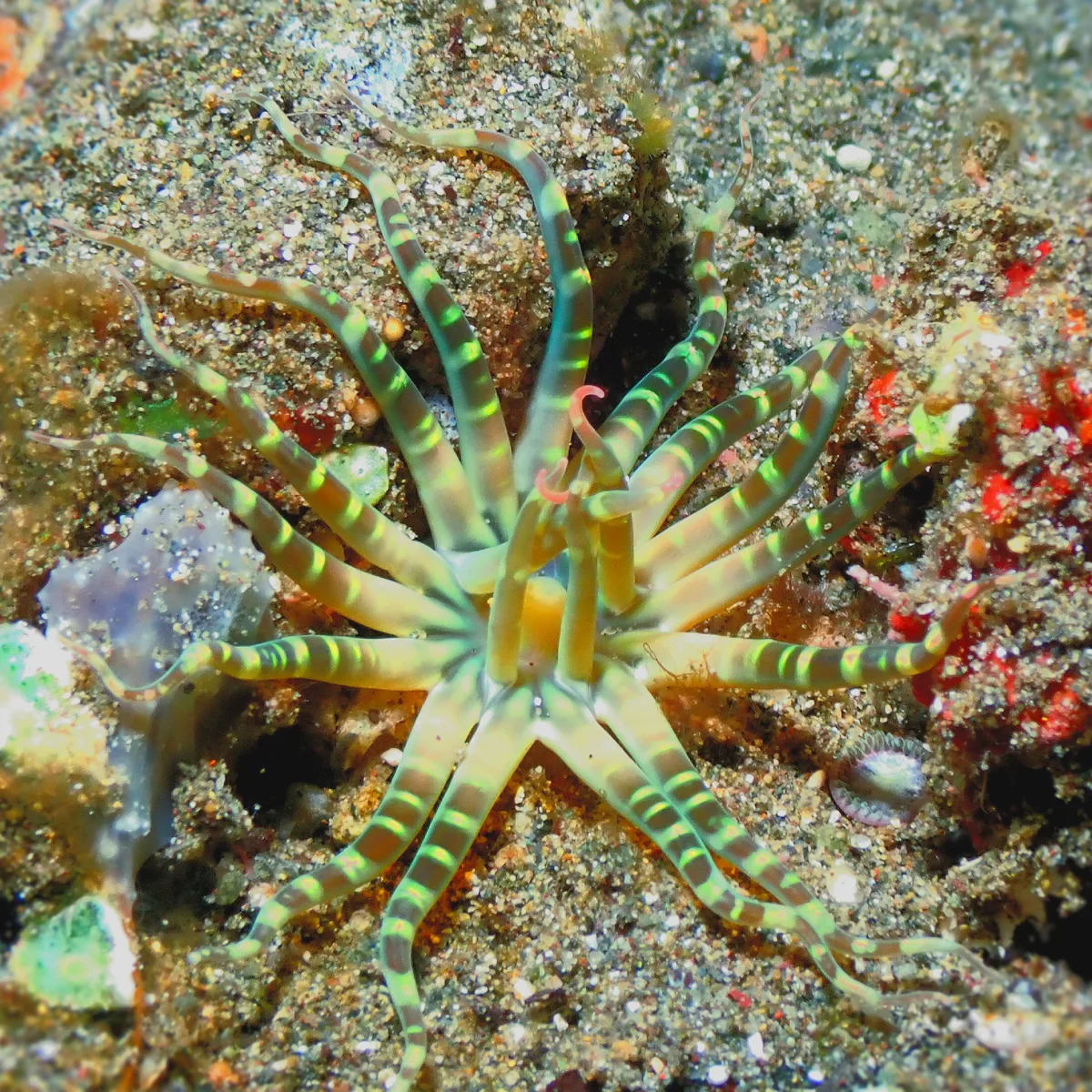
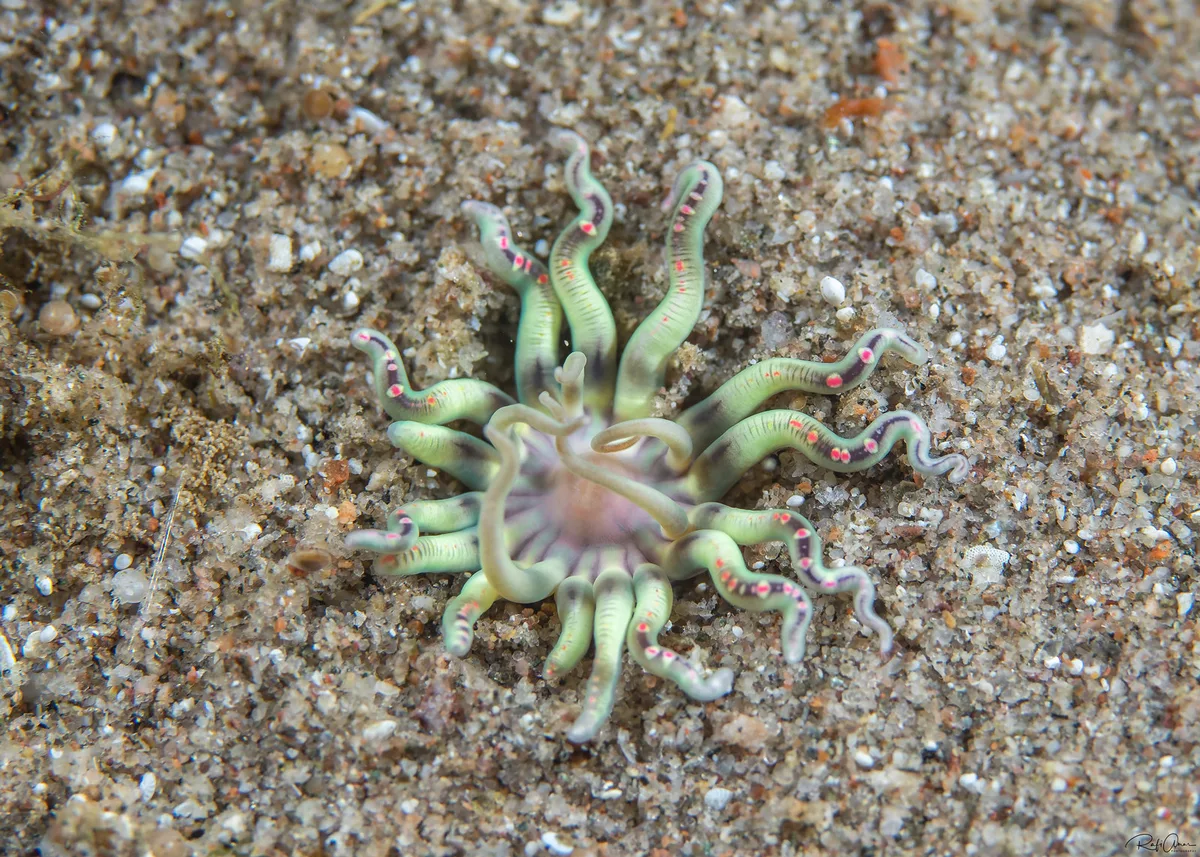
What you find is a crown of tentacles standing straight out of the sand with no animal attached to it. There is no column, no visible body, nothing to suggest where it ends.
Burrowing anemones are built as a buried tube. The body is a long soft cylinder pushed down into the sediment and anchored there by a swollen tip rather than by the adhesive disc that a reef anemone uses to grip rock, and only the last centimeter or two, the crown, ever comes above the surface. Threatened, the animal contracts the whole tube and pulls the crown under, and the patch of sand it was in becomes indistinguishable from the sand around it.
It feeds the way anemones do, on whatever drifts within reach of the tentacles and is small enough to be stung and folded into the mouth in the middle, and it does most of that at night.
Carl Benjamin Klunzinger described it in 1877. He was a German doctor posted to Quseir on the Egyptian coast as a quarantine officer, and he spent his spare hours describing the animals of the reef in front of the town, hundreds of them, in the work that still underpins a good part of 🌊 Red Sea zoology.
- crown of tentacles rising straight from the sand
- no visible column - the body is a buried tube
- withdraws below the surface when approached
- crown up to 5 cm across