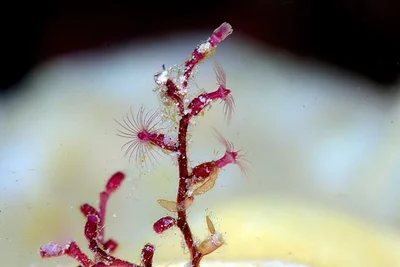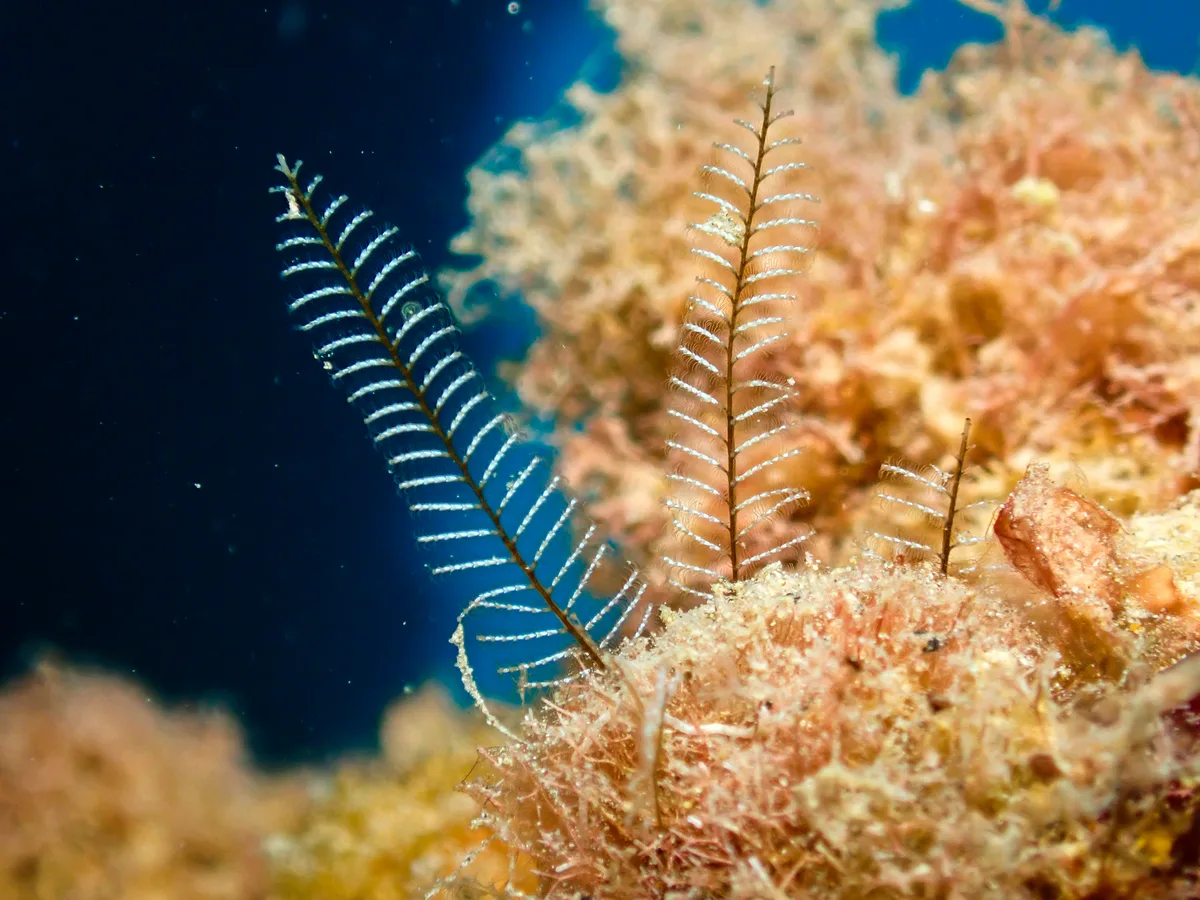
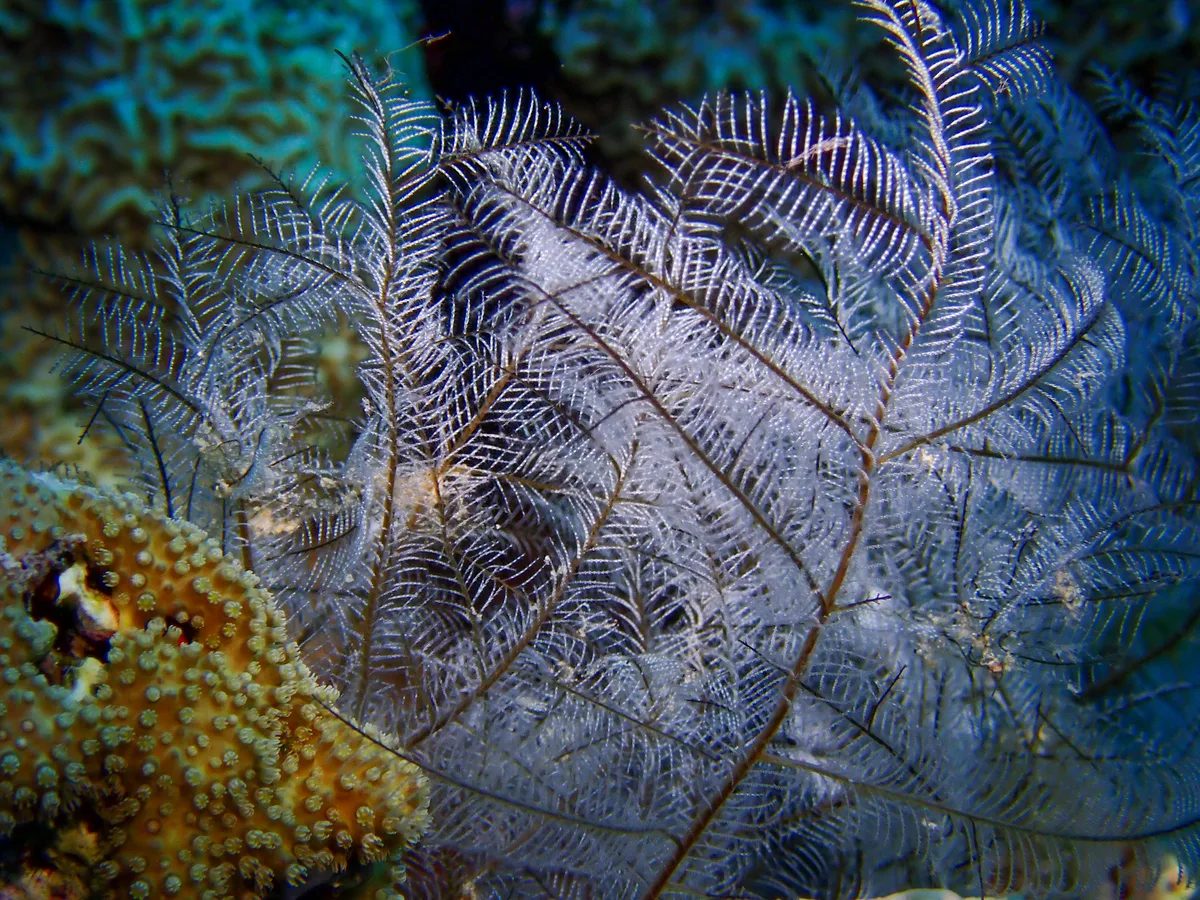
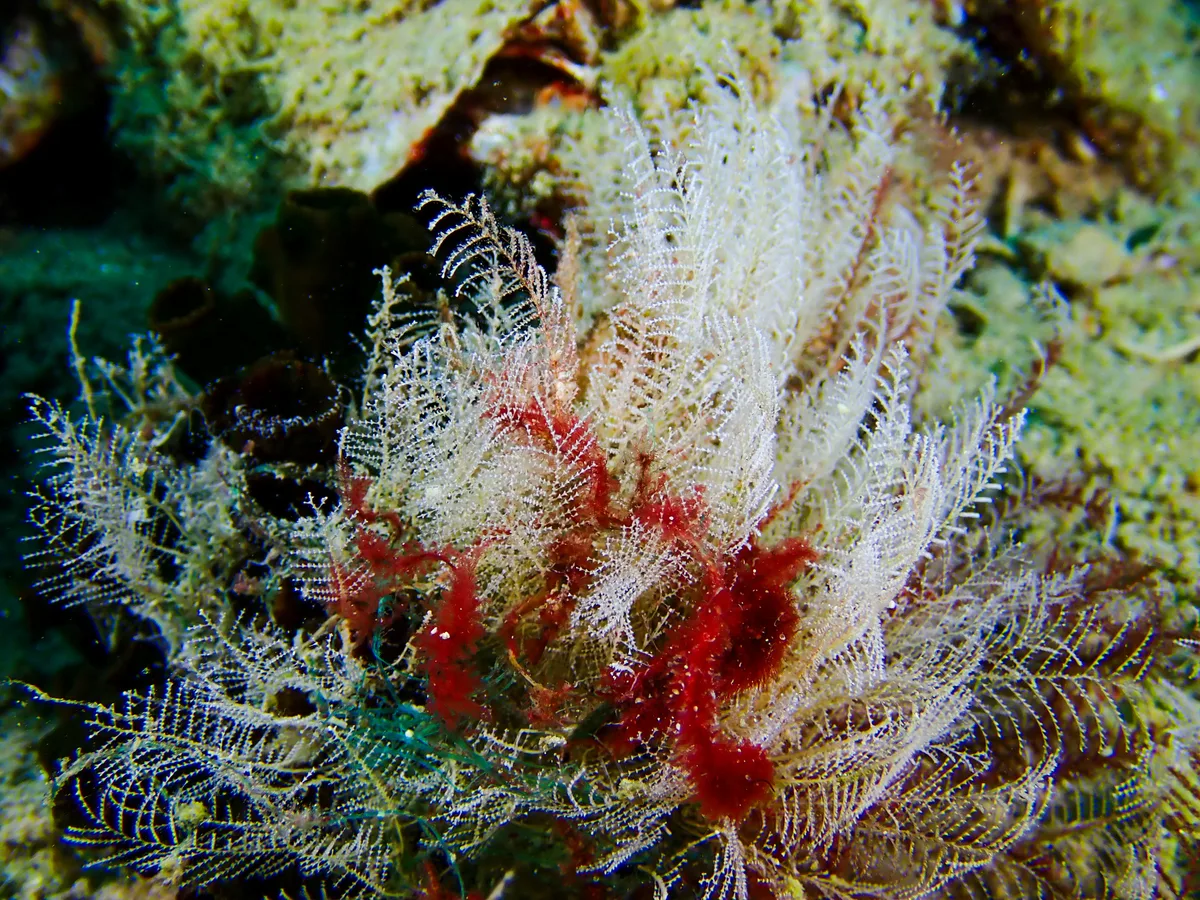
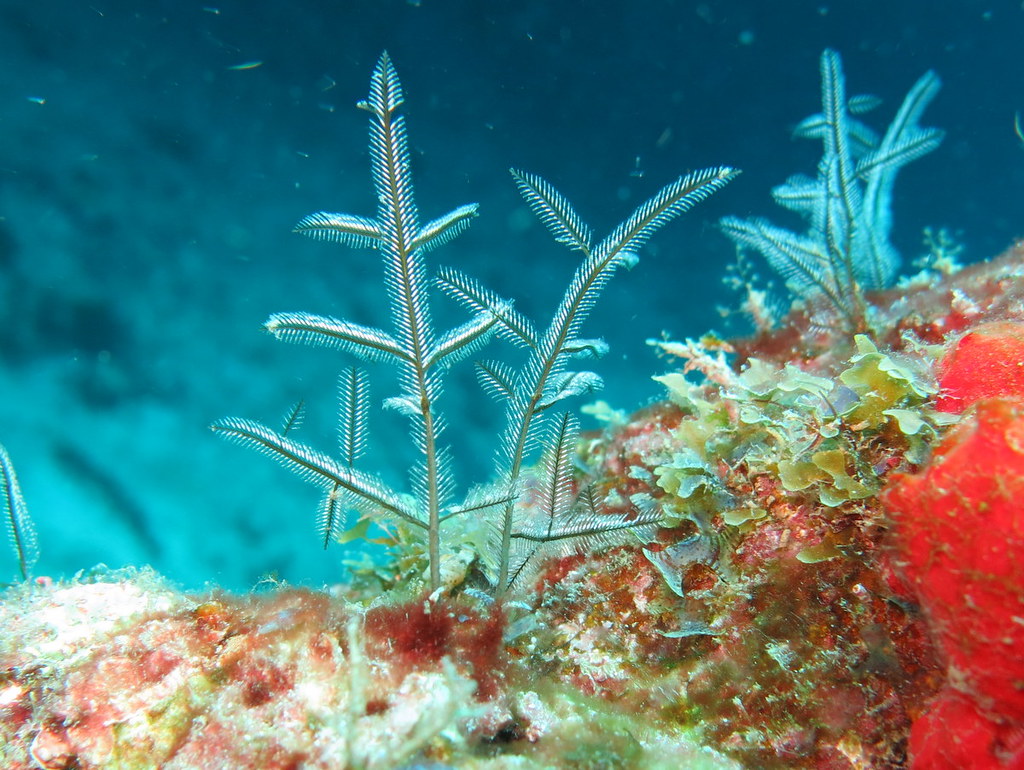
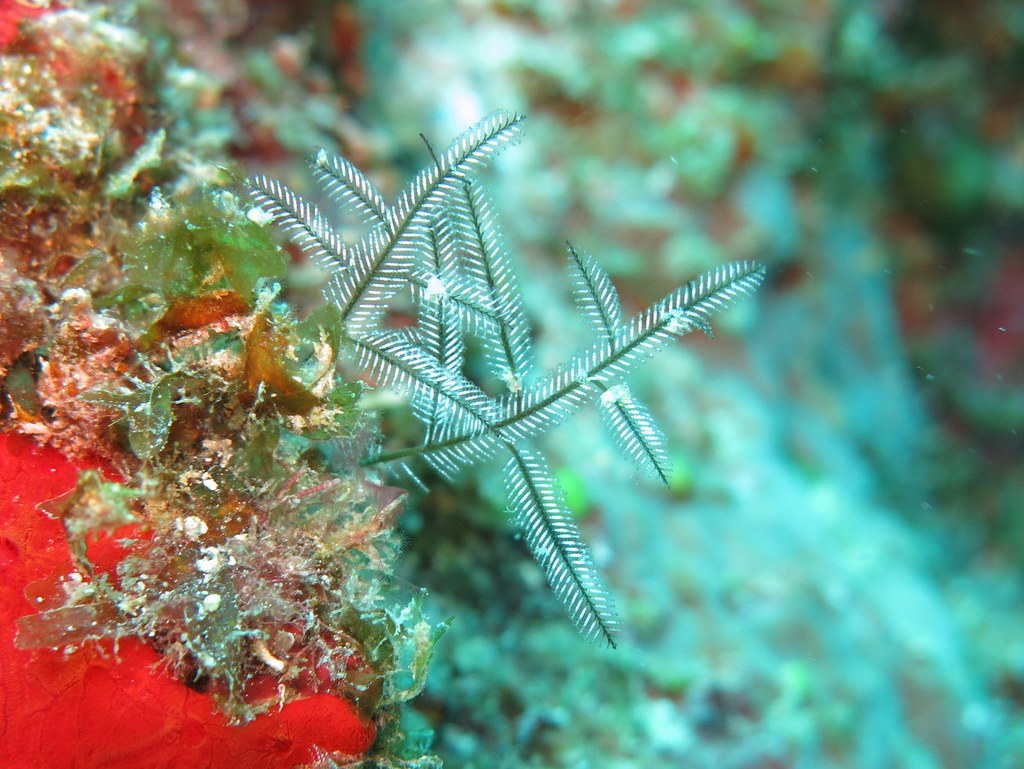
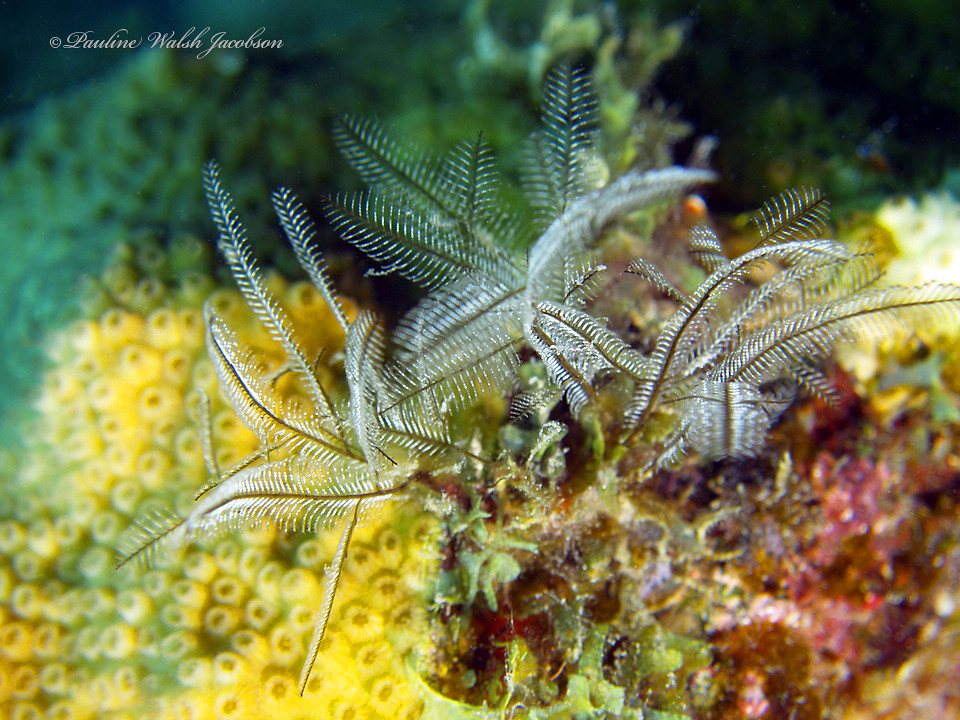
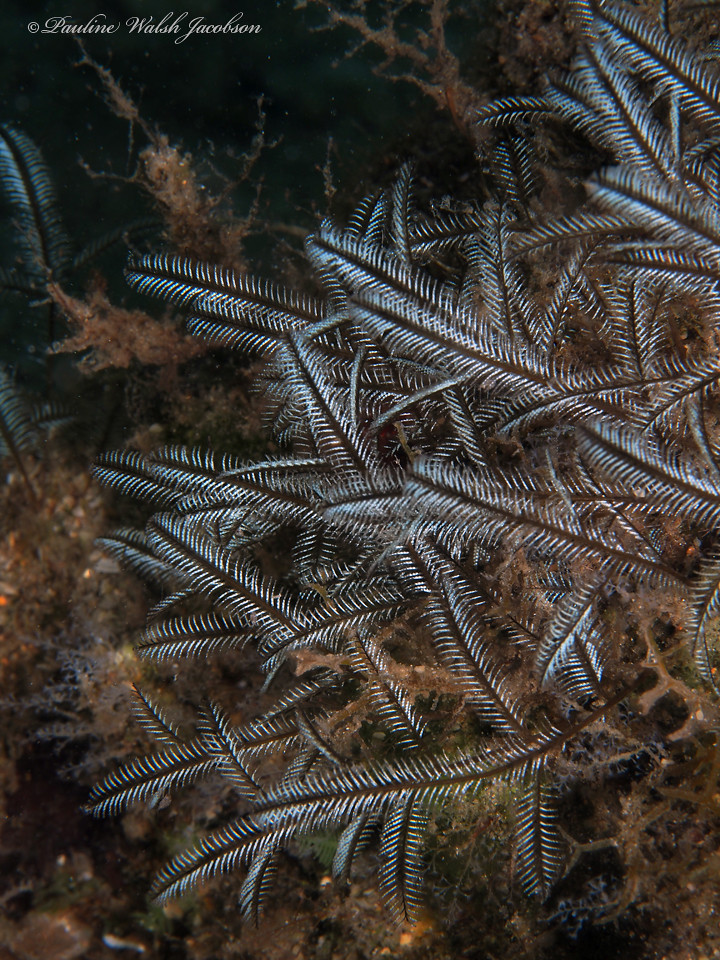
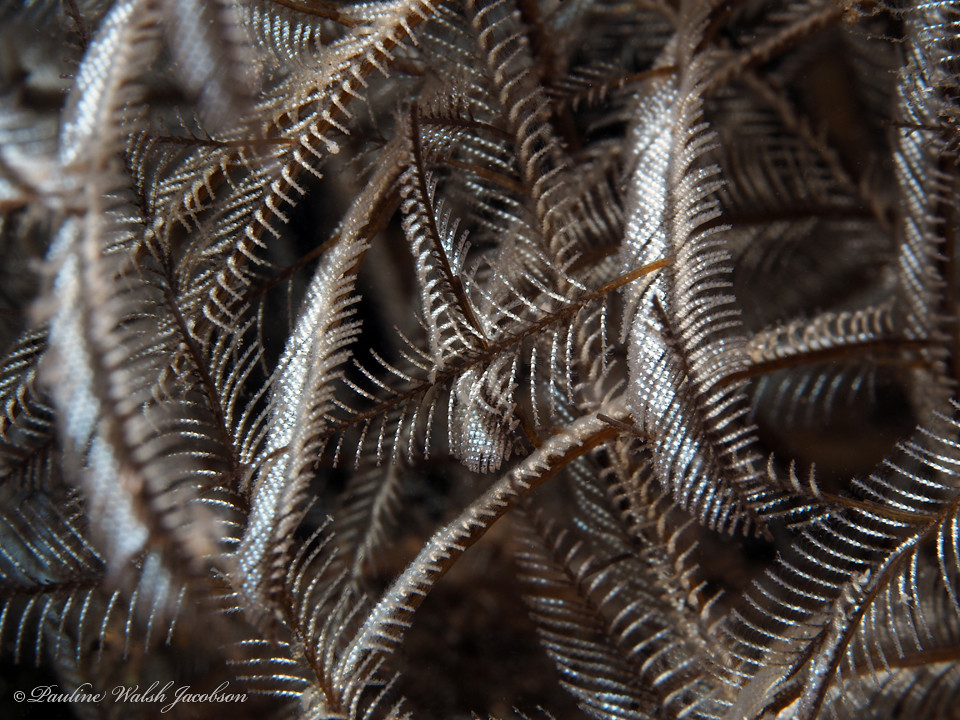
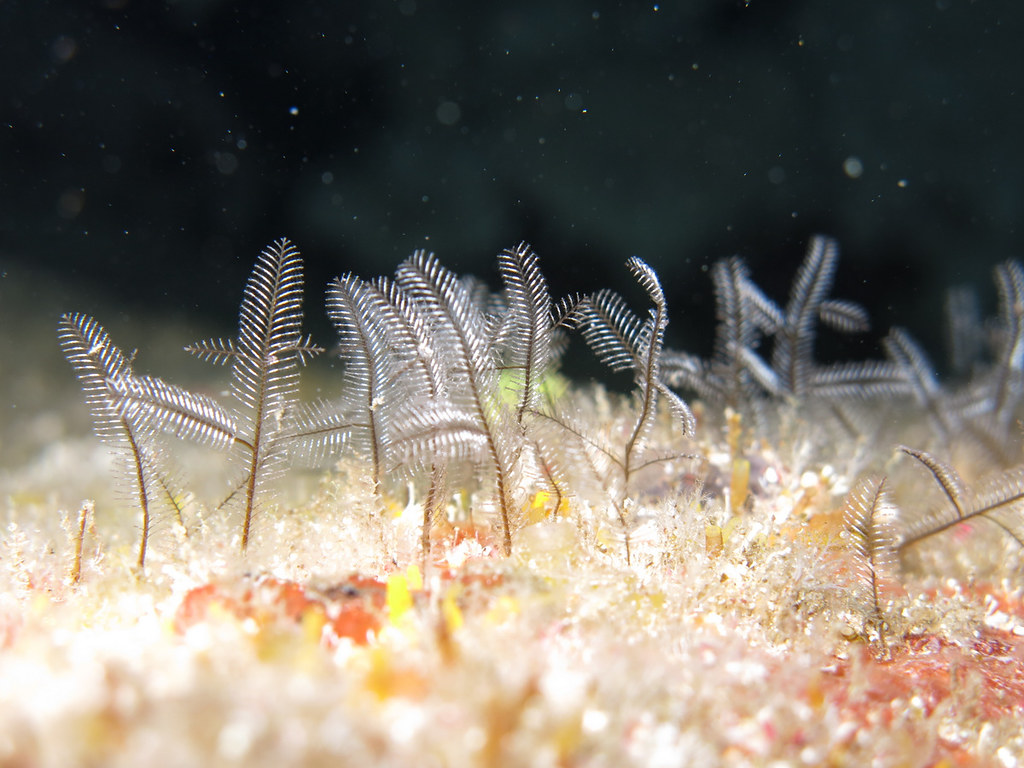
A stiff white fern growing off a wreck or a shaded rock, and one of the most reliable ways to get hurt on this reef.
It is a hydroid, not a plant and not a coral: a colony of tiny polyps sharing a horny skeleton, and closer to jellyfish than to anything it grows among. Among the feeding polyps sit defensive ones loaded with nematocysts, and they fire on contact through skin that a stony coral would not mark.
The sting arrives seconds late, burns for hours, and often raises a welt that itches for days and reappears weeks later. It is the classic injury of a diver steadying themselves on a wreck or brushing a line, and of anyone in a shorty. Rinse with seawater or vinegar, never fresh water, lift anything clinging off with a card edge rather than rubbing, and use hot water at about 45 C (113 F) for the pain.
It grows where current runs, which is exactly where a diver wants to hold on. That combination is the whole reason this card carries a danger flag.
- white to cream feathery plumes, stiff rather than soft, in flat fans
- regular side branches giving a fern-like outline
- grows on wrecks, ropes and shaded reef with current
- colonies to 20 cm tall