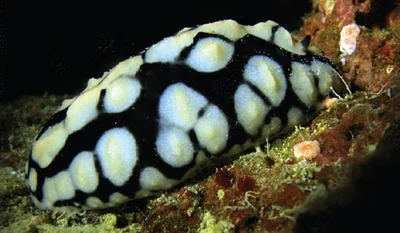
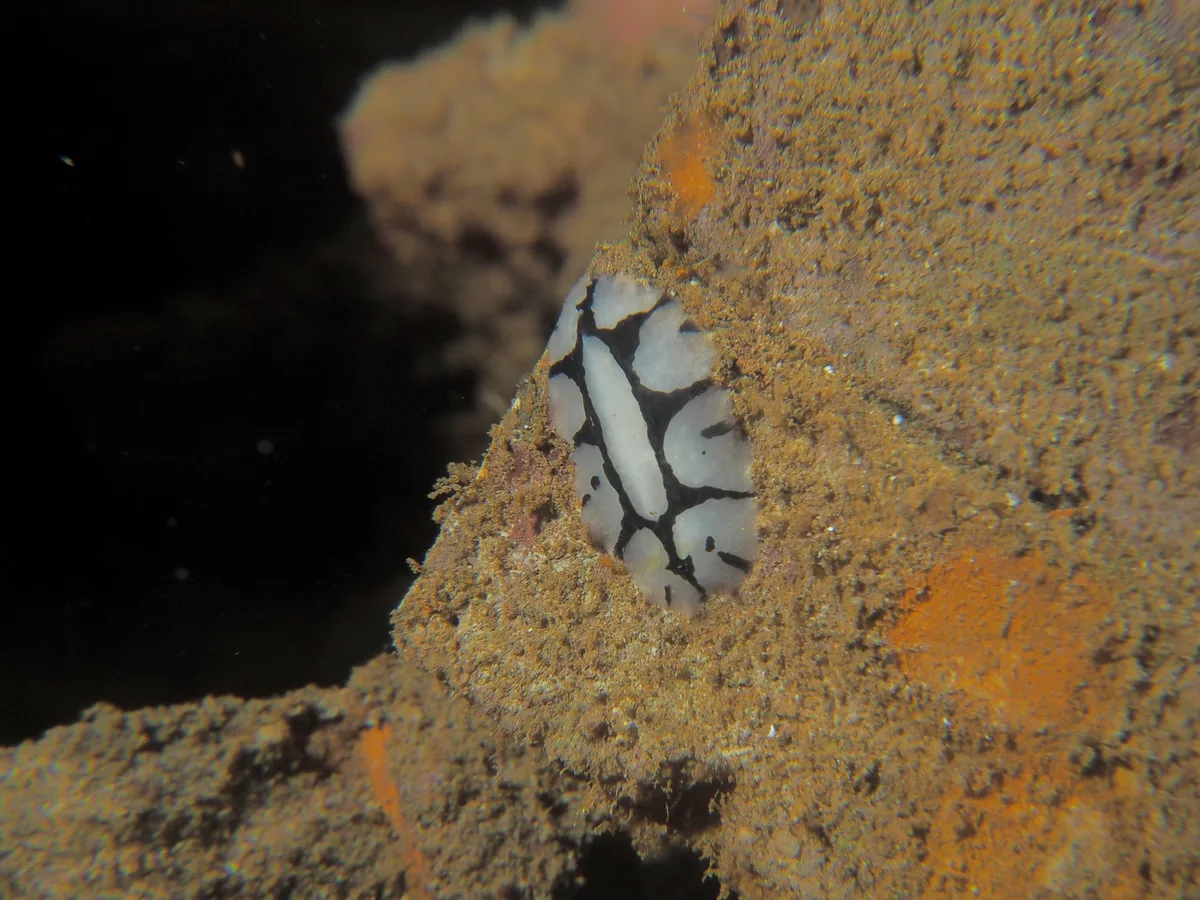
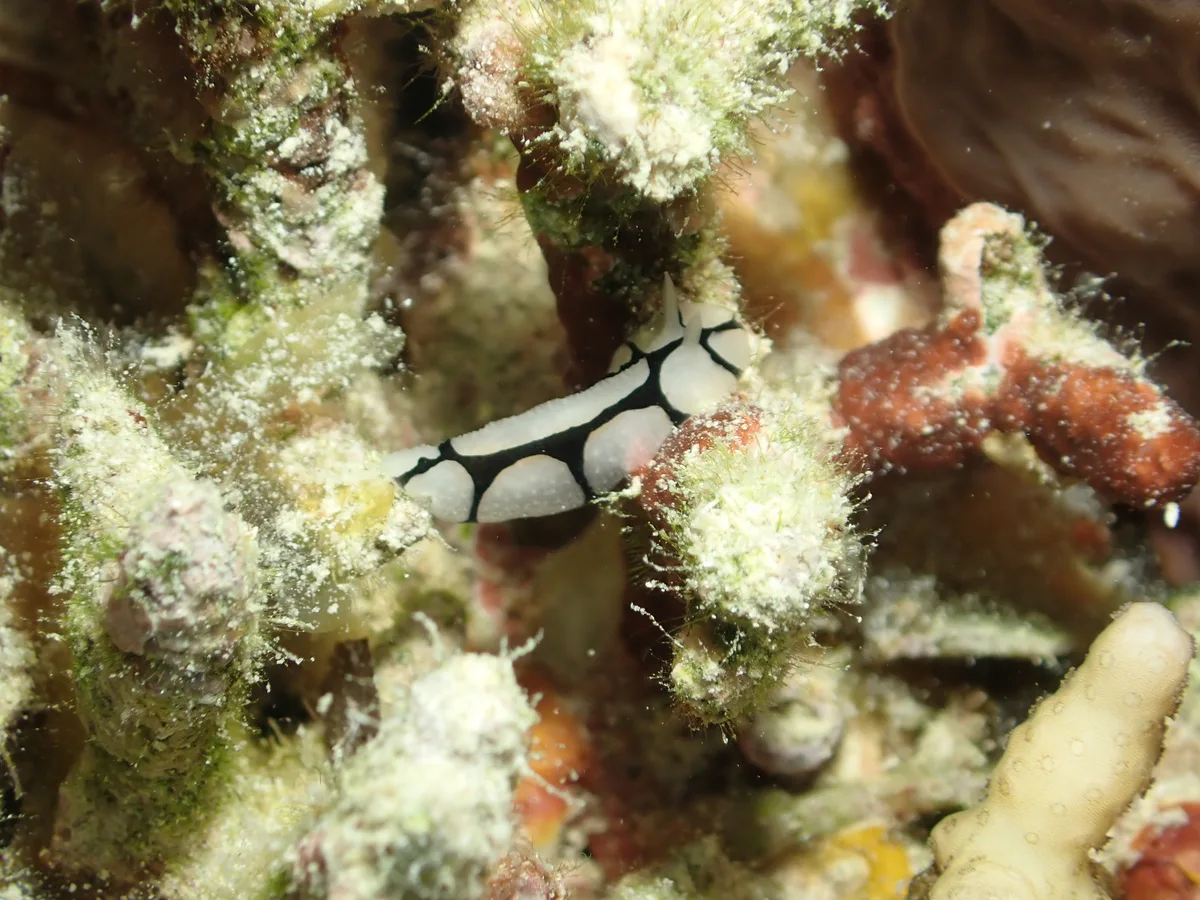
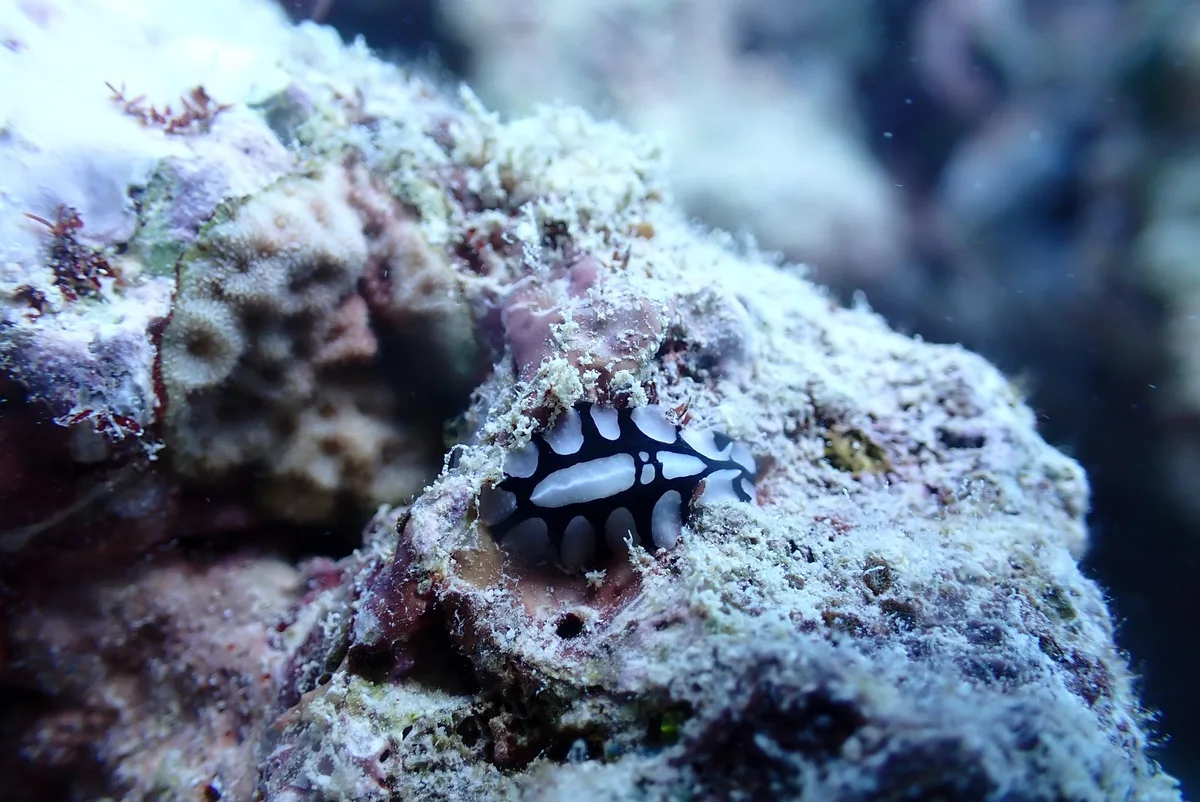
On most wart slugs the dark pigment sits in the spaces between the bumps and does nothing in particular. Here it draws something.
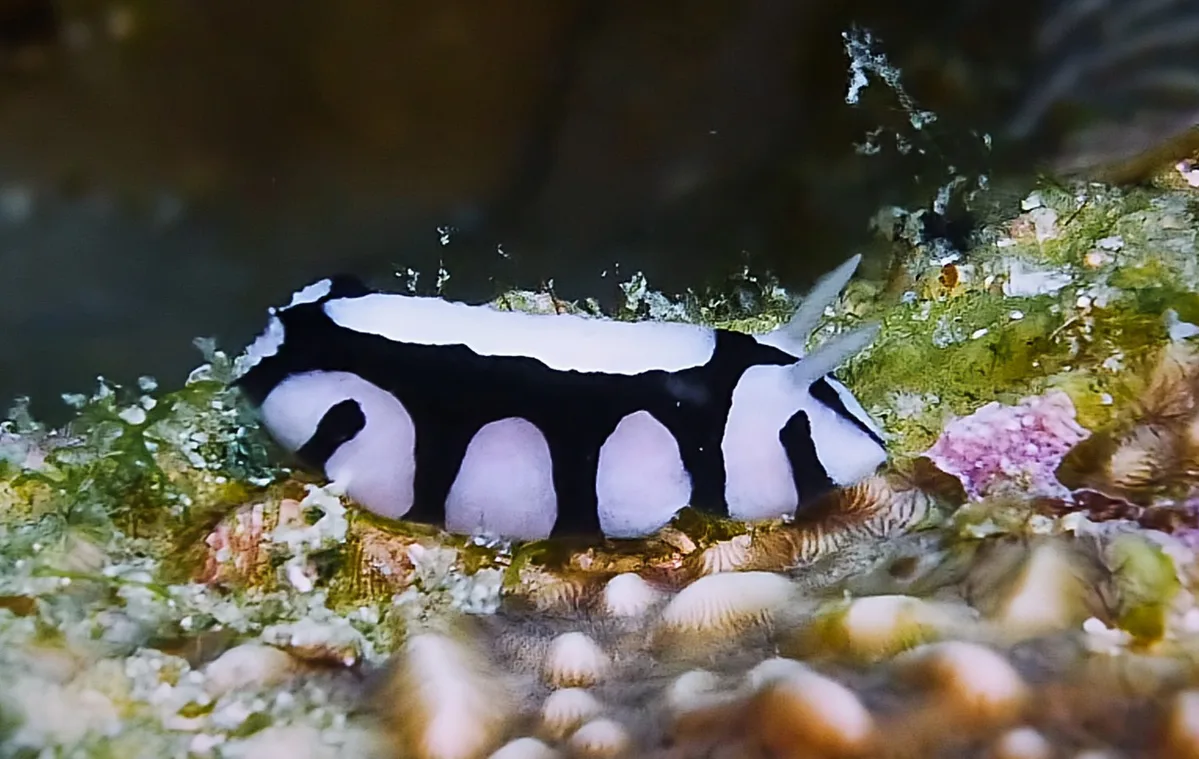
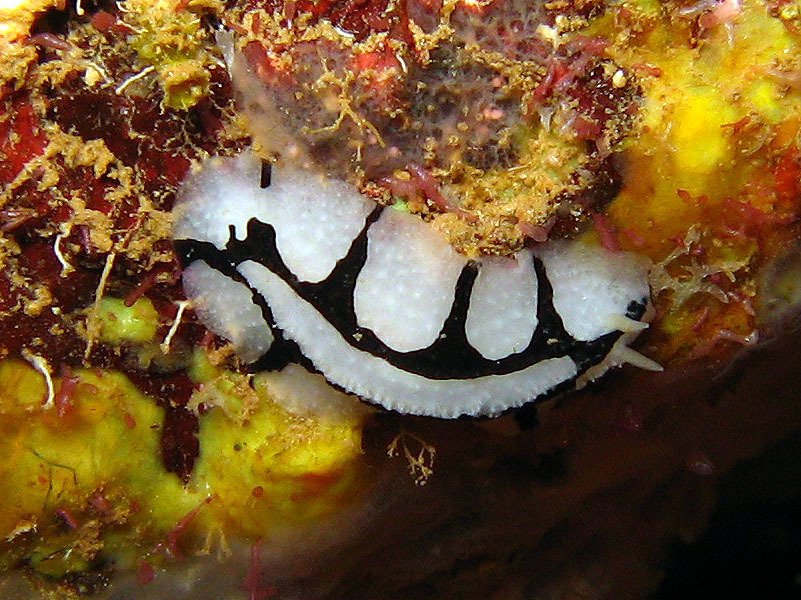
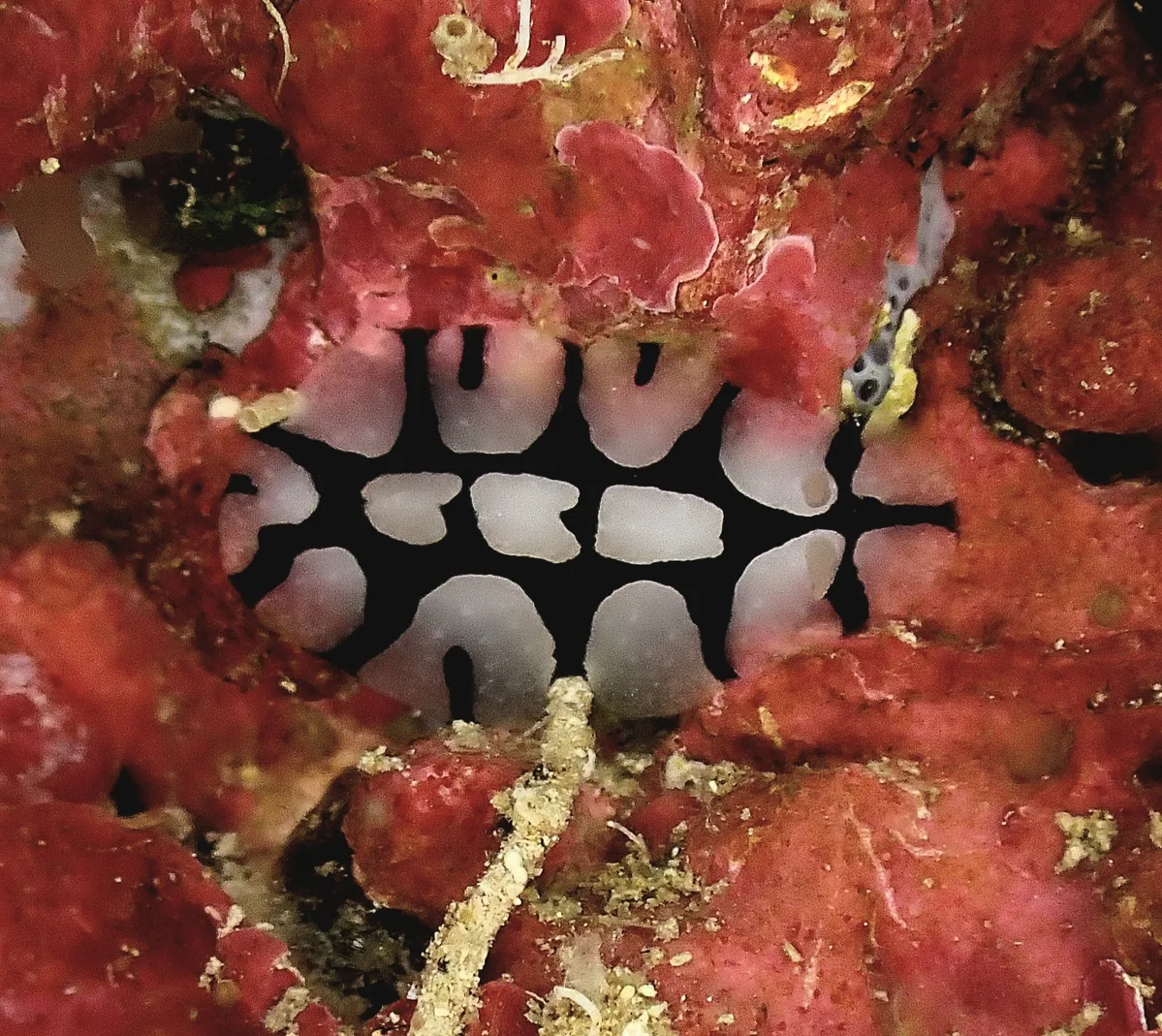
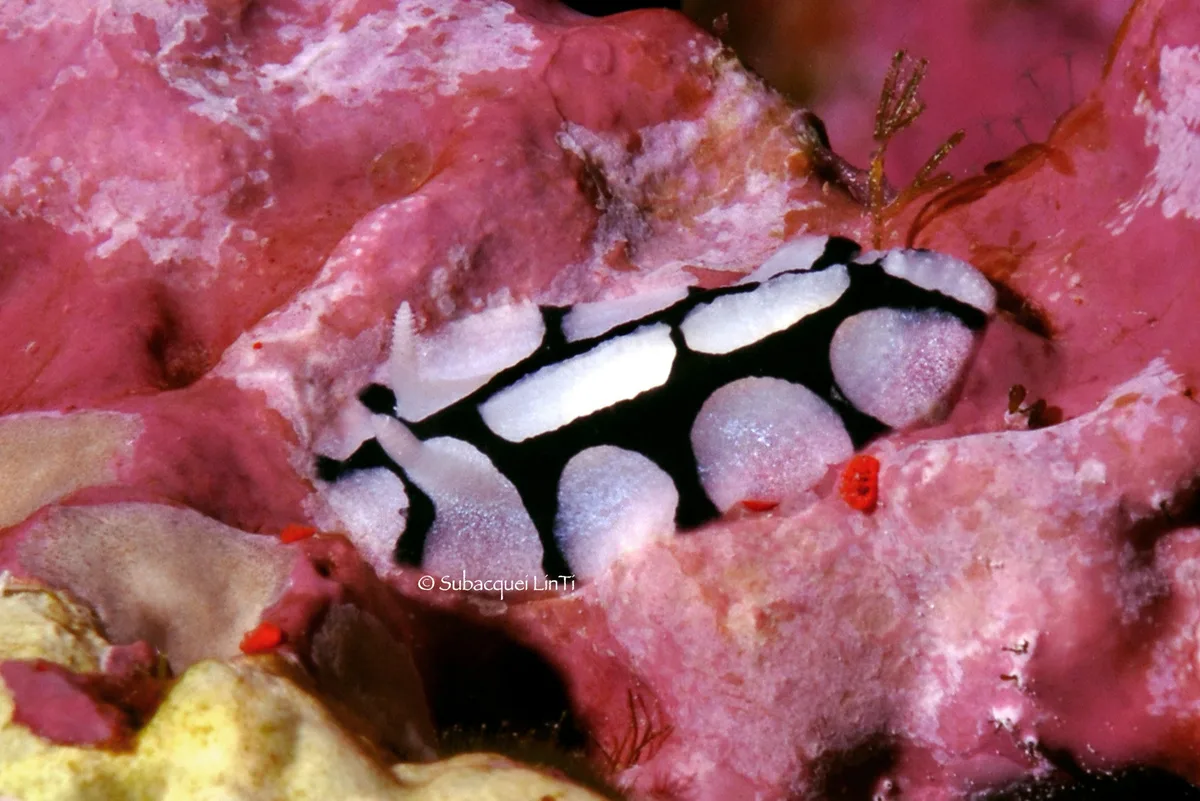
The pale tubercles on this animal are broad rounded lobes rather than small separate domes, and the black between them runs as narrow channels that branch, meet and radiate outward from the center of the back. The effect is a web laid over the animal, and the printed description calls it spider-like, which is as good a word as any. It is unmistakable once seen and it does not resemble any other wart slug here.
Under two centimeters (0.7 in), which is small for a family whose members run to eight, and it is often photographed sitting on pink coralline algae, where a black and white animal is about as conspicuous as it could arrange to be.
It can afford that. The family gave up the gill plume entirely, breathing instead through leaflets under the mantle rim, and carries sponge-derived toxins spread through the whole body. Nothing on this reef eats them, and they behave accordingly: out in daylight, in the open, unhurried.
Every confirmed record comes from this sea or the 🌊 Gulf of Aden, which makes it one of the animals in this catalogue you cannot go and look for anywhere else. Vayssière described it in 1912.
- black lines branching and radiating between large pale tubercles, like a web
- the pale areas are broad rounded lobes, not small separate domes
- under two centimeters, small for the family
- found in this sea and the Gulf of Aden, and nowhere else