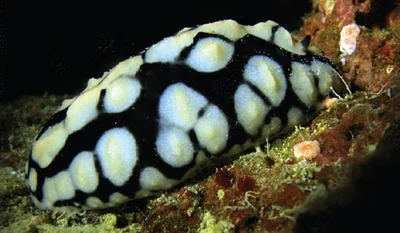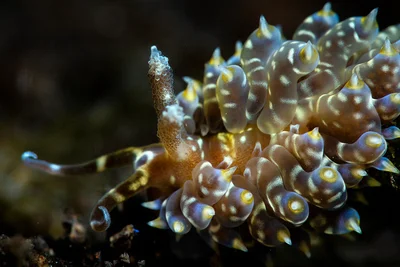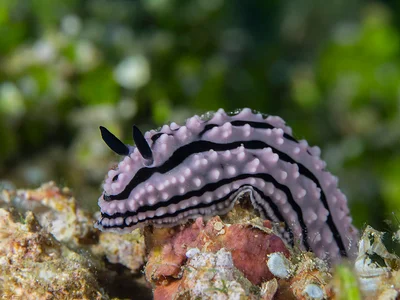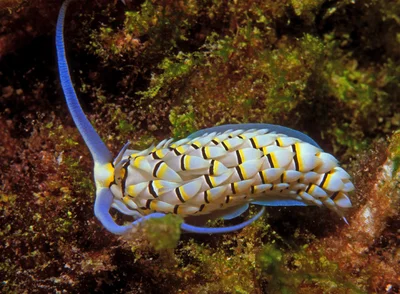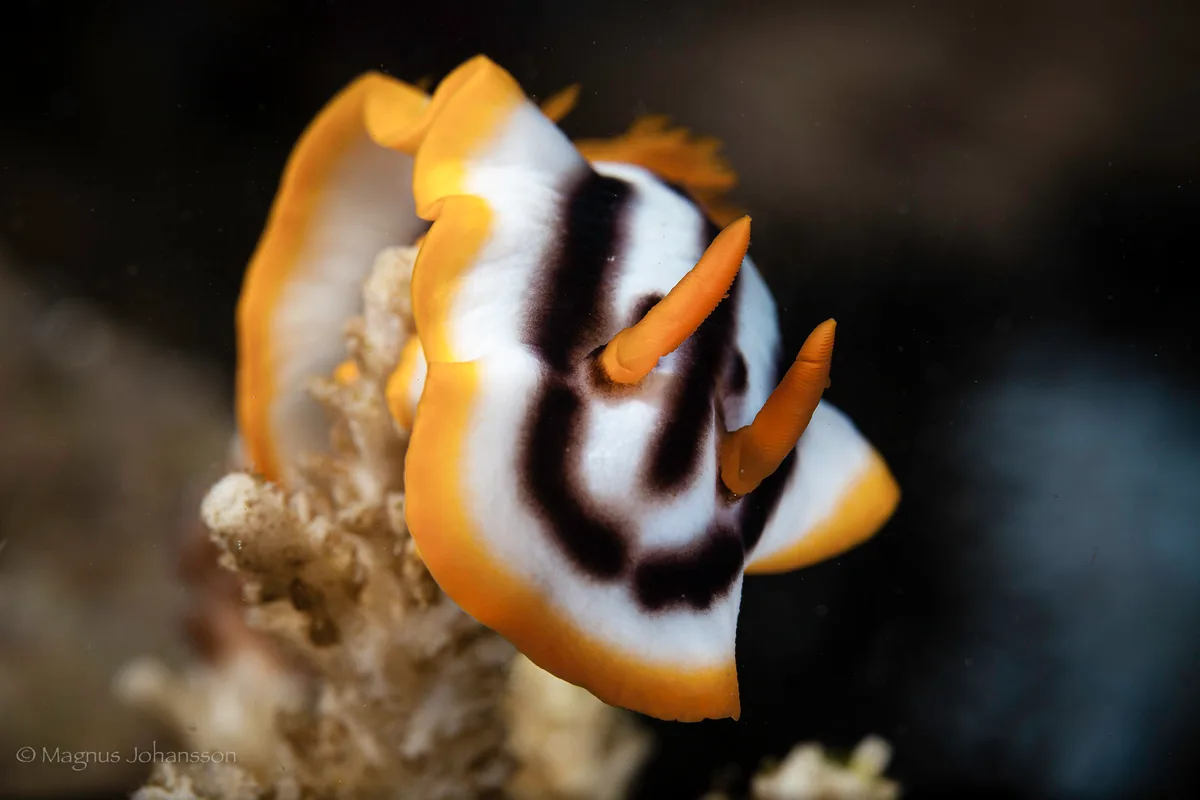
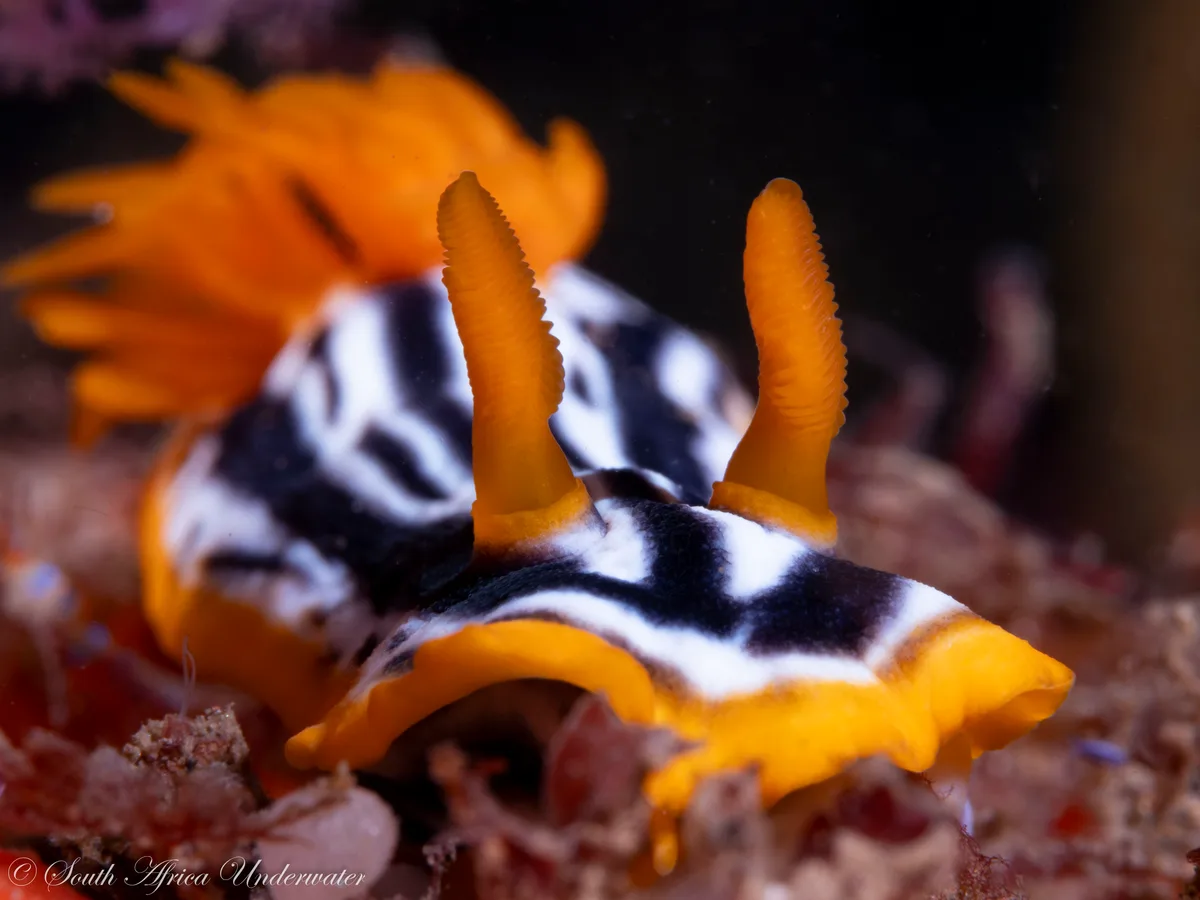
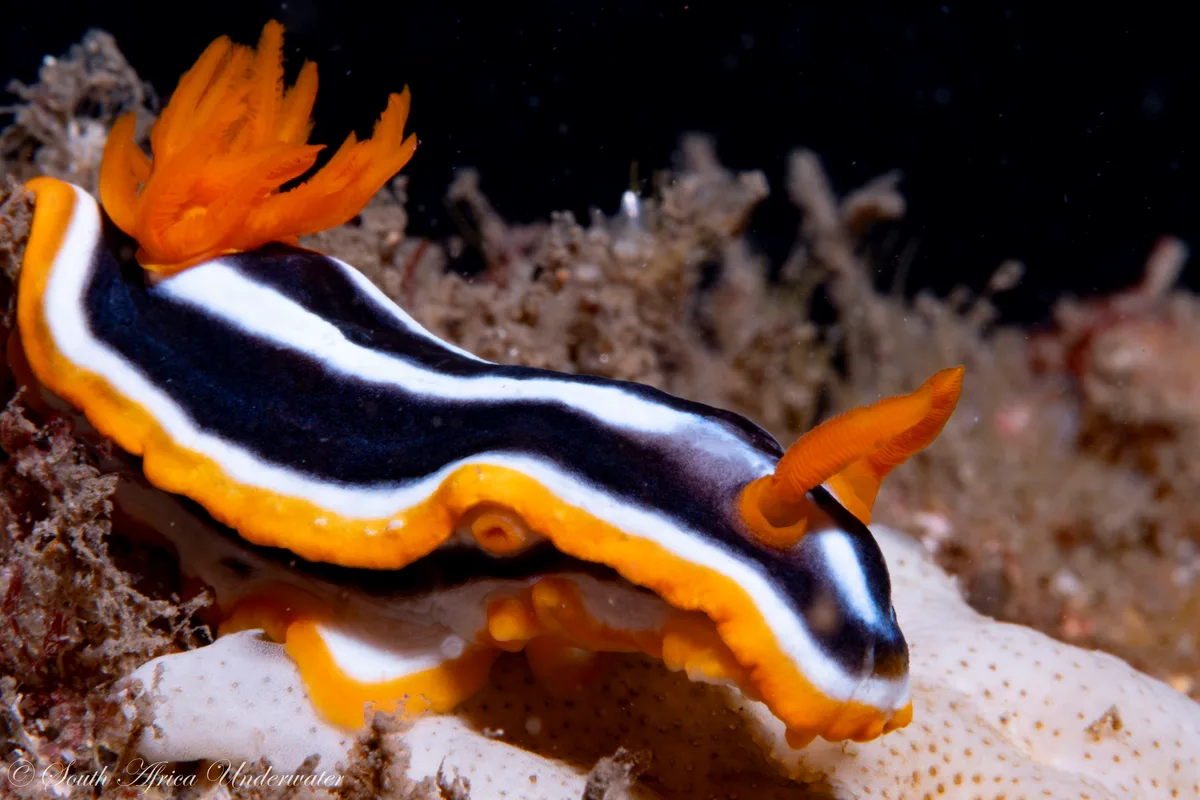
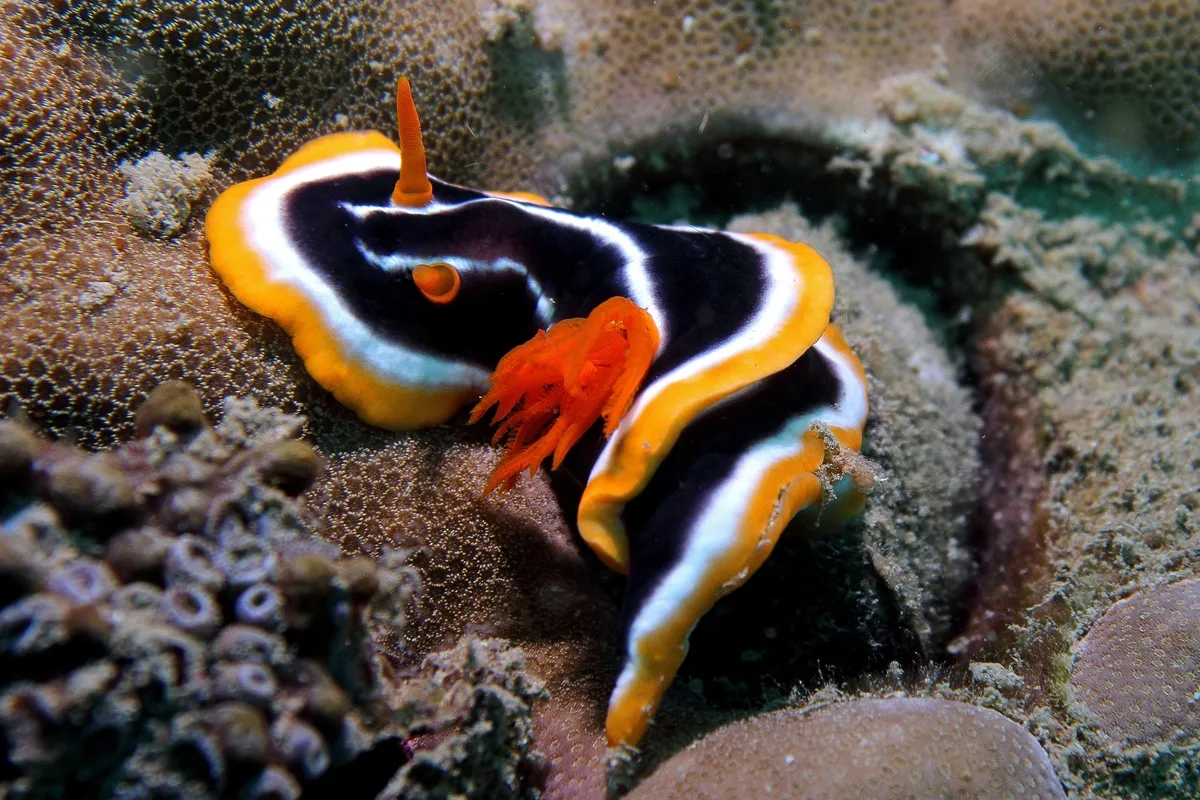
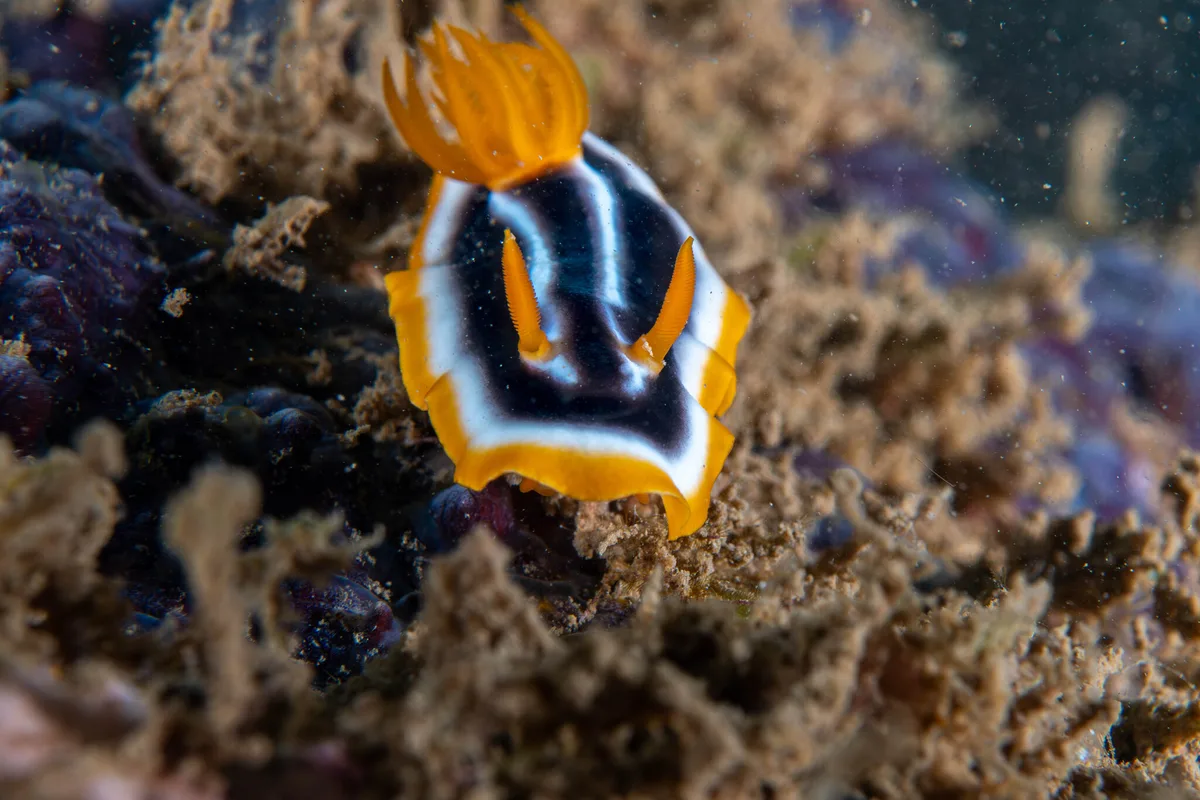
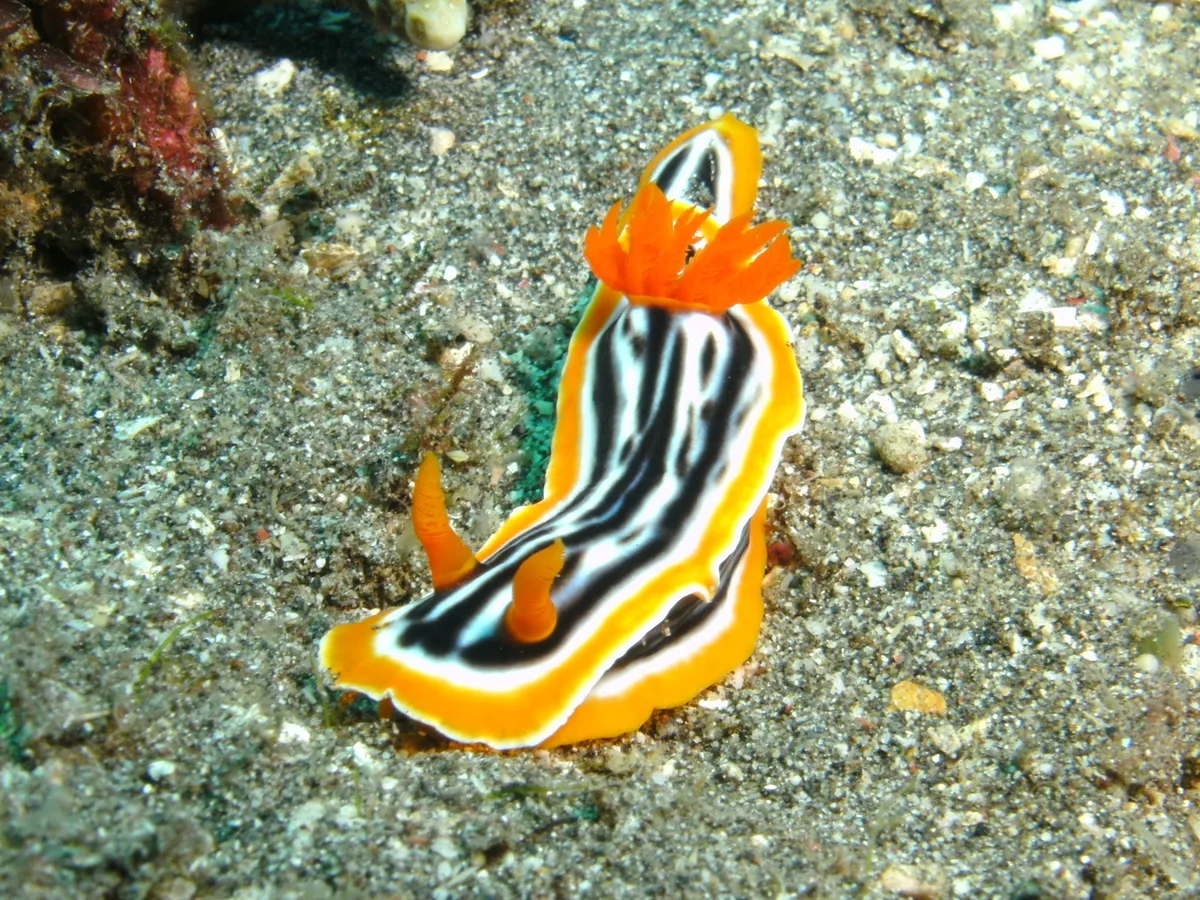
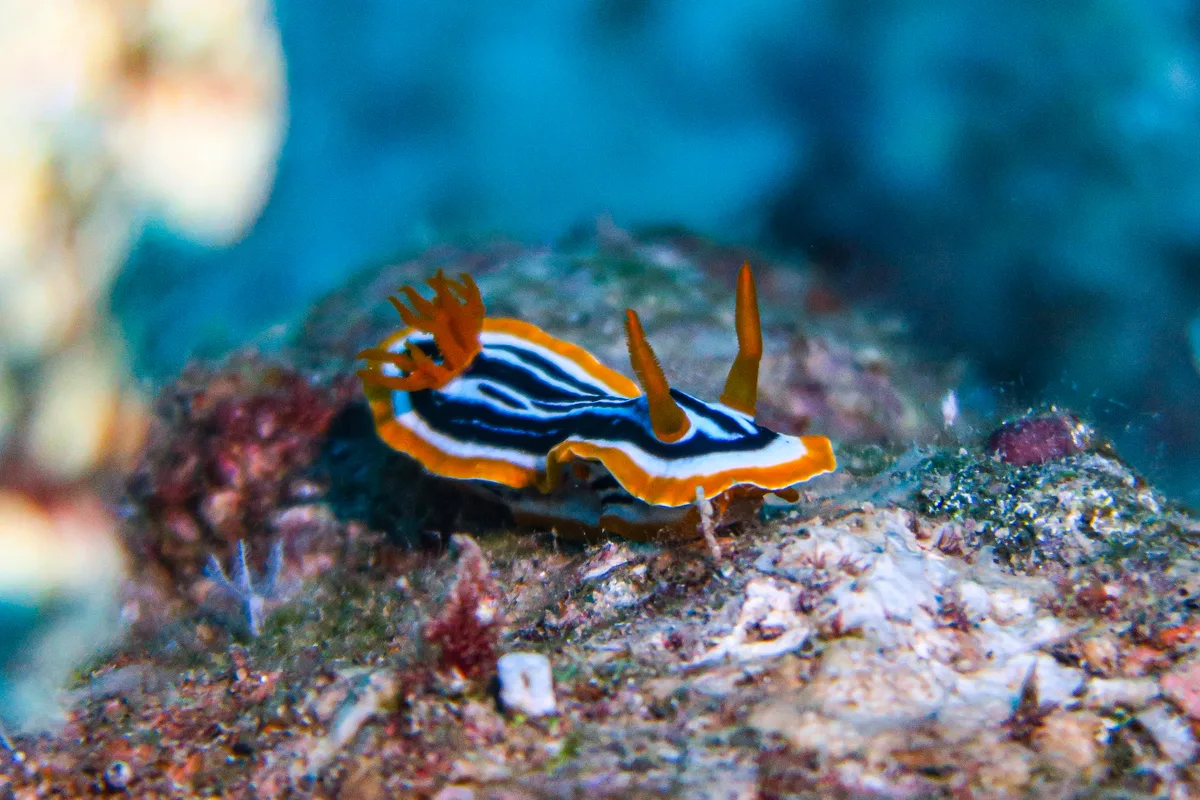
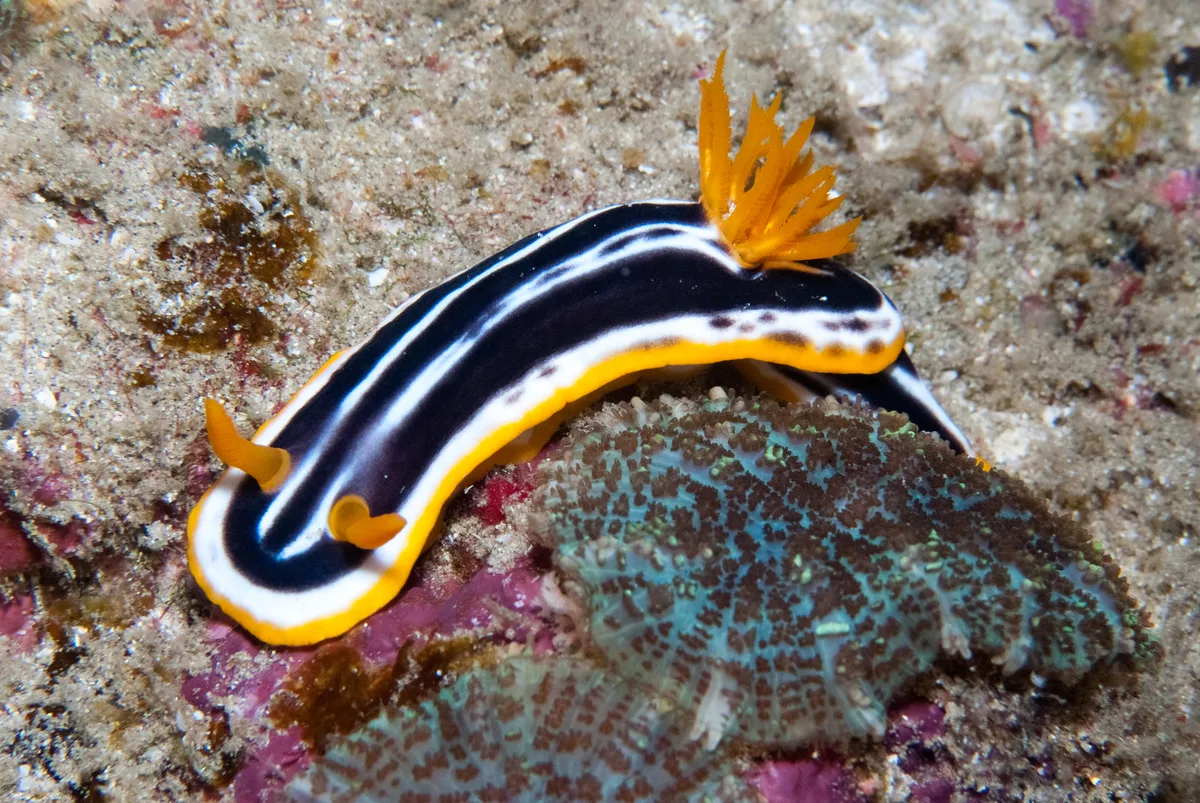
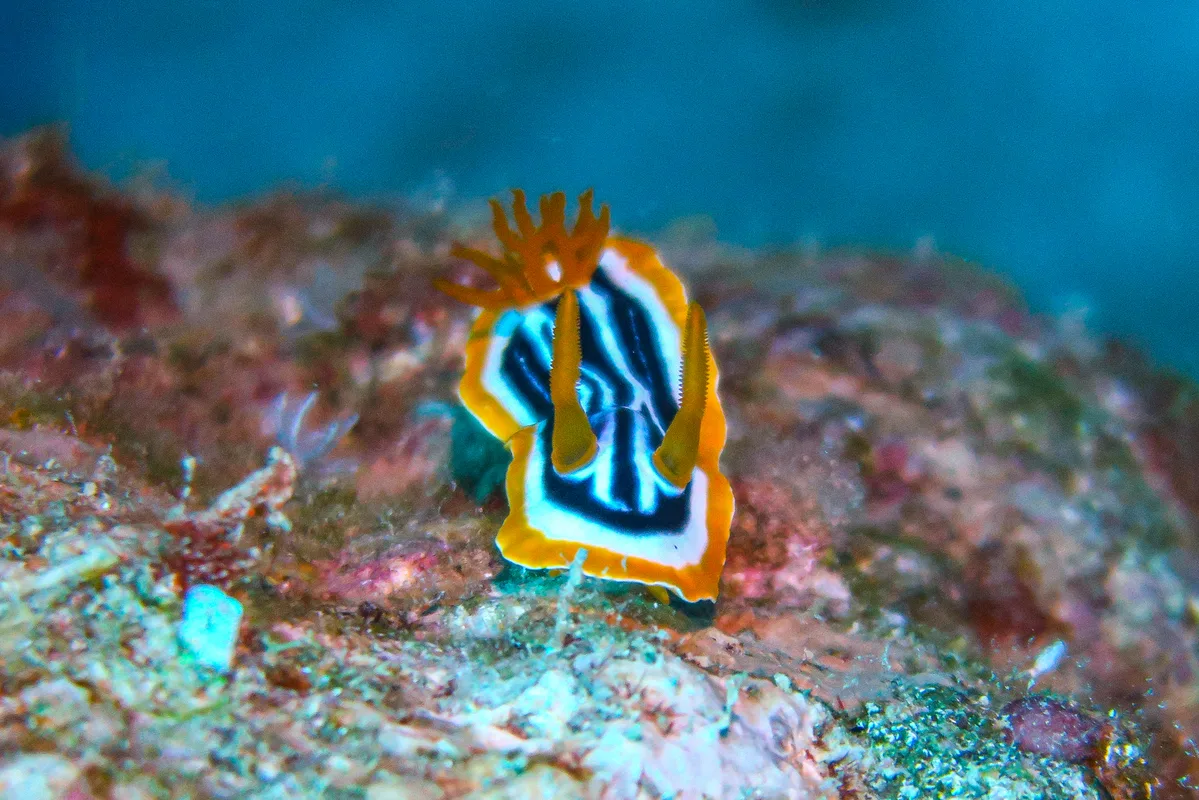
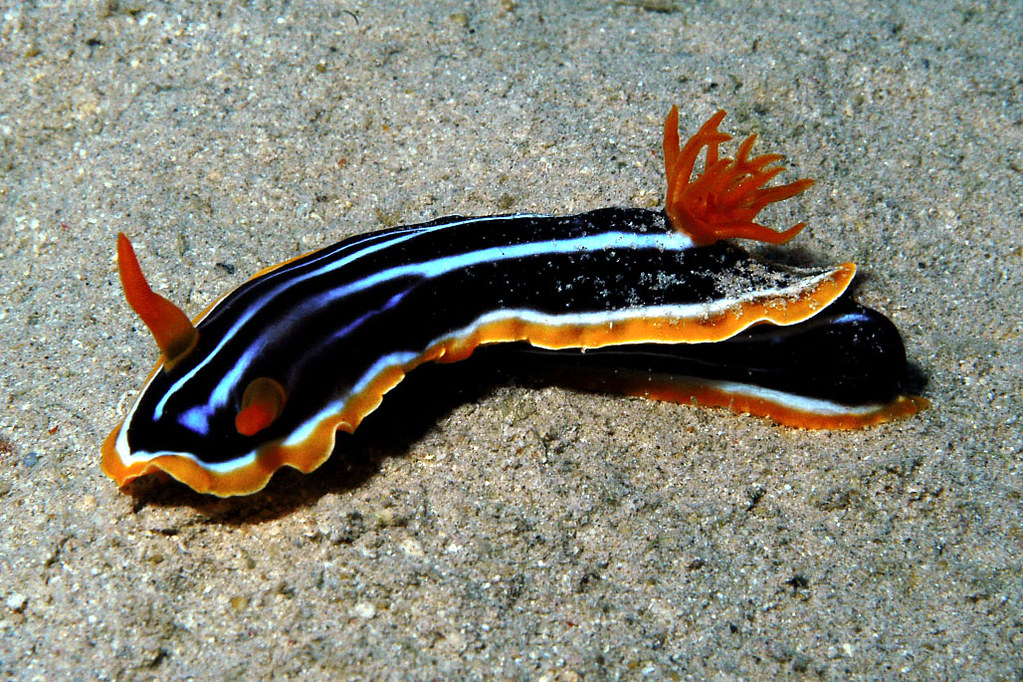
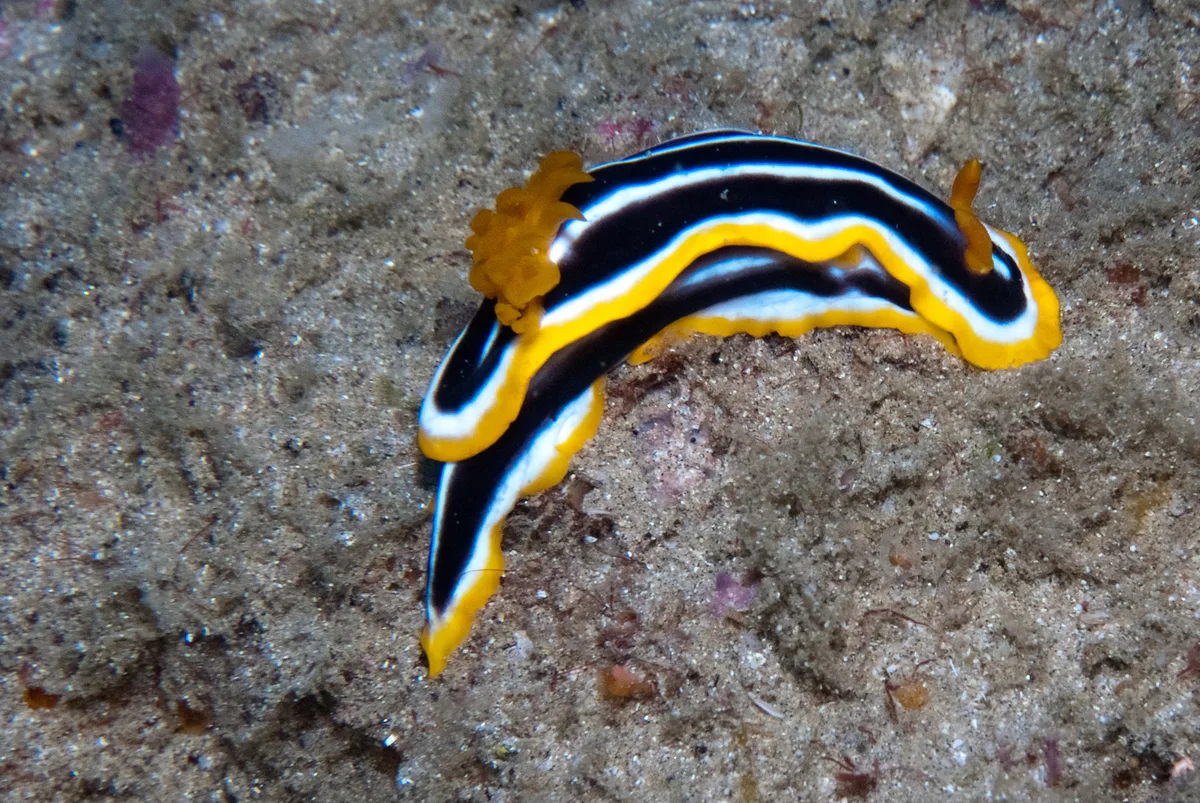
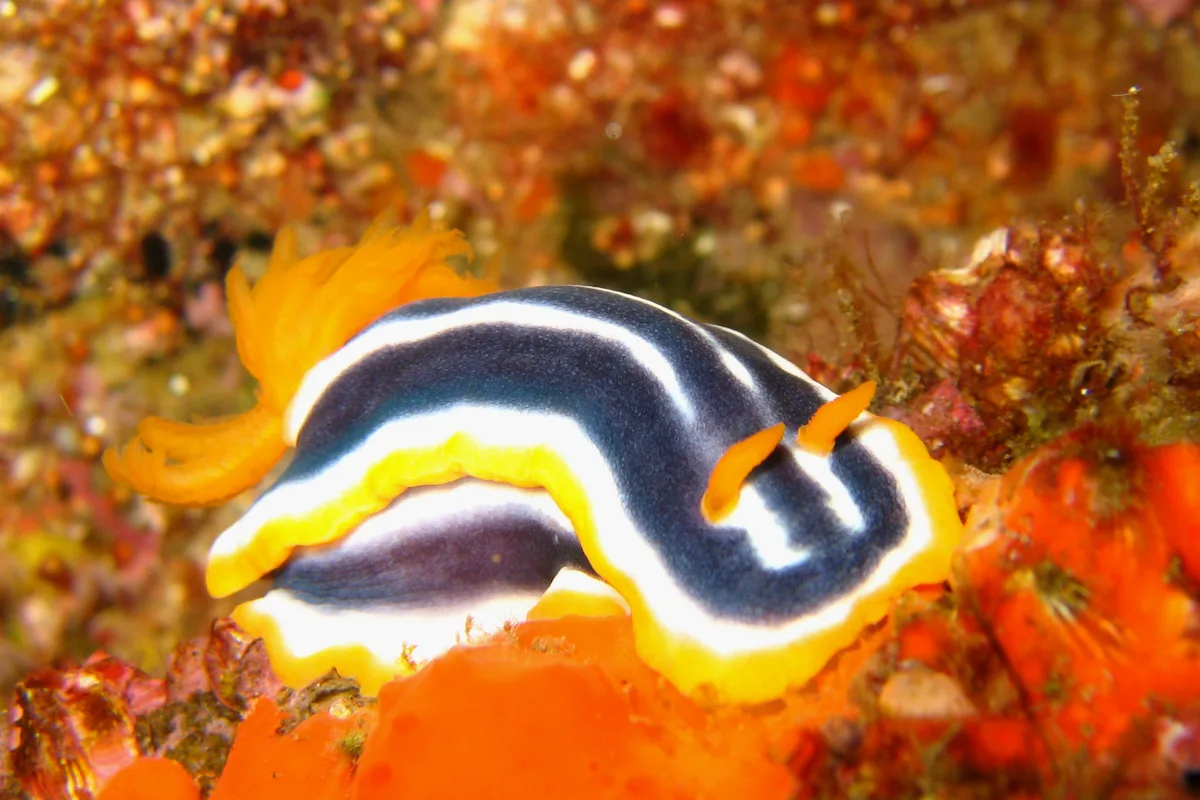
Several unrelated slugs on this reef wear the same coat, and that is the point of it.
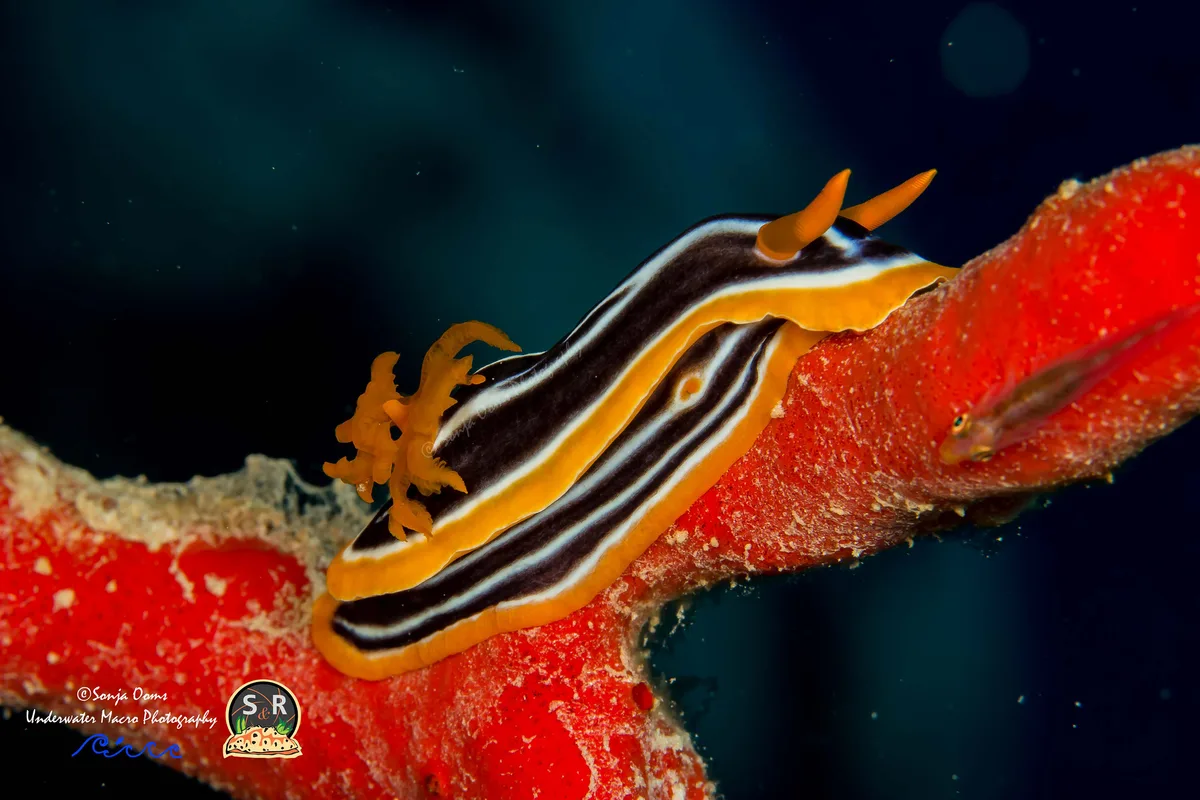
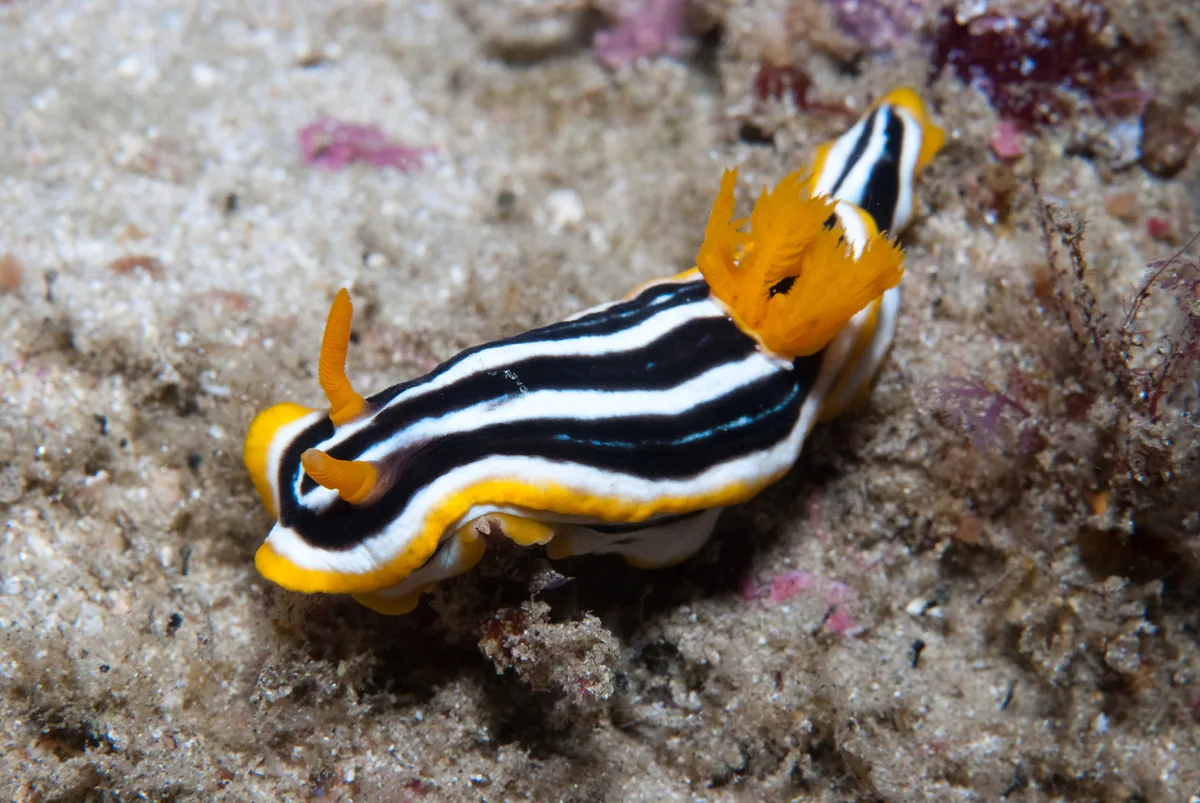
White ground, wide black stripes running the length of the back, an orange rim: the pattern belongs to this species, to the blue-lined chromodoris already in this catalogue, and to a handful of others scattered across the Indian and Pacific oceans. They are not close relatives dressed alike by descent. They are separate species that arrived at one uniform because all of them are foul to eat, and a predator that learns the uniform once avoids every animal wearing it.
That arrangement has a name. When several genuinely defended species converge on a single warning pattern, each one is spending less on teaching predators than it would alone, and the lesson sticks harder because it is being taught from more directions. The alternative, where a harmless animal copies a defended one, is the arrangement everyone hears about first, and this is the other and more cooperative half of the idea.
The defense behind the label is stolen. Chromodorids eat sponges, take the compounds the sponge made to keep from being eaten, move them through the body without harm and store them along the mantle rim, which is the part a fish bites first.
This is the largest of the striped ones here at seven centimeters, and the widest-ranging, running from this sea down the East African coast. Told from its relatives by stripe count and by how far the orange margin runs onto the foot.
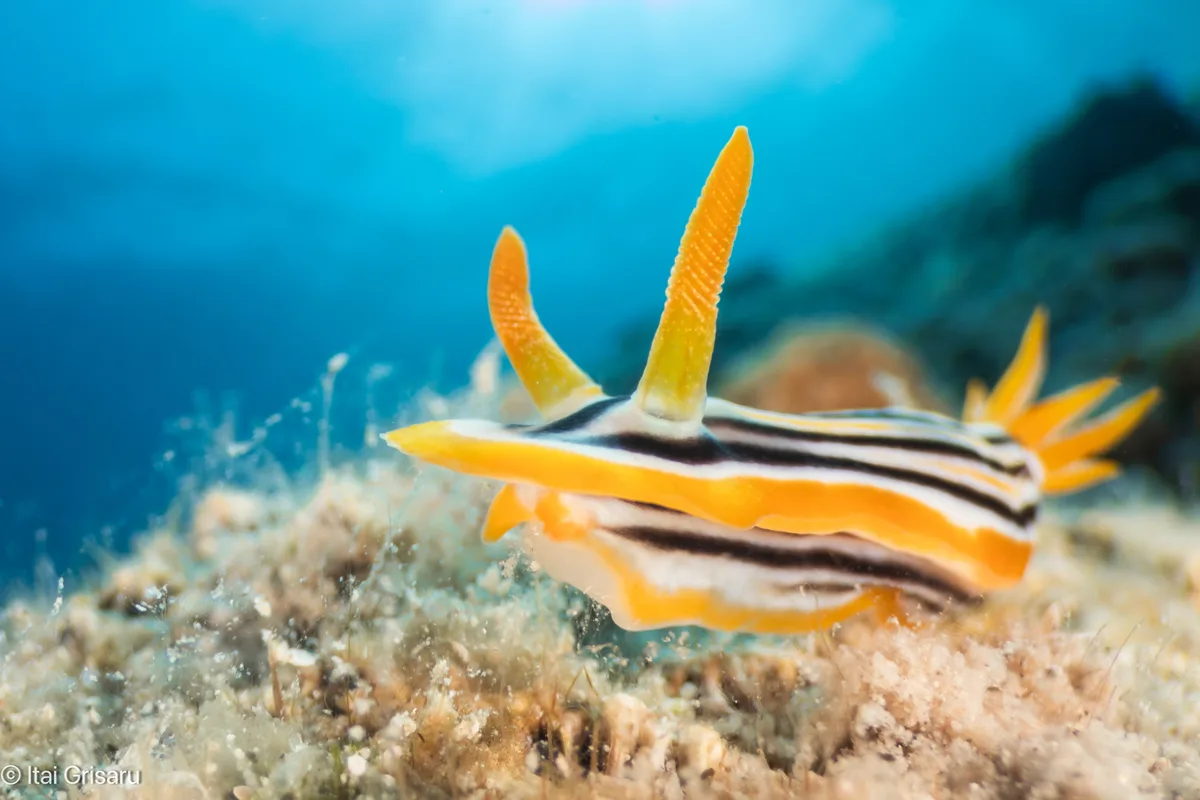
- white back crossed by three wide black stripes running head to tail
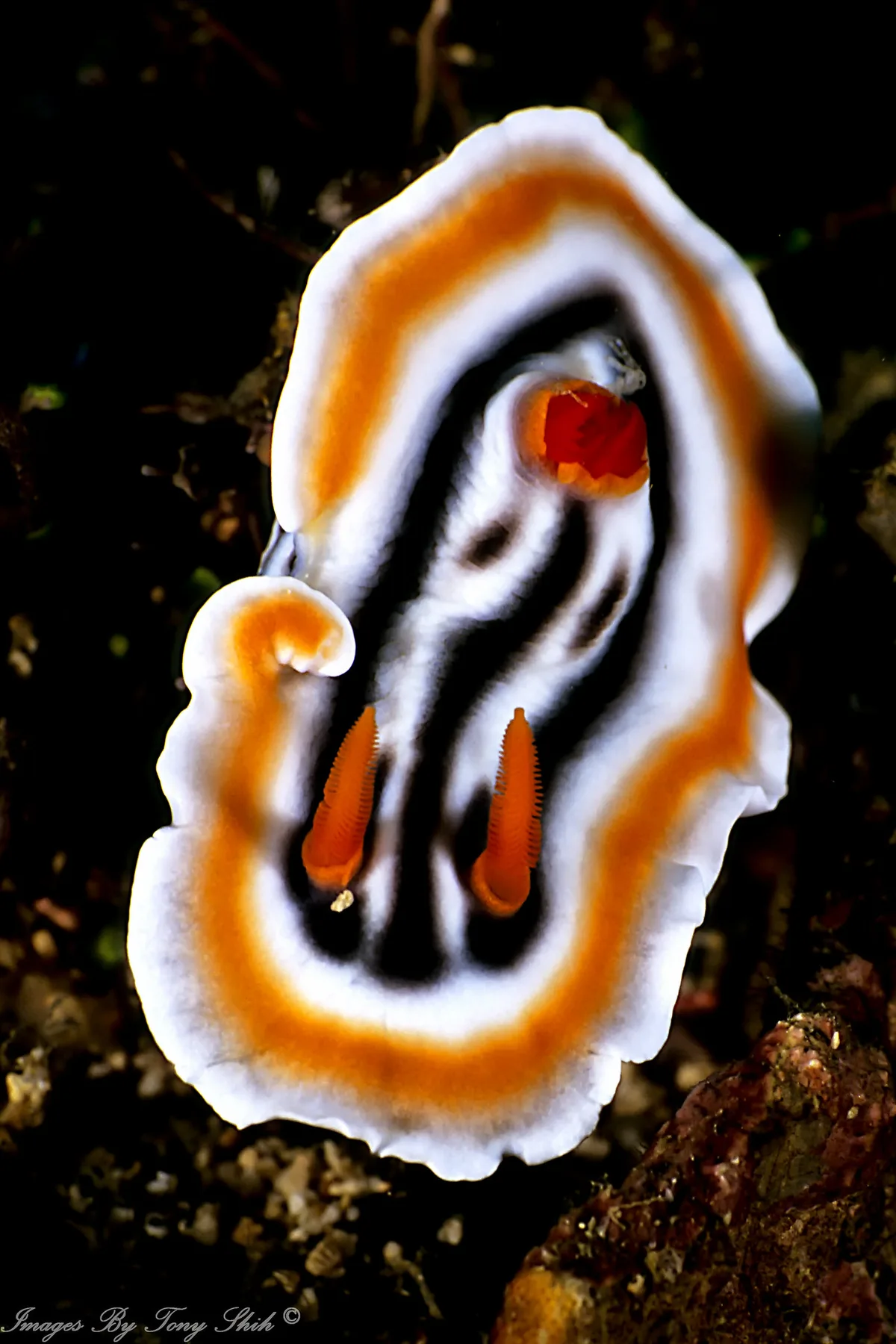
- broad orange margin all the way around the mantle
- orange rhinophores and gill plume
- large for a chromodorid, up to 7 cm