The leathery soft corals this animal feeds on are the reef's chemical warfare specialists. Sinularia and Lobophytum colonies hold ground against stony corals by producing terpenes that poison the tissue of anything growing into them, and the same compounds keep almost every grazer off. A soft coral does not need to sting, hide or run. It wins by being unpalatable to nearly everything.
This slug eats them anyway. It works over the colony at night, taking the tissue polyp by polyp, and it deals with the chemistry that stops everything else. Even in a section full of animals that eat defended food, this is one of the harder menus on the reef.
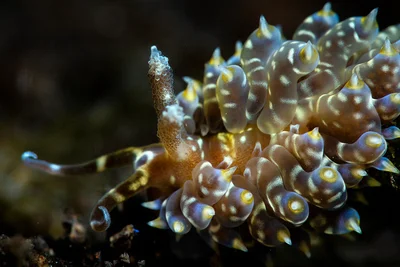
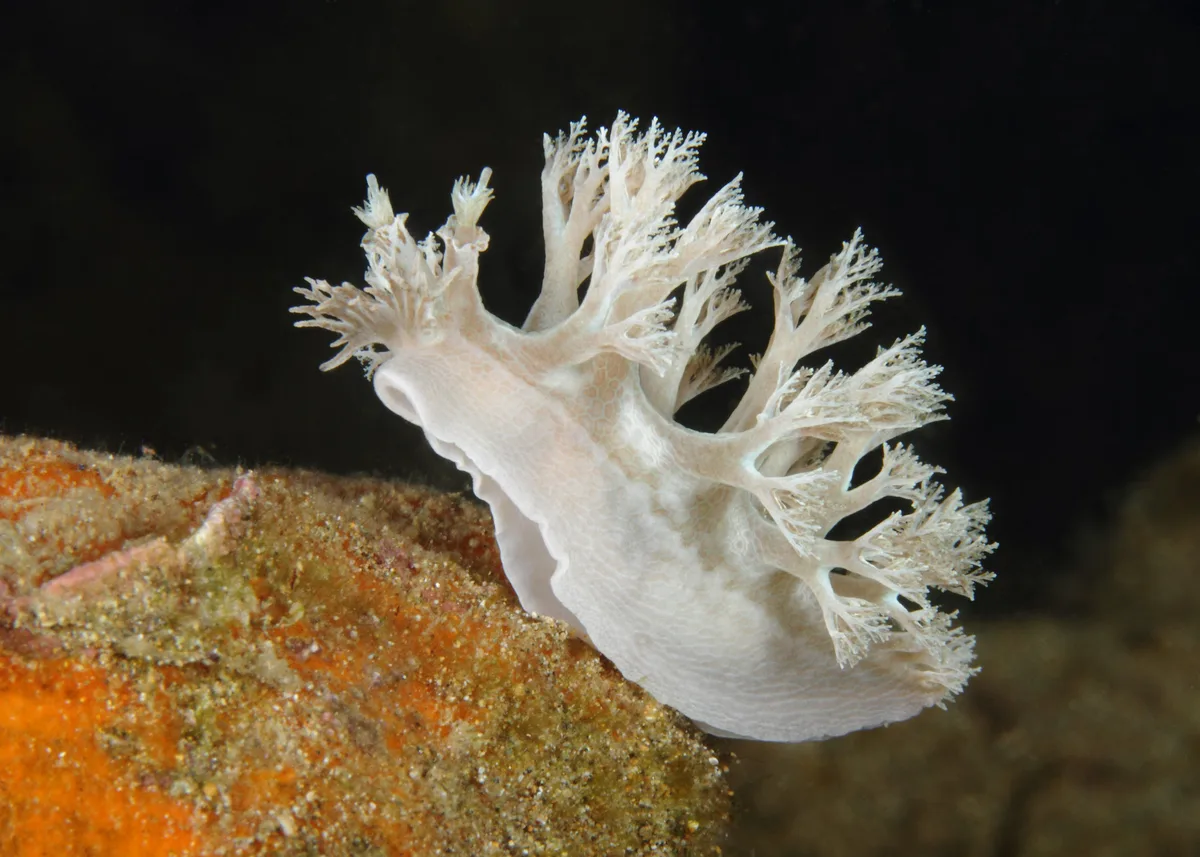
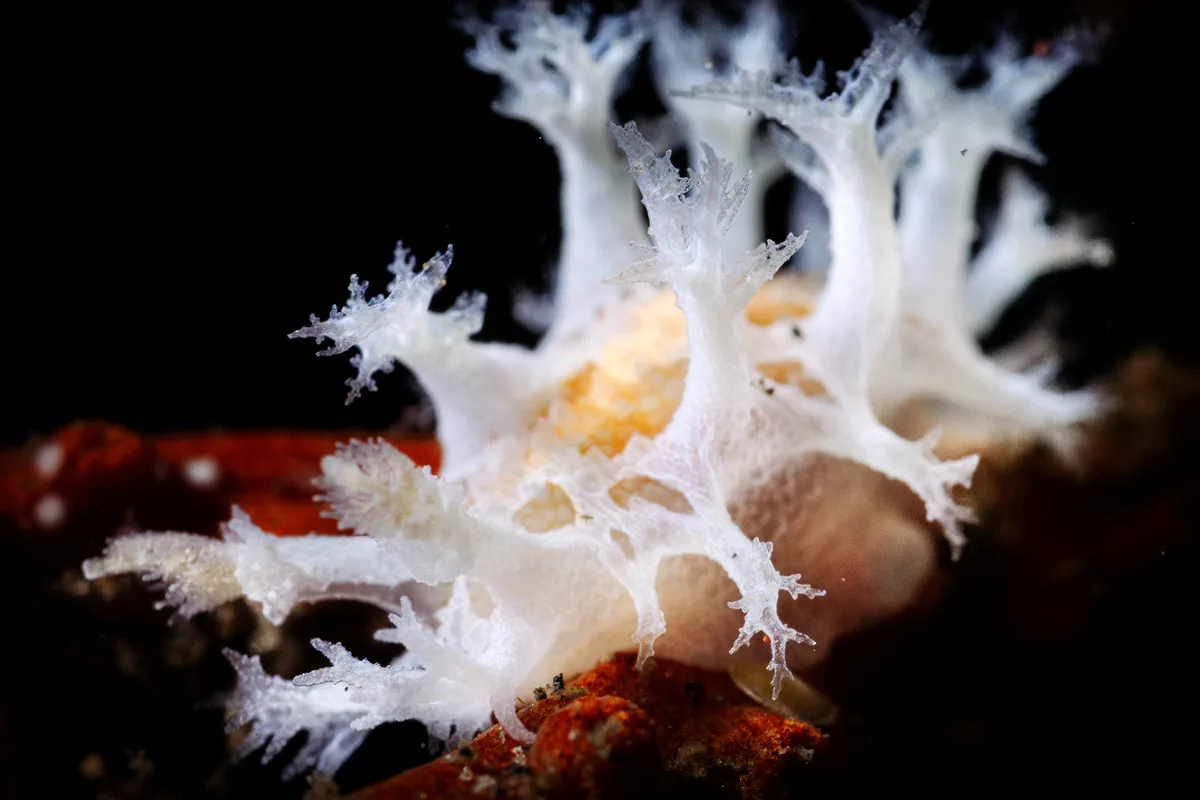
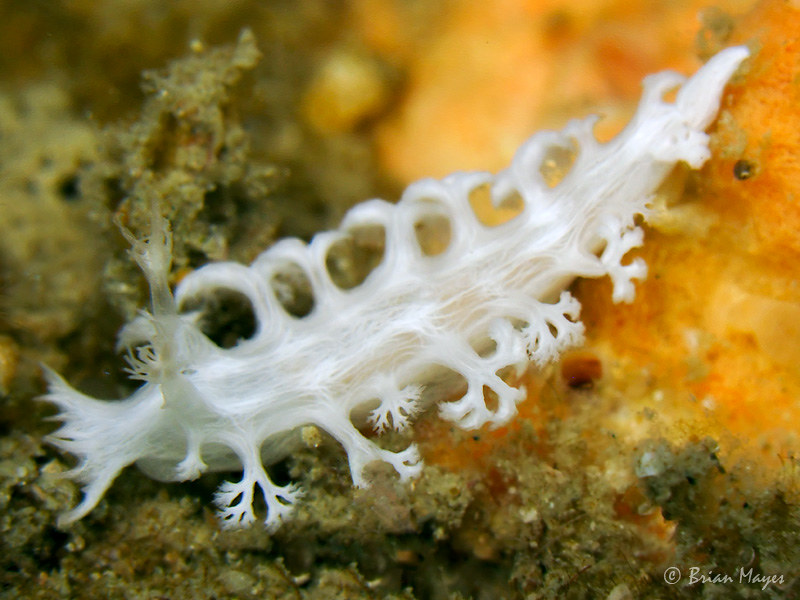
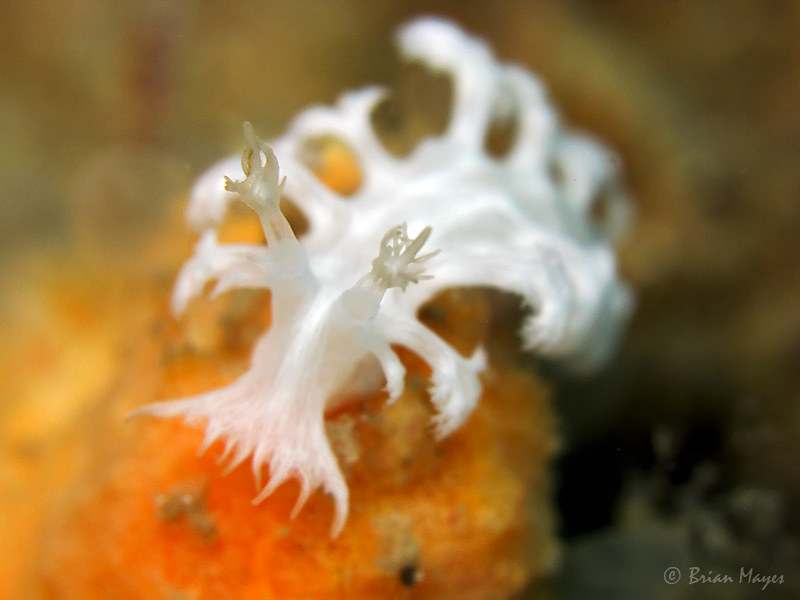
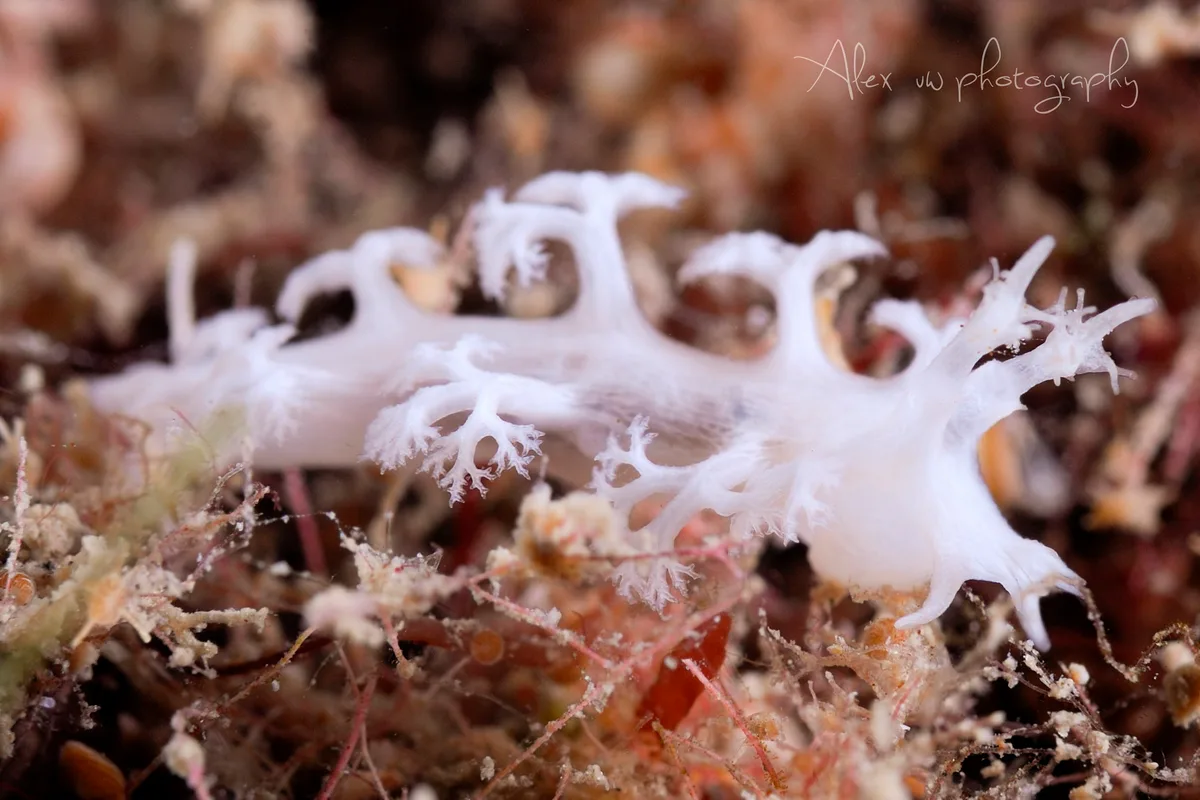
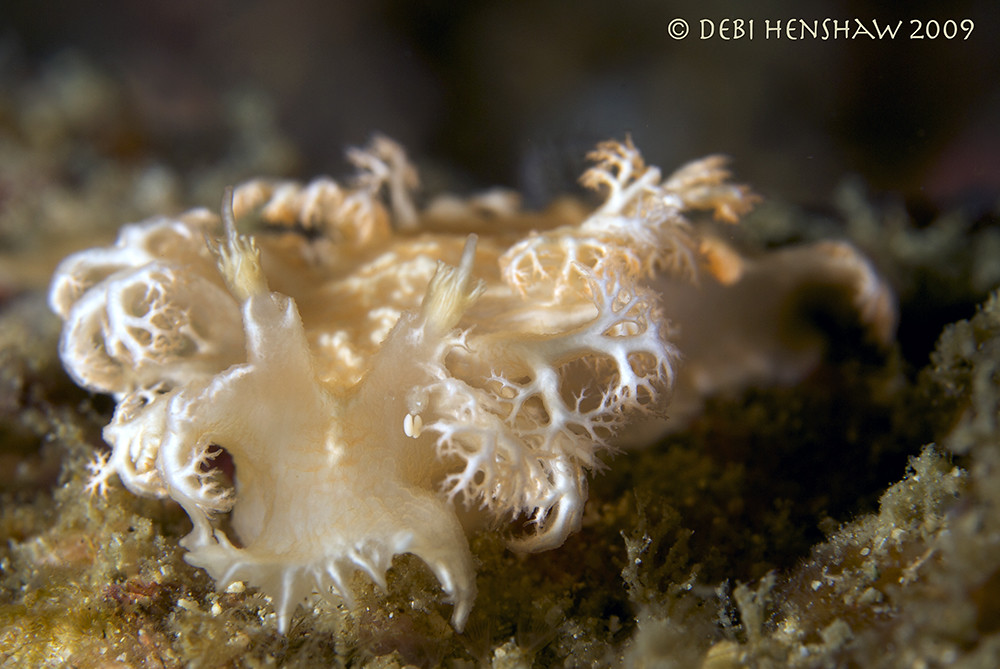
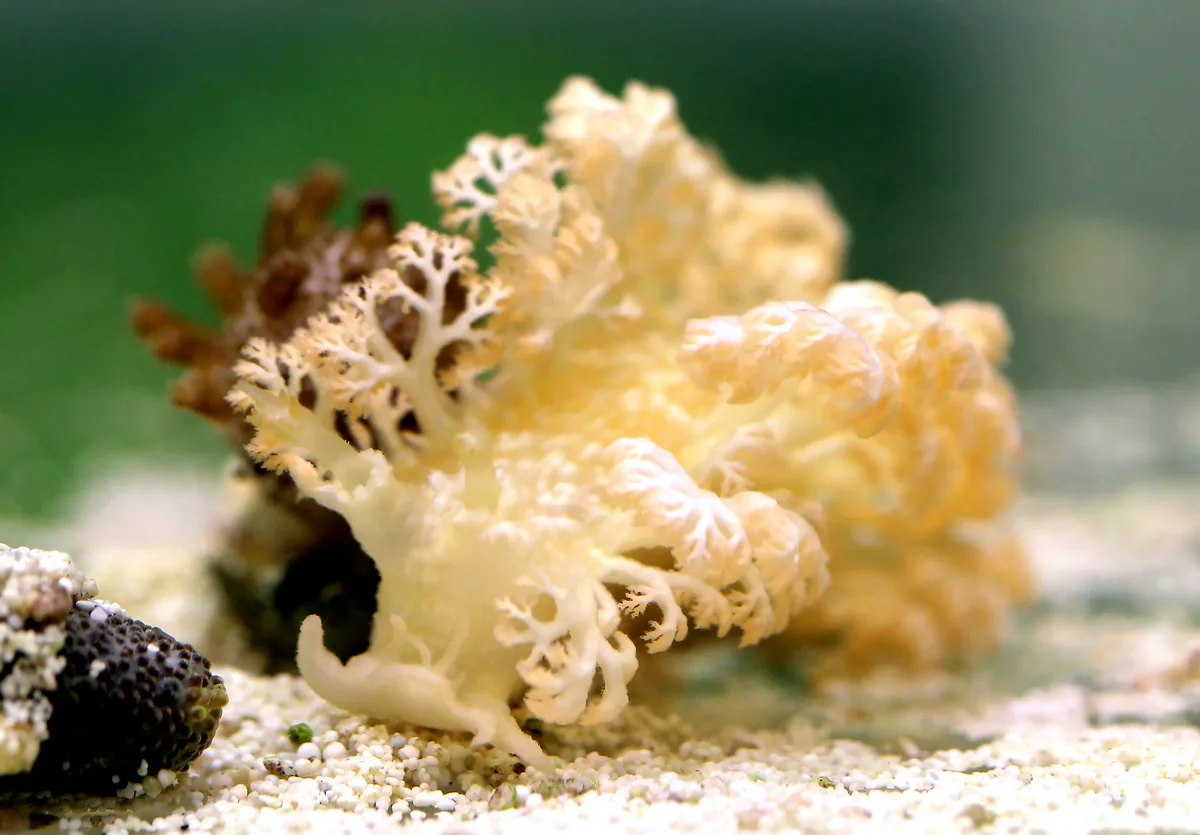
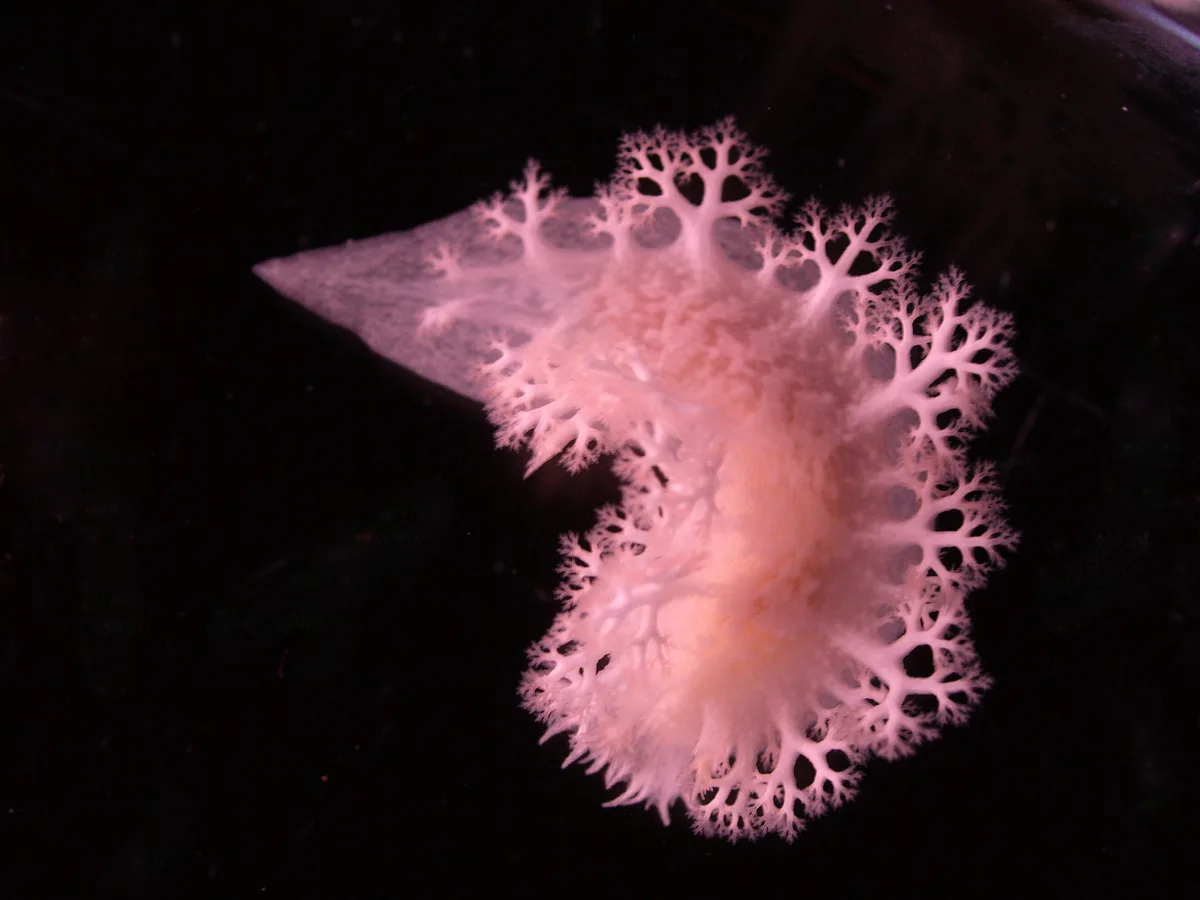
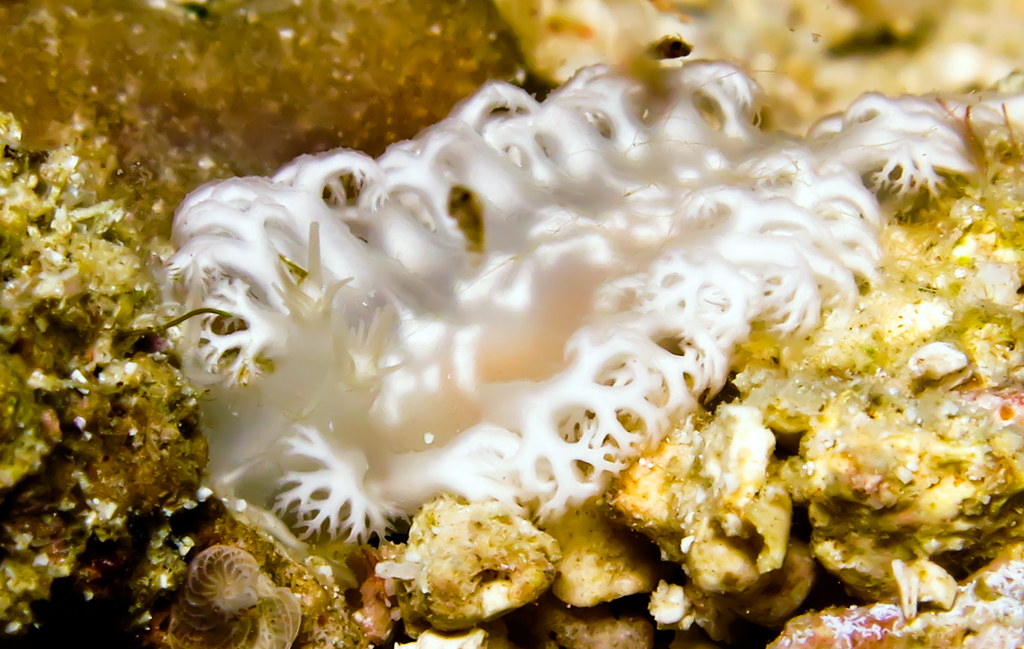
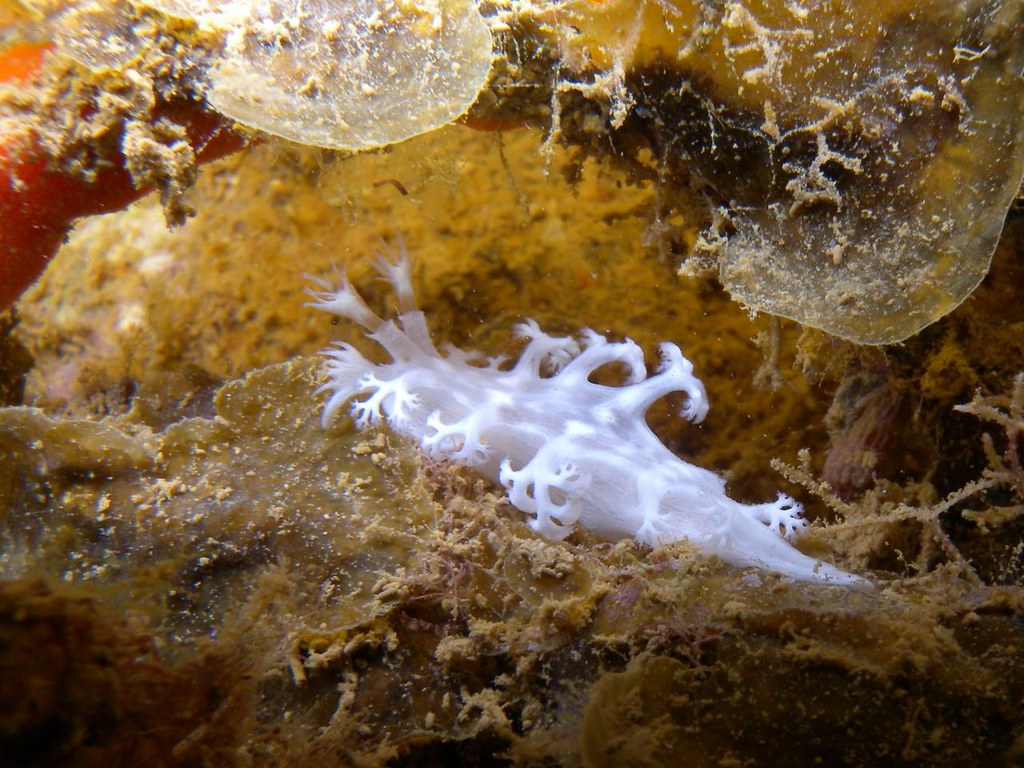
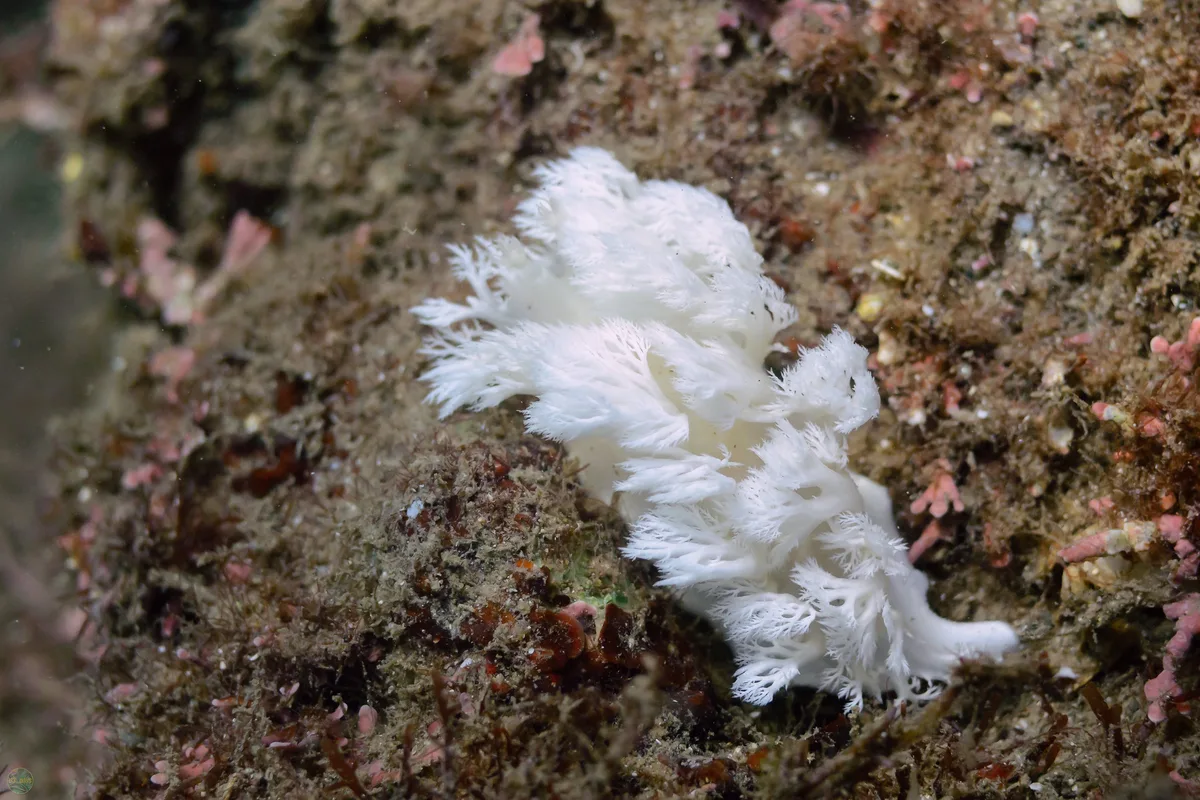
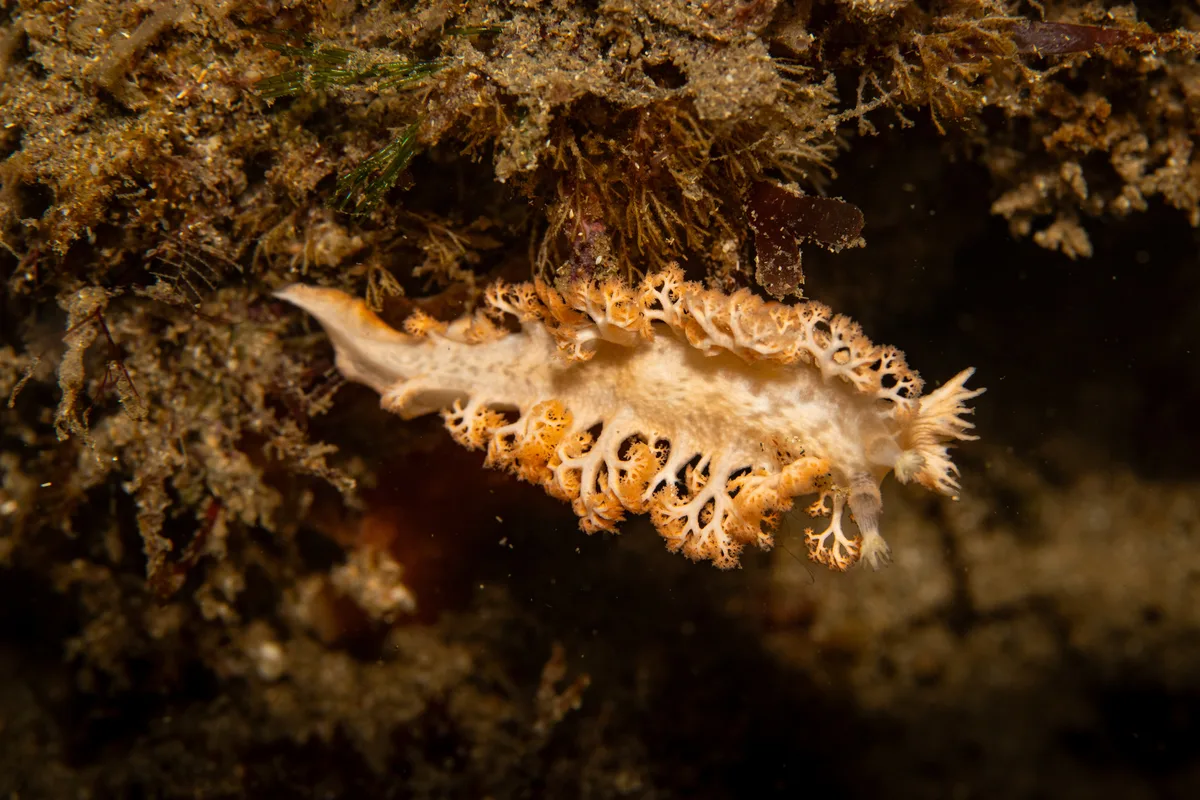
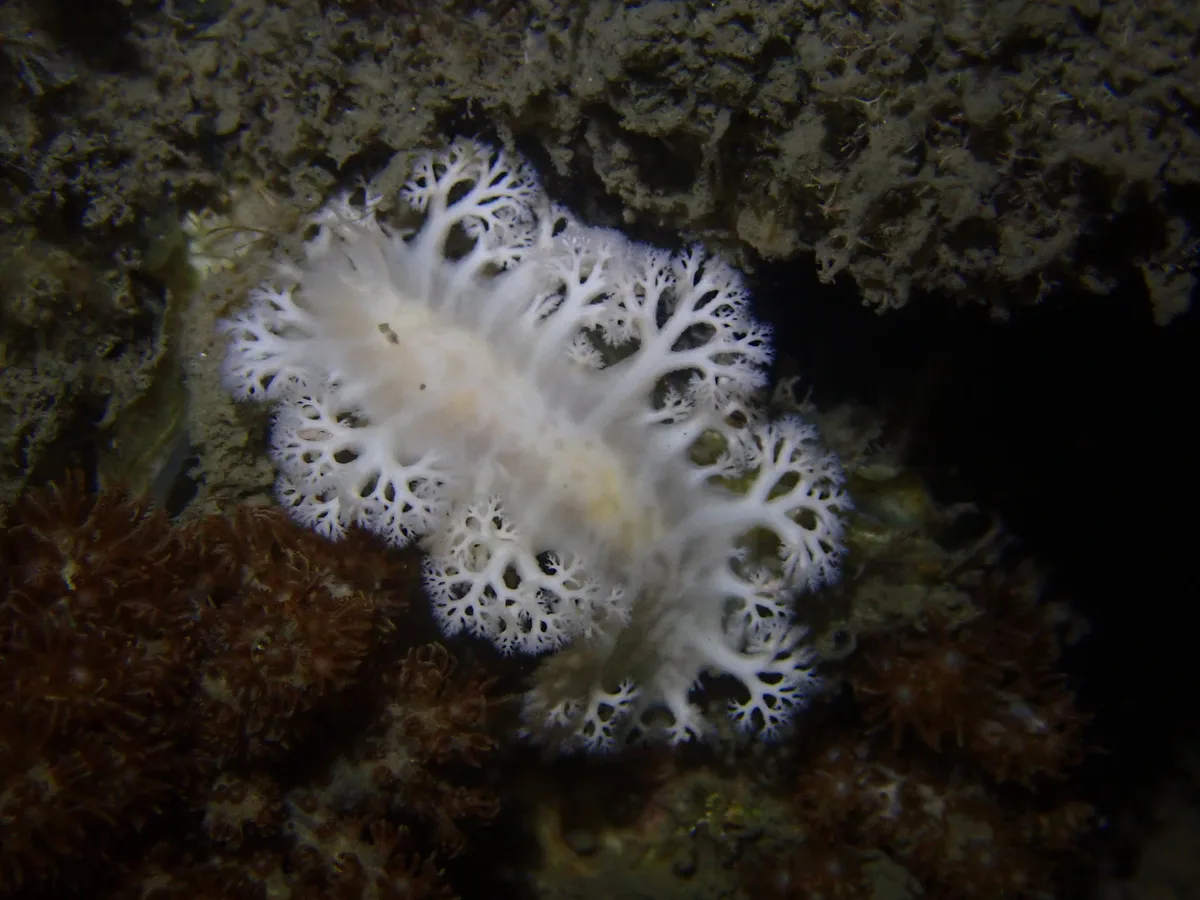
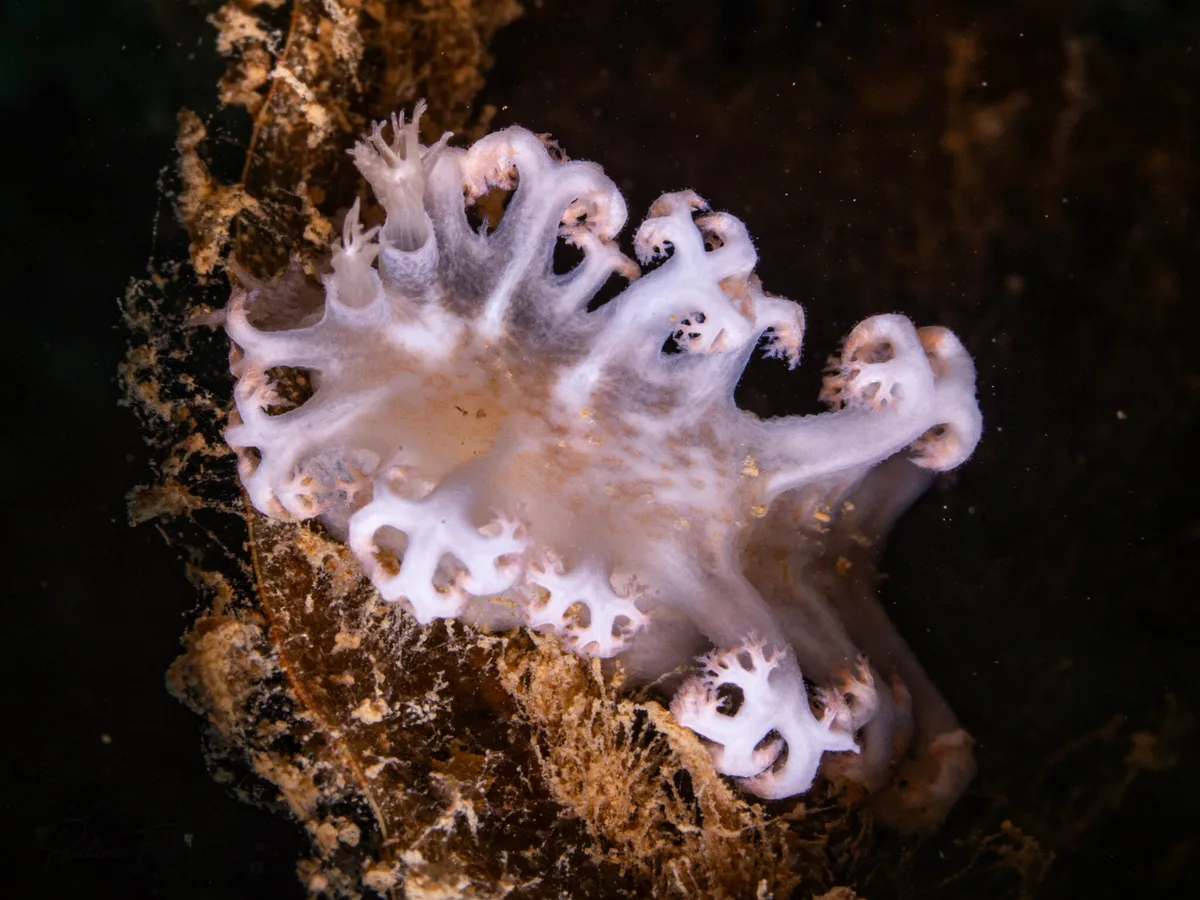
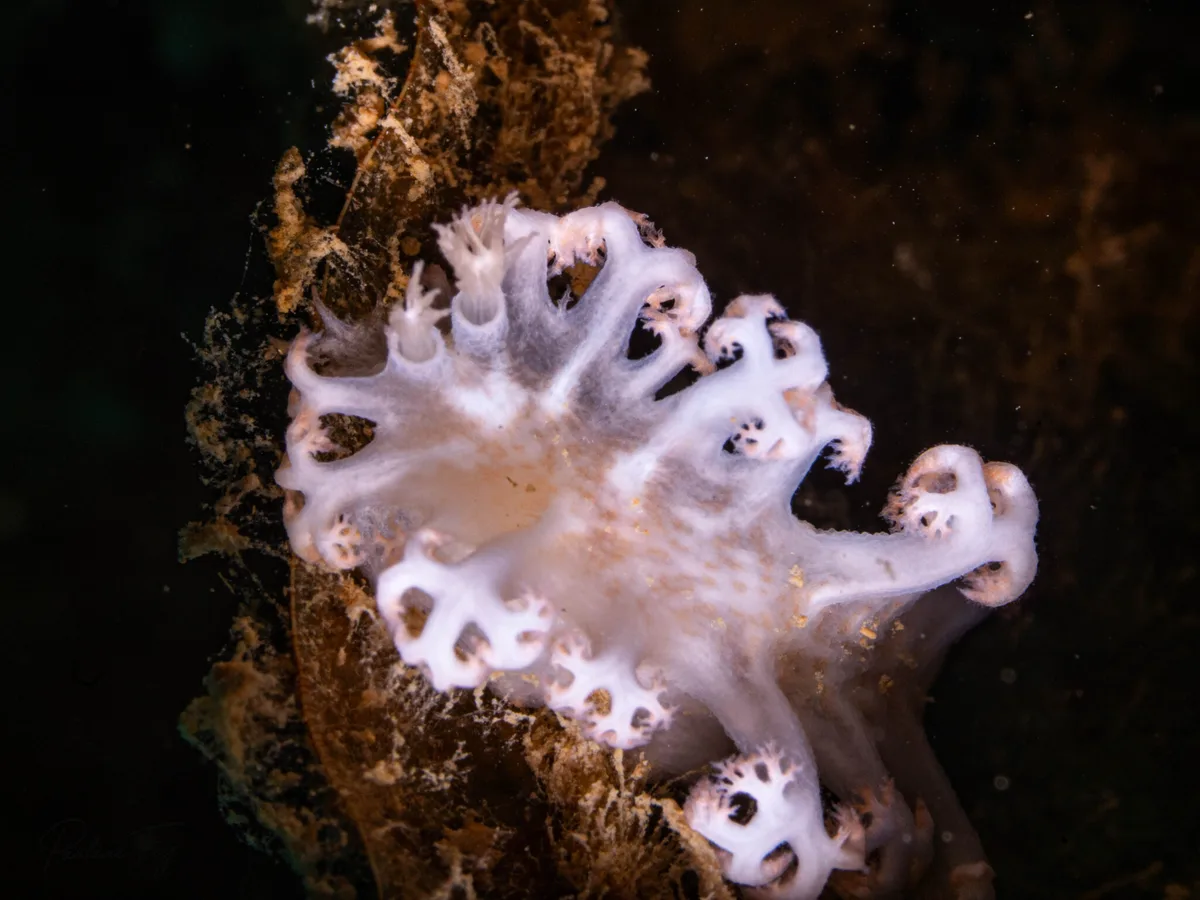
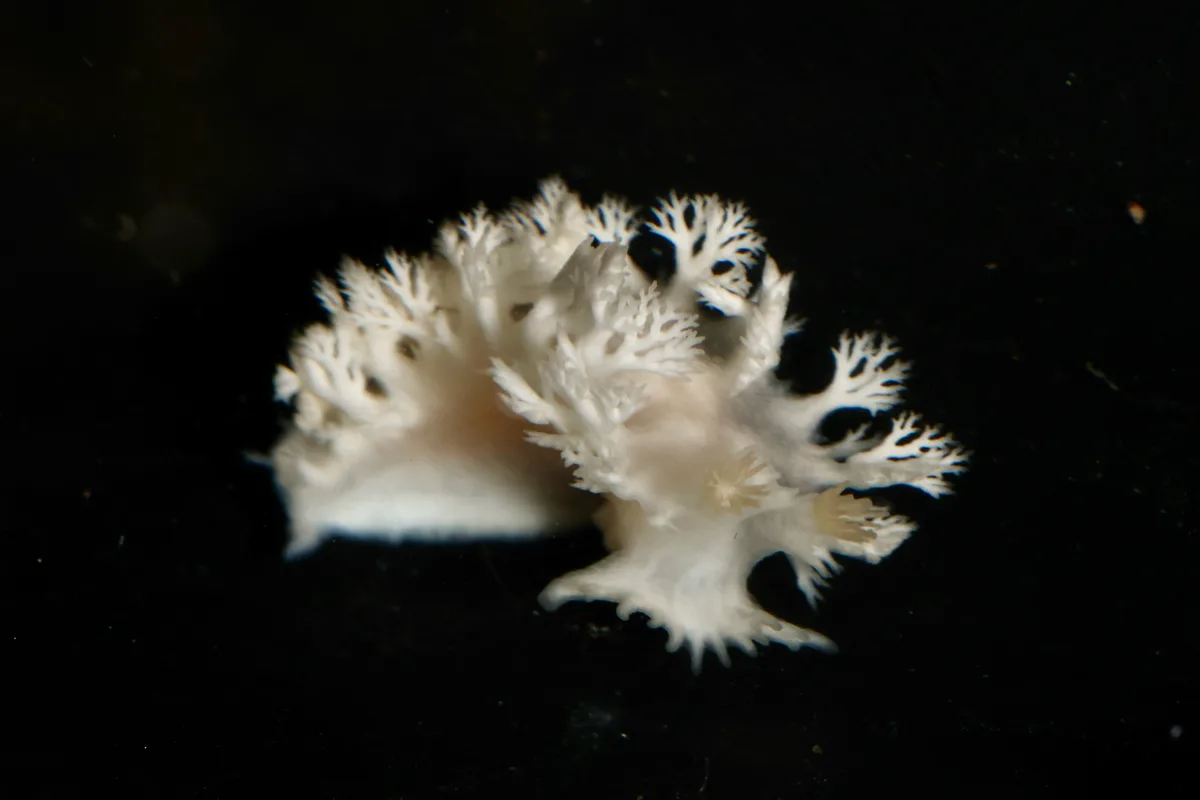
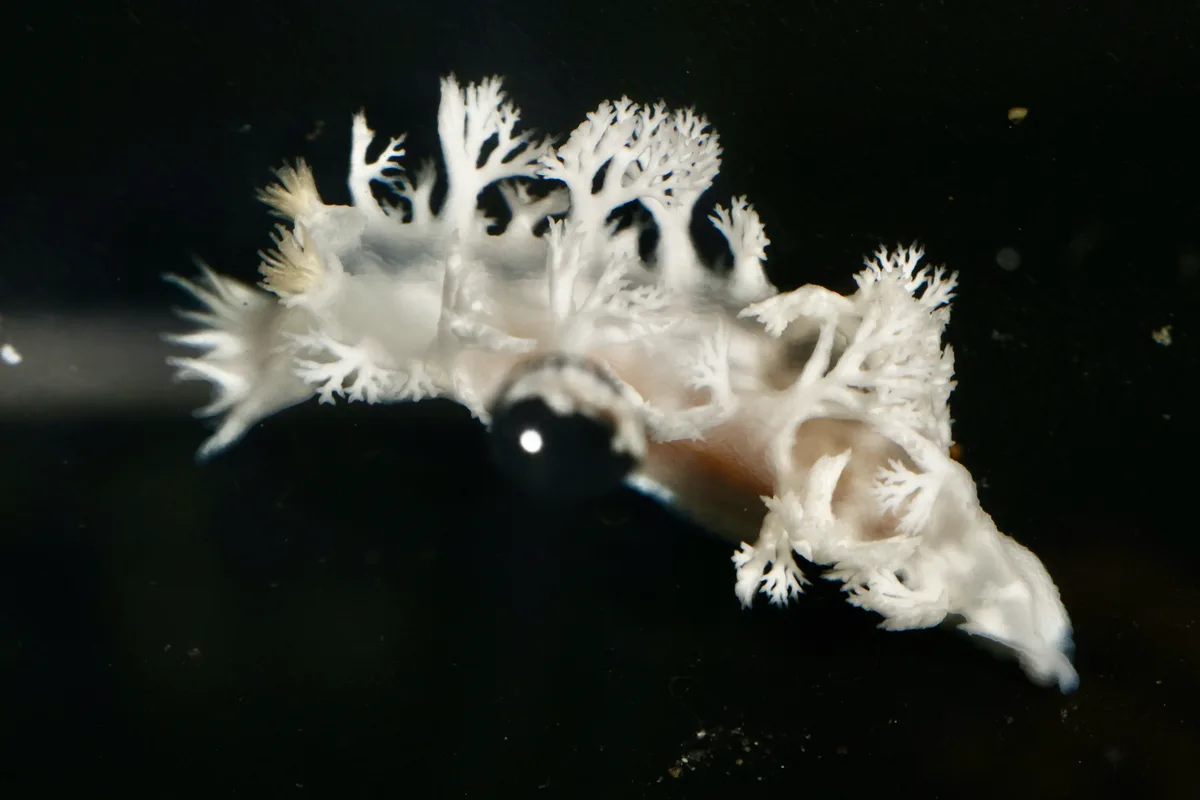
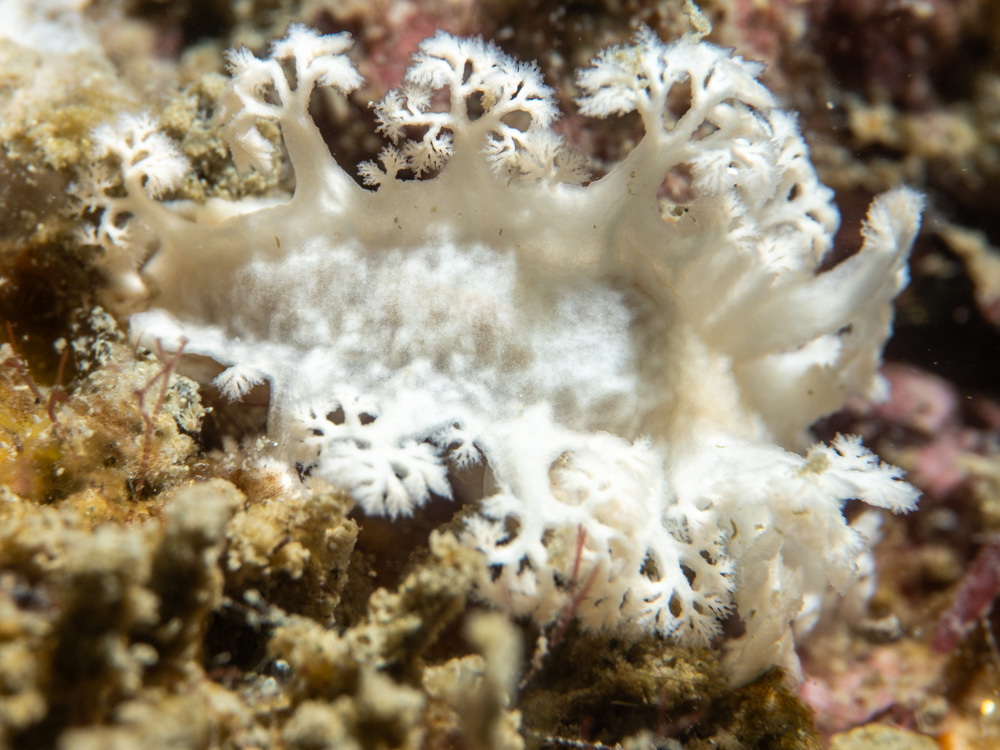
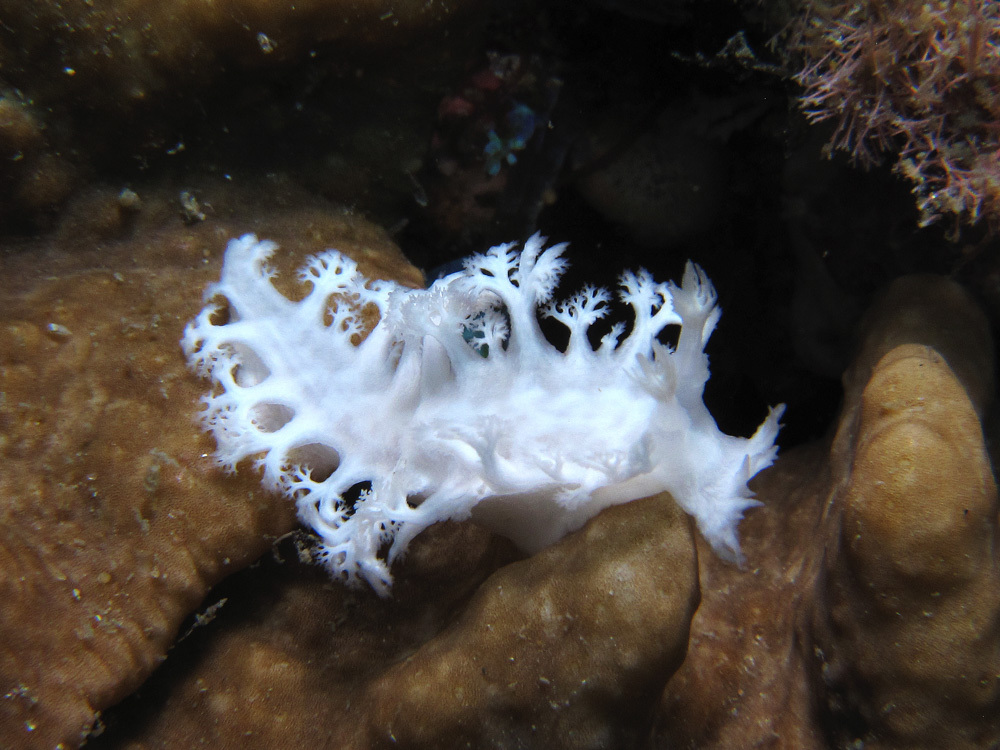
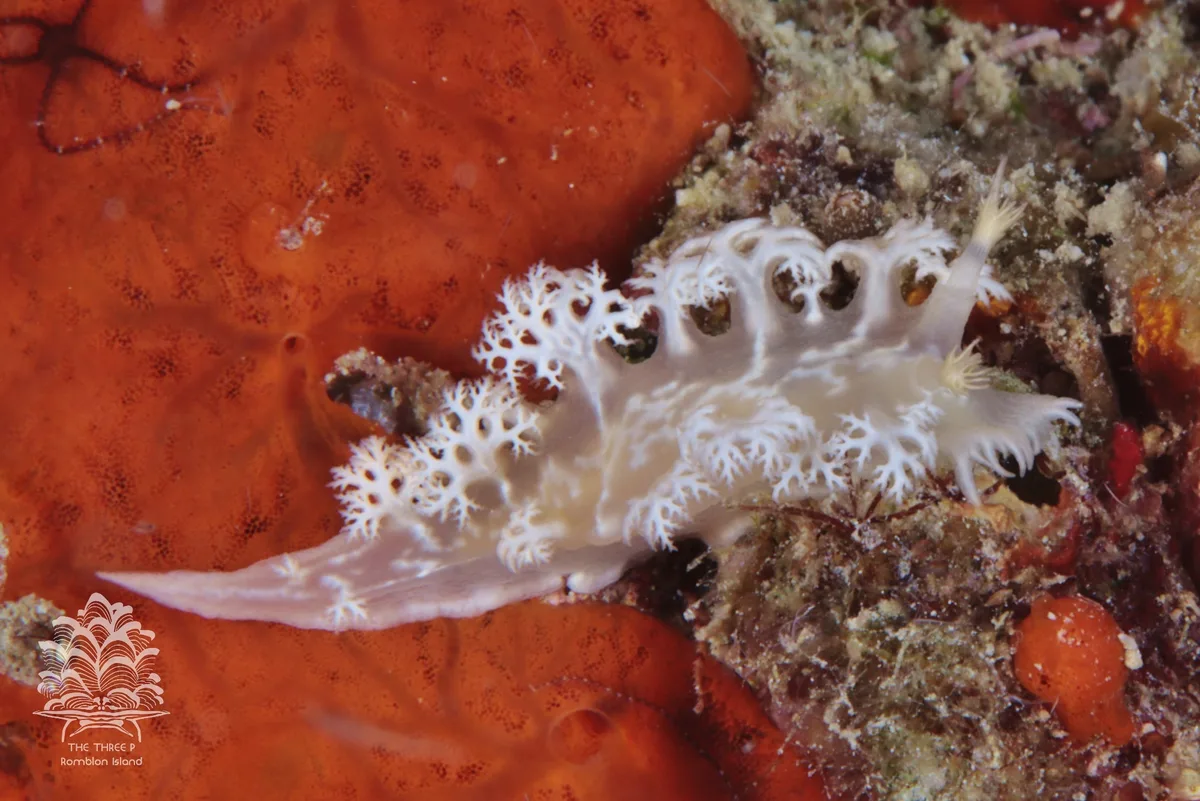
The body is built around that job. There is no gill rosette on the back; instead a row of finely branched tufts stands along each side, and on a translucent white or orange animal sitting on a soft coral they read as more polyps. The colors run from clear white through yellow to orange, marked with opaque white patches, and which color you get seems to follow the colony the animal has been living on.
Six centimeters (2.4 in), out only after dark, and reliably in one place: on the soft coral, not around it. If you want to find one, stop looking at the reef and start looking at the individual colonies, one at a time, with a torch.
- highly branched gill tufts standing in a row down each side, like small bushes
- translucent white, orange or yellow, with opaque white markings on the back
- found on the soft coral itself rather than on rock or sand
- out at night, very rarely seen in daylight