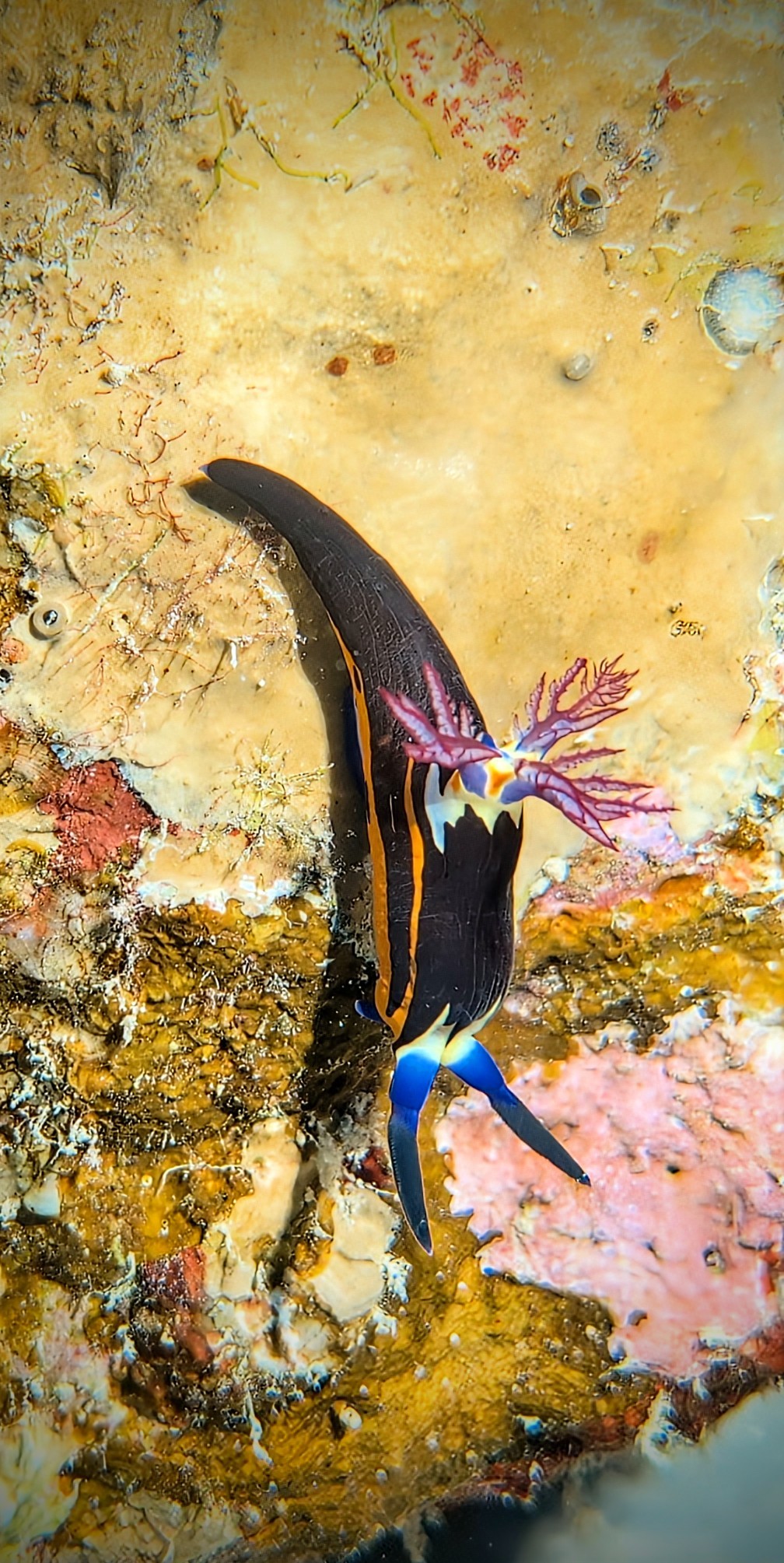
This slug does not eat sponges. It eats sea squirts, which are chordates, which makes its meals closer relatives of yours than of its own.
Nembrotha specialize on colonial ascidians, and this species has been recorded feeding on Diazona, one of the soft transparent colonial squirts that grow in clusters on shaded rock. That is a whole different chemistry from the sponge-eating chromodorids and a different way of finding one: look for the ascidian colony rather than for sponge crusts, and check the animals sitting on it.
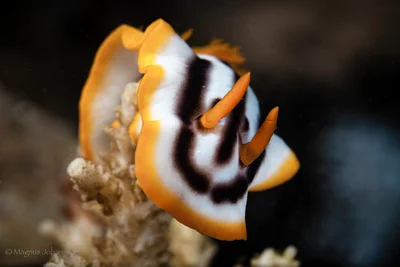
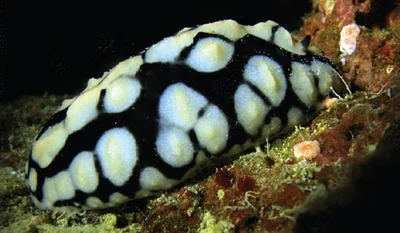
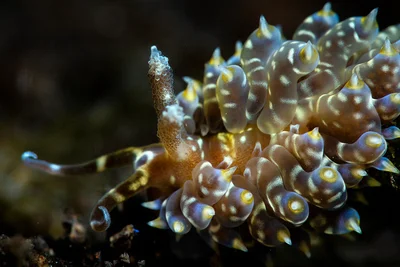
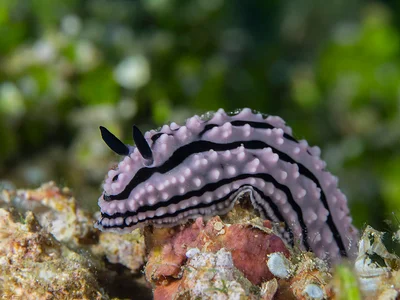
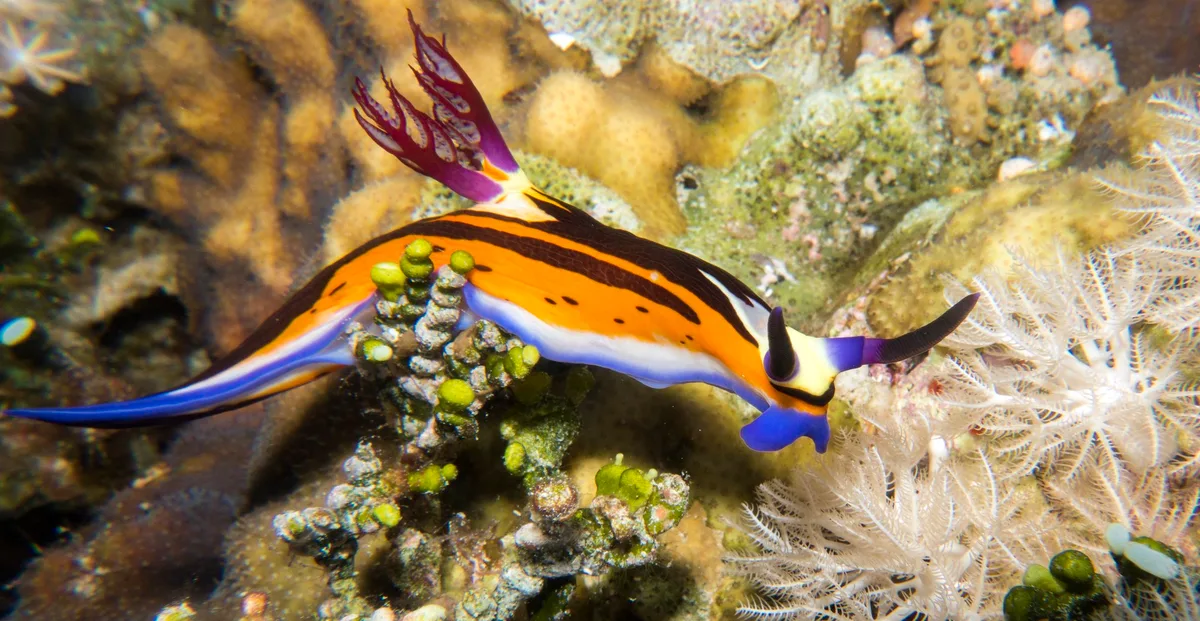
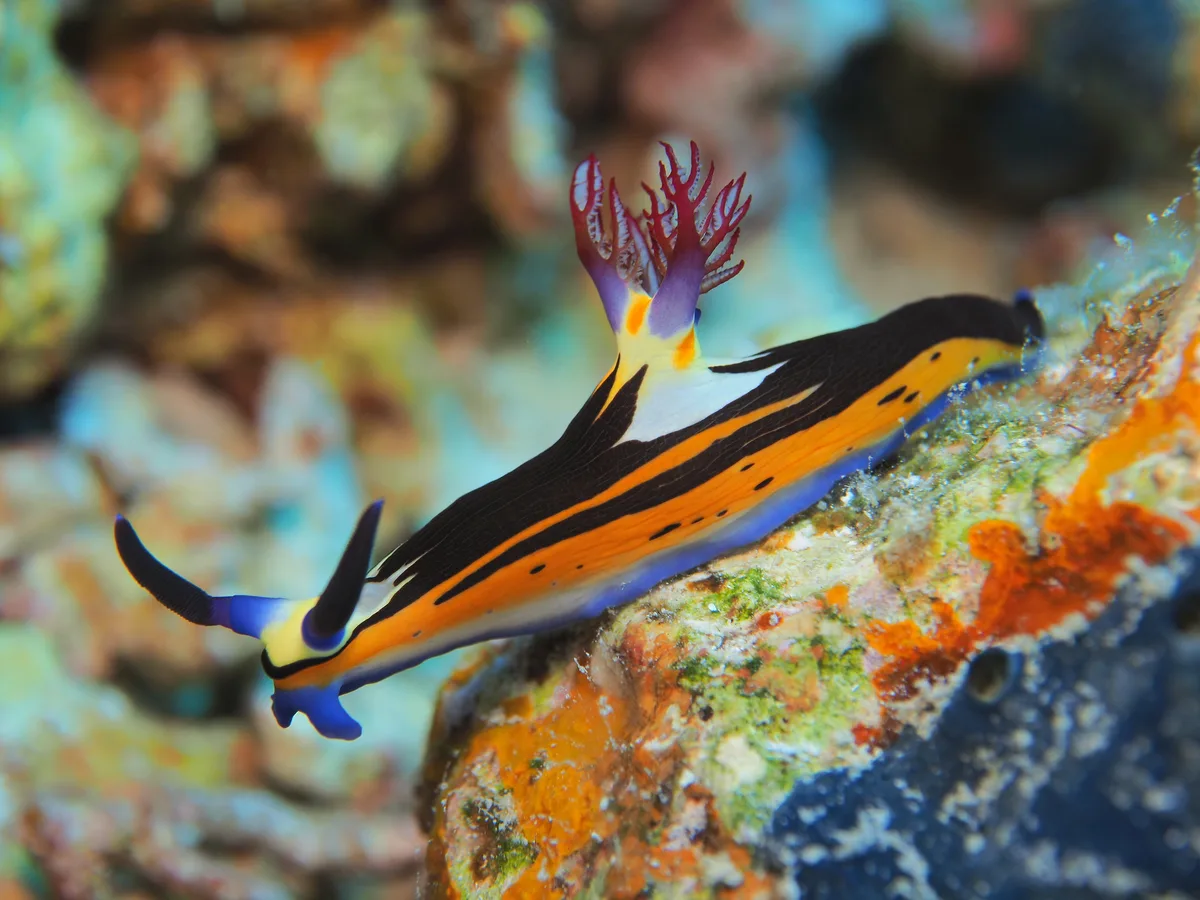
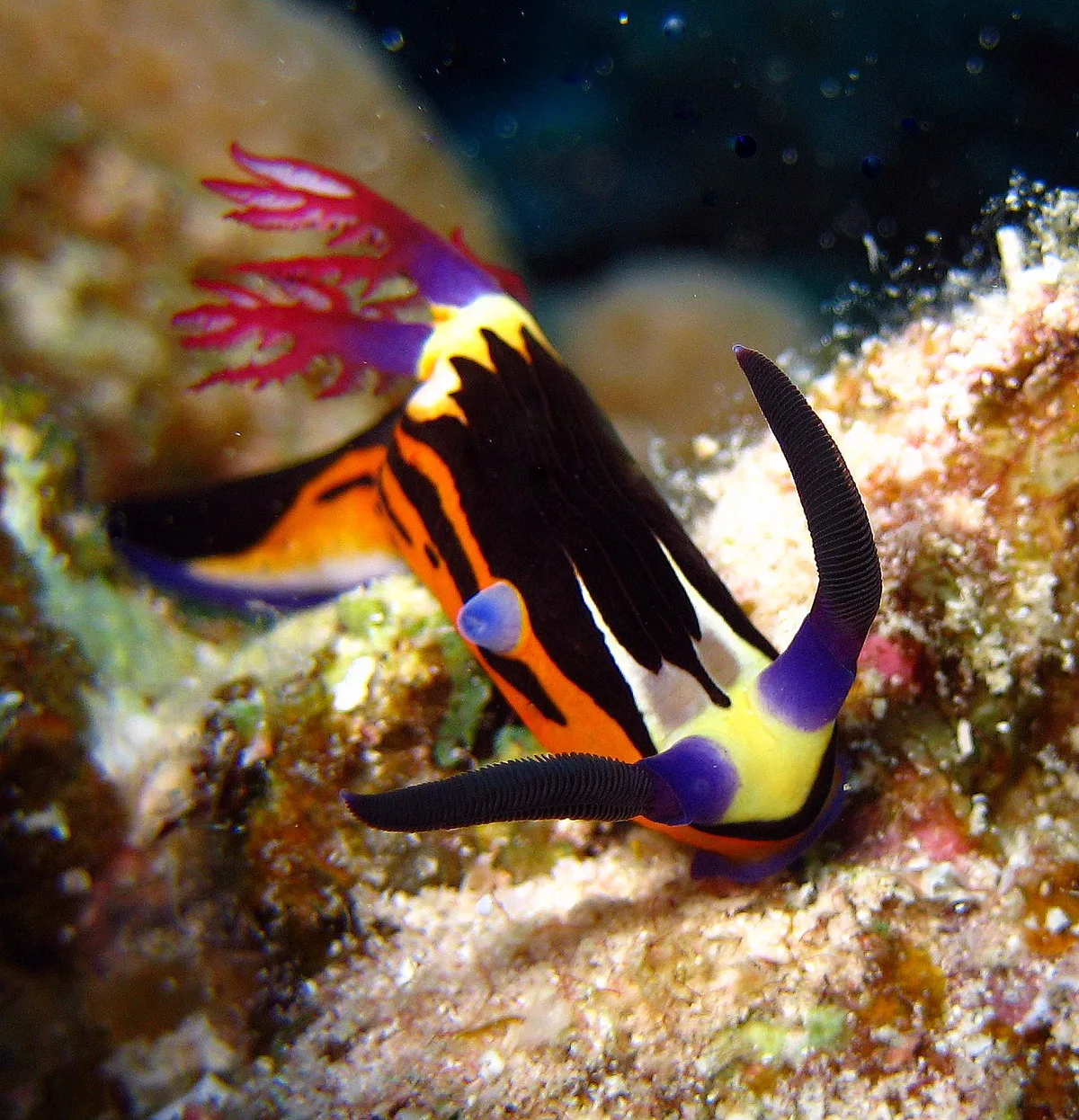
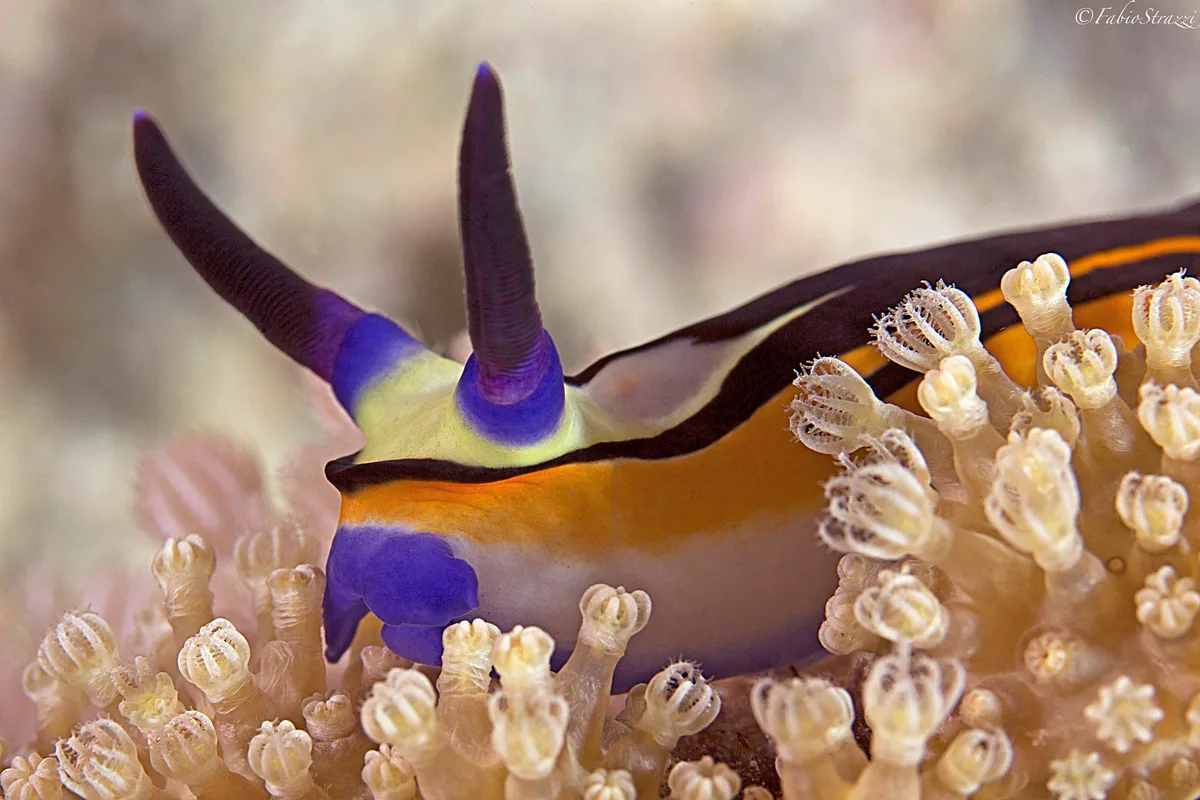
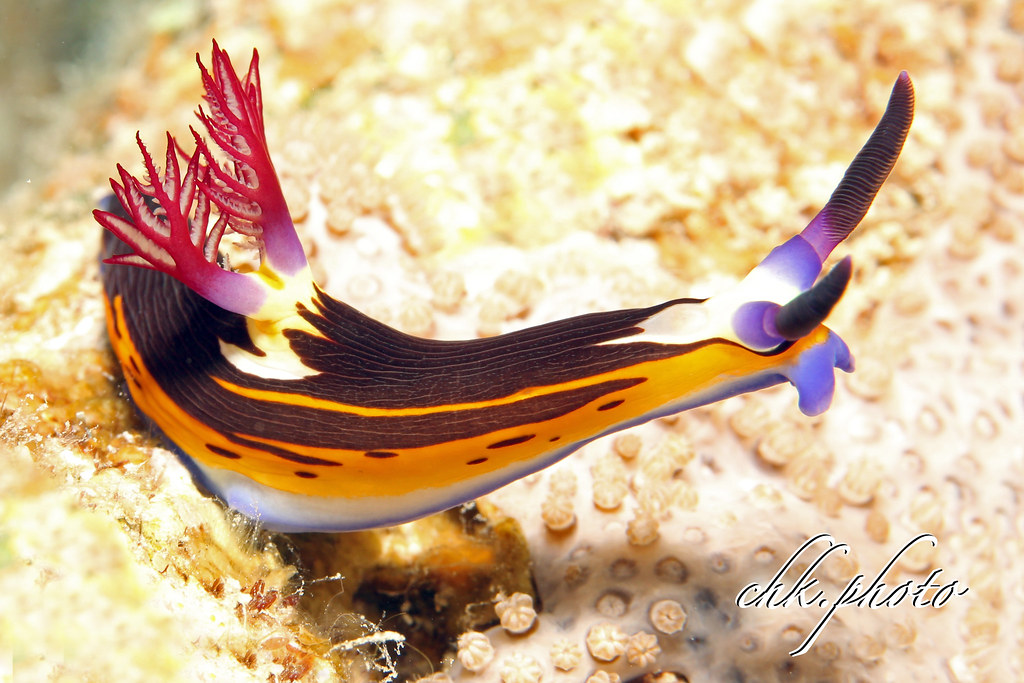
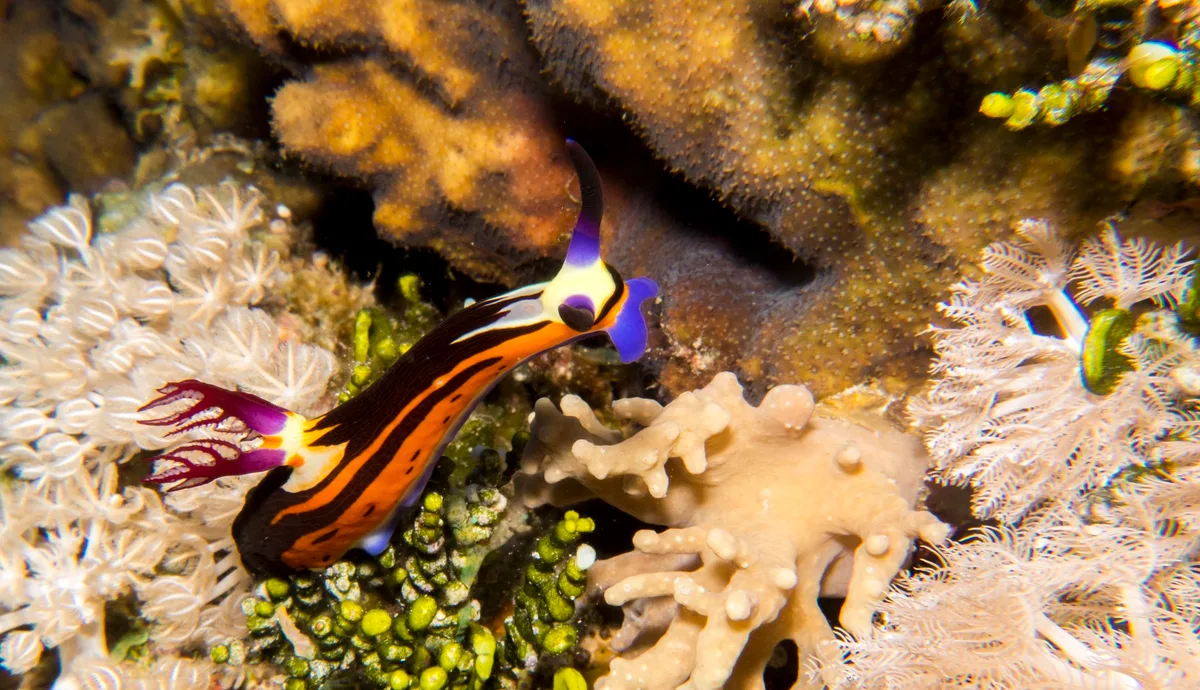
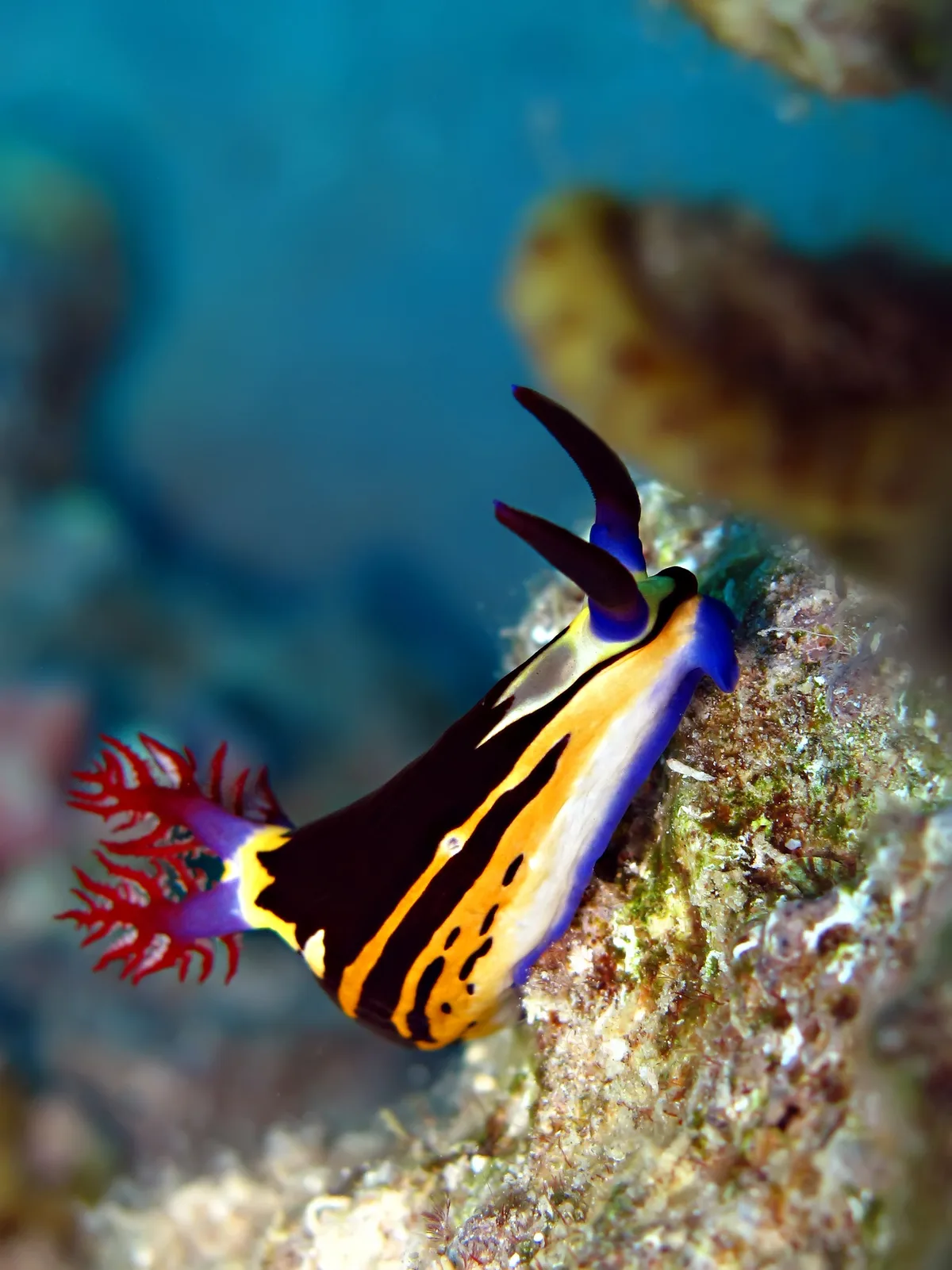
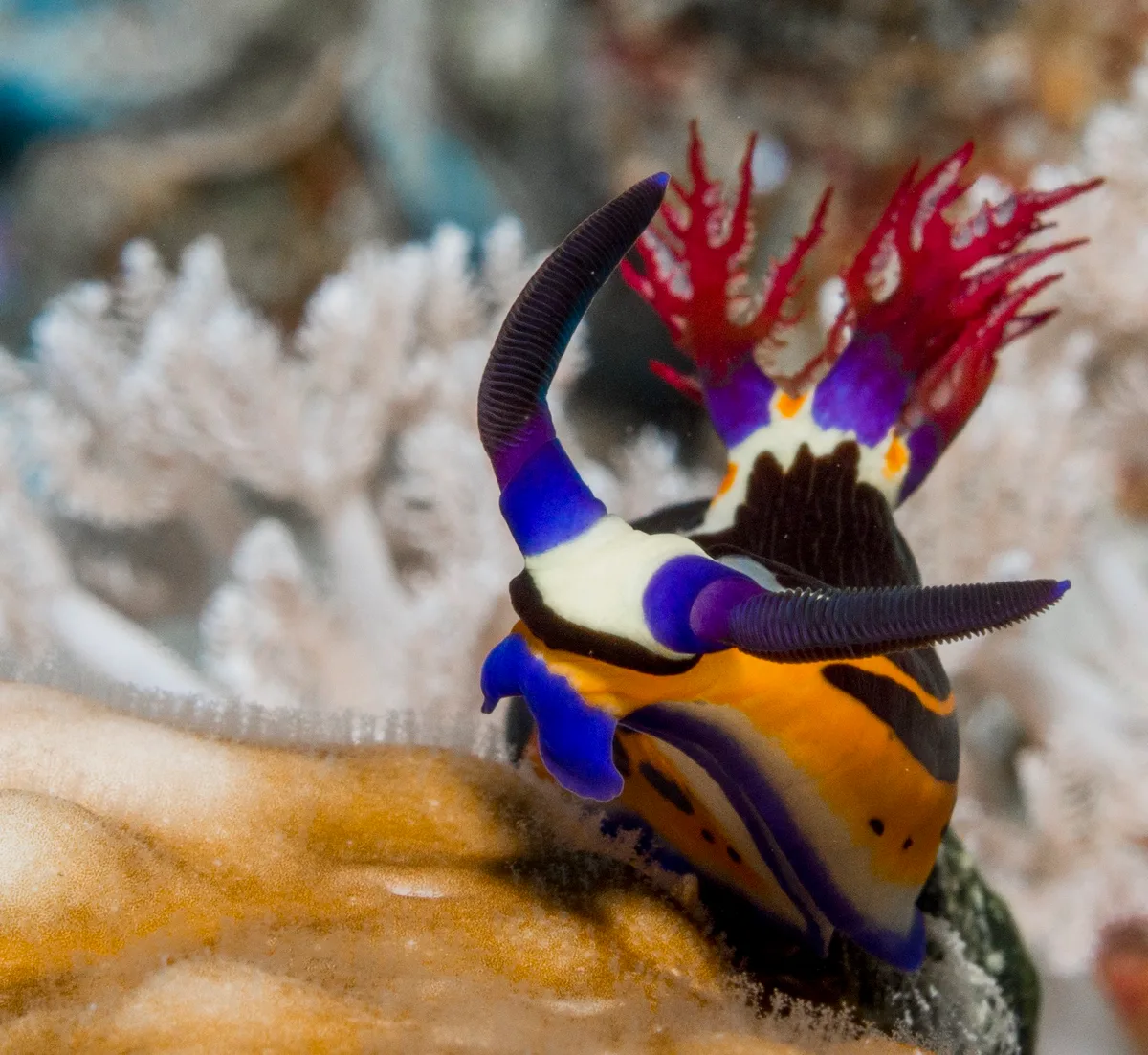
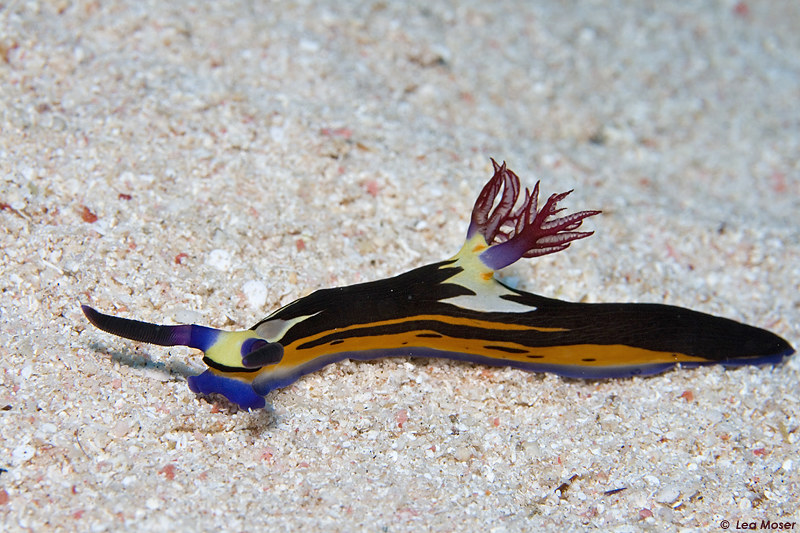
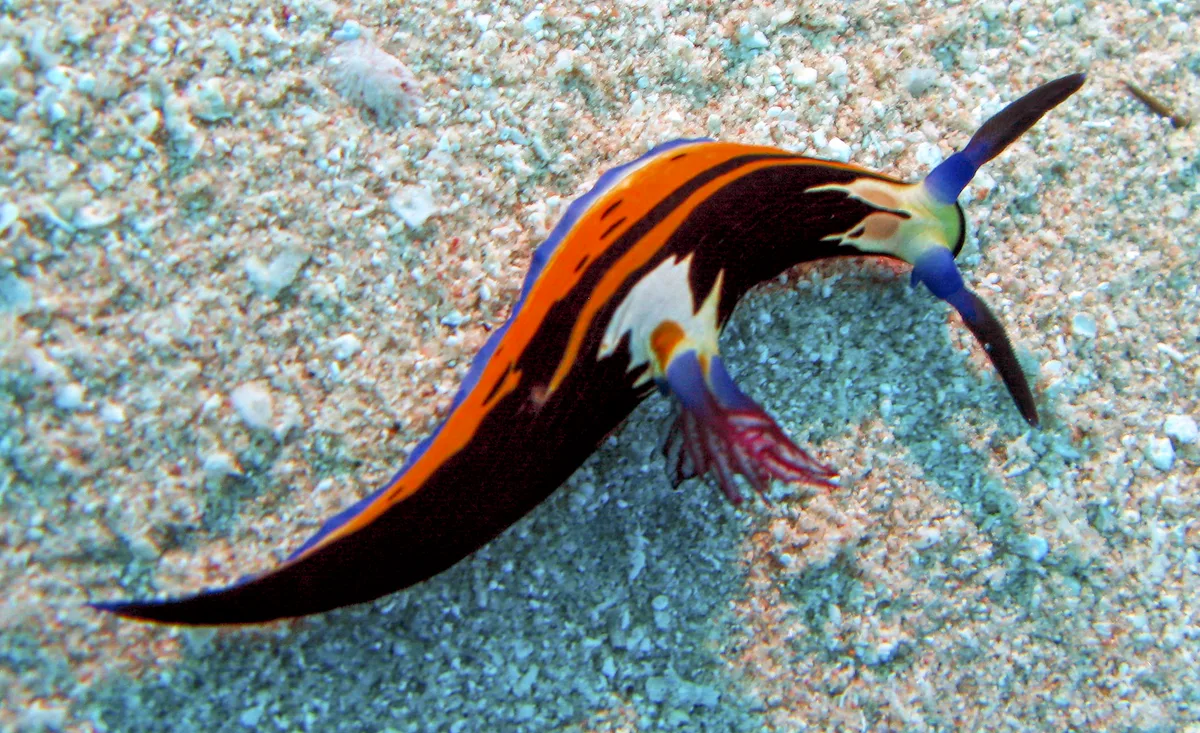
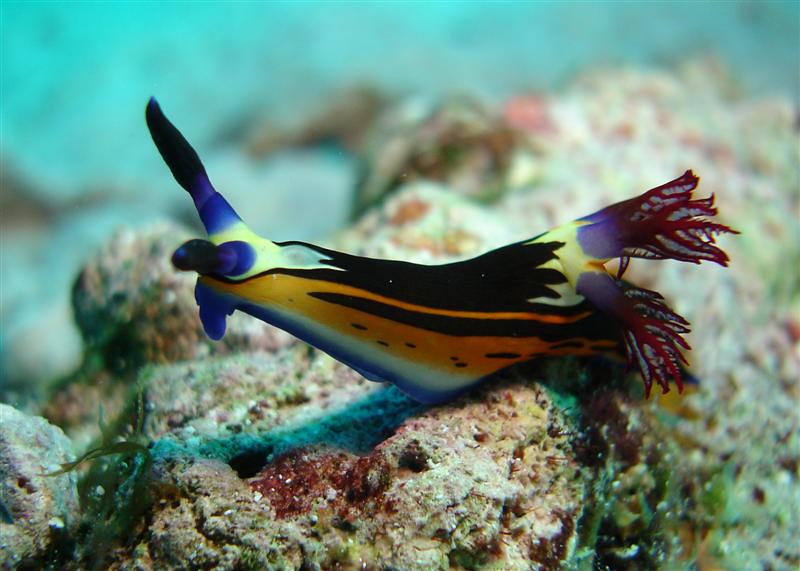
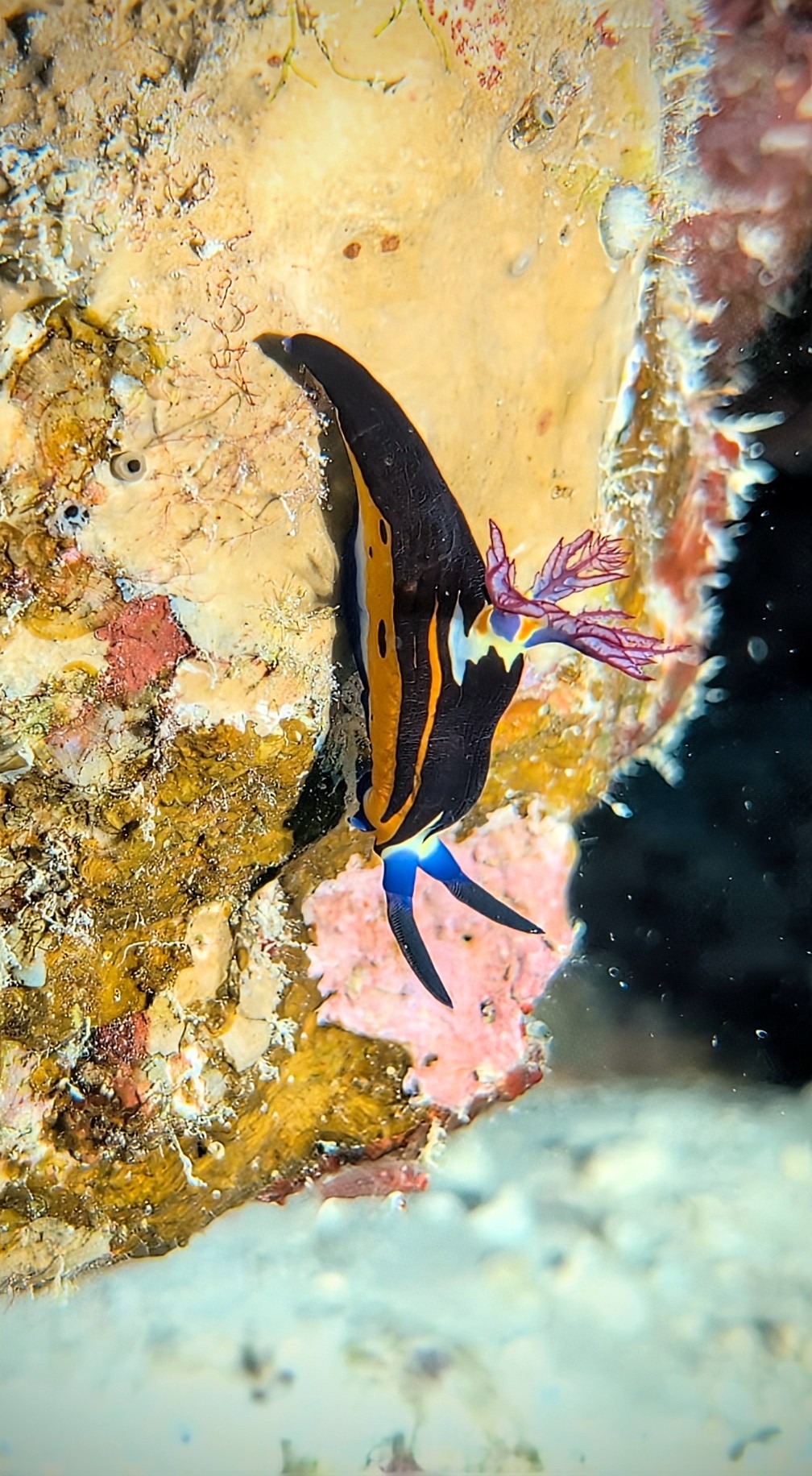
It is a 🌊 Red Sea endemic, up to eight centimeters, yellow-orange with black markings down the back and a clean purple line running around the edge of the foot. The gills and rhinophores stand tall and clear of the body rather than being tucked down, which is the genus at a glance and makes it one of the more photogenic slugs here.
Nembrotha are also unusually active for sea slugs. They move at a visible pace, climb, and are often found several to a colony rather than singly, which is worth knowing because finding one usually means there are more within a meter.
Described in 1990, and one of a small number of conspicuous slugs that belong to this sea alone.
- yellow-orange body with black markings along the back
- purple line running around the outline of the foot
- tall gill plume and rhinophores standing well clear of the body
- found in the Red Sea and nowhere else