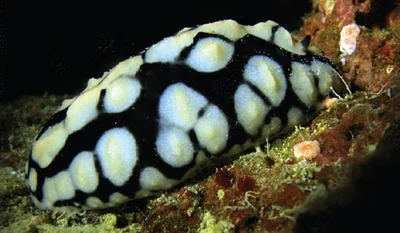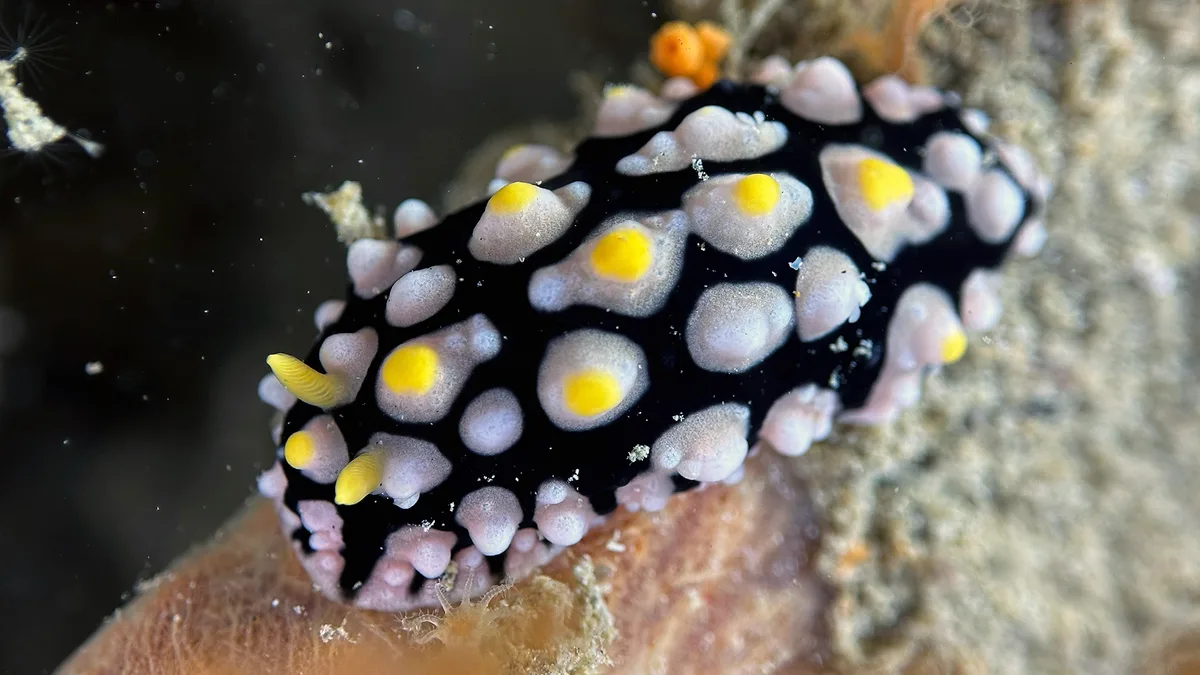
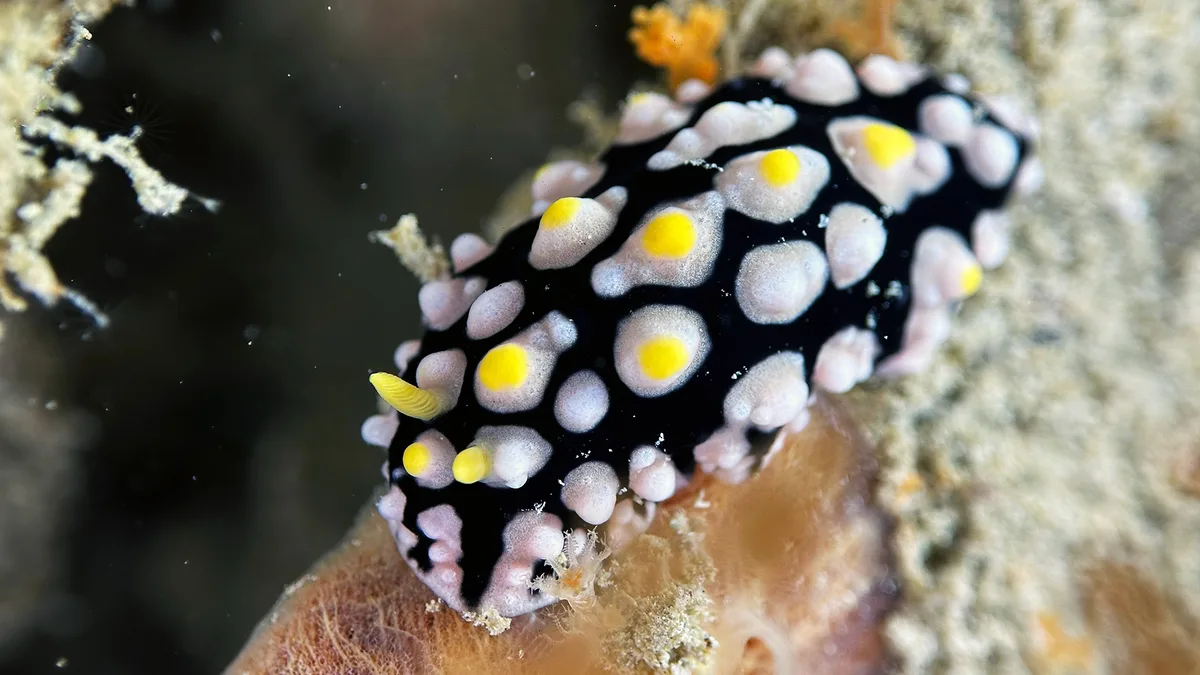
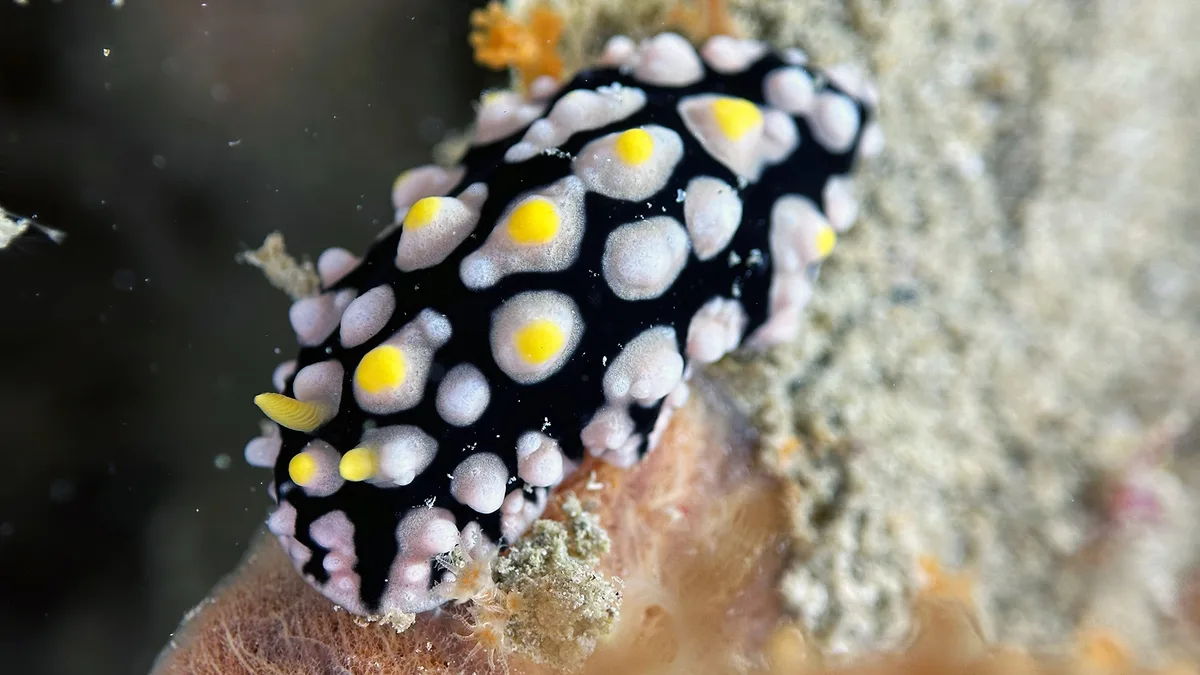
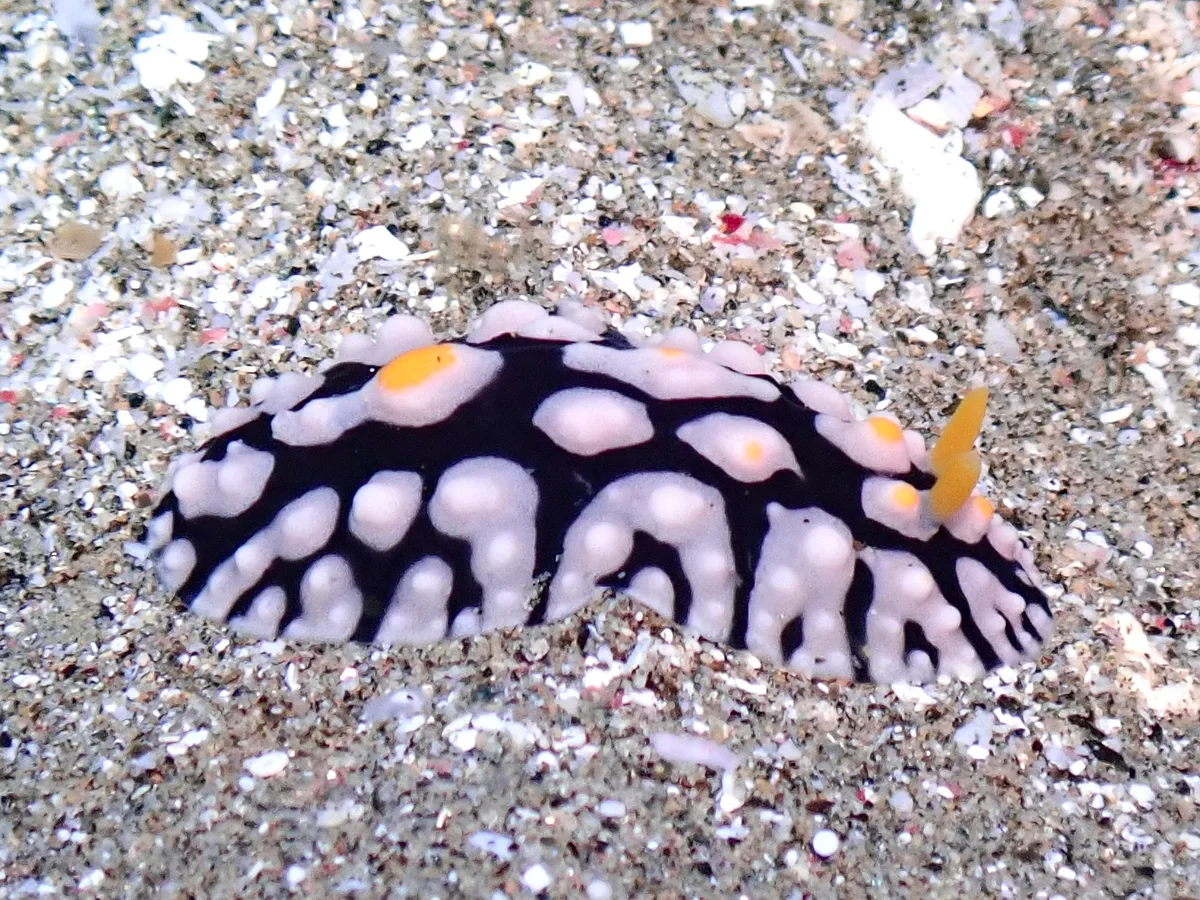
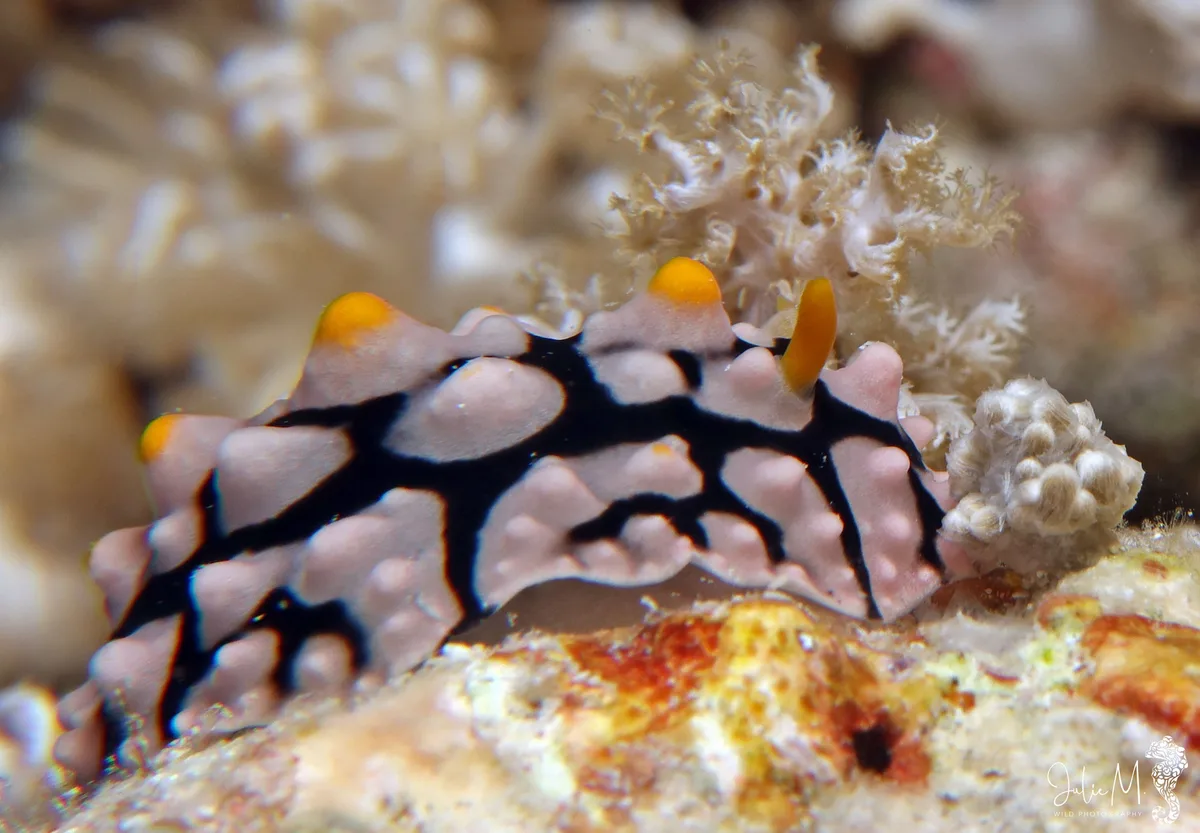
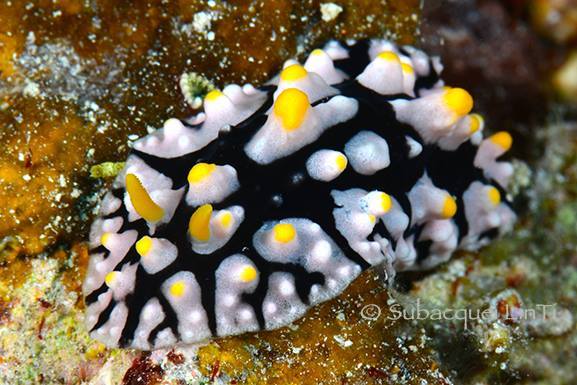
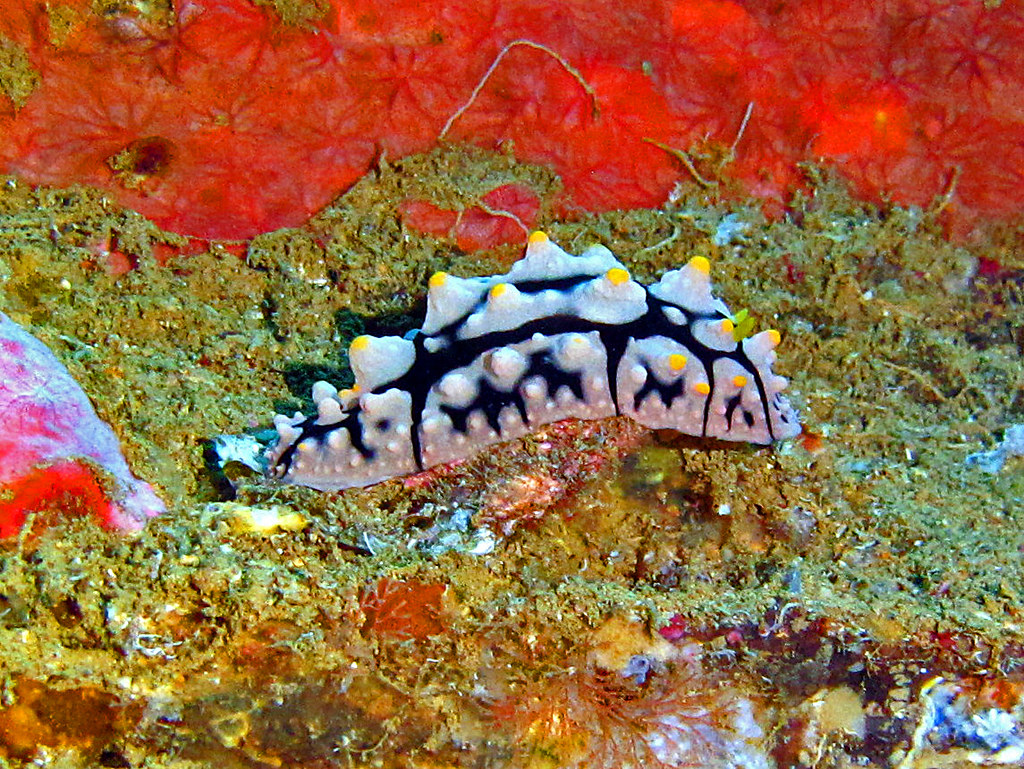
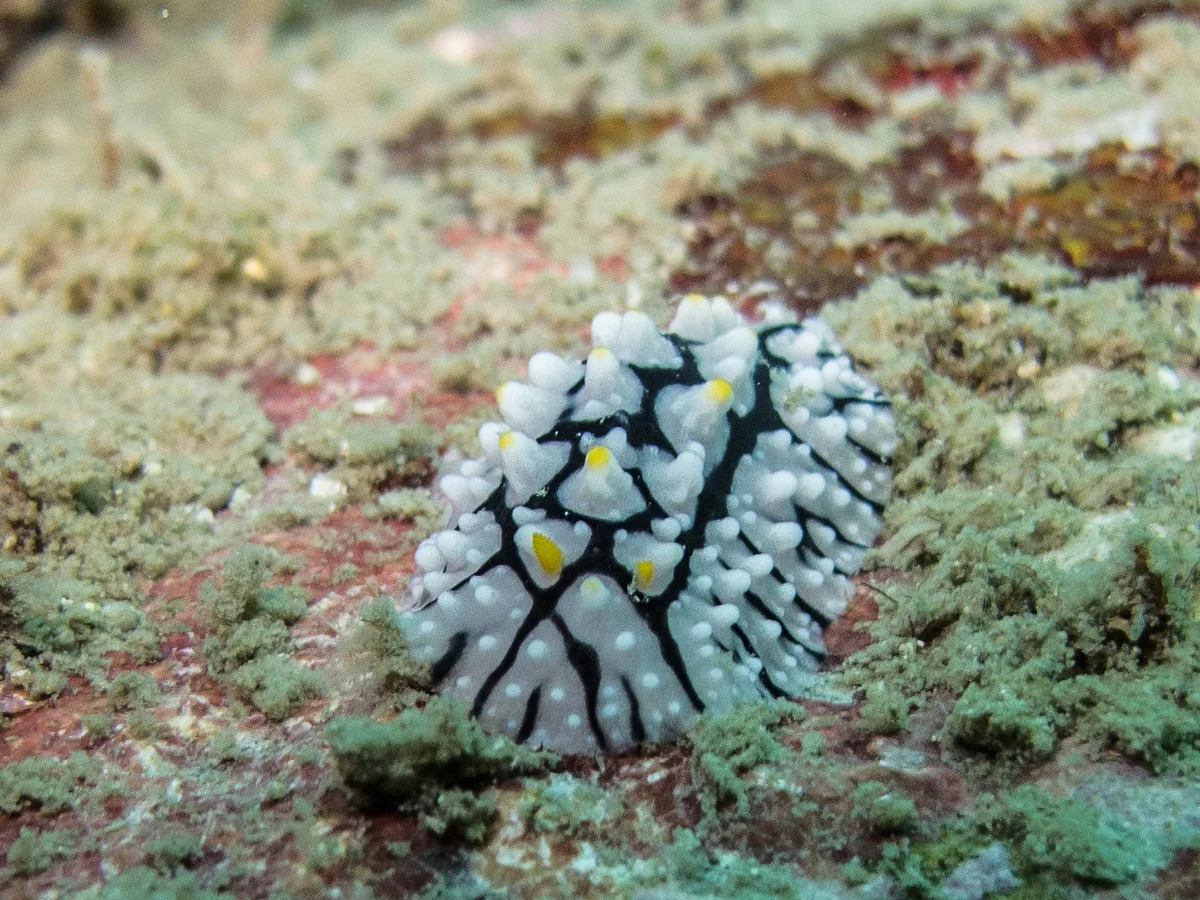
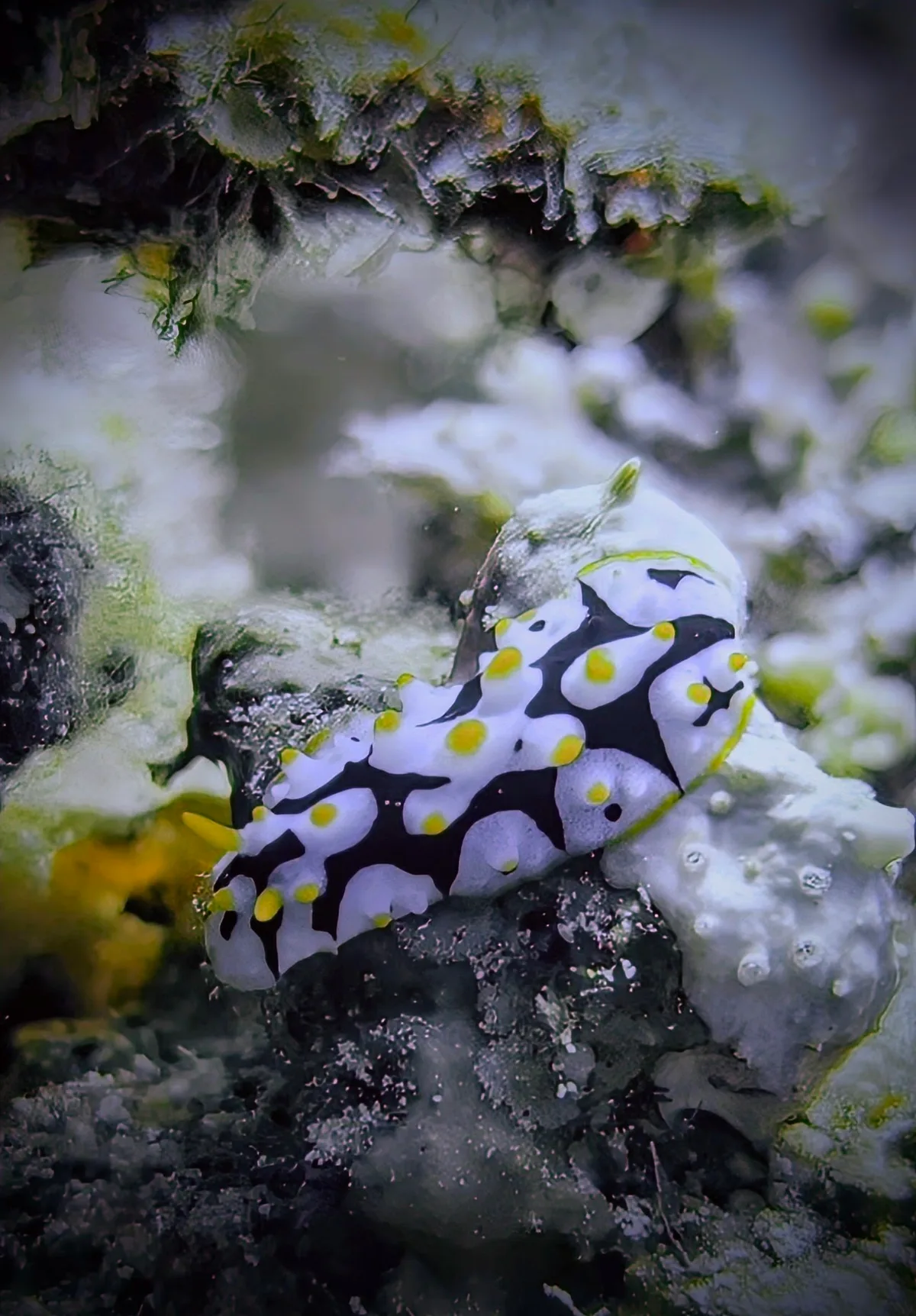
Read the gaps, not the bumps. Wart slugs are told apart by their tubercles, and on this one the useful character is what happens between them: the black pigment forms a connected net running through the spaces, rather than sitting in stripes along the back. The raised tubercles down the midline are tipped yellow, the ones out toward the edge are white, and the black web ties the whole pattern together.
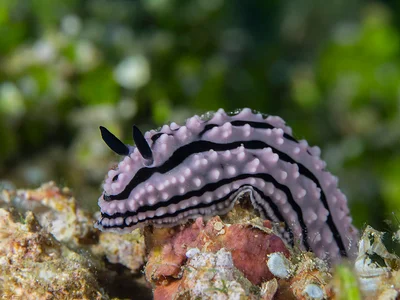
That matters because color alone will not identify anything in this family. Half a dozen wart slugs on this reef are black with yellow and white bumps, and the resemblance between them is the point of the scheme, not an inconvenience for divers. They are all genuinely toxic, and a shared warning pattern is cheaper to teach than six separate ones.
Where the toxin comes from is worth stating plainly, because the slug is not the manufacturer. Phyllidiids eat particular sponges and take the sponges' terpene compounds intact, and in a number of cases the real origin is a step further back still, in bacteria living inside the sponge tissue. What crawls across the reef in the open in broad daylight, untouchable, is the end of a supply chain that starts with a microbe.
The last fact about this one is where it lives. It was described in 1986 from 🌊 Red Sea material, and nearly every confirmed record since has come from this sea and the 🌊 Gulf of Aden. Four centimeters (1.6 in), out in the open, entirely unbothered, and found essentially nowhere else on Earth.
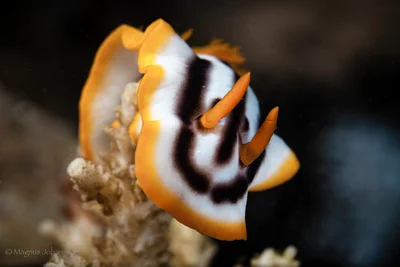
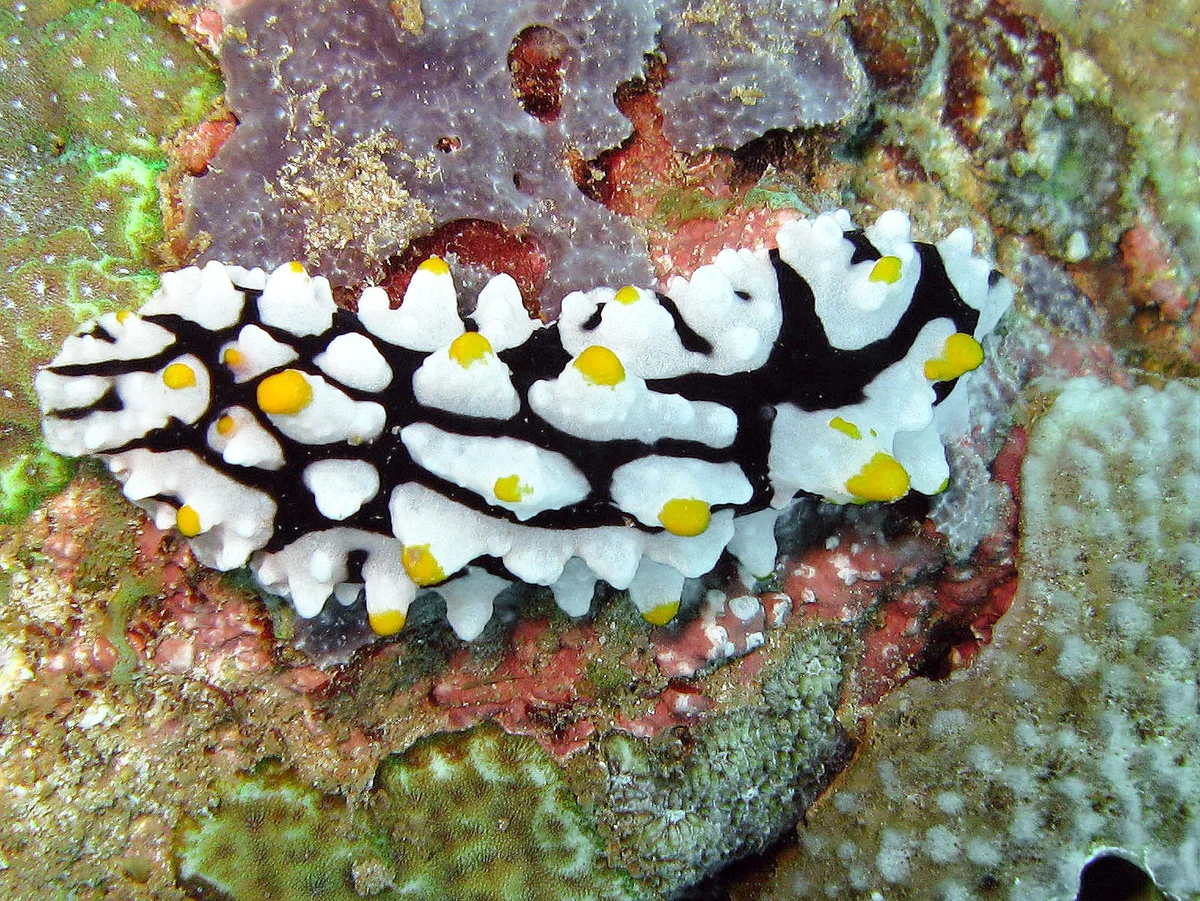
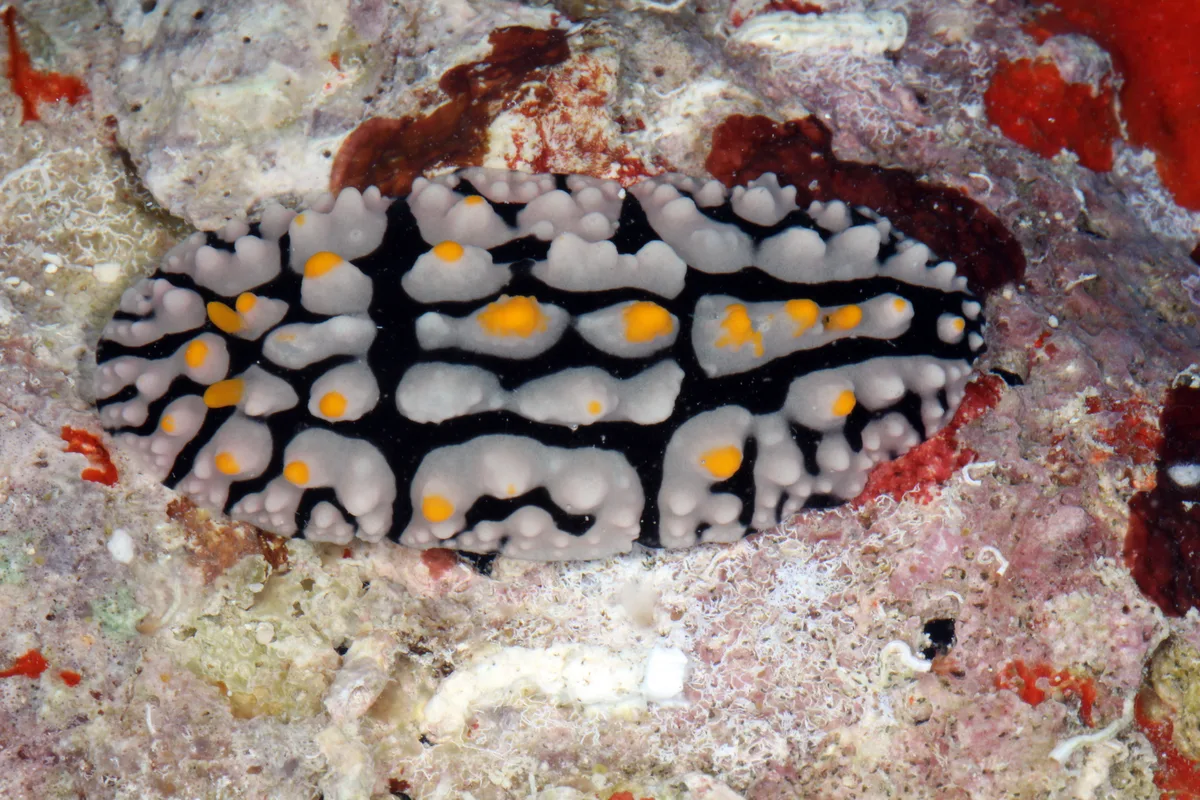
The species it actually gets confused with is Rüppell's wart slug, which is common here and shares the same ground. The caps on the tubercles separate them faster than anything else. On this one only some tubercles are capped, mostly the raised ones toward the middle, and the rest stay plain white or gray, while on Rüppell's practically every tubercle is capped the same orange from edge to middle. The margin confirms it: Rüppell's carries a continuous orange line around the mantle and this species carries none at all, which is exactly what leaves the black net between the tubercles so easy to see.
- a network of black lines running between the tubercles, not along the back
- tubercles along the middle of the back tipped yellow, the outer ones white
- hard-looking ridged body with no gill plume showing
- found in this sea and effectively nowhere else