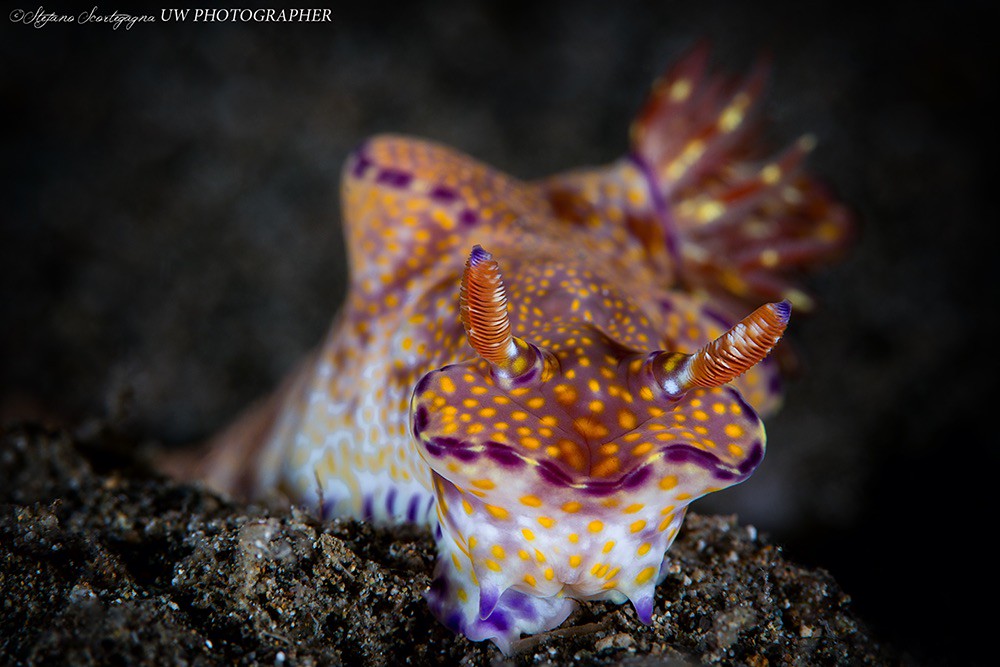
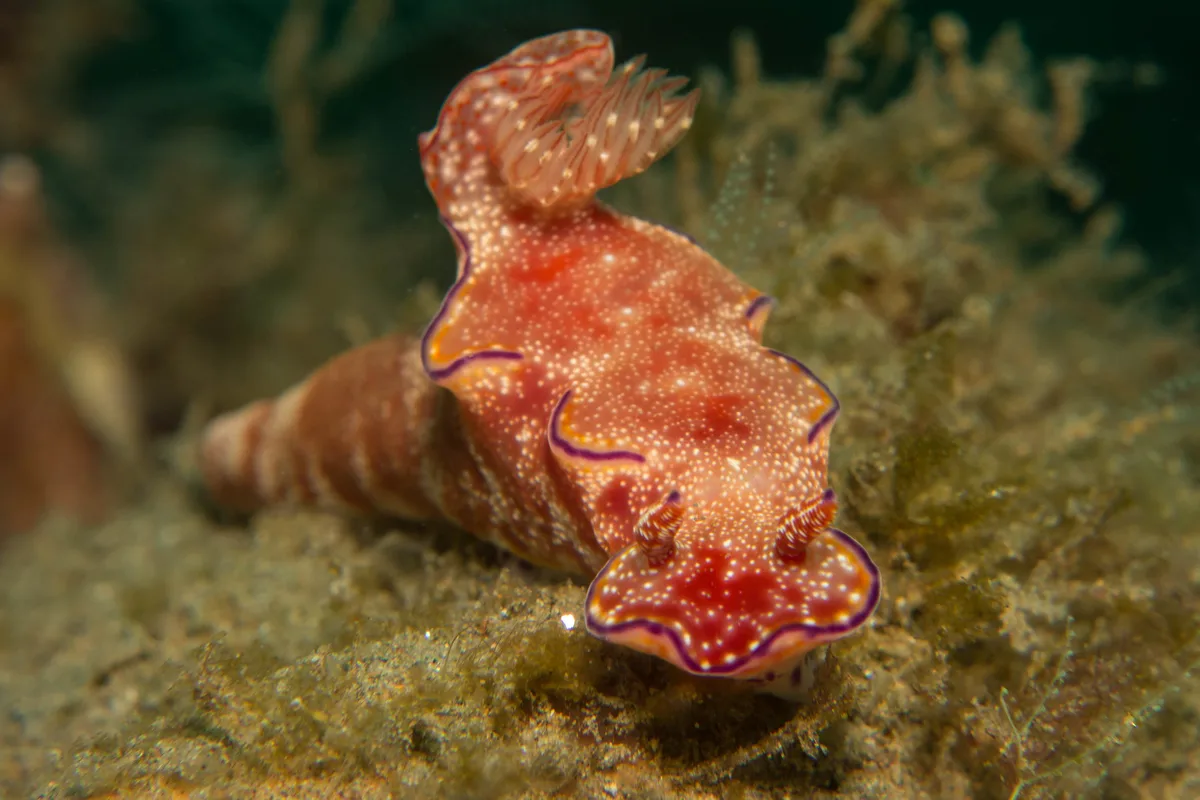
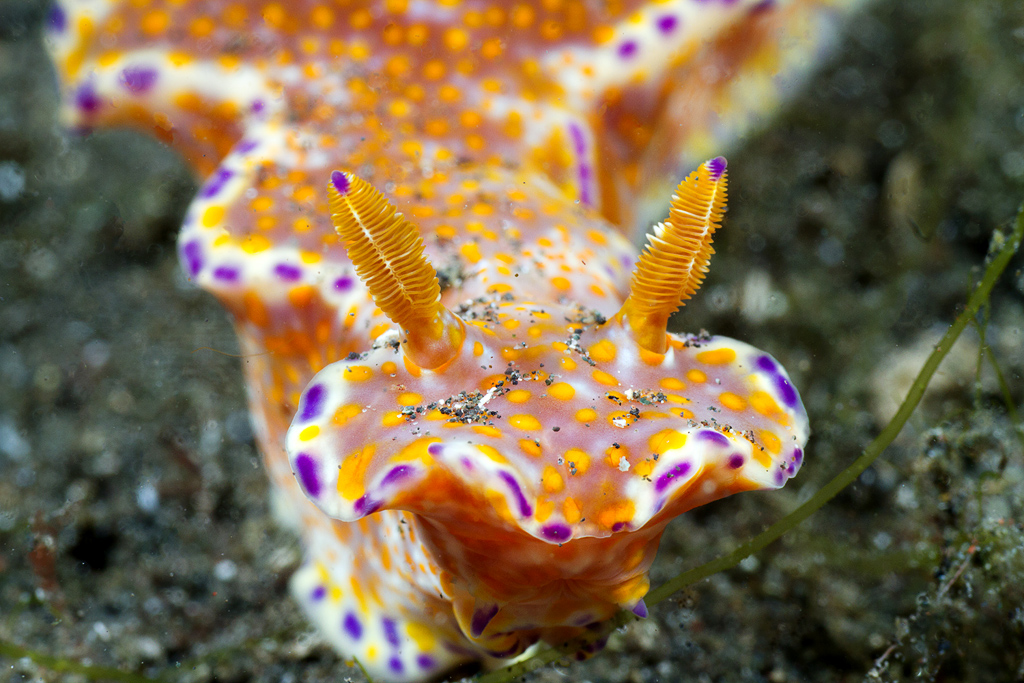
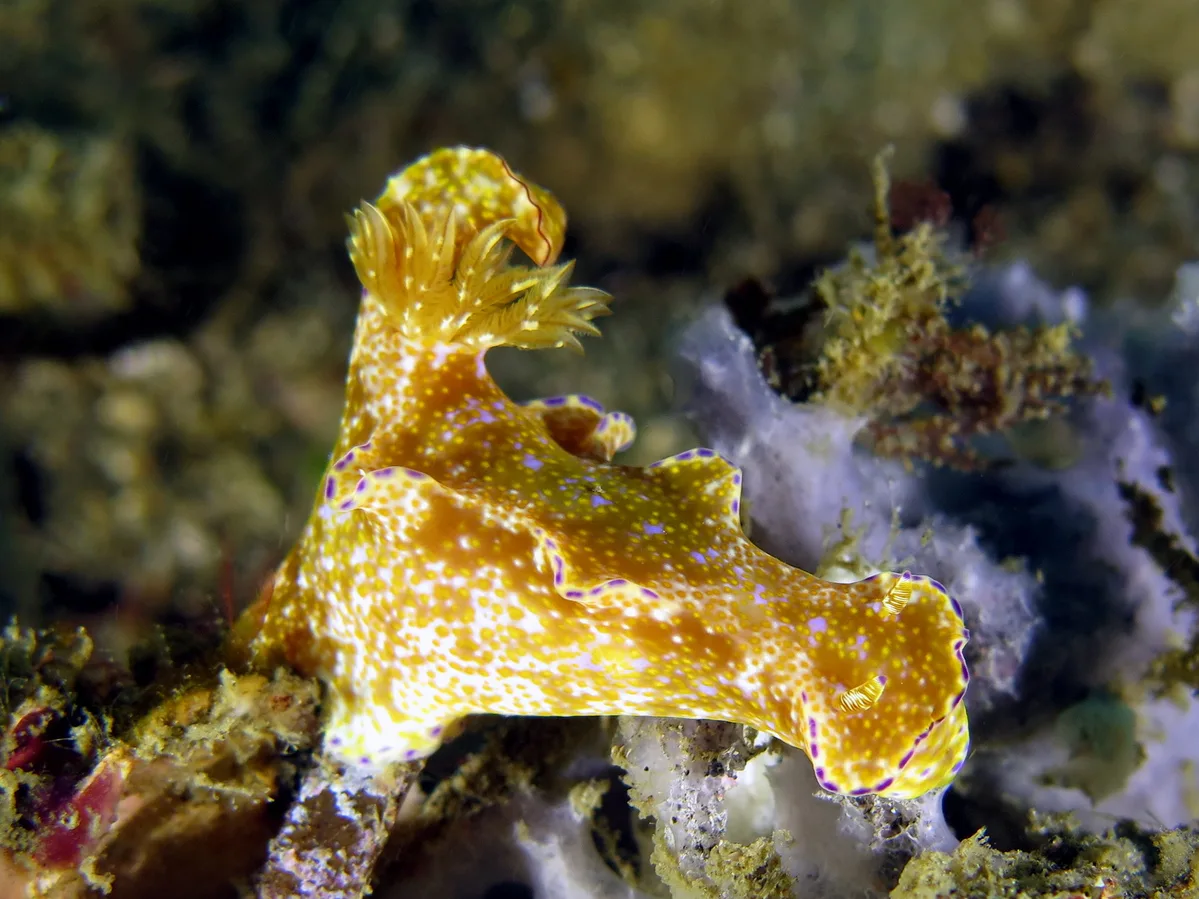
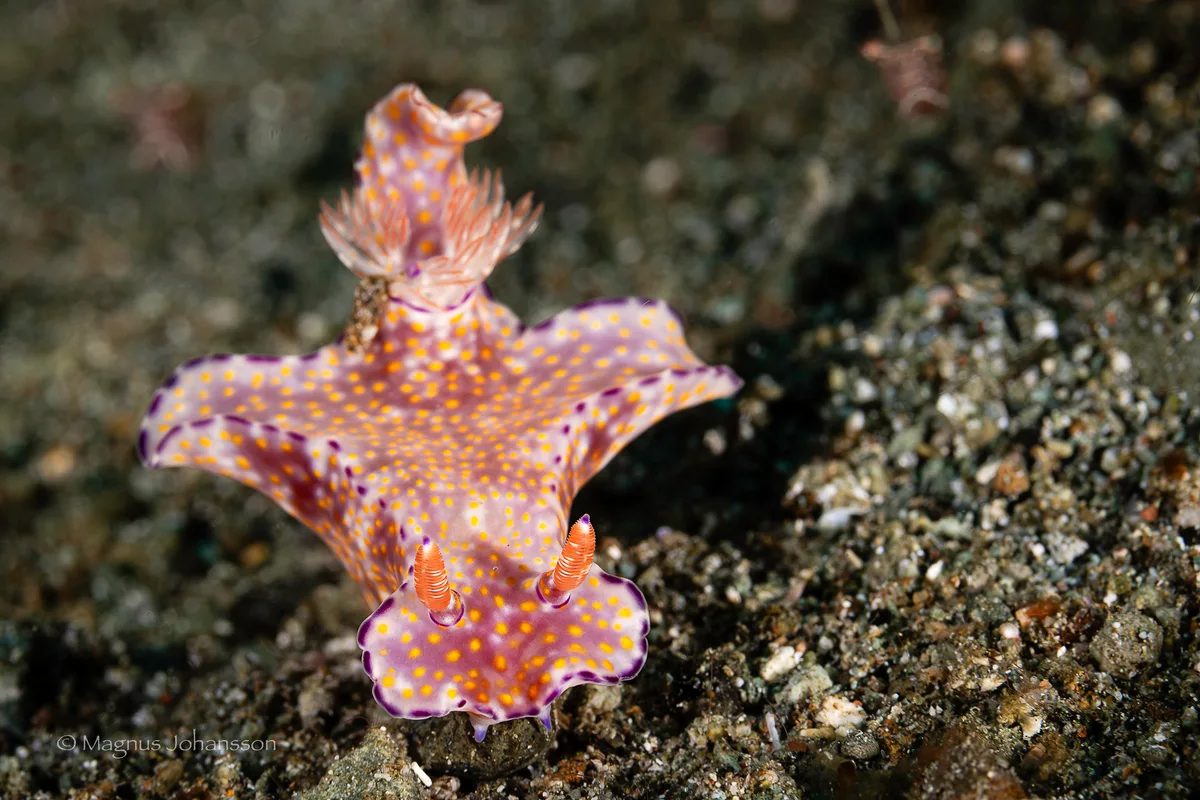
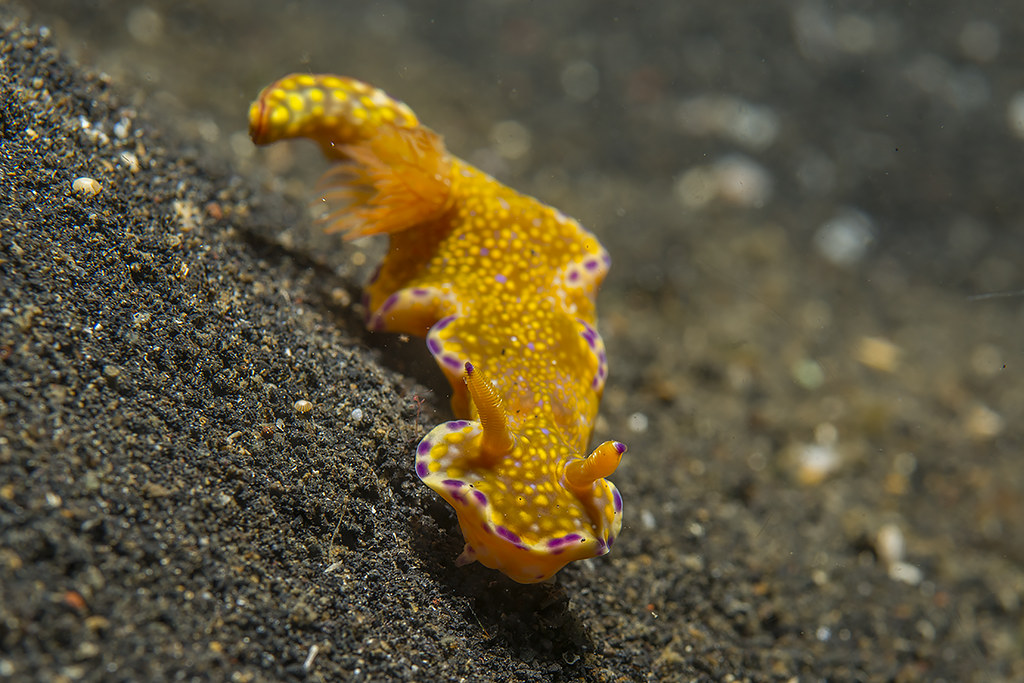
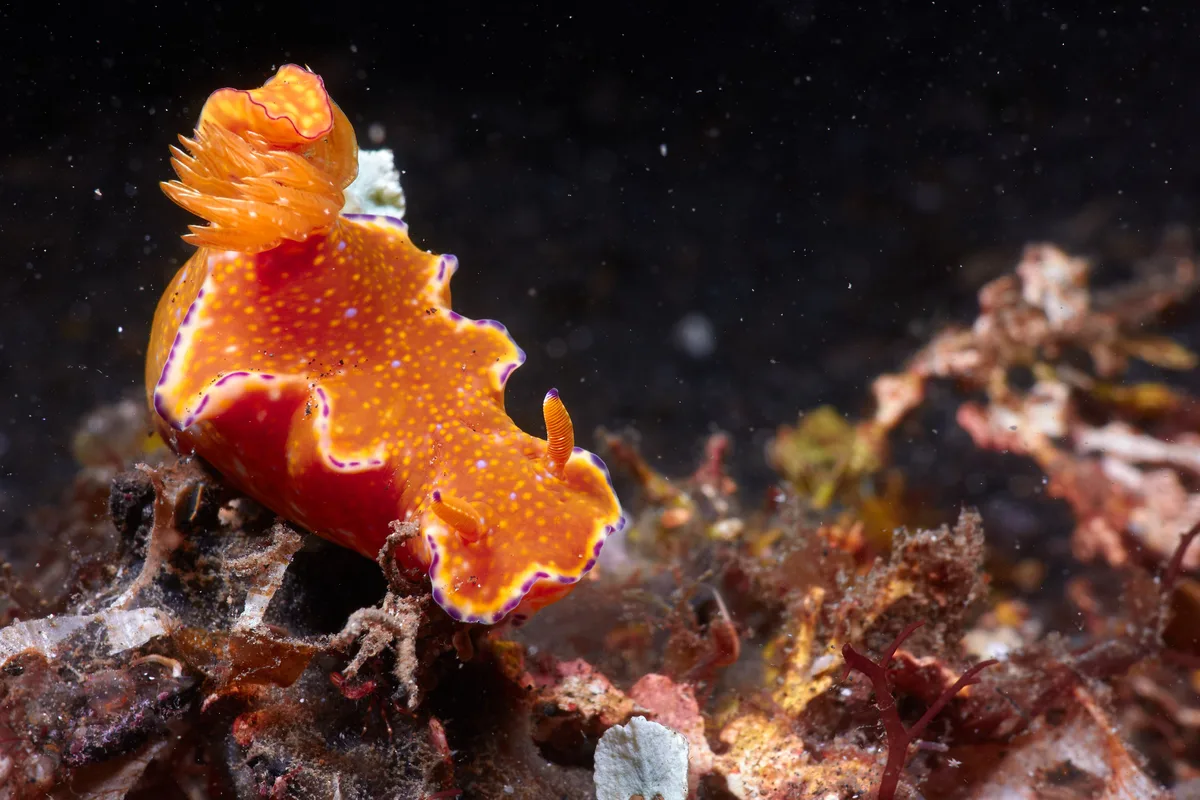
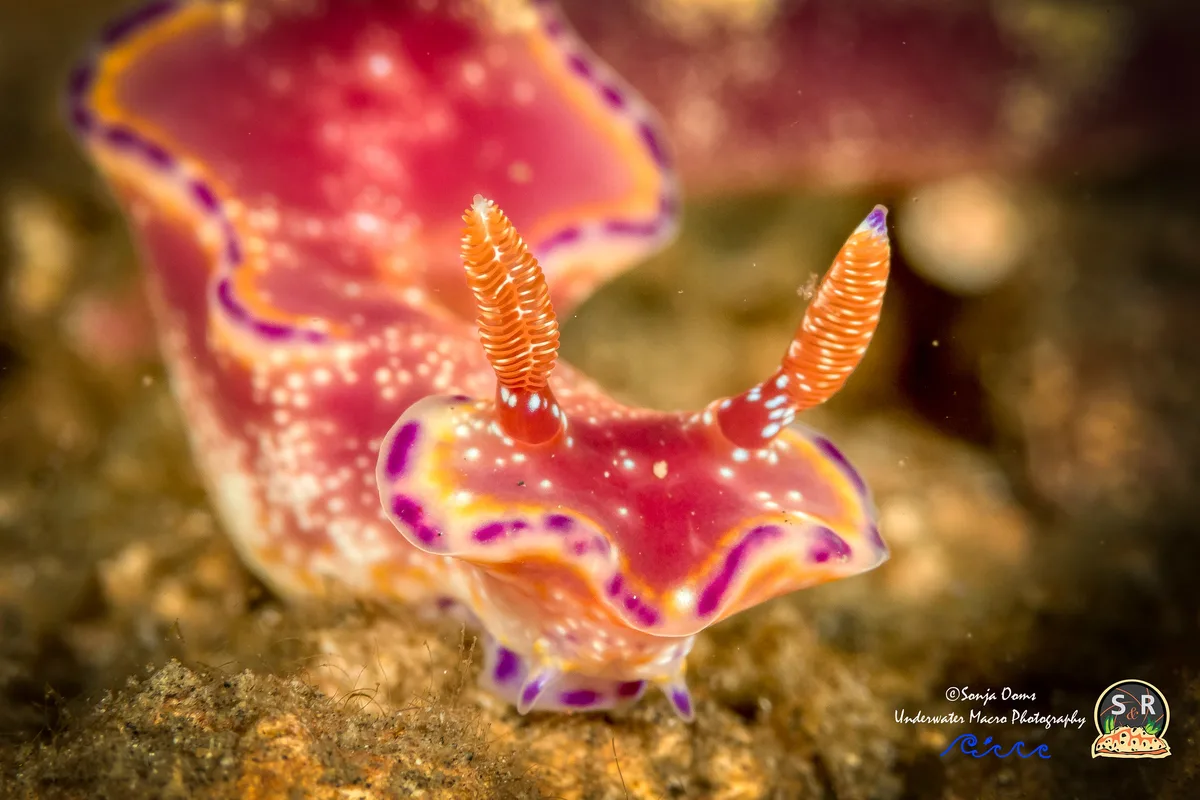
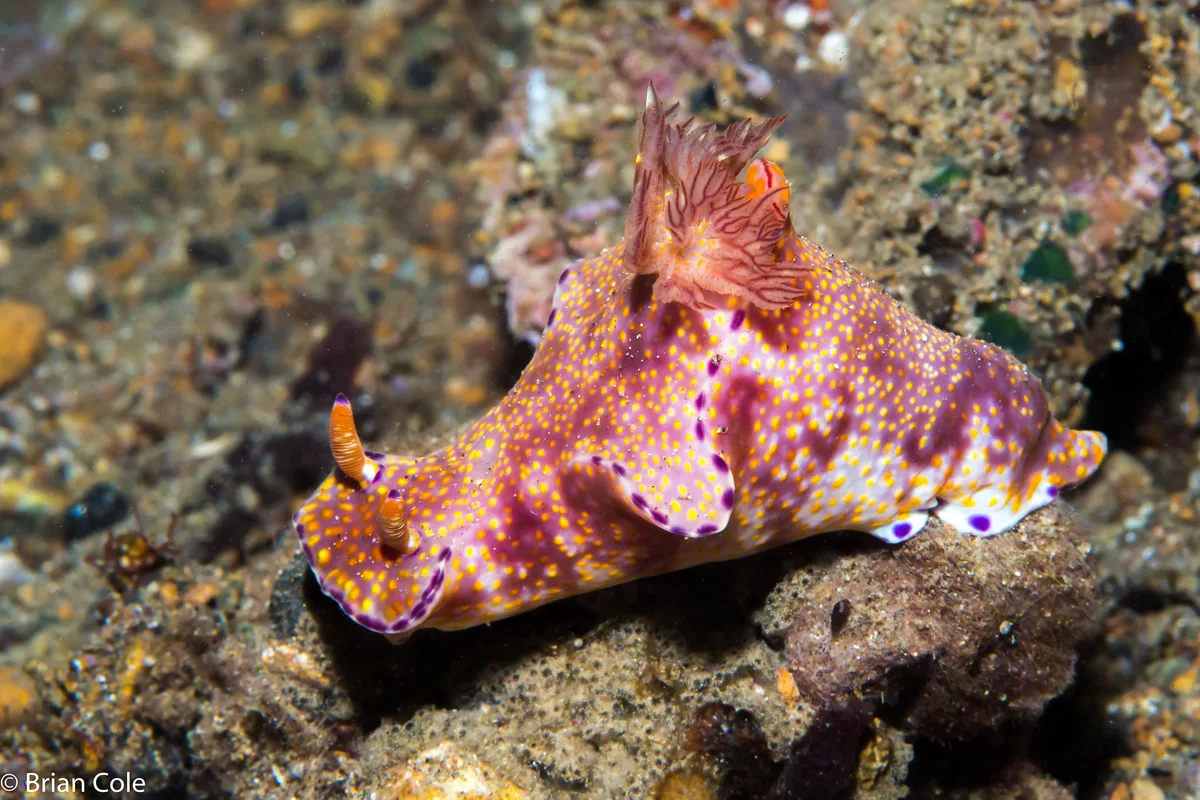
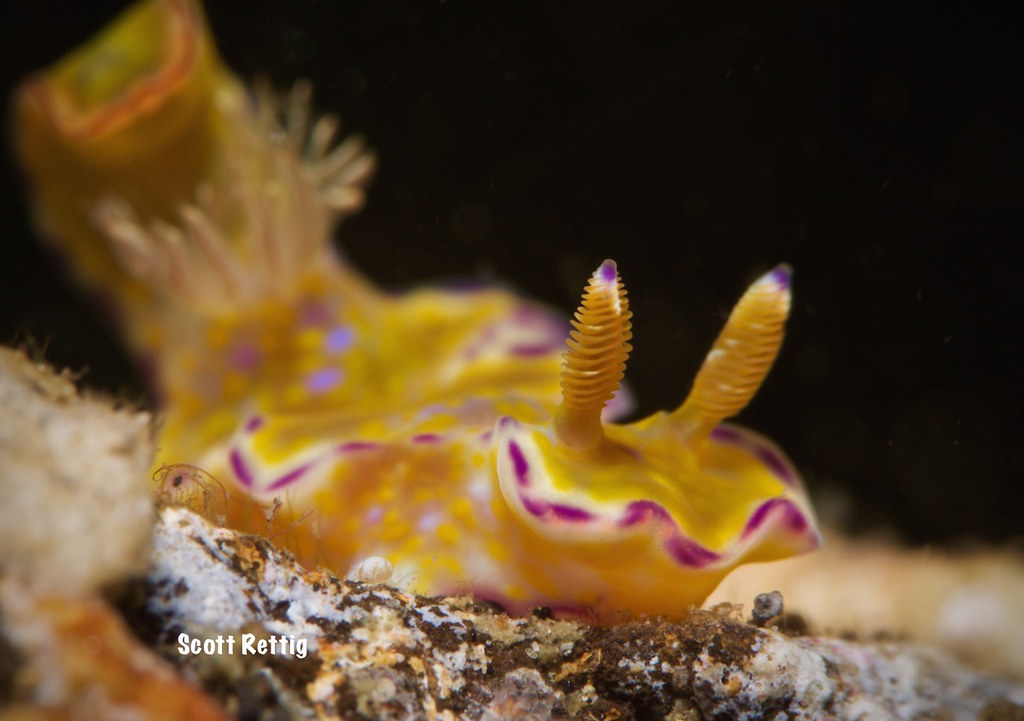
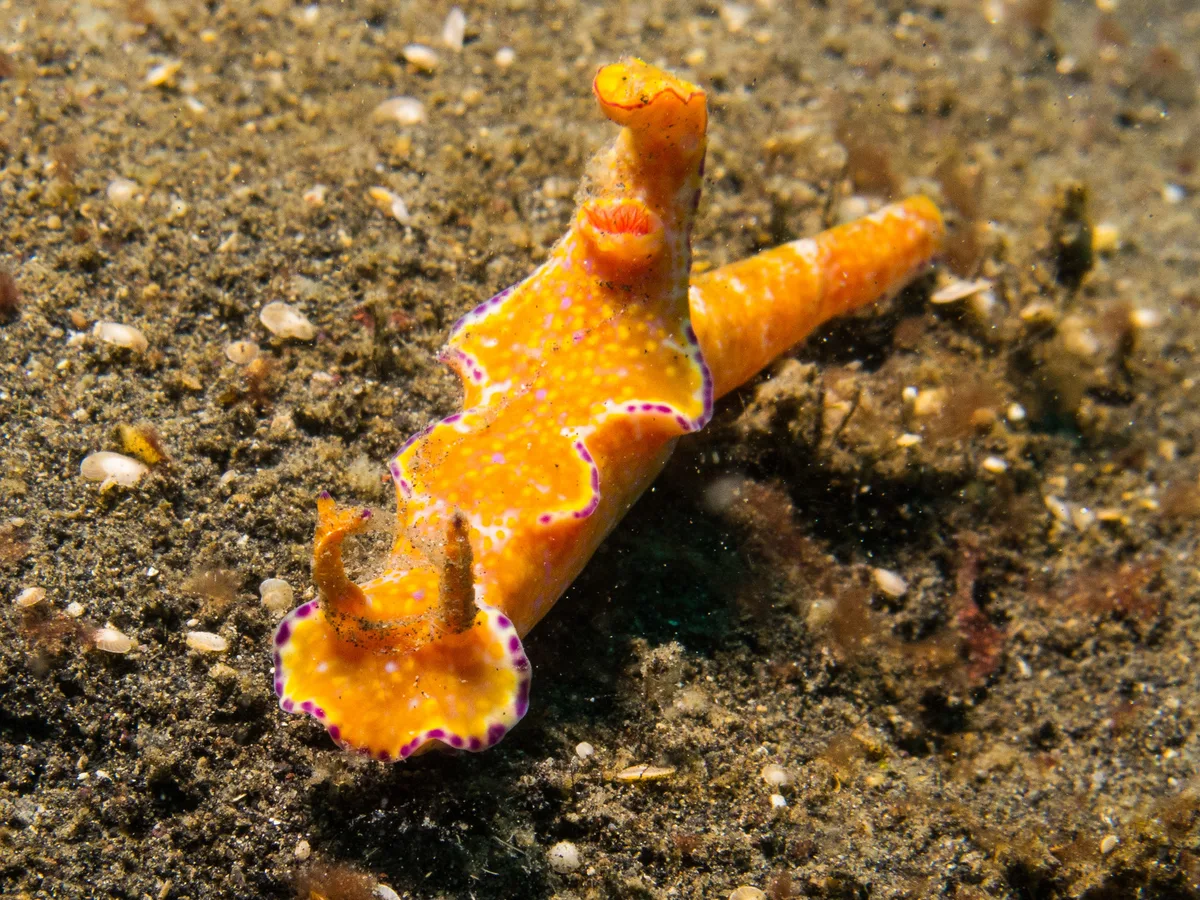
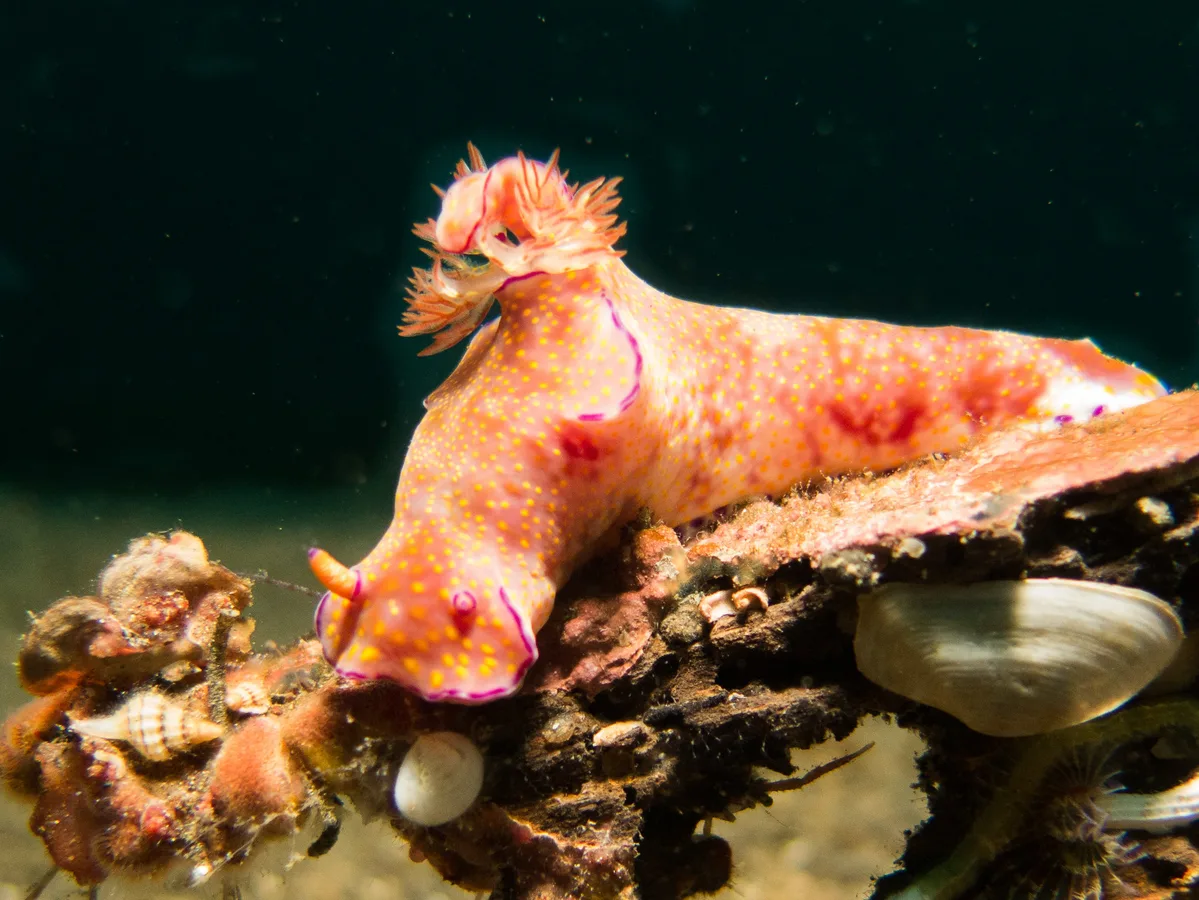
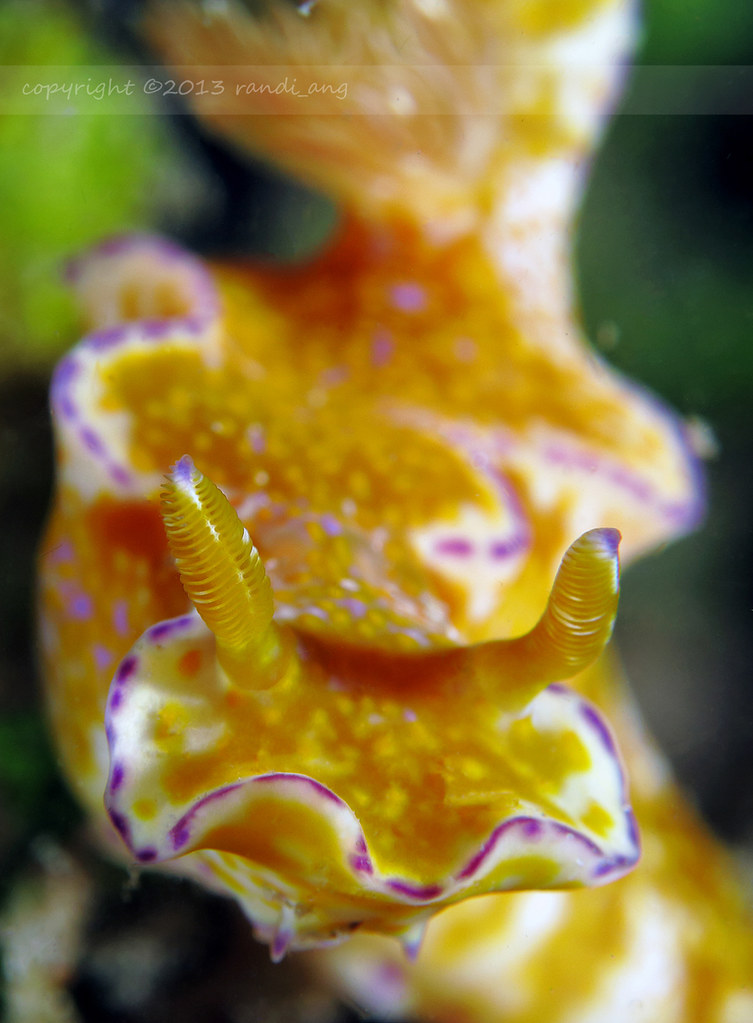
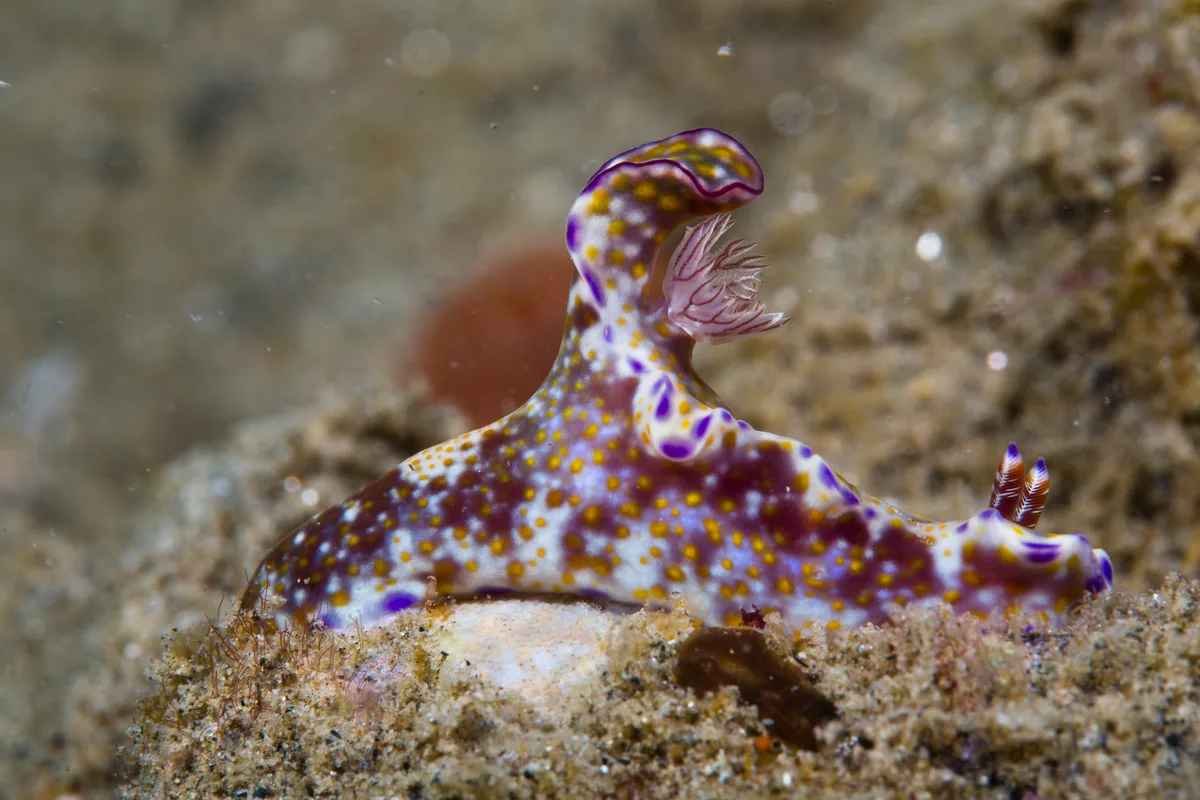
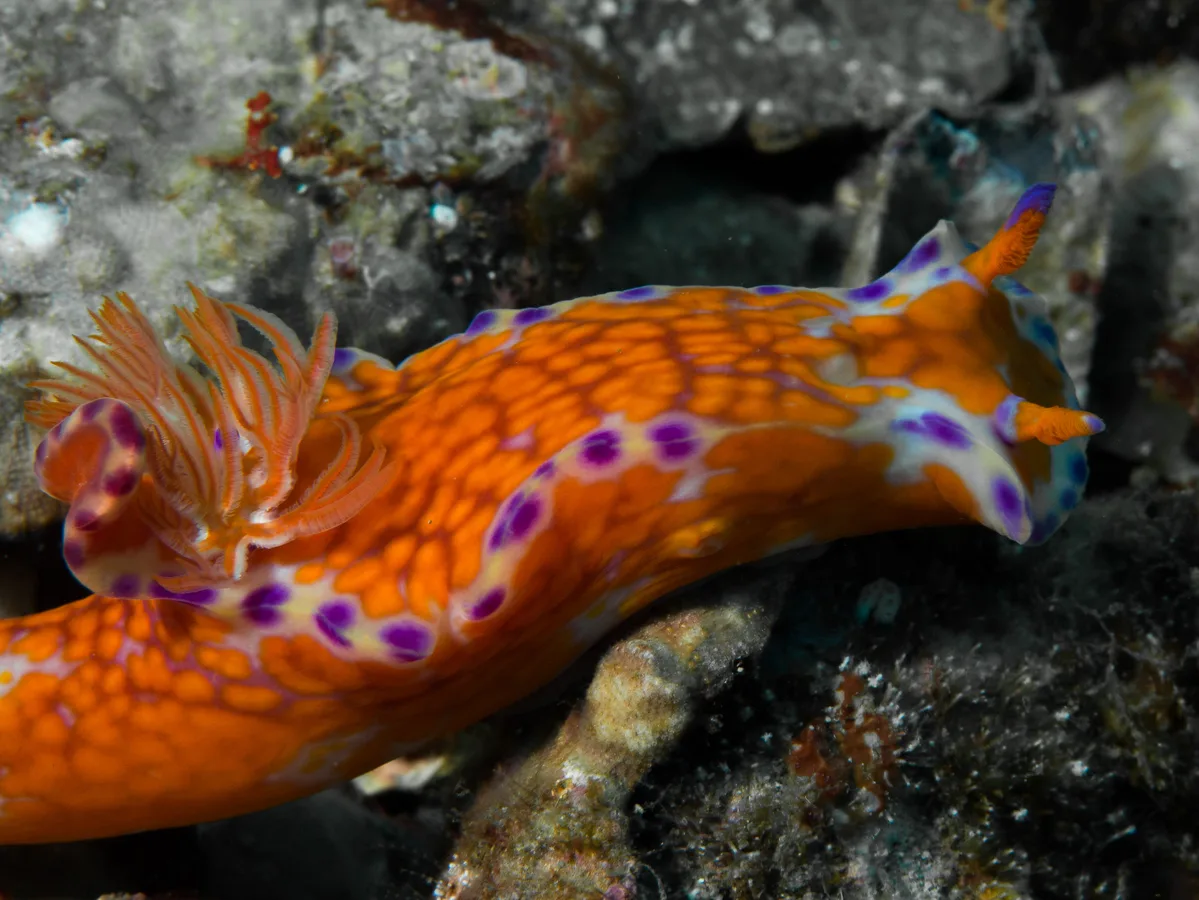
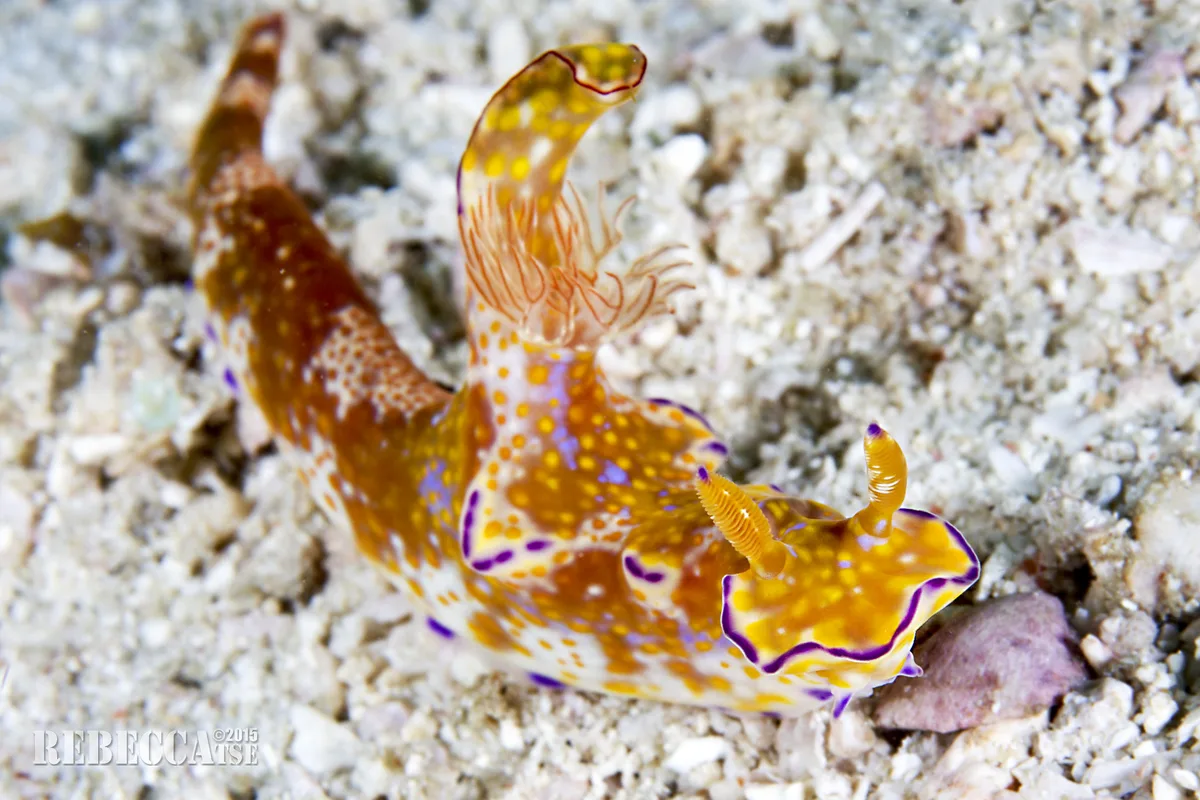
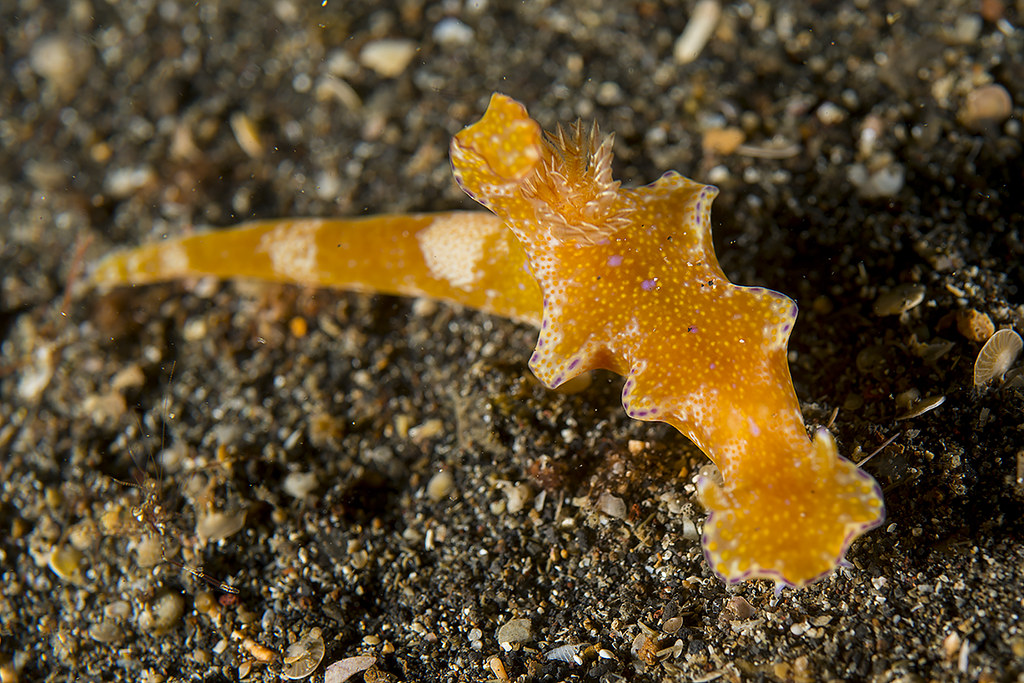
The horn is the genus, and it is one of the strangest pieces of engineering in this section.
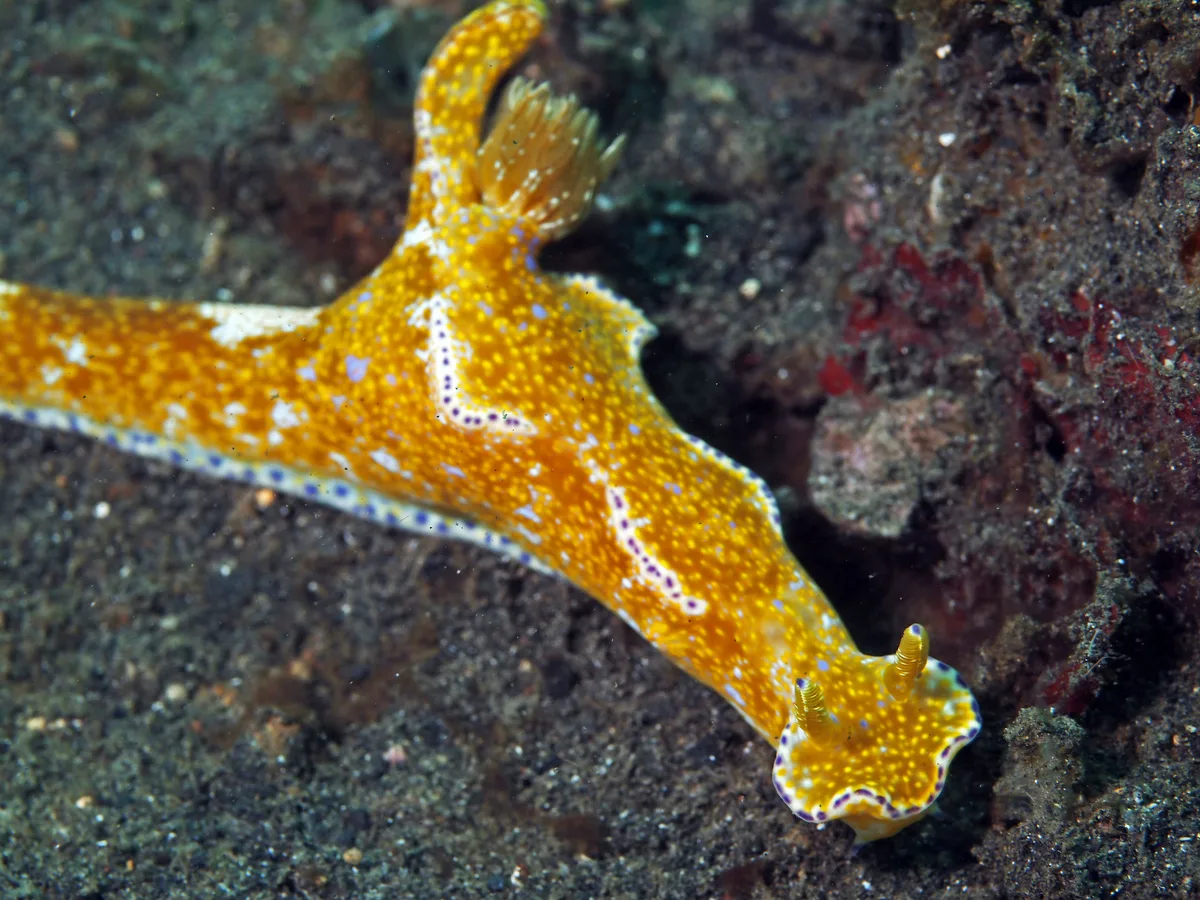
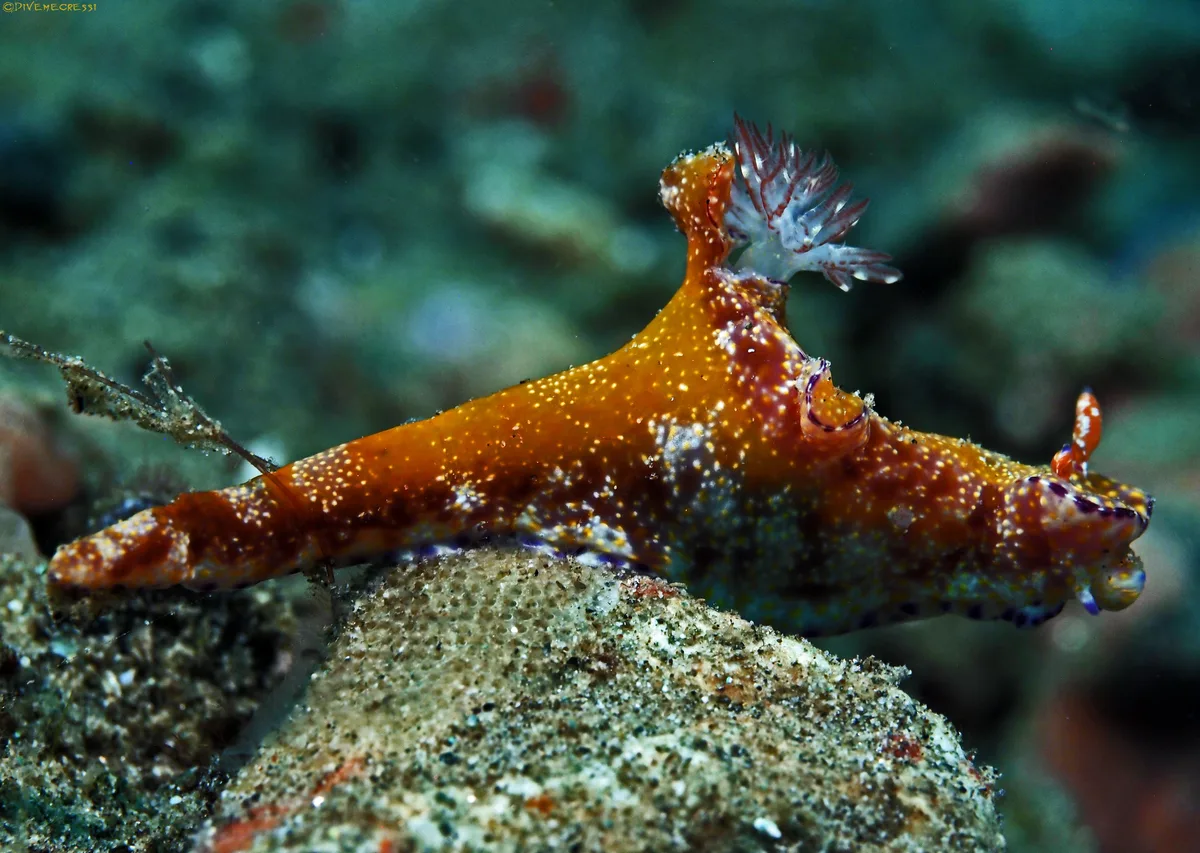
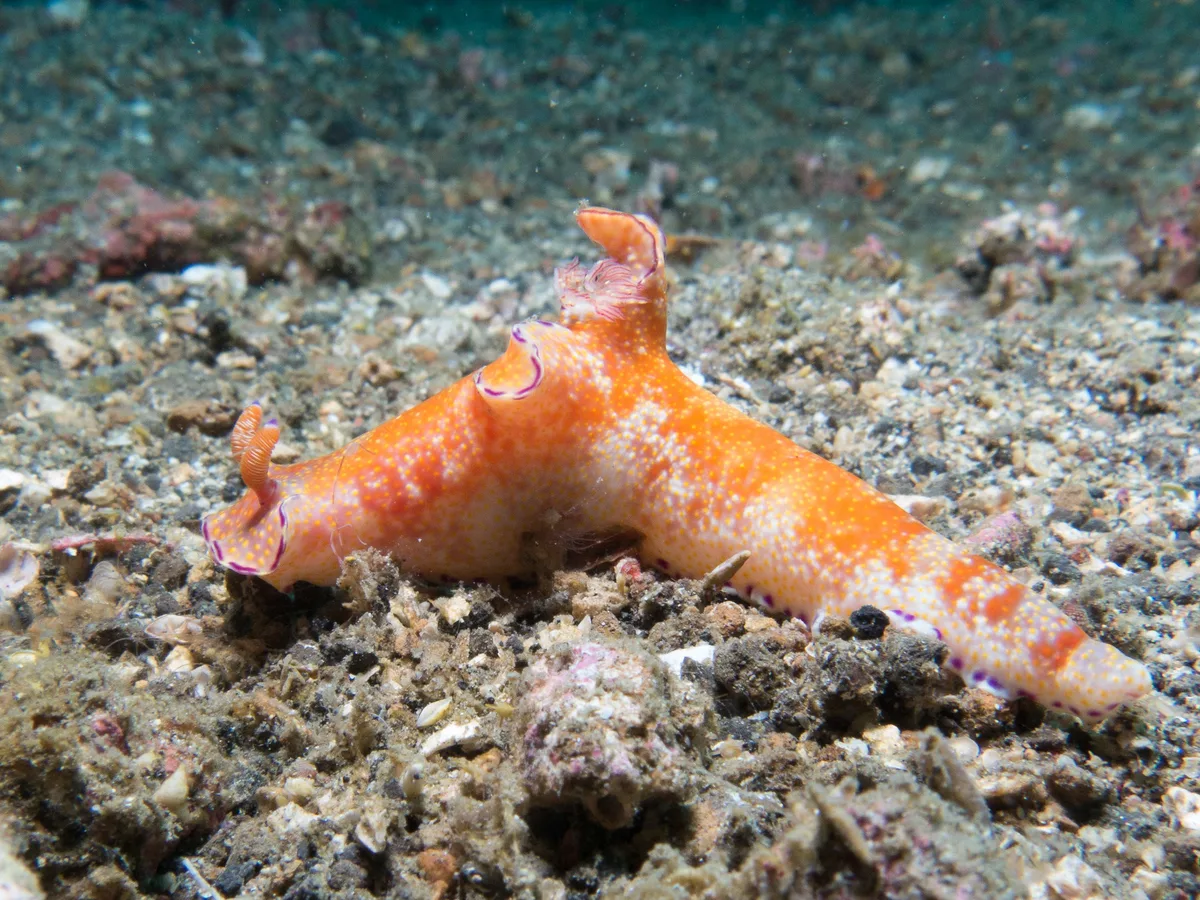
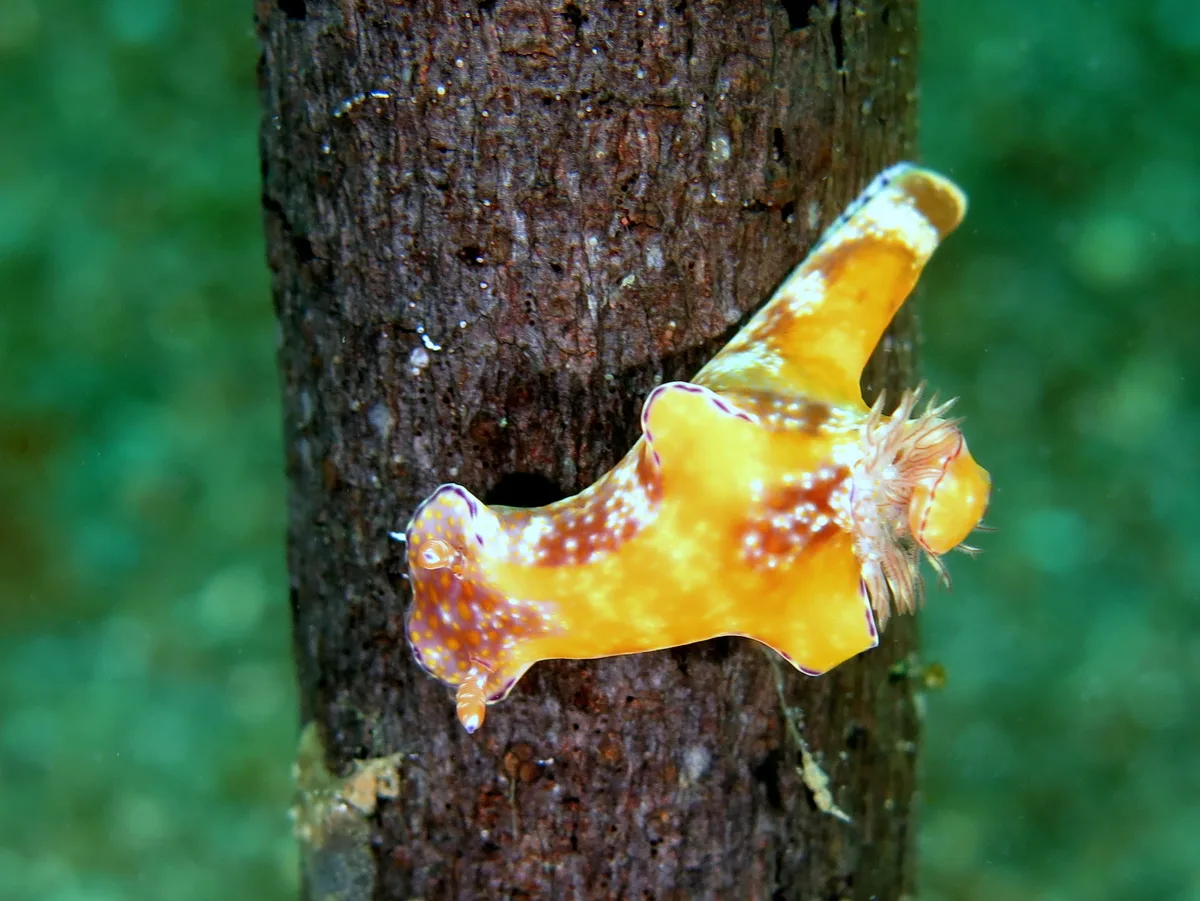
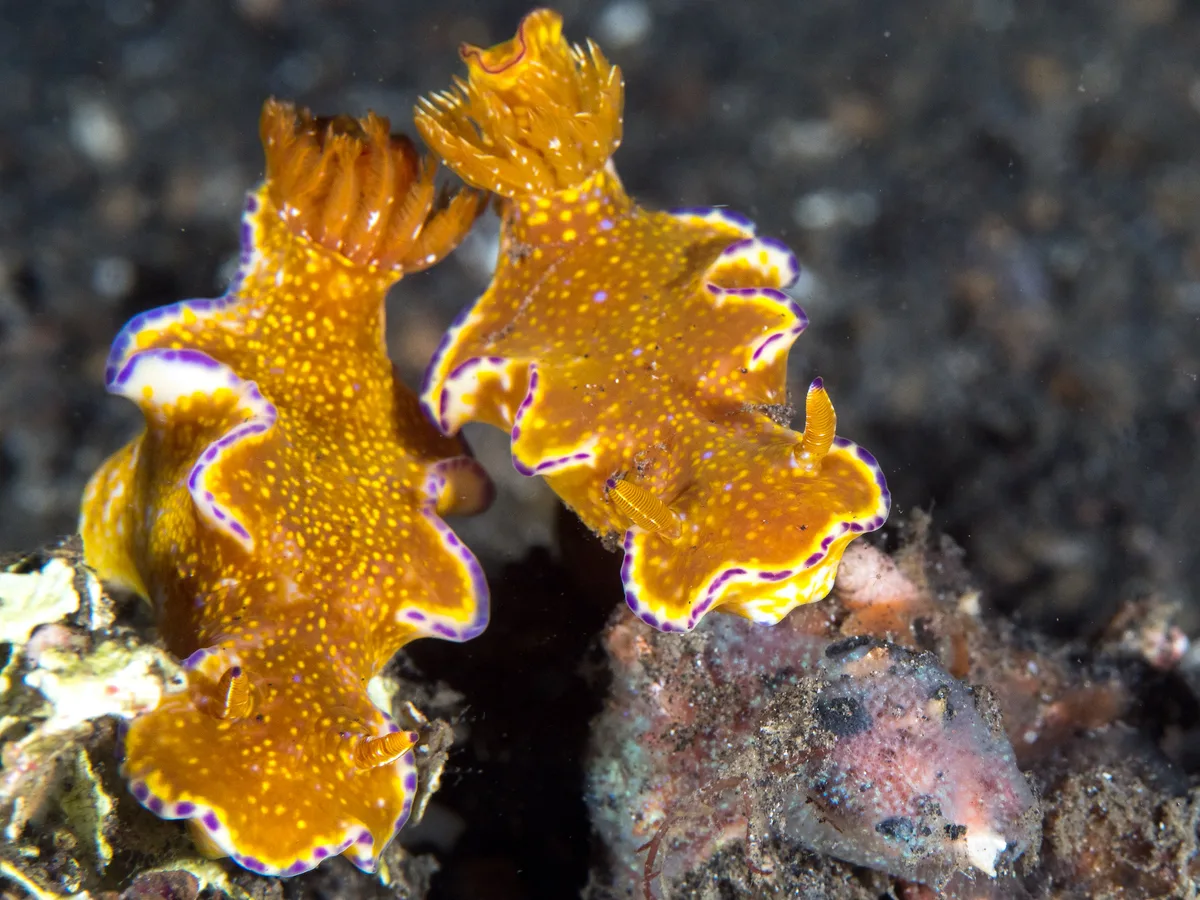
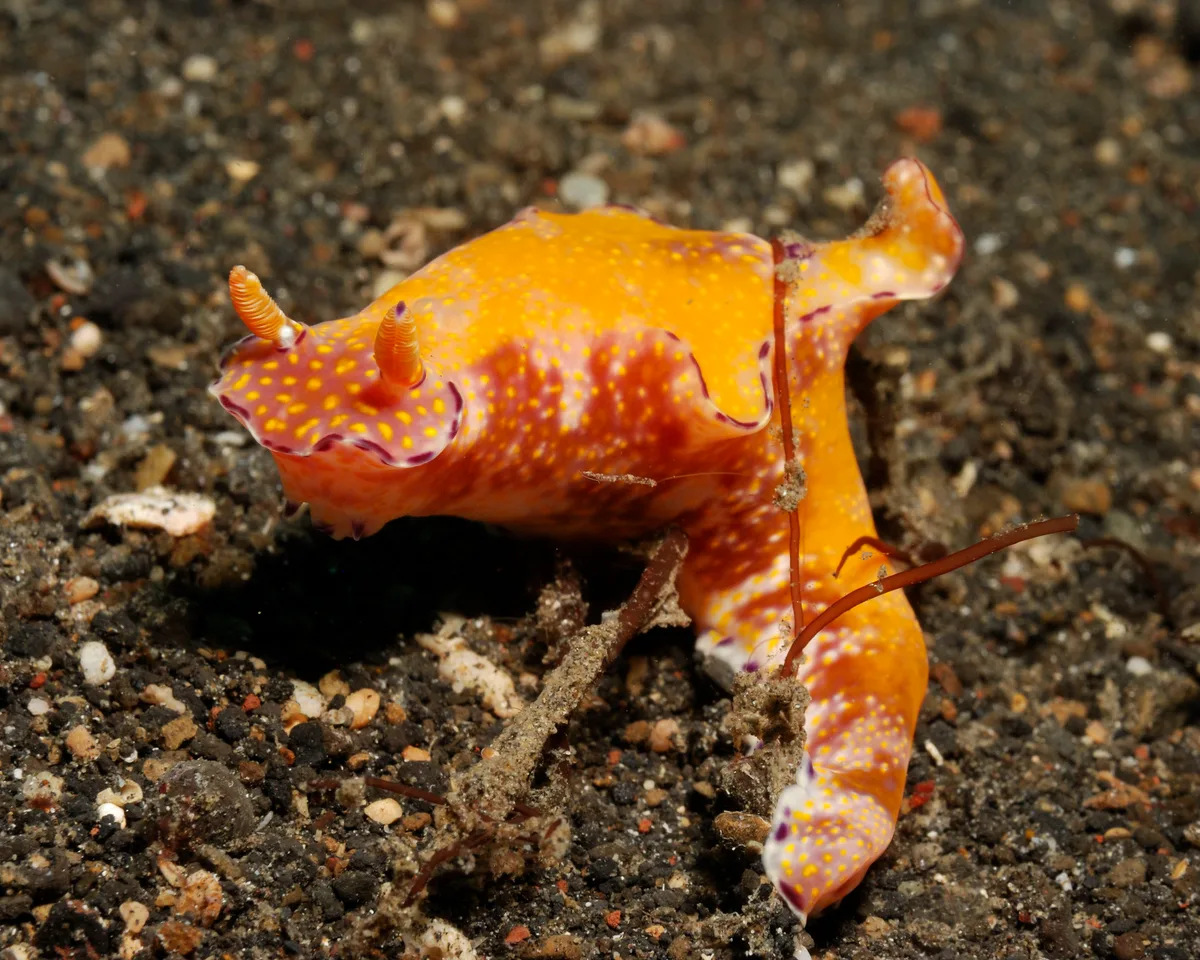
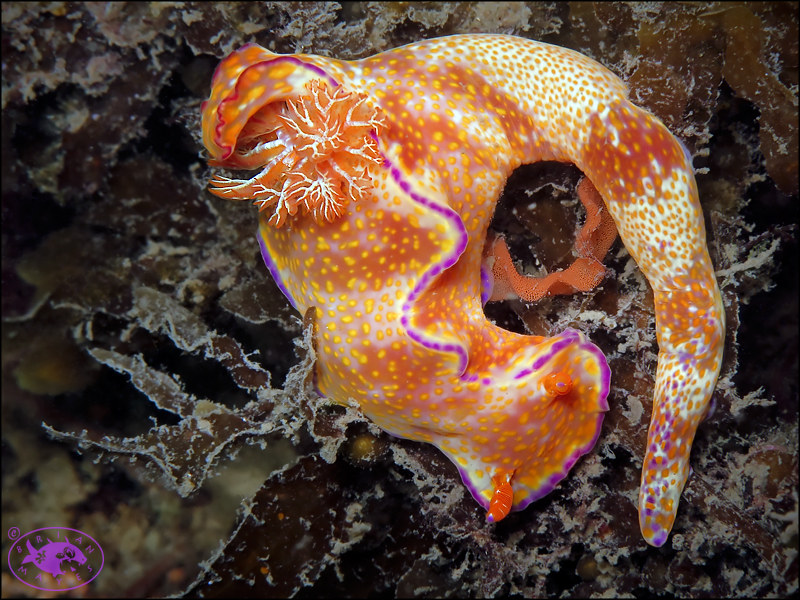
Ceratosoma carry a projection rising from the back behind the gill plume and leaning forward over it. It is not a weapon and not a sensor. The animal packs its highest concentration of stolen sponge toxins into that horn, so the most poisonous part of the body is also the part that sticks up highest and is easiest for a fish to take. A predator that grabs the obvious handle gets the worst mouthful available and lets go, and the slug keeps its gills. It is a decoy that works by being genuinely the worst thing to bite.
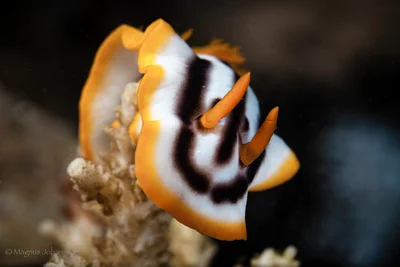
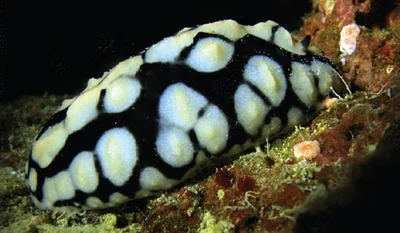
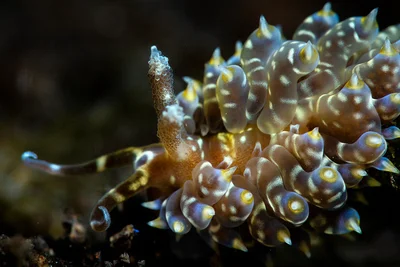
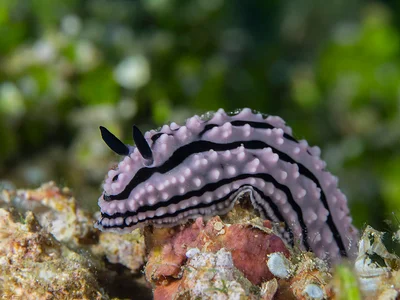
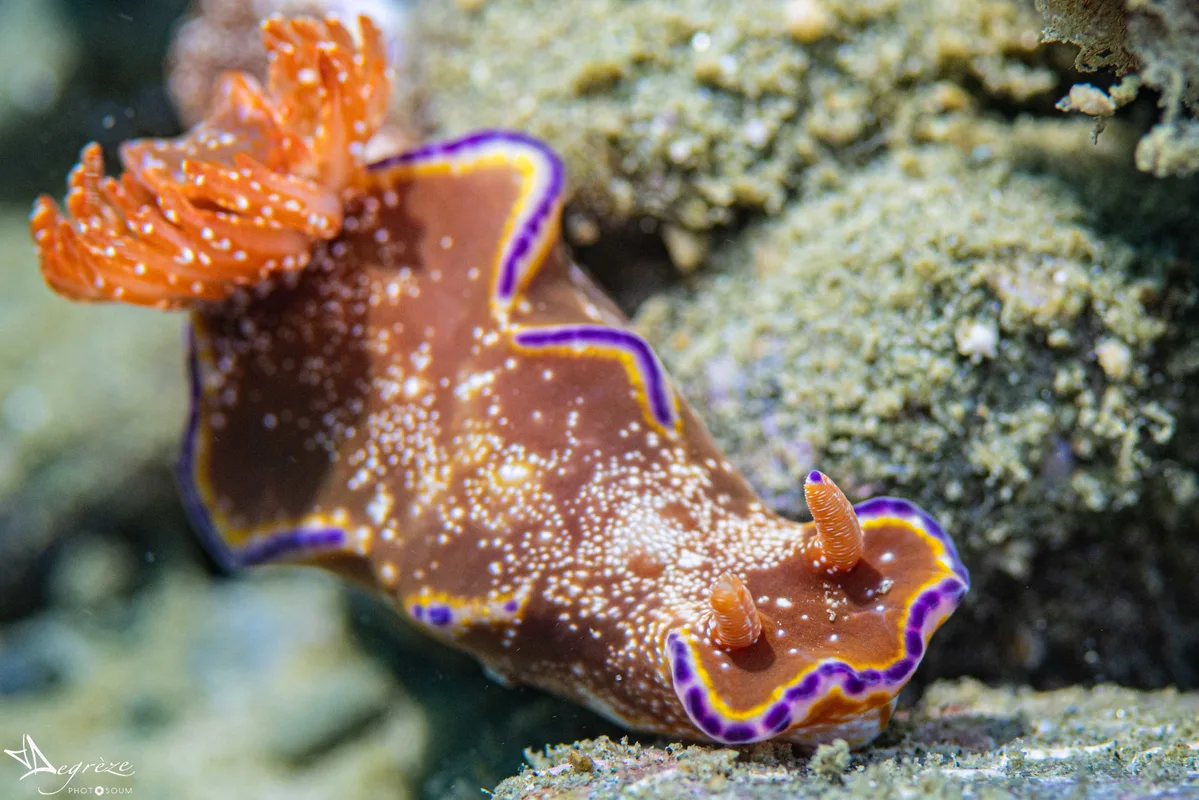
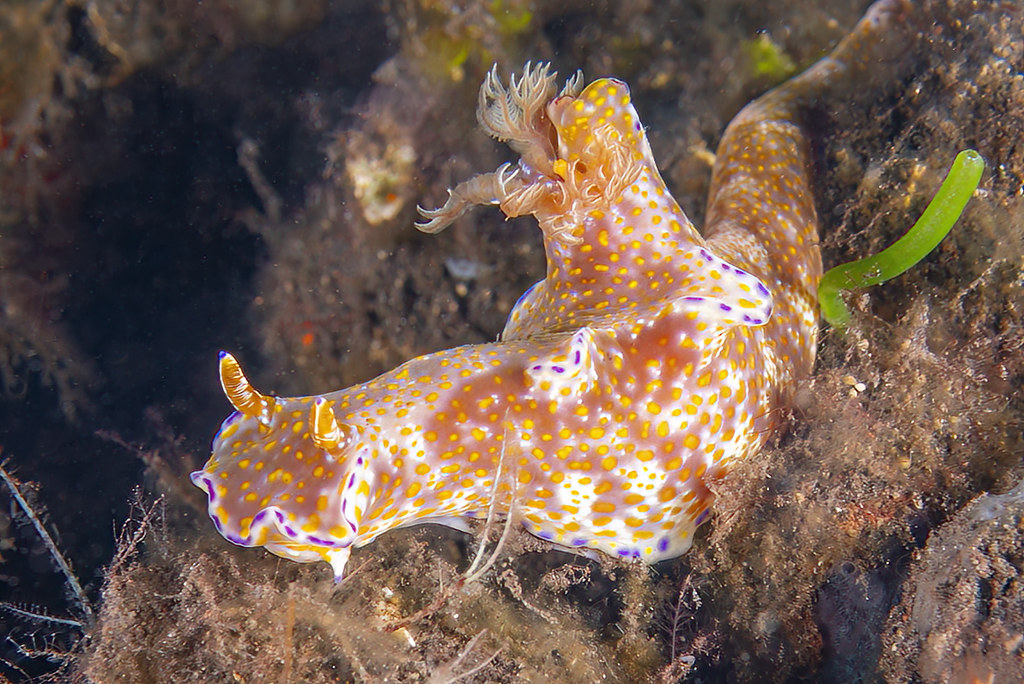
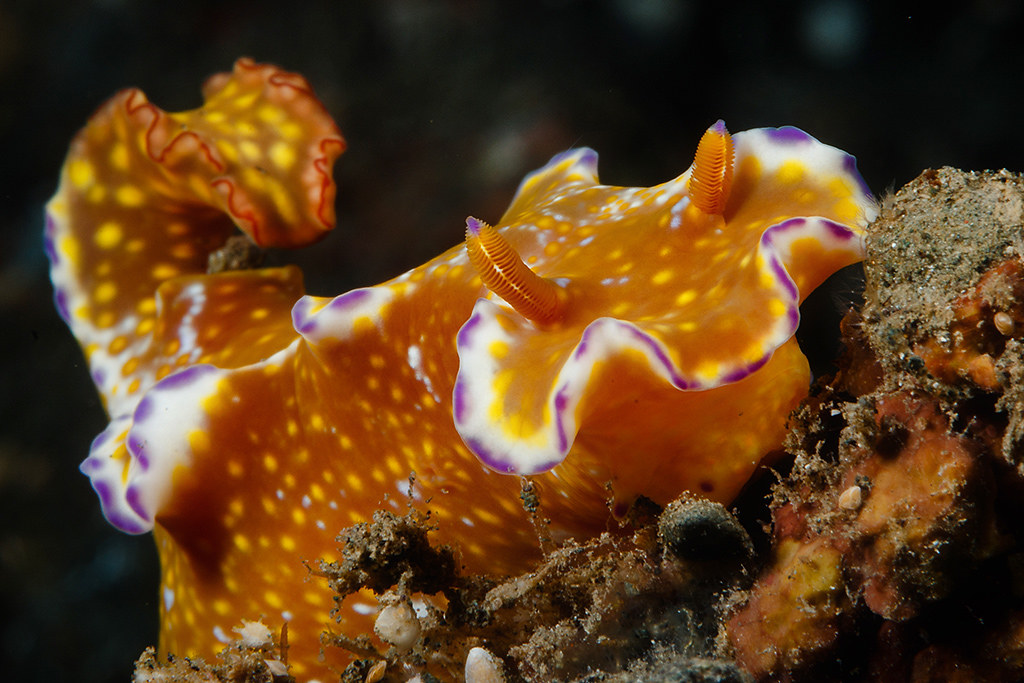
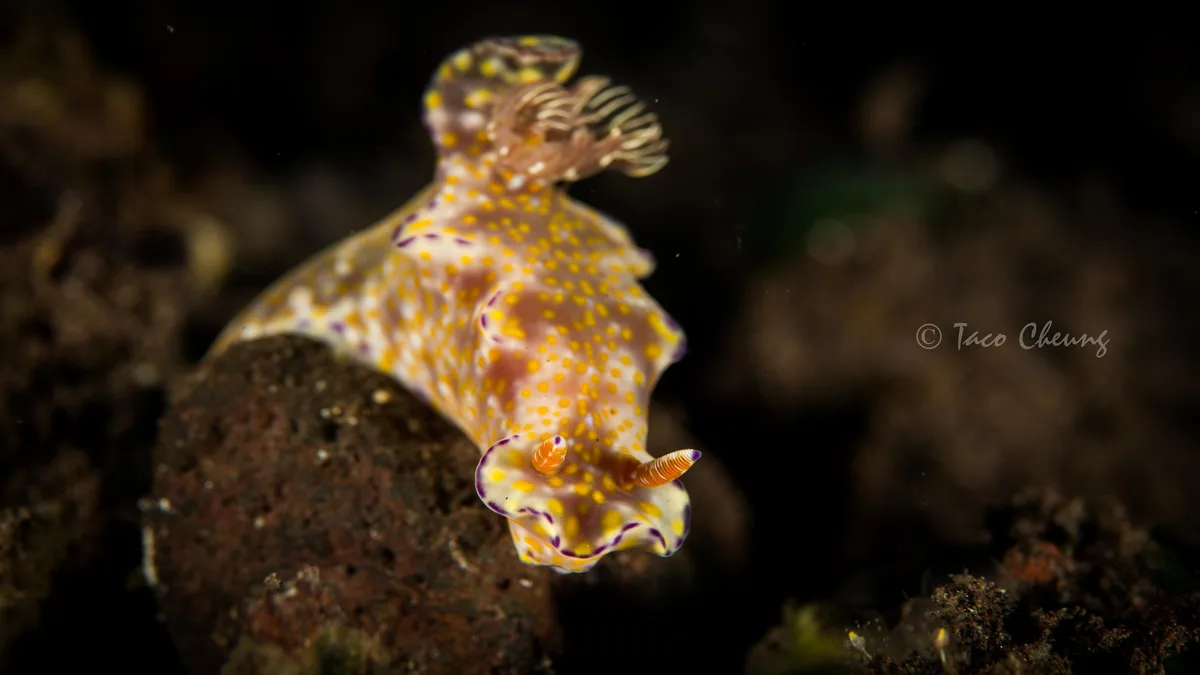
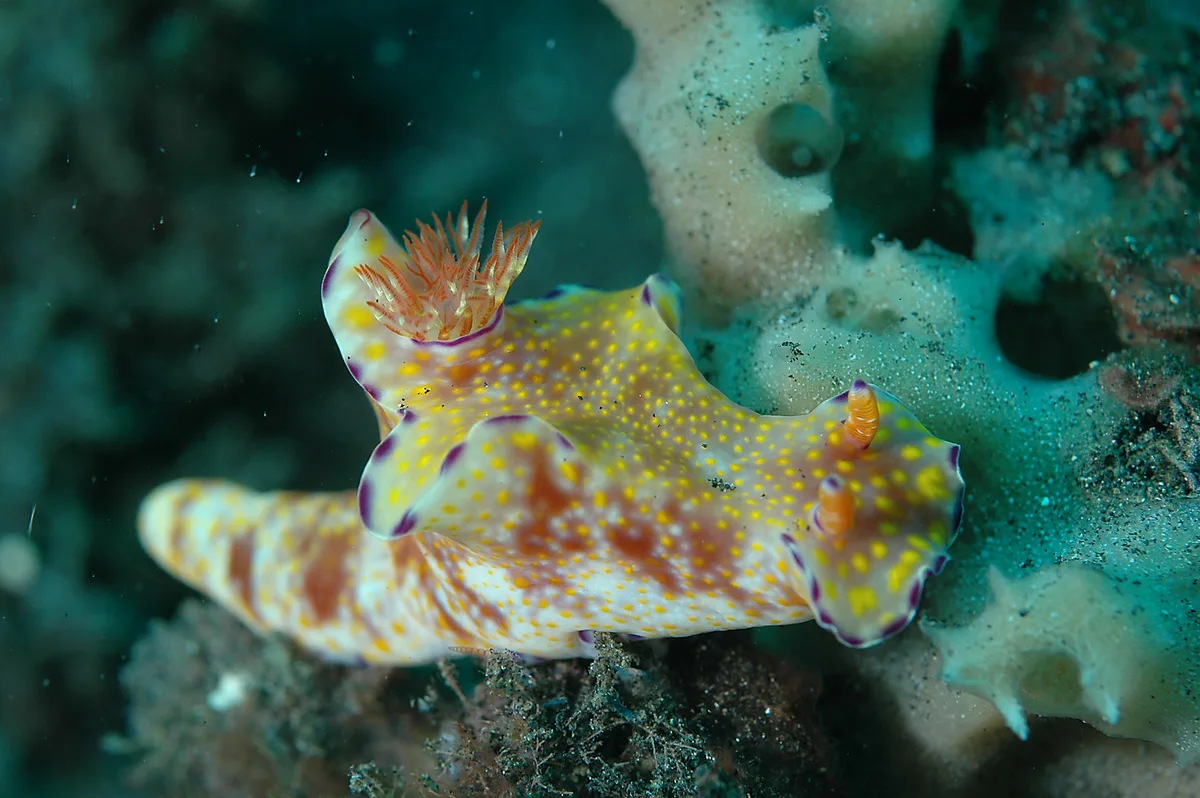
This species is the big one. Twelve centimeters (4.7 in) makes it one of the largest nudibranchs on the reef, with the mantle drawn out into a series of lobes down both sides, and the whole animal is variable in color: orange, pink, brown, sometimes several of them on one individual.
So the color will not identify it, and the mark that does is the line around the mantle edge. It is blue, and it is interrupted, running as a series of separate dashes rather than as one continuous stroke. Its large relative on this reef carries a different arrangement, and the segmented blue line is the fastest way to separate them in a photograph.
Like the rest of the chromodorids it grazes sponges and keeps their chemistry rather than digesting it, which is where the horn gets its contents. It crawls in the open in daylight, unhurried, at a size that makes no attempt at hiding.
- blue marginal line broken into segments rather than running continuously
- a horn rising from the back behind the gills, leaning over them
- mantle drawn out into lobes down both sides
- color variable, from orange through pink to brown