Almost every defended sea slug on this reef is carrying somebody else's chemistry. They eat sponges, they hold on to the compounds the sponge made, and the poison in the slug is a poison with a supplier. This genus is one of the exceptions: its defensive compounds are built by the animal itself, from scratch, and they have been traced in the mantle and in the egg masses of species that had no chance to collect them from a meal.
That independence fits the rest of how it lives. Dendrodoris has no rasping ribbon of teeth at all, so it cannot be tied to a food it has to scrape; it presses its mouth to a sponge, releases digestive fluid, and drinks the tissue back up already dissolved. No teeth, no borrowed poison, and a soft body with nothing hard in it anywhere.
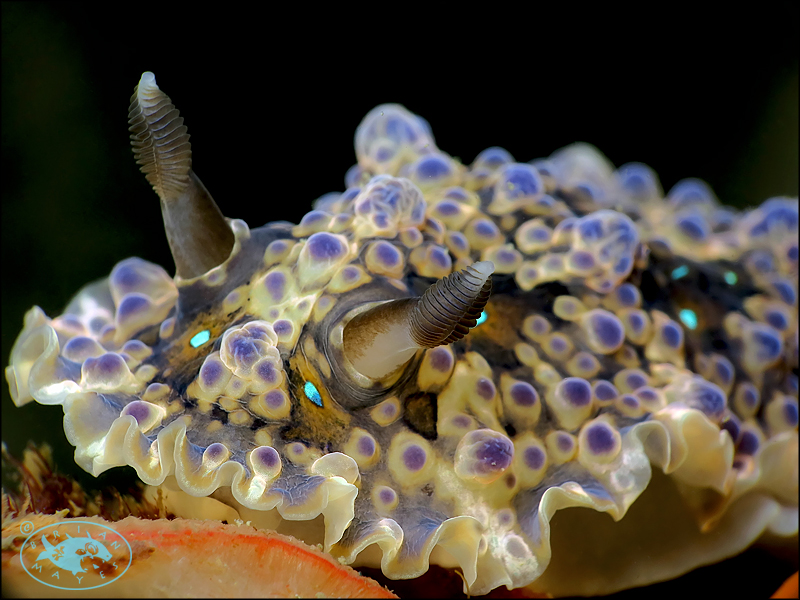
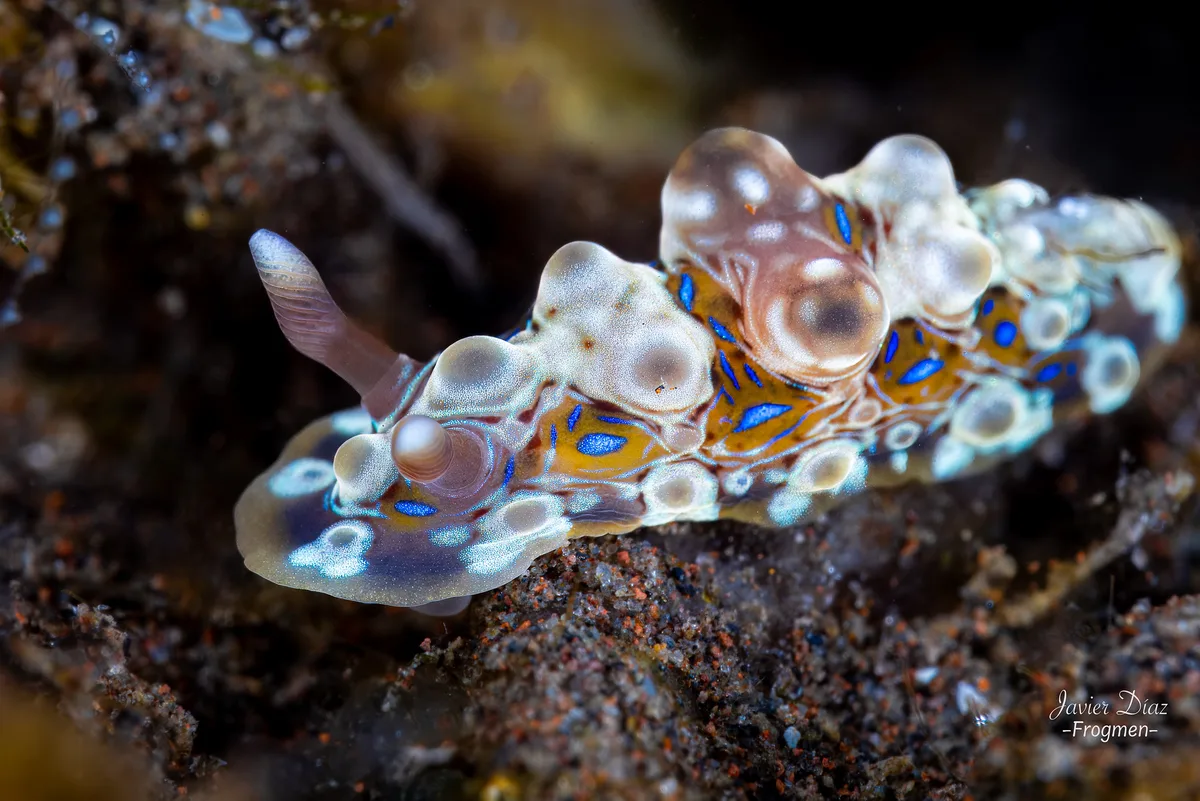
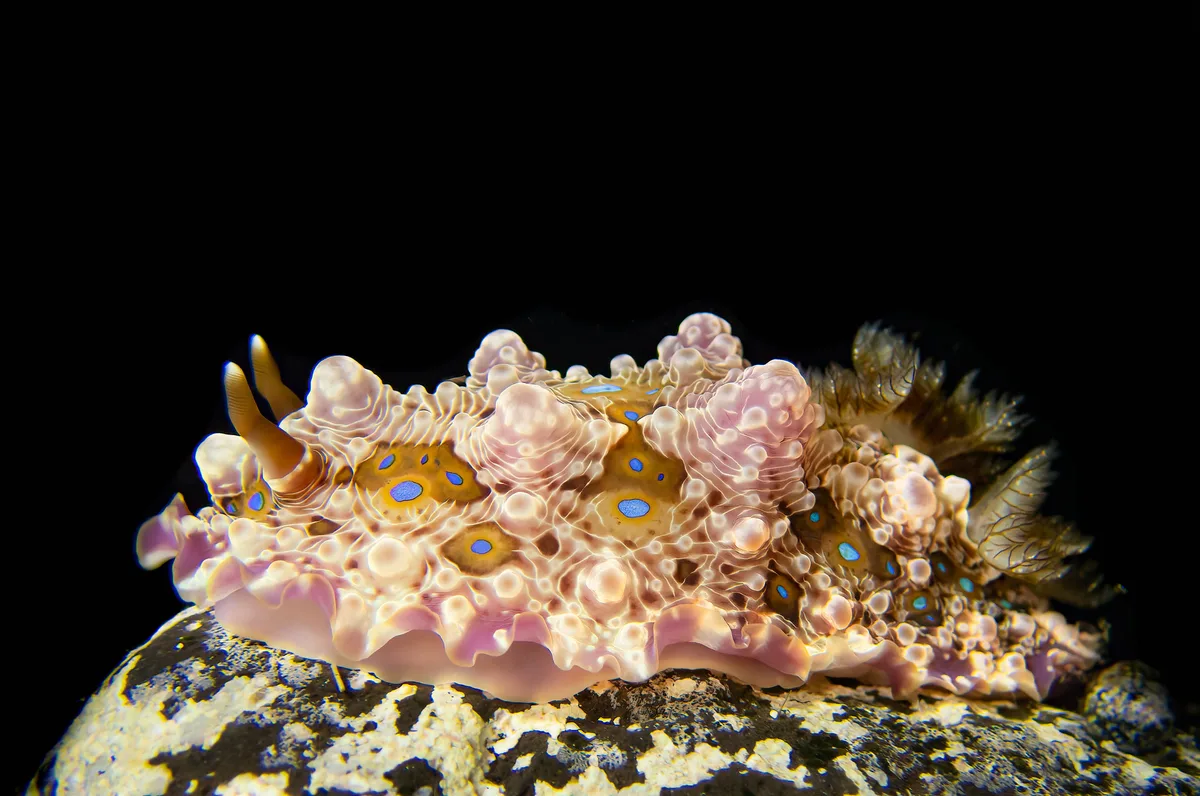
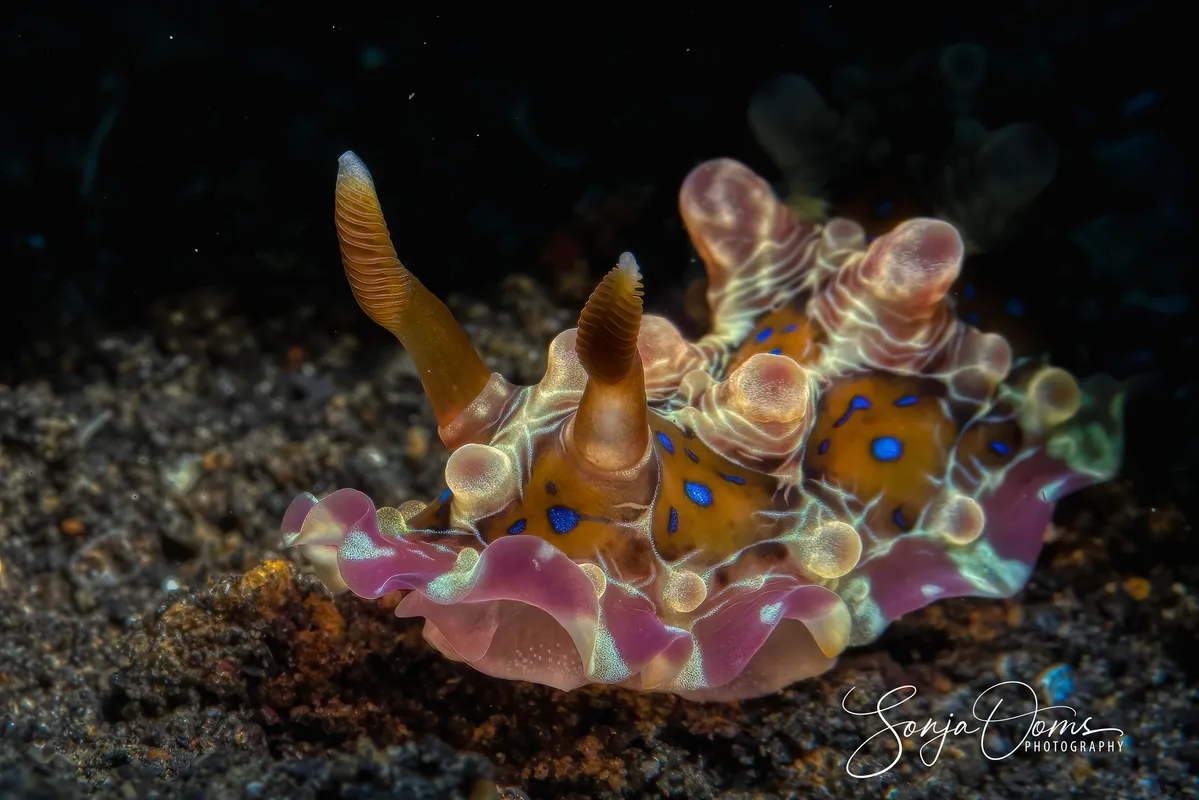
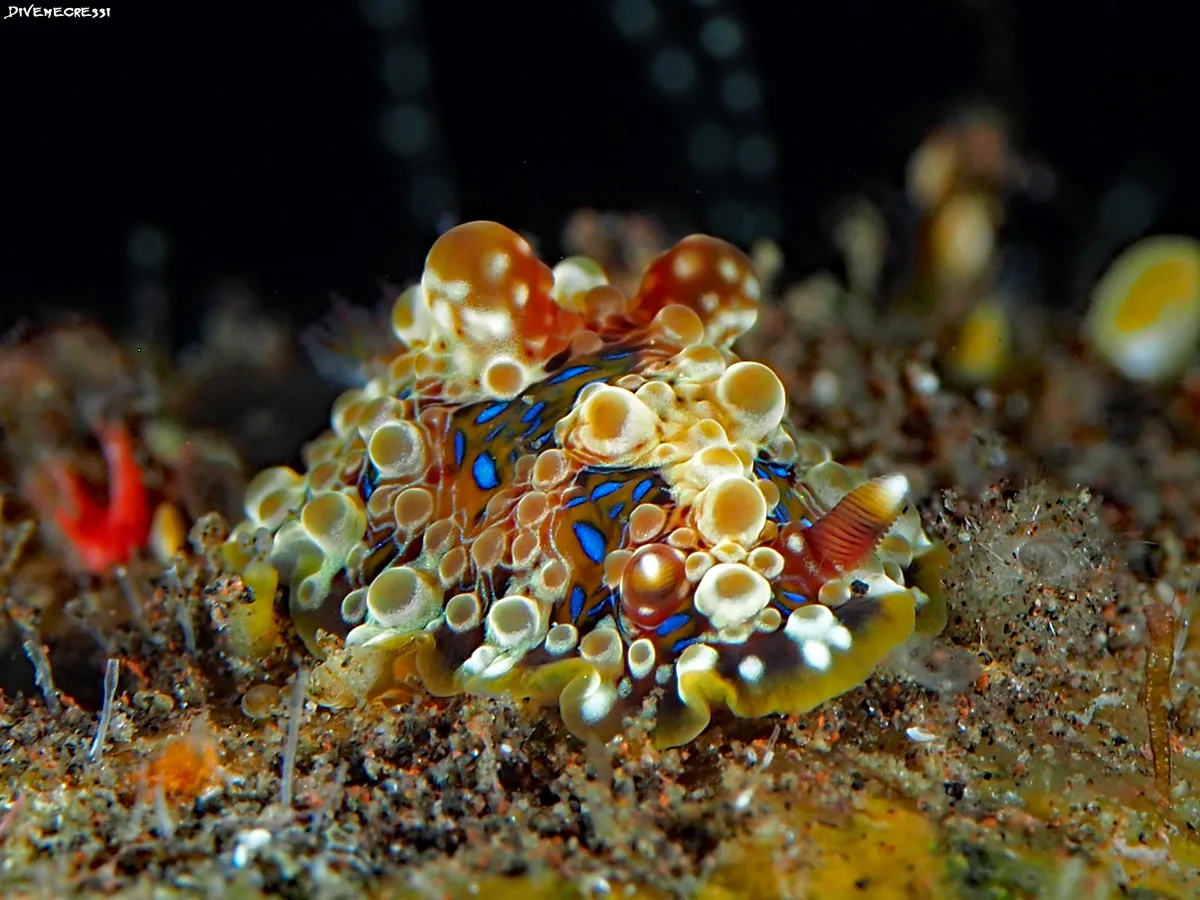
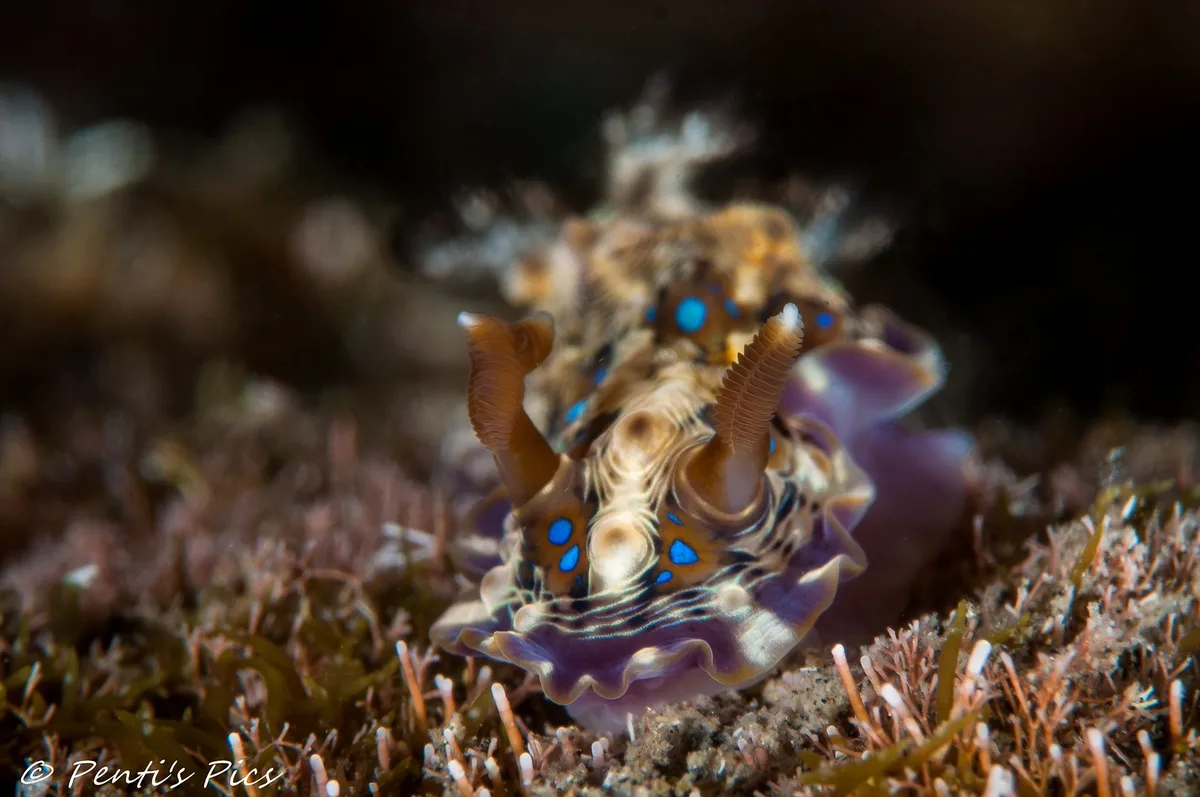
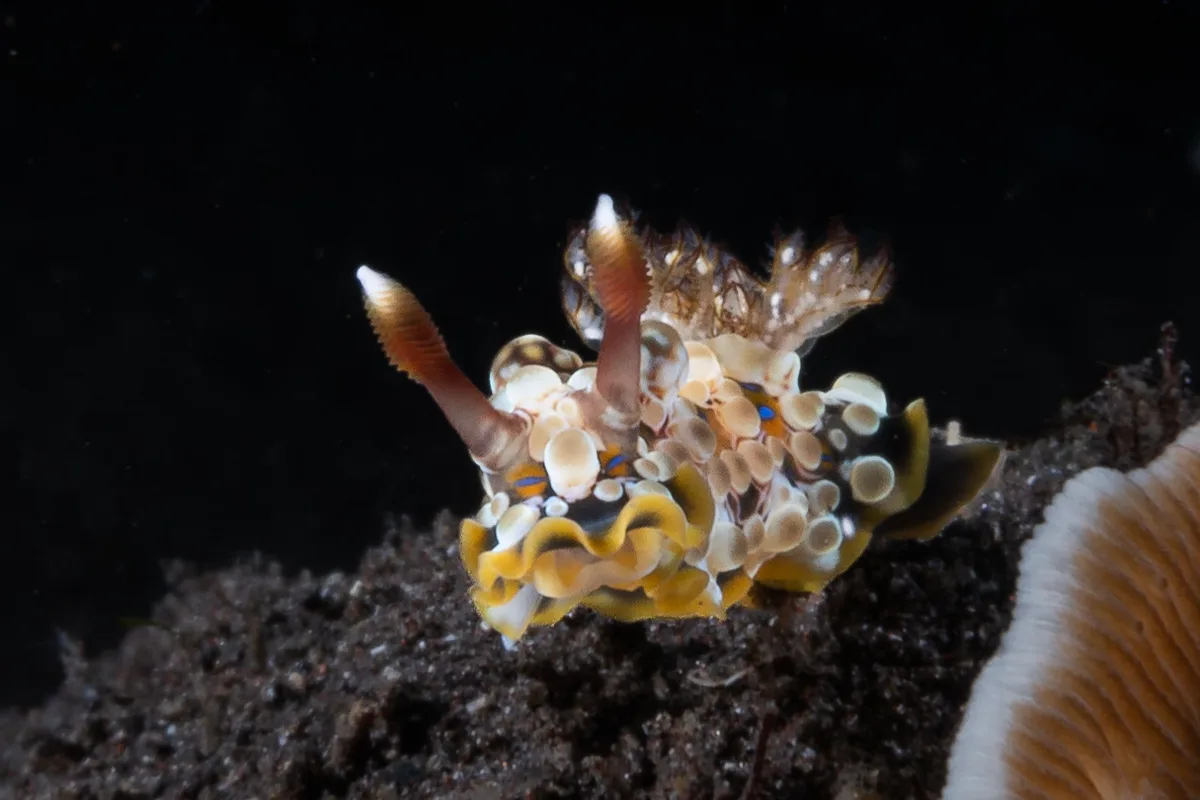
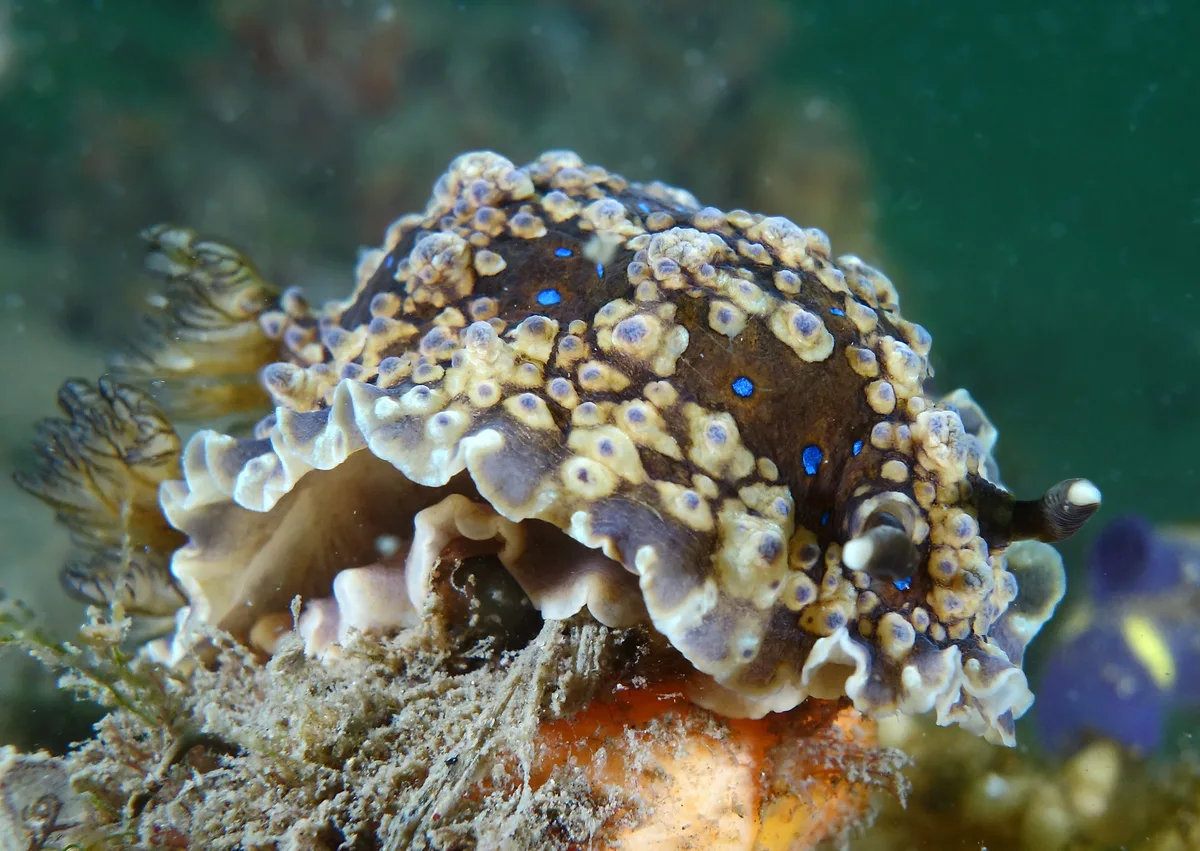
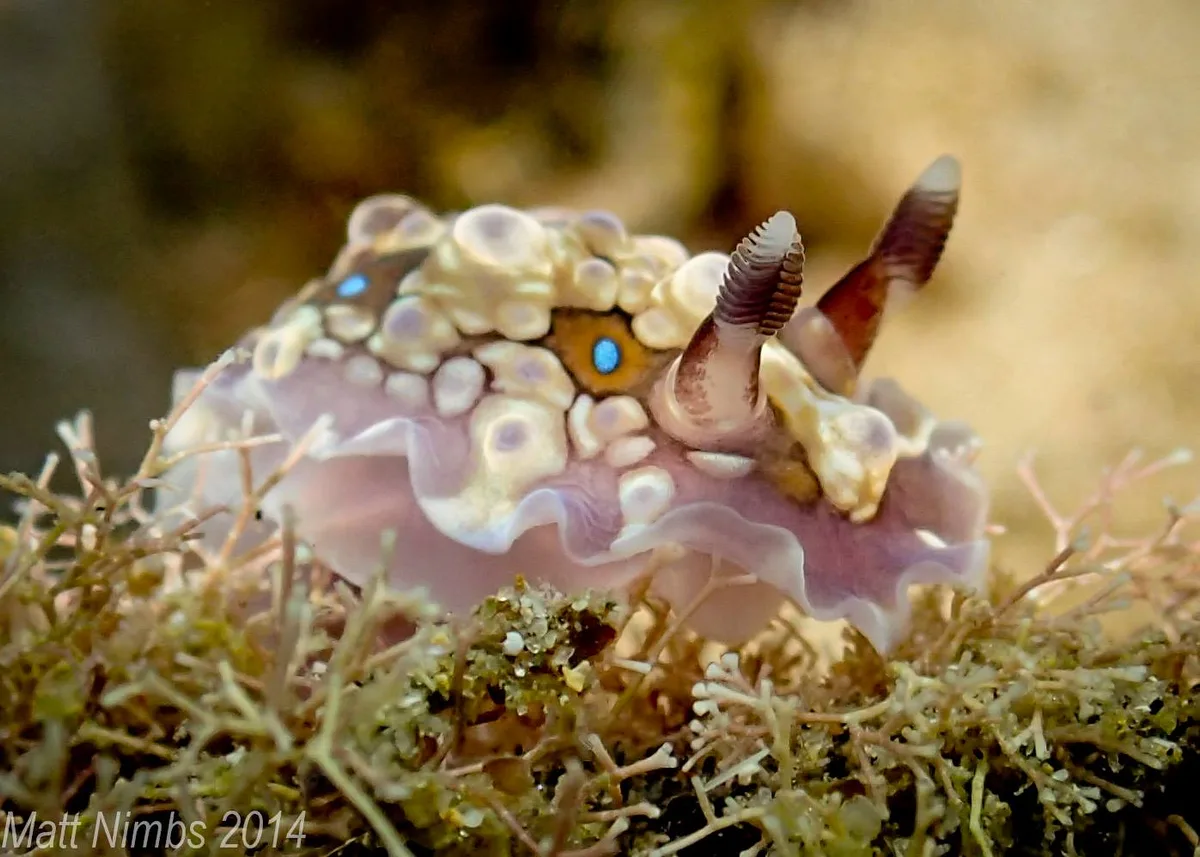
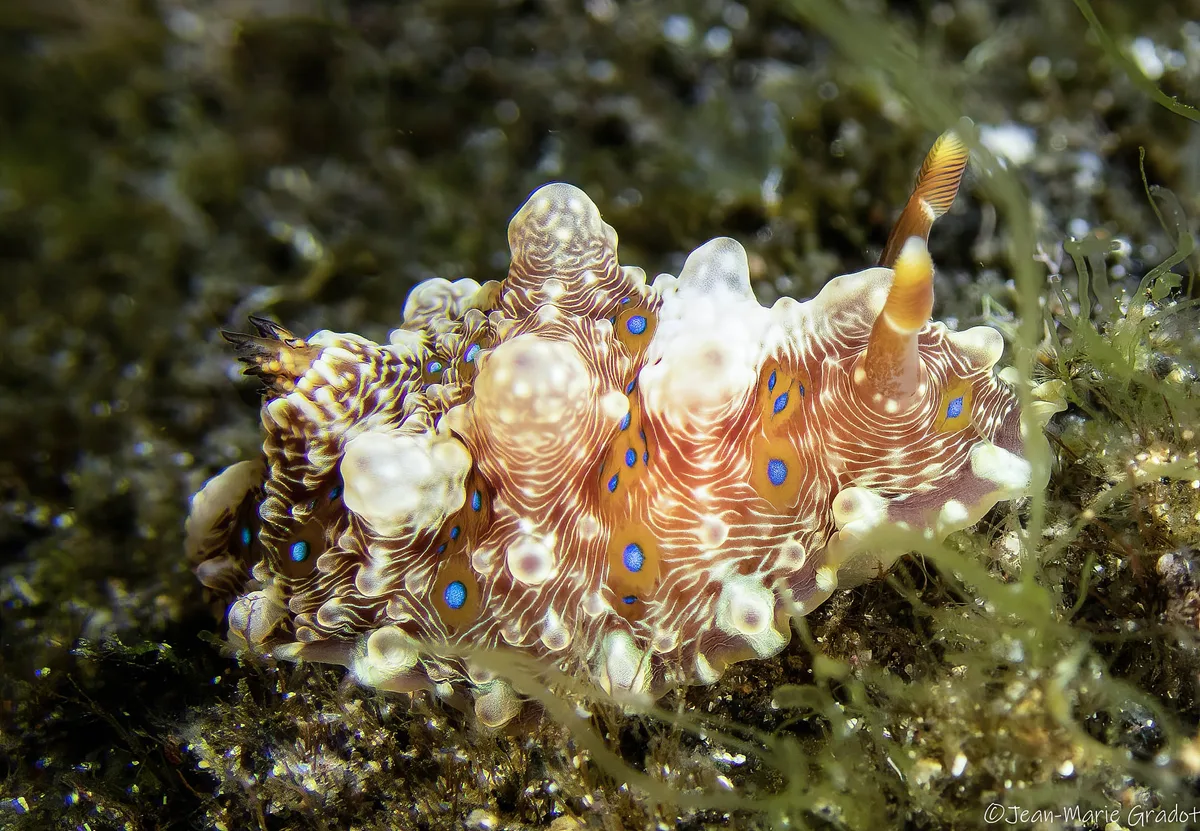
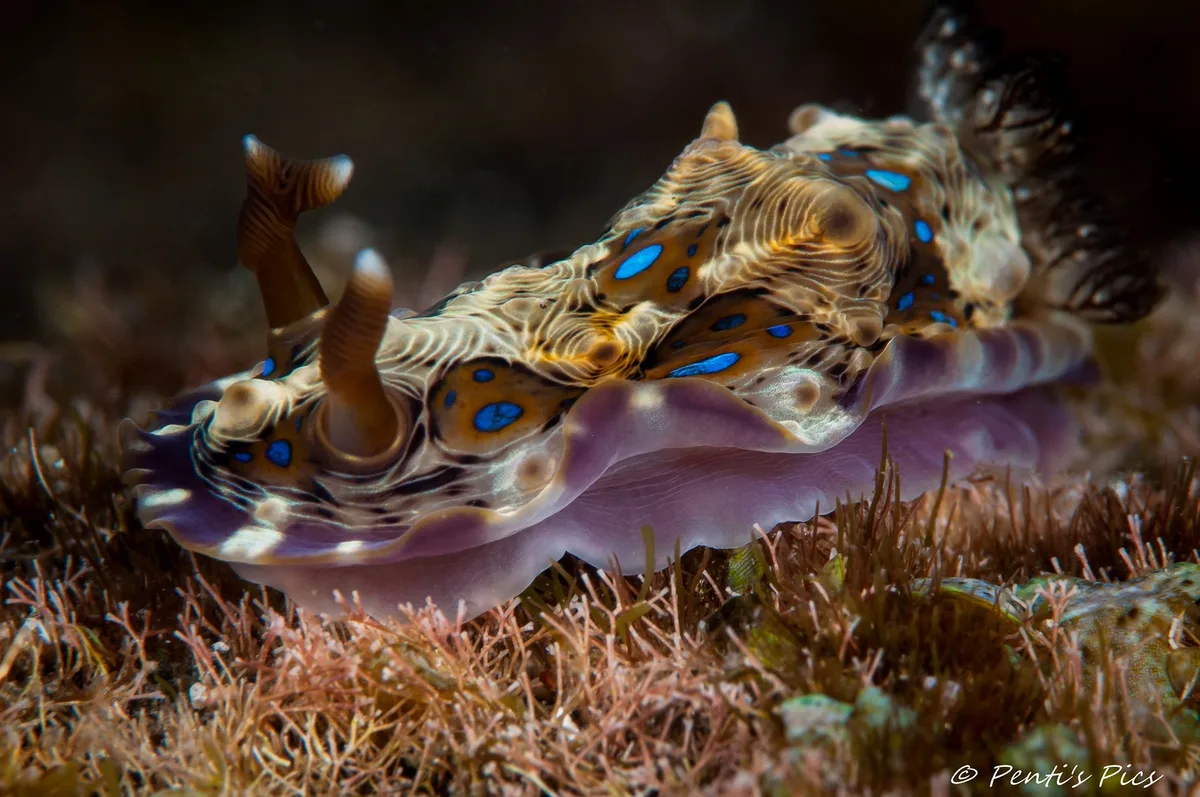
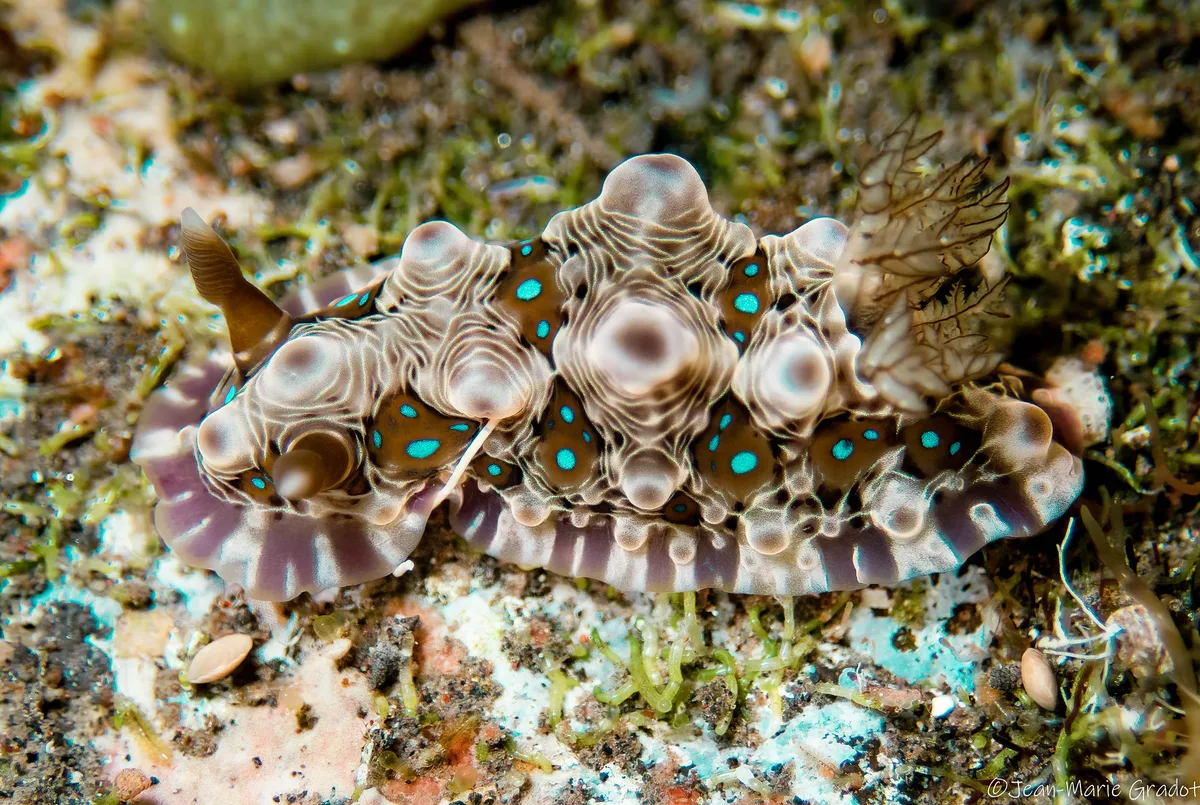
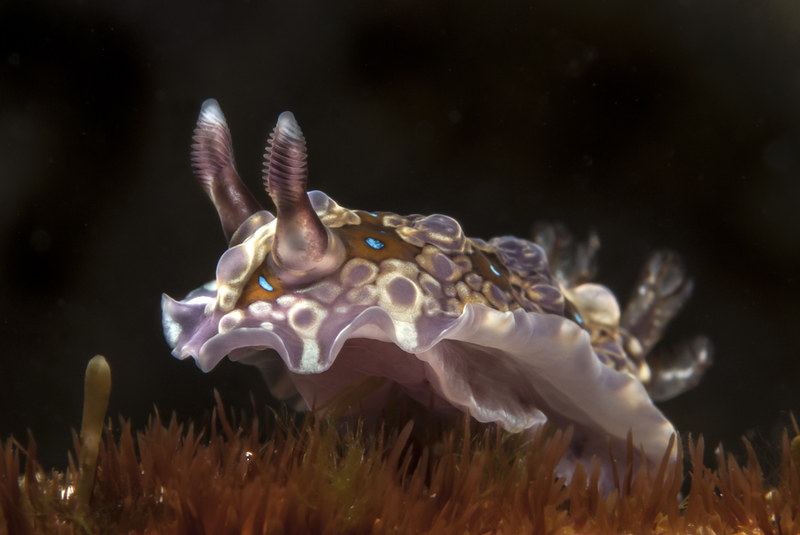
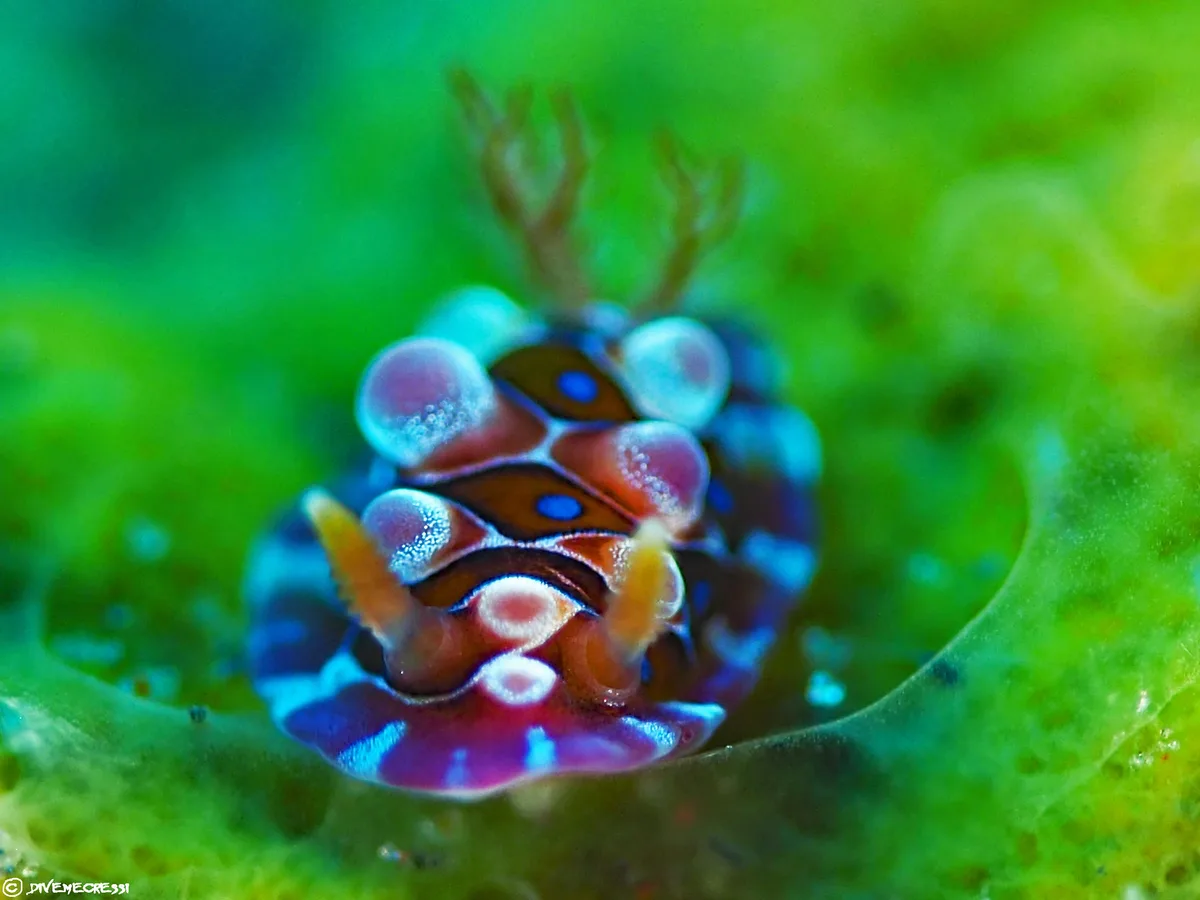
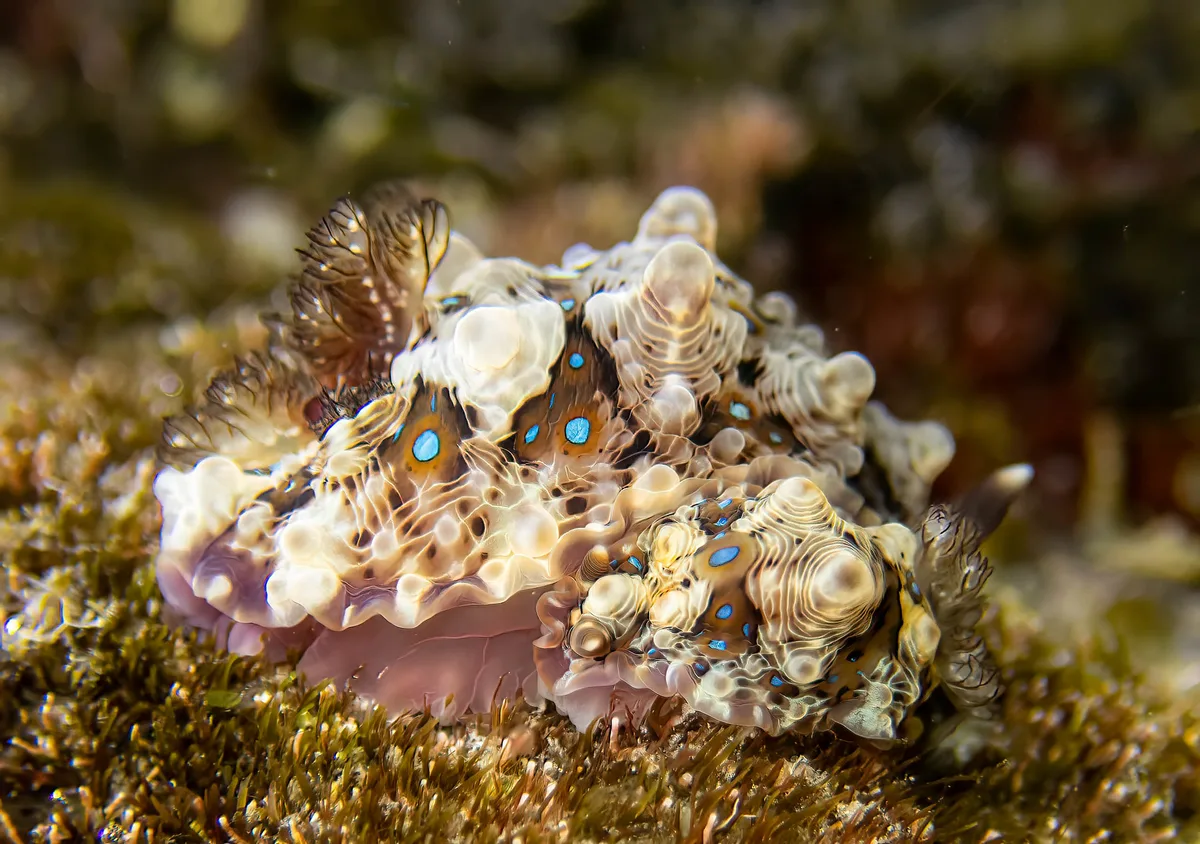
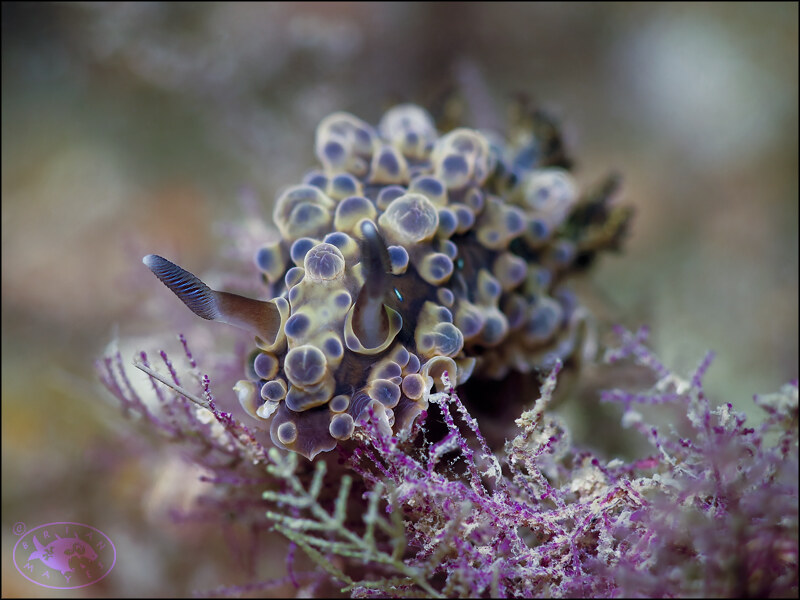
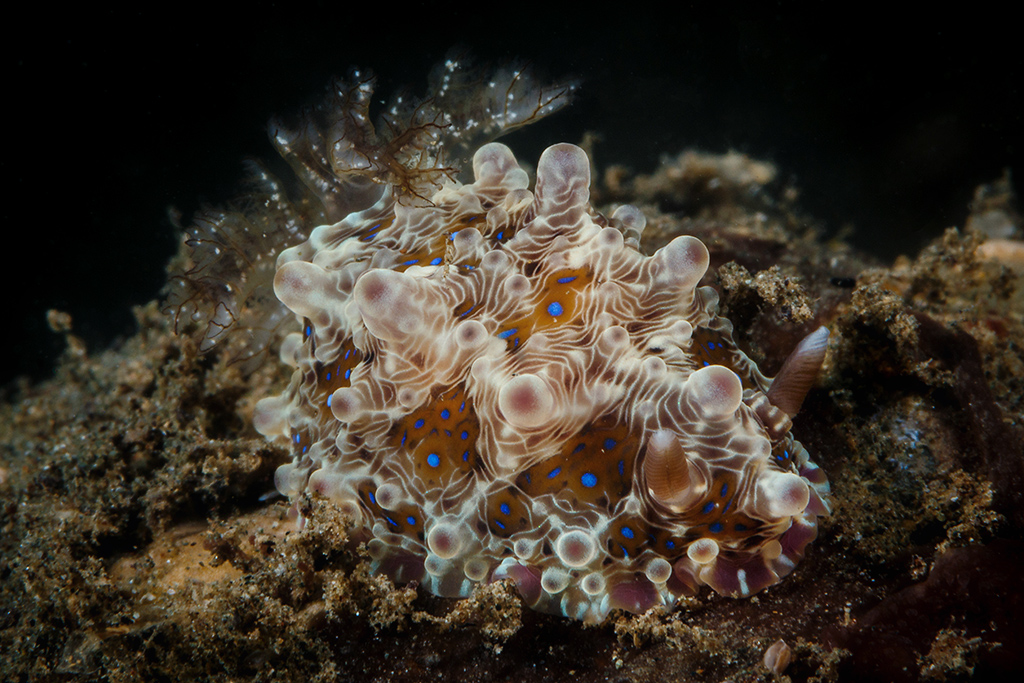
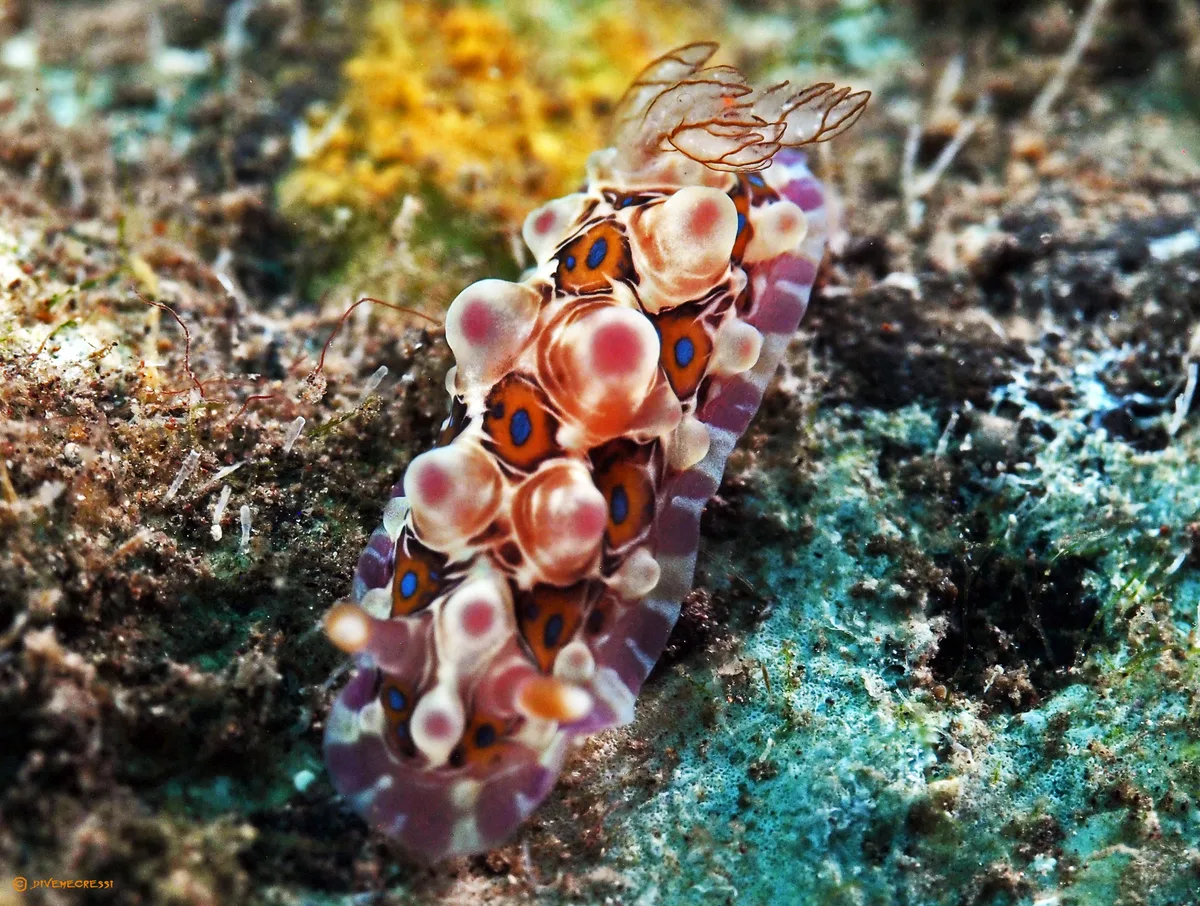
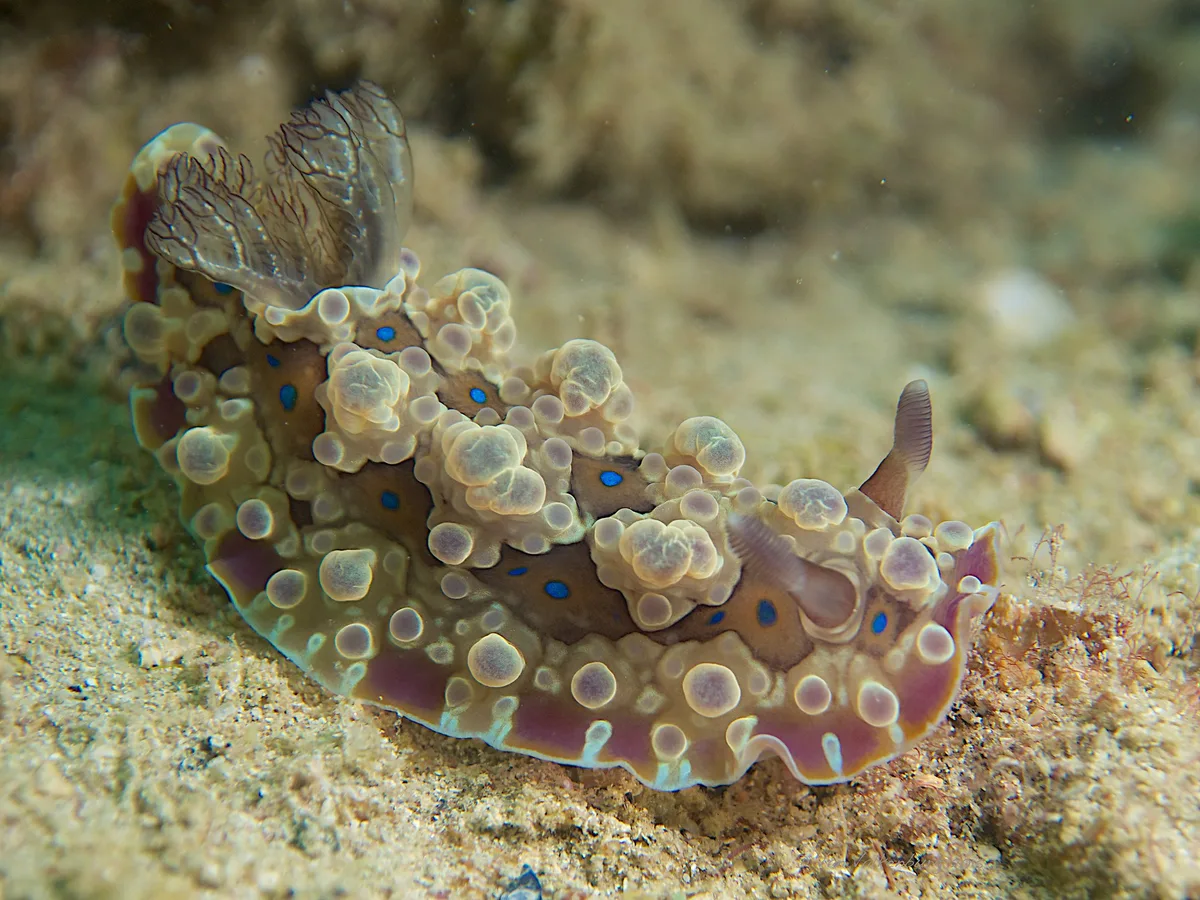
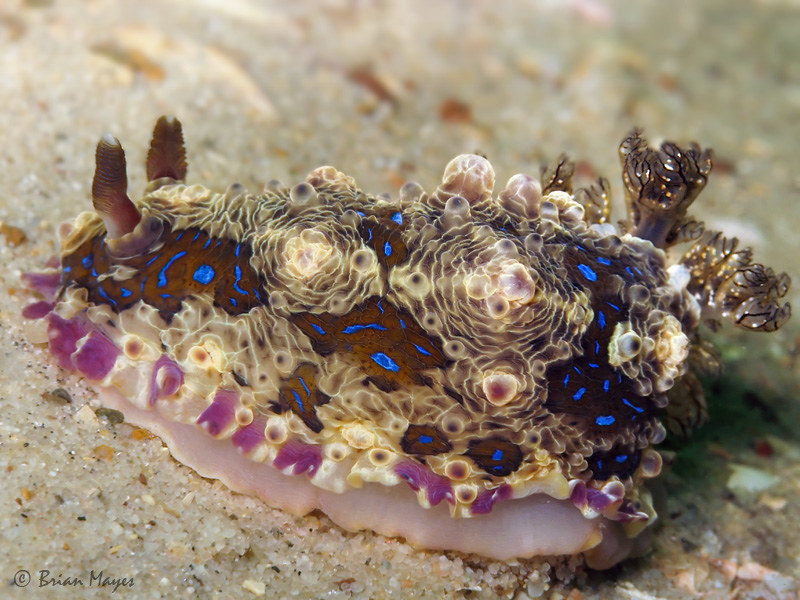
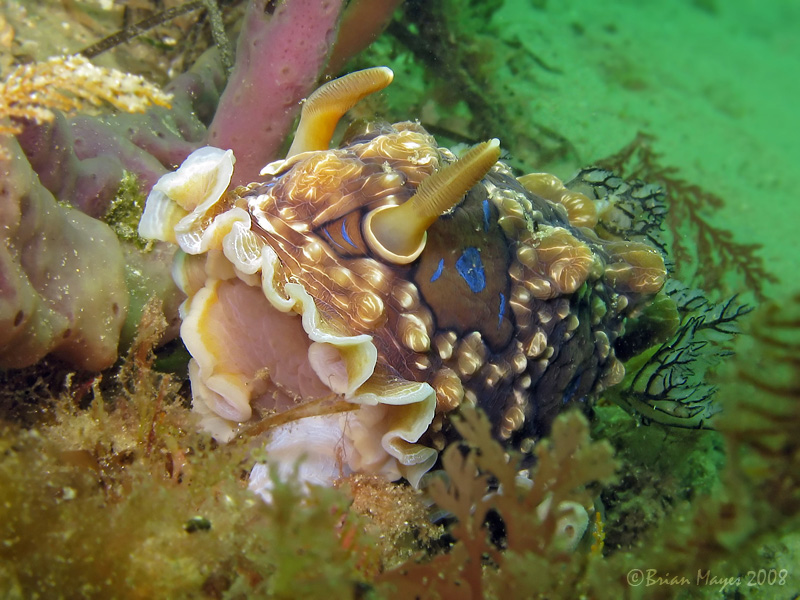
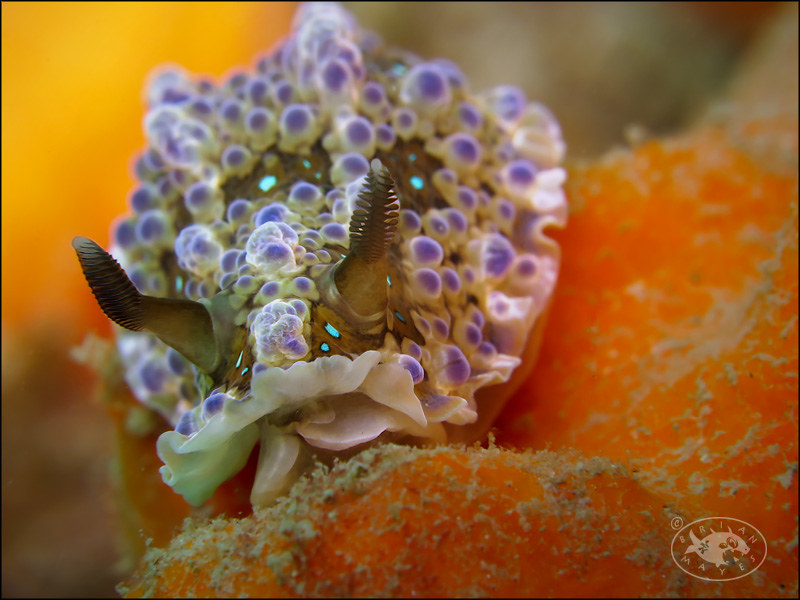
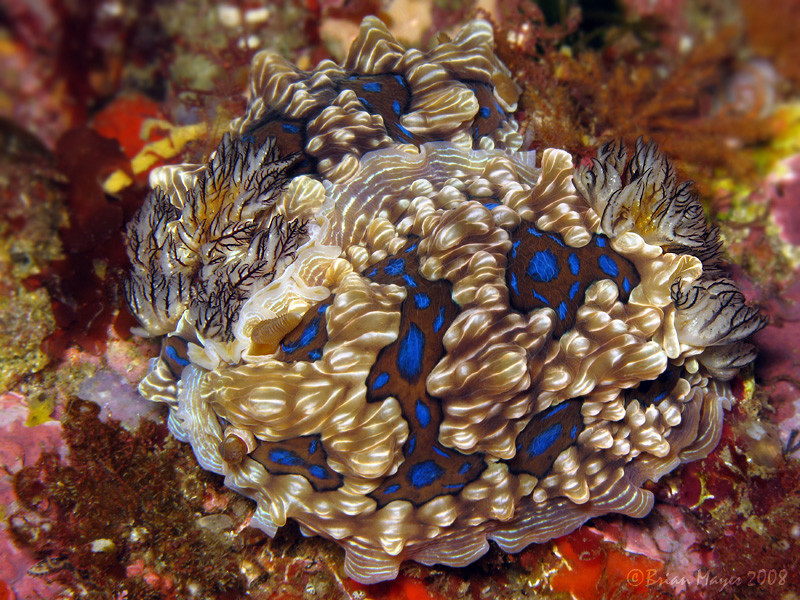
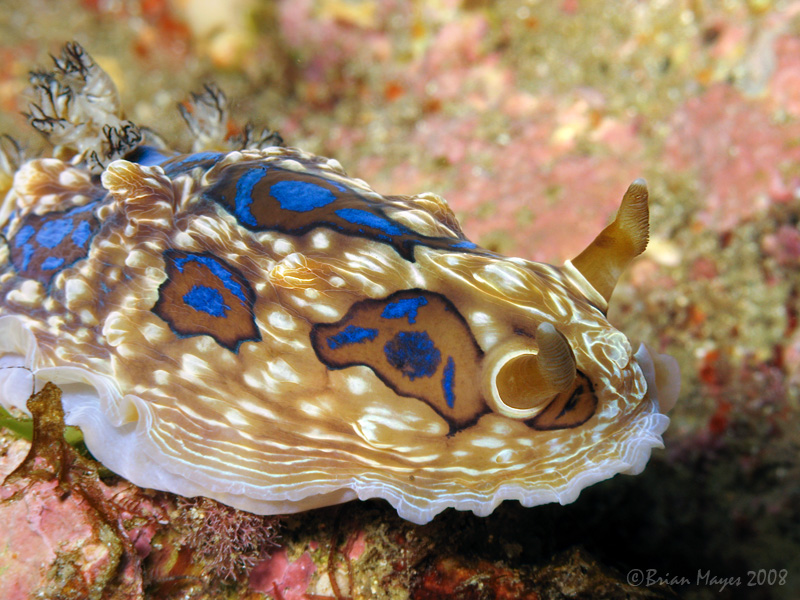
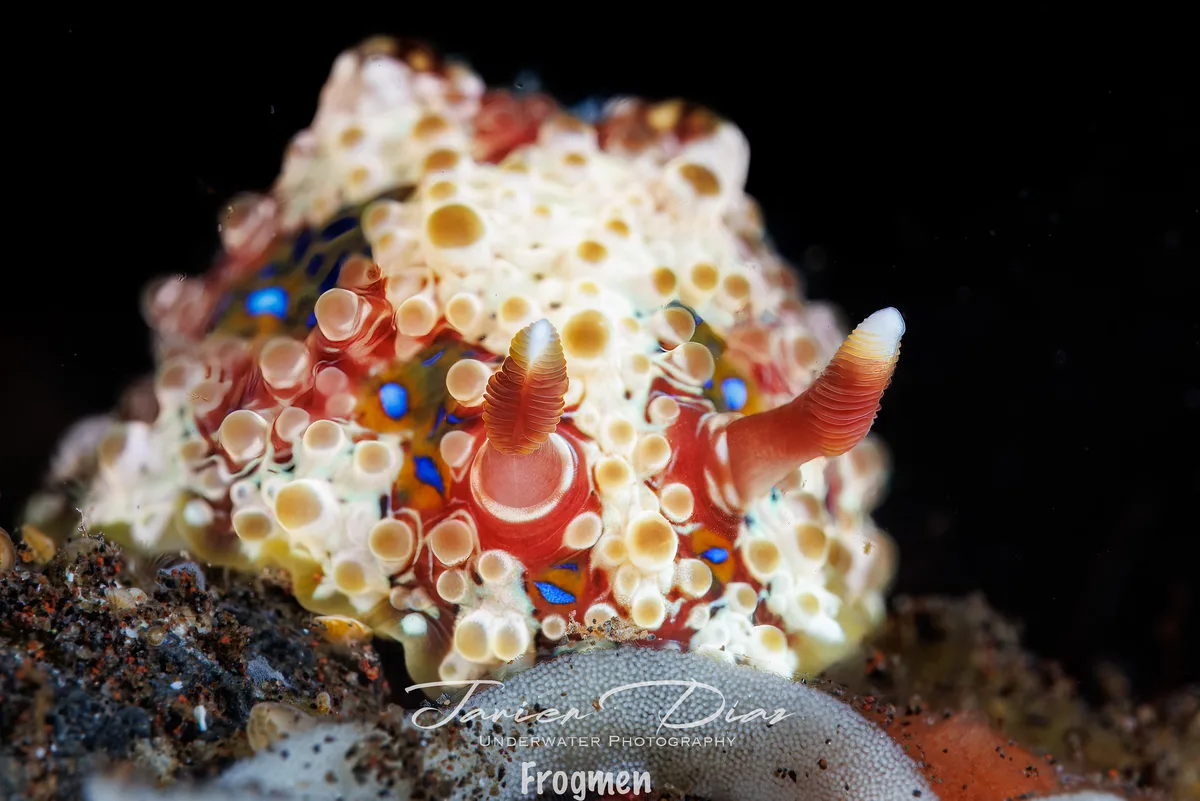
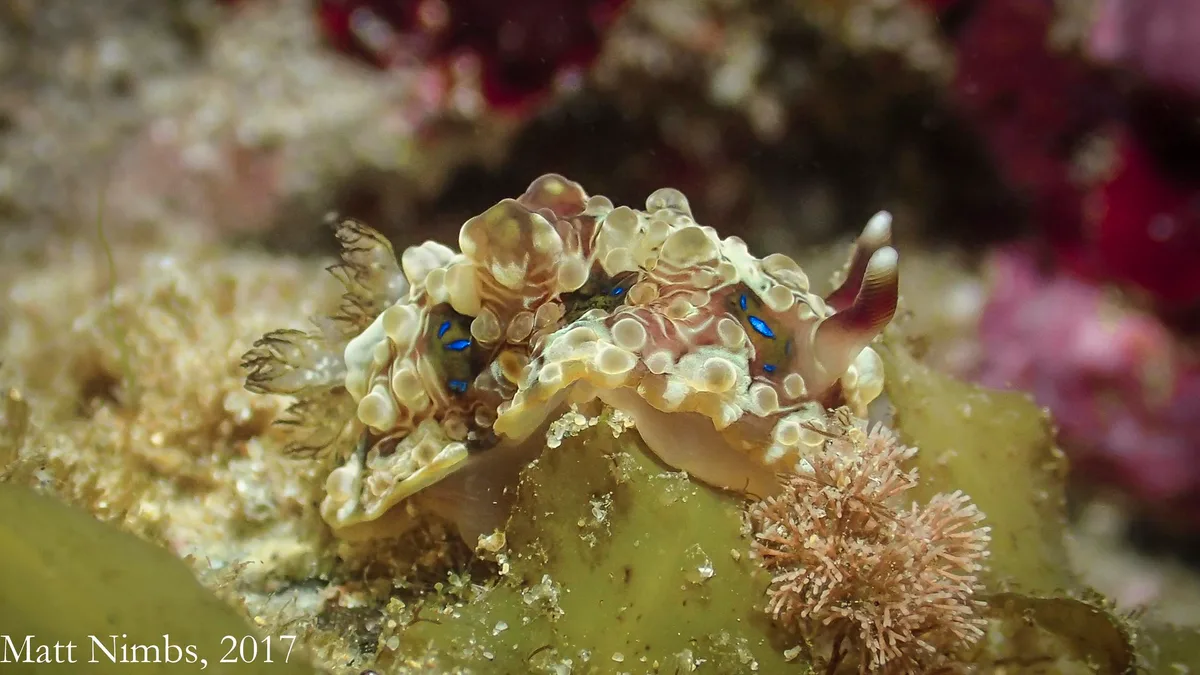
What you see on a night dive is a small black slab lit up with electric blue spots, often with an orange or red line around the edge. Six centimeters (2.4 in), no tubercles, no ridges, and a color scheme that under a torch beam looks like something switched on. The blue is the whole identification. Nothing else in this section is dark with blue spots.
The name honors Adam Johann von Krusenstern, who took the first Russian expedition around the world at the start of the nineteenth century. A great deal of what ended up in European museums, and a great many of the names attached to it, came back in the holds of voyages like that one, and this slug is one of them.
- very dark body, near black to deep maroon, scattered with electric blue spots
- the blue spots are the identification and nothing else here has them
- margin often edged in orange or red
- soft and smooth to look at, with no hard tubercles