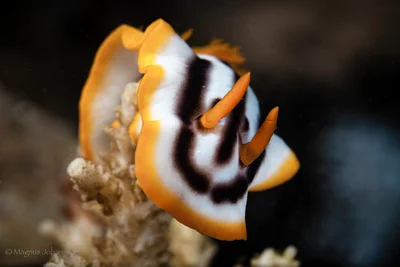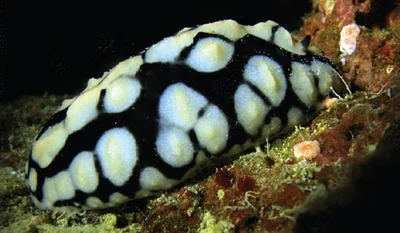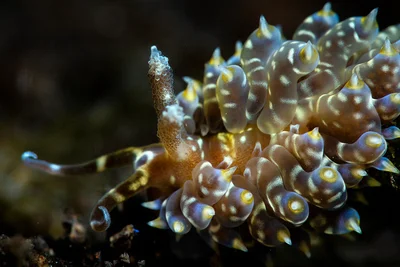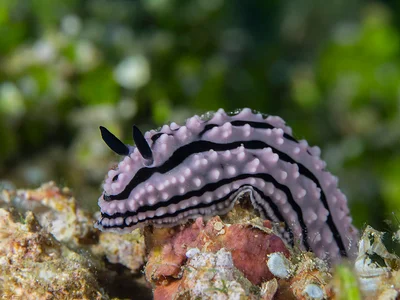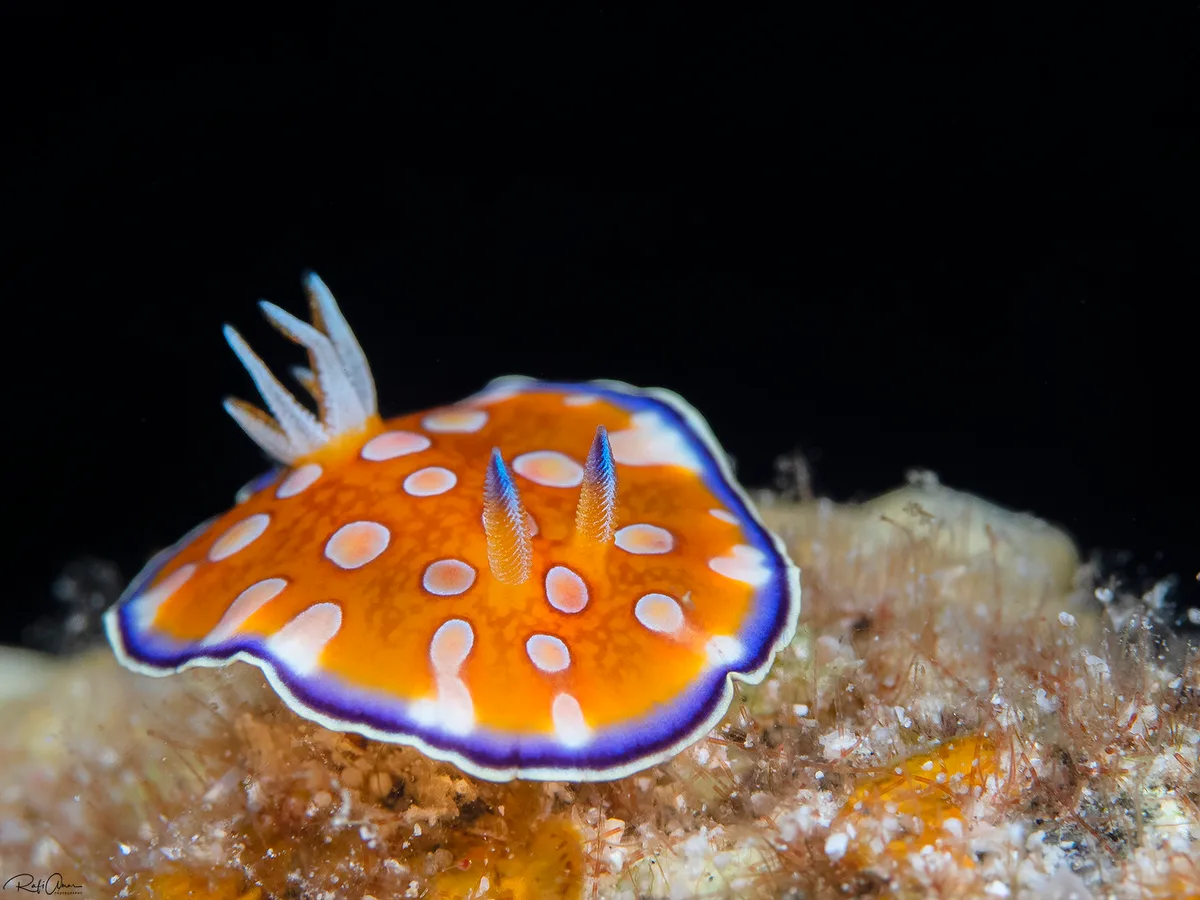
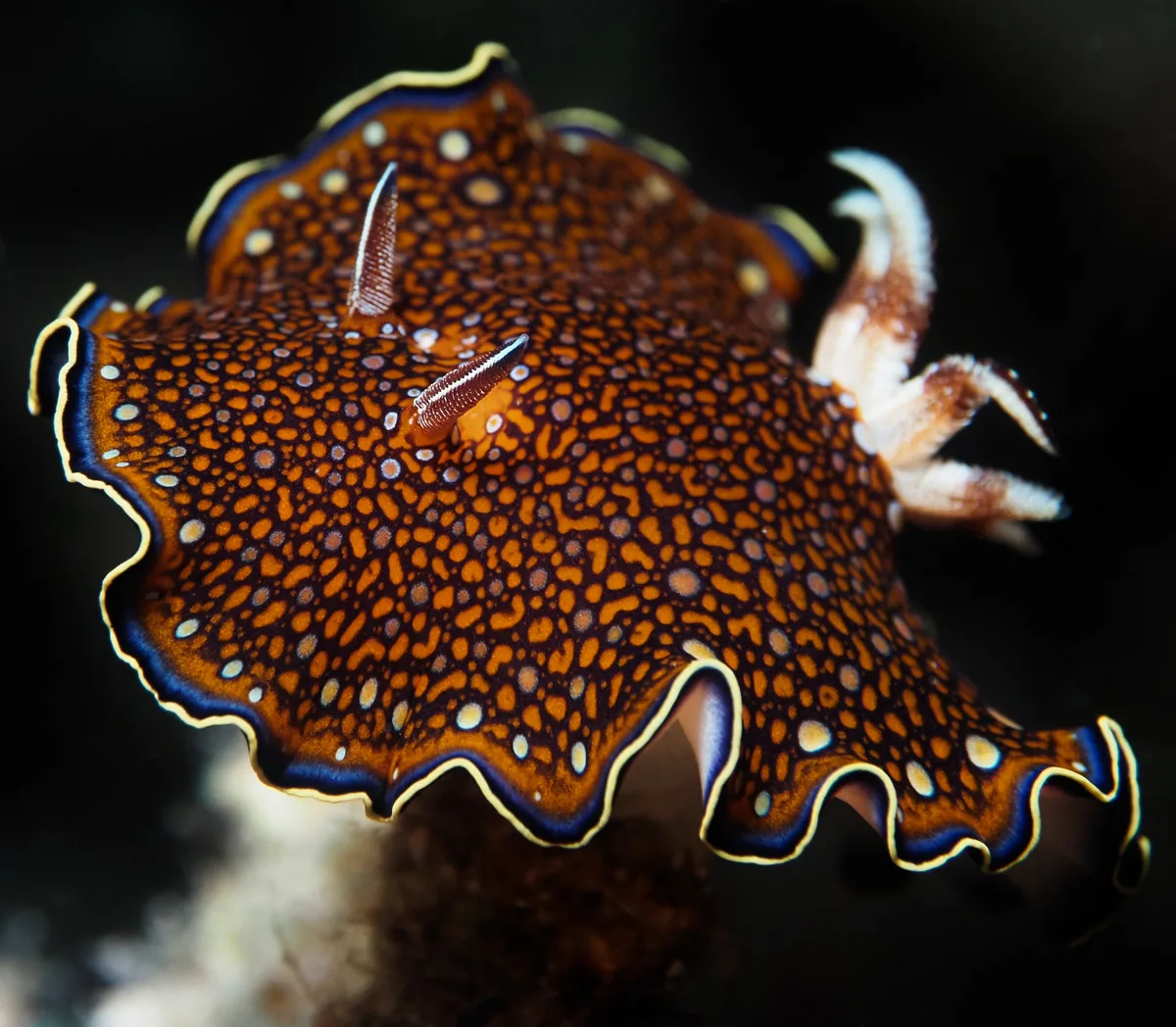
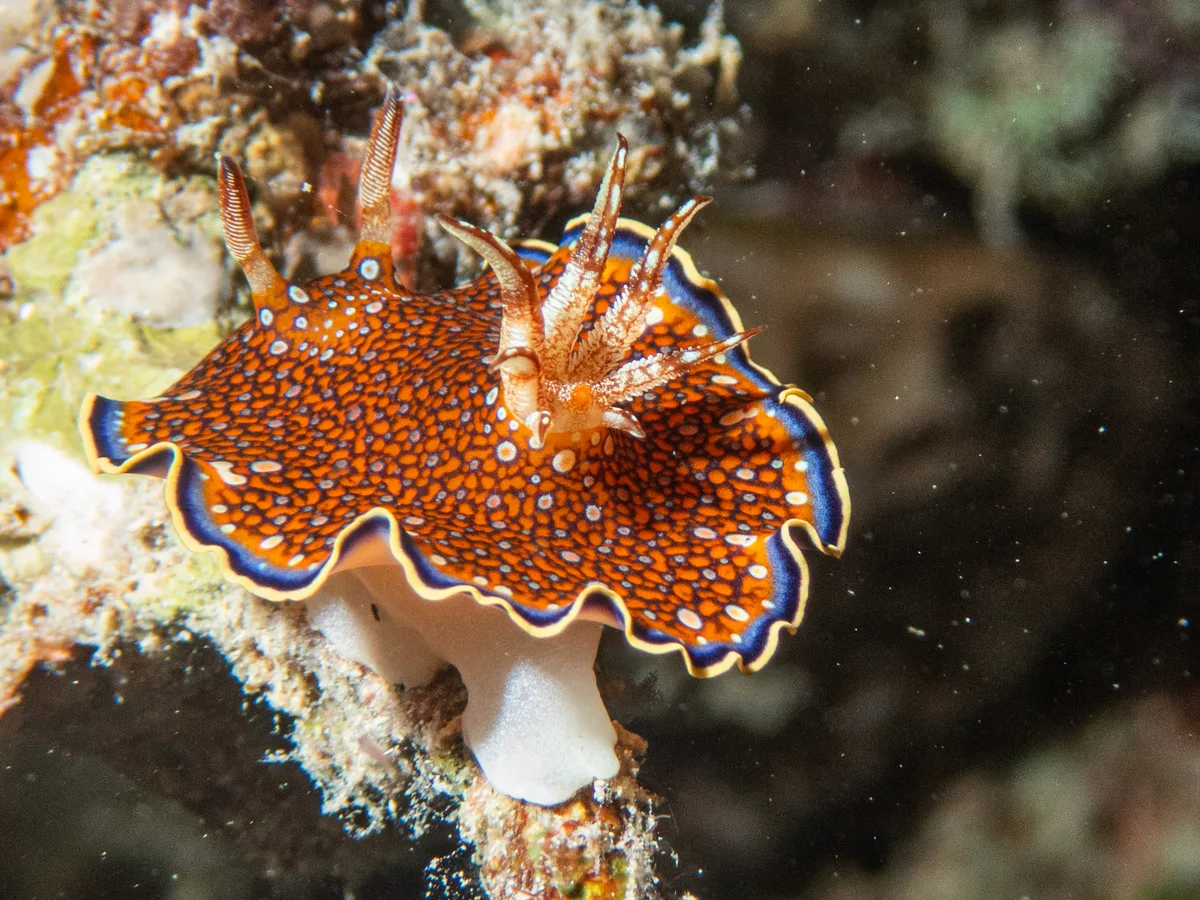
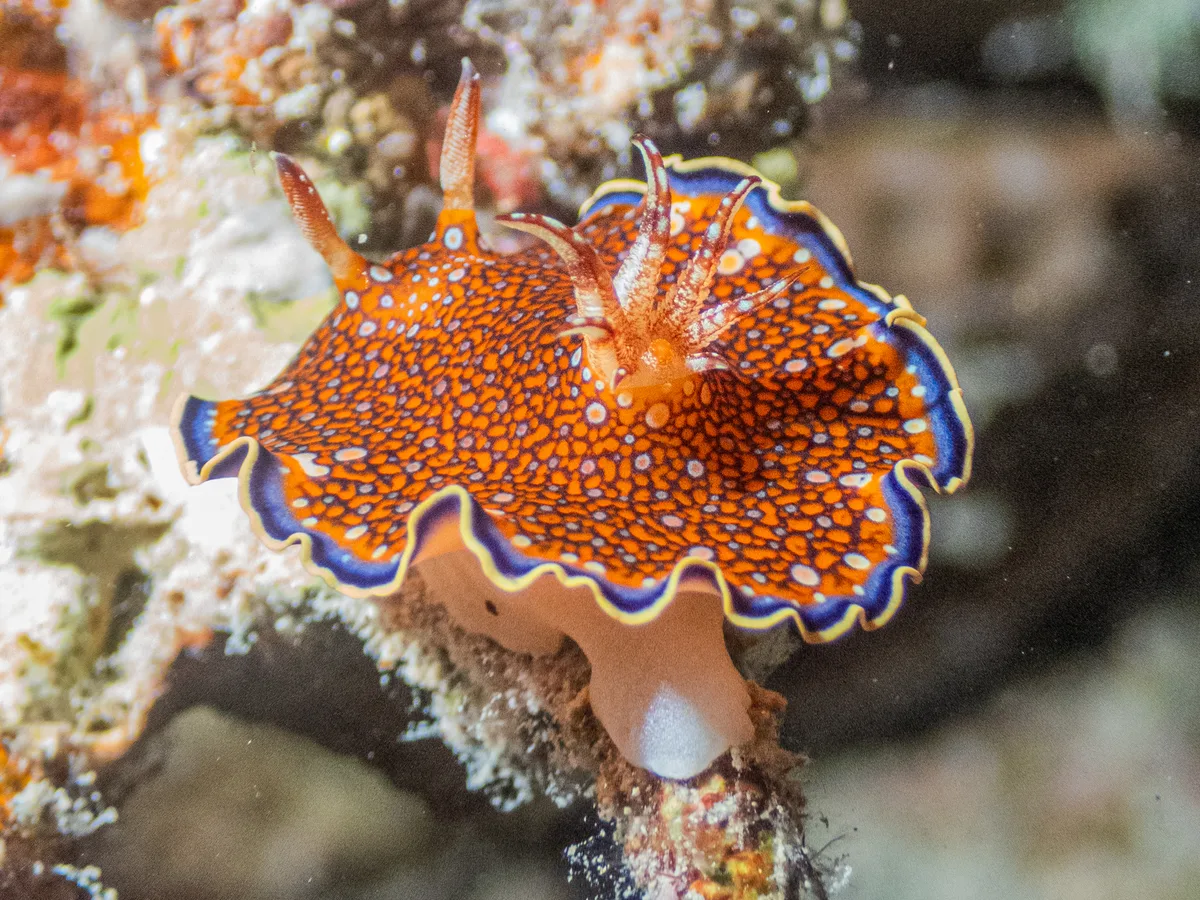
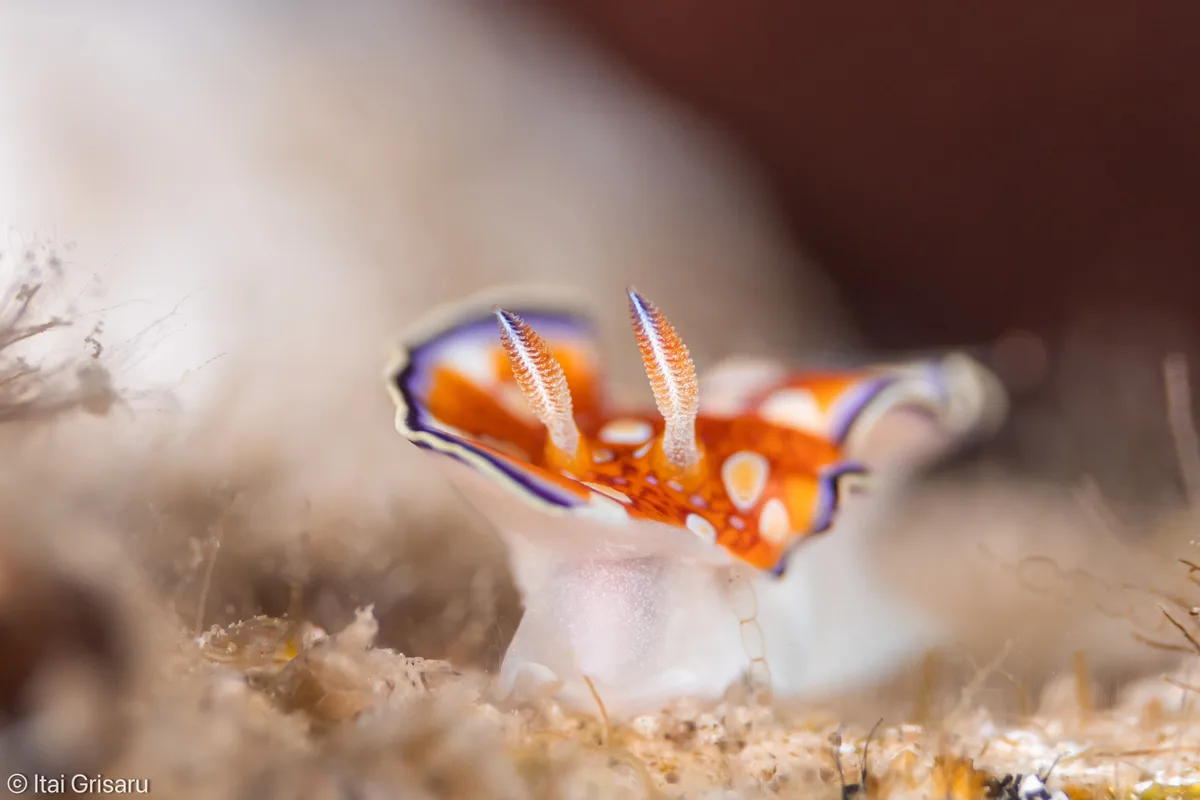
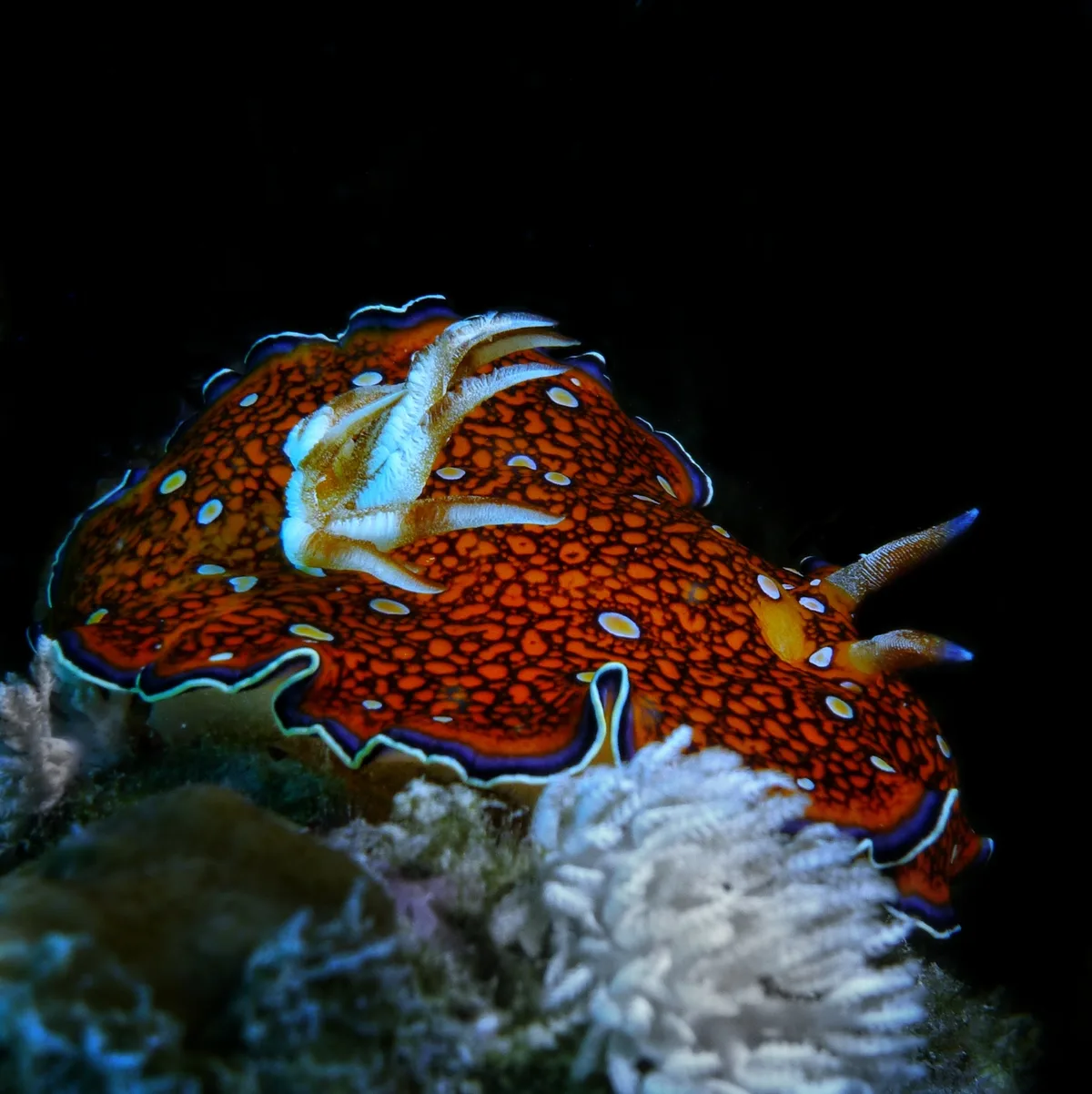
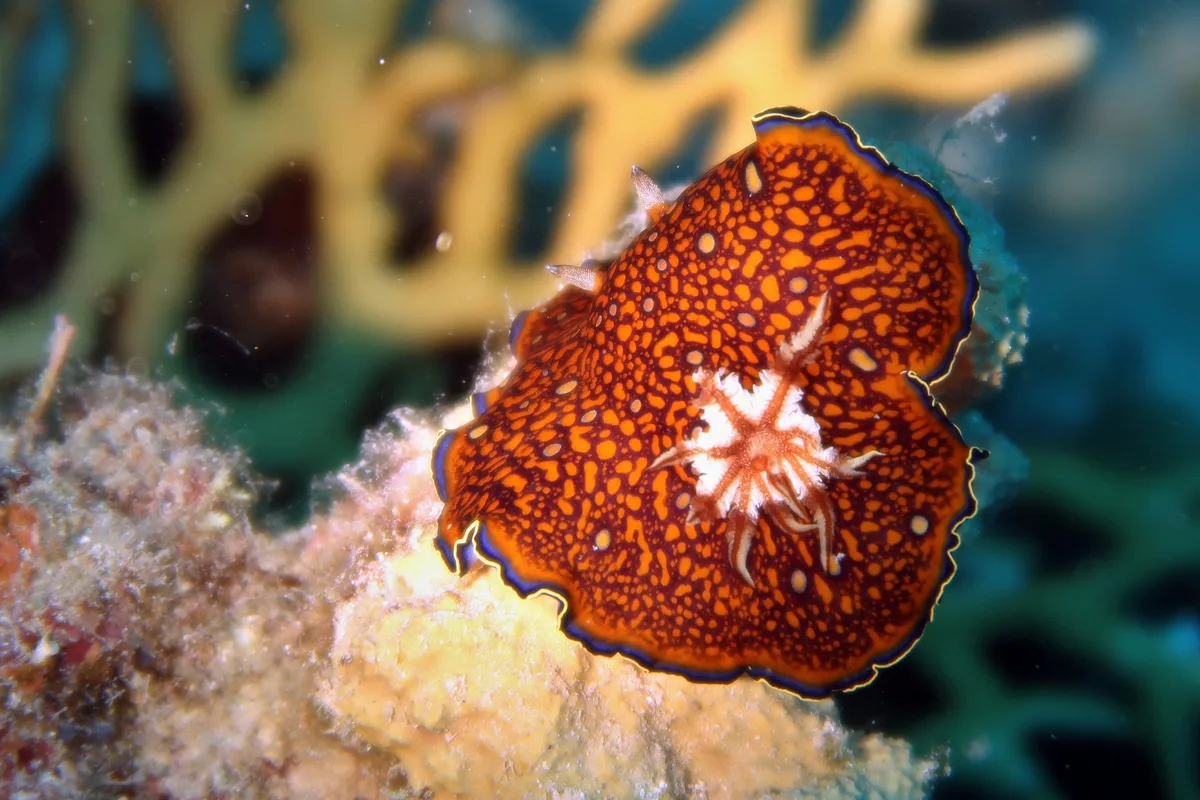
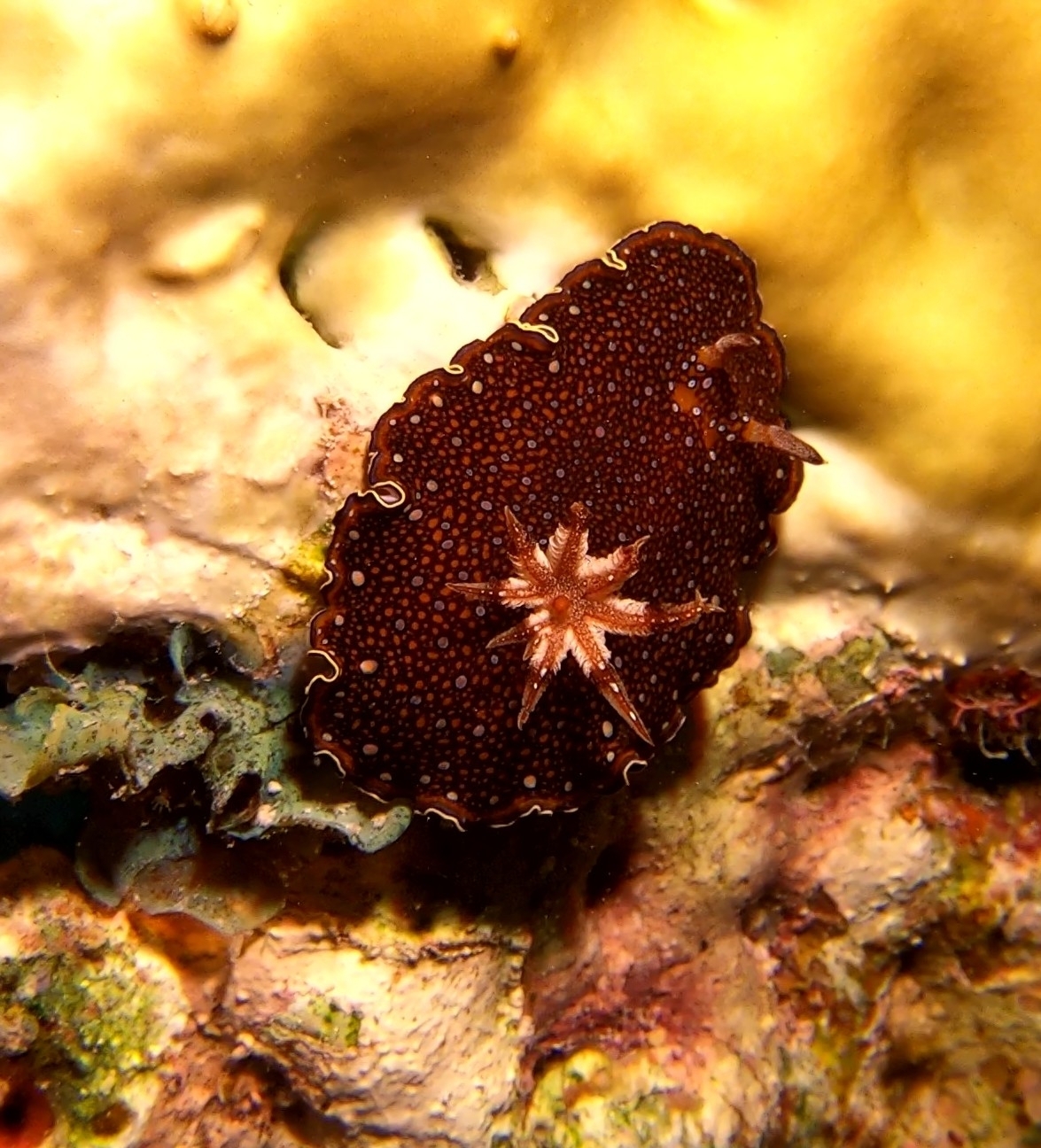
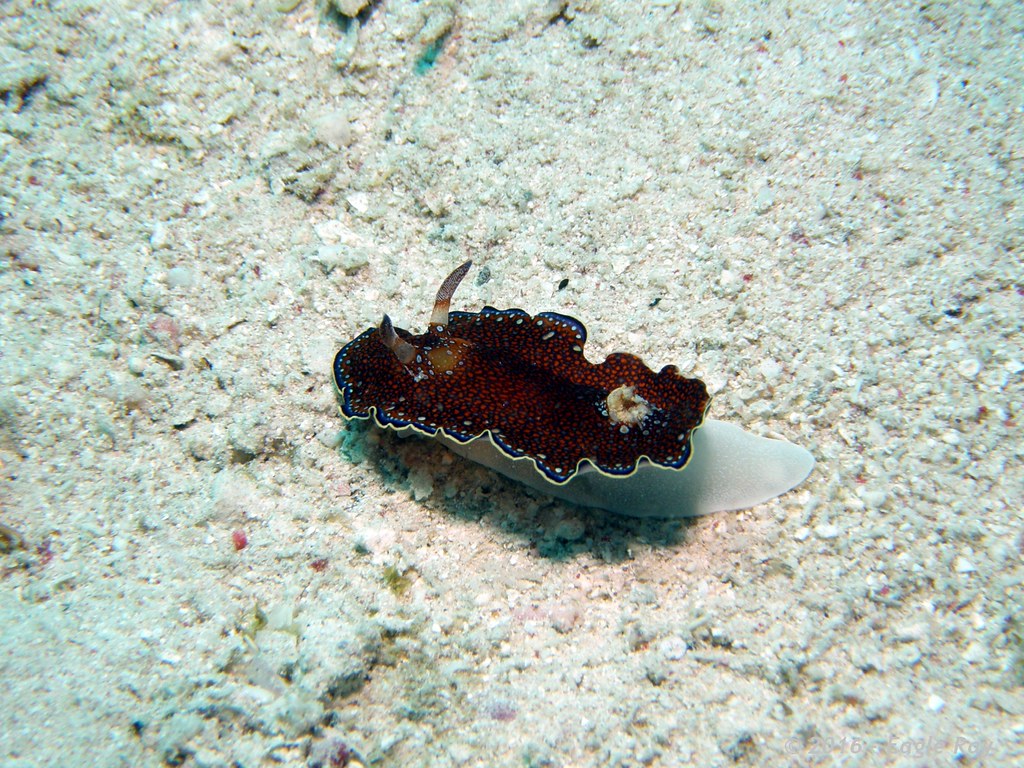
The rings on this slug are not spots. Each one is a pale circle with the body color showing through the middle, and that difference is the whole identification.
Spots and rings sound like a distinction only a specialist would care about, and on a chromodorid they are exactly what separates species that are otherwise the same animal in the same colors. This one is reddish-brown, scattered with those circles, with three bands running around the mantle edge. The juvenile looks like something else again, which is why the regional guide prints a young one beside the adult.
It lives in this sea and nowhere else, and it was named for a person rather than for a feature, which is common in this group: the species were described one or two at a time by a small number of workers, and the names carry their colleagues, their students and occasionally the diver who found the animal.
The rest is chromodorid. It eats sponges and keeps what the sponge made to defend itself, concentrating it in glands along the mantle rim. The bright pattern advertises that, which is why the animal crawls about in daylight on open rock instead of hiding, and why photographing one requires no stealth at all.
Look on walls and under overhangs where sponges grow thickly, and look for circles rather than dots.
- reddish-brown back scattered with pale rings
- three bands around the mantle margin
- juveniles patterned differently from adults, which causes confusion
- up to 6 cm